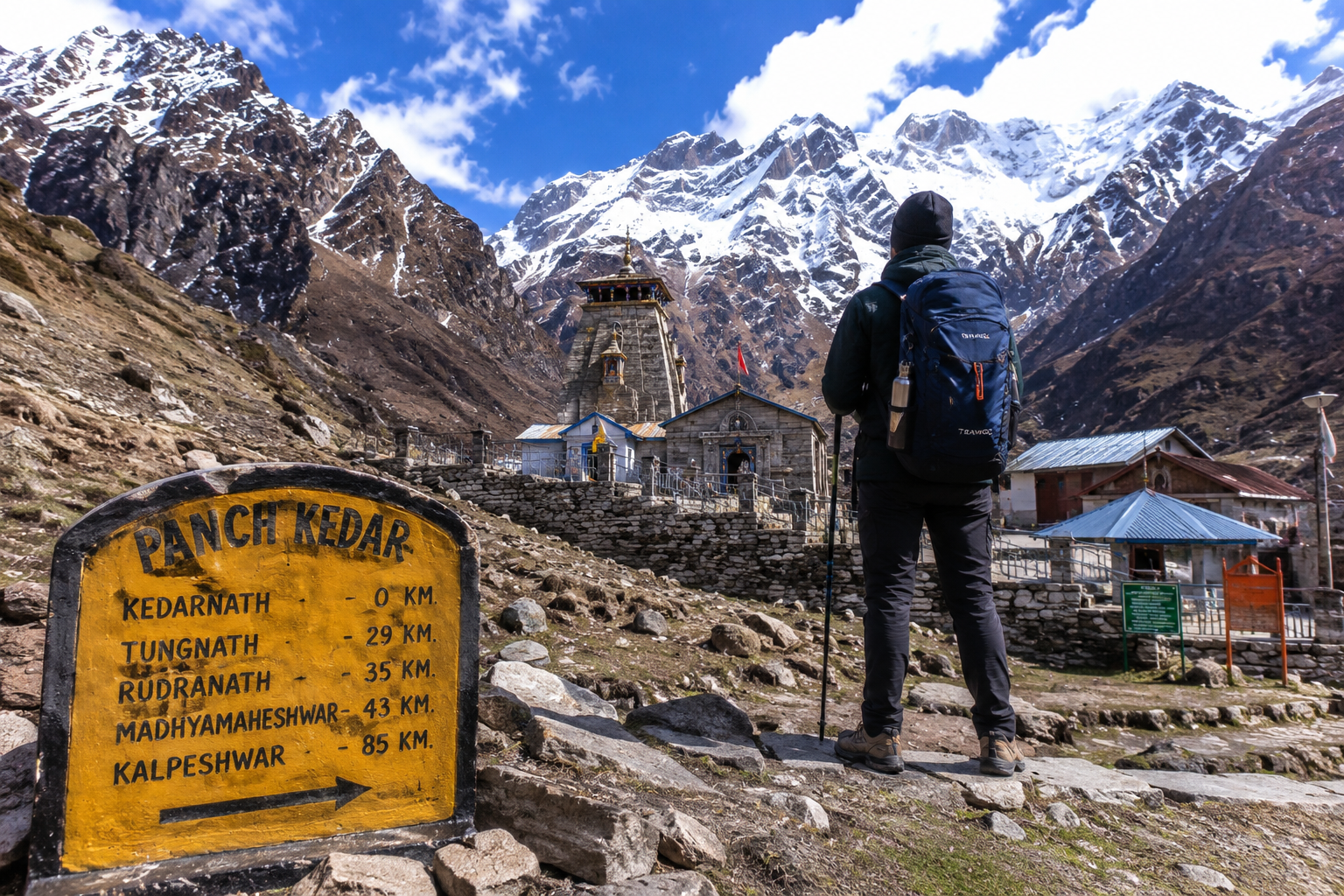
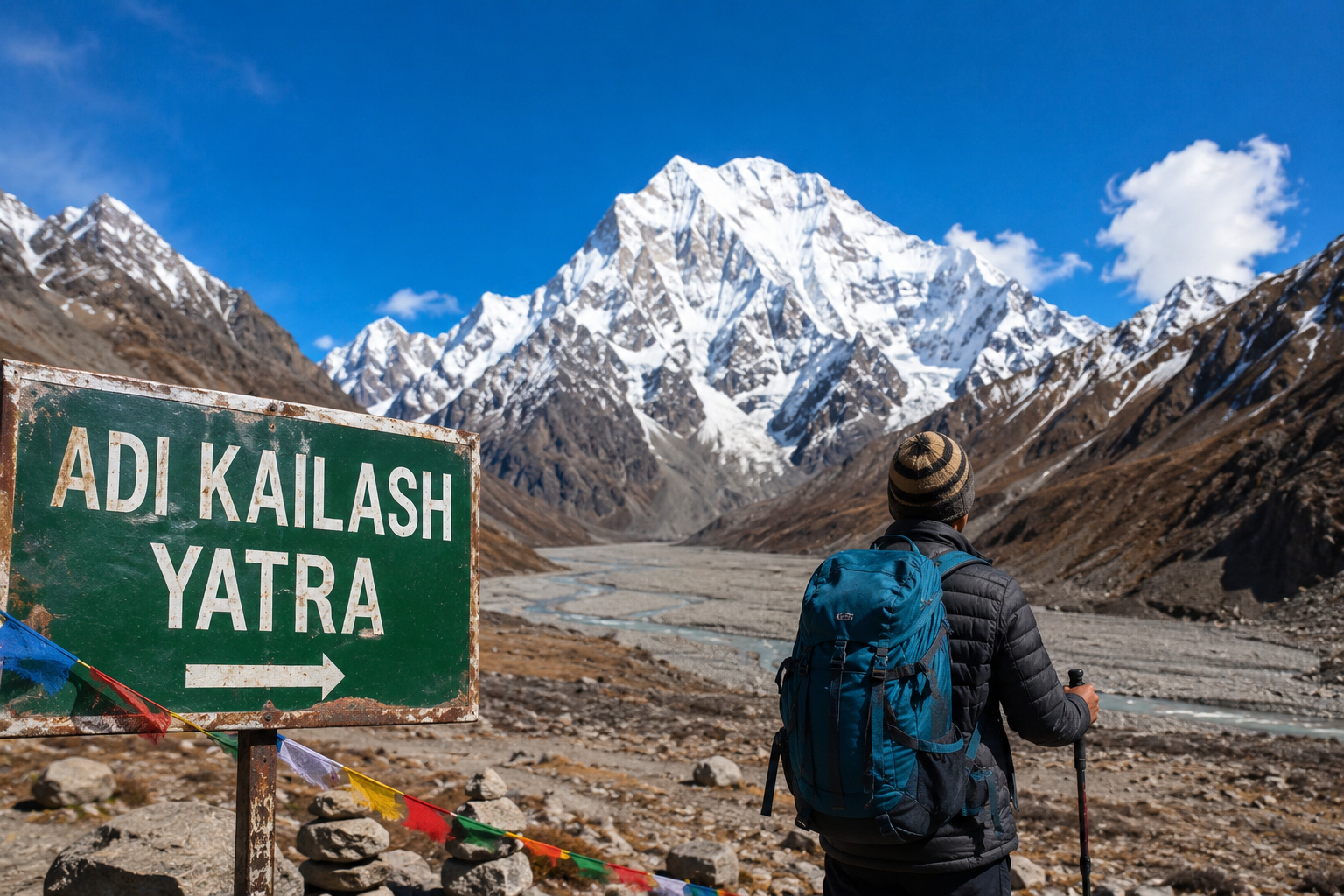
The trail to Adi Kailash does not forgive the unprepared. Sitting at an altitude of over 6,191 metres in the Pithoragarh district of Uttarakhand, Adi Kailash is one of the most spiritually charged and physically demanding destinations in the Indian Himalayas. For centuries, it has drawn pilgrims, trekkers, and seekers who believe this sacred peak is a terrestrial manifestation of Lord Shiva’s divine abode.
Choosing how to undertake this yatra is the first real decision every traveller must make. The debate around Adi Kailash Yatra Solo vs Group is not just about convenience. It touches on safety in high-altitude terrain, cost efficiency, the depth of spiritual experience, and how well a traveller can handle the unexpected in remote border regions.
This guide breaks down both approaches with honest, experience-backed insights so you can make the right call before you even pack your bag.
What Makes Adi Kailash Yatra Unique Among Himalayan Pilgrimages
Before comparing travel styles, it helps to understand what makes this yatra distinct from other Himalayan journeys.
Unlike Char Dham or the popular Kailash Mansarovar Yatra route through Tibet, the Adi Kailash circuit remains relatively less commercialised. The route passes through remote villages like Gunji, Napachu, and Jolingkong, touching the India-China border zone. That proximity to a sensitive border area means travellers must obtain an Inner Line Permit (ILP) from the Uttarakhand government — a requirement that already shapes how the yatra is organised.
The trek is accessible both as a trekking route and partially via road up to Gunji after the Dharchula district. The sacred Om Parvat, visible along the route, adds another layer of reverence that draws devotees seeking the natural snow formation shaped like the sacred syllable “Om.”
Understanding this context helps you evaluate which travel format — solo or group — actually serves you better on this specific route.
Solo Adi Kailash Yatra: What You Need to Know
Solo Adi Kailash Yatra offers flexibility and personal spiritual experience, but requires careful planning for permits, transport, accommodation, and safety due to remote terrain and unpredictable Himalayan weather conditions.
The Freedom Factor
Travelling solo to Adi Kailash means operating entirely on your own timeline. You can linger longer at Jolingkong Lake, spend extra time in quiet meditation at the Adi Kailash base, or take detours to lesser-known viewpoints without consulting anyone. For spiritually motivated travellers, this uninterrupted solitude can make the pilgrimage profoundly personal.
Solo travellers also have full control over their accommodation choices, meal preferences, and rest days — a significant advantage if you are acclimatising slowly or have dietary needs.
Permit and Logistics Challenges
Here is where solo travel gets complicated. The Inner Line Permit for Adi Kailash must be obtained from the District Magistrate’s office in Dharchula or online through the Uttarakhand government portal. Solo travellers must manage this entirely on their own, along with arranging:
- Registered local guides (mandatory for border zone entry)
- Porter services if carrying heavy gear
- Accommodation bookings in advance at Gunji and surrounding villages
- Vehicle arrangements from Dharchula onwards
If any permit documentation is incomplete or border regulations shift — which they occasionally do in sensitive zones — a solo traveller bears the full brunt of delays with no group support system to share the burden.
Safety Considerations
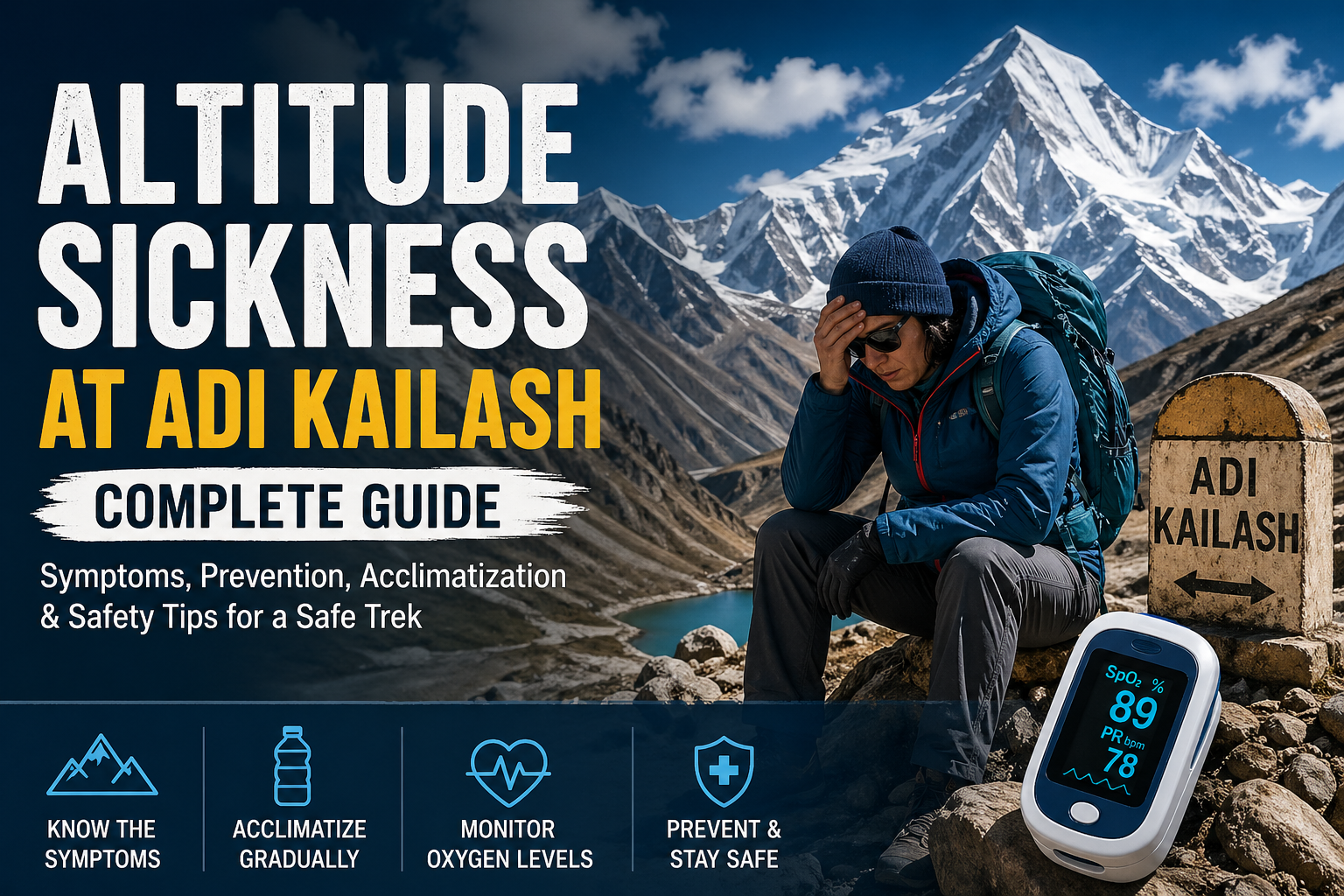
Solo trekking at high altitude carries significant risk. Acute Mountain Sickness (AMS), sudden weather changes, slippery river crossings, and limited mobile connectivity in areas beyond Gunji can turn a manageable situation into a serious emergency. Without fellow travellers watching for warning signs, solo pilgrims must be exceptionally self-aware and medically prepared.
That said, the Adi Kailash route now has a more established infrastructure compared to a decade ago, with ITBP (Indo-Tibetan Border Police) checkpoints offering some layer of security.
For anyone curious about border zone protocols, rules around permitted areas, and what locals recommend for safety, checking the Frequently Asked Questions on Adi Kailash is a practical starting point before finalising a solo plan.
Solo Adi Kailash: Best For
- Experienced Himalayan trekkers with prior high-altitude exposure
- Travellers with flexible schedules who value autonomy above everything
- Those pursuing a deeply personal or meditative pilgrimage without group distractions
- Individuals comfortable managing permits, logistics, and emergency decisions independently
Group Adi Kailash Yatra: What You Need to Know
Group Adi Kailash Yatra is ideal for budget-friendly and safer travel. Shared transport, accommodation, permits, and guided assistance reduce costs while offering a spiritual Himalayan journey with fellow pilgrims.
The Organised Advantage
Joining a structured Adi Kailash Yatra group tour eliminates most of the logistical friction that burdens solo travellers. Reputable operators handle Inner Line Permits, guide arrangements, vehicle convoys, camp or guesthouse bookings, and meal planning as part of the package.
This matters enormously in a destination where local knowledge is not a luxury but a necessity. Experienced trek leaders know when a river is swollen from glacial melt, which alternative path to take near Nabhi village, and how to coordinate with ITBP checkpoints efficiently.
Cost Comparison: Is Group Travel Cheaper?
Counter-intuitively, group tours are often more cost-effective per person than going solo — especially for first-timers.
A solo Adi Kailash Yatra budget typically includes:
- Transport from Dharchula to Gunji and back (shared or private)
- Local registered guide fees (non-negotiable requirement)
- Porter charges
- Accommodation at guesthouses or government-run tourist bungalows
- Individual permit processing time and fees
- Emergency contingency funds
Group packages distribute many of these costs across participants. Shared vehicle arrangements alone can save a significant amount. Additionally, group operators often have pre-negotiated rates with local guesthouses along the Dharchula to Adi Kailash route.
The Social and Spiritual Dimension
Many pilgrims report that the group experience adds a communal spiritual dimension that solo travel cannot replicate. Shared prayers at Jolingkong, group darshan at the Parvati Sarovar, and the collective energy of a group chanting at dawn near the base creates a bhakti atmosphere that resonates deeply for devotees.
For families, senior pilgrims, or first-time high-altitude travellers, this communal support is not just emotionally meaningful — it is practically protective.
The Best Time to Visit Adi Kailash matters more in group planning
Timing is everything on this route. The yatra season typically runs from May to June and again from September to October, with the monsoon period from July to August making the route too treacherous for most travellers. Group tours are almost always planned within this window.
This is actually one instance where solo travellers have an edge — they can choose shoulder-season dates that avoid crowds entirely. For detailed guidance on seasonal conditions, trail status, and weather windows, the Best Time to Visit Adi Kailash resource on mountainiax.com offers reliable month-by-month breakdowns that both solo and group travellers should consult.
Group Adi Kailash: Best For
- First-time pilgrims or trekkers new to high-altitude Himalayan terrain
- Families, senior devotees, or those with health conditions requiring regular monitoring
- Travellers who want full logistical support without managing permits or guides
- Pilgrims who value the collective spiritual energy of a group journey
- Budget-conscious travellers splitting costs across a team
Key Differences at a Glance
- Flexibility Solo offers complete control of pace and schedule. Group follows a fixed itinerary with limited changes.
- Cost Solo can be higher per person due to individual logistics. Group tours are generally more economical through shared costs.
- Safety Solo requires strong self-reliance and emergency preparedness. Group offers built-in support and professional guidance.
- Permit Handling Solo travellers manage their own ILP and documentation. Group operators handle all permit logistics.
- Spiritual Experience Solo allows deep personal reflection. Group creates communal devotional atmosphere.
- Ideal For Solo suits experienced trekkers and independent travellers. Group suits first-timers, families, and those wanting convenience.
Common Mistakes to Avoid on Either Format
Whether you go solo or with a group, these errors consistently derail Adi Kailash plans:
- Underestimating acclimatisation time. Rushing from Dharchula to Gunji without rest days leads to AMS more often than not. Budget at least one extra acclimatisation day regardless of your travel format.
- Skipping the Inner Line Permit. This is non-negotiable. Travellers without valid ILP documentation are turned back at checkpoints, wasting both time and money.
- Relying on mobile connectivity. Signal disappears well before Gunji. Download offline maps, carry a portable satellite communicator if solo, and inform someone at base of your daily check-in schedule.
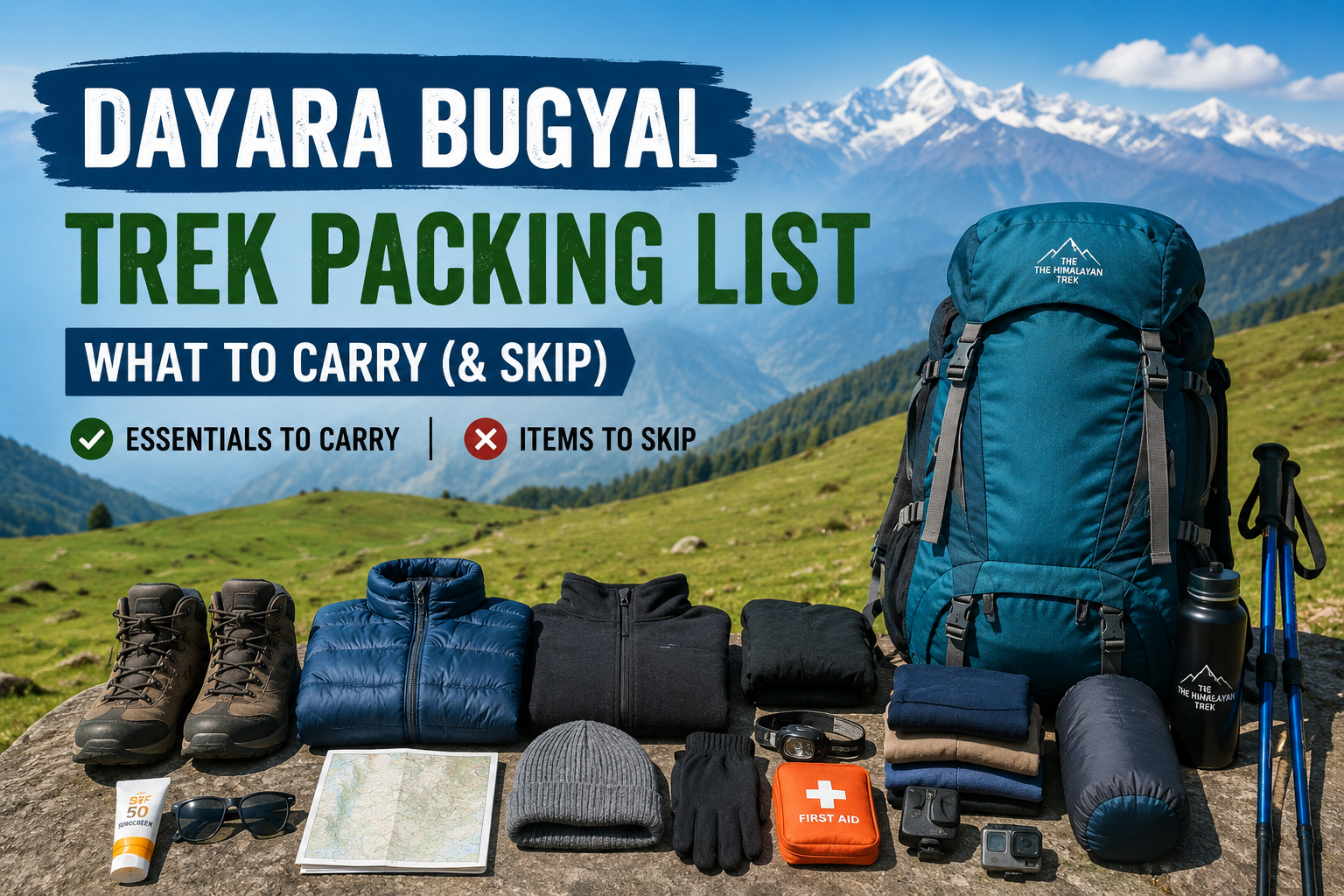
- Packing for comfort over function. The Adi Kailash trek involves significant altitude gain. Every extra kilogram matters. Focus on thermal layers, waterproof gear, and altitude medication over non-essentials.
- Ignoring local weather updates. Conditions change rapidly in the Pithoragarh high Himalayas. A clear morning does not guarantee a safe afternoon crossing.
What Experienced Pilgrims Recommend
Travellers who have completed the Adi Kailash and Om Parvat Yatra multiple times consistently offer the same advice: your first time should ideally be with a group. The unfamiliarity of border zone protocols, the physical demands of the altitude, and the logistical complexity of remote Himalayan travel all argue in favour of professional support on an introductory visit.
Once you have completed the route once and understand its rhythms — the permit process, the key checkpoints, the reliable guesthouses, the best acclimatisation stops — returning solo becomes far more manageable and deeply rewarding.
The sacred corridor between Dharchula and Jolingkong has its own pace. Learning that pace with guidance first makes every subsequent visit richer.
Travellers planning ahead and comparing route options alongside Kalapani, which lies en route and holds its own historical and spiritual significance, will find it beneficial to explore resources on Kalapani to understand the broader landscape of this trans-Himalayan region before finalising any itinerary.
Solo vs Group
There is no single correct answer — and any guide that tells you otherwise is oversimplifying a nuanced decision.
Choose solo if you are an experienced high-altitude trekker, you prioritise complete autonomy, you have handled permit processes in border zones before, and you are comfortable with emergency self-management in remote terrain.
Choose group if this is your first Himalayan pilgrimage, you are travelling with family or senior members, you want logistical peace of mind, or you value the collective spiritual energy that comes with a shared devotional journey.
What matters most is that you arrive informed, physically prepared, and spiritually ready. The mountain does not distinguish between solo pilgrims and group travellers — it asks the same of everyone who walks its approaches.
FAQs: Adi Kailash Yatra Solo vs Group
Q1: Can I do the Adi Kailash Yatra completely solo without a guide?
No. The route passes through a restricted Inner Line Permit zone near the India-China border. A registered local guide is mandatory for all travellers, regardless of experience level.
Q2: How much does an Adi Kailash group tour typically cost?
Group tour packages from reputed operators generally range between INR 18,000 to INR 35,000 per person depending on the duration, inclusions, and departure city. Solo travel costs vary widely based on individual logistics.
Q3: Is the Adi Kailash Yatra safe for solo female travellers?
The route passes through remote terrain with limited connectivity. While the region is generally safe and ITBP checkpoints are present, solo female travellers are advised to join reputed group tours or connect with established trekking communities for companionship and added safety.
Q4: What documents are required for the Inner Line Permit?
Travellers need a valid government-issued photo ID (Aadhaar, passport, or voter ID), passport-size photographs, and an application submitted either at the Dharchula DM office or through the official Uttarakhand government portal.
Q5: Which is more spiritually rewarding — solo or group Adi Kailash Yatra?
This is personal. Solo travel offers silence and introspection. Group travel offers communal prayer and shared devotion. Many pilgrims describe their solo experience as more inward and their group experience as more celebratory — both are valid expressions of the same pilgrimage.
Conclusion
The journey to Adi Kailash is not just a physical expedition — it is a passage through some of the most awe-inspiring and spiritually charged landscapes the Indian Himalayas have to offer. Whether you choose to walk this path alone or alongside fellow pilgrims, what ultimately defines your experience is the preparation, intention, and respect you bring to the mountain. Solo travel rewards the self-reliant with silence and freedom. Group travel rewards the community-minded with shared devotion and logistical ease. Neither path is superior — both lead to the same sacred destination.
What matters most is making an informed choice that aligns with your experience level, physical fitness, and the kind of journey your spirit is seeking. Research thoroughly, plan your permits early, acclimatise responsibly, and never underestimate the terrain. The sacred peaks of Adi Kailash and Om Parvat have stood for millennia — they ask only that you arrive prepared and leave with humility. Choose wisely, trek safely, and let the Himalayas do the rest.
With the Adi Kailash Yatra season approaching, it’s time to plan a journey that blends spirituality with raw Himalayan adventure. From sacred lakes to the divine presence of Adi Kailash, every moment feels profound and transformative. If you seek purpose beyond travel, this is your path.
Visit this page for Adi Kailash Yatra Packages, Itinerary & Booking.