
- Pokhara, Nepal
Annapurna Base Camp Trek
Book your Annapurna Base Camp Trek Package @36000
Starting From ₹ 36000/-
- 4.8/5 Rating
- 1000+ Trekkers
- Certified Guides
- 24/7 Support
Max Elevation
13,550 Ft.
Distance
70 KM
Duration
8 Nights / 9 Days
Gradient
Moderate
Best Month
Mar–May · Sep–Nov
Group Size
20
Annapurna Base Camp Trek - Overview
The Annapurna Base Camp trek is, without question, one of the greatest walking experiences on the planet. Every year, thousands of trekkers from India, Europe, and beyond lace up their boots in Pokhara and set off into the Annapurna Sanctuary — and almost every single one of them returns with the same words: “That was the best thing I’ve ever done.”
And honestly? They’re not wrong.
Over 9 days and roughly 70 km of trail, the Annapurna Base Camp trek takes you from the subtropical warmth of the Modi Khola valley all the way up to 4,130 m (13,550 ft) — into a jaw-dropping glacial amphitheatre ringed by eight peaks above 6,000 m, including Annapurna I (8,091 m), the tenth highest mountain in the world. You don’t need to be a mountaineer. You don’t need prior trekking experience. What you need is the will to go, a decent pair of boots, and four to six weeks of basic fitness prep.
The Annapurna Base Camp trek begins in Pokhara — a beautiful lakeside city with the entire Annapurna range visible on a clear morning. From Nayapul, you enter the Annapurna Conservation Area and the trail starts weaving its magic immediately. Dense rhododendron forests, terraced rice fields, stone-paved village paths, suspension bridges swaying over turquoise rivers — the scenery changes dramatically every single day.
By the time you pass through Ghandruk, the largest Gurung village on the route, you already have Machapuchare (the “Fishtail” mountain — Nepal’s Matterhorn, sacred and unclimbed) dominating the skyline ahead. It’s one of those views that stops you in your tracks. Then comes the steep, forest-cloaked climb through Chhomrong, the last permanent village before the Sanctuary, and the atmosphere shifts — quieter, wilder, more alpine.
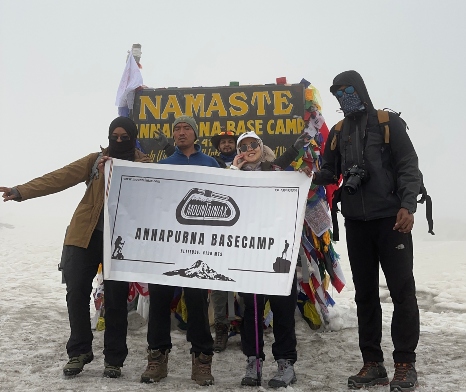
As you push higher through Bamboo, Dovan, and Deurali, the vegetation peels back and the trail narrows between rock walls. And then, on Day 7, you walk into the Annapurna Sanctuary itself — an arena of mountains so immense and so close that trekkers regularly describe it as surreal. That moment, standing at Annapurna Base Camp surrounded by a 360° wall of Himalayan giants at golden hour or sunrise, is one you’ll carry with you for the rest of your life.
This is the Annapurna Base Camp trek. This is why people come to Nepal.
Why Annapurna Base Camp is a Must-Do Trek
Among hundreds of Himalayan treks, the Annapurna Base Camp trek remains one of the world’s top-ranked adventures for its unmatched mix of scenery, culture, accessibility, and biodiversity. Surrounded by peaks like Annapurna I, Machapuchare, Hiunchuli, and Gangapurna, trekkers witness breathtaking sunrise views over glowing glaciers. The trail passes through authentic Gurung and Magar villages where local traditions, warm hospitality, and mountain culture remain beautifully preserved. Rated moderate in difficulty, the trek is challenging yet achievable for fit beginners without technical climbing skills. Inside the Annapurna Conservation Area, the journey also offers rich biodiversity, from rhododendron forests and bamboo groves to rare Himalayan wildlife and alpine meadows near the snowline.
Tea House Trekking on the Annapurna Base Camp Trek
The Annapurna Base Camp trek is a classic teahouse trek, where family-run lodges provide accommodation and meals throughout the journey. After long trekking days, you relax in cozy wooden lodges with hot meals like dal-bhat, momos, and ginger tea while meeting trekkers from around the world. Lower sections such as Ghandruk and Chhomrong offer comfortable stays with private rooms, hot showers, and Wi-Fi, while higher stops like Deurali, MBC, and ABC provide simpler twin-sharing lodges with shared facilities. Despite the basic setup at higher altitudes, the warm dining halls and mountain atmosphere create an unforgettable experience. Indian trekkers especially enjoy the familiar Nepali dal-bhat, a filling comfort meal with unlimited refills that becomes the perfect fuel for the trek.
An Unforgettable Adventure
Trekking to Annapurna Base Camp is a journey filled with diverse landscapes, cultural richness, and breathtaking mountain views. Whether it's walking through dense forests, crossing alpine meadows, or standing face-to-face with the towering Annapurna peaks, every step of the trek is a memory to cherish. This trek is perfect for those seeking a moderate challenge while immersing themselves in the stunning beauty and vibrant traditions of the Nepal Himalayas.
Best Time to Trek
Month-by-month weather, trail conditions and our verdict.
| Month | Weather | Trail Condition | Verdict |
|---|---|---|---|
| Jan–Feb | Cold (-5°C) | Snow at ABC, icy trail | Difficult |
| March | Mild (10–15°C) | Rhododendrons bloom | Excellent |
| April–May | Warm (15–20°C) | Best visibility | Best Season |
| June | Pre-monsoon | Rain starts, leeches | Avoid |
| Jul–Aug | Monsoon | Heavy rain, landslides | Avoid |
| September | Post-monsoon | Crystal clear skies | Excellent |
| Oct–Nov | Cool (8–12°C) | Stable weather, crowds | Best Season |
| December | Cold (2–5°C) | Quiet trail, some snow | Challenging |
Annapurna Base Camp Trek — Complete Information
Welcome to the complete planning guide for your Annapurna Base Camp trek — everything you need to know, in one place, written by a team that has guided this route hundreds of times.
This section covers the full Annapurna Base Camp trek itinerary day by day, so you know exactly what to expect at every stage. We cover the Annapurna Base Camp trek route in detail — every village, every altitude gain, every key viewpoint. We explain the Annapurna Base Camp trek difficulty honestly, so you can train specifically for what the trail demands. And we give you practical intel — permits, gear, food, altitude safety — so there are no nasty surprises once you’re on the trail.
The Annapurna Base Camp trek is one of Nepal’s most iconic experiences, and we want yours to go perfectly. Whether you’re a first-timer planning your first Himalayan adventure or an experienced trekker coming to knock this classic off your list, use this guide as your foundation.
Base Camp
Pokhara
Pickup
Pokhara (Lakeside)
Nearest Railway Station
Gorakhpur (India) / via Kathmandu
Nearest Airport
Pokhara International Airport
Temperature
Summers: 20° Max / 5° Min · Winters: 10° Max / -10° Min
Mobile Network
NTC/Ncell available till most tea-houses. Patchy beyond MBC and ABC.
Electricity
Available at most tea-houses with charging on payment. Solar/hydro powered — can be intermittent in winter.
Last ATM
Pokhara is the last reliable ATM. Carry sufficient Nepali Rupees for the trail.
Fitness & Training
ABC is moderate — a 6-week prep plan gets you trail-ready.
- Who Can Do This Trek
- Minimum age: 12 years
- Maximum age: 65 years (with doctor clearance)
- No prior trekking experience needed
- Healthy BMI; basic cardio fitness recommended
- Key Exercises
- Calf raises — for the Ulleri 3000 stairs
- Squats & lunges — for steep descents
- Core planks — for balance on rocky terrain
- Stair climbing — most important of all
- 6-Week Training Plan
- Week 1–2
- 30 min brisk walk daily • 3×20 squats • 10 min stair climbing
- Week 3–4
- 5 km jog or cycling 45 min • Stair climbs with 5 kg backpack • Lunges & calf raises
- Week 5–6
- 10–15 km hike weekends • Full backpack (8–10 kg) • Daily core workout
- When NOT to Trek
- • Heart conditions without doctor clearance
- • Recent surgery (within 3 months)
- • Severe asthma at altitude
- Not sure if you're fit enough?
Annapurna Base Camp Trek Difficulty
Let’s be straight with you about the Annapurna Base Camp trek difficulty: this is not a walk in the park. But it’s also not Everest Base Camp. With the right preparation, the vast majority of healthy adults — including complete beginners — successfully complete this trek every season.
The Annapurna Base Camp trek difficulty is officially rated Moderate. Here’s what that means in practice:
- You will walk 5–8 hours a day for 7 consecutive days of active trekking
- The biggest single challenge on the Annapurna Base Camp trek is Day 3 — the Ulleri staircase. Over 3,000 stone steps climbed in a single morning. Your calves will know about it.
- Altitude is a real factor. You cross the 3,000 m AMS risk threshold on Day 6 and reach 4,130 m on Day 7. The Annapurna Base Camp trek difficulty increases significantly above this point if you haven’t acclimatized properly.
- The trail is well-maintained and clearly marked throughout — no navigation skills required.
- There are no fixed ropes, no glacier crossings, no technical sections.
So when people ask us “Is the Annapurna Base Camp trek difficulty manageable for me?” — the honest answer is: if you can walk comfortably for 2 hours today, and you’re willing to train for 4–6 weeks, yes. Absolutely.
The Annapurna Base Camp trek difficulty is also heavily influenced by the season. Trekking in October or spring gives you firm, dry trails. Attempting the trek in June or July means muddy paths, leeches, and reduced visibility — the difficulty rating effectively goes up by one level.
What increases the difficulty:
- Not training beforehand (the most common mistake)
- Rushing the ascent — the Annapurna Base Camp trek is not a race
- Ignoring early AMS symptoms
- Carrying an oversized, overweight pack
What makes it easier:
- Booking an experienced guide (we provide one on every Annapurna Base Camp trek package)
- Using porter support — your guide carries navigation; a porter carries your bag
- 4–6 weeks of targeted training (see our plan below)
- Booking during spring or autumn
The Annapurna Base Camp trek difficulty should never put you off — it should motivate you to prepare properly. And when you’re standing at 4,130 m with Annapurna I filling your entire field of vision, every one of those training runs will feel worth it.
Trek Route & Altitude Profile — Detailed Overview
The Annapurna Base Camp trek route follows a well-established trail through the Annapurna Conservation Area, entering via the Modi Khola valley and penetrating deep into the Annapurna Sanctuary. Here’s the complete route with altitudes:
Gradual ascent profile reduces altitude sickness risk.
Detailed Itinerary
The standard Annapurna Base Camp trek itinerary runs 9 days from Pokhara and back. It’s been refined over decades of guiding experience to give you the best possible acclimatization profile while hitting every highlight the trail has to offer. Our Annapurna Base Camp trek itinerary includes the Poon Hill sunrise — one of the most spectacular mountain viewpoints in all of Nepal — which many shorter itineraries skip.
Day 1: Arrival in Pokhara
Your Annapurna Base Camp trek begins in Pokhara, Nepal’s beautiful lakeside city and the gateway to the Annapurna region. Most trekkers arrive by a short flight or tourist bus from Kathmandu. After reaching Pokhara, you’ll meet your trek guide and attend a detailed pre-trek briefing covering the route, teahouse stays, altitude awareness, packing essentials, and trekking guidelines. This session helps you prepare mentally and physically for the journey ahead. Spend the evening relaxing near Lakeside and get proper rest before the trek officially starts the next morning. Overnight stay in Pokhara hotel with dinner included.
- 🛬 Arrival · Briefing · Overnight in hotel
Day 2: Pokhara → Nayapul → Tikhedhunga
After breakfast, drive from Pokhara to Nayapul, the starting point of the Annapurna Base Camp trek. The scenic journey offers beautiful views of villages, terraced hills, and Himalayan peaks. From Nayapul, the trek begins with an easy walk through Birethanti and along the Modi Khola River. Cross suspension bridges, pass traditional villages, and follow stone-paved trails surrounded by green landscapes. Today’s trek is a gentle introduction to the Annapurna region, helping you adjust to the trail comfortably before the tougher days ahead. Reach Tikhedhunga by evening and relax at a local tea house. Meals included: breakfast, lunch, and dinner.
- 🚙 Drive: 1.5 hrs
- 🥾 Trek: 4–5 hrs
Day 3: Tikhedhunga → Ulleri → Ghorepani
Today’s trek is one of the most challenging yet rewarding parts of the Annapurna Base Camp route. The day begins with the famous Ulleri staircase, where you climb thousands of steep stone steps through traditional villages and lush forests. As you gain altitude, the trail passes through beautiful rhododendron, oak, and bamboo forests, especially vibrant during spring. After several hours of steady trekking, you arrive at Ghorepani, a scenic mountain village surrounded by Himalayan peaks. On clear evenings, stunning views of Annapurna South and Hiunchuli create an unforgettable atmosphere. Overnight stay at a tea house in Ghorepani with all meals included.
- 🥾 Trek: 6–7 hrs
- 📍 Alt: 2,860 m
Day 4: Ghorepani → Poon Hill → Tadapani
Wake up early for the unforgettable sunrise hike to Poon Hill, one of the highlights of the Annapurna Base Camp trek. The short climb rewards you with breathtaking panoramic views of Dhaulagiri, Annapurna, and the iconic Machapuchare peak glowing in the morning light. After returning to Ghorepani for breakfast, continue trekking through peaceful rhododendron and oak forests toward Tadapani. The trail offers a refreshing mix of nature, mountain scenery, and quiet forest paths. By evening, reach the beautiful village of Tadapani, known for its close-up Himalayan views and relaxing atmosphere. Overnight stay at a tea house with all meals included.
- 🌅 Sunrise at Poon Hill (3,210 m)
- 🥾 Trek: 6–7 hrs
Day 5: Tadapani → Chhomrong → Bamboo
Today’s trek takes you deeper into the Annapurna Sanctuary region. The trail descends through lush forests before reaching Chhomrong, a beautiful Gurung village known for its stunning mountain views of Machapuchare and Annapurna South. Chhomrong is a popular resting point with cozy tea houses and a lively trekking atmosphere. After lunch, cross the suspension bridge over the Chhomrong Khola and continue through forested trails toward Bamboo. Surrounded by dense greenery and river sounds, Bamboo offers a peaceful overnight stop in the heart of the valley. Overnight stay at a tea house with breakfast, lunch, and dinner included.
- 🥾 Trek: 6–7 hrs
- 📍 Alt: 2,310 m
Day 6: Bamboo → Dovan → Himalaya → Deurali
The trail continues deeper into the Annapurna Sanctuary, following the scenic Modi Khola valley through Dovan and Himalaya. Dense forests slowly give way to rocky alpine landscapes as the altitude increases. The air becomes noticeably thinner, encouraging a slower and steadier trekking pace for proper acclimatization. Surrounded by towering cliffs and dramatic Himalayan scenery, this section feels remote and adventurous. As you approach Deurali, the valley narrows and the mountains appear closer than ever, creating one of the most breathtaking parts of the Annapurna Base Camp trek. Overnight stay at a tea house in Deurali with breakfast, lunch, and dinner included.
- 🥾 Trek: 5–6 hrs
- 📍 Alt: 3,230 m
Day 7: Deurali → MBC → Annapurna Base Camp
The most awaited stage of the Annapurna Base Camp trek begins with a climb through dramatic mountain landscapes toward Machapuchare Base Camp (MBC). The valley opens into the breathtaking Annapurna Sanctuary, surrounded by towering snow-covered peaks and glaciers. After a short rest at MBC, continue the gradual ascent across rocky terrain to Annapurna Base Camp at 4,130 meters. Reaching ABC is an unforgettable experience, with panoramic views of Annapurna I, Machapuchare, Hiunchuli, and Gangapurna surrounding you from every direction. The peaceful atmosphere, glowing glaciers, and massive Himalayan walls make this one of the world’s most iconic trekking destinations. Overnight stay at Annapurna Base Camp with all meals included.
- 🥾 Trek: 6–7 hrs
- 📍 Max Alt: 4,130 m (13,550 ft)
Day 8: ABC → Bamboo → Jhinu Danda
Wake up early at Annapurna Base Camp and enjoy the unforgettable sunrise over the Himalayan peaks before beginning the descent. The trail retraces through Machapuchare Base Camp, Deurali, and forested valleys as the landscape gradually changes from snowy alpine terrain to lush greenery. Lower altitude brings easier breathing and a more relaxed pace on the way down. Instead of stopping at Bamboo, continue toward Jhinu Danda, a peaceful village famous for its natural hot springs beside the Modi Khola River. A warm soak after days of trekking is the perfect way to relax and recover. Overnight stay at Jhinu Danda with all meals included.
- 🥾 Trek: 7–8 hrs
- ♨️ Hot springs at Jhinu
Day 9: Jhinu → Nayapul → Pokhara
The final day of the Annapurna Base Camp trek brings a scenic descent through traditional villages, terraced fields, and lush hillsides toward Siwai, where the road journey begins. From there, drive back to Pokhara and return to the comfort of the lakeside city after days in the mountains. The stunning Annapurna range across Phewa Lake serves as a lasting reminder of the incredible journey you completed. After reaching Pokhara, enjoy a relaxing evening with good food, a hot shower, and time to celebrate your trekking achievement. Breakfast and lunch are included before the trek officially concludes in Pokhara.
- 🥾 Trek: 4 hrs
- 🚙 Drive: 2 hrs
Health & Altitude Safety
At 4,130 m, the Annapurna Base Camp trek reaches altitudes that require genuine respect. The good news: the Annapurna Base Camp trek itinerary we use is specifically designed with a gradual altitude gain profile that significantly reduces AMS (Acute Mountain Sickness) risk. The bad news: no itinerary eliminates risk entirely — AMS can affect anyone, regardless of age or fitness level, and the Annapurna Base Camp trek difficulty above 3,500 m is directly tied to how well your body acclimatizes.
- Early Warning Symptoms
- Headache
- Dizziness
- Difficulty sleeping
- Nausea / vomiting
- Loss of appetite
- Shortness of breath at rest
- ⚠ If 2+ symptoms appear, tell your guide immediately.
- Prevention Tips
- Walk slow, walk steady — no rushing
- Stay hydrated: 3–4 litres water daily
- Avoid alcohol above 3,000 m
- Diamox (acetazolamide) — consult your doctor
- Built-in acclimatization in our itinerary
- Our Safety Protocol
- Oximeter carried by guide (daily SpO₂ checks)
- First aid kit on every trek
- Emergency helicopter evacuation contacts
- Nearest hospital: Pokhara (3–4 hrs from trail)
- Medical Evacuation
- Travel insurance covering helicopter rescue up to ₹10 lakh is mandatory.
- We assist with evacuation coordination 24/7.
Our guides are trained in Wilderness First Aid and carry emergency equipment on every trek.
Things to Carry
A well-packed bag makes for a smooth trek. Here’s our recommended checklist.
- Basic Gears
- Backpack (50–60 L)
- Trekking Shoes (high ankle, waterproof)
- Trekking Pole
- LED Torch / Headlamp
- One Water Bottle (one litre)
- Lunch Box
- Basic Medications (or prescribed if any)
- Clothes
- Trekking Jacket (down/insulated)
- Warm Layers (fleece)
- Two trek pants
- Full sleeve dry-fit T-shirts
- Thermals (1–2 pairs)
- Accessories
- Sunglasses (UV protection)
- Sunscreen Lotion (SPF 50/70)
- Lip Balm (SPF 30)
- Synthetic hand gloves
- Woolen Cap
- Three pairs of Socks
- Raincoat / Poncho is a must
- Others & Documents
- Daypack (Recommended) for summit Day
- Plastic cover (for wet clothes in winters and rainy season)
- Passport (Valid for 6+ months)
- Nepal visa & passport-size photos
- Travel insurance copy (recommended)
Inclusion & Exclusion
Complete cost breakdown — know exactly what’s covered in your Annapurna Base Camp trek package.
Inclusions
- Airport / hotel pickup & drop in Pokhara.
- Accommodation in Pokhara (twin sharing) on arrival and departure day.
- All meals (Breakfast, Lunch, Dinner) during the trek at tea-houses.
- Tea-house / lodge accommodation throughout the trek on twin sharing basis.
- Professional English-speaking trek leader and assistant guide(s).
- Porter support (1 porter for every 2 trekkers, up to 20 kg combined).
- ACAP (Annapurna Conservation Area Permit) and TIMS card.
- First-aid kit, oximeter and basic medical supplies.
- All applicable government taxes and service charges.
Exclusions
- International airfare and Nepal entry visa fees.
- Personal expenses like tips, personal medicines, phone calls, hot showers, charging etc.
- Bottled / boiled water and hot/cold beverages on the trek.
- Travel insurance (mandatory — covering high-altitude trekking up to 5,000 m).
- Any cost or services not mentioned in the Inclusions.
- Cost arising due to unforeseen incidents like bad weather, medical evacuation, road blocks, helicopter rescue etc.
- Extra porter on personal request — can be arranged at additional cost.
Cancellation & Refund Policy
Cancellation Policy
We understand that plans can change. If you need to cancel, reduce, or amend a guaranteed reservation, please do so by 12 noon, 15 days prior to arrival to avoid cancellation charges. Any cancellation made within 15 days of arrival will be 100% non-refundable. Bookings made under non-cancellable or non-amendable packages or rates cannot be canceled or amended, and the full amount of the advance paid will be treated as the cancellation fee. The same terms apply if guests do not show up.
For all bookings other than non-cancellable ones, if the guest does not show up, the complete booking will be non-refundable. If the guest chooses to check out early, one night’s room rate, including taxes, will be charged. No cancellations will be accepted over the phone or via WhatsApp message. Please reply to the email confirmation you received at the time of booking to request a cancellation.
No refunds will be provided in case of problems arising due to government orders, harsh weather conditions, protests, landslides, or other unforeseen circumstances. In such cases, we usually have a backup plan ready and will proceed with that. Sometimes, we may have to cancel activities mentioned in the itinerary due to circumstances beyond our control.
If a trek is called off at the last moment due to natural calamities or unforeseen circumstances (such as rain, snowfall, earthquake, landslides, strikes, or bandhs), participants will be provided with a travel voucher for the same amount. This voucher can be used within 365 days of the issuance date for any package of equal value, subject to availability.
If a trek or trip has to be aborted midway due to natural calamities or unforeseen circumstances, no refund will be provided. Mountainiax will not bear any extra expenses due to such natural calamities or unforeseen circumstances.
Refund Policy
The following refund shall be payable to the user in case of valid cancellation as per the guidelines:
Note: The above-mentioned refunds are subjected to deductions for any expenses that may have been incurred for hotel booking or transport etc. Refunds are applicable on the total cost and not on the advance amount.
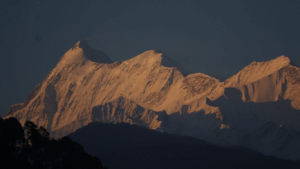
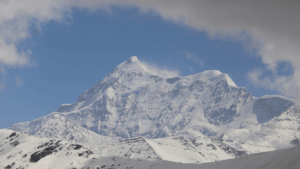
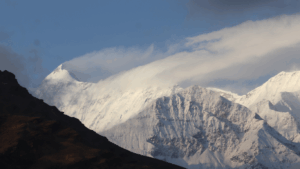
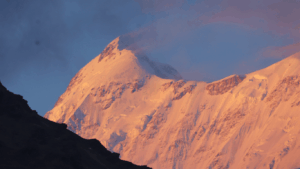
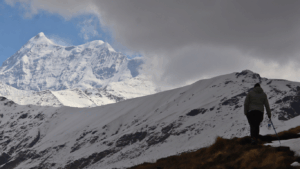
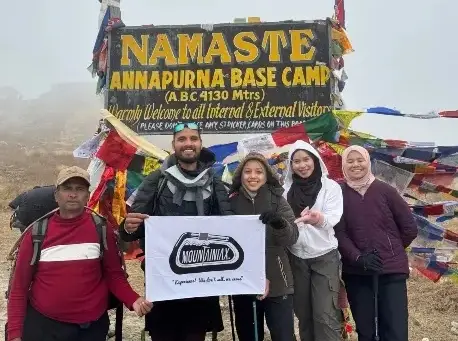
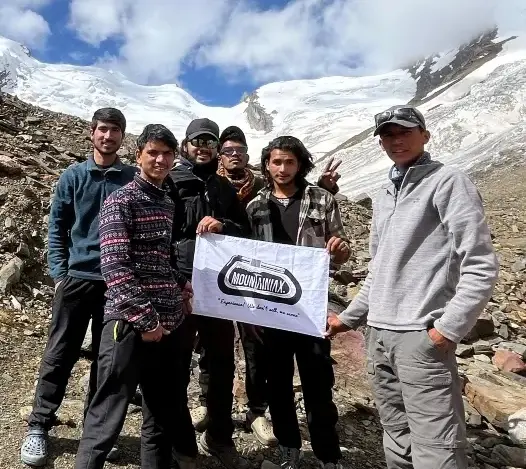
Annapurna Base Camp Trek Gallery
A glimpse of the beauty that awaits you on the trail.
FAQ's
What is the difficulty level of the Annapurna Base Camp Trek?
The ABC trek is rated Moderate. While there are no technical climbing sections, the trek involves long walking days (5–8 hours), steep ascents (notably the Ulleri stairs), and altitudes above 4,000 m. Reasonable fitness with regular cardio training for 4–6 weeks before the trek is recommended.
What is the best time to trek to Annapurna Base Camp?
The best months are March to May (spring — rhododendrons in bloom, clear views) and September to November (post-monsoon — crystal clear skies and stable weather). December to February is also possible but cold with snow at higher altitudes. June–August (monsoon) is best avoided due to leeches, rain, landslides and obstructed views.
How high is Annapurna Base Camp?
Annapurna Base Camp sits at 4,130 metres (13,550 ft). It lies within the Annapurna Sanctuary — a glacial basin surrounded by some of the highest peaks of the Annapurna Massif including Annapurna I (8,091 m).
Is altitude sickness a concern on the ABC trek?
AMS is possible above 3,000 m. The ABC itinerary has a gradual gain profile with built-in acclimatization. Stay hydrated, walk at your own pace, avoid alcohol, and inform your guide immediately if you feel symptoms like persistent headache, nausea or breathlessness.
What kind of accommodation is available during the trek?
ABC is a classic ‘tea-house’ trek — you stay in family-run lodges along the trail. Rooms are basic with twin beds, shared bathrooms (mostly squat), and simple bedding. Hot showers and Wi-Fi are usually paid extras. In Pokhara, you stay in standard tourist-class hotels.
What kind of food is served during the trek?
Tea-houses serve a wide variety of vegetarian and non-vegetarian food including the staple dal-bhat (rice, lentils, vegetables — unlimited refills), noodles, momos, fried rice, pasta, pancakes, eggs, soups and tea/coffee. Menus are surprisingly extensive even at higher altitudes.
Do I need a permit for the Annapurna Base Camp Trek?
Yes. You need two permits — the ACAP (Annapurna Conservation Area Permit) and the TIMS (Trekkers’ Information Management System) card. Both are arranged by Mountainiax and included in the package cost.
Is mobile network and electricity available during the trek?
NTC and Ncell SIMs work at most tea-houses up to Deurali; signal becomes patchy at MBC and ABC. Electricity for charging is available at most lodges (often paid per device per hour). Carry a power bank for backup.
Is travel insurance required?
Yes — travel insurance is strongly recommended (and effectively mandatory). It must cover trekking up to 5,000 m, medical evacuation, and helicopter rescue. Please share a copy with our team before the trek begins.
Where can I store my extra luggage during the trek?
You can store extra luggage at your hotel in Pokhara free of charge for the duration of the trek. Carry only what you need on the trail; porters carry up to 20 kg combined for two trekkers.
Is the Annapurna Base Camp trek suitable for beginners?
Yes — ABC is one of the most popular treks for first-time high-altitude trekkers. With proper preparation (4–6 weeks of cardio), the right gear, and the support of our experienced guides, beginners regularly complete this trek successfully.