
- Uttarakhand · Garhwal Himalayas
Kedarkantha Trek 2026
- The Queen of Winter Treks — snow, summit, and a sunrise you never forget
- Book Now — ₹6,599/- per person onwards
- Everything a first-time trekker needs before walking into India's most-loved winter summit — mythology, itinerary, cost, packing, fitness, and the honest details no one tells you.
- 4.8/5 Rating
- 1000+ Trekkers
- Certified Guides
- 24/7 Support
12,500 ft
Max Elevation Summit
20 KM
Distance Total trek
4N / 5D
Duration Kedarkantha
EASY–MODERATE
Difficulty Beginner friendly
DEC–APRIL
Best Months Winter trek
Up to 20
Group Size Small batches
- About the trek
Why Kedarkantha Is India's Most-Loved Winter Trek
Every winter, thousands of first-time trekkers ask the same question: “Which trek should I do first?” Nine times out of ten, the answer is Kedarkantha. Few treks combine reliable snowfall, an achievable trail, and a summit view that rivals treks twice as difficult.
Tucked inside Govind Pashu Vihar National Park in Uttarakhand’s Uttarkashi district, Kedarkantha rises to 12,500 ft. What makes it special isn’t the altitude — it’s the consistency. From late November to early April, it holds snow reliably, earning it the nickname “Queen of Winter Treks.”
Whether you’re a working professional with five days off, a college student on winter break, or a parent planning a first Himalayan experience for your kid — Kedarkantha is built for exactly this. This guide covers mythology, trail, difficulty, cost, training, and the sixty small questions you’re probably too shy to Google.
- Overview
Where Legend Meets a Snow Ridgeline
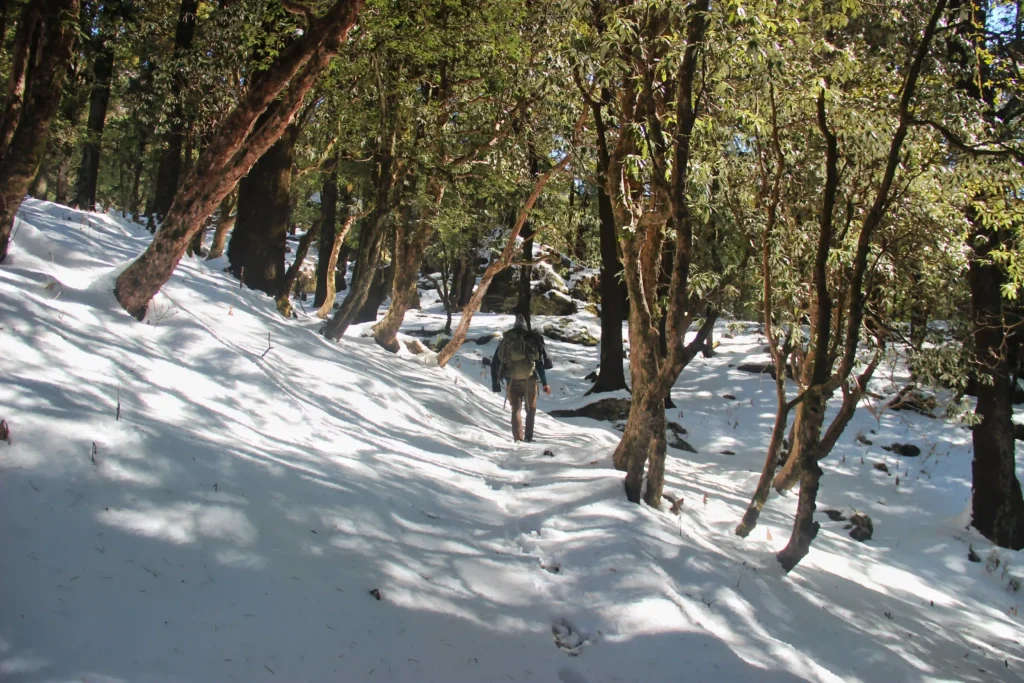
The trek begins in Sankri, a small Garhwali village that also serves as base camp for Har Ki Dun and Bali Pass. The trail climbs through pine, oak, and rhododendron forests, past terraced fields, into wide meadows and finally the snow-covered summit ridge.
“Kedar” is one of Shiva’s names; “Kantha” means throat. Local legend says Shiva meditated at this peak while hiding from the Pandavas before moving on to what is now Kedarnath. Standing on the summit at sunrise, surrounded by an unbroken 360° wall of snow peaks, does feel like standing somewhere outside ordinary time.
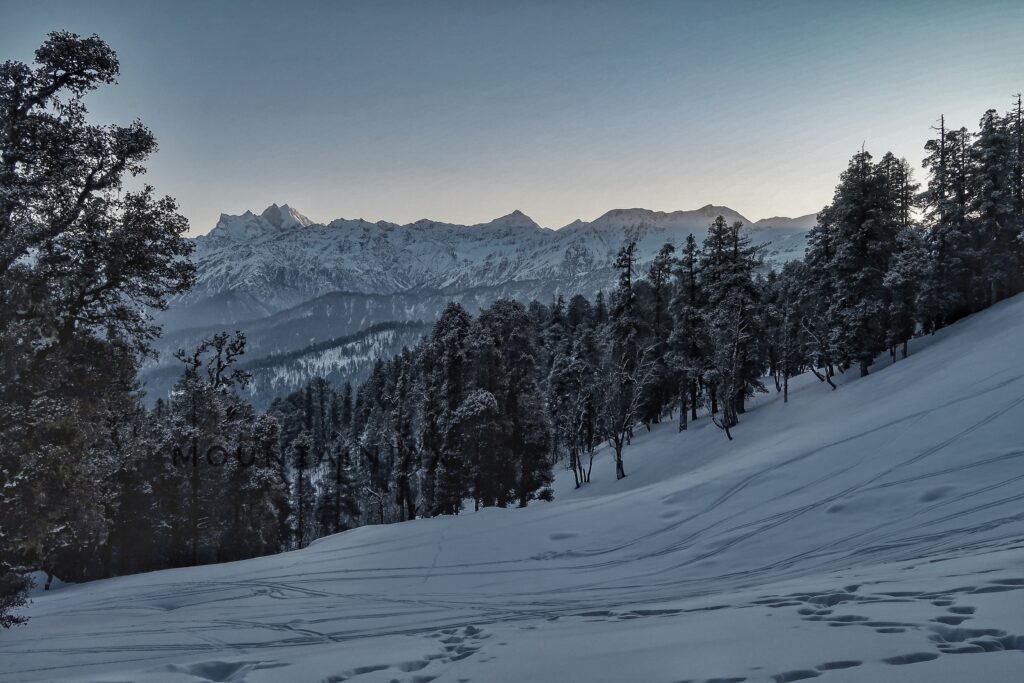
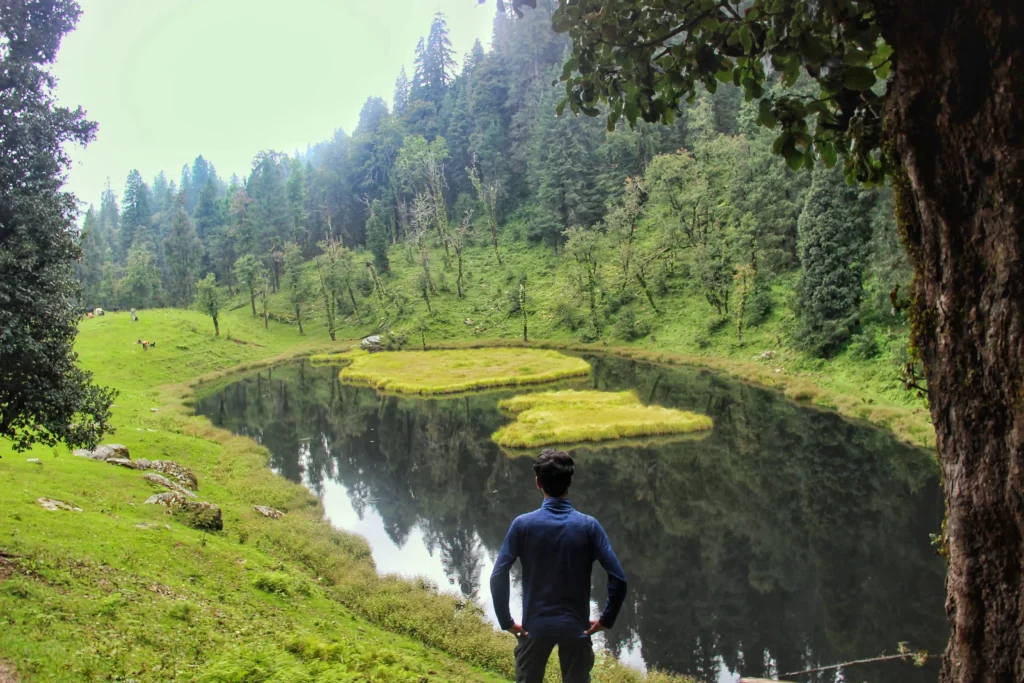
Along the way you’ll pass Juda Ka Talab, a glacial lake that freezes into a perfect white disc in winter — said to be formed from a droplet that fell from Shiva’s matted hair. From the summit: Swargarohini, Bandarpunch, Black Peak (Kalanag), and glimpses of the Gangotri and Yamunotri ranges.
- Common confusion
Kedarkantha vs Kedarnath — Two Different Places
One of the most searched questions — the names sound almost identical and both link to Shiva. But they are two completely different places, roughly 370 km apart.
- Kedarnath
Pilgrimage temple
One of the twelve Jyotirlingas and a major Chota Char Dham pilgrimage, in Rudraprayag district. Reached via religious trek or helicopter to a temple at over 11,700 ft.
- Kedarkantha
Trekking peak
A trekking peak (not a temple) in Uttarkashi district inside Govind Pashu Vihar National Park — popular as a winter snow trek for adventure travellers rather than pilgrims.
The only link is mythological. If you want a pilgrimage, choose Kedarnath. If you want a snow trek with Himalayan views, choose Kedarkantha. You cannot combine them in one itinerary.
- What makes it special
7 Reasons Trekkers Keep Coming Back
01. Reliable, deep snow
North-facing slopes hold 3–6 ft of snow from late Nov through March — no depending on a good snowfall year.
02. Achievable summit
12,500 ft with a well-defined trail and only 20 km total — a Himalayan summit a beginner can realistically reach.
03. Campsite variety
Forest clearing, frozen lake, open base camp — three distinct campsites give the trek visual variety.
04. Short duration, big reward
A 4N/5D window from Dehradun — no burning ten days of annual leave for a full summit experience.
05. Wildlife sanctuary setting
Govind Pashu Vihar — home to Himalayan monal, musk deer, and (rarely) snow leopard territory.
06. 360° summit panorama
Swargarohini, Bandarpunch, Black Peak, Gangotri and Yamunotri ranges from a single spot.
07. A proven gateway trek
A large share of India’s serious trekkers — now on EBC, Kili, Himalayan peaks — did Kedarkantha first.
- Realistic breakdown
Kedarkantha Trek Difficulty — Day by Day
Mountainiax rates Kedarkantha as Easy to Moderate. Here’s what that actually means, day by day — no vague labels.
- Day 1
Dehradun → Sankri
Zero physical exertion — an 8-hour drive.
- Day 2
Sankri → Juda Ka Talab (4 km)
Gentle, steady forest ascent. Comfortable for most beginners; altitude can leave you a little breathless.
- Day 3
Juda Ka Talab → Base Camp (2–3 km)
Short but steeper. Snow depth starts to matter — sometimes knee-deep.
- Day 4
Summit day (~6 km round-trip)
Hardest day. 3 AM start, steep push above the treeline in freezing temps, then knee-jarring descent.
- Day 5
Descent + drive back
Physically easy but long — 6 km descent plus an 8-hour drive.
Bottom line: If you can comfortably walk 8–10 km at a steady pace, climb a few flights of stairs, and push through one genuinely tough summit day — you will be fine. No prior trekking or mountaineering experience is required. No ropes, no crampons for glacier travel, no ice axes are used on this route.
- When to go
Best Time to Visit — Month by Month
Late Nov
First snowfall, trail partly visible, crisp clear skies, fewer crowds
Best for: Trekkers wanting snow + smaller groups
December
Snow deepens fast, Christmas/New Year special batches, festive camp atmosphere
Best for: Groups, families wanting a celebratory trek
January
Peak winter — heaviest, driest, powder-like snow (4–6 ft), coldest nights (-10 to -15°C)
Best for: Serious snow-lovers, photographers
February
Still deep snow, slightly milder days, excellent visibility
Best for: Best all-round balance of snow and comfort
March
Snow softens at lower stretches, rhododendrons bloom near Sankri, longer daylight
Best for: Snow + early spring colour
April
Last reliable snow near summit only, trail mostly clear, warmer days
Best for: Milder temperatures over deep snow
May – Oct
Monsoon and summer — no snow, leeches, slippery paths, reduced visibility
Best for: Not recommended for the winter experience
Quick answer: The best time for the Kedarkantha trek is December to March, with January and February offering the deepest snow, and December and March offering the best balance of snow and milder weather.
- Getting there
How to Reach Sankri (Base Camp)
By Air
Nearest airport: Jolly Grant Airport, Dehradun — roughly 210 km / 9–10 hr drive from Sankri. Regular flights from Delhi and seasonal flights to a few other cities.
By Train
Dehradun Railway Station is the nearest major station and the common pickup point, well connected to Delhi (Nizamuddin/Old Delhi) with overnight options. Rishikesh Railway Station is a secondary option.
By Road
From Delhi it’s ~460 km via Dehradun. Best broken into Delhi → Dehradun (6–7 hr) and Dehradun → Sankri (8–9 hr). Passes Mussoorie, Nainbagh, Damta, Naugaon, Purola, Mori — along the Yamuna, Tons and Kamal Ganga rivers.
With Mountainiax: All packages include transport from Dehradun (or Rishikesh, depending on batch) to Sankri and back — you only need to reach the pickup point on Day 1 morning.
- Day-wise plan
Detailed Itinerary — 4 Nights, 5 Days
1
DAY
- Dehradun to Sankri
- Distance: 199 km (Drive) Duration: 8 Hours
- Altitude: Dehradun – 477 meters, Sankri – 1920 meters
The trek ‘begins’ the moment the vehicle leaves Dehradun. The route climbs through Mussoorie, descends into the Yamuna valley, then runs alongside the Tons and Kamal Ganga rivers. Watch for the Supin–Tons confluence at Netwar. Overnight homestay near Sankri’s main market — your last night with electricity, hot showers and phone signal.
2
DAY
- Sankri to Juda ka Talab
- Distance: 4 km (Trek)
- Time: 5 hours
After breakfast in Sankri, the trek to Juda Ka Talab begins, passing through the quaint village of Saud situated along the ridge of the Tons River valley. The trail soon diverges into a forested path where thick pine and maple trees shield trekkers from the sun. This enchanting route leads up to Juda Ka Talab, where tents are pitched beside a stunningly frozen lake, surrounded by snow and dense pine forests. Enjoy dinner under a starlit sky at this breathtaking high-altitude location.
3
DAY
- Trek to Kedarkantha Base camp
- Distance: 2 km (Trek)
- Time: 2 Hours
Trek from base camp to the legendary Juda Ka Talab — a sacred glacial lake surrounded by densely forested pine trees, offering breathToday’s trek is more challenging, with a steeper ascent. Departing Juda Ka Talab, the path splits; take the left fork which climbs through dense pine forests. Along the way, encounter shelters transformed into makeshift shops by locals. Reaching the Base Camp unveils stunning views of the Kedarkantha summit. Prepare for an early night, as the ascent to the summit begins at 3 A.M.taking views in any weather condition. This lake is steeped in mythology, believed to have been created from a droplet that fell from Lord Shiva’s hair bun. In winter, the lake freezes completely, creating an enchanting mirror-like expanse. Camp overnight by the lakeside.
4
DAY
- Kedarkantha Summit and return to Base Camp
- Distance: 6 km (Trek)
- Time: 6 Hours
An early start leads to a challenging two-hour hike to a tea point where the tree line ends, opening up to spectacular Himalayan vistas. The summit of Kedarkantha is a haven for snow enthusiasts and photographers alike, featuring small temples dedicated to Lord Shiva and Lord Ganesha. Spend time absorbing the panoramic views of the Himalayas, including the prominent peaks of Swargarohini, Black Peak, Bandarpoonch, Gangotri, and Yamunotri ranges. Return to Base Camp for a well-deserved rest under the cold night sky.
5
DAY
- Return to Sankri and journey back to Dehradun
- Distance: 6 km (Trek) back to Sankri, 199 km (Drive) to Dehradun
- Time: 3-4 Hours trek, 8 Hours drive
The final leg of the trek leads back to Sankri via a different route, passing through the campsite at Hargaon. The return drive to Dehradun travels through picturesque settings, transitioning from serene mountain landscapes back into the lively urban environment. Reflect on a memorable adventure as you approach Dehradun, bringing the journey to a close.
- Trail details
Route & Elevation Profile
| Segment | Distance | Elevation |
|---|---|---|
| Sankri | Start | 1,920 m / 6,300 ft |
| Juda Ka Talab | 4 km from Sankri | 2,700–2,750 m |
| Kedarkantha Base Camp | 2–3 km from Juda Ka Talab | 3,000–3,100 m |
| Kedarkantha Summit | 3 km from Base Camp | 3,819–3,849 m / ~12,500 ft |
Total trekking distance is approximately 20 km, spread across four trekking days with one travel day at each end.
- Sanctuary setting
Flora & Fauna of Govind Pashu Vihar
Lower forests
Himalayan pine, deodar, oak and maple, with rhododendron thickets that turn deep red in late March and April.
Alpine meadows
Above the treeline the landscape shifts to open bugyals in non-winter months, buried under snow through the trekking season.
Wildlife
Officially home to snow leopard, Himalayan brown bear, musk deer and the Himalayan monal (state bird). Winter trekkers spot tracks more than animals themselves.
None of this wildlife poses a realistic threat to trekking groups moving with guides on the established trail — but it adds an ecological dimension beyond just the summit views.
- Get ready
Fitness & Training Guide
- 4–6 weeks before
- Cardio: 30–40 min brisk walking, jogging, or cycling 4–5 times a week — build pace and distance gradually.
- Strength: Bodyweight squats, lunges, and stair climbing (2–3 sets × 15–20 reps) twice a week for leg and knee strength.
- Stamina: One longer session per week — 6–8 km walk with a loaded 5–8 kg daypack.
- 4–6 weeks before
- Break in your shoes properly — non-negotiable. Blisters on Day 2 ruin the whole trek.
- Add short practice hikes on any nearby incline you can find.
- Light stretching + basic breathing exercises to help altitude adjustment.
What you don’t need: prior mountaineering experience, technical climbing skills, or gym-level fitness. What you do need: the discipline to actually do the 4–6 weeks of prep rather than showing up untrained and hoping the trek “eases you in.” It won’t — Day 4 doesn’t wait for anyone.
- Safety
Altitude Sickness (AMS) & Safety on Kedarkantha
At ~3,850 m (12,500 ft), Kedarkantha sits in the zone where mild AMS is possible — but the gradual ascent profile makes severe cases uncommon compared to higher treks.
Common mild symptoms
Headache, mild nausea, fatigue greater than expected for the effort, disturbed sleep at higher camps.
How we manage it
Gradual altitude gain over four days.
Certified guides monitor everyone on summit day, with basic first-aid and oxygen support.
Hydration + pacing briefing before the trek begins.
Anyone with worsening AMS is escorted down — guide’s decision is final.
What you can do
Stay hydrated (3–4 L/day), avoid alcohol before and during the trek, eat properly even if appetite dips, and speak up honestly to your guide rather than pushing through silently.
- On the trek
Food & Accommodation
Accommodation
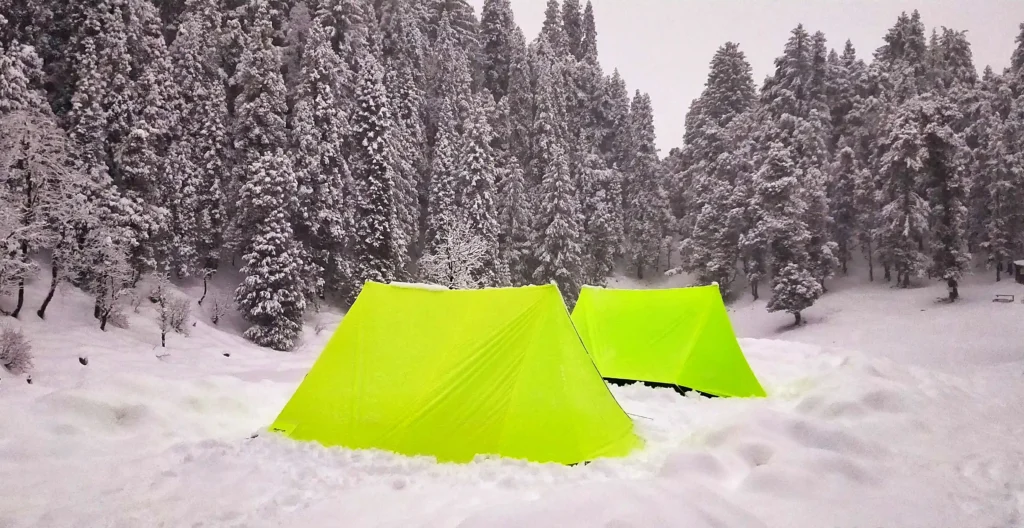
Night 1 in a Sankri homestay — proper beds, electricity, hot water. From Day 2 onward, high-quality dome/alpine tents on triple or quad sharing, with insulated sleeping bags and mats.
Food
All vegetarian, freshly cooked at camp — high-carb and warming. Hot khichdi, dal-rice, sabzi-roti, soup, sweet before bed. Paratha/poha/upma with tea for breakfast. Packed snacks on summit day.
Toilets
Basic eco-friendly toilet tents at each campsite. Genuinely one of the more “civilised” winter treks in terms of facilities — but still winter camping in the Himalayas.
- What to bring
Complete Packing List — And Why Each Item Matters
A generic list tells you what to bring. This tells you why it matters for this specific trek.
- Basic Gear
- Backpack (50–60L) — Large enough for five days of winter gear, with a rain cover.
- Trekking shoes — Ankle-high, waterproof, good grip. Non-negotiable on snow.
- Trekking pole — Reduces knee strain significantly on the steep, snowy descent.
- LED torch / headlamp — Essential for the 3 AM summit start — hands-free is far safer.
- Water bottle (1 L) — Carry inside your jacket on summit day so it doesn't freeze.
- Basic medication — Prescribed medicines + paracetamol and altitude-relevant tablets if advised.
- Clothing
- Trekking jacket — Windproof, waterproof outer shell. Main defence against wind chill.
- Fleece inner layers — Layering beats one thick jacket — add or remove as exertion changes.
- Two trek pants — Quick-dry. Not denim — jeans get wet, stay wet, become dangerous.
- Full-sleeve dry-fit t-shirts — Base layer that wicks sweat rather than trapping moisture.
- Thermals — Worn under everything on summit day and for sleeping at high camps.
- Accessories
- Sunglasses (UV) — Snow glare at altitude can cause temporary snow blindness.
- Sunscreen SPF 50/70 + lip balm SPF 30 — UV exposure is far more intense on reflective snow.
- Synthetic gloves + woolen cap — Extremities lose heat fastest — frostbite risk is real on summit morning.
- Three pairs of socks — Wet socks are the single most common cause of trek-ending blisters.
- Raincoat / poncho — A must. Mountain weather changes fast and without warning.
- Documents & Misc
- Daypack (15–20L) — For summit day — you don't carry the full bag up.
- Plastic covers for wet clothes — Keeps dry gear dry when packing damp items.
- Photo ID (original + copy) — Required for the forest permit checkpoint.
Kedarkantha Trek Cost 2026 — What You're Actually Paying For
- Choose Your Plan
- Starting from
per person · 4N / 5D · Rishikesh to Rishikesh · dorm/triple sharing
Prices scale with accommodation type, group size, and add-ons like porter/mule support.
- What's Included
- • Transport between pickup city and Sankri (both ways)
- • All meals from Day 1 dinner to Day 5 breakfast
- • Quad-sharing tented + homestay accommodation
- • Certified trek guide and support staff
- • Camping equipment (tents, sleeping bags, mats)
- • Forest entry permits, tolls, and applicable taxes
- What's Excluded
- • Personal expenses (tips, medication, phone/data)
- • Transport outside the pickup-drop route
- • Costs from weather delays or medical evacuation
- • Porter/mule for personal luggage (~₹500/day per bag under 12 kg, on request)
Why prices vary between operators: group size (smaller = more per head), accommodation grade (dorm vs. private room in Sankri), guide-to-trekker ratio, and equipment quality. A significantly cheaper package than the market average is worth questioning — ask about guide certification, group size, and safety equipment before booking on price alone.
Kedarkantha vs Other Popular Winter Treks
| Trek | Duration | Max Altitude | Difficulty | Best For |
|---|---|---|---|---|
|
Kedarkantha FEATURED
|
4N/5D | 12,500 ft | Easy–Moderate | First-time winter trekkers wanting summit + deep snow |
| Brahmatal | 5N/6D | 12,250 ft | Easy–Moderate | Lake views (Bekaltal, Brahmatal) alongside a summit |
| Dayara Bugyal | 4N/5D | 11,800 ft | Easy | Wide open meadows, gentler trail, good for families |
| Chopta–Chandrashila | 3N/4D | 13,100 ft | Easy–Moderate | Shortest itinerary, temple + summit combo |
| Nag Tibba | 1N/2D | 9,900 ft | Easy | Best for a quick weekend trek near Dehradun |
- Compare
Quick takeaway: Among India’s popular winter treks, Kedarkantha stands out for reliable deep snow, a genuine 360° summit panorama, and a difficulty accessible to first-timers — making it the most recommended starter Himalayan winter trek.
- Suitability
Who Can Do the Kedarkantha Trek?
Age range
Generally 8 to 60, subject to basic fitness and health check. Younger children and older adults case-by-case with doctor’s clearance.
Fitness level
Comfortably walking 8–10 km without significant strain. You don’t need gym-level fitness — you do need baseline cardiovascular health.
Medical conditions
Trekkers with heart conditions, uncontrolled hypertension, asthma or chronic respiratory/cardiac issues must consult a doctor and disclose at booking — not on Day 3 at 3,000 m.
Solo & first-time trekkers
Very well suited. Structured groups of ~20 with certified guides managing pace — one of the friendliest treks in India for a first solo trip.
Solo female trekkers
A well-established route for solo women, with mixed groups, female-inclusive homestay arrangements, and guides briefed on group welfare.
- Important
Cancellation & Refund Policy
Cancellation Policy
We understand that plans can change. If you need to cancel, reduce, or amend a guaranteed reservation, please do so by 12 noon, 15 days prior to arrival to avoid cancellation charges. Any cancellation made within 15 days of arrival will be 100% non-refundable.
No cancellations will be accepted over the phone or via WhatsApp message. Please reply to the email confirmation you received at the time of booking to request a cancellation.
No refunds will be provided in case of problems arising due to government orders, harsh weather conditions, protests, landslides, or other unforeseen circumstances. If a trek is called off at the last moment due to natural calamities, participants will be provided with a travel voucher for the same amount, valid within 365 days for any package of equal value.
Refund Policy
| Cancellation Timing | Refund |
|---|---|
| Up to 21 days prior to departure | 70% refund |
| Between 21 to 14 days prior | 50% refund |
| Between 14 to 10 days prior | 30% refund |
| Less than 10 days of departure | No refund (can transfer trek to someone else) |
Note: Refunds are subjected to deductions for any expenses incurred for hotel booking or transport. Refunds are applicable on the total cost and not on the advance amount.
- Responsibility
Sustainable & Responsible Trekking
Because the trek runs entirely inside a protected wildlife sanctuary, responsible trekking isn’t optional courtesy — it directly affects whether this trail stays open and healthy for the next generation of trekkers.
Carry back all non-biodegradable waste — wrappers, bottles, packaging don’t get left at campsites (it resurfaces every spring).
Stick to the marked trail — cutting across meadows damages fragile alpine vegetation that takes years to recover.
Use designated toilet tents rather than spots near water sources like Juda Ka Talab.
Minimise plastic — carry a reusable bottle rather than multiple single-use ones.
Respect wildlife and local culture — Sankri is an inhabited community, not a backdrop. Support village homestays and shops where you can.
- Why Mountainiax
Trusted by Thousands of Trekkers
- 🧑🤝🧑
PROFESSIONAL TEAM
If you book your trek with us you'll be going with a team of our highly skilled professional trainers. Client safety is our first priority.
- 📝
Certified Organisation
We are registered with Uttarakhand Tourism Department and MSME.
- ⭐
4.9★ on Google & TripAdvisor
Trusted by 1000+ trekkers across 100+ successful Kedarkantha batches. Consistently rated best-in-class for safety and experience.
- 🗺️
Traveller's Choice (TRIPADVISOR)
Awarded as Travellers Choice by Tripadvisor for 2021 & 2022. With 140+ positive reviews we are ranked amongst Top 5 Outdoor Company in Dehradun.
- 📞
CUSTOMIZED TREK
Are you exhausted with the same old trekking packages? Mountainiax offers comfort for travelers to design and arrange your plans independently.
- 👨👩👧
AWAY FROM THE CROWD
The mission of our committee is to explore the unmapped trails in different regions and make our customers visit these offbeat destinations to enjoy in solitude.
- Visual Journey
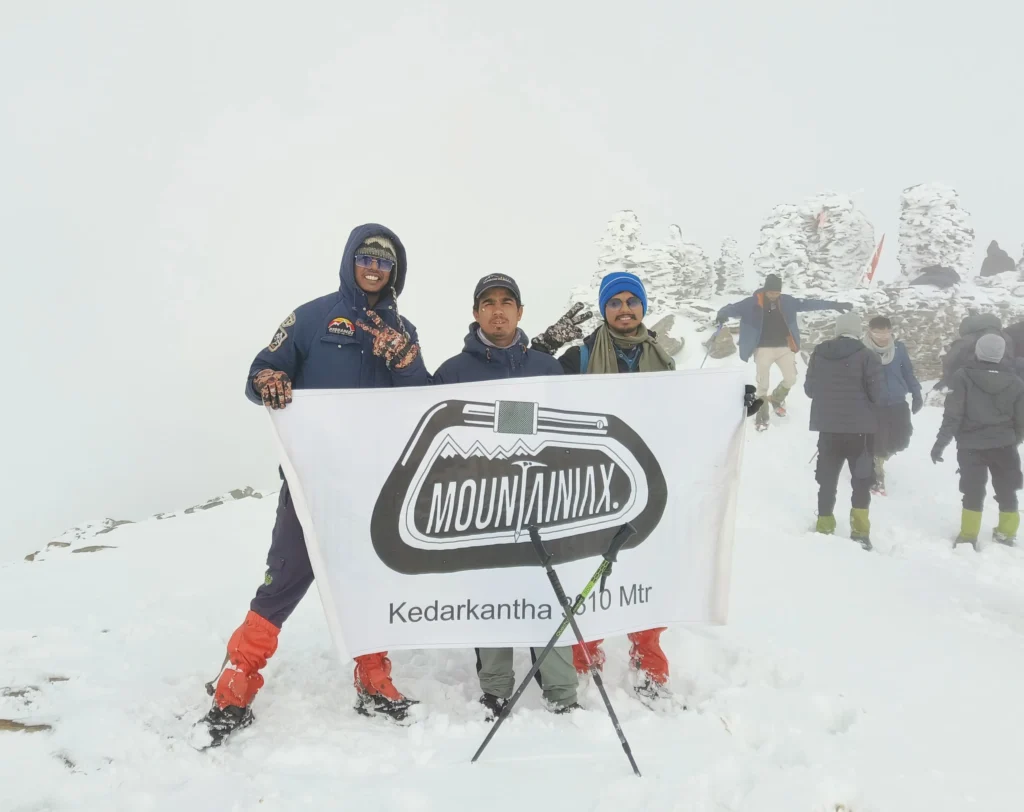
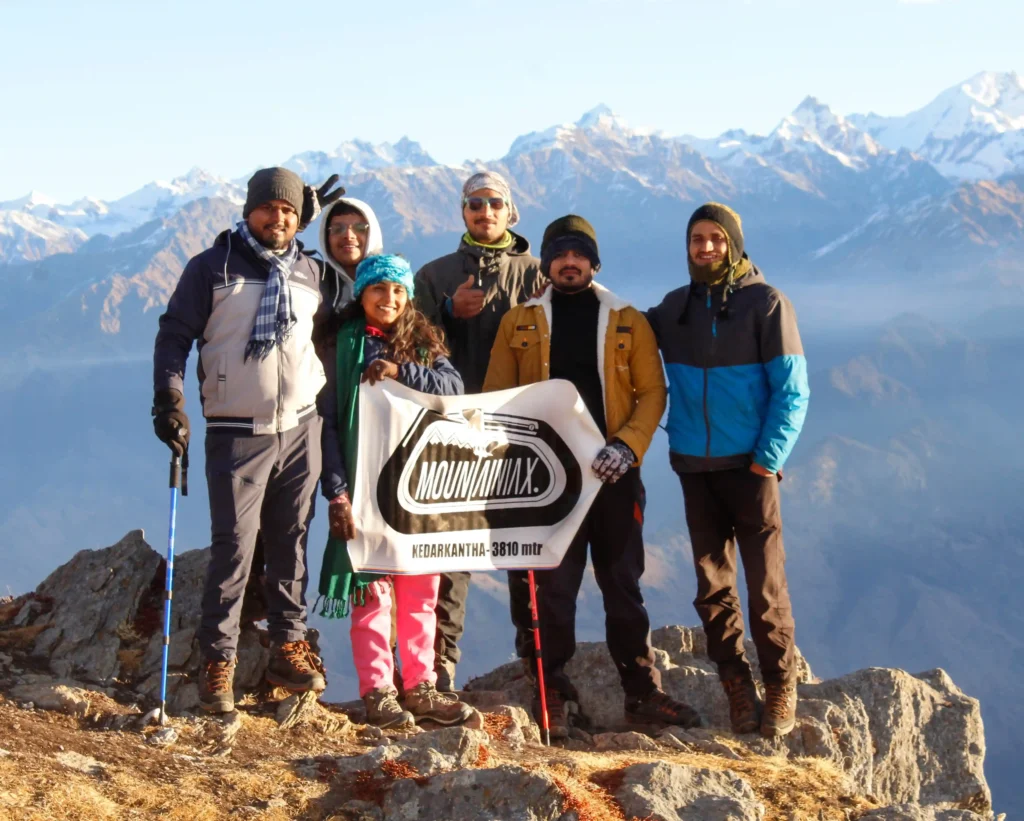
Kedarkantha Trek Gallery
- Need Help?
Frequently Asked Questions
What is the difficulty level of Kedarkantha Trek?
What is the best time for Kedarkantha Trek?
Is mobile network available during the trek?
Is electricity available during the trek?
Where can I store my extra luggage during the trek?
Is Kedarkantha Trek suitable for someone with no prior trekking experience?
What is the pickup point and time?
How to book the Kedarkantha Trek with Mountainiax?
- Ready to Trek?
Book Your Free Trek
Consultation Today
With Free Itinerary Planning Session — Limited Slots Available!
- +91-6398937502 | +91-7887449236