Day 1: Dehradun to Gangotri
- Distance: 250 km
- Drive Time: 10-12 hours
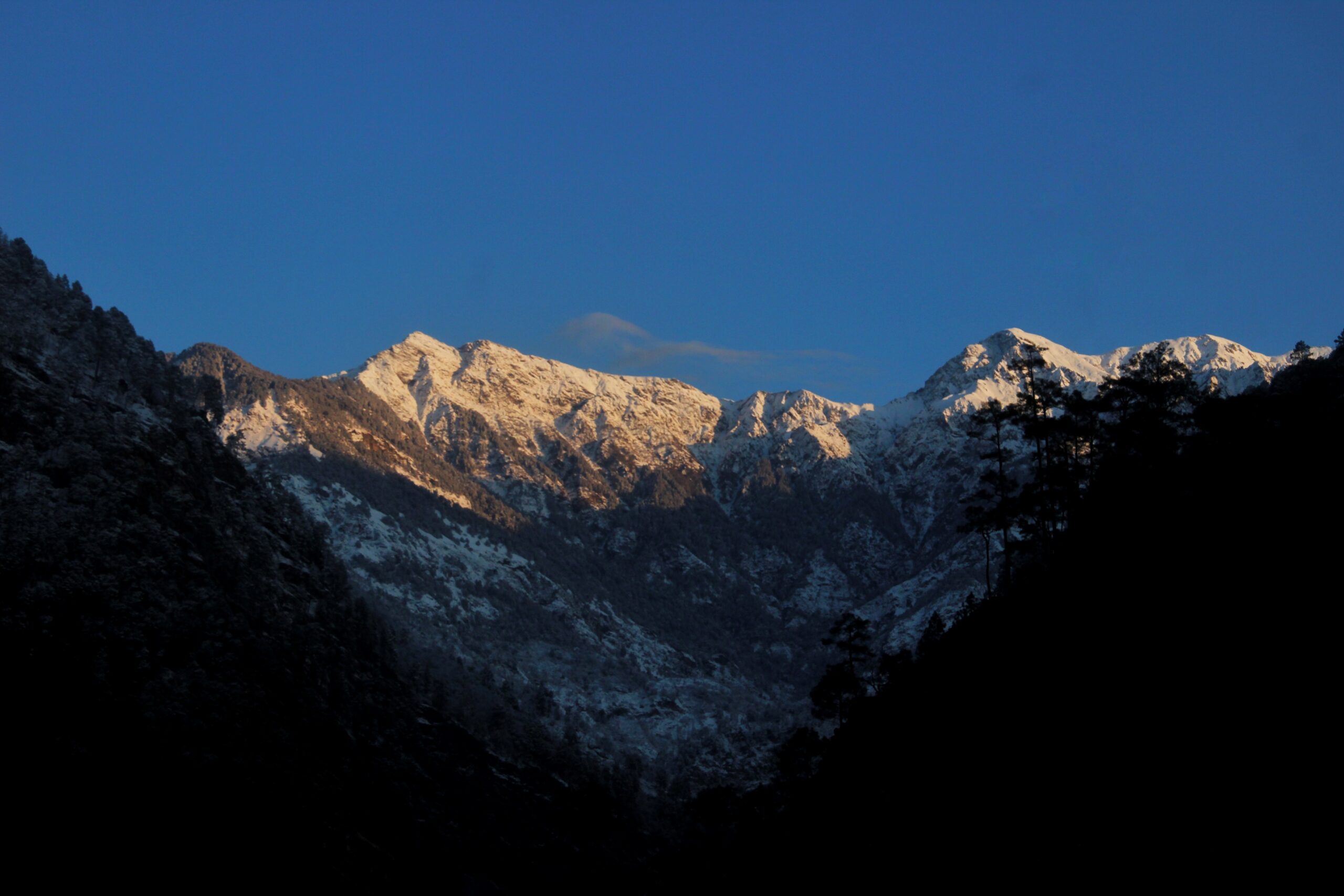
Meet us at the Dehradun railway station at 6:00 AM to begin your journey to Gangotri. This scenic drive covers approximately 250 kilometers and takes about 10-12 hours. The route offers stunning views of picturesque mountain villages, dense forests, and the Bhagirathi river. As you ascend into the Himalayas, you’ll pass through notable towns like Uttarkashi, where you can take brief rest stops and refreshments. Arrive in Gangotri by late afternoon or early evening, ready to start your trekking adventure the next day.
Day 2: Acclimatization day in Gangotri
Day 3: Gangotri to Bhoj Kharak
- Distance: 9 km
- Trek Time: 4-5 hours
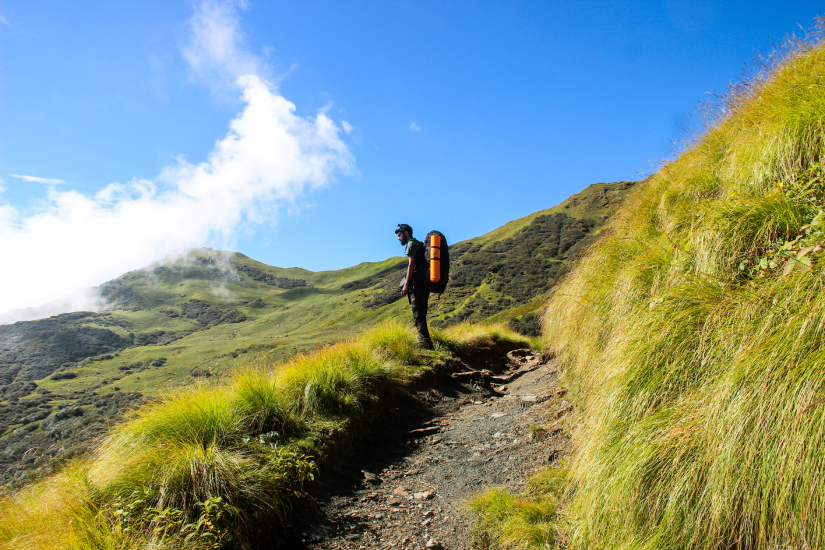
Begin your trek from Gangotri, starting from the Bhairav Ghati bridge and crossing the Bhagirathi river. The trail begins with a steep ascent past a GMVN lodge and several ashrams, transitioning into a dense forest path. This rocky and strenuous route is the only way to reach Bhoj Kharak. Along the way, enjoy the sights and sounds of the Kedar Ganga river and towering fir trees. The trail narrows and offers occasional flat stretches for rest. About an hour and a half into the trek, you’ll encounter birch trees, historically used for writing and insulation. Staying hydrated is crucial, and there are three water points along the trail. After approximately four hours, navigate the “spider wall,” a narrow path on a near-vertical rock face. Continue the climb to reach the Bhoj Kharak campsite, nestled in a narrow valley with limited views but a peaceful environment.
Day 4: Bhoj Kharak to Kedar Kharak
- Distance: 4.5 km
- Trek Time: 4-5 hours
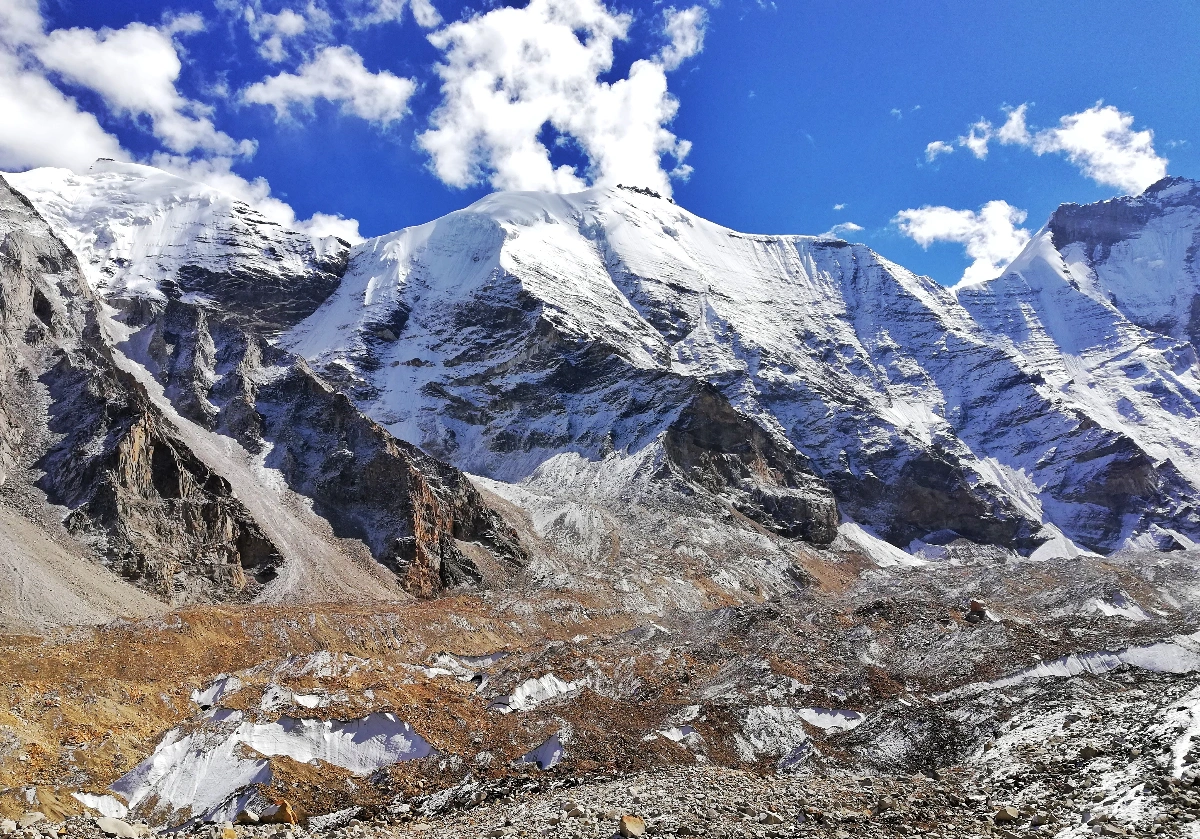
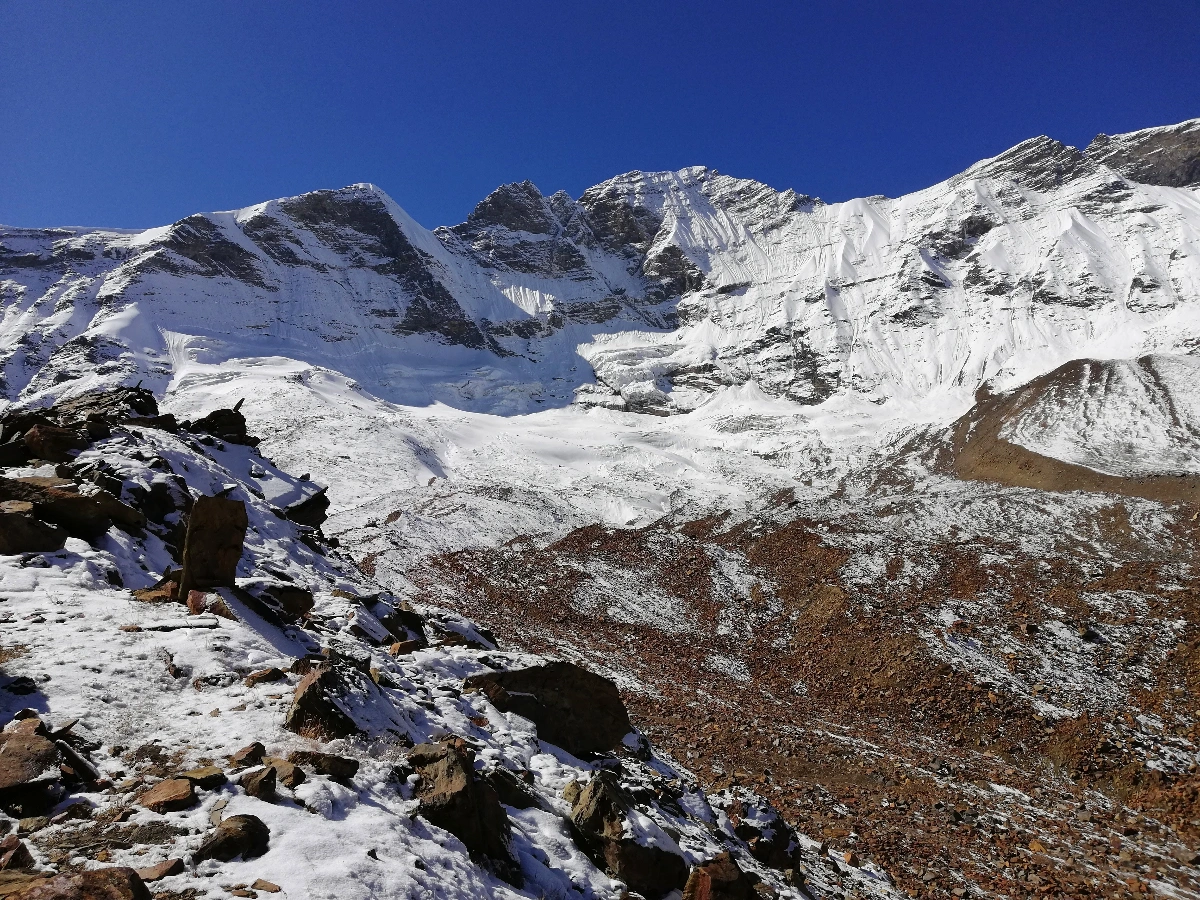
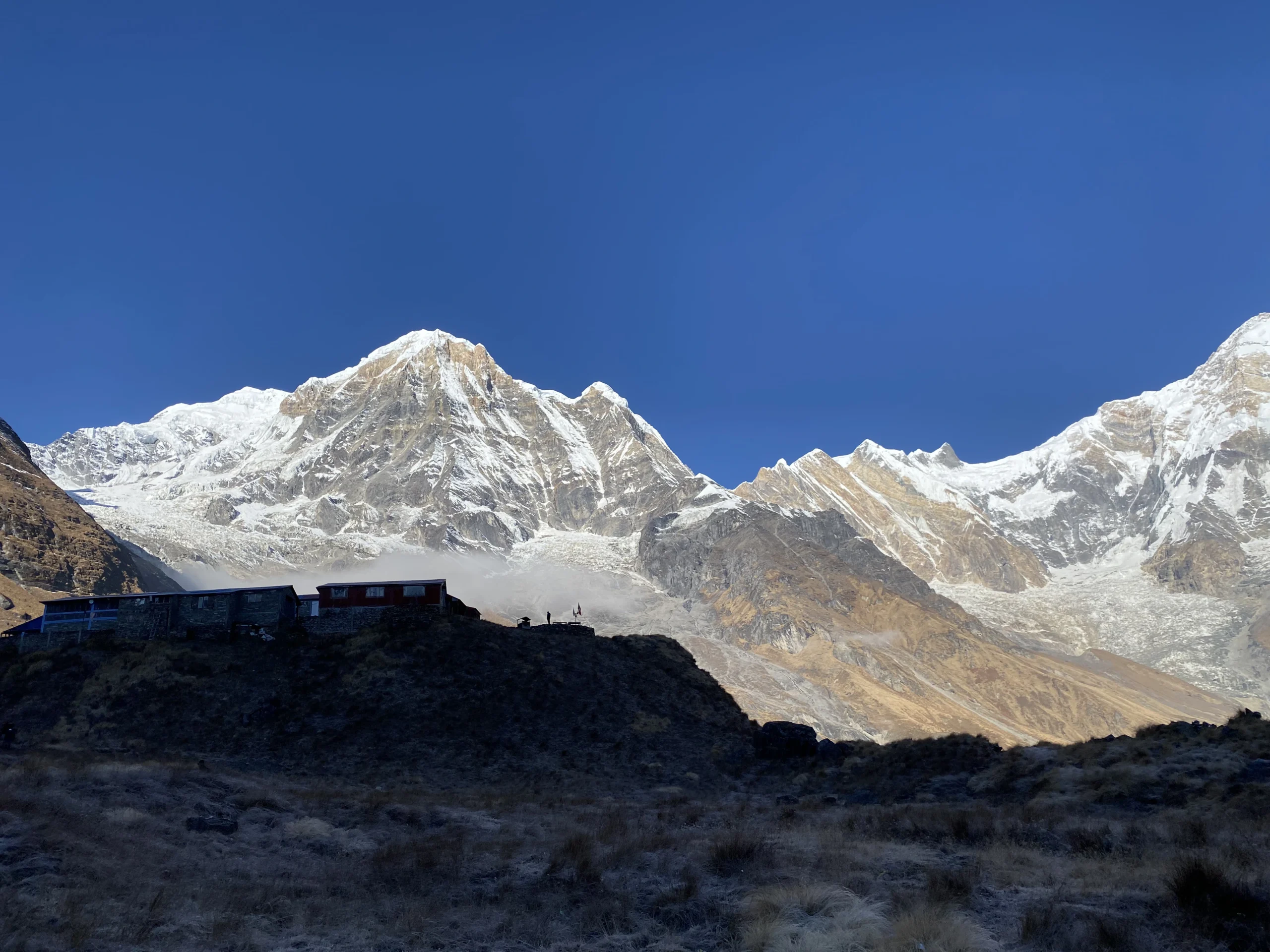
Today’s trek begins with a steep ascent from Bhoj Kharak. As you climb higher, the dense forest gives way to expansive meadows filled with colorful blooms, especially vibrant in the autumn. The hike involves a mix of gentle slopes and a few steep inclines. Keep an eye out for wildlife like Bharal (Blue Sheep), Goral, and various bird species. The meadows stretch over 2 kilometers, offering stunning views and a relatively easier walk compared to the previous day. Kedar Kharak, situated at an altitude of 14,000 feet, is a spectacular campsite surrounded by the peaks of Brighupanth, Thalaysagar, and Jogin 3. The area is frequented by herds of blue sheep, adding to its charm. The final part of the trek involves crossing the Kedar Ganga river. Upon reaching the campsite, enjoy the stunning views, especially at sunset when the entire meadow glows with an orange hue.
Day 5: Kedar Kharak to Kedartal and Back to Kedar Kharak
- Distance: 5 km
- Trek Time: 5-6 hours
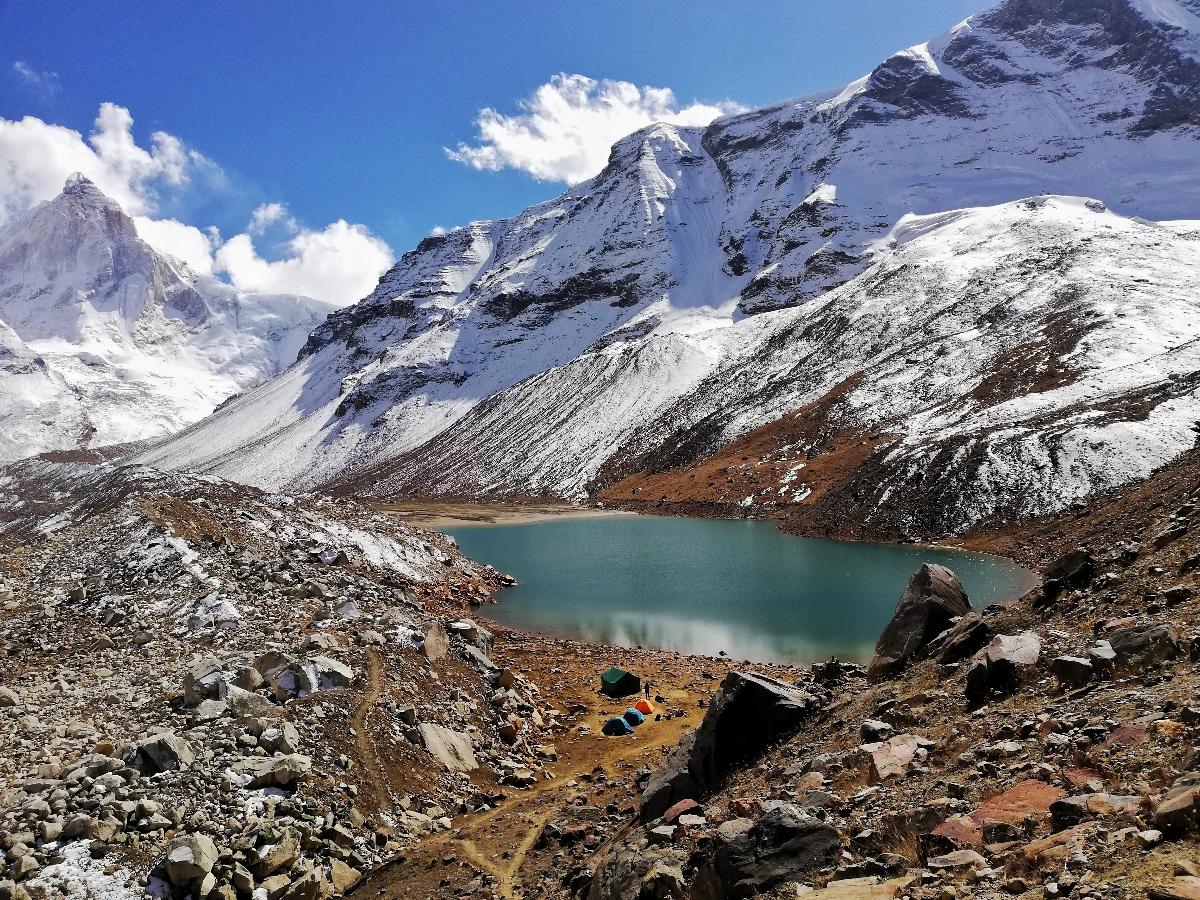
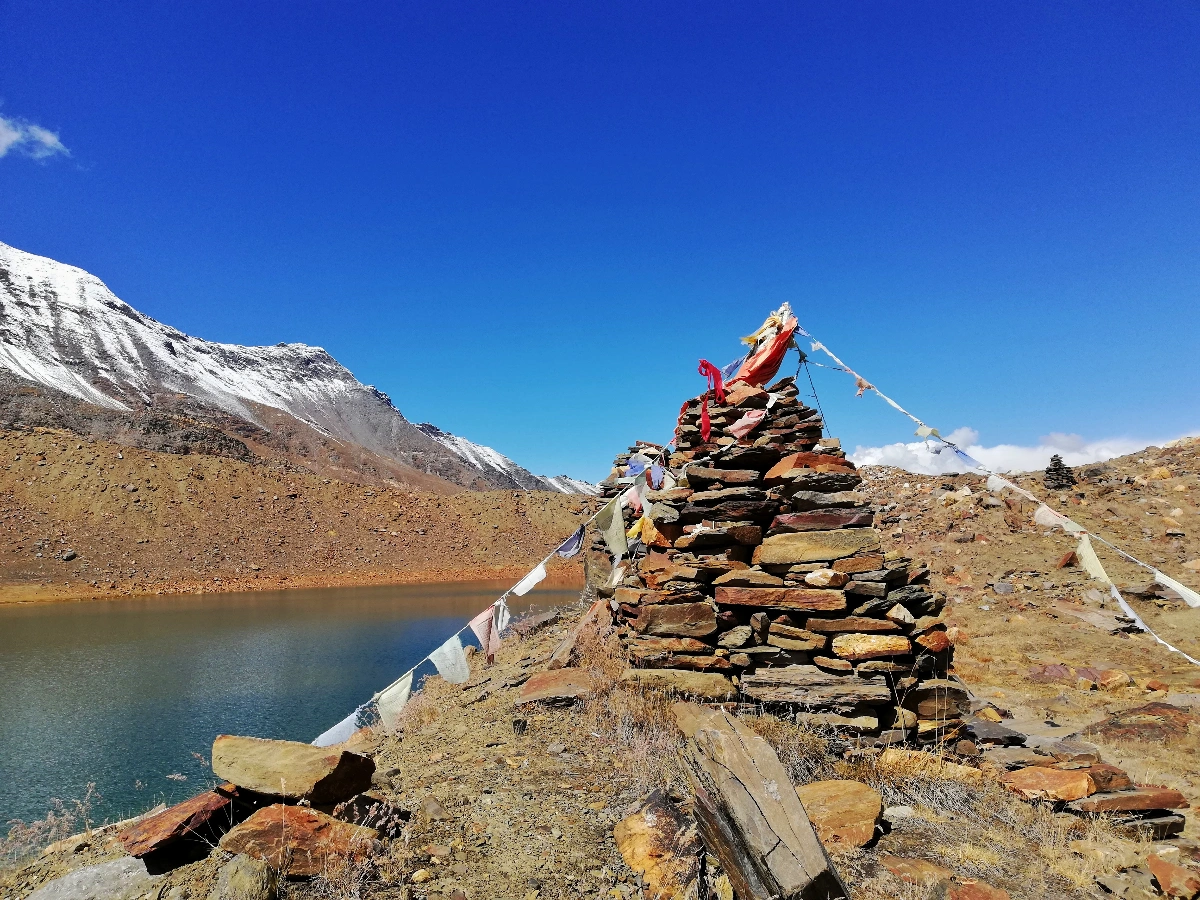
Start early for the trek from Kedar Kharak to Kedartal. This part of the journey involves navigating steep, rocky terrain. As you ascend, the landscape transforms into a rugged alpine zone with sparse vegetation. The route requires careful footwork, especially when crossing moraines and rocky sections. Upon reaching Kedartal, soak in the serene beauty of the emerald-green lake surrounded by snow-capped peaks. The reflections of the surrounding mountains in the clear waters of the lake add to its magical ambiance. After spending some time at Kedartal, begin your descent back to Kedar Kharak, appreciating the stunning landscape from a different perspective. End the day by returning to the Kedar Kharak campsite, where you can relax and reflect on the day’s adventure.
Day 6: Kedar Kharak to Gangotri
- Distance: 13.5 km
- Trek Time: 7-8 hours
On the final day of your trek, retrace your steps from Kedar Kharak back to Gangotri. Begin your descent early, leaving the high-altitude meadows and rocky terrain behind. The journey down offers different perspectives on the landscapes you traversed during your ascent. Navigate the familiar “spider wall” sections with care. Maintain a steady pace and take breaks as needed to manage the long descent. Upon reaching Bhoj Kharak, take a short rest before continuing towards Gangotri. The lush forests and the sound of the Kedar Ganga river accompany you as you make your way back. Arrive in Gangotri by late afternoon or early evening, ready to rest and reflect on your trekking adventure.
Day 7: Gangotri to Dehradun
- Distance: 250 km
- Drive Time: 10-12 hours
Start early for the scenic drive from Gangotri to Dehradun, covering 250 km in approximately 10-12 hours. This route retraces your journey through picturesque mountain villages, dense forests, and alongside the Bhagirathi river. Enjoy the changing landscape as you descend from the Himalayas to the plains, passing through notable towns like Uttarkashi for rest and refreshments. Arrive in Dehradun by late afternoon or evening, concluding your Kedartal trek with reflections on the breathtaking vistas and the adventures of the past days.






 Quick Facts
 Short Itinerary
 Detailed Itinerary
 Things To Carry
 Inclusion Exclusion
 Cancellation Policy