- ⭐ Easy-Moderate · 5N/6D · Uttarakhand, India
Valley of Flowers Trek
- UNESCO World Heritage — Bloom Season
- ₹9,499/- per person onwards
- 5N/6D / 4,329 m / 37 km / Easy-Moderate / Best: June - September
- Easy to Moderate
- Transport Included
- Certified Guides
- Group Size: 20
Duration
5N/6D
Max Elevation
4,329 m
Gradient
Easy-Moderate
Distance
37 km
Best Month
June - September
Group Size
20
Starting From
₹9,499/-
- Overview
Valley of Flowers Trek — Overview
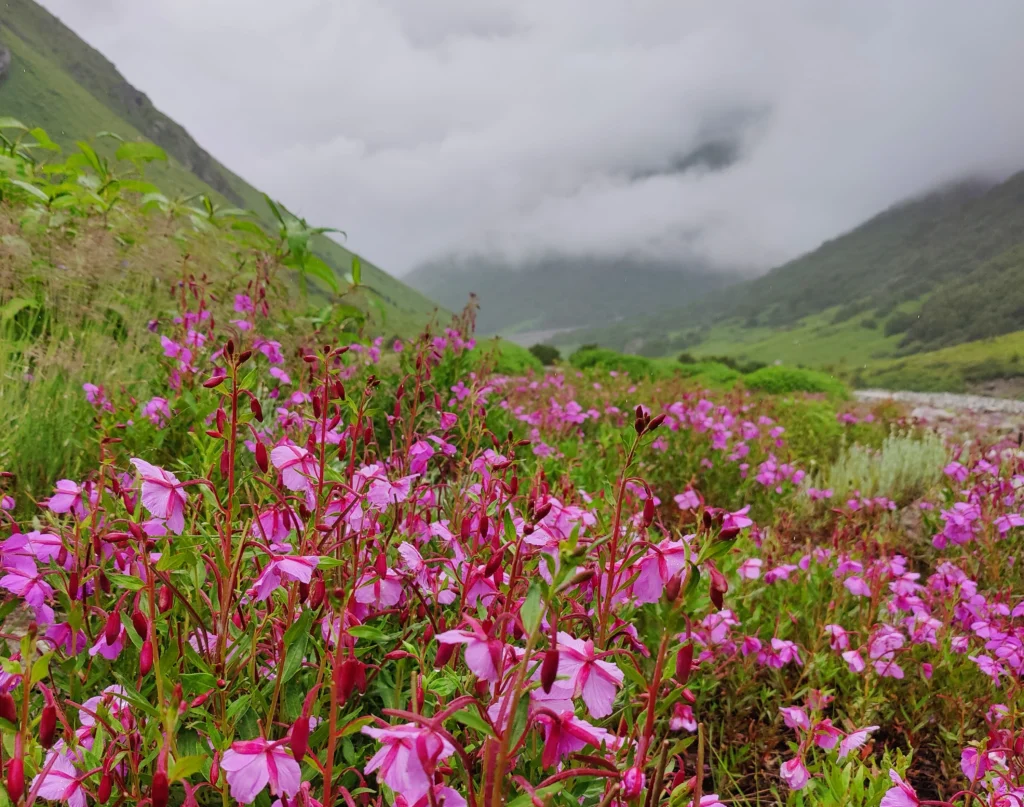
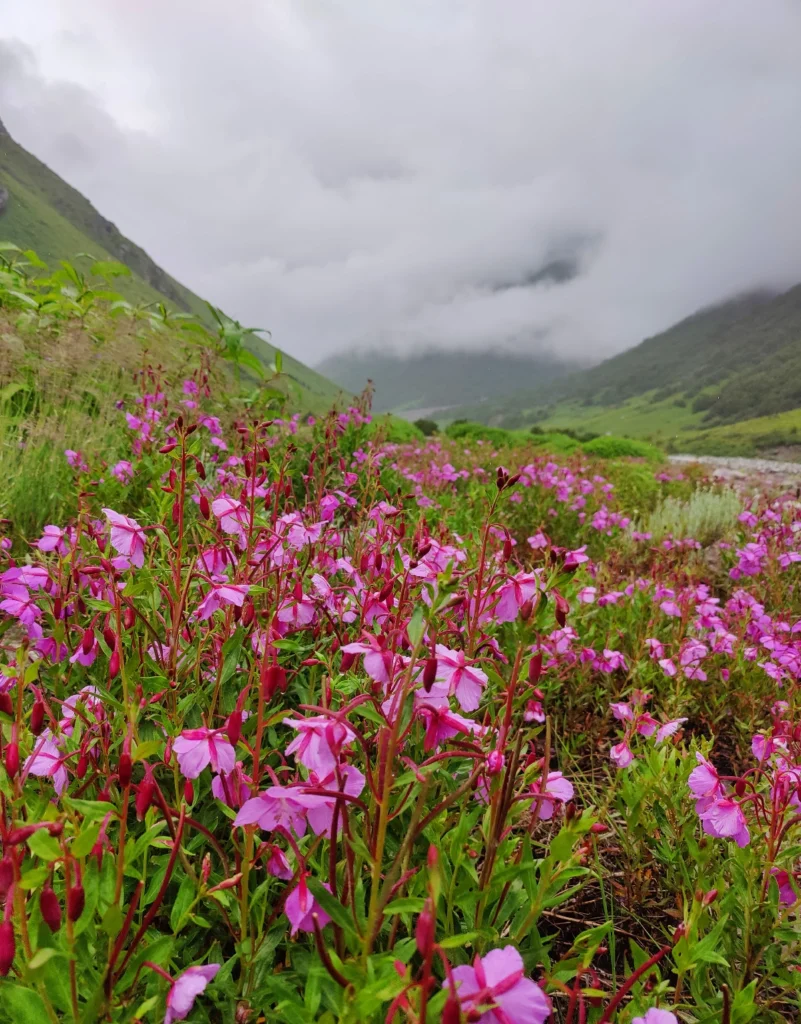
Tucked inside the Chamoli district of Uttarakhand, the Valley of Flowers is one of those rare places on Earth that feels genuinely unreal the first time you see it. A sweeping high-altitude meadow at 3,658 metres, it explodes into a riot of colour every monsoon — over 500 species of alpine wildflowers carpeting a valley that stretches roughly 8 km end-to-end, framed by snow-capped giants like Nilkantha (6,596 m) and Kamet (7,756 m). It is, without exaggeration, one of the most beautiful treks in all of India.
The Valley of Flowers Trek is classified as Easy to Moderate, making it one of the very few UNESCO World Heritage Sites in the Himalayas that’s genuinely accessible to first-time trekkers and families — not just seasoned mountaineers. The trail begins at Govindghat (1,830 m) and follows the Pushpawati River gorge through birch and pine forests, past roaring waterfalls and glacial streams, before reaching Ghangaria (3,050 m) — the last village and the base for all exploration here.
Most trekkers pair the Valley with a day hike to Hemkund Sahib — a sacred Sikh gurudwara and glacial lake at 4,329 m surrounded by seven Himalayan peaks. This combination is what makes the 5N/6D Valley of Flowers Trek packages so popular: you get the botanical wonder of the Valley one day, and the spiritual serenity of Hemkund the next.
The valley was completely unknown to the outside world until 1931, when three British mountaineers — Frank S. Smythe, Eric Shipton, and R.L. Holdsworth — stumbled upon it while descending after a successful expedition on Mt. Kamet. Smythe was so captivated he returned the following year, documented over 250 flowering species, and published a book simply titled ‘Valley of Flowers.’ The name stuck. In 1982, it was declared a National Park, and in 1988, UNESCO recognised it as a World Heritage Site as part of the Nanda Devi Biosphere Reserve.
If you’ve ever wondered what it feels like to walk through a living painting — this is it.
- Complete Information
Quick Facts
Base Camp
Ghangaria (3,050m)
Pickup
Near Dehradun Railway Station
Nearest Railway Station
Dehradun / Haridwar
Nearest Airport
Jolly Grant Airport, Dehradun
Temperature
Day: 18-20°C | Night: 5-8°C (Jul-Aug bloom season)
Mobile Network
Sketchy Jio Networks available in Ghangaria. No network in Valley.
Electricity
Available in Ghangaria (basic). No electricity in the Valley itself.
Last ATM
Joshimath, on the way to Govindghat. Carry sufficient cash from Dehradun.
- Day by Day
Detailed Itinerary — Valley of Flowers Trek
1
DAY
- Dehradun → Govindghat
- 🛣️ 270 km Drive
- ⏱️ 9-10 Hrs
- 📍 1,830m
Your journey begins early morning from near Dehradun Railway Station, where the Mountainiax team picks you up. The drive itself is an adventure — you pass through the sacred confluence towns of Devprayag, Rudraprayag, and Karnaprayag, then climb through Chamoli and Joshimath to reach Govindghat by evening. The road runs alongside the Alaknanda and Dhauliganga rivers for most of the way, so there’s no shortage of scenery. Expect dramatic gorges, cascading tributaries, and the unmistakable feeling that you’re leaving the plains far behind. Check in to your guesthouse in Govindghat, have a warm dinner, and get an early night — tomorrow the walking begins.
Pro tip: Carry motion-sickness tablets if you’re sensitive on mountain roads. The stretch from Joshimath onwards is winding.
2
DAY
- Govindghat → Ghangaria
- 🥾 14 km Trek
- ⏱️ 5-6 Hrs
- 📍 Ghangaria: 3,050m
This is your first proper trekking day, and it’s a beautiful one. The trail begins right from Govindghat bridge, where you’ll cross the Alaknanda River and start walking along the Pushpawati River gorge. The path is well-marked and gradually ascends through dense forests of oak, maple, and pine. You’ll pass through the small settlement of Pulna (around 2 km in), which is the last point for mule/pony rides if anyone needs them. From Pulna, the trail narrows and deepens into the forest — expect hanging bridges, small waterfalls, and the constant sound of the river below. After about 5–6 hours of steady walking, you’ll arrive at Ghangaria — a cluster of guesthouses and dhabas that serves as the base for both the Valley of Flowers and Hemkund Sahib. Overnight at guesthouse in Ghangaria.
Distance note: Some operators still list the starting point as Govindghat (14 km). In recent years, vehicle access has extended to Pulna village (~3.5 km), reducing the actual trekking distance to around 9–10 km on this day. Mountainiax will update this based on current road conditions.
3
DAY
- Ghangaria → Valley of Flowers → Ghangaria
- 🥾 8 km Round Trip
- ⏱️ 5-6 Hrs
- 📍 Valley: 3,658m
Today is the day you’ve come for. Start early — the morning light on the flowers is extraordinary, and you want as much time in the Valley as possible. The trail to the Valley of Flowers entrance gate is about 3 km from Ghangaria, mostly flat with a gentle climb in places. Past the forest check post (where your Biosphere Reserve permit is checked), the valley opens up dramatically — a wide, flat bowl of meadow stretching ahead of you, ringed by mountains, with the Pushpawati stream threading through the middle.
In peak bloom (mid-July to mid-August), the visual impact is overwhelming. Blue Himalayan poppies (Meconopsis aculeata), crimson primulas, golden potentillas, purple orchids, white anemones, Brahmakamals, cobra lilies, and hundreds more species create a layered carpet of colour that shifts as you walk deeper into the valley. The valley extends about 6–7 km before ending at a glacier — most trekkers explore 3–4 km in and then rest and soak it all in before returning. No camping is allowed inside the valley. Return to Ghangaria by late afternoon. Overnight at guesthouse.
Camera tip: On cloudy days (common during monsoon), the flowers actually photograph better — soft diffused light, no harsh shadows. Don’t let a cloudy morning discourage you.
4
DAY
- Ghangaria → Hemkund Sahib → Ghangaria
- 🥾 12 km Round Trip
- ⏱️ 7-8 Hrs
- 📍 Hemkund: 4,329m
The most physically demanding day of the trek, but also one of the most rewarding. The trail to Hemkund Sahib climbs steeply from Ghangaria — roughly 1,280 metres of altitude gain over 6 km — passing through a dramatic landscape of rocky switchbacks, alpine meadows, and fields of Brahmakamal flowers as you gain height. The last 1 km is especially steep and can be icy even in July, so trekking poles are strongly recommended.
At the top, the Hemkund lake appears almost out of nowhere — a perfectly still glacial lake at 4,329 m, encircled by seven Himalayan peaks (Hathi Parbat, Saptrishi Parbat, and others), with the white-and-gold facade of the Sikh gurudwara reflected in the water. The gurudwara is open to all visitors, and the langar (community kitchen) serves hot food — a deeply welcome gesture at that altitude. The lake is considered sacred by both Sikhs and Hindus (it is associated with Lok Paal in the Mahabharata). Take your time here; the setting is unlike anything else on this trek. Return to Ghangaria carefully — the descent can be slippery. Overnight at guesthouse.
Altitude note: At 4,329 m, some trekkers may experience mild altitude symptoms (headache, breathlessness) at Hemkund. Take it slow on the ascent, drink water consistently, and don’t rush. If you feel unwell, turn back — no viewpoint is worth pushing through genuine altitude sickness.
5
DAY
- Ghangaria → Govindghat → Joshimath
- 🥾 14 km Descent + Drive
- ⏱️ 5-6 Hrs Trek
Today you retrace the river trail back to Govindghat. Descents are faster, of course, but take care on wet or rocky sections — your knees will thank you for a steady pace rather than a fast one. Once at Govindghat, there’s an optional side trip to Badrinath temple — one of the four Char Dham sites and just 25 km further up the road. The Badrinath temple is dedicated to Lord Vishnu and set against the backdrop of the Neelkanth peak — spiritually significant and architecturally stunning. Whether you visit or not, you’ll drive to Joshimath for the overnight stay.
6
DAY
- Joshimath → Dehradun
- 🛣️ 270 km Drive
- ⏱️ 9-10 Hrs
The final drive back to Dehradun follows the same route in reverse — the same rivers, the same mountains, but seen with completely different eyes after six days in the Himalayas. Our team will drop you back near Dehradun Railway Station by evening. The trek is done, but honestly, the Valley of Flowers has a way of staying with people for a very long time.
Valley of Flowers Trek Difficulty Level
The Valley of Flowers trek difficulty level is rated Easy to Moderate — which is accurate, but worth unpacking so you know exactly what to expect.
What ‘Easy to Moderate’ Actually Means on This Trek
There are no technical sections, no glacier crossings, no rock scrambling, and no ropes required on the Valley of Flowers route. The trails are well-defined, the daily distances are manageable (8–14 km), and the maximum altitude — 3,658 m in the Valley itself — is within the range most healthy adults can handle without prior altitude experience.
That said, the Hemkund Sahib day (Day 4) pushes this into genuine ‘Moderate’ territory: a steep 1,280-metre climb in 6 km at altitude will test your cardiovascular fitness regardless of how fit you are at sea level. The monsoon season also means wet, muddy trails on most days — which slows pace and requires care, especially on the descent from Hemkund.
Day-by-Day Difficulty Breakdown
- Day 1: Drive only — no trekking
- Day 2 (Govindghat → Ghangaria): Moderate. 14 km on a gradual incline. Well-maintained trail, no steep sections. Tiring for beginners but very doable with a steady pace.
- Day 3 (Valley of Flowers day): Easy. Mostly flat meadow walking after a gentle 3 km approach. The valley itself is a flat bowl with only minor elevation changes.
- Day 4 (Hemkund Sahib day): Moderate to Challenging. Steep ascent, significant altitude gain, can be icy near the top. This is the hardest day of the trek.
- Day 5 (Descent to Govindghat): Easy to Moderate. Same trail in reverse. Knees take more load on descent.
- Day 6: Drive only.
Who Can Do This Trek?
This trek is genuinely beginner-friendly for the Valley days. Practically anyone who is reasonably active — can walk 8–10 km at a comfortable pace — can complete the Valley of Flowers route. Families with fit teenagers, solo travellers on their first Himalayan trek, couples, seniors in good health — all of these groups trek the Valley every season with Mountainiax.
The Hemkund Sahib day is more demanding and optional. If anyone in your group isn’t confident about it, they can rest at Ghangaria while others make the climb. There’s no pressure to do both.
Fitness Preparation Tips
- Start preparing at least 4–6 weeks before the trek.
- Walk or jog 4–5 km daily — aim to cover 5 km in under 45 minutes.
- Include stair climbing or uphill walks in your routine to build leg strength.
- Practise with your trekking backpack loaded (start with 5 kg, build to 7–8 kg).
- Stay well-hydrated in the days leading up to the trek.
- Avoid alcohol for 48 hours before departure — it impairs altitude acclimatisation.
- Be Prepared
Things to Carry
- 🎒 Basic Gear
- Backpack
- Trekking Shoes
- Trekking Pole
- LED Torch
- One Water Bottle (1 litre)
- Lunch Box
- Basic / Prescribed Medications
- 🧥 Clothes
- Trekking Jacket
- Warm Layers
- Two Trek Pants
- Full Sleeve Dry-fit T-shirts
- Thermals (1 pair)
- 🕶️ Accessories
- Sunglasses
- Sunscreen Lotion (SPF 50/70)
- Lip Balm (SPF 30)
- Synthetic Hand Gloves
- Woolen Cap
- Three Pairs of Socks
- Raincoat / Poncho (must)
- 📄 Documents & Others
- Daypack (for Summit Day)
- Plastic cover for wet clothes
- Original + photocopy of Govt Photo ID (Passport / Aadhaar / Driving License / Voter ID)
Valley of Flowers Trek — Package & Cost
Budget
- 5 Nights / 6 Days
- Starting from: Dehradun
- Transport: Pickup to Drop included
- Dormitory / triple sharing accommodation
- All vegetarian meals included
- Certified trek guide and support staff
- Forest entry permits and camping fees
- Sleeping bags, mats, and tents
Limited seats — call +91 98765 43210
Valley of Flowers Trek Distance — Route Breakdown
Understanding the Valley of Flowers trek distance helps you plan your daily effort. Here's the full breakdown by day:
Day | Segment | Distance | Time |
Day 1 | Dehradun to Govindghat (Drive) | ~270 km | 9–10 hrs |
Day 2 | Govindghat → Ghangaria (Trek) | 14 km | 5–6 hrs |
Day 3 | Ghangaria → Valley → Ghangaria | ~8 km | 5–6 hrs |
Day 4 | Ghangaria → Hemkund → Ghangaria | 12 km | 7–8 hrs |
Day 5 | Ghangaria → Govindghat (Descent) | 14 km | 4–5 hrs |
Day 6 | Joshimath → Dehradun (Drive) | ~270 km | 9–10 hrs |
TOTAL TREKKING | On foot across all days | ~48 km | 5N/6D days |
- What's Covered
Inclusions & Exclusions
- ✅ Included
- Transport support from Dehradun to Dehradun.
- All vegetarian meals starting from dinner on Day 1 to dinner on Day 5.
- Guesthouse/Homestay accommodation in Ghangaria on triple/quad sharing.
- Tented accommodation throughout the trek on sharing basis.
- Professional guide, cook and support staff.
- Rent for camping equipment — clean sleeping bags & mats, good quality tents, kitchen tents, toilet tents.
- Gaiters and Crampons, if required.
- Forest entry charges for Indian nationals (Nanda Devi Biosphere Reserve permit).
- Porter and mule support to carry camping equipment.
- All applicable taxes.
- ❌ Excluded
- Personal expenses like tips, personal medicines, phone calls etc.
- Any transport support during the trek apart from what is included above.
- Any cost or services not mentioned in the Inclusions.
- Accommodation in Dehradun / Rishikesh before or after the trek.
- Cost arising due to unforeseen incidents like bad weather, medical evacuation, road blocks etc.
- Porter/mule charges to carry personal luggage — can be arranged at ₹500/day (1 soft bag per person, max 12 kg).
- Important
Cancellation & Refund Policy
Cancellation Policy
We understand that plans can change. If you need to cancel, reduce, or amend a guaranteed reservation, please do so by 12 noon, 15 days prior to arrival to avoid cancellation charges. Any cancellation made within 15 days of arrival will be 100% non-refundable.
No cancellations will be accepted over the phone or via WhatsApp message. Please reply to the email confirmation you received at the time of booking to request a cancellation.
No refunds will be provided in case of problems arising due to government orders, harsh weather conditions, protests, landslides, or other unforeseen circumstances. If a trek is called off at the last moment due to natural calamities, participants will be provided with a travel voucher for the same amount, valid within 365 days for any package of equal value.
Refund Policy
| Cancellation Timing | Refund |
|---|---|
| Up to 21 days prior to departure | 70% refund |
| Between 21 to 14 days prior | 50% refund |
| Between 14 to 10 days prior | 30% refund |
| Less than 10 days of departure | No refund (can transfer trek to someone else) |
Note: Refunds are subjected to deductions for any expenses incurred for hotel booking or transport. Refunds are applicable on the total cost and not on the advance amount.
- Plan Your Trip
Best Time to Visit Valley of Flowers Trek
- ⭐ Best
Jul-Aug
Peak Bloom Season
This is the window most people are talking about when they say they want to trek the Valley of Flowers. The monsoon brings generous rainfall from late June onwards, and by mid-July, the meadow is at its most spectacular — a dense, layered carpet of 500+ wildflower species in full simultaneous bloom. Mid-July to mid-August is the absolute peak. Blue Himalayan poppies, cobra lilies, Brahmakamals, primulas, anemones, bistort, marsh marigolds, and hundreds more are all flowering at once. Yes, it rains — often every afternoon — but that’s precisely what makes the flowers bloom. Pack your waterproofs and embrace it.
- ✅ Good
Jun / Sep
Early & Late Season
The Valley opens officially in the first week of June (date varies by snowmelt). Early June means fewer crowds, clear mornings, and the first blooms appearing — but the flower density won’t match July. A good option if you want a quieter experience and don’t mind fewer species in bloom. Hemkund Sahib also opens in June (typically second or third week, depending on snow conditions).
- ⚠️ Closed
Oct-May
Valley Closed
By September, the main bloom is thinning out, but late-season flowers take over — asters, gentians, and other autumn species create a different but still beautiful palette. Monsoon rain eases in late September. Crowds thin significantly. A good choice for those who prefer clearer skies and quieter trails.
- ❄️ Note
All Year
Hemkund Sahib
The National Park closes officially in October. By November, the valley is deep under snow and inaccessible. It remains closed through winter and spring, reopening the following June.
📅 Hemkund Sahib shrine: Opens approximately second–third week of June and closes in October. Exact dates depend on snowmelt and are announced by the Gurudwara management. Confirm current dates before booking.
The best time to visit Valley of Flowers is from July to August, when the valley is covered in vibrant alpine blooms and offers its most spectacular scenery. June and September provide quieter trails with pleasant weather, while the park remains closed from October to May due to heavy snowfall. For peak flower viewing, mid-July to mid-August is considered the best time to visit Valley of Flowers.
- Why Mountainiax
Trusted by Thousands of Trekkers
- 🏛️
Govt Registered Company
Fully registered travel operator with valid GSTIN and all required tourism licenses. Your money is safe with us.
- 🧭
Certified & Experienced Guides
Our trek coordinators and guides have 8+ years of experience on the Kedarkantha route. They know every turn, every campsite.
- ⭐
4.8★ on Google & TripAdvisor
Trusted by 1000+ trekkers across 100+ successful Kedarkantha batches. Consistently rated best-in-class for safety and experience.
- 🕐
On-Time Operations
Punctual pickups, pre-booked guesthouses, and well-planned itineraries. No last-minute surprises or hidden costs.
- 📞
24/7 Support During Trek
Dedicated trip coordinator with you throughout. 24-hour call assistance for any emergency or query during the trek.
- 👨👩👧
Beginner & Group Friendly
Perfect first Himalayan trek. We manage solo trekkers, groups, corporate teams, and college trips with equal expertise.
- Visual Journey
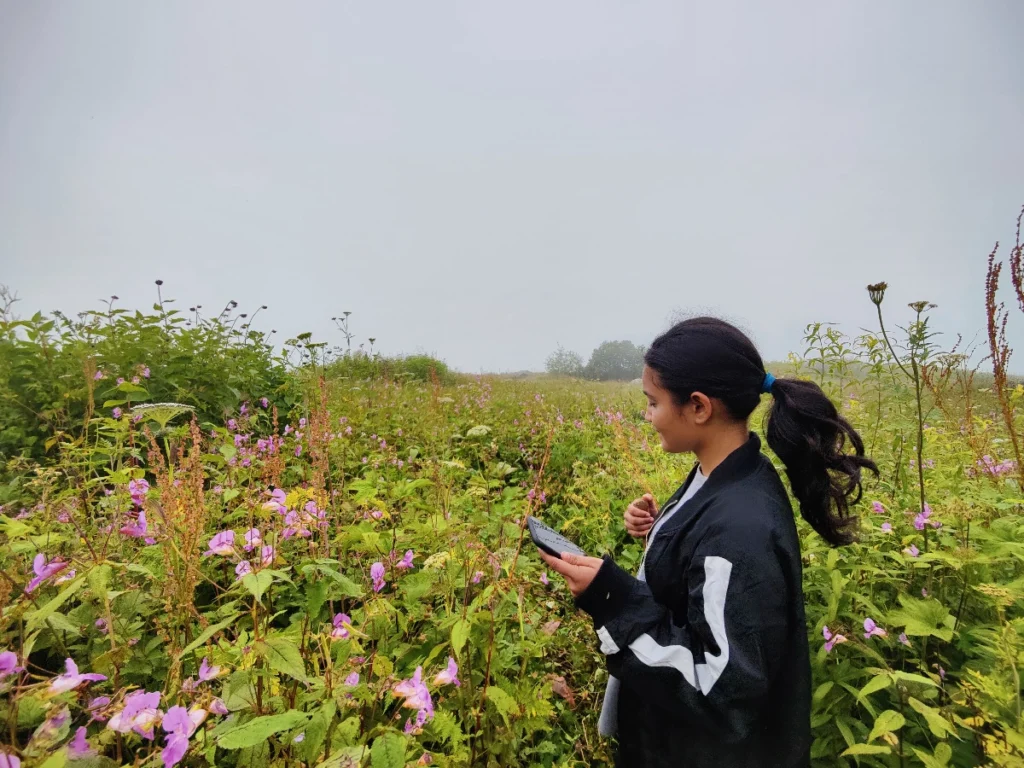
Valley of Flowers Trek Gallery

- Need Help?
Frequently Asked Questions
What is the difficulty level of the Valley of Flowers Trek?
What is the best time for the Valley of Flowers Trek?
What is the total Valley of Flowers Trek distance?
Is the Valley of Flowers Trek suitable for beginners?
Yes — the Valley of Flowers is one of the best first Himalayan treks for beginners precisely because the Valley day itself is easy, the trails are well-marked, and the duration is manageable. Mountainiax’s guides are experienced in supporting first-timers throughout. The Hemkund day is optional for those who want to build up gradually.
What Valley of Flowers Trek packages does Mountainiax offer?
Is a permit required for the Valley of Flowers?
Can I do the Valley of Flowers Trek solo (without a group)?
Is mobile network available during the Valley of Flowers Trek?
Where can I store extra luggage during the trek?
How do I book the Valley of Flowers Trek with Mountainiax?
- Ready to Trek?
Book Your Free Trek
Consultation Today
With Free Itinerary Planning Session — Limited Slots Available!
- +91-6398937502 | +91-7887449236