- Easy to Moderate · 5N/6D · Uttarakhand, India · UNESCO World Heritage Site
Valley of Flowers Trek 2026
- UNESCO World Heritage — Bloom Season
- ₹10,500/- per person onwards
- 5N/6D / 4,329 m / 37 km / Easy-Moderate / Best: June - September
- Easy to Moderate
- Transport Included
- Certified Guides
- Group Size: 20
Duration
5N/6D
Max Elevation
4,329 m
Gradient
Easy-Moderate
Distance
35–42 km
Best Month
June - September
Group Size
20
Starting From
₹10,500/-
- Overview
Valley of Flowers Trek — Overview
Hidden in the heart of Chamoli, Uttarakhand, the Valley of Flowers Trek is one of India’s most iconic Himalayan adventures. Situated at an altitude of 3,658 meters, this UNESCO World Heritage Site blooms between July and September with over 500 species of alpine wildflowers, creating a stunning landscape surrounded by snow-capped Himalayan peaks. Rated Easy to Moderate, the trek begins from Govindghat (1,830 meters) and winds through the picturesque Pushpawati Valley to Ghangaria (3,050 meters), the base camp for both the Valley of Flowers and Hemkund Sahib (4,329 meters). Most trekkers combine these two destinations, making Mountainiax’s 5 Nights / 6 Days Valley of Flowers Trek a perfect mix of nature, adventure, and spirituality.
Spanning 87.5 sq. km within the Nanda Devi Biosphere Reserve, the valley is renowned for its rich Himalayan biodiversity and lively seasonal blooms, including Blue Poppies, Primulas, Orchids, and Cobra Lilies. Whether you’re a first-time trekker, photographer, or nature enthusiast, the Valley of Flowers offers an unforgettable Himalayan adventure.
A Valley Rediscovered by Accident
The Valley of Flowers remained largely unknown to the outside world until 1931, when renowned British mountaineers Frank S. Smythe, Eric Shipton, and R.L. Holdsworth accidentally discovered the valley while descending from a successful expedition to Mt. Kamet. Mesmerised by its colourful alpine meadows and untouched Himalayan landscape, Smythe returned in 1937 to explore the region in greater detail. He documented hundreds of flowering plants and later published his celebrated book, The Valley of Flowers, which introduced this hidden Himalayan gem to nature lovers and trekkers across the world.
In 1939, British botanist Joan Margaret Legge visited the valley to research its rare alpine flora. During her expedition, she tragically lost her life after slipping on a steep mountainside. Today, a small memorial dedicated to her can still be seen along the trekking route, reflecting her lasting contribution to Himalayan botany.
Recognising its exceptional ecological value, the Government of India declared the area a National Park in 1982 to help conserve its unique biodiversity. The valley later gained international recognition when UNESCO included it in the Nanda Devi and Valley of Flowers National Parks World Heritage Site in 2005. Today, the Valley of Flowers is celebrated not only for its spectacular seasonal blooms but also for its rich biodiversity, rare Himalayan plant species, and pristine mountain ecosystem, making it one of India’s most treasured trekking destinations.
Why the Valley of Flowers Deserves a Place on Every Trekker's List
The Valley of Flowers Trek offers far more than its world-famous blooms. While the valley is home to 500+ species of alpine flowers, including the Brahma Kamal, Himalayan Blue Poppy, Cobra Lily, Primulas, and Anemones, the journey itself is equally rewarding. Starting from Govindghat, the trail follows the scenic Pushpawati River, crossing suspension bridges, cascading waterfalls, lush forests, and picturesque mountain landscapes before opening into the breathtaking Valley of Flowers. Surrounded by towering Himalayan peaks, colourful meadows, and glacial streams, every section of the trek offers stunning views and excellent photography opportunities.
The experience becomes even more special with a visit to Hemkund Sahib (4,329 m), one of the world’s highest Sikh pilgrimage sites, located beside a pristine glacial lake. Combining spectacular Himalayan scenery, rich biodiversity, and spiritual significance, this trek offers the perfect balance of nature, adventure, and culture. Its well-defined trail and moderate difficulty make it an excellent choice for beginners, families, photographers, and anyone looking to experience the beauty of the Indian Himalayas with confidence. That’s why the Mountainiax Valley of Flowers Trek remains one of the most recommended Himalayan trekking experiences in India.
The Mountainiax pickup point is conveniently located near Dehradun Railway Station. After your booking is confirmed, our team will share the exact pickup location, reporting time (usually early morning), and a dedicated WhatsApp contact number for seamless coordination.
Why Trek the Valley of Flowers With Mountainiax
Govt. Registered Trek Operator with valid GSTIN and all required tourism licenses.
8+ years of on-ground experience on the Valley of Flowers and Hemkund Sahib route.
4.9★ rated across Google and TripAdvisor, trusted by 1,000+ trekkers.
Small, well-managed batches with a maximum group size of 20 trekkers per departure.
24/7 in-trek support with a dedicated trip coordinator and emergency communication equipment on every batch.
Transparent, fixed pricing — no hidden costs, no last-minute add-ons.
Beginner and family friendly — solo trekkers, couples, families with teenagers, and corporate groups are equally welcome.
Quick Facts
| Base Camp | Ghangaria (3,050 m) |
| Pickup Point | Near Dehradun Railway Station |
| Nearest Railway Station | Dehradun / Haridwar |
| Nearest Airport | Jolly Grant Airport, Dehradun (~295 km from base camp) |
| Duration | 5 Nights / 6 Days |
| Trekking Distance | ~35–42 km (across 4 walking days) |
| Max Altitude | 4,329 m (Hemkund Sahib) |
| Grade | Easy to Moderate |
| Best Season | July – September (peak bloom: mid-July to mid-August) |
| Group Size | Up to 20 trekkers per batch |
| Starting Price | ₹10,500 per person |
| Temperature | Day: 15–20°C · Night: 5–8°C (monsoon season) |
| Mobile Network | Sketchy Jio in Ghangaria only; no network in the Valley or on the Hemkund trail |
| Electricity | Available (basic) in Ghangaria; none inside the Valley |
| Last ATM | Joshimath, en route to Govindghat — carry sufficient cash from Dehradun |
- Day by Day
Detailed Itinerary — Valley of Flowers Trek
1
DAY
- Dehradun → Govindghat
- 270 km drive
- ⏱️ 9-10 Hrs
- 📍 1,830 m
Your Valley of Flowers Trek begins early in the morning with a pickup by the Mountainiax team from Dehradun Railway Station. The scenic drive to Govindghat takes you through the famous Himalayan confluence towns of Devprayag, Rudraprayag, Karnaprayag, and Chamoli, before continuing via Joshimath. Throughout the journey, you’ll travel alongside the beautiful Alaknanda and Dhauliganga rivers, enjoying breathtaking mountain views, deep river gorges, charming villages, and winding Himalayan roads. By evening, you’ll arrive at Govindghat, check in to your guesthouse, enjoy a freshly prepared dinner, and relax for the night, ready to begin the trekking adventure the following morning.
Pro tip: Carry motion-sickness tablets if you’re sensitive to mountain roads — the stretch from Joshimath onward is winding.
2
DAY
- Govindghat → Pulna → Ghangaria
- 🥾11 km trek
- ⏱️ 4–5 hrs
- 📍 base camp: 3,050 m
oday marks the beginning of your Valley of Flowers Trek. After breakfast, you’ll drive from Govindghat to Pulna Village, the current road head that reduces the trekking distance and makes the journey more comfortable for beginners. From Pulna, the well-defined trail follows the scenic Pushpawati River, gradually ascending through lush oak, maple, and pine forests. Along the way, you’ll cross suspension bridges, pass cascading waterfalls, and enjoy spectacular views of the surrounding Himalayan landscape. Pulna is also the last point where mule and pony services are available for trekkers who prefer additional support.
After approximately 4–5 hours of trekking (around 9–11 km, depending on the road conditions and starting point), you’ll reach Ghangaria (3,050 m), the base camp for both the Valley of Flowers and Hemkund Sahib. This peaceful mountain village offers comfortable guesthouses, local cafés, and a welcoming atmosphere where you can relax, enjoy dinner, and prepare for the next day’s visit to the Valley of Flowers. Please note that some older itineraries still mention a 14 km trek from Govindghat, but with the road now extended to Pulna, the walking distance is generally around 9–11 km.
3
DAY
- Ghangaria → Valley of Flowers → Ghangaria
- 🥾8 km round trip
- ⏱️ 5–6 hrs
- 📍 valley: 3,658 m
Today is the highlight of your Valley of Flowers Trek. After an early breakfast, begin your hike from Ghangaria to the Valley of Flowers National Park, covering around 3 km to the entry gate. After your permit is checked, the trail opens into a spectacular alpine valley surrounded by snow-capped Himalayan peaks, with the Pushpawati River flowing gracefully through colourful meadows.
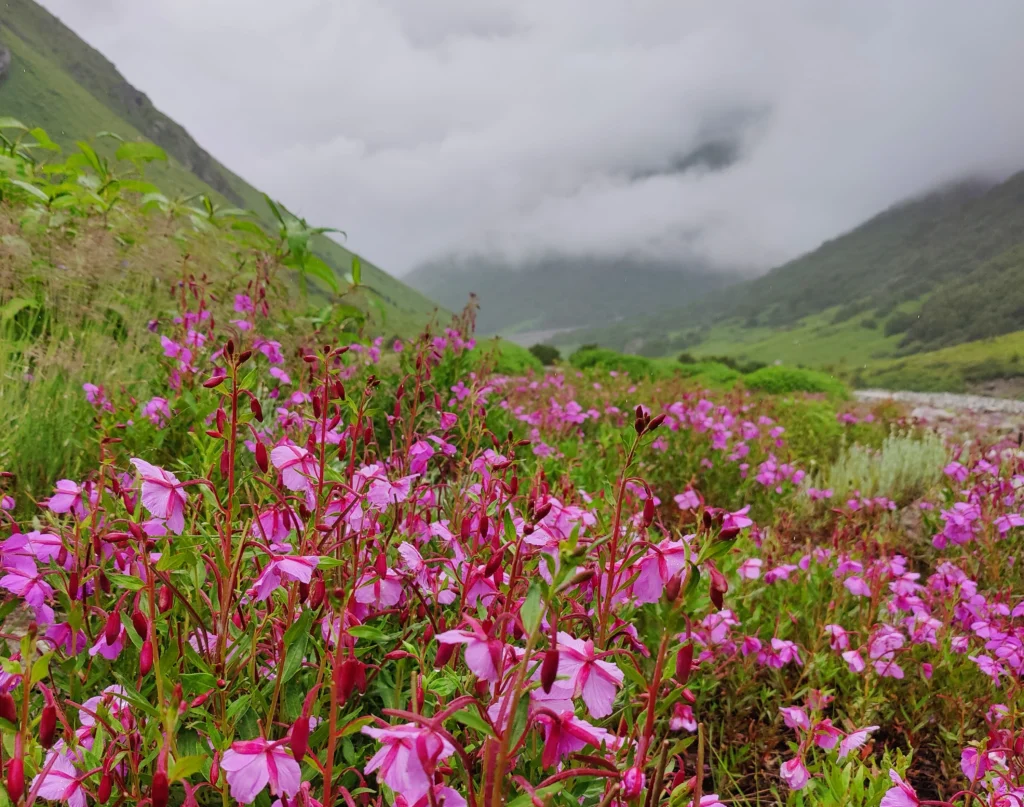
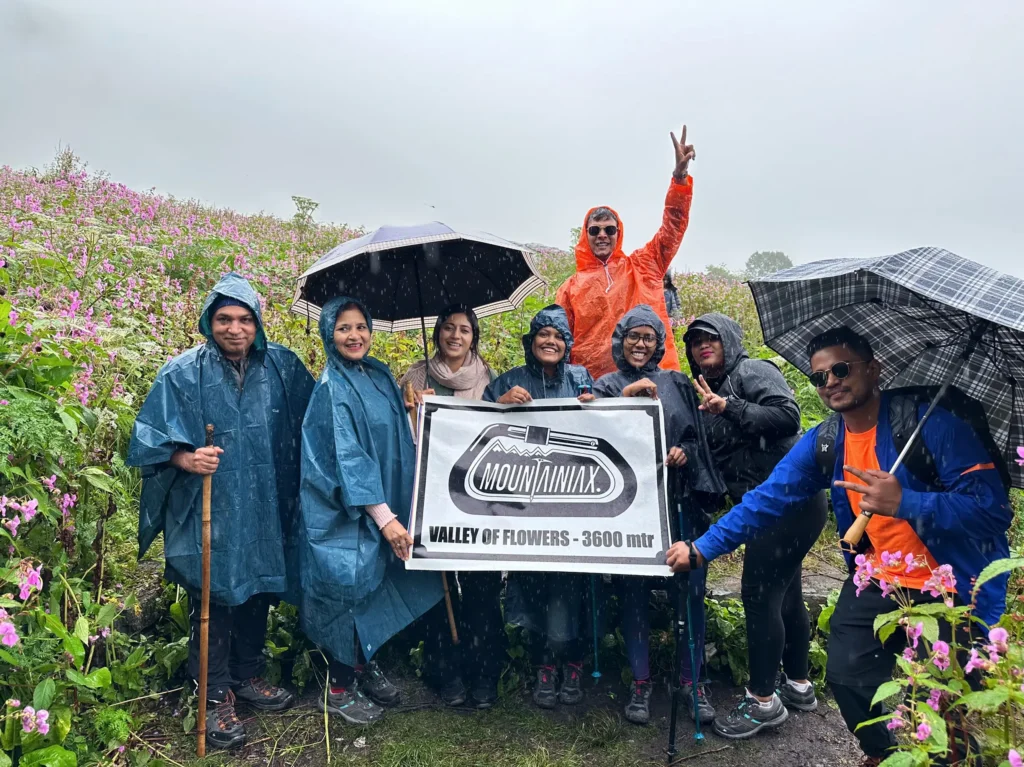
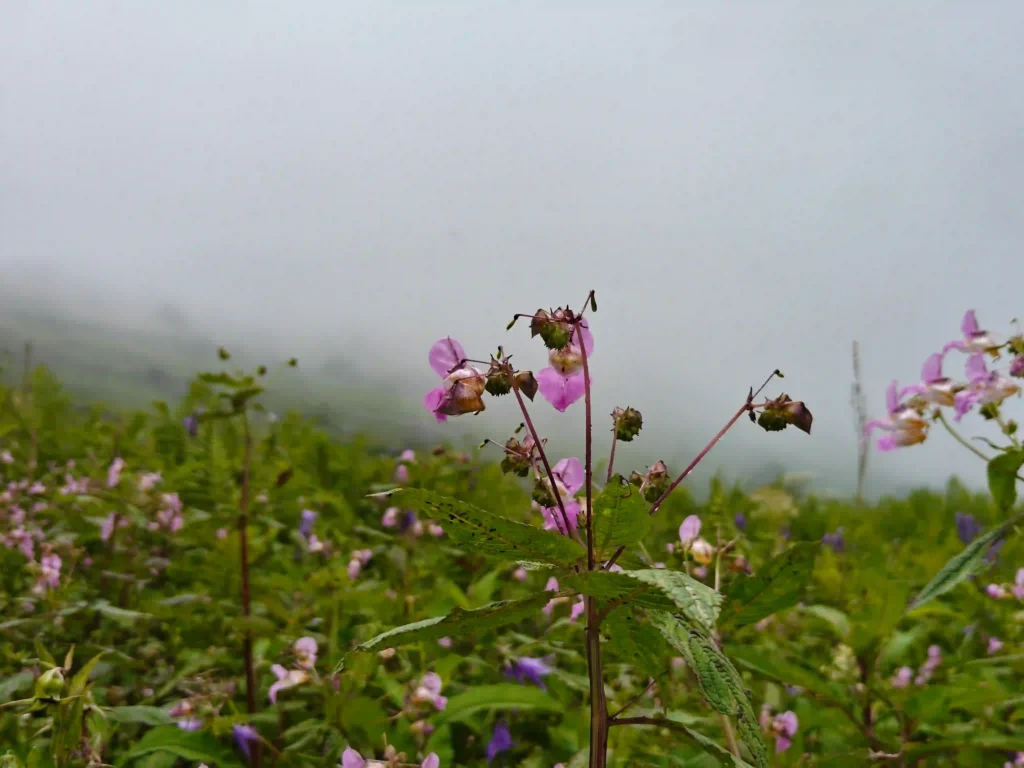
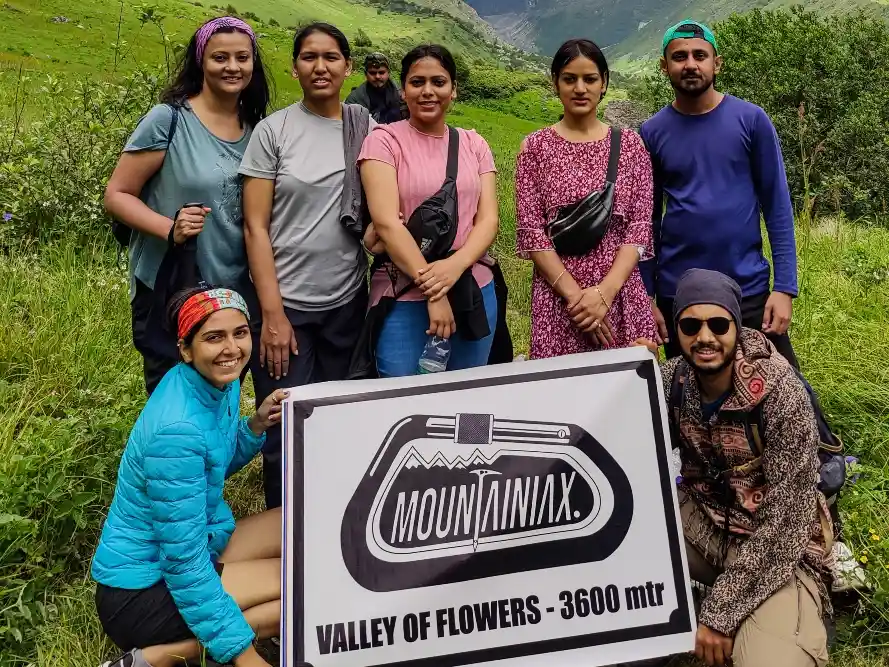
During the blooming season from July to September, the valley is covered with over 500 species of alpine flowers, including the Himalayan Blue Poppy, Brahma Kamal, Cobra Lily, Primulas, Anemones, Orchids, and Potentillas. As you walk deeper into the valley, you’ll enjoy breathtaking mountain views, glacial streams, and endless photography opportunities in one of India’s most beautiful UNESCO World Heritage Sites. After spending several hours exploring this natural wonder, return to Ghangaria by evening for dinner and an overnight stay. Please note that camping inside the Valley of Flowers National Park is not permitted, helping preserve its unique ecosystem for future generations.
4
DAY
- Ghangaria → Hemkund Sahib → Ghangaria
- 🥾 12 km round trip
- ⏱️ 7–8 hrs
- 📍 Hemkund: 4,329 m
Today is the most challenging yet one of the most memorable days of your Valley of Flowers Trek. After an early breakfast, begin the 6 km ascent from Ghangaria to Hemkund Sahib (4,329 m). The well-paved trail climbs steadily through alpine meadows, rocky mountain paths, waterfalls, and vibrant fields of seasonal wildflowers, including the revered Brahma Kamal during the blooming season. As you gain altitude, you’ll be rewarded with spectacular views of the surrounding Himalayan peaks, making every step worthwhile.
At the summit, you’ll reach the serene Hemkund Sahib, one of the world’s highest Sikh pilgrimage sites, set beside a crystal-clear glacial lake surrounded by seven majestic Himalayan peaks. Visitors of all faiths are welcome to explore the gurudwara and enjoy the warm langar (community meal) served to pilgrims and trekkers. After spending time at this peaceful and spiritually significant destination, begin your descent to Ghangaria. The downhill walk requires careful footing, especially if the trail is wet, before returning to your guesthouse for dinner and an overnight stay.
5
DAY
- Ghangaria → Govindghat → Joshimath
- 🥾11 km descent + drive
- ⏱️ 4–5 hrs trek
After breakfast, begin your descent from Ghangaria and retrace the scenic trail along the Pushpawati River to Pulna, followed by a short drive to Govindghat. The downhill trek is easier than the ascent, allowing you to enjoy the surrounding forests, waterfalls, suspension bridges, and Himalayan landscapes from a new perspective.
From Govindghat, you’ll continue your journey towards Joshimath. If time and road conditions permit, you can also visit the sacred Badrinath Temple, one of the four revered Char Dham pilgrimage sites, located about 25 km from Govindghat. Dedicated to Lord Vishnu and set against the magnificent Neelkanth Peak, Badrinath is renowned for its spiritual significance and breathtaking mountain setting. Later, return to Joshimath for dinner and an overnight stay.
6
DAY
- Joshimath → Dehradun
- 🛣️ 270 km Drive
- ⏱️ 9-10 Hrs
After breakfast, begin your return journey from Joshimath to Dehradun, following the scenic route along the Alaknanda River through the picturesque towns of Chamoli, Karnaprayag, Rudraprayag, and Devprayag. Enjoy one last glimpse of the Garhwal Himalayas as you travel back through winding mountain roads and beautiful river valleys.
By evening, the Mountainiax team will drop you near Dehradun Railway Station, marking the end of your 6-Day Valley of Flowers Trek. With unforgettable mountain landscapes, vibrant alpine meadows, and the spiritual experience of Hemkund Sahib, you’ll return home with lasting memories of one of the most beautiful trekking experiences in the Indian Himalayas.
Day | Segment | Distance | Time |
Day 1 | Dehradun to Govindghat (Drive) | ~270 km | 9–10 hrs |
Day 2 | Govindghat → Ghangaria (Trek) | 14 km | 5–6 hrs |
Day 3 | Ghangaria → Valley → Ghangaria | ~8 km | 5–6 hrs |
Day 4 | Ghangaria → Hemkund → Ghangaria | 12 km | 7–8 hrs |
Day 5 | Ghangaria → Govindghat (Descent) | 14 km | 4–5 hrs |
Day 6 | Joshimath → Dehradun (Drive) | ~270 km | 9–10 hrs |
TOTAL TREKKING | On foot across all days | ~48 km | 5N/6D days |
Valley of Flowers Trek Distance — Route Breakdown
- Difficulty Level
Valley of Flowers Trek Difficulty Level
The Valley of Flowers Trek is graded Easy to Moderate, making it an excellent choice for beginners and experienced trekkers alike. Although the trail is well-marked and non-technical, trekking at high altitude and covering daily distances requires a reasonable level of fitness and preparation.
What "Easy to Moderate" Actually Means
The trek does not involve any technical climbing, glacier crossings, or rope sections, making it suitable for first-time Himalayan trekkers. The trail is well-marked, with daily trekking distances of 8–12 km, and the valley’s maximum altitude of 3,658 m is comfortable for most healthy trekkers with basic fitness. The most challenging part is the Hemkund Sahib trek — a steep 6 km ascent to 4,329 m. High altitude and continuous climb require good stamina, while monsoon can make the trail wet and slippery. With proper preparation, comfortable gear, and a steady pace, most beginners can complete the trek safely.
Day-by-Day Difficulty Breakdown
Day 1: Drive only — no trekking.
Day 2 (Govindghat/Pulna → Ghangaria): Moderate — gradual incline on a well-maintained trail.
Day 3 (Valley of Flowers): Easy — mostly flat meadow walking after a gentle approach.
Day 4 (Hemkund Sahib): Moderate to Challenging — steep ascent, altitude gain, sometimes icy near the top. Hardest day.
Day 5 (Descent): Easy to Moderate — same trail reversed; knees take more load.
Day 6: Drive only.
Who Can Do This Trek?
Ideal for beginners, families, solo travellers, couples, and senior citizens with a reasonable level of fitness. Anyone who can comfortably walk 8–10 km in a day can usually complete the Valley trek. The Hemkund Sahib trek is more challenging but optional. Children above 8–9 years who are physically active and senior citizens in good health can also enjoy the trek. Anyone with pre-existing heart, lung, or joint conditions should consult a doctor before planning the trek, especially for Hemkund Sahib.
Fitness Preparation Tips
- Start preparing at least 4–6 weeks before the trek.
- Walk or jog 4–5 km daily — aim to cover 5 km in under 45 minutes.
- Include stair climbing or uphill walks to build leg strength.
- Practise with a loaded backpack (start with 5 kg, build up to 7–8 kg).
- Stay well-hydrated in the days leading up to the trek.
- Avoid alcohol for at least 48 hours before departure — it impairs acclimatisation.
- Benchmark: jog 5 km in 35–40 minutes, or cycle 10 km in 30 minutes = ready.
- Difficulty Level
Health, Fitness & Medical Eligibility
Your safety on the trail matters more to us than a completed booking. Before joining any Mountainiax batch, please review these health guidelines honestly and consult your doctor if you’re uncertain.
General Health Guidelines
- Resting pulse rate should ideally be between 60 and 100 beats per minute.
- Blood pressure within a safe range — approx. 100–130 mm Hg systolic and 75–85 mm Hg diastolic.
- Resting respiratory rate between 12 and 20 breaths per minute.
- No active liver or kidney conditions.
- Trekkers with Diabetes Mellitus, Bronchial Asthma, heart conditions, or Hypertension should consult their physician and inform our trek coordinator before booking.
- Trekkers with a pacemaker implant are advised not to attempt this trek, particularly the Hemkund Sahib segment.
- If you have a history of epilepsy or chronic sinus issues, please speak to our trek coordinator before booking.
- If your BMI falls significantly outside the normal range (18.5–25), a quick call before booking helps us plan pacing and support.
A Simple BMI Guide
| BMI Range | Category |
|---|---|
| Below 16.5 | Severely Underweight |
| 16.5 – 18.5 | Underweight |
| 18.5 – 25 | Normal |
| 25 – 30 | Overweight |
BMI = Weight (kg) ÷ Height (m)². Being outside "Normal" doesn't disqualify you — it simply means our team may recommend extra preparation time or a pre-trek call.
Medical & Disclaimer Form
Every trekker must carry a signed Medical & Disclaimer Form on the day of departure. This form confirms that you have disclosed any relevant medical conditions and understand the responsibilities and physical demands of high-altitude trekking. Mountainiax will provide the form during the pre-trek briefing. Please complete it a few days before departure and bring a signed hard copy with you to ensure a smooth check-in.
Kids, Families & Group Guidelines
- Children below 12 years should be accompanied by a parent or guardian throughout the trek and are recommended for the Valley of Flowers day only; the Hemkund Sahib climb is generally not advised for very young children.
- Children between 12 and 18 years can join with a signed parental consent/disclaimer form.
- Families, college groups, and corporate teams are welcome — please inform us in advance so we can plan guesthouse sharing and pacing for mixed-fitness groups.
- Senior citizens are welcome on all our batches; please read the Health & Medical Eligibility section above before booking.
- Things to Carry
Things to Carry — Complete Packing List
- 🎒 Basic Gear
- Backpack (50–60 litres, with rain cover)
- Daypack (20–30 litres, if you opt for luggage offloading)
- Trekking shoes with good ankle support and grip
- Trekking pole (at least one; two recommended for the Hemkund descent)
- LED torch or headlamp with spare batteries
- One water bottle (1 L) — second bottle/hydration pack for Hemkund day
- Lunch box / small tiffin
- Personal or prescribed medications, plus basic first-aid kit
- 🧥 Clothes
- Trekking jacket (waterproof, windproof)
- Warm fleece or down layers
- Two pairs of quick-dry trek pants
- One pair of thermal innerwear
- Full-sleeve dry-fit t-shirts
- One pair of thermal innerwear
- Raincoat or poncho (mandatory — this is a monsoon trek)
- 🕶️ Accessories
- Sunglasses (UV protection)
- Sunscreen (SPF 50+)
- Lip balm (SPF 30)
- Synthetic hand gloves
- Woolen cap
- Three pairs of trekking socks
- A sturdy hat or cap for sun protection
- 📄 Documents & Others
- Original + one photocopy of a government photo ID (Aadhaar / Passport / DL / Voter ID)
- Two passport-size photographs (required for the Biosphere Reserve permit)
- Signed Medical & Disclaimer Form
- A plastic cover or dry bag for wet clothes
- Offline maps downloaded in advance (Google Maps offline or Maps.me)
Valley of Flowers Trek — Package & Cost
Budget
- 5 Nights / 6 Days
- Starting from: Dehradun
- Transport: Pickup to Drop included
- Dormitory / triple sharing accommodation
- All vegetarian meals included
- Certified trek guide and support staff
- Forest entry permits and camping fees
- Sleeping bags, mats, and tents
Limited seats — call +91 6398937502
- What's Covered
Inclusions & Exclusions
- ✅ Included
- Transport support from Dehradun to Dehradun.
- All vegetarian meals starting from dinner on Day 1 to dinner on Day 5.
- Guesthouse/Homestay accommodation in Ghangaria on triple/quad sharing.
- guesthouse wording throughout the trek on sharing basis.
- Professional guide, cook and support staff.
- Gaiters and Crampons, if required.
- Forest entry charges for Indian nationals (Nanda Devi Biosphere Reserve permit).
- Porter and mule support to carry camping equipment.
- All applicable taxes.
- ❌ Excluded
- Personal expenses like tips, personal medicines, phone calls etc.
- Any transport support during the trek apart from what is included above.
- Any cost or services not mentioned in the Inclusions.
- Accommodation in Dehradun / Rishikesh before or after the trek.
- Cost arising due to unforeseen incidents like bad weather, medical evacuation, road blocks etc.
- Porter/mule charges to carry personal luggage — can be arranged at ₹500/day (1 soft bag per person, max 12 kg).
- Optional Add-ons
- Luggage offloading (porter for personal bag): ₹500/day
- Trekking pole rental: available on request
- Extra night's stay in Dehradun/Rishikesh before or after the trek: available on request
Note: Mountainiax uses guesthouse-based stays throughout this itinerary, not tented camping, since camping is not permitted inside the Valley of Flowers or in Ghangaria under current forest regulations. If you’ve seen “tented accommodation” or “camping equipment” mentioned elsewhere for this trek, that reflects an outdated version of our package and has been corrected here.
Enquire Now — Limited seats. Call +91-6398937502 / +91-7887449236
- Important
Cancellation & Refund Policy
Cancellation Policy
We understand that plans can change. If you need to cancel, reduce, or amend a guaranteed reservation, please do so by 12 noon, 15 days prior to arrival to avoid cancellation charges. Any cancellation made within 15 days of arrival will be 100% non-refundable.
No cancellations will be accepted over the phone or via WhatsApp message. Please reply to the email confirmation you received at the time of booking to request a cancellation.
No refunds will be provided in case of problems arising due to government orders, harsh weather conditions, protests, landslides, or other unforeseen circumstances. If a trek is called off at the last moment due to natural calamities, participants will be provided with a travel voucher for the same amount, valid within 365 days for any package of equal value.
Refund Policy
| Cancellation Timing | Refund |
|---|---|
| Up to 21 days prior to departure | 70% refund |
| Between 21 to 14 days prior | 50% refund |
| Between 14 to 10 days prior | 30% refund |
| Less than 10 days of departure | No refund (can transfer trek to someone else) |
Note: Refunds are subjected to deductions for any expenses incurred for hotel booking or transport. Refunds are applicable on the total cost and not on the advance amount.
- Plan Your Trip
Best Time to Visit Valley of Flowers Trek
- ⭐ Best
July – August
Peak Bloom Season
Mid-July to mid-August is the best time. The valley transforms into a vibrant alpine meadow with 500+ species of wildflowers — Blue Poppies, Brahma Kamal, Cobra Lilies, Primulas, Anemones, and Marsh Marigolds. Light to moderate rainfall is common and plays a vital role in blooming.
- ✅ Good
June & September
Early & Late Season
In June, the park reopens after winter — fresh greenery, early wildflowers, pleasant weather, fewer crowds. By September, peak bloom transitions into late-season flowers (Asters, Gentians), rainfall decreases, and skies become clearer.
- ⚠️ Closed
October – May
Valley Closed
The Valley of Flowers National Park is typically open from June to early October and remains closed during winter due to heavy snowfall. Hemkund Sahib welcomes pilgrims from around the second/third week of June until October.
For the best experience, plan your trek between July and August. June offers fresh greenery and fewer crowds, September brings clearer skies and peaceful trails.
- Plan Your Trip
How to Reach the Valley of Flowers Trek Base Camp
By Air
Jolly Grant Airport, Dehradun (DED) is well connected to Delhi and other major Indian cities. Our pickup point is near Dehradun Railway Station, about 25–30 min from the airport. Arrive a day before the trek for a hassle-free start.
By Train
Dehradun Railway Station (official pickup) is connected to Delhi, Mumbai, Lucknow, Kolkata. If direct trains aren’t available, Haridwar Junction is a great alternative — 45–60 min from Dehradun by road.
Oct-May
Dehradun is ~250 km from Delhi (6–7 hrs). Regular UTC and private buses from ISBT Kashmere Gate; taxis and self-drive also available. Reach Dehradun the evening before for a smooth morning pickup.
Getting to the Pickup Point
The Mountainiax pickup point is conveniently located near Dehradun Railway Station. After your booking is confirmed, our team will share the exact pickup location, reporting time (usually early morning), and a dedicated WhatsApp contact number for seamless coordination.
- Why Mountainiax
Trusted by Thousands of Trekkers — Why Choose Mountainiax
- 🏛️
Govt Registered Company
Fully registered travel operator with valid GSTIN and all required tourism licenses. Your money is safe with us.
- 🧭
Certified & Experienced Guides
Our trek coordinators and guides have 8+ years of experience on the Valley of Flowers and Hemkund Sahib route.
- ⭐
4.9★ on Google & TripAdvisor
Trusted by 1000+ trekkers across 100+ successful batches. Consistently rated best-in-class for safety and experience.
- 🕐
On-Time Operations
Punctual pickups, pre-booked guesthouses, and well-planned itineraries. No last-minute surprises or hidden costs.
- 📞
24/7 Support During Trek
Dedicated trip coordinator with you throughout. 24-hour call assistance for any emergency or query during the trek.
- 👨👩👧
Beginner & Group Friendly
Perfect first Himalayan trek. We manage solo trekkers, groups, corporate teams, and college trips with equal expertise.
- Visual Journey
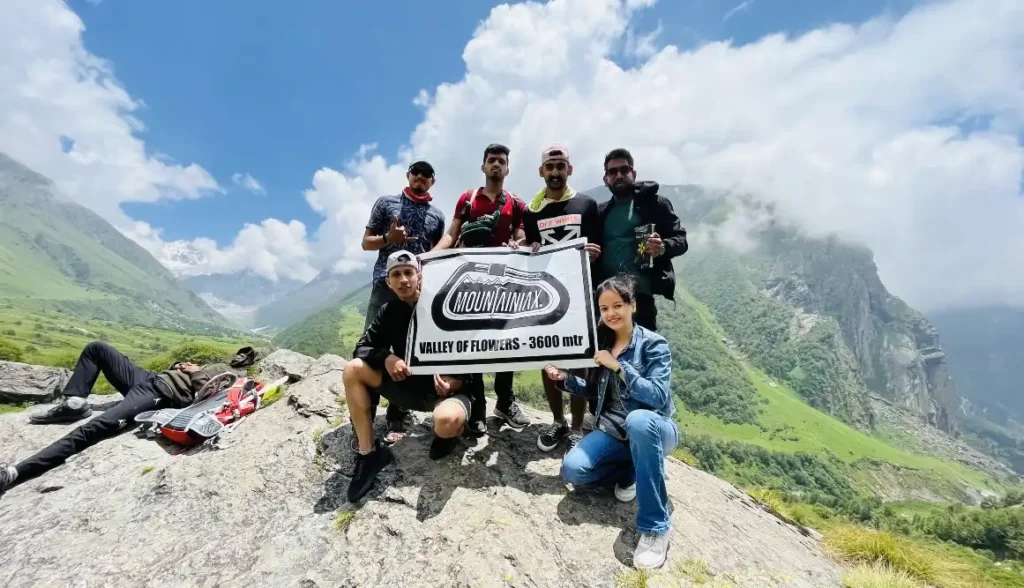
Valley of Flowers Trek Gallery

- Need Help?
Frequently Asked Questions
What is the difficulty level of the Valley of Flowers Trek?
The Valley of Flowers trek difficulty level is Easy to Moderate. The Valley itself is easy — a mostly flat meadow walk accessible to beginners and families. The Hemkund Sahib day is where it becomes genuinely moderate, with a steep 1,280 m climb at altitude. Most fit adults with basic preparation can complete the full itinerary.
What is the best time for the Valley of Flowers Trek?
The best time is July to August, when 500+ wildflower species are in peak bloom. Mid-July to mid-August is the absolute peak. June is good for early blooms and fewer crowds; September is good for late-season flowers and clearer skies. The valley is closed from October to May.
What is the total Valley of Flowers Trek distance?
The total trekking distance is approximately 35–42 km km across 4 walking days (excluding drive days), though this can range up to 42 km depending on your batch’s exact road-head and whether you complete the Hemkund Sahib side trip. This includes the approach to Ghangaria, the Valley round trip, the Hemkund Sahib round trip, and the descent back to Govindghat.
Is the Valley of Flowers Trek suitable for beginners?
Yes — one of the best first Himalayan treks for beginners precisely because the Valley day itself is easy, the trails are well-marked, and the duration is manageable. Mountainiax’s guides are experienced in supporting first-timers throughout. The Hemkund day is optional for those who want to build up gradually.
What Valley of Flowers Trek package does Mountainiax offer?
Mountainiax offers a 5 Nights/6 Days Valley of Flowers Trek package starting at ₹10,500/- per person from Dehradun. The package includes return transport, all vegetarian meals, guesthouse accommodation, a certified guide, Biosphere Reserve permits, and 24/7 support. Contact us for group discounts and custom departure dates.
Is a permit required for the Valley of Flowers?
Yes. The Valley of Flowers lies inside the Nanda Devi Biosphere Reserve, a UNESCO World Heritage Site, and an entry permit is mandatory. For Indian nationals, the permit fee is included in the Mountainiax package. You’ll need 2 passport-size photos and a copy of your government ID. International trekkers pay a higher permit fee — confirm with us at booking.
Can I do the Valley of Flowers Trek solo (without a group)?
Technically, yes — the trail is open to individual trekkers. However, trekking with a certified operator like Mountainiax is strongly recommended for safety, logistics, and permits. Solo trekkers also benefit from the group energy on demanding days like Hemkund Sahib. We accommodate solo bookings across all our group departures.
Is the mobile network available during the Valley of Flowers Trek?
The Jio network is intermittently available in Ghangaria only. Beyond that — inside the Valley and on the Hemkund trail — there is no mobile connectivity of any kind. Download offline maps before leaving Joshimath and inform your family in advance. Our guides carry emergency communication equipment on every batch.
Where can I store extra luggage during the trek?
Extra luggage can be stored securely at your Govindghat/Joshimath guesthouse before you start trekking. Carry only what you need in the mountains — unnecessary weight makes the Hemkund day significantly harder. Mountainiax will advise on luggage management during the pre-trek briefing.
Is camping allowed during the Valley of Flowers Trek?
No. Camping is not permitted inside the Valley of Flowers National Park (a protected UNESCO site) and is also not permitted in Ghangaria under current local regulations. All Mountainiax stays are in guesthouses/homestays with basic but comfortable rooms.
What type of accommodation is provided?
You’ll stay in simple, clean guesthouses in Govindghat, Ghangaria, and Joshimath, typically on twin/triple sharing with attached or shared washrooms. Facilities are basic but comfortable — don’t expect luxury stays, but the mountain setting and hospitality more than make up for it.
Are mules or porters available for carrying luggage?
Yes. Mules and porters are available for personal luggage between Govindghat/Pulna and Ghangaria at approximately ₹500/day (max 12 kg, one bag). Mules are also available for the Hemkund Sahib climb. However, mules are not permitted inside the Valley of Flowers — that stretch must be covered entirely on foot.
Can children or senior citizens do this trek?
Yes. Children above 8–9 years in good health, and senior citizens with reasonable fitness, regularly complete the Valley of Flowers day with Mountainiax. The Hemkund Sahib day is more demanding and optional — anyone who prefers to skip it can rest at Ghangaria. Please review our Health & Medical Eligibility section and inform us of any pre-existing conditions before booking.
What fitness level is required?
A simple benchmark: if you can jog 5 km in around 35–40 minutes, or cycle 10 km in about 30 minutes, without significant fatigue, you’re well prepared. Start training at least 4–6 weeks in advance with regular walks, stair-climbing, and loaded-backpack practice.
How do I book the Valley of Flowers Trek with Mountainiax?
Call or WhatsApp us at +91-6398937502 or +91-7887449236. You can also fill out the booking form on our website. We confirm your slot within 2 hours and send the full pre-trek brief — packing list, pickup point, payment details, and permit requirements. Spots fill up fast in peak season (July–August), so book at least 4–6 weeks in advance.
Does it rain a lot during this trek?
Yes — this is a monsoon trek by nature, since the flowers themselves depend on the monsoon rains. Expect regular afternoon showers, misty trails, and wet, sometimes slippery paths, especially in July and August. Good rain gear (poncho, waterproof shoes, dry-bag for electronics) is essential, not optional.
Can the Valley of Flowers be visited in a single day?Can the Valley of Flowers be visited in a single day?
No. You first need to reach Ghangaria, the base village, which itself takes a full trekking day from Govindghat/Pulna. From Ghangaria, you visit the Valley of Flowers as a separate day trip and return the same evening. The overall itinerary needs a minimum of 5–6 days, including travel.
Is Hemkund Sahib included in the Mountainiax package?
Yes, the Hemkund Sahib visit on Day 4 is built into the standard 5N/6D itinerary, along with an optional Badrinath Temple stop on Day 5. Both are included at no extra cost beyond your package price (excluding personal expenses at the shrine/temple, if any).
- Ready to Trek?
Ready to Trek the Valley of Flowers?
Book Your Free Trek Consultation Today — with a free itinerary planning session and limited slots available for the 2026 season.
- +91-6398937502 | +91-7887449236