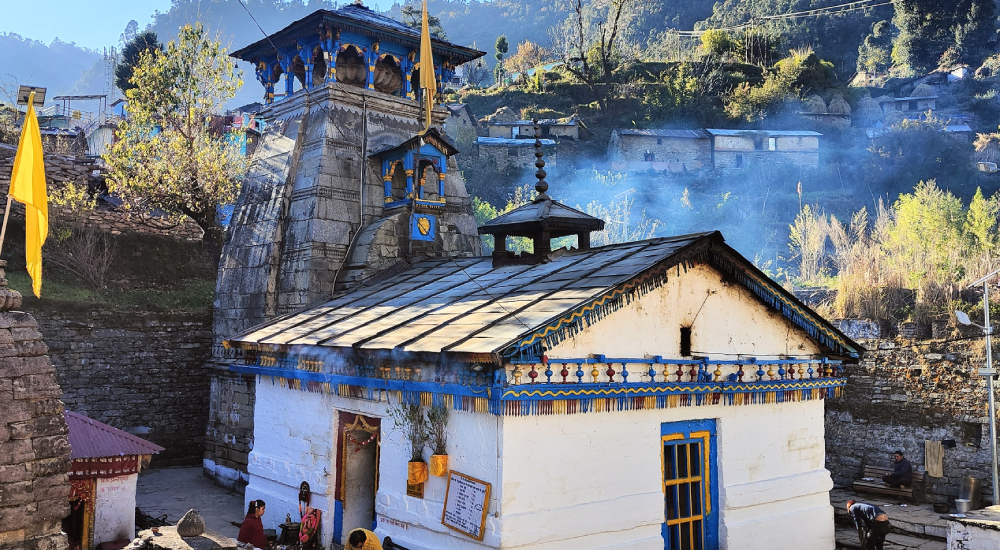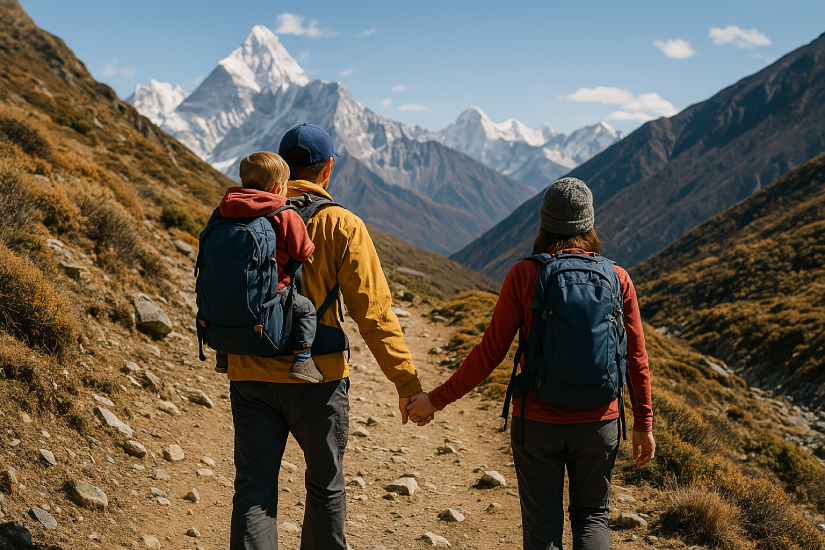
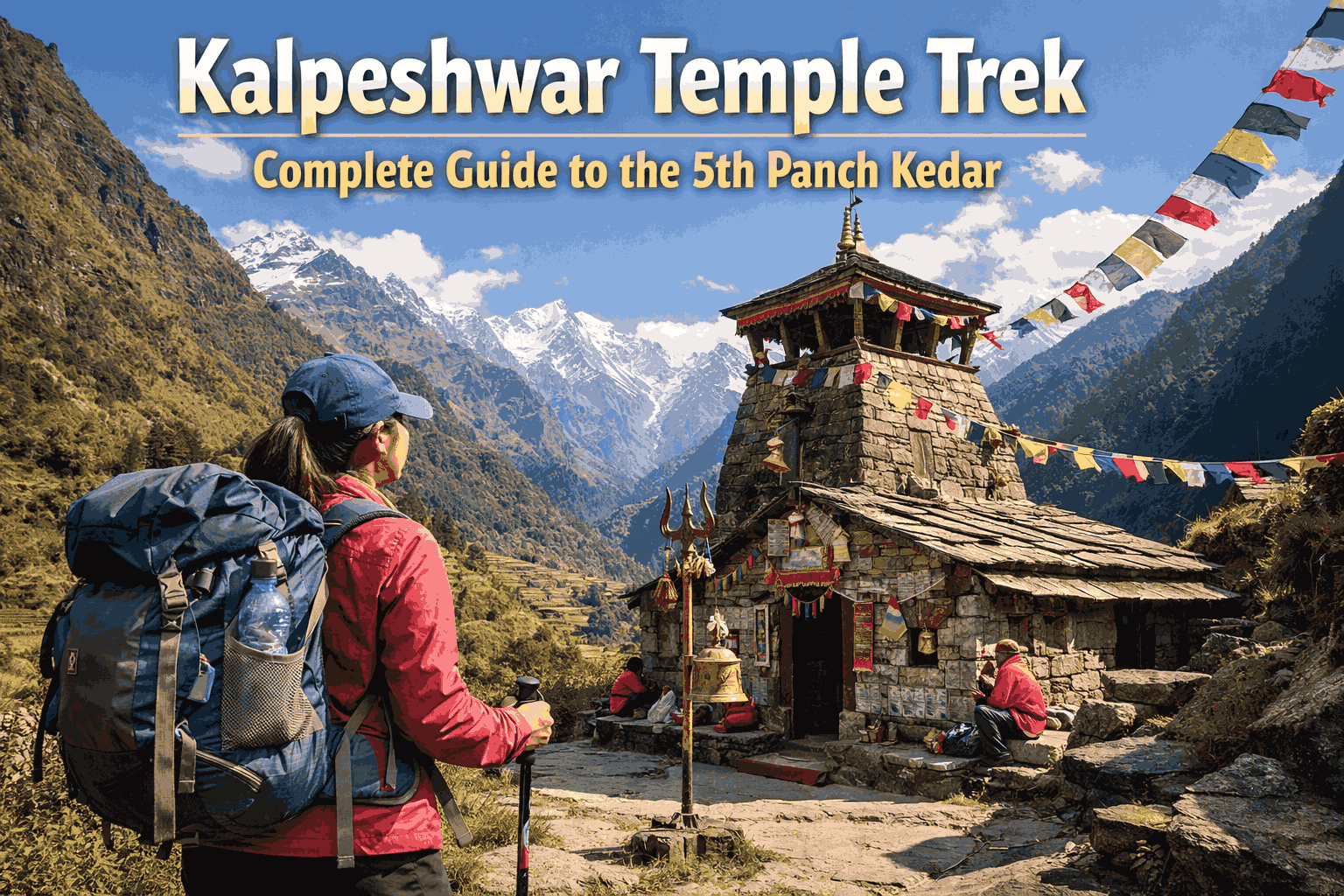
Tucked away in the remote Urgam Valley of Chamoli district in Uttarakhand, Kalpeshwar Temple is one of the most spiritually significant and naturally breathtaking destinations in the Indian Himalayas. As the 5th and final shrine of the sacred Panch Kedar circuit, Kalpeshwar holds a very special place in the hearts of Hindu pilgrims and adventure trekkers alike. Unlike the other four Panch Kedar temples that remain closed during the harsh winter months, Kalpeshwar Temple remains open throughout the year — making it a year-round pilgrimage destination unlike any other in the Garhwal Himalayas.
Whether you are a devout pilgrim looking to complete the Panch Kedar Yatra, an adventure enthusiast seeking an offbeat Himalayan trek, or a solo traveller chasing unexplored trails — Kalpeshwar has something deeply rewarding to offer. In this comprehensive guide, we cover everything you need to know about the Kalpeshwar Temple trek: its mythological significance, route details, best time to visit, accommodation, and essential travel tips.
Kalpeshwar Temple — Quick Facts at a Glance
- Location: Urgam Valley, Chamoli District, Uttarakhand
- Altitude: 2,200 metres (7,217 feet) above sea level
- Deity: Lord Shiva (Jatashankara — the matted hair)
- Panch Kedar Rank: 5th and last Kedar
- Trek Distance: Approx. 2 km from Urgam Village
- Open For: All Year (unlike other Panch Kedars)
- Nearest Town: Helang (on the Badrinath Highway)
- Best Time to Visit: April to June & September to November
The Mythology Behind Kalpeshwar: Why Is It So Sacred?
To truly appreciate Kalpeshwar, you need to understand its mythological roots that stretch back to the great epic of the Mahabharata. After the devastating Kurukshetra war, the Pandavas were overcome with guilt for having killed their own kin and sought the blessings of Lord Shiva to attain moksha (liberation from sins). However, Lord Shiva, displeased with the Pandavas, disguised himself as a bull and hid in the Garhwal region.
When the Pandavas finally tracked him down, the bull began to sink into the earth. Bhima, the strongest of the Pandavas, grabbed the bull by its tail but could only hold onto different body parts. These body parts of Lord Shiva emerged at five separate locations, and that is how the five sacred Panch Kedar temples came into being.
At Kalpeshwar, Lord Shiva’s Jata (matted hair) appeared, which is why the presiding deity here is known as Jatashankara. The word ‘Kalpeshwar’ itself is derived from the ‘Kalpa Vriksha’ — the divine wish-fulfilling tree — that is believed to exist near this temple. Devotees believe that sincere prayers offered here are always answered by the lord.
What Is the Panch Kedar Yatra? Understanding the Circuit
The Panch Kedar Yatra refers to the sacred pilgrimage that covers all five Shiva temples in the Garhwal Himalayas of Uttarakhand. Completing the full circuit is considered one of the most spiritually rewarding journeys a Hindu devotee can undertake. The five temples and their corresponding body parts of Lord Shiva are:
• Kedarnath temple (1st Kedar): The hump of the bull — the most famous and highest altitude temple
• Tungnath temple (2nd Kedar): The arms — the highest Shiva temple in the world at 3,680 m
• Rudranath temple (3rd Kedar): The face — hidden deep in the alpine meadows of Panar Bugyal
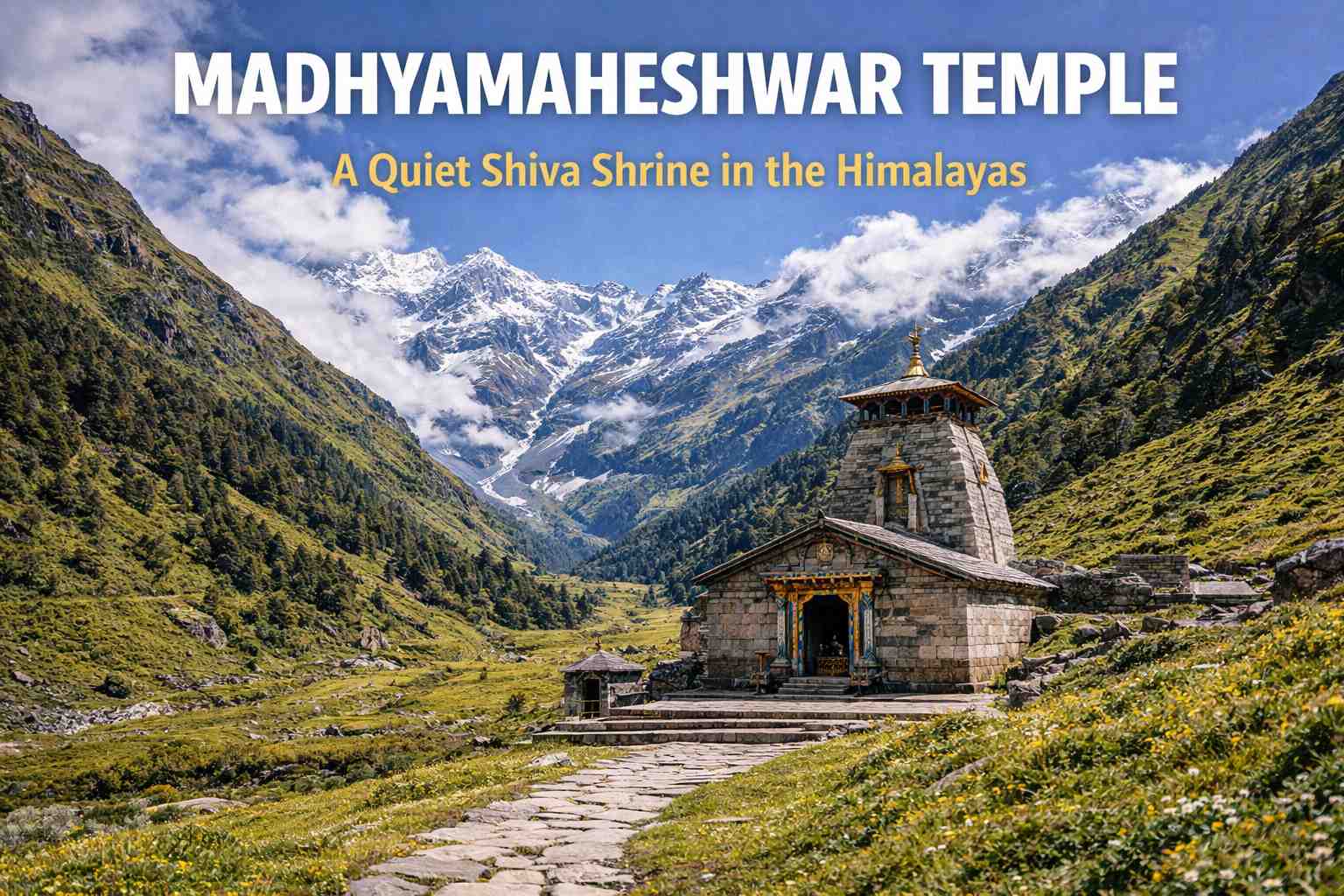
• Madhyamaheshwar temple (4th Kedar): The navel and chest — set amidst stunning meadows at 3,497 m
• Kalpeshwar temple (5th Kedar): The matted hair (Jata) — the only year-round open Panch Kedar temple
If you’re planning to undertake the full circuit, booking a well-structured Panch Kedar Yatra package is highly recommended. A good package takes care of logistics, accommodation, permits, and a knowledgeable guide — letting you focus entirely on the spiritual and natural experience.
Kalpeshwar Temple Trek Route: How to Reach Step by Step
One of the biggest advantages of Kalpeshwar over other Panch Kedar shrines is how accessible it is. The trek to Kalpeshwar is relatively short and manageable, making it suitable even for first-time trekkers and older pilgrims. Here is a step-by-step breakdown of how to reach Kalpeshwar Temple:
Step 1: Reach Haridwar or Rishikesh
Your journey begins at Haridwar or Rishikesh — the twin gateway cities to the Uttarakhand Himalayas. Both cities are well connected by rail and road from Delhi, Dehradun, and other major cities across India.
Step 2: Drive to Helang (on NH-58 Badrinath Highway)
From Rishikesh, take the road towards Badrinath (NH-58). Helang is a small roadside village located approximately 220 km from Rishikesh and about 14 km before Joshimath. This drive typically takes 7 to 9 hours, depending on road conditions. Helang serves as the main entry point to the Urgam Valley and the Kalpeshwar trek.
Step 3: Drive from Helang to Urgam Village (13 km)
From Helang, a motorable road leads into the Urgam Valley for about 13 km until you reach Urgam Village at an altitude of approximately 2,100 metres. This road is narrow and winding, with stunning views of the valley. You can hire a local jeep or shared taxi from Helang for this stretch.
Step 4: Trek from Urgam Village to Kalpeshwar Temple (2 km)
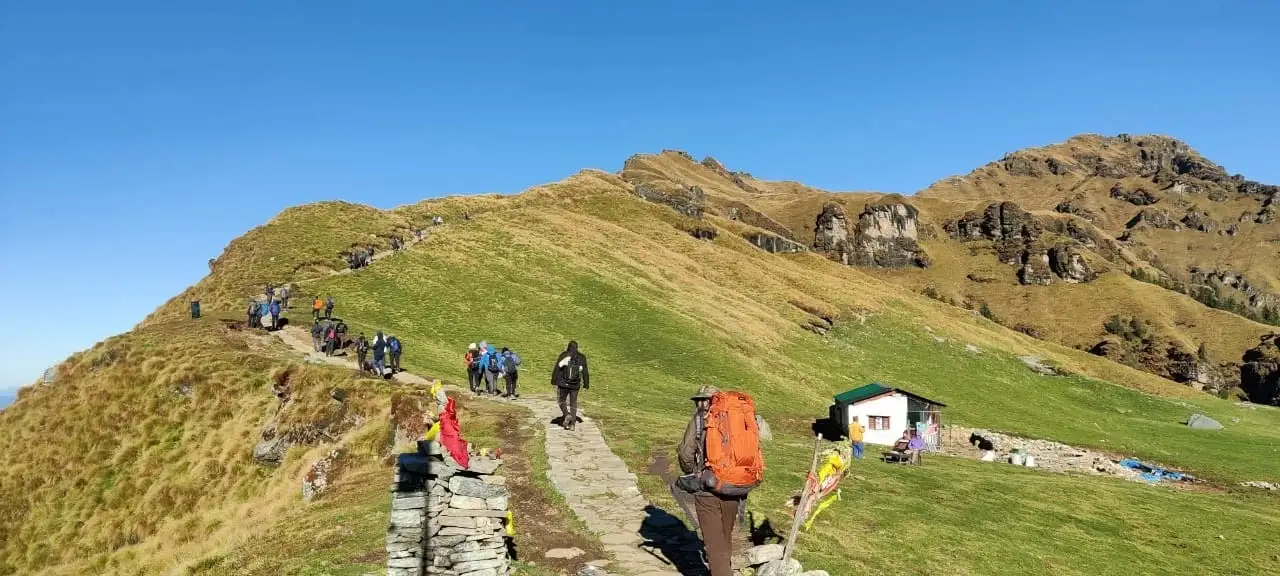
From Urgam Village, the actual temple trek begins. The trail is about 2 km long and involves a gentle ascent through dense oak and rhododendron forests. The path is well-marked and takes approximately 45 minutes to 1 hour to complete. The trail passes through a natural cave, inside which the temple itself is situated — a truly unique and awe-inspiring experience.
Best Time to Visit Kalpeshwar Temple
As mentioned earlier, Kalpeshwar is the only Panch Kedar temple that remains accessible throughout the year. However, certain seasons offer a vastly better experience than others:
• April to June (Spring/Early Summer): This is the most popular and recommended season. The skies are clear, the trails are lush green, rhododendrons bloom in vibrant red and pink, and the temperature ranges between 10°C and 20°C — ideal for trekking and sightseeing.
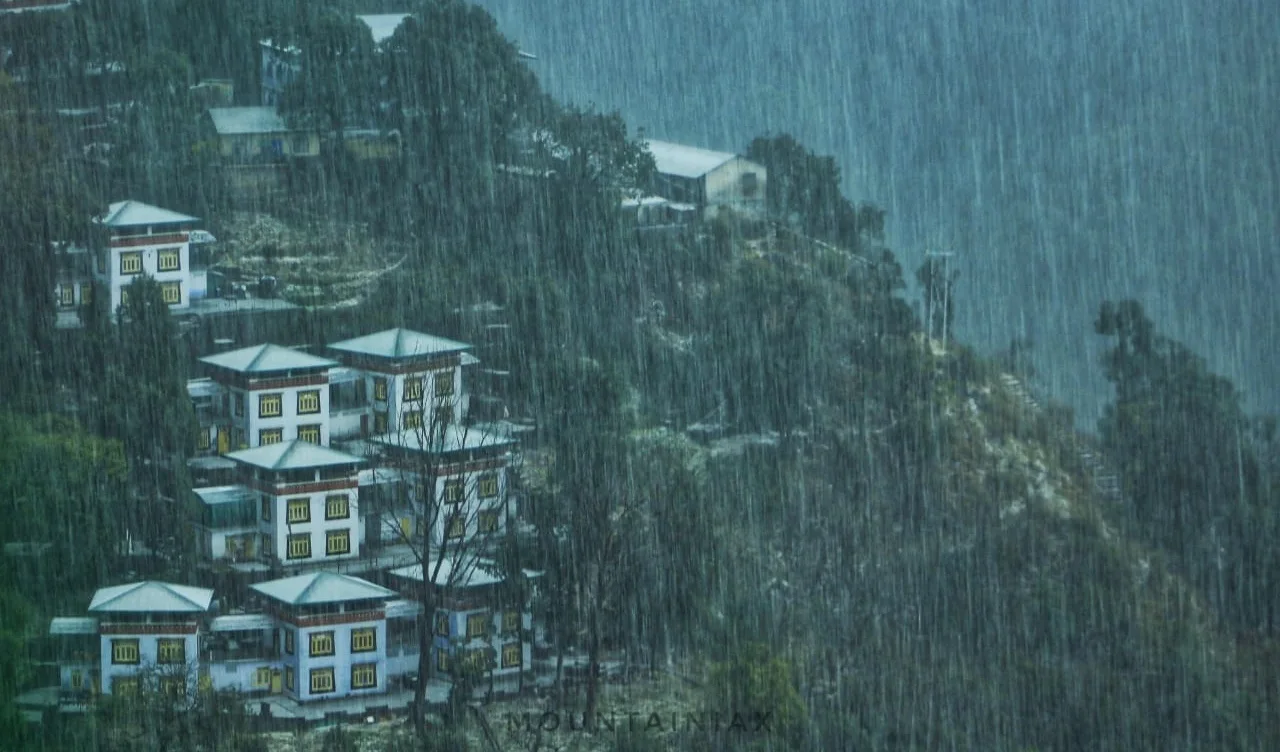
• July to August (Monsoon): The Urgam Valley receives heavy monsoon rainfall, making the trek slippery and potentially dangerous. Landslides are common on the road from Helang to Urgam. Avoid visiting during this period if possible.
• September to November (Autumn): Another excellent window for visiting. Post-monsoon Uttarakhand is at its most beautiful — sparkling clear mountain air, fresh greenery, and snow-capped peaks visible from the higher elevations. October is arguably the best single month to visit.
• December to March (Winter): While the temple remains open, heavy snowfall makes the journey extremely challenging. The road to Urgam may be blocked and temperatures can drop well below zero. Suitable only for experienced winter trekkers.
Nearby Attractions: Explore Beyond the Temple
The Urgam Valley and its surroundings are home to several hidden gems that are worth exploring while you are in the region:
Anusuya Mata Temple: A highly revered temple located about 5 km from Mandal village in the Urgam Valley. Dedicated to Goddess Anusuya, this site is surrounded by dense forests and is considered extremely sacred in the Hindu tradition.
Vaitarni Kund: A small but spiritually significant glacial lake near Kalpeshwar, believed to be associated with the Vaitarni river of the afterlife in Hindu mythology.
Rudraprayag and Karnaprayag: Two of the five Panch Prayag (sacred river confluences) are located along the Badrinath Highway, offering spectacular views and an opportunity to perform holy dips.
Joshimath: Located just 14 km from Helang, Joshimath is the winter seat of Badrinath and serves as a gateway to the Auli ski resort and the Valley of Flowers National Park.
Where to Stay Near Kalpeshwar Temple
Accommodation near Kalpeshwar Temple is simple, functional, and aligned with the region’s offbeat Himalayan character. The area remains largely untouched by heavy commercialisation, which enhances its authenticity. Most options focus on basic comfort rather than luxury, making it suitable for trekkers and spiritual travellers seeking a quiet, immersive experience.
In Urgam Village, homestays run by local families are the most preferred choice. These stays are clean, affordable, and provide a direct glimpse into the Garhwali lifestyle, including traditional food and daily routines. Alternatively, Helang offers a few small guesthouses and dharamshalas that serve as convenient stopover points before entering the Urgam Valley.
For those looking for slightly better infrastructure, Joshimath is the nearest town with a wider selection of budget and mid-range hotels. Many visitors choose to stay there and plan a day trip to Kalpeshwar. Additionally, a Forest Rest House managed by the Uttarakhand Forest Department is available in Urgam Valley, but it requires booking due to limited availability.
Planning the Full Circuit? Why You Need a Panch Kedar Yatra Package
If Kalpeshwar has ignited your curiosity and you are now considering completing the entire sacred circuit, opting for a well-planned Panch Kedar Yatra package is one of the smartest decisions you can make. The full Panch Kedar circuit covers over 170 km of Himalayan terrain, crosses multiple villages and high-altitude meadows, and requires careful coordination of transport, accommodation, and trekking permits across different districts.
A curated package from an experienced trekking company typically includes:
• Airport or railway station pickup and drop from Haridwar/Rishikesh
• All inter-valley road transfers (private vehicle or shared taxi)
• Accommodation in guesthouses, homestays, or tented camps
• Experienced local trek guides who know the trails intimately
• All meals during the trek (breakfast, packed lunch, and dinner)
• Forest department permits and entry fee arrangements
• First aid and emergency evacuation support
• Customised itinerary based on your fitness level and time available
Whether you’re a solo traveller, a group of friends, or a family on a spiritual journey, there is a package suited for every kind of pilgrim and trekker.
Essential Trek Tips for Kalpeshwar Temple Visit
• Acclimatise properly: Even though the trail is short and low in altitude compared to other Himalayan treks, spending at least a day in Joshimath or Helang before heading to Kalpeshwar helps your body adjust to the mountain air.
• Carry warm layers: Even in summer, temperatures at Urgam can drop significantly after sunset. Always carry a fleece jacket and a windproof outer layer.
• Wear trekking shoes: The 2 km trail from Urgam to the temple is uneven and can be slippery, especially after rainfall. Good ankle-support trekking shoes are essential.
• Respect temple etiquette: Remove footwear before entering the cave temple. Photography inside the sanctum sanctorum is generally prohibited. Dress modestly as it is a place of worship.
• Carry enough cash: ATMs are not available in Urgam or Helang. Carry sufficient cash before leaving Joshimath or Rishikesh.
• Start early: Begin your trek from Urgam in the morning (by 7 am) to avoid afternoon clouds that can reduce visibility and increase the risk of light rain.
How to Reach Kalpeshwar: Complete Transport Guide
By Air
The nearest airport is Jolly Grant Airport in Dehradun, approximately 260 km from Helang. From the airport, hire a private taxi or take a bus to Rishikesh and then onwards to Helang.
By Train
The nearest major railway station is Haridwar (roughly 240 km from Helang) or Rishikesh (approximately 225 km). Both are well-connected to Delhi and other major cities. From there, buses and taxis are available to Helang.
By Road
Regular GMOU (Garhwal Motor Owners Union) and UPSRTC buses run from Rishikesh and Haridwar to Joshimath. From Joshimath or Chamoli, local buses and shared jeeps ply to Helang. The road is open year-round, though winter snowfall can occasionally cause temporary disruptions between December and February.
Final Thoughts
In a world of overhyped tourist destinations and overcrowded pilgrimage sites, Kalpeshwar Temple in the Urgam Valley stands apart as a place of genuine spiritual depth and unspoiled natural beauty. There are no long queues, no pushy vendors, and no commercialisation — just you, the mountains, the ancient cave temple, and the profound silence of the Himalayas.
Whether you visit Kalpeshwar as a standalone pilgrimage or as part of a broader exploration of Uttarakhand, you will return home with memories that last a lifetime. And if completing all five shrines of Lord Shiva is on your spiritual radar, there is no better way to do it than by booking a comprehensive Panch Kedar Yatra package that covers every sacred peak from Kedarnath to Kalpeshwar with expert guidance and full logistical support.
The Himalayas are calling. Kalpeshwar is waiting. Your journey to the abode of Jatashankara begins the moment you decide to take that first step.