Planning the Panch Kedar Yatra in 2026? Then your preparation is incomplete without a proper packing strategy. Unlike regular trips, this is a high-altitude trekking pilgrimage that demands the right gear for safety, comfort, and endurance.
Whether you’re trekking to Kedarnath, Tungnath, Rudranath, Madhyamaheshwar, or Kalpeshwar, carrying the correct essentials can make or break your journey.
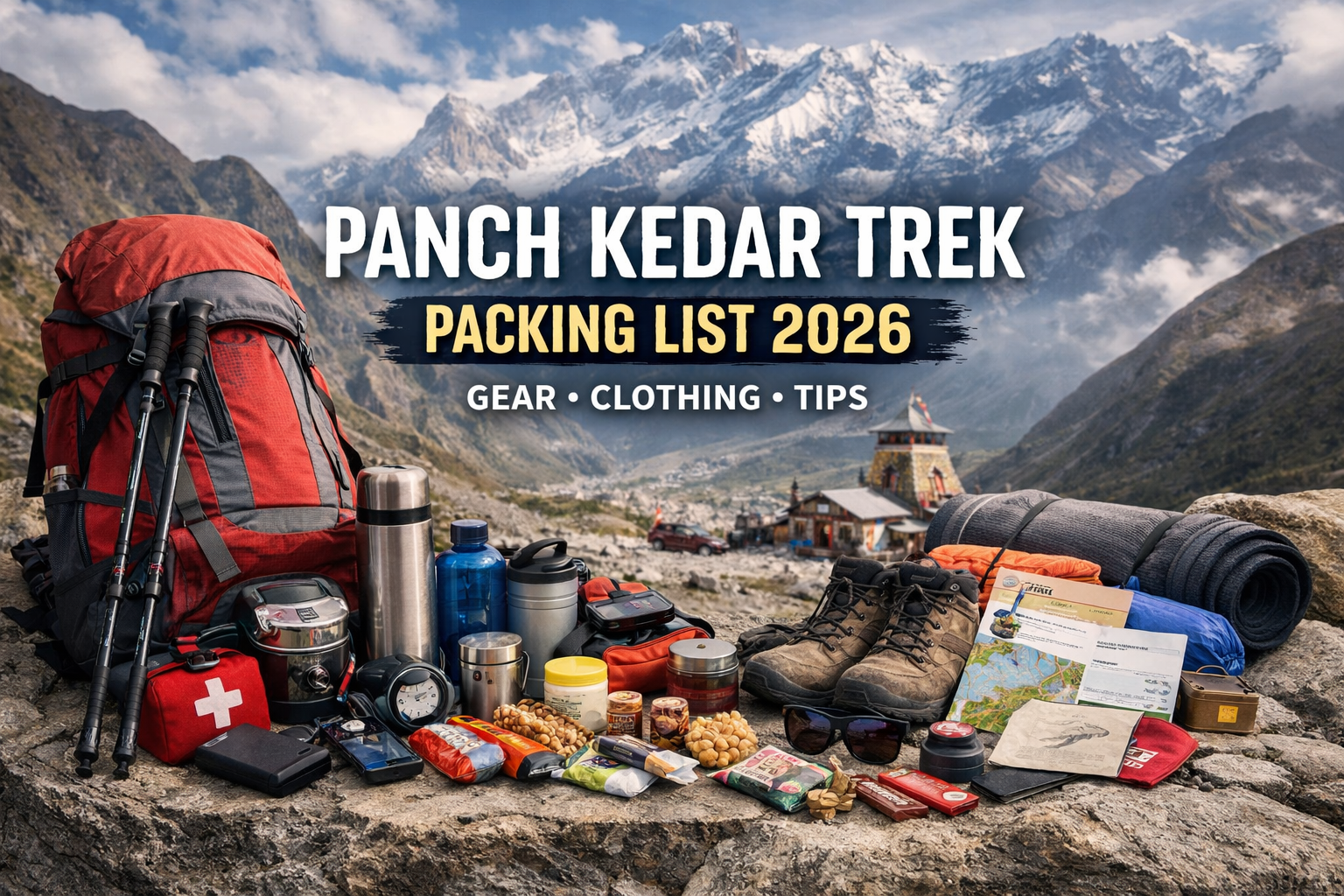
In this complete guide, we’ll cover the ultimate Panch Kedar trek packing list 2026, categorized for clarity, along with pro tips that most blogs miss.
Why Packing Right for Panch Kedar Trek is Crucial
The Panch Kedar Trek involves:
- High altitudes (up to 3,600+ meters), where oxygen levels are lower, and the body is under constant stress
- Unpredictable weather conditions, including sudden rain, cold winds, and temperature drops
- Long trekking distances (60+ km total) across steep, rugged, and remote terrain
- Limited access to medical facilities, food supplies, and gear replacement options
Because of these factors, packing becomes a critical part of trek planning rather than a secondary task. Every item you carry must serve a clear purpose—either for protection, survival, or efficiency.
A single missing item can lead to discomfort, altitude sickness, fatigue, or even force you to abandon the trek midway. Proper packing ensures safety, stability, and a smoother trekking experience in challenging Himalayan conditions.
1. Clothing Essentials (Layering is Key)
Layering is the most efficient clothing strategy for the Panch Kedar Trek, as it allows you to adapt to rapid temperature changes without carrying excessive weight. Instead of relying on a single heavy jacket, multiple layers help regulate body heat, manage sweat, and provide protection against harsh weather.
Base Layer (Innerwear)
- Thermal tops and bottoms (2 pairs) to retain body heat in cold conditions
- Sweat-wicking, quick-dry t-shirts to keep moisture away from the skin
Mid Layer (Insulation)
- Fleece jacket or wool sweater for warmth during colder sections
- Lightweight down jacket for high-altitude insulation
Outer Layer (Protection)
- Waterproof and windproof jacket to shield against rain and strong winds
- Poncho or raincoat for full-body rain protection
Bottom Wear
- Trekking pants (2–3 pairs) that are flexible and quick-drying
- Avoid jeans as they are heavy, retain moisture, and restrict movement
Accessories
- Woolen cap for heat retention
- Waterproof gloves for cold protection
- Neck gaiter or muffler to protect against wind chill
Pro Tip: Always carry an extra set of dry clothes in a waterproof bag to stay comfortable and prevent hypothermia.
2. Footwear (Most Critical Gear)
Your entire trek on the Panch Kedar Trek depends on foot stability, grip, and comfort. Poor footwear choices are one of the most common reasons for blisters, fatigue, and even injuries during long-distance Himalayan treks.
Must-Have Footwear
- High-ankle trekking shoes (water-resistant) to provide ankle support on uneven terrain
- Durable sole with strong grip for rocky paths, loose gravel, and slippery sections
Additional
- 3–4 pairs of woolen socks to keep feet warm in cold conditions
- 2 pairs of cotton or moisture-wicking socks for daytime trekking
- Lightweight slippers or sandals for camps and rest stops
Footwear should be selected based on durability, comfort, and terrain adaptability rather than appearance. Since the trek involves steep ascents and descents, proper ankle support reduces the risk of twists and strain.
Avoid new shoes—always break them in with practice walks before the trek to prevent painful blisters and discomfort on the trail.
3. Backpack & Storage
Efficient packing and storage management are essential for maintaining balance, accessibility, and endurance throughout the Panch Kedar Trek. A well-organized backpack reduces physical strain and ensures that critical items are always within reach during long trekking days.
Main Backpack
- 40–60L trekking backpack, suitable for multi-day trekking with enough capacity for all essentials
- Ergonomic design with padded shoulder straps and hip support for weight distribution
- Rain cover (essential) to protect gear from sudden rainfall and moisture
Extra Storage
- Dry bags or zip-lock pouches to keep clothes, electronics, and documents safe from water
- Small daypack for short treks or summit hikes such as Tungnath Temple
Proper compartmentalization helps separate wet and dry items, food, and quick-access gear like snacks or rainwear.
Pack smart—keep frequently used items like water, snacks, and rain protection in easily accessible compartments to avoid unnecessary stops.
4. Personal Care & Hygiene Kit
Maintaining basic hygiene during the Panch Kedar Trek is essential not just for comfort, but also for preventing infections and skin issues in remote, high-altitude environments. Since access to running water and facilities is limited, your hygiene kit should be compact, efficient, and environmentally responsible.
Essential Items
- Toothbrush and toothpaste for daily oral hygiene
- Biodegradable soap to minimize environmental impact
- Hand sanitizer for quick cleaning when water is unavailable
- Wet wipes for basic body cleaning during long trekking days
- Toilet paper, as facilities may be minimal or absent
- Quick-dry towel for efficient use and faster drying in cold conditions
- Lip balm and moisturizer to prevent dryness caused by cold winds and sun exposure
These items help maintain personal cleanliness despite limited resources and harsh conditions.
Water is scarce in high-altitude regions—use it conservatively and rely more on dry hygiene solutions whenever possible.
5. Medical Kit (Must Not Ignore)
A well-prepared medical kit is critical for managing minor injuries and preventing serious health issues during the Panch Kedar Trek. Given the remote terrain and limited access to medical facilities, immediate self-care is often the first line of response.
Essential Medicines
- Paracetamol for fever and mild pain relief
- Pain relief spray for muscle soreness and joint strain
- Band-aids and crepe bandages for cuts, sprains, and support
- Antiseptic cream to prevent infections
- ORS packets to maintain hydration and electrolyte balance
High Altitude Essentials
- Diamox (only after medical consultation) to help prevent altitude sickness
- Personal prescribed medicines based on individual health conditions
At high altitudes, even small health issues can escalate quickly if ignored. Carrying the right medications ensures you can respond promptly without relying on external help.
Always consult your doctor before taking altitude-related medication, especially for preventive use.
6. Trekking Gear & Accessories
The right gear significantly improves efficiency, safety, and endurance during the Panch Kedar Trek. These accessories are not optional luxuries—they directly support stability, visibility, and energy management across long and demanding trekking days.
Essential Gear
- Trekking pole to reduce knee strain and improve balance on steep ascents and descents (can reduce strain by up to 30%)
- Headlamp or torch for early morning starts or low-light conditions
- Extra batteries to ensure uninterrupted usage in remote areas
- Sunglasses with UV protection to shield eyes from harsh sunlight and snow glare
Hydration & Power
- Water bottle (1–2 liters) to maintain consistent hydration throughout the trek
- Thermos (optional) for carrying warm fluids in cold conditions
- Power bank to keep devices charged, especially where electricity access is limited
Proper gear selection ensures you remain self-sufficient and prepared for varying terrain and weather conditions.
7. Food & Energy Essentials
Sustained energy intake is critical for maintaining stamina and performance during the Panch Kedar Trek. Due to long trekking hours and high energy expenditure at altitude, your body requires consistent fuel to avoid fatigue and weakness.
Quick Energy Sources
- Energy bars for compact, high-calorie nutrition
- Dry fruits (almonds, raisins) for healthy fats and natural sugars
- Glucose powder for an instant energy boost during exhaustion
- Chocolates for quick sugar intake and a morale boost
- Instant snacks that are lightweight and easy to consume on the move
These items are easy to carry, require no preparation, and provide immediate energy when needed, especially during steep climbs or long stretches without food stops.
Maintaining proper nutrition is as important as hydration in high-altitude trekking.
Eat small, frequent meals instead of large portions to keep your energy levels stable throughout the trek.
8. Documents & Essentials
Administrative preparedness is a non-negotiable aspect of the Panch Kedar Trek. Since this trek involves religious routes, forest areas, and regulated zones, carrying the correct documents ensures smooth movement without delays or compliance issues.
Mandatory Documents
- ID proof (Aadhar card) for identity verification at checkpoints, accommodations, and registration counters
- Yatra registration, which may be required for certain temples or trekking routes as part of safety and tracking protocols
- Hotel or stay bookings to confirm accommodation in remote locations where options are limited
Emergency Preparedness
- A written list of emergency contacts, including family members and local authorities
- Basic travel details are shared with a trusted person before starting the trek
Keeping documents organized and accessible reduces unnecessary friction during the journey.
Always keep digital copies of all important documents on your phone (and preferably in cloud storage) as a backup in case of loss or damage.
Things NOT to Carry
When preparing for the Trek, minimizing unnecessary weight is as important as carrying the right essentials. Overpacking reduces mobility, increases fatigue, and can negatively impact your overall trekking performance.
Avoid Carrying
- Heavy luggage that adds strain during long ascents and descents
- Jeans and cotton-heavy clothes, as they retain moisture, dry slowly, and become uncomfortable in cold conditions
- Expensive jewelry, which serves no functional purpose, increases the risk of loss or damage
- Unnecessary gadgets that add weight and require frequent charging in areas with limited electricity
Every extra kilogram directly affects your stamina and speed, especially at high altitudes. Follow a minimalist approach—carry only what is essential, functional, and aligned with the demands of the trek.
Smart Packing Tips (Expert Level)
Efficient packing for the Panch Kedar Trek is a balance between weight optimization, accessibility, and risk preparedness. These advanced strategies are used by experienced trekkers to improve endurance and reduce on-trail complications.
1. Weight Management
- Keep your backpack under 8–10 kg maximum to maintain agility and reduce fatigue
- Focus on multi-purpose items (e.g., a jacket that provides both insulation and wind protection)
- Eliminate redundancies—every item should justify its weight
2. Waterproof Everything
- Himalayan weather is highly volatile; sudden rain or snowfall is common
- Use dry bags, zip-locks, or backpack liners to protect clothes, electronics, and documents
- Even “water-resistant” backpacks need internal waterproofing for safety
3. Pack by Priority (Accessibility Strategy)
- Top section: rain gear, snacks, first-aid (quick access items)
- Middle section: clothes and daily-use essentials
- Bottom section: rarely used items like spare clothes or backup gear
This structure minimizes unnecessary unpacking during the trek.
4. Acclimatization Matters
- Avoid rushing the itinerary—altitude gain should be gradual
- Poor acclimatization increases the risk of Acute Mountain Sickness
- Plan rest points and stay hydrated to support adaptation
Bonus: Trek-Specific Packing Strategy
Each segment of the Panch Kedar circuit has different logistical and difficulty levels, requiring slight adjustments in packing:
- Kedarnath: More crowded with better facilities—lighter food load required
- Tungnath Temple: Short and relatively easy—minimal gear needed
- Rudranath Temple: Remote and most challenging—carry extra food, medical supplies, and backup essentials
- Madhyamaheshwar Temple: Long and scenic—balanced packing with sufficient energy supplies
- Kalpeshwar Temple: Easiest access—minimalist packing works well
Adjust your packing based on remoteness, duration, and facility availability—especially for food, medicines, and emergency gear.
Summary
Planning the Panch Kedar Trek in 2026 requires a precise packing strategy due to high altitudes, unpredictable weather, and limited facilities. Proper preparation ensures safety, comfort, and sustained performance across long trekking distances.
This guide outlines a structured packing list covering layered clothing, durable footwear, essential gear, hygiene items, medical supplies, and energy-rich food. Each category focuses on functionality—protecting against cold, maintaining hygiene, preventing injuries, and ensuring consistent energy levels. It also emphasizes carrying important documents and avoiding unnecessary weight that can reduce efficiency.
Additionally, it includes practical packing strategies such as weight control, waterproofing, and priority-based organization. Trek-specific adjustments for routes like Kedarnath and Rudranath help optimize packing based on terrain and remoteness, ensuring better preparedness and a smoother trekking experience.
Check the official Panch Kedar temple opening dates 2026 before planning your trek.”