- ★ Uttarakhand · Chamoli · Garhwal Himalayas
Ali Bedni Bugyal Trek 2026
-
Two huge Himalayan meadows, one close-up view of Trishul and Nanda Ghunti.
Asia's Largest Alpine Meadow — Complete Guide, Itinerary & Cost
- Book Now — ₹15,000/- per person onwards
- The Ali Bedni Bugyal trek is a 6-day beginner-friendly trek in Chamoli, Uttarakhand, from Rishikesh to Rishikesh. You walk about 31 km through oak and rhododendron forest to Ali Bugyal and Bedni Bugyal, two of the biggest alpine meadows in the Himalayas, with Mt Trishul (7,120 m) and Mt Nanda Ghunti (6,309 m) rising right in front of you.
- 4.8/5 Rating
- 1000+ Trekkers
- Certified Guides
- 24/7 Support
3,660 m
Max Altitude Bedni Top
31 km
Distance On foot
5N/6D
Duration Rishikesh–Rishikesh
Easy–Moderate
Difficulty Beginner friendly
Feb–Jun / Sep–Nov
Best Season 2026
Up to 20
Group Size Small batches
- Quick Answer
What Is the Ali Bedni Bugyal Trek?
The Ali Bedni Bugyal trek is a 5-night, 6-day easy-to-moderate trek in Chamoli district, Uttarakhand. It covers about 31 km on foot, starts at Lohajung (about 2,300 m) and reaches a high point of about 3,800 m at Bedni Top. You cross two meadows, Ali Bugyal and Bedni Bugyal, and see Mt Trishul, Mt Nanda Ghunti and the Chaukhamba massif. It suits first-time Himalayan trekkers who are reasonably fit.
- The Divine Route
Why This Trek Is Worth Your Time
Some treks are about a summit. This one is about space. For most of two days you walk across open grassland so wide that people stop mid-step and just look.
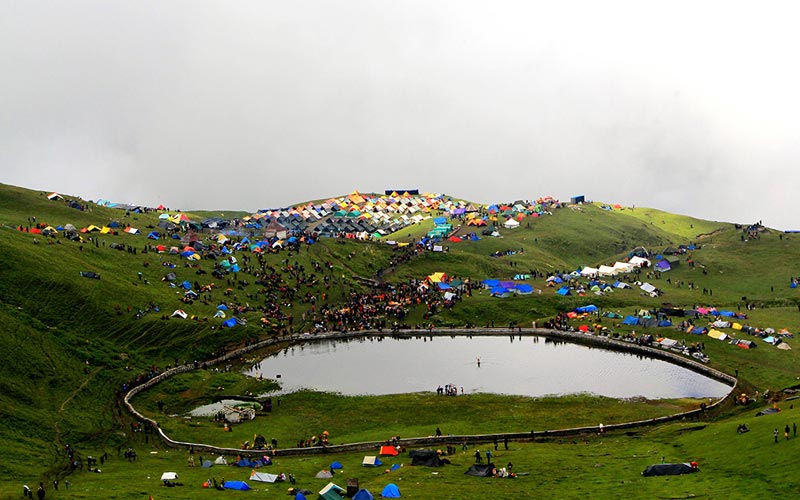
The trek starts at Lohajung, a small village in Chamoli close to the Garhwal–Kumaon border. The trail climbs through oak and rhododendron forest, and then, quite suddenly, the trees end and Ali Bugyal opens out. A little further on is its twin, Bedni Bugyal. Both are often called the largest alpine meadows in Asia.
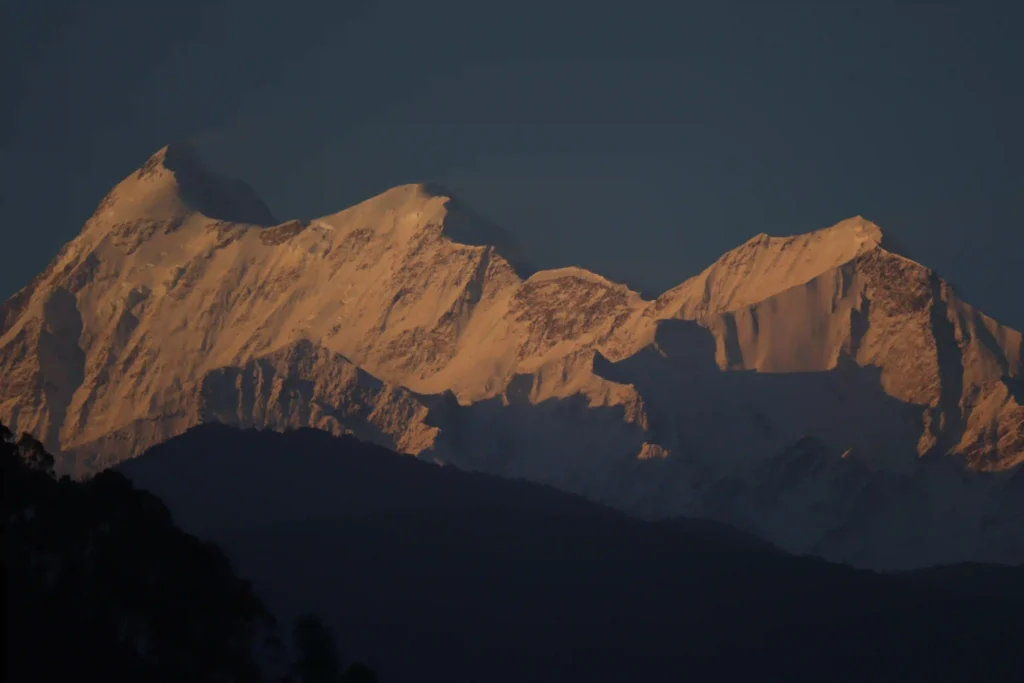
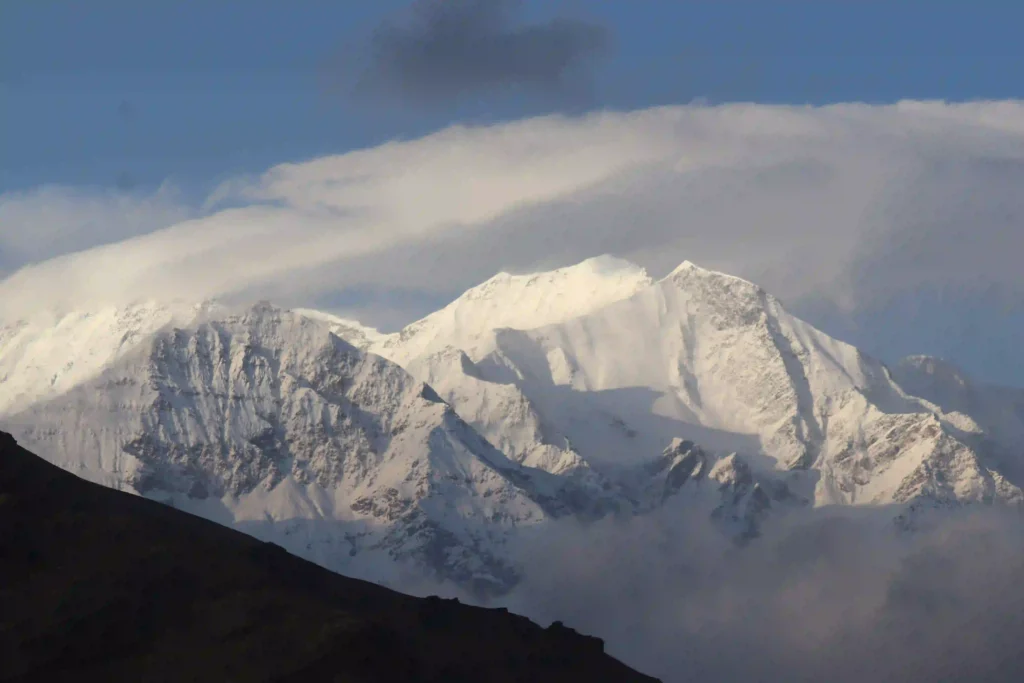
What makes it special is how close the mountains feel. Trishul and Nanda Ghunti are not faint shapes on the horizon. Their faces rise straight up from the meadow, and from Bedni Top you also see the Chaukhamba massif.
The journey starts well before the trail. The drive from Rishikesh follows the Alaknanda valley past Devprayag, Rudraprayag and Karnaprayag, three of the five Panch Prayag river confluences. On the trail you pass the villages of Didna and Wan and Bedni Kund, a small lake that local communities hold sacred.
The altitude is also kinder than most Himalayan treks of this length. You sleep no higher than about 3,450 m, and much of the route is under tree cover. That is why this trek appears on so many “first Himalayan trek” lists.
If you have done a gentler trek like Nag Tibba and want something bigger, this is a natural next step. If meadows are your thing, compare it with Dayara Bugyal in section 19.
- Highlights
Trek Highlights
Asia's largest alpine meadow
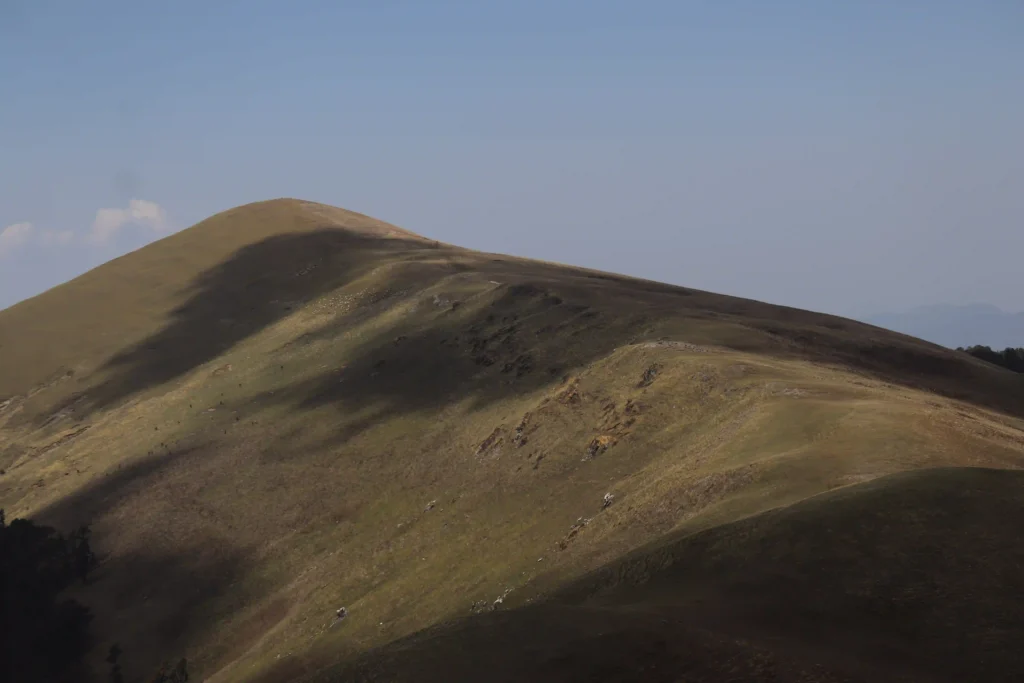
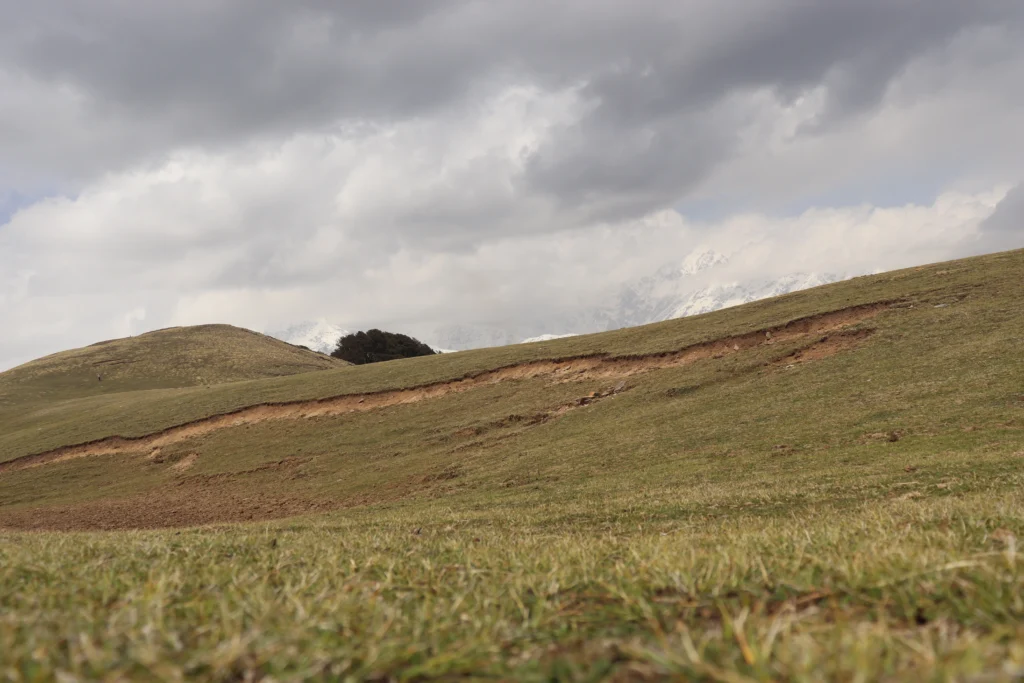
Ali Bugyal is a vast, open, gently undulating grassland with almost no tree cover — which means near-uninterrupted mountain views for the better part of a day’s walk.
Two meadows, one trek
Ali Bugyal and Bedni Bugyal sit right next to each other, so you get two distinct high-altitude grasslands on a single trip, each with its own personality.
Mountains that feel close enough to touch
Trishul and Nanda Ghunti aren’t distant snow-capped specks here — you see them base-to-summit, a perspective that’s rare on a trek graded this gentle.
A genuinely old trail
Sections of the historic Lord Curzon Trail and the sacred Bedni Kund lake connect this route to centuries of local pilgrimage history.
Real forest, not just meadow
Rhododendron, oak, birch, and Himalayan bamboo forest along the lower trail are home to species like the Himalayan monal and koklass pheasant.
Lower AMS risk
A max altitude of roughly 3,660 m plus good tree cover for much of the route makes this a comparatively forgiving high-altitude trek.
Real village life
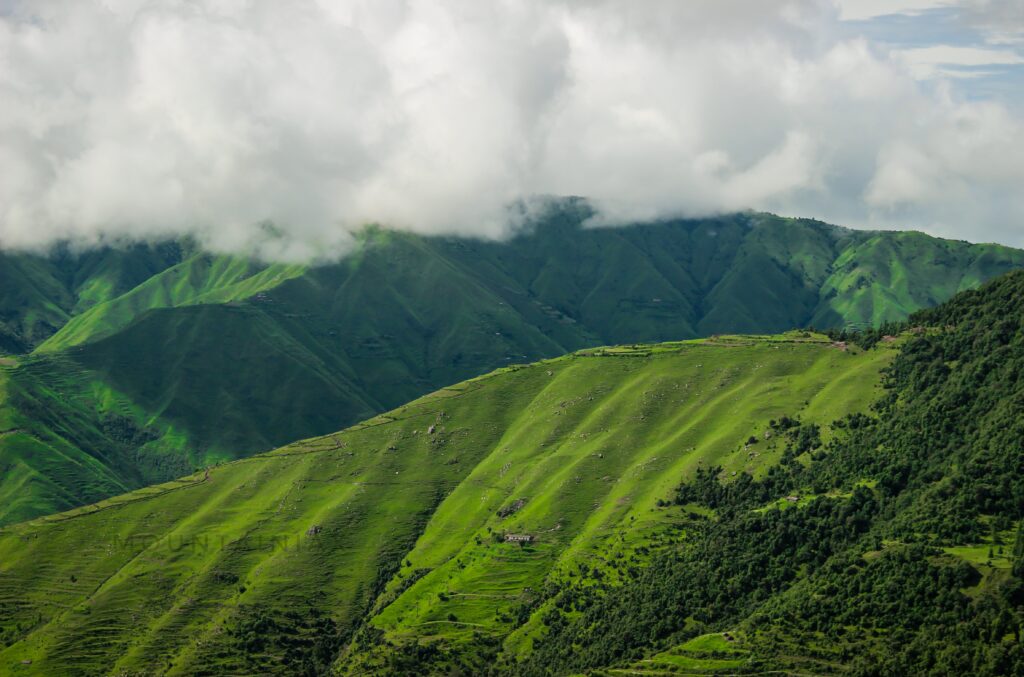
Didna and Wan give you an unhurried look at Garhwali mountain life — terraced fields, small homes, working farms — without any tourist-town polish.
A piece of the Roopkund story
This trail was historically the opening stretch of the famous Roopkund trek, and its folklore still colours the walk today.
- Quick Facts
Trek Snapshot
- Best Time
Best Time to Visit Ali Bedni Bugyal Trek
⭐ Best — September to November (Post-Monsoon)
After the monsoon the air is clear and the mountain views are at their sharpest. Meadow grass turns golden.
✅ Good — April to June (Spring/Summer)
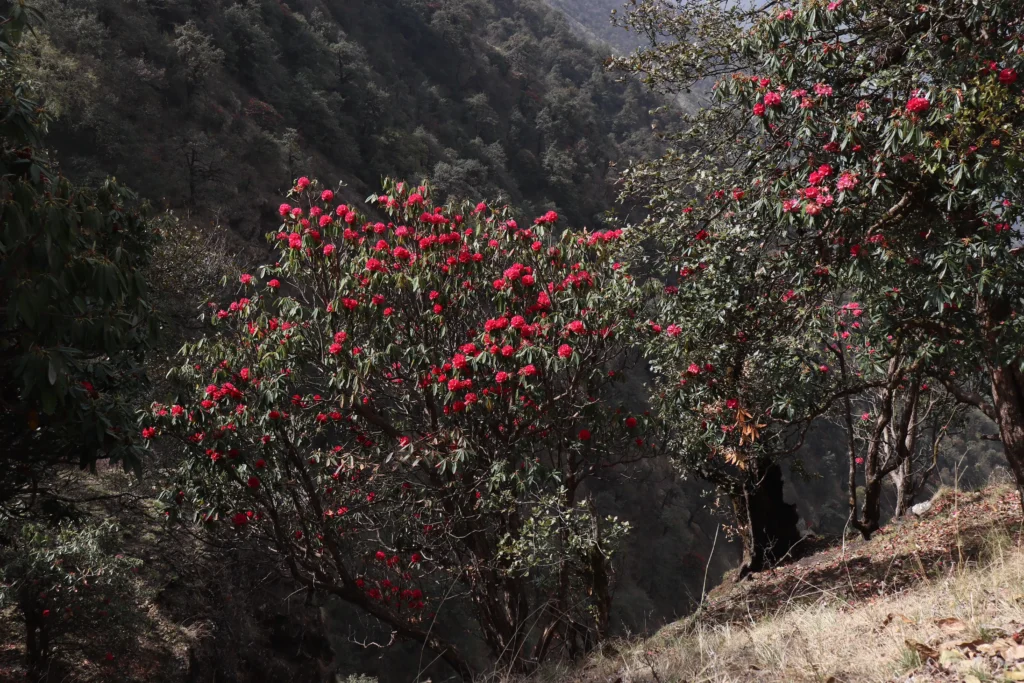
Rhododendrons bloom on the lower trail, and the meadows turn green. June brings wildflowers. Mornings and evenings at camp stay cold.
✅ Good — February to March (Late Winter)
December to March. Forest and meadows are snow-covered, with fewer people. You need extra warm gear. Check our departure calendar for winter batches.
⚠️ Avoid — July to August (Monsoon)
Heavy rain, slippery trails, risky stream crossings and leeches in the lower forest.
- Why Mountainiax
Why Trek With Mountainiax
🏛️ Govt Registered Company
A fully registered travel operator with a valid GSTIN and all required tourism licenses.
🧭 Certified & Experienced Guides
Our trek coordinators have 8+ years of experience on the Ali Bedni Bugyal route and know every campsite and water point along the way.
⭐ 4.8★ on Google & TripAdvisor
Trusted by 1,000+ trekkers, consistently rated for safety and overall trek experience.
🕐 On-Time Operations
Punctual pickups, pre-booked accommodation, and well-planned itineraries — no last-minute surprises.
📞 24/7 Support During the Trek
A dedicated trip coordinator stays with you throughout, with round-the-clock assistance for emergencies or queries.
👨👩👧 Beginner & Group Friendly
A genuinely good first Himalayan trek — we regularly host solo trekkers, families, corporate groups, and college trips.
Ali Bedni Bugyal Trek Packages 2026
Ali Bedni Bugyal Trek Packages
- 5N/6D
- Starting from: Delhi | Kathgodam
- 5N/6D
- Transportation support from kathgodam to kathgodam
- Shared accomodation
- Meals included
- ILP permits
- Experienced guide
Limited seats — call +91-6398937502
- Packing List
Inclusions & Exclusions
Inclusions
- Transport from Rishikesh to Rishikesh (or Dehradun to Dehradun, as applicable)
- All vegetarian meals, from dinner on Day 1 to breakfast on the last day
- Triple-sharing hotel accommodation at base camp on the first and last day
- Professional guide, cook, and support staff
- Triple-sharing tent accommodation throughout the trek
- Camping equipment rental — sleeping bags, mats, dome/A-shaped tents, kitchen/common/toilet tents
- Forest entry charges for Indian nationals (an additional charge applies for non-Indian passport holders)
- Porter and mule support for camping equipment (not personal luggage)
- All applicable taxes
Exclusions
- Personal expenses — tips, medicines, phone calls, etc.
- Transport beyond what's listed above
- Anything not explicitly mentioned in the inclusions
- Accommodation in Dehradun/Rishikesh before or after the trek
- Costs from unforeseen events — bad weather, medical evacuation, roadblocks
- Porter/mule charges for personal luggage (available separately at ₹500/day, one soft bag per person, max 12 kg)
Cancellation and refund policy
- Policy
Cancellation Policy
We understand that plans can change. If you need to cancel, reduce, or amend a guaranteed reservation, please do so by 12 noon, 15 days prior to arrival to avoid cancellation charges. Any cancellation made within 15 days of arrival will be 100% non-refundable. Bookings made under non-cancellable or non-amendable packages or rates cannot be canceled or amended, and the full amount of the advance paid will be treated as the cancellation fee. The same terms apply if guests do not show up.
For all bookings other than non-cancellable ones, if the guest does not show up, the complete booking will be non-refundable. If the guest chooses to check out early, one night’s room rate, including taxes, will be charged. No cancellations will be accepted over the phone or via WhatsApp message. Please reply to the email confirmation you received at the time of booking to request a cancellation.
No refunds will be provided in case of problems arising due to government orders, harsh weather conditions, protests, landslides, or other unforeseen circumstances. In such cases, we usually have a backup plan ready and will proceed with that. Sometimes, we may have to cancel activities mentioned in the itinerary due to circumstances beyond our control.
If a trek is called off at the last moment due to natural calamities or unforeseen circumstances (such as rain, snowfall, earthquake, landslides, strikes, or bandhs), participants will be provided with a travel voucher for the same amount. This voucher can be used within 365 days of the issuance date for any package of equal value, subject to availability.
If a trek or trip has to be aborted midway due to natural calamities or unforeseen circumstances, no refund will be provided. Mountainiax will not bear any extra expenses due to such natural calamities or unforeseen circumstances.
Refund Policy
The following refund shall be payable to the user in case of valid cancellation as per the guidelines:
Note: The above-mentioned refunds are subjected to deductions for any expenses that may have been incurred for hotel booking or transport etc. Refunds are applicable on the total cost and not on the advance amount.
- Getting There
How to Reach the Base Camp
By Air
The nearest airport is Jolly Grant Airport in Dehradun, roughly 18 km from Rishikesh. It has regular daily flights from Delhi. From the airport, a cab or shared taxi gets you to Rishikesh in about 45 minutes to an hour, where you’ll join the group for the onward drive to Lohajung.
By Train
Rishikesh railway station is the closest to the trek and also the official pickup point. It connects directly with Delhi, and Haridwar — about 20 minutes further away — has wider rail connectivity if a direct Rishikesh train doesn’t fit your schedule.
By Road
Rishikesh is roughly 240 km from Delhi via NH334 and NH58, about a 6–7 hour drive, and there are frequent overnight Volvo buses from Delhi’s Kashmiri Gate ISBT that make the same journey in around 6–7 hours. Once the trek begins, the package covers the 250 km, 10–12 hour drive onward from Rishikesh to Lohajung, through Devprayag, Srinagar, Rudraprayag, and Karnaprayag.
A practical tip
If you’re travelling from outside Delhi/NCR, arriving in Rishikesh the evening before Day 1 is worth the extra night. The pickup for Lohajung is early (usually 6–6:30 AM), and you don’t want a delayed flight or train to jeopardise that.
- Detailed Itinerary
Ali Bedni Bugyal Trek 2026 — Complete Day-by-Day Route
1
DAY
- Rishikesh → Lohajung
- 🛣️ 250 km drive
- ⏱️ 10–12 hours
The trek opens with a long, scenic drive that follows the Alaknanda river valley through some of Garhwal’s most storied towns. You’ll pass Devprayag first — the most sacred of the five Panch Prayags, where the Bhagirathi and Alaknanda rivers physically merge to become the Ganga — then Rudraprayag and Karnaprayag, each marking another river confluence with its own mythology attached. Past Karnaprayag, the road quietens down considerably: fewer highway towns, more terraced farms and small mountain settlements. By evening, you’ll roll into Lohajung at close to 2,300 m, with your first real taste of mountain air and, on a clear evening, distant snow peaks catching the last light.
2
DAY
- Lohajung → Didna Village
- 🚐 30-min drive + 🥾 5 km trek
- ⏱️ 4–5 hours
- 📍 Didna: 2,200 m
A short jeep ride takes you from Lohajung to Kuling, where the walking begins. The first stretch briefly follows the historic Lord Curzon Trail before dropping down to the Neel Ganga river. Once you cross it — usually on a small footbridge — the trail climbs steadily toward Didna Village through mixed forest: rhododendron, Himalayan bamboo, and oak. It’s a gentle day, mostly there to ease your legs into trekking rhythm before the tougher climb ahead. Didna itself is small — a handful of homes and terraced fields — and a short evening walk to a nearby viewpoint gives you your first look at Ali Bugyal in the distance, along with views of Wan village and the Brahmatal ridge.
3
DAY
- Didna Village → Ali Bugyal
- 🥾 10 km trek
- ⏱️ 6–7 hours
- 📍 Ali Bugyal: 3,600 m
This is the day that defines the trek — the longest, the toughest, and by far the most rewarding. It starts with a sustained, steep climb through dense oak and rhododendron forest. About midway up, you’ll reach Tolpani, your last dependable water source before the meadow, so it’s worth filling up here even if you’re not thirsty yet. As the forest thins out, the gradient eases, and then — almost without warning — the trail breaks open into Ali Bugyal. The shift from tight, shaded forest trail to a rolling, treeless expanse of grassland is genuinely one of the most striking transitions on any trek in India. The final stretch to camp is an easy, scenic walk across the meadow, and the campsite here is known for some of the best sunsets on the whole route — the sky turning orange and pink over the surrounding ridgelines.
4
DAY
- Ali Bugyal → Garoli Patal via Bedni Bugyal & Bedni Kund
- 🥾 6 km trek
- ⏱️ 4–5 hours
- 📍 Garoli Patal: 3,354 m
Today packs in two of the trek’s biggest moments. You’ll cross further into Ali Bugyal, then over a low ridge into Bedni Bugyal — its twin meadow, just as vast, with an even better angle on Trishul. A short detour brings you to Bedni Kund, a small glacial lake regarded as sacred locally, and an important stop on the Nanda Devi Raj Jat Yatra pilgrimage (more on that below). From Bedni Top, just above the lake, you get arguably the single best viewpoint on the entire trek — an unobstructed, close-range view of both Trishul and Nanda Ghunti. From here, the trail drops back into forest en route to Garoli Patal (also spelled Ghairoli Patal), a peaceful campsite tucked into the trees, with Trishul still visible through the canopy.
5
DAY
- Garoli Patal → Wan → Drive to Lohajung
- 🥾 10 km trek
- ⏱️ 4–5 hours, then a short drive
The last trekking day is a long, steady descent through quiet, shaded forest down to Wan village. Wan is home to the Latu Devta temple, an important local shrine tied into the same mythology that runs through the whole trek — worth a short stop if your legs and schedule allow it. From Wan, a short drive brings you back to Lohajung, where the trekking portion officially wraps up and you can collect any luggage you left in storage.
6
DAY
- Lohajung → Rishikesh
- 🛣️ 250 km drive
- ⏱️ 10–12 hours
The return drive retraces the same route — Karnaprayag, Rudraprayag, Srinagar, Devprayag — back to Rishikesh, usually arriving by evening. This is the final day of the package, ending at the same pickup point where it all began.
- Fitness
Difficulty Level & How to Prepare
Ali Bedni Bugyal is graded Easy-to-Moderate, which makes it one of the more approachable high-altitude treks in the Indian Himalayas — genuinely a solid choice for a first Himalayan trek, for a family trip, or for a group of friends with mixed fitness levels.
That said, “moderate” isn’t nothing. Day 3 — the climb from Didna to Ali Bugyal — is a sustained 6–7 hour ascent gaining roughly 1,400 m, and it’s the toughest single day on the route. As a rough benchmark: if you can comfortably walk 8–10 km at a stretch and climb a few flights of stairs without getting badly out of breath, you already have a reasonable base to work from.
A simple 3–4 week prep plan
Cardio: brisk walking, jogging, or cycling for 30–45 minutes, 4–5 times a week, to build the stamina you’ll need on the longer days.
Strength: bodyweight squats, lunges, and stair climbs to prepare your legs for sustained ascents and, just as importantly, descents with a loaded pack.
Flexibility: basic stretching, especially around the knees and ankles, to lower your risk of strain on descent-heavy days like Day 5.
Practice hikes: a few walks with a loaded daypack (around 5–7 kg) in the weeks before you leave will make a real difference on trek days.
On age: the trek generally suits trekkers aged 10 and above who are reasonably fit, and adults up to their early 60s, provided there’s no serious cardiac or respiratory condition. Trekkers over 55–60 are usually asked for a basic fitness certificate from a doctor, and minors should always trek with a parent or guardian.
- Safety
Altitude Sickness (AMS): What to Actually Expect
The highest point is about 3,800 m, and your highest camp is about 3,450 m. Above about 3,000 m (10,000 ft) any trekker can feel altitude effects, even a fit one, so mild AMS is possible but much less common than on treks above 4,500 m. For general guidance, see the CDC Yellow Book on high-altitude travel.
Mild AMS shows up as headache, nausea or unusual tiredness, usually in the first day or two above 3,000 m. The itinerary adds height over three days instead of one big jump. What helps:
- Drink 3–4 litres of water a day
- Walk at a steady pace and never rush the climbs
- Tell your leader right away about a headache that does not ease with rest and water, breathlessness at rest, or confusion in you or a fellow trekker
Every batch has a trek leader with a medical kit, a pulse oximeter and training in recognising early AMS. We check oxygen saturation and pulse daily. If you have a known heart or lung condition, speak to your doctor before you book.
- Packing
Ali Bedni Bugyal Trek 2026 Packing List — What to Actually Carry
🧥 Clothes
- Trekking jacket
- Warm layers
- Two trek pants
- Full-sleeve dry-fit t-shirts
- One pair of thermals
🎒 Basic Gear
- Backpack
- Trekking shoes
- Trekking pole
- LED torch
- One water bottle (1 litre)
- Lunch box
- Basic/prescribed medications
Practical Gear
- A 1-litre or larger water bottle, or a 2-litre hydration bladder that fits inside your daypack
- A daypack for the short optional treks to Parvati Sarovar and Gauri Kund
- Biodegradable soap and shampoo in small travel bottles — facilities along the route are basic
- A lightweight duffel bag for the main luggage that travels by vehicle, plus a smaller daypack for what you carry yourself
Mountainiax sends every confirmed pilgrim a detailed, printable packing checklist after booking, tailored to your specific departure month, since May packing needs differ meaningfully from September or October packing needs.
- Be Prepared
Things to Carry
- 🎒 Basic Gear
- Backpack
- Trekking Shoes
- Trekking Pole
- LED Torch
- One Water Bottle (1 litre)
- Lunch Box
- Basic / Prescribed Medications
- 🧥 Clothes
- Trekking Jacket
- Warm Layers
- Two Trek Pants
- Full Sleeve Dry-fit T-shirts
- Thermals (1 pair)
- 🕶️ Accessories
- Sunglasses
- Sunscreen Lotion (SPF 50/70)
- Lip Balm (SPF 30)
- Synthetic Hand Gloves
- Woolen Cap
- Three Pairs of Socks
- Raincoat / Poncho (must)
- 📄 Documents & Others
- Daypack (for Summit Day)
- Plastic cover for wet clothes
- Original + photocopy of Govt Photo ID (Passport / Aadhaar / Driving License / Voter ID)
- Gear Notes
Recommended Gear — A Few Notes on Quality
A couple of practical pointers beyond the checklist above:
Trekking shoes: Go for ankle-high boots with a solid grip sole (Vibram or similar) rather than regular running shoes. The descent sections, especially Day 5, are noticeably easier on your knees and ankles with proper ankle support.
Backpack: A 50–60 litre bag with a good hip belt is ideal if you’re carrying your own gear; if you’re using mule/porter support for the main duffel, a 20–30 litre daypack is enough for daily essentials — water, camera, an extra layer, snacks, sunscreen.
Trekking poles: Genuinely useful on both the Day 3 ascent and the Day 5 descent. They take a real load off your knees on the longer trekking days.
Headlamp over handheld torch: A headlamp keeps both hands free for balance on the uneven ground around camp at night — worth the small extra cost.
Layering: A moisture-wicking base layer, a fleece or light insulating mid-layer, and a windproof/water-resistant outer shell together cover the full temperature swing you’ll experience — from warm midday sun on the meadow to well-below-freezing nights at Ali Bugyal or Bedni Bugyal camp.
- Stay & Meals
Food & Accommodation on the Trek
Meals: All meals are vegetarian, cooked fresh at each campsite, and built to keep your energy up at altitude — dal, rice, seasonal sabzi, chapati, and a hot soup to open dinner, along with tea/coffee and snacks during trekking breaks. Breakfast is usually hearty (parathas, poha, or eggs where available) to fuel the day’s climb, and packed lunches or trail snacks are provided on longer days like Day 3. Stream water is available up to Tolpani; beyond that, you’ll carry a filled bottle from camp.
Accommodation: On Day 1 and Day 6, you’ll stay in triple-sharing hotel or guesthouse rooms at Lohajung. From Day 2 through Day 5, it’s triple-sharing dome or A-shaped tents at each campsite, with separate kitchen, dining, and toilet tents set up by the crew. Sleeping bags and mats are provided and generally rated for sub-zero temperatures, but a sleeping bag liner is a smart add if you tend to feel the cold at night.
Toilets: Basic toilet tents are set up at each campsite. If you’re new to camping, expect a simpler setup than a hotel bathroom — a reasonable trade-off for staying somewhere this remote and scenic.
- Ecology
Flora and Fauna Along the Trail
01
Flora
The stretch between Lohajung/Didna and the meadows runs through oak (locally banj), rhododendron, birch, and pockets of Himalayan bamboo, with rhododendrons putting on a proper red-and-pink show through spring (roughly April–May). Once you’re up on the meadows, the grassland fills in with alpine wildflowers through summer and early autumn — keep an eye out for the Brahma Kamal, Uttarakhand’s state flower, which tends to bloom around September–October and carries real spiritual significance for local communities.
02
Fauna
The forested sections are good birdwatching territory, with sightings of the Himalayan monal (Uttarakhand’s state bird) and koklass pheasant reasonably common, along with langurs in the lower forest belt. The meadows themselves are seasonally grazed by sheep, goats, and horses belonging to local shepherds, which is actually part of what gives bugyals like Ali and Bedni their distinctive, well-worn grassland character. Himalayan black bear sightings are occasionally reported by local guides, though they’re shy animals and rarely encountered by trekking groups.
If wildlife and plant life on Uttarakhand’s meadows genuinely interests you, our deep-dive on the wildlife and flora of Dayara Bugyal covers a lot of the same species you’ll likely spot here too, since the two ecosystems overlap significantly.
- Culture
Mythology, Culture & the Roopkund Connection
Very few Himalayan treks carry as much cultural weight as this one. Ali Bedni Bugyal isn’t just a scenic route — it’s an active section of one of Uttarakhand’s most significant pilgrimage trails, and the culture around it is lived, not historical.
Bedni Kund and the Nanda Devi Raj Jat Yatra
Bedni Kund, the small glacial lake you visit on Day 4, is one of the key halting and worship points on the Nanda Devi Raj Jat Yatra — a massive pilgrimage held once every 12 years and considered one of the longest, most demanding religious treks anywhere in the world. Local legend holds that on a clear night, the lake reflects every star in the sky above it, and it’s treated with genuine reverence by the Garhwali villages along the route.
Latu Devta Temple, Wan
The village of Wan, where Day 5’s trekking ends, is home to the Latu Devta temple, an old shrine dedicated to a local deity closely woven into Nanda Devi mythology. Local tradition holds Latu Devta as the messenger and gatekeeper for Nanda Devi’s journey, and the temple remains an active site of worship rather than a tourist stop — which is part of what makes visiting it worthwhile.
The Roopkund connection
Historically, Ali Bedni Bugyal was the first and, by most accounts, the most scenic stretch of the longer Roopkund trek — the route famous for the “mystery lake” where hundreds of centuries-old human skeletons were discovered. After a Uttarakhand High Court order restricted access to Roopkund itself for conservation reasons, Ali Bedni Bugyal became established as a complete, standalone trek in its own right. Most trekkers who’ve done both sections don’t feel like they’re missing much by ending at Bedni Top — the meadows and mountain views here are the real draw either way.
The Lord Curzon Trail
A short section of Day 2’s walk follows what locals still call the Lord Curzon Trail, named after the British viceroy said to have explored the route in the early 1900s. It’s rarely walked in full by trekkers today, since most groups branch off toward Didna fairly quickly — but it’s a small, quiet nod to the route’s exploration history sitting on top of its much older local mythology.
Living culture, not a museum piece
What genuinely sets Ali Bedni Bugyal apart from many scenic treks is that none of this is a historical footnote. Villagers from Wan and the surrounding settlements still take part in Nanda Devi rituals every year, shepherds still graze livestock on the same meadows their families have used for generations, and Bedni Kund remains a real pilgrimage stop rather than a curated photo opportunity. Walking this trail means passing through a living tradition, not just a scenic backdrop.
If this kind of pilgrimage-meets-trekking experience appeals to you, it’s worth reading about the Panch Kedar trek or a first-hand account in our Panch Kedar circuit trekker stories post — both explore the same spiritual-adventure blend that defines this part of Garhwal. And if you’re planning a bigger Uttarakhand trip around a pilgrimage circuit, our complete guide to the Char Dham Yatra is a useful companion read.
- Route
Places & Sights Along the Way
- Overall Grade
Devprayag, Rudraprayag, Karnaprayag
Three of the five sacred Panch Prayag river confluences of the Alaknanda, all seen en route to Lohajung on Day 1.
Didna Village
A quiet farming settlement with a viewpoint over Wan, Brahmatal, and your first distant look at Ali Bugyal.
Tolpani
The last dependable water source before the meadows, roughly midway up the Day 3 climb.
Ali Bugyal
Asia’s largest alpine meadow, and the trek’s headline attraction.
Bedni Kund
A sacred glacial lake and a key stop on the Nanda Devi Raj Jat Yatra pilgrimage route.
Bedni Top
The single best viewpoint on the trek, with a close, unobstructed look at both Trishul and Nanda Ghunti.
Wan Village & Latu Devta Temple
A working Garhwali village with an active local temple tied to the region’s core mythology.
- Comparison
How Ali Bedni Bugyal Compares to Other Meadow Treks
People often ask how this trek stacks up against Uttarakhand’s other well-known meadow routes. Here’s an honest comparison:
Vs. Dayara Bugyal: Dayara Bugyal is shorter (3–4 days) and slightly easier, and it’s genuinely beautiful — but the meadow is smaller and the mountain views sit further off. Ali Bedni Bugyal is the longer, more immersive experience, with two large meadows and dramatically closer big-mountain views.
Vs. Gidara Bugyal: Gidara is quieter and less crowded, but trail infrastructure and campsite options are more limited. Ali Bedni Bugyal is the better call for first-time trekkers, thanks to its well-established route and the villages you pass along the way.
Vs. Bhrigu Lake: Bhrigu Lake is a shorter trek (2–3 days) that reaches a small alpine lake with meadow views, but it doesn’t match the sheer scale of open grassland or the up-close mountain views you get on Days 3 and 4 of Ali Bedni Bugyal.
Vs. the full Roopkund trek: Roopkund is considerably harder — longer, higher altitude, involving a high pass and snow crossings — and access near the lake itself is currently restricted. Ali Bedni Bugyal gives you the most scenic and culturally significant part of the same historic route, minus the extreme difficulty and the access issue.
If your appetite for meadows and offbeat Himalayan trails is bigger than one trek can satisfy, our ultimate guide to offbeat treks in Uttarakhand is worth a browse — it covers several lesser-known routes across Garhwal and Kumaon, including a few that pair naturally with Ali Bedni Bugyal if you have extra days to spare.
In short: if you want the biggest, most photogenic meadow experience in the Garhwal Himalayas at a genuinely moderate difficulty level, Ali Bedni Bugyal is usually the strongest pick among these options.
- Photography
Photography Tips for This Trek
- Overall Grade
Golden hour is everything on the meadows
The hour around sunrise and sunset at the Ali Bugyal and Bedni Bugyal campsites gives you the best light of the trip — warm tones across the grassland, with Trishul and Nanda Ghunti glowing in the background.
Go wide
A smartphone’s ultra-wide lens (or a compact wide lens, if you’re carrying one) will do far more justice to Ali Bugyal’s scale than a standard zoom shot.
Time Bedni Kund for early morning
On calm, clear mornings, the lake surface can mirror the surrounding peaks almost perfectly.
Protect your gear from cold and moisture
Batteries drain faster in low temperatures, so keep spares in an inner jacket pocket, and carry a dry pouch for your camera in case the weather turns on the meadow.
Spring trekkers, look down as well as up
If you’re on the trail in April–May, the rhododendron-lined stretch between Lohajung and Didna offers some of the most colourful frames on the entire lower trek.
- Who It Suits
Solo Trekkers, Families & Groups
Solo trekkers are common on this route, and it’s genuinely one of the friendlier treks to attempt alone — group sizes are capped at 20, tent-sharing is arranged with fellow trekkers of the same gender, and the trek leader makes sure no one is walking the trail by themselves. It’s also a popular trek for meeting like-minded people, given its beginner-friendly pace.
Families with children benefit from the trek’s lower AMS risk and its shorter daily distances compared to higher, longer routes. Kids above 10, in reasonable fitness, generally manage the trail well, and the mix of terrain — forest, village, meadow — tends to keep younger trekkers interested rather than bored.
Corporate and college groups also suit this trek nicely. It balances a genuine outdoor challenge (Day 3’s climb) with plenty of downtime on the meadows for team activities and evening campfires, without straying into technically demanding, high-risk terrain.
- Sustainability
Responsible & Sustainable Trekking
Ali Bedni Bugyal’s meadows are ecologically sensitive, and how carefully trekking groups behave on the trail genuinely affects how well they hold up over time. A few things we ask every trekker to keep in mind:
Carry back all non-biodegradable waste
Wrappers, bottles, and packaging should go back down to Lohajung with you — there’s no waste collection infrastructure beyond the base camp.
Stick to marked trails
Especially on the meadow sections, since trampled grassland vegetation can take years to recover.
Skip open fires on the meadows
Campfires, where allowed, are restricted to designated spots near forest campsites — never on open grassland.
Respect grazing livestock and shepherd camps
These are working pastures for local families, not just scenery.
Avoid washing directly in streams or at Bedni Kund
It’s both an ecologically sensitive water source and a site of religious significance.
Support the local economy
Choose porters, mules, and guides from Lohajung, Didna, and Wan — tourism is one of the more sustainable income sources for these mountain communities.
- Weather
Month-by-Month Weather Guide
| Period | Conditions |
|---|---|
| February–March | Daytime 5–10°C, nights dropping to -8 to -10°C at higher camps. Meadows are usually snow-covered — expect a slower pace and pack extra insulation plus gaiters. |
| April–May | Daytime 12–18°C, nights around 0 to -5°C. Rhododendrons are in bloom on the lower trail, and meadows turn green and largely snow-free by late April. |
| June | Daytime 15–20°C, nights around 2–5°C. Generally warm and stable, though early monsoon showers can begin toward month-end. |
| July–August | Wet, humid, and unpredictable — daytime around 15–18°C but with frequent rain. Not recommended, due to slippery trails and leech activity in the lower forest. |
| September | Daytime 12–16°C, nights around 0–3°C. Skies begin clearing after the monsoon, and this is roughly when the Brahma Kamal starts blooming. |
| October–November | Daytime 10–14°C, nights falling to -5 to -8°C by late November. Widely considered the best window for clear views, with golden meadow grass adding to the scenery. |
A layering system matters regardless of season — even on a warm afternoon at the meadow, temperatures can drop sharply within an hour of sunset.
- Add-ons
Combine This Trek With
If you have a few extra days on either side of the trek, a couple of nearby stops pair naturally with an Ali Bedni Bugyal itinerary:
Auli
Known for its cable car and winter skiing scene, Auli sits on a scenic detour toward Rishikesh via Joshimath — a relaxed add-on for a day or two after the trek.
Kalpeshwar Temple
One of the Panch Kedar shrines and the only one accessible year-round, located a reasonable drive from the Karnaprayag–Joshimath road.
Rishikesh itself
Since both ends of this trek are in Rishikesh, it’s worth budgeting an extra day here for river rafting, the Ganga Aarti at Triveni Ghat, or just unwinding by the river.
Valley of Flowers
If your travel dates fall between June and September, our Valley of Flowers trek is in the same general region and makes for an excellent second trip later in the season.
Brahmatal
For winter trekkers specifically, our complete Brahmatal trek guide covers a nearby snow trek that shares part of the same access road as Ali Bedni Bugyal.
- First-Timer Tips
Trekking Tips for First-Timers
- Break in your trekking shoes at least 2–3 weeks before the trek — new shoes on Day 3's long climb are a common cause of blisters.
- Pack in layers rather than relying on one heavy jacket; temperatures swing widely between daytime trekking and nighttime camp.
- Start each trekking day early — mornings usually offer the clearest mountain views before afternoon cloud cover rolls in.
- Carry a small personal medical kit (any prescribed medication, blister plasters, pain relief) in addition to the group first-aid kit.
- Fully charge your power bank at Lohajung, since electricity beyond the base camp isn't available.
- Store non-essential luggage at Lohajung to keep your trekking pack light — most guesthouses and trek operators offer secure storage.
- Be respectful at Bedni Kund and the Latu Devta temple in Wan — both are active places of worship, not photo stops.
Safety Measures on the Trek
- Every batch is accompanied by a certified, experienced trek leader along with local support staff who know the terrain well.
- Basic first-aid, a pulse oximeter, and emergency oxygen are carried on every trek for monitoring and responding to AMS or minor injuries.
- Daily health check-ins (oxygen saturation and pulse) take place, especially above Didna, to catch early signs of altitude issues.
- Group sizes are capped at 20 trekkers per batch, keeping the trek-leader-to-trekker ratio manageable so everyone is properly looked after.
- Trekkers are briefed on trail safety, river crossing points, and weather contingencies before each day begins.
- In a medical emergency, evacuation is coordinated via the nearest motorable road (Lohajung or Wan), with local support arranged for stretcher-carry if needed from more remote sections.
- Mistakes to Avoid
Common Mistakes First-Timers Make on This Trek
A few patterns come up again and again with first-time trekkers on this route — worth knowing before you go, so you can skip them entirely.
Underestimating Day 3
Because the trek is graded Easy-to-Moderate overall, some trekkers assume every day will feel roughly the same. Day 3’s climb is genuinely the toughest stretch of the trip, and pacing yourself from the start — rather than pushing hard early and running out of steam halfway up — makes a real difference to how much you enjoy the meadow once you finally reach it.
Skipping the water refill at Tolpani
It’s easy to walk past Tolpani without topping up, especially if you’re not thirsty yet on a cool morning. But it’s the last dependable water point before camp, and running low on the final push to Ali Bugyal is a completely avoidable problem.
Packing one heavy jacket instead of layers
A single thick jacket feels like the simple solution, but it leaves you either too hot while climbing or too cold once you stop moving. A base layer, a mid layer, and a shell you can add or remove as conditions change works far better across a day that swings from warm sun to a freezing evening.
Not breaking in trekking shoes beforehand
New boots straight out of the box are one of the most common causes of blisters on Day 3, when you’re on your feet for 6–7 hours straight. A few local walks in the weeks before departure solve this entirely.
Forgetting that Lohajung is your last real charging point
Trekkers sometimes assume they’ll find some way to top up devices along the trail. There genuinely isn’t one — plan around it rather than around the assumption that something will work out.
Treating Bedni Kund and the Latu Devta temple as just photo stops
Both are active, sacred sites for local communities. A little awareness — lowering your voice, asking before photographing people or rituals, not treating the lake as a bathing spot — goes a long way and is simply the respectful way to move through someone else’s living tradition.
Assuming AMS "won't happen to me" because the altitude is lower
A max altitude of 3,660 m is genuinely more forgiving than most Himalayan treks, but it’s not zero risk. The trekkers who have the smoothest trip are usually the ones who still hydrate properly and pace themselves, rather than treating a “moderate” grading as a reason to skip the basics.
- Why Mountainiax
Trusted by Thousands of Trekkers
- 🏛️
Govt Registered Company
Fully registered travel operator with valid GSTIN and all required tourism licenses. Your money is safe with us.
- 🧭
Certified & Experienced Guides
Our trek coordinators and guides have 8+ years of experience on the Kedarkantha route. They know every turn, every campsite.
- ⭐
4.8★ on Google & TripAdvisor
Trusted by 1000+ trekkers across 100+ successful Kedarkantha batches. Consistently rated best-in-class for safety and experience.
- 🕐
On-Time Operations
Punctual pickups, pre-booked guesthouses, and well-planned itineraries. No last-minute surprises or hidden costs.
- 📞
24/7 Support During Trek
Dedicated trip coordinator with you throughout. 24-hour call assistance for any emergency or query during the trek.
- 👨👩👧
Beginner & Group Friendly
Perfect first Himalayan trek. We manage solo trekkers, groups, corporate teams, and college trips with equal expertise.
Ali Bedni Bugyal Trek Gallery
A glimpse of the beauty that awaits you on the trail.
FAQ's
What is the difficulty level of the Ali Bedni Bugyal Trek?
The Ali Bedni Bugyal Trek is graded Easy-to-Moderate. It suits both beginners and experienced trekkers, with steady ascents and descents and the steepest section on Day 3. Being able to comfortably walk 8–10 km is generally enough preparation.
What is the best time for the Ali Bedni Bugyal Trek?
September to November gives the clearest skies and best mountain views. April to June is best for rhododendron blooms and green meadows, while February–March offers a snow-covered trek with fewer crowds. July–August (monsoon) should be avoided.
Is mobile network available during the trek?
Network (Jio, Airtel, VI) works only up to Lohajung. Beyond that, there’s no connectivity during the trek itself — a good chance to disconnect. Carry a power bank; guides carry emergency communication equipment.
Is electricity available during the trek?
Only at Lohajung, and even there it’s intermittent, especially in winter and during the monsoon transition. Carry a power bank or solar charger for the trekking days.
Where can I store my extra luggage during the trek?
Extra luggage can be stored securely at Lohajung, the base camp, so you only carry what you actually need for the trekking days.
Is this trek suitable for someone with no prior trekking experience?
Yes. Ali Bedni Bugyal is considered one of the more beginner-friendly high-altitude treks in Uttarakhand. Our team guides you through acclimatisation, pacing, and safety, along with pre-trek fitness and packing advice.
What is the risk of altitude sickness (AMS) on this trek?
The risk is comparatively low, thanks to a maximum altitude of around 3,660 m and a gradual, forest-covered ascent profile. Mild symptoms are still possible, so staying hydrated and reporting any headache or unusual fatigue to your guide early is recommended.
What is the pickup point and time?
Pickup is from Natraj Chowk, Rishikesh, on Day 1 morning. All packages include Rishikesh-to-Rishikesh transport, with drop-off by evening on Day 6. Confirm your exact pickup time with our team at the time of booking.
Can I charge my phone or camera during the trek?
Only at Lohajung, and even that is intermittent. Beyond Lohajung there’s no electricity access, so a fully charged power bank is essential.
How do I book the Ali Bedni Bugyal Trek with Mountainiax?
WhatsApp or call us at +91-6398937502 or +91-7887449236, or fill in the booking form on our website. We confirm your slot within 2 hours and send the full pre-trek document with packing list, pickup instructions, and payment details.
Book Your Free Trek Consultation Today
With a free itinerary planning session included — walk through packing, fitness prep, and pickup logistics with a Mountainiax trip coordinator before you commit. Limited slots available for the 2026 season.
 +91-6398937502 | +91-7887449236
239/2 Lane no.-3, Turner Road, Clement Town, Dehradun, Uttarakhand
mountainiax.com