
- ★ Uttarakhand · Kumaon Himalayas
Dayara Bugyal Trek
- #1 Rated Beginner Himalayan Trek in Uttarakhand
- Book Now —₹8,999 + 5% GST per person, all-inclusive
- Six days from Dehradun into a 3.38 sq km alpine meadow at 3,408 m — oak and rhododendron forest, Bandarpoonch on the skyline, and snow deep enough to ski on in winter.
- 4.8/5 Rating
- Running since 2018
- Certified Trek Leaders
- 24/7 Support
3,408 M
Max Altitude Dayara Top
24 KM
Trek Distance 4 trekking days
4 DAYS
Duration 3 nights
Difficulty
Difficulty Beginner friendly
YEAR-ROUND
Best Months Apr–Jun · Oct–Mar
AGE 10+
Group Size Small batches
- About the Trek
Dayara Bugyal Trek: The Complete Guide to Uttarakhand's High-Altitude Meadow
The Dayara Bugyal trek is a 6-day journey from Dehradun into one of the largest alpine meadows in the Garhwal Himalayas — a rolling expanse of grassland covering approximately 3.38 sq km at around 3,408 metres, with the trail climbing to roughly 3,500–3,750 metres in the upper areas around Bakariya Top. The meadow is ringed by views of Bandarpoonch, Black Peak, and the Gangotri range. Its fragile alpine ecosystem has also prompted restoration efforts to protect the meadow.
That’s exactly why it’s become the trek we recommend most to first-timers, and why so many families choose it as their child’s first real Himalayan experience. There’s no technical climbing, no knife-edge ridges, no summit push that needs ropes. What there is: dense oak and rhododendron forest that opens, on day three, into a meadow so wide you can’t see the far end of it — and Himalayan giants standing behind it like they’ve been waiting for you.
| Quick Facts | |
|---|---|
| Duration | 4 Days / 3 Nights |
| Trek Distance | 24 km |
| Max Altitude | 3,408 m (11,181 ft) |
| Difficulty | Easy – Moderate |
| Base Village | Raithal (also accessible via Barsu) |
| Distance from Dehradun | 185–190 km (7–8 hour drive) |
| Best Time | April–June, October–November, December–March (winter/skiing) |
| Trek Price | ₹8,999 + 5% GST (all-inclusive) |
| Minimum Age | 10 years |
About Dayara Bugyal Trek
Dayara Bugyal sits in the Uttarkashi district of Uttarakhand, and it’s one of India’s largest high-altitude meadows — locals call this kind of grassland a “bugyal,” and once you’ve seen one, you understand why they get their own word. It isn’t a viewpoint you reach and photograph and leave. It’s a landscape you walk through for the better part of a day, hillock after hillock of grass rolling out in every direction, with barely a rock or tree breaking the pattern.
The trek itself begins in Raithal, a quiet Garhwali village that still runs on its own rhythm — terraced fields, wood-smoke in the evenings, kids playing cricket on whatever flat ground they can find. From there, the trail climbs gradually through oak, maple, and rhododendron forest for two days before the trees start thinning out and the meadow takes over. By the time you’re standing on the open bugyal (6,316 m) filling the skyline, you’ll have covered most of the elevation gain without really noticing it — that’s the advantage of a well-paced, beginner-friendly itinerary.
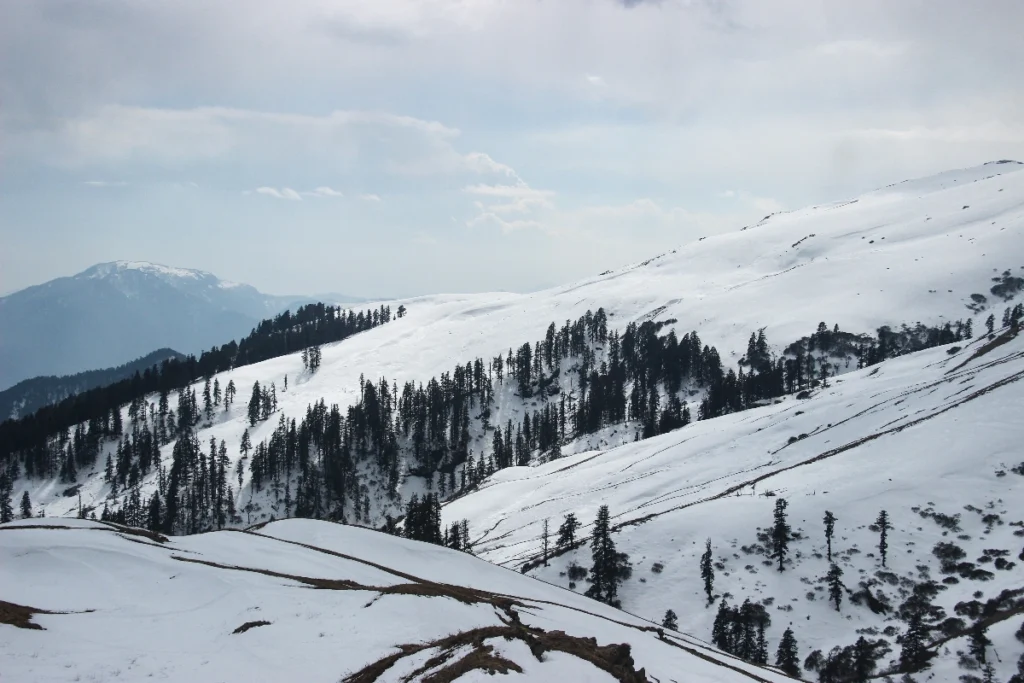
What makes Dayara genuinely unusual among Himalayan treks is that it works in every season, and it works differently in every season. April to June, the meadow is scattered with wildflowers and the snow has retreated to the higher ridgelines. October and November bring the clearest skies of the year and a golden, autumn-toned meadow. And from December through March, the entire bugyal disappears under a blanket of snow deep enough for skiing — an experience that very few easy treks in India can offer.
We’ve been running the Dayara Bugyal trek package since 2018, and it remains one of the two or three treks we get asked about the most — usually by people who’ve never trekked before and want to know if it’s really as manageable as everyone says. Short answer: yes, with a few honest caveats we’ll get into below.
If you want the numbers behind that claim, our detailed Dayara Bugyal trek difficulty breakdown covers exactly which sections are steep, how much altitude you gain each day, and what to expect if you’re trekking in snow.
Where the Name Comes From
“Bugyal” is a Garhwali word for the high-altitude alpine pastures that appear above the treeline across this part of the Himalayas — you’ll find the same word used for Bedni Bugyal, Ali Bugyal, and a handful of other lesser-known meadows further into the range. Dayara is among the largest and most accessible of them, which is a large part of why it became a trekking destination in the first place rather than staying purely a grazing ground for local shepherds, which is still what it’s used for outside the trekking season.
A Working Landscape, Not Just a Viewpoint
It’s worth knowing, before you go, that Dayara isn’t a preserved-for-tourism meadow — it’s a working pastoral landscape. Through the summer grazing season, shepherds from villages around Raithal and Barsu bring cattle and sheep up to graze here, much as they likely have for generations. You may well share the meadow with a flock on your trek, and it’s part of what makes the place feel real rather than manicured. Come winter, both the shepherds and their livestock move back down to the lower villages, leaving the bugyal to the snow — and to the trekkers who come specifically to see it that way.
- On This Page
- About the Dayara Bugyal Trek
- Why Trek Dayara Bugya
- Dayara Bugyal Trek Itinerary
- Dayara Bugyal Trek Difficulty
- Best Time for Dayara Bugyal Trek
- How to Reach Dayara Bugyal from Dehradun
- Dayara Bugyal Camping and Trek Experience
- Safety on the Dayara Bugyal Trek
- What to Pack for the Dayara Bugyal Trek
- Dayara Bugyal Trek Photography
- Flora, Fauna and the Dayara Ecosystem
- Dayara Bugyal Trek with Kids — Is It Suitable for Families?
- Places to See Before or After Your Dayara Bugyal Trek
- Dayara Bugyal Trek Package
- Why Trek Dayara Bugyal with Mountainiax
- Other Treks You Might Like
- Dayara Bugyal vs Other Beginner Treks in Uttarakhand
- Permits, Registration and Group Logistics
- What Trekkers Say About Dayara Bugyal
- Sustainable Trekking at Dayara Bugyal
- Dayara Bugyal Trek Gallery
- Dayara Bugyal Trek FAQs
- The Case For It
Why Trek Dayara Bugyal
- 01
The Meadow Itself
Twenty-eight square kilometres is hard to picture until you’re standing in the middle of it. Dayara doesn’t reveal itself all at once — you crest one grassy rise expecting the meadow to end, and instead there’s another one, and another. Trekkers who’ve done a dozen Himalayan treks still say this is one of the only ones where the walking through the destination is as memorable as arriving at it.
- 02
The Peaks Behind It
From the open bugyal, the Gangotri range dominates the skyline — Srikanth, Jaonli, Draupadi ka Danda — with Bandarpoonch rising on the other side. On a clear autumn morning you can pick out the Yamunotri range too. None of this requires a summit climb. You see it from the meadow itself, which is part of why this trek suits people who aren’t chasing a peak, just a view worth remembering.
- 03
The Forest Approach
The first two trekking days run almost entirely under tree cover — oak, oak-and-rhododendron mix, the occasional stand of deodar. It’s a cooler, quieter kind of trekking than the open-meadow sections, and it’s where you’re most likely to hear (if not see) a Himalayan Monal or spot langurs moving through the canopy.
- 04
Winter Transformation
Between December and March, Dayara becomes one of Uttarakhand’s better-known Dayara Bugyal winter trek destinations. Snow depths at the meadow regularly exceed a foot, sometimes much more, and the trek shifts from a walk to something closer to a snow expedition — slower, colder, and honestly more dramatic. We run dedicated winter batches with extra layers, gaiters, and microspikes built into the package. If you’ve never walked on snow before, this is one of the gentler places in the Himalayas to try it.
- 05
It Works for Families
A trek that’s genuinely safe and enjoyable for a 10-year-old and a 55-year-old on the same itinerary is rarer than you’d think. Dayara’s gradual ascent profile and manageable daily distances (rarely more than 6-7 km on trekking days) make it one of the more dependable family treks in Uttarakhand — more on this in the dedicated family section below.
- 06
Butter Festival (Andhuri)
If your dates line up, the villages around Dayara celebrate the Andhuri or Butter Festival — a local harvest and dairy festival tied to the grazing season in the high meadows. It’s not something we build the itinerary around, but if you’re trekking in the right window, it’s a genuinely interesting glimpse into Garhwali mountain culture that most trekking pages won’t even mention.
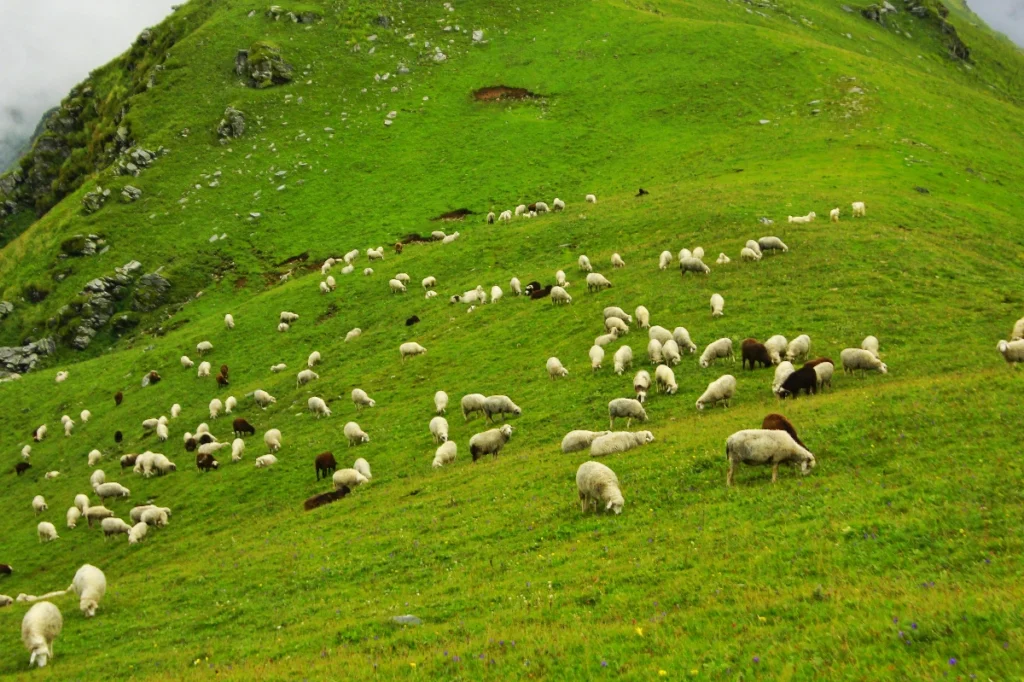
Days 2 and 3 run almost entirely under oak and rhododendron cover.
- Detailed Itinerary Day by Day
Dayara Bugyal Trek Itinerary — Day by Day
This is the exact route our groups follow. Distances and altitudes can shift by 100m or so depending on weather and the specific trail taken that season — that’s normal in the Himalayas, not a sign anything’s wrong.
For an even more detailed version with photos for each stretch of trail, see our full Dayara Bugyal trek itinerary day-by-day breakdown.
1
DAY
- DEHRADUN TO BARSU
- Drive Distance: 200 km
- Drive Duration: 8 hours
- Altitude: 640 meters → 2,050 meters
We start our drive from Dehradun to Barsu early in the morning. The drive is visually appealing as the route mixes changing mountain terrain with the colors of the holy river Bhagirathi as we go deeper into the valley. Our drive ends as we reach the village of Barsu. Barsu is a tranquil village frequented by trekkers as it serves as the base camp for the Dayara Bugyal trek. The locals are devotees of Nag Devta, and the village hosts a temple dedicated to this deity. The day ends with a relaxing dinner and an overnight stay in a homestay.
2
DAY
- BARSU TO BARNALA TAL
- Trek Distance: 4 km
- Duration: 4–5 hours
- Altitude Gain: 2,400 meters
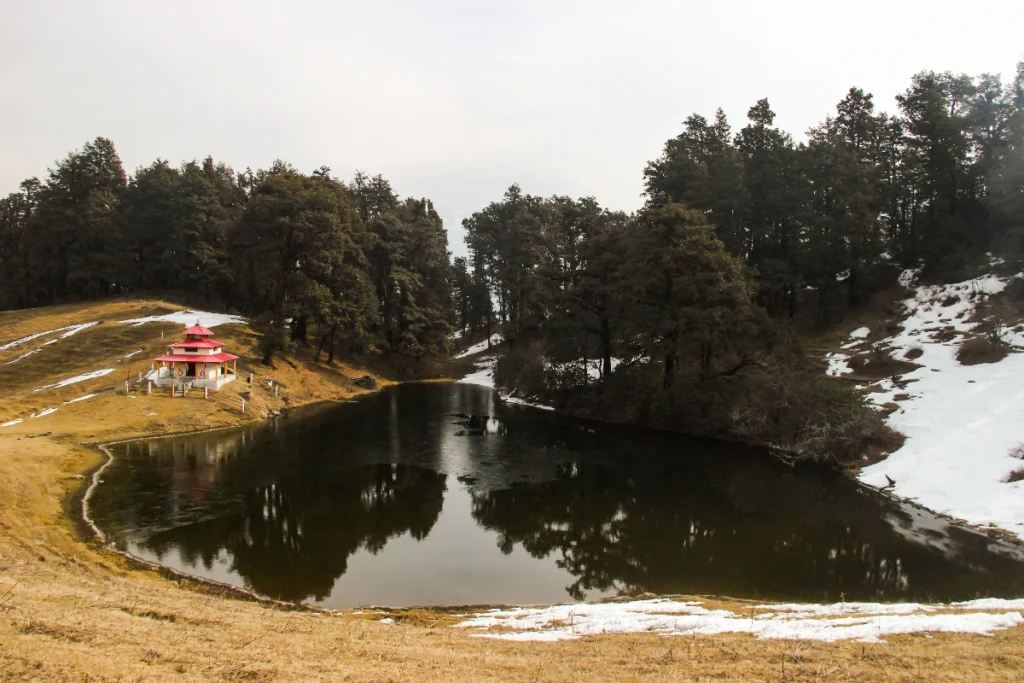
The trek starts early in the morning after breakfast. The village fades behind the forest trail as we ascend from Barsu on a well-marked trail. This trail passes through an oak and rhododendron forest, eventually leading to a small meadow. This meadow is home to the beautiful Barnala Tal, a natural high-altitude lake, and the holy Nag Devta Temple at one corner of the lake. Day 1 DEHRADUN TO BARSU Distance: Drive – 200 km Duration: Drive – 8 hours Stay: Hotel Altitude : 640 meters → 2,050 meters We start our drive from Dehradun to Barsu early in the morning. The drive is visually appealing as the route mixes changing mountain terrain with the colors of the holy river Bhagirathi as we go deeper into the valley. Our drive ends as we reach the village of Barsu. Barsu is a tranquil village frequented by trekkers as it serves as the base camp for the Dayara Bugyal trek. The locals are devotees of Nag Devta, and the village hosts a temple dedicated to this deity. The day ends with a relaxing dinner and an overnight stay in a homestay. As dusk falls, the magic of the Himalayas deepens. The sky transforms into a canvas of endless stars, untouched by city lights. Our astro guide leads an engaging stargazing session, unveiling constellations, planets, and celestial stories that connect mythology with science.
3
DAY
- BARNALA TAL TO DAYARA BUGYAL AND BACK
- Trek Distance: Trek- 10 km (Both ways)
- Duration: 6-7 hours
- Altitude Gain: 2,400 meters → 3,605 meters
The trek starts through the forest trail in the morning. As we ascend, leaving the forest trail behind, we are greeted with some shepherd huts known locally as Chani. As we pass the huts in the meadow, Dayara Bugyal welcomes us with the backdrop of the snowcapped Himalayan peaks. This lush green expanse of 28 square kilometers hosts streams and rivers that originate in this alpine meadow. The majestic Himalayan peaks, including Srikanth, Gangotri, Draupadi ka Danda, Jaonli, Bandarpunch, and Swargarohini, are visible from the meadow. we spend our time at Dayara Top and, after relaxing, trek back to Barnala Tal, our campsite for the night.
4
DAY
- BARNALA TO BARSU TO DEHRADUN
- Distance: 4 Km (Trek) | 200 Km (Drive
- Time: 2 Hours (Trek) | 8 hours (Drive
The trek starts early in the morning as we descend from Barnala Tal to the village of Barsu. The local community in Barsu is involved in agriculture, but over recent years, Barsu has seen a surge in tourism. This has led to the development of several guesthouses, providing employment opportunities. Locals also work as guides, cooks, and porters. The day ends as we drive from Barsu to Dehradun, filled with the memories of the beautiful Dayara Bugyal.
- Honest Assessment
Dayara Bugyal Trek Difficulty
Is Dayara Bugyal trek difficult? No — it’s rated Easy–Moderate, and it’s one of the more forgiving high-altitude treks in Uttarakhand, but “easy” doesn’t mean “effortless.” Here’s the honest breakdown.
Terrain, section by section
The steepest stretch on the entire trek is the first 30-45 minutes out of Raithal on Day 2 — a proper climb that tests your legs before you’ve warmed up. After that, the trail settles into a steady, manageable gradient for most of Day 2 and 3. Day 4’s climb to Dayara Top is longer but less steep — it’s a case of sustained effort rather than technical difficulty. In winter, the final stretch to the top can be under knee-deep or deeper snow, which changes the character of the day considerably: slower pace, more energy spent per step, and a genuine need for microspikes (we provide these).
Altitude and total elevation gain
Across the four trekking days, you gain roughly 1,200 metres in total, topping out at 3,408 m. That’s high enough that Acute Mountain Sickness (AMS) is a real, if generally manageable, consideration — not a reason to avoid the trek, but a reason to take it seriously. Our itinerary is paced with this in mind: the shorter Day 3 exists specifically to help your body adjust before the bigger push on Day 4.
What is AMS, and should I be worried about it?
Acute Mountain Sickness is your body’s reaction to reduced oxygen at altitude — symptoms usually start as a mild headache, nausea, or unusual fatigue, typically above 2,500-3,000 m. At Dayara’s maximum altitude of 3,408 m, most trekkers experience nothing more than mild symptoms, if any. Our trek leaders are trained to recognise early signs, and every group carries an oxygen cylinder and a pulse oximeter for monitoring. If you take it slow, stay hydrated, and tell your trek leader the moment something feels off, AMS on this particular trek is very rarely serious.
Fitness benchmark
You don’t need to be a runner, but you should be able to walk briskly for 4-5 hours on uneven ground without significant strain. A reasonable target to aim for in the weeks before your trek: comfortably walking or light-jogging 4-5 km in under 40 minutes, two to three times a week, for at least three weeks beforehand. If you can already do that, you’ll find this trek genuinely easy. If you can’t yet, you have time to get there — it doesn’t take much.
Who this trek suits
- First-time trekkers who want a real Himalayan experience without a punishing learning curve
- Families with children 10 and above
- Trekkers over 55 who are reasonably active but want to avoid technical or high-exertion routes
- Anyone returning to trekking after a long break
Who might find it harder than expected
- Anyone with a significant cardiovascular condition undisclosed to the trek leader
- Trekkers attempting the winter batch with no prior snow-walking experience and inadequate layering (we brief everyone on this beforehand, but it's worth knowing going in)
- Anyone expecting a purely flat, effortless walk — Day 4 in particular will ask something of you, even if it's well within reach for most people
For the complete breakdown with day-by-day altitude charts and terrain photos, visit our dedicated Dayara Bugyal trek difficulty page.
- Season by Season
Best Time for Dayara Bugyal Trek
When is the best time to do the Dayara Bugyal trek? Dayara is one of the few Himalayan treks that works nearly year-round — the only season to genuinely avoid is the monsoon (July to mid-September), when trails get slippery and the approach road is prone to landslides. Outside of that window, every season offers a meaningfully different trek.
Spring
- Mid-March to April
Day
13–17°C
Night
0–5°C
Layers
3–4
Spring is transition season — snow is retreating from the lower campsites while the upper meadow near Dayara Top can still be under a late-winter blanket. You get an unusual mix in a single day: green lower meadows, patches of snow higher up, and the first rhododendron blooms lighting up the forest sections. It’s a quieter time on the trail too, since it falls between the winter and peak-summer crowds.
Summer
- April to June
Day
15–22°C
Night
5–10°C
Layers
3
This is peak family-batch season, and for good reason — the meadow is at its greenest, wildflowers are out in numbers by May-June, and the weather is the most forgiving of the year. It’s also the easiest window for the trek physically, since there’s no snow to slow you down on the ascent. If you’re bringing children or trekking for the first time, this is the window we’d point you toward.
Autumn
- October to November
Day
10–18°C
Night
0–5°C
Layers
4
Autumn brings the clearest skies of the year in the Garhwal Himalayas, which means your best odds at those wide, unobstructed views of the Gangotri range and Bandarpoonch. The meadow itself turns a deeper, golden-brown, and maple trees along the forest sections go a genuine fire-red — this is the season serious photographers tend to pick.
Winter
- December to March
Day
0–8°C
Night
-10°C to -5°C
Layers
5+
The Dayara Bugyal winter trek is its own experience entirely. Snow typically arrives by late December and stays through March, transforming the meadow into an unbroken white expanse with natural slopes gentle enough for basic skiing. Nights get genuinely cold — we’re talking sub-zero even at the lower campsites — but our winter gear kit (extra-rated sleeping bags, hot water bottles, additional layers) is built specifically for this. It’s a harder, slower trek in winter, and one that rewards trekkers who come prepared rather than those expecting a scaled-down version of the summer route.
A note on the monsoon
July to mid-September isn’t in our regular batch calendar for a reason — leech-heavy trails, poor visibility, and a genuinely higher risk of landslides on the approach road through the Bhagirathi valley. If you’re set on a monsoon Himalayan trek, we’d point you toward higher-altitude, rain-shadow routes instead rather than Dayara.
For a deeper look specifically at the late-spring window, our blog on Dayara Bugyal in May and June covers wildflower timing, trail conditions, and packing tips in more detail.
- Logistics
How to Reach Dayara Bugyal from Dehradun
How do I get to Dayara Bugyal? The base village, Raithal, is roughly 185–190 km from Dehradun by road — about a 7-8 hour drive through Mussoorie and Uttarkashi — and every Mountainiax package includes this transport in both directions.
Getting to Dehradun
By Air
Jolly Grant Airport (DED) is Dehradun’s own airport, connected to Delhi, Mumbai, and several other major cities. If direct flights to Dehradun are significantly pricier than flying into Delhi, it’s often cheaper to fly to Delhi and take an overnight bus or train onward — but check the price difference first; if it’s under roughly ₹1,000, flying direct usually isn’t worth skipping for the time you save.
By Train
Dehradun railway station has direct trains from Delhi, Mumbai, and other major cities, including overnight options that get you in early morning — useful if you want to avoid burning a full travel day before your trek starts.
By Road
Regular Volvo and overnight buses run from Delhi to Dehradun, roughly 6-7 hours depending on traffic.
Plan to arrive in Dehradun the evening before Day 1. Pickup for the trek happens early morning, and arriving the same morning leaves zero buffer if your flight or train is delayed even slightly.
The Journey from Dehradun to Raithal
Pickup is arranged from a central point in Dehradun, typically around 6:00-6:30 AM. The route runs through Mussoorie first — expect a short uphill stretch of hairpin turns, which is normal and part of the scenery rather than a warning sign — then descends toward the Bhagirathi valley through Uttarkashi. Roads are well-paved for most of the drive, and the team usually stops once or twice for chai and a stretch. You’ll arrive in Raithal by mid-to-late afternoon.
If You're Arranging Your Own Travel to Raithal
Some trekkers prefer to reach the base village independently rather than joining the group transport. If that’s you: there’s no direct bus from Dehradun to Raithal, so the practical route is Dehradun to Uttarkashi by bus (roughly 6 hours), followed by a shared jeep or taxi from Uttarkashi to Raithal (about 1.5-2 hours, roughly 45 km). Shared vehicles for Raithal from Uttarkashi’s taxi stand tend to run until early evening — don’t cut this connection too close.
Returning to Dehradun
Book your onward travel (flights especially) for after 8-9 PM on Day 6, or ideally the next day. Mountain roads are unpredictable enough — a landslide clearance, a slow-moving vehicle ahead, a weather delay — that a same-evening flight connection is a genuine risk you don’t need to take on the last day of an otherwise smooth trip.
- On the Mountain
Dayara Bugyal Camping and Trek Experience
What is camping like on the Dayara Bugyal trek? You’ll stay in quality alpine tents through the trek, sharing with one other trekker, with proper sleeping bags, foam mattresses, and a dedicated dining tent for meals — set up fresh at each campsite by our support team ahead of your arrival.
Accommodation
In Raithal, you’re in either a homestay-style base camp or basic guesthouse rooms depending on batch size — comfortable, simple, with functioning bathrooms and hot water arranged. On the trek itself, at Gui, Chilapada, and Nayata, you’re in twin-sharing tents rated to handle -10°C, with foam mattresses underneath and sleeping bags rated for the same conditions. Tents are pitched before you arrive at each campsite, so there’s no setup work on your end.
Meals
All meals are vegetarian, freshly cooked by our mountain cooks at each campsite — hot breakfasts, packed trail lunches, and proper sit-down dinners, with chai available more or less constantly. Meal coverage runs from dinner on Day 1 through breakfast on Day 6.
Toilets
Toilet tents are set up at each campsite — a simple pit-and-cover system with soil and a shovel provided, and a basic room freshener. It’s not glamorous, but it’s clean and it’s the standard setup for Himalayan trekking anywhere in the country. Please carry plain toilet paper rather than wet wipes, which don’t biodegrade at altitude.
Water
Campsites are pitched near natural water sources, and there are refill points on the trail on most trekking days — your trek leader will point these out each morning. Two litres of carrying capacity is generally enough for a day’s trekking; we recommend water purification tablets or a filter as backup, which we can advise on before you go.
Electricity and Mobile Network
Raithal is your last point with reliable electricity — charge everything here before heading up. Once you’re on the trek, there’s no power, so bring a power bank (10,000 mAh or more is a safe bet) if you’re relying on a phone for photos. Mobile network is patchy but does exist at several points on the trail, including occasionally at Dayara Top itself — don’t count on it for work, but don’t assume total silence either.
- Checklist
Safety on the Dayara Bugyal Trek
What should I carry on the Dayara Bugyal trek? A practical layering system, sturdy waterproof shoes, and a few Himalayan-specific essentials — here’s the full breakdown by category.
Our Safety Setup
As covered above, AMS is the main altitude risk on this trek, and at 3,408 m maximum altitude, it’s generally mild and manageable with proper pacing. HAPE (High Altitude Pulmonary Edema) and HACE (High Altitude Cerebral Edema) are more serious altitude illnesses that are extremely rare at this elevation but that our trek leaders are trained to recognise regardless.
Altitude-Related Risks
As covered above, AMS is the main altitude risk on this trek, and at 3,408 m maximum altitude, it’s generally mild and manageable with proper pacing. HAPE (High Altitude Pulmonary Edema) and HACE (High Altitude Cerebral Edema) are more serious altitude illnesses that are extremely rare at this elevation but that our trek leaders are trained to recognise regardless.
Emergency Evacuation
If an evacuation is needed from Chilapada or below, the return route to Raithal is the fastest option. From higher points near Dayara Top, descent toward Barsu can be quicker depending on exact location. Evacuation from the farthest points on the trek can take 6-8 hours on foot with support, which is standard for this kind of terrain across the Himalayas — it’s a reason to disclose any pre-existing medical condition to your trek leader before you start, not a reason to avoid the trek.
Nearest Medical Facilities
The District Hospital in Uttarkashi is the closest facility to the trek route, roughly an hour’s drive from Raithal. For anything requiring more advanced care, Dehradun (7-8 hours away) is the nearest major hospital hub — which is why our on-trek medical kit and trained trek leaders matter as much as they do; most situations are managed on the mountain rather than requiring a full evacuation.
What We Ask of You
Tell us about any pre-existing conditions — heart issues, asthma, previous altitude sickness, joint problems — honestly, before the trek. It changes nothing about whether you can come; it changes how closely we watch and what we plan for. The single biggest safety factor on any trek isn’t gear, it’s information the trek leader actually has.
- Packing
What to Pack for the Dayara Bugyal Trek
What should I carry on the Dayara Bugyal trek? A practical layering system, sturdy waterproof shoes, and a few Himalayan-specific essentials — here’s the full breakdown by category.
Footwear and Clothing
- Waterproof trekking shoes, broken in before the trek (not brand new)
- 3-4 warm layers (thermal base layer, fleece, insulated jacket)
- A waterproof/windproof outer shell jacket
- Trekking pants (avoid denim — it's slow to dry and cold when wet)
- Thermal innerwear, especially for autumn/winter batches
- A warm cap and a sun cap/hat
- Gloves — a lighter pair for daytime, an insulated pair for camp evenings
Personal Gear
- A 40-50L backpack with a rain cover
- A 2L water bottle or hydration bladder
- A headlamp with spare batteries (essential — campsites have no lighting after dark)
- UV-protection sunglasses (snow glare in winter is genuinely intense)
- SPF 50+ sunscreen and lip balm
- A basic personal medical kit, plus any personal prescription medication
- A power bank (10,000 mAh+)
- Trekking pole(s) — optional but genuinely useful on the descent days
Winter-Specific Additions
- Snow gaiters
- Microspikes (we provide these, but let us know your shoe size in advance)
- An extra thermal layer and a warmer sleeping bag liner (also provided on winter batches)
Documents
- A government photo ID (Aadhaar or similar) — required for forest permits
- Any medical documents relevant to pre-existing conditions
A full, printable checklist is shared with every confirmed trekker before their batch date.
Gear You Can Rent Instead of Buying
If this is your first Himalayan trek and you’re not ready to invest in a full kit, several items are worth renting rather than buying outright — a good insulated jacket, trekking poles, and gaiters in particular tend to sit unused in a cupboard after a single trip if you’re not a frequent trekker. Talk to us before your batch date and we can point you to trusted rental options in Dehradun, or let you know which items we can arrange directly.
A Note on What Not to Overpack
First-time trekkers tend to overpack in two specific ways: too many clothing changes (you will re-wear things — that’s normal on a multi-day trek) and too much “just in case” gear that adds weight without adding much real utility. A loaded backpack that’s 2-3 kg lighter than it needs to be makes a genuinely noticeable difference by Day 4. If you’re offloading your bag (see the camping section above), this matters less, but if you’re carrying your own pack, it’s worth a second, more critical look at your pile before you zip it shut.
- Light and Life
Dayara Bugyal Trek Photography
Few beginner-friendly treks in India offer this much visual reward for this little technical difficulty. The open meadow at Dayara Top gives you a genuine 360-degree composition — mountains on one side, undulating grassland stretching in the other — and because there’s minimal light pollution at the campsites, clear nights deliver some of the more accessible Milky Way photography you’ll find on an easy trek.
Golden hour at the top campsite (Nayata or Chilapada, depending on your exact route) is worth planning around specifically — ask your trek leader about timing if photography is a priority for you. For a full guide to the best specific viewpoints, timing, and gear recommendations, see our dedicated Dayara Bugyal trek photography page.
- Ecology
Flora, Fauna and the Dayara Ecosystem
The trail from Barsu and Raithal passes through oak, maple, deodar, and rhododendron forest that isn’t just scenery — it’s a genuinely rich ecosystem. Keep an eye (and ear) out for the Himalayan Monal, Uttarakhand’s state bird, along with snow pigeons, vultures circling the higher ridgelines, and occasionally foxes moving through the lower forest sections. Spring brings rhododendron blooms in shades of red and pink through the mid-elevation forest; by early summer, the meadow itself is dotted with wildflowers that most first-time trekkers don’t expect from an “easy” trek.
Dayara Bugyal is also protected under conservation efforts by the Uttarakhand Forest Department, which is part of why the meadow has stayed as pristine as it has despite decades of trekking traffic — permits and forest fees, included in every Mountainiax package, go toward this upkeep.
- For Families
Dayara Bugyal Trek with Kids — Is It Suitable for Families?
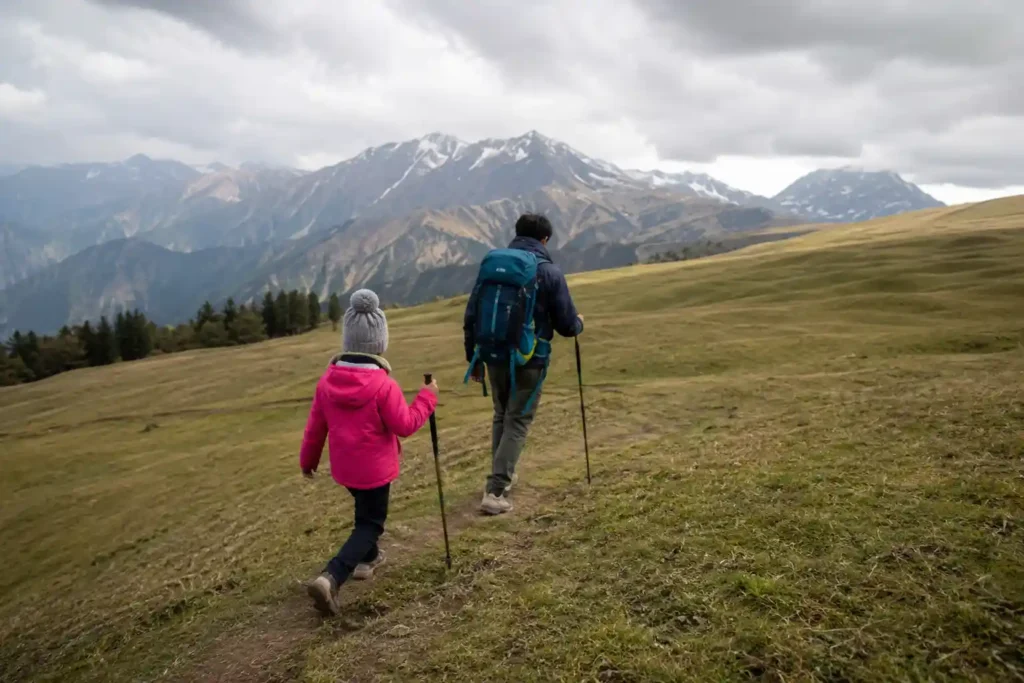
Can children do the Dayara Bugyal trek? Yes — it’s widely considered one of the most family-friendly Himalayan treks in Uttarakhand, with a minimum age of 10 and an itinerary that’s genuinely manageable for a reasonably active child.
The gradual altitude gain, manageable daily distances, and lack of any technical or exposed sections make this one of the few Himalayan treks where you’re not gambling on whether your child will actually enjoy it. Most families choose the summer batches (April-June) specifically because there’s no snow to complicate the walk, and the weather is at its most forgiving.
A few practical notes if you’re bringing kids: pack an extra layer beyond what you’d bring for an adult (children run cold faster at altitude), keep hydration a constant reminder rather than an assumption, and talk to your trek leader in advance about pace — our groups with children typically take slightly longer on Day 4 than a purely adult batch, and that’s built into the schedule, not an inconvenience.
For a more detailed look at planning a family trip here, our blog on Dayara Bugyal with Kids covers age-specific packing advice, pacing tips, and what to expect from a child’s perspective on the trail.
- Add-ons
Places to See Before or After Your Dayara Bugyal Trek
If you’re building in a buffer day around Dehradun, a few worthwhile stops:
Mussoorie
the hill station you’ll pass through on the drive up; worth a half-day if you have one to spare, for the Mall Road views and the Kempty Falls detour
Rishikesh
about 45 minutes from Dehradun, a natural add-on if you want a day of a completely different pace (river, ashrams, cafes) before or after the mountains
Uttarkashi
the largest town on the route, with the Vishwanath Temple and a good spot to pick up any last-minute gear or cash
Robber's Cave (Dehradun)
an easy half-day activity right in Dehradun if you’re arriving a day early
- Cost and Inclusions
Dayara Bugyal Trek Package
Our Dayara Bugyal trek package is priced at ₹8,999 + 5% GST, all-inclusive, for the full 6 days / 5 nights.
Book Your Dayara Bugyal Trek Now — ₹8,999What's Included
- Dehradun to Dehradun transport (Tempo Traveller)
- All vegetarian meals from Day 1 dinner through Day 6 breakfast
- Camping equipment — tents, -10°C rated sleeping bags, mattresses
- Experienced trek leader and local guide
- Forest permits and camping charges
- First aid kit and oxygen cylinder
- Certificate of completion
What's Not Included
- Personal expenses
- Travel insurance (we recommend arranging this separately)
- Anything not explicitly listed above
- Tips and gratuities
- Early arrival or late departure accommodation in Dehradun
- Mules or porters for personal luggage (available on request for an additional charge)
Upcoming Batches
We run regular departures through spring and summer, with dedicated winter batches from December through March. Current availability and exact dates are listed on the booking section above — batches do fill up, particularly the May-June wildflower window and the December-January winter skiing dates, so booking 3-4 weeks ahead is a reasonable rule of thumb.
- Trek Highlights
Why Trek Dayara Bugyal with Mountainiax
We’ve been organising treks since 2018, and Dayara Bugyal has been part of our core lineup since close to the beginning — which means our trek leaders aren’t reading off a script, they’ve genuinely walked this trail across every season it offers.
Bandarpoonch Peak View
Witness the majestic Bandarpoonch peak (6,316m) from Dayara Bugyal meadows
Dayara Bugyal Camping
Experience magical camping amidst vast green meadows with panoramic mountain views
Winter Snow Trek & Skiing
Dayara Bugyal in winter transforms into a skiing paradise with pristine snow slopes
Spectacular Sunrise & Sunset
Capture golden hour magic with Himalayan peaks turning crimson at dawn and dusk
Dense Forest Trail
Trek through enchanting oak and rhododendron forests rich in biodiversity
Photography Paradise
Dayara Bugyal photos - capture stunning landscapes, wildflowers & starry nights Kedar Trek Trail
More Dayara Bugyal Trek photos available during the trek. Capture memories at every Dayara Bugyal Trek
1200+
Happy Trekkers
4.9/5
Average Rating
100%
Success Rate
8+
Years Experience
- Honest Comparison
Dayara Bugyal vs Other Beginner Treks in Uttarakhand
If you’re weighing Dayara Bugyal against other easy-to-moderate options, here’s an honest comparison rather than a sales pitch for why ours is “the best.”
Dayara Bugyal vs Kedarkantha
Kedarkantha is a summit trek — you’re aiming for a peak with a proper 360-degree view from the top, and it’s almost exclusively done as a winter trek. Dayara is a meadow trek — no summit push, gentler daily distances, and it works across three seasons instead of mainly one. If you want the bragging rights of standing on a summit, Kedarkantha edges it out. If you want a more relaxed, family-friendly week with more flexibility on timing, Dayara wins.
Dayara Bugyal vs Nag Tibba
Nag Tibba is shorter — a genuine weekend trek, 2 days, doable if you can only get away from work for a Saturday-Sunday. Dayara is a fuller week, with more forest variety, a bigger meadow, and higher altitude. If time is your real constraint, Nag Tibba is the practical choice. If you have the days to spare, Dayara offers considerably more trek for the extra time.
Dayara Bugyal vs Valley of Flowers
Valley of Flowers is a monsoon specialty — a UNESCO World Heritage meadow that’s only accessible in a narrow July-September window, and it involves permits and a different logistical setup (including an overnight in Ghangaria). Dayara is available nearly year-round and has a simpler, more predictable logistics chain. If your travel dates are fixed to the monsoon, Valley of Flowers is worth the extra planning. Otherwise, Dayara is the lower-friction choice.
The honest takeaway: Dayara Bugyal’s real advantage isn’t that it’s “better” than these treks in some absolute sense — it’s that it’s the most flexible one on this list. Nearly year-round availability, family-appropriate difficulty, and a genuinely spectacular payoff for the effort involved is a combination the others don’t all offer together.
- Paperwork
Permits, Registration and Group Logistics
Do I need a permit for the Dayara Bugyal trek? Yes — the trek passes through forest department land, and permits are mandatory. This is handled entirely by our team as part of your package; you don’t need to arrange anything separately beyond carrying a valid photo ID.
What You Need to Carry
A government-issued photo ID (Aadhaar card or passport) is required at the forest checkpoint near Raithal/Barsu. Carry the original, not just a photocopy — checkpoint staff generally ask to see it directly. If you’re a minor trekking with a parent or guardian, we’ll guide you on the specific documentation needed during the registration process.
Registration Process
Once you book your batch, you’ll receive a short pre-trek form covering your medical history, emergency contact, and any dietary restrictions. This isn’t a formality we skip past — it’s genuinely how we decide how closely to brief your trek leader on you specifically. Fill it out honestly; it changes nothing about your ability to join, only how prepared we are.
Group Composition
Our batches typically run with a trek leader, a local guide, and support staff (cook and helpers) alongside the trekking group. Group sizes are kept intentionally small — this is a deliberate choice rather than a capacity limitation, because smaller groups move at a more natural pace and get meaningfully more attention from the trek leader, particularly useful on a trek that includes first-timers and children.
- Feedback
What Trekkers Say About Dayara Bugyal
Trekkers who’ve done both an “easy” trek elsewhere and Dayara Bugyal often mention the same thing: the meadow feels disproportionately rewarding for how manageable the trek actually is. That gap between effort and payoff is, if we’re honest about what makes a trek worth recommending, the single biggest reason we keep this one at the center of our lineup.
Winter trekkers in particular tend to come back with a different kind of story — less about the view (though it’s still there) and more about the experience of walking on real, deep snow for the first time, often with a small group of strangers who become genuinely good company by Day 4. Families, on the other hand, most often mention the forest sections on Day 2 and 3 — slower, shaded, easier to enjoy with a child who isn’t chasing a summit deadline.
We’d rather you read verified reviews directly than take our word for it — you’ll find our Google Business Profile and TripAdvisor listing linked in the footer of this site, both reflecting real, dated trekker feedback rather than static numbers on a page.
- Leave No Trace
Sustainable Trekking at Dayara Bugyal
Dayara’s meadow has stayed remarkably intact despite decades of trekking traffic, and that’s not an accident — it’s the result of active Forest Department conservation and, frankly, the choices individual trekking groups make on the trail. We ask every trekker on our batches to carry out everything they carry in, avoid stepping off marked trails on the open meadow sections (repeated off-trail walking erodes the grass cover faster than it can recover), and use biodegradable toiletries where possible. None of this is difficult, and collectively it’s the reason this meadow still looks the way it does in photographs from a decade ago.
Dayara Bugyal Trek Gallery
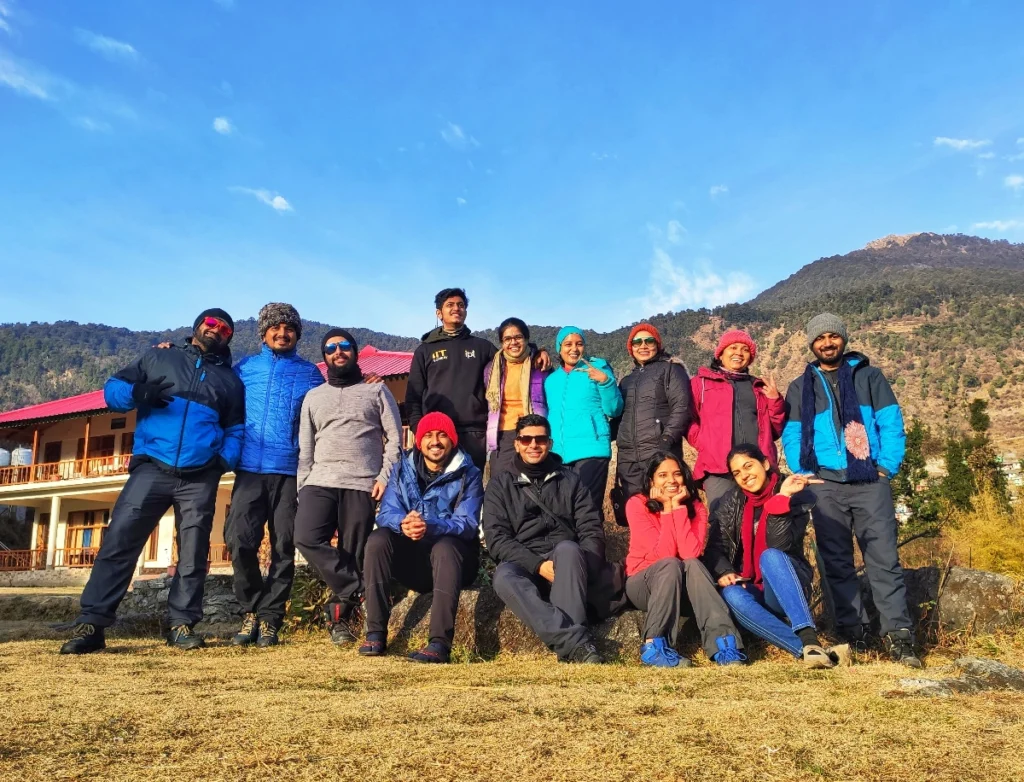
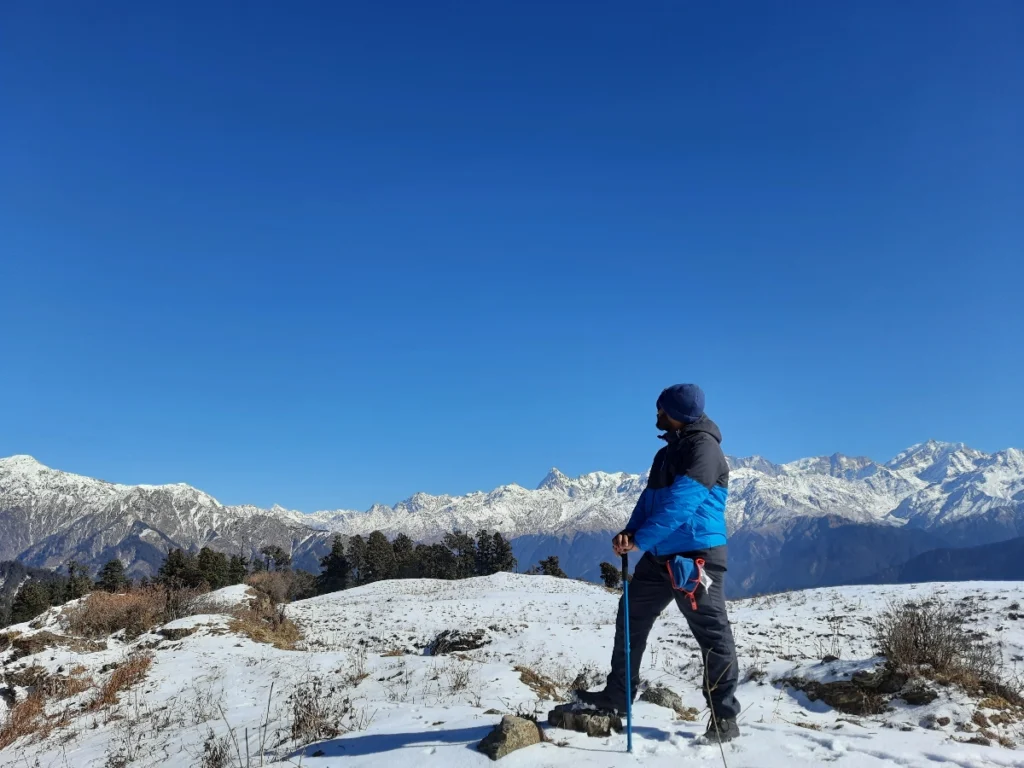
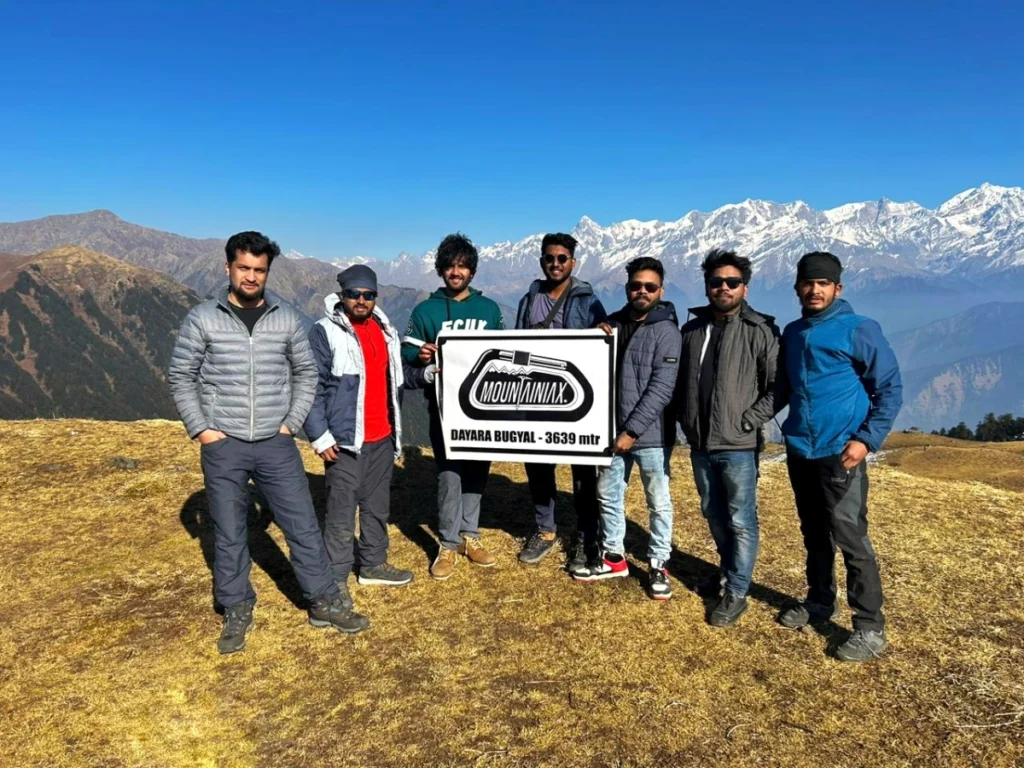
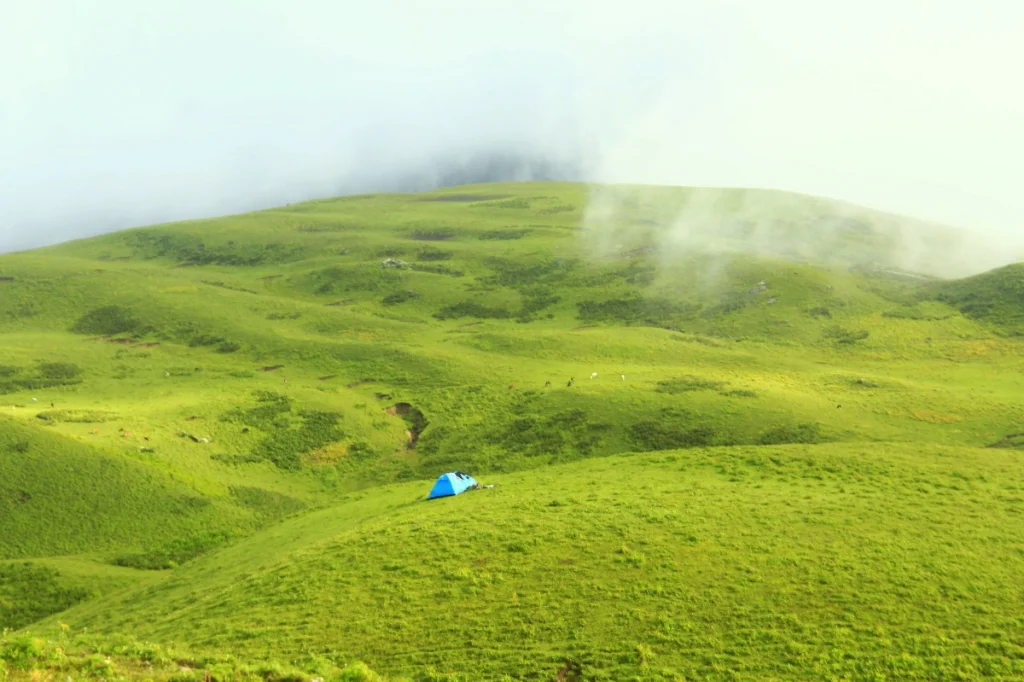
Where endless alpine meadows meet the mighty Himalayas — moments from the Dayara Bugyal Trek
Why Choose Our Dayara Bugyal Trek Package?
We’re Mountainiax, and our Dayara Bugyal trek itinerary is built from real mountain experience — not templates. Running treks from Dehradun since 2016, we craft each day with safety, acclimatization, and genuine alpine adventure in mind. That’s what sets our packages apart — not just on paper, but on the trail.
Safety First
Every trek leader is wilderness first-aid certified. We carry oxygen cylinders, pulse oximeters, and have a tested emergency evacuation protocol in place. We've never had a serious safety incident on this route.
Expert Trek Leaders
Our guides aren't just experienced — they're local. Born and raised in Uttarkashi district, they know this trail, its weather patterns, and its moods in every season. They also make brilliant company.
Best Value Packages
Our Dayara Bugyal trek package are all-inclusive at ₹8,999 per person + GST. That covers transport from Dehradun, all meals, camping gear, permits, guides, and your completion certificate. No surprise charges at the end.
Delicious Meals
We know food matters on a trek. Our mountain cooks prepare fresh, nutritious vegetarian meals at every camp — hot breakfasts, packed lunches on the trail, and proper sit-down dinners. Strong chai is always available.
24/7 Support
From the moment you book until you're back in Dehradun, our team is reachable. Questions before the trek? Call us. Something unexpected on the trail? Your guide has a direct line to our base team.
Small Groups
We keep group sizes small by design. It means better guide attention, quieter campsites, and a more genuine mountain experience — not a tourist convoy.
8+
Years Experience
150+
Successful Treks
1200+
Happy Trekkers
4.9
Star Rating
- More Trails
Other Treks You Might Like
If Dayara Bugyal’s easy-moderate profile suits you, a few other treks in our lineup follow a similar spirit:
a multi-day Himalayan pilgrimage covering five sacred Shiva temples across the Garhwal Himalayas
the shortest weekend Himalayan trek from Dehradun, ideal if you’re short on time
a UNESCO World Heritage meadow trek, best done in the monsoon window Dayara avoids
another beginner-accessible trek combining a high-altitude Shiva temple with panoramic Himalayan views
You can browse our complete list of departures on the all treks page, or read more trekking guides, packing advice, and destination breakdowns on the Mountainiax blog.
- Answers
Dayara Bugyal Trek FAQs
Common questions about Dayara Bugyal trek package, weather, difficulty, camping, and more. Can’t find your answer? Contact us!
What is Dayara Bugyal and why is it famous?
Dayara Bugyal is one of India’s largest and most photogenic alpine meadows, located in the Uttarkashi district of Uttarakhand at 3,408 metres. It’s known for three things: its vast rolling meadows, its 360-degree views of peaks like Bandarpoonch and the Gangotri range, and its transformation into a snow-and-skiing destination every winter.
What is the best time for the Dayara Bugyal trek?
April to June and October to November are the two most popular windows — summer for wildflowers and easy conditions, autumn for the clearest mountain views. December to March offers a completely different winter/skiing experience for those prepared for the cold. Avoid the monsoon (July to mid-September) due to slippery trails and landslide risk on the approach road.
How difficult is the Dayara Bugyal trek?
It’s rated Easy–Moderate. The total distance is 24 km across 4 trekking days, with no technical sections, though the initial climb out of Raithal and the final push to Dayara Top both require sustained effort. Basic fitness — comfortably walking or jogging 4-5 km in under 40 minutes — is enough preparation for most trekkers.
What is the Dayara Bugyal altitude?
The meadow tops out at 3,408 metres (11,181 ft). The trek starts from Raithal at around 2,200 m and gains altitude gradually over four days, keeping AMS risk manageable for most trekkers.
How do I reach Dayara Bugyal from Dehradun?
Raithal, the base village, is 185–190 km from Dehradun — a 7-8 hour drive via Mussoorie and Uttarkashi. All Mountainiax packages include this transport. The nearest airport is Jolly Grant Airport, Dehradun, and Dehradun railway station has direct trains from Delhi, Mumbai, and other major cities.
What's included in the package?
Our ₹8,999 + GST package includes Dehradun return transport, all vegetarian meals from Day 1 dinner to Day 6 breakfast, camping equipment (tents, -10°C sleeping bags, mattresses), an experienced trek leader and guide, forest permits, first-aid supplies, an oxygen cylinder, and a completion certificate.
Is camping safe there?
Yes. We use quality alpine tents and -10°C rated sleeping bags, and every trek leader is wilderness first-aid certified. Groups carry an oxygen cylinder and pulse oximeter, and we follow a tested emergency evacuation protocol.
Can I do the Dayara Bugyal winter trek?
Yes — it’s one of our most popular winter departures. Snow typically covers the meadow from late December through March, with natural slopes suitable for basic skiing. We provide specialised winter gear (extra layers, gaiters, microspikes, hot water bottles) for these batches.
What is Dayara Bugyal's weather like across seasons?
Summer (April-June): 15-22°C days, 5-10°C nights. Autumn (Oct-Nov): 10-18°C days, 0-5°C nights. Winter (Dec-Mar): 0-8°C days, -10°C to -5°C nights. Always pack a waterproof outer layer regardless of season — mountain weather shifts quickly.
What should I carry for the Dayara Bugyal trek?
Waterproof trekking shoes, 3-4 warm layers, a waterproof jacket, thermal innerwear, a warm cap, gloves, UV sunglasses, a 2L water bottle, SPF 50+ sunscreen, a headlamp with spare batteries, and personal medication. Winter batches need snow gaiters and microspikes in addition. A full checklist is shared with confirmed trekkers.
Can children do the Dayara Bugyal trek? What's the minimum age?
Yes — the minimum age is 10 years, and it’s one of the most recommended family treks in Uttarakhand thanks to its gradual ascent and manageable daily distances.
How many people are in a trekking group?
We keep our Dayara Bugyal batches deliberately small for better guide attention and a more genuine mountain experience — exact batch sizes are listed alongside each departure date.
Will I get mobile network on the trek?
Coverage is patchy but present at several points, including occasionally at Dayara Top. Don’t rely on it for work commitments, but it isn’t a total network blackout either.
Are there ATMs near the Dayara Bugyal trek route?
Uttarkashi has the last reliable ATMs before Raithal. We’d suggest carrying roughly ₹2,000-3,000 in cash for personal expenses and any last-minute needs, since once the trek starts, meals and stay are already covered in your package.
Is offloading (porter/mule service for luggage) available?
Yes, available on request for an additional charge — this isn’t included in the standard package but is easy to arrange in advance if you have a medical reason to avoid carrying your own backpack.
What if the trek gets cancelled due to weather or a landslide?
Himalayan trekking is genuinely subject to factors outside anyone’s control — sudden weather, government-imposed permit restrictions, road blockages. If this happens, we’ll do everything possible to offer a safe alternative trek; where that isn’t feasible, our standard cancellation and refund policy applies.
Still have questions about the Dayara Bugyal trek?
Call us at +91 6398937502 or send us a WhatsApp — we're happy to help you plan.