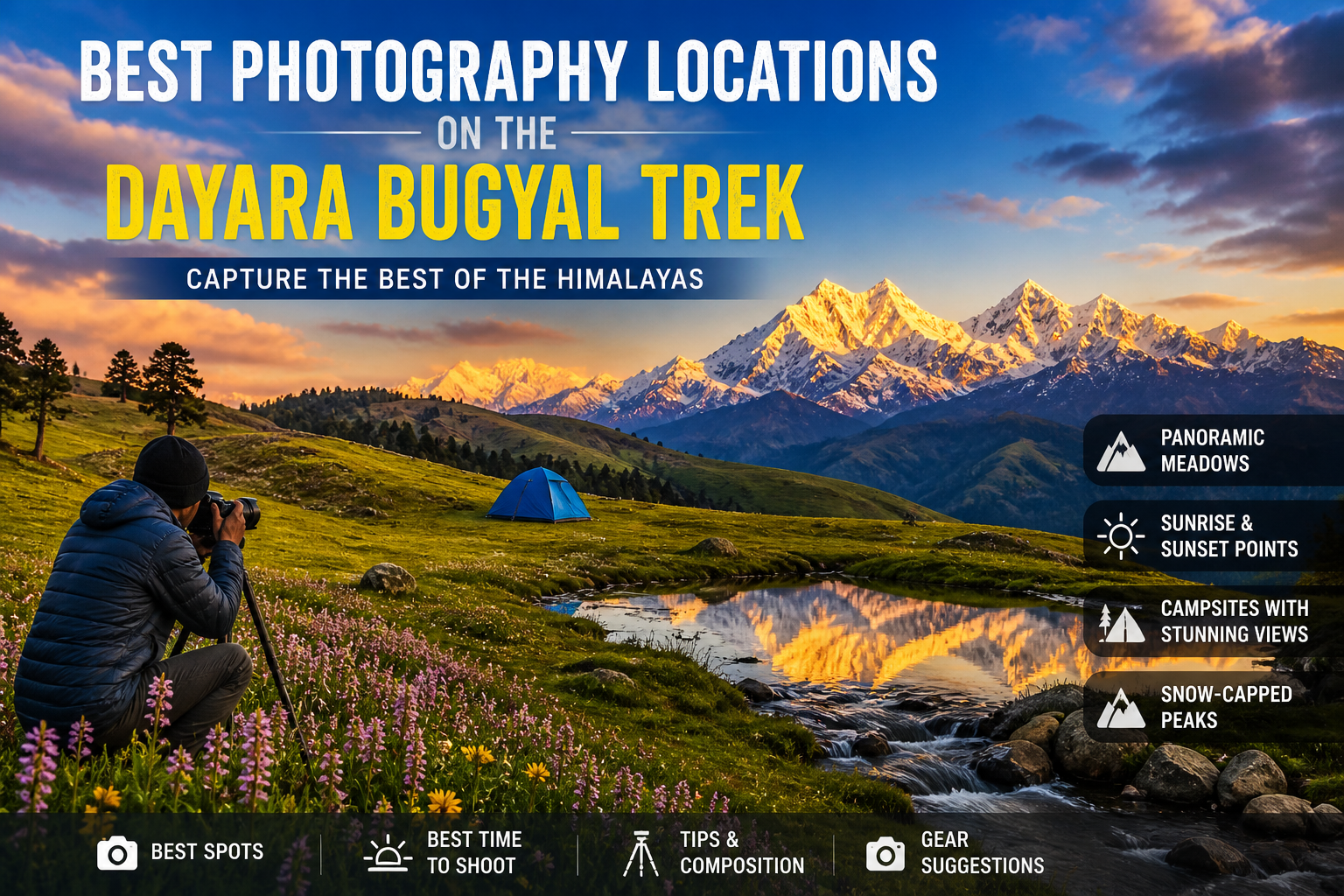
Few trails in the Indian Himalayas offer a photographer’s eye as many layered, dynamic, and emotionally resonant frames as the route through Dayara Bugyal. From the dappled morning light filtering through silver birch canopies to the electric silence of a snow-covered plateau at dawn, this trail is essentially a moving exhibition of Himalayan light and landscape. Whether you shoot on a DSLR, a mirrorless system, or a smartphone, the terrain rewards patience, timing, and a willingness to pause far more often than you walk.
What makes this trek particularly compelling for visual storytellers is its diversity. In the span of a single day, you move through dense rhododendron forest, across open ridges, beside rushing glacial streams, and onto a sweeping alpine meadow ringed by some of the most photogenic peaks in Uttarakhand. Each environment has its own light quality, its own texture, its own emotional register. The Best Photography Locations on the Dayara Bugyal Trek are not limited to a single viewpoint — the entire trail is the subject.
This guide is written specifically for trekkers who want to return from Dayara Bugyal with not just memories but a portfolio. Every location listed here has been assessed for its visual potential across different seasons, lighting conditions, and photographic disciplines — from wide landscape compositions to intimate wildlife encounters and long-exposure night sky frames.
Why Dayara Bugyal Rewards the Photographer’s Eye
The Dayara Bugyal trek sits within the Uttarkashi district of Uttarakhand, in the broader Gangotri region — one of the most ecologically and visually rich corridors in the entire Himalayan range. The altitude range from 7,200 feet at Barsu village to 12,087 feet at Bakaria Top means the landscape transforms dramatically within a single day’s walk.
At lower elevations, dense rhododendron, oak, and silver birch forests create layered foregrounds, filtered light, and atmospheric depth. As you climb, the canopy gives way to open ridgelines where the sky takes over — vast, uninterrupted, and at altitude, a shade of blue that cameras often struggle to reproduce faithfully. Then the meadow opens out, and suddenly you have everything: foreground, midground, and background all speaking to each other in perfect compositional harmony.
The Himalayan peaks visible from Dayara Bugyal — Bandarpunch, Kala Nag, Draupadi Ka Danda, and Srikanth — are not distant smudges on the horizon. They are close, present, and dominant in the frame. On a clear post-monsoon morning or a sharp winter day, the detail visible on these summits through even a mid-range telephoto lens is breathtaking.
Photography Location 1 — The Forest Trail from Barsu Village
The trail begins its photographic offering almost immediately after leaving Barsu village. The forest path that climbs through mixed rhododendron and oak woodland is one of the most underrated stretches on the entire route. In spring (late March through May), the rhododendron trees erupt in vivid red and pink blooms — one of the most dramatic natural colour events in Uttarakhand’s trekking calendar.
Shoot with the blooms as foreground elements and allow the trail to serve as a leading line pulling the viewer deeper into the frame. The filtered, diffused light within the canopy is soft and flattering — particularly in the early morning hours when mist still clings to the lower slopes. This is ideal for forest landscape photography and botanical macro work.
Key considerations for this location:
- Shoot during the blue hour or first two hours after sunrise for the softest light
- Use a polarising filter to manage reflections on wet leaves after rain
- A 24-70mm or equivalent range covers most compositions comfortably here
- In winter, snow-dusted branches against dark bark create striking monochromatic scenes
Photography Location 2 — The Meadow Entry Point (First View of the Bugyal)
The moment the forest yields to an open meadow is one of the most visually dramatic transitions on any Himalayan trekking route in Uttarakhand. After the contained intimacy of the forest, stepping onto the edge of the bugyal delivers an immediate spatial shock — suddenly the world opens to an enormous sky, and the peaks that were hidden behind the canopy appear all at once.
This threshold moment, where the last trees frame the entry into the meadow, creates a natural compositional device. Position the tree line to frame the peaks in the background while the meadow rolls toward the horizon. In summer, when the grass is green and wildflowers dot the foreground, the scene barely needs any compositional effort.
For trekkers planning their journey, referencing a solid dayara bugyal trek itinerary before departure helps you time your arrival at this transition point to coincide with golden hour — when the peaks catch the last directional light of the day and glow orange and amber against a deepening sky.
Technique tips for this location:
- Use a wide-angle lens (16-24mm) to capture the full meadow sweep and sky together
- Shoot at the magic hour — either dawn or dusk — for the warmest, most directional light
- Include trekkers or local shepherds in the frame to add human scale and narrative
- On overcast days, focus on the meadow textures and foreground rather than the sky
Photography Location 3 — The Campsite at Dayara Bugyal
Camping on the meadow is the centrepiece of the Dayara Bugyal trekking experience, and the campsite itself offers three distinct photographic windows: pre-dawn star trails, sunrise over the peaks, and the soft evening glow that follows sunset.
The night sky above Dayara Bugyal is extraordinary. At over 10,000 feet, with no light pollution for hundreds of kilometres in most directions, the Milky Way is visible with the naked eye on clear nights from late September through November. For astrophotography in the Himalayas, this location is among the most accessible — no technical climbing required, and the flat meadow surface makes tripod placement straightforward.
At sunrise, the peaks surrounding the campsite catch the first light before the meadow itself is illuminated. This creates a dramatic window of perhaps 15 to 20 minutes where the mountains glow while the foreground remains in cool shadow — one of the most coveted light states in Himalayan landscape photography.
For astrophotography specifically:
- Bring a sturdy, wind-resistant tripod — gusts on the open meadow are unpredictable
- Shoot at ISO 1600 to 3200 with a 20 to 25 second exposure at f/2.8 for star clarity
- Focus manually using live view at maximum magnification, locking onto a bright star
- Battery life drops significantly in cold — carry spares in an inner jacket pocket
Photography Location 4 — Bakaria Top: The Panoramic Summit Frame
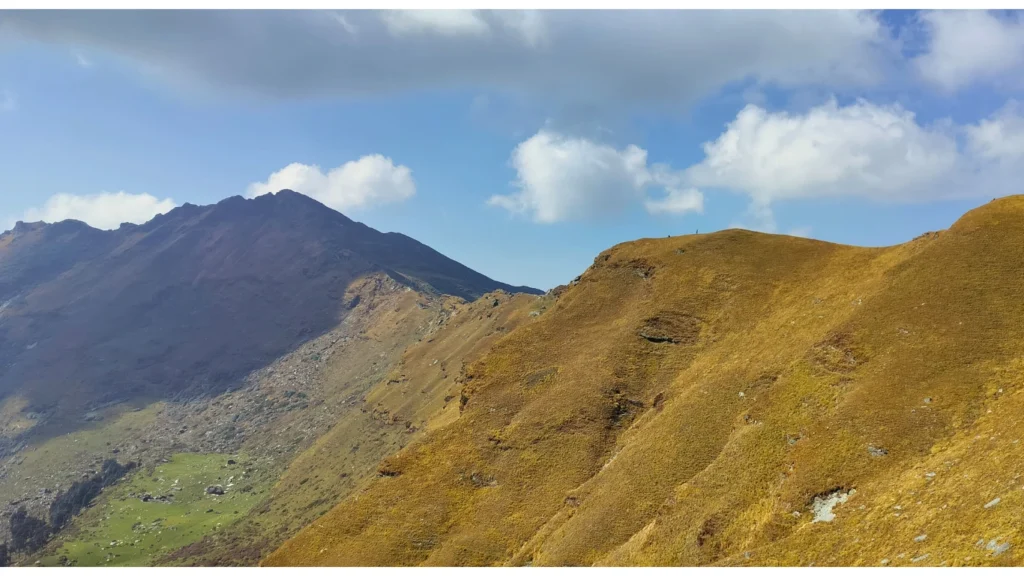
Bakaria Top at 12,087 feet is the highest accessible point on the standard Dayara Bugyal trek route, and it is unambiguously the most spectacular photography location on the entire trail. The 360-degree panoramic view from the summit includes Bandarpunch, Kala Nag, Draupadi Ka Danda II, and several unnamed glaciated ridgelines that extend endlessly into the distance.
The composition possibilities here are staggering. In one direction, the peaks fill the horizon in an unbroken wall of rock, ice, and snow. In another, the entire Dayara Bugyal meadow spreads below like a green or white carpet, with the forest beyond and the Bhagirathi valley far beneath. In winter, fresh snowfields in the foreground with peak reflections in the occasional meltwater pool create abstract, painterly compositions.
Understanding the Best Time for the Dayara Bugyal Trek is critically important for Bakaria Top photography, specifically, because the clarity of the atmosphere varies dramatically between seasons. October provides the sharpest, most dust-free air for distant peak photography, while early June mornings offer beautiful cloud formations that build through the day — perfect for dramatic cloudscape compositions.
Shoot from Bakaria Top with:
- A telephoto lens (70-200mm) for compressed peak-to-meadow compositions
- A wide-angle for the full panoramic sweep — stitch a panorama for the complete view
- Arrive before 8 AM for the clearest light and before afternoon clouds build
- Use graduated ND filters to balance the bright sky with the darker foreground
Photography Location 5 — Rhododendron Forest in Full Bloom
For botanical and forest photographers, the rhododendron forest section of the Dayara Bugyal trek between April and May is a destination unto itself. The trees here are mature specimens with gnarled trunks and enormous flower clusters — nothing like the ornamental varieties seen in gardens. Their blooms are intensely saturated and hold detail beautifully in soft, overcast light.
Shoot the blooms individually at close range to reveal their internal structure, or pull back to capture entire canopies of colour with the sky or snowline as background. The contrast between crimson flowers and remaining patches of snow is particularly striking in late April when both coexist.
Macro and close-up tips:
- Carry a dedicated macro lens or macro extension tubes for botanical detail work
- Shoot on overcast mornings — harsh direct sun bleaches red and pink tones
- Dew on flowers in the early morning adds texture and visual interest
- Use a remote shutter release or self-timer to eliminate camera shake in close-up work
Photography Location 6 — Snow-Covered Meadow and Winter Landscapes
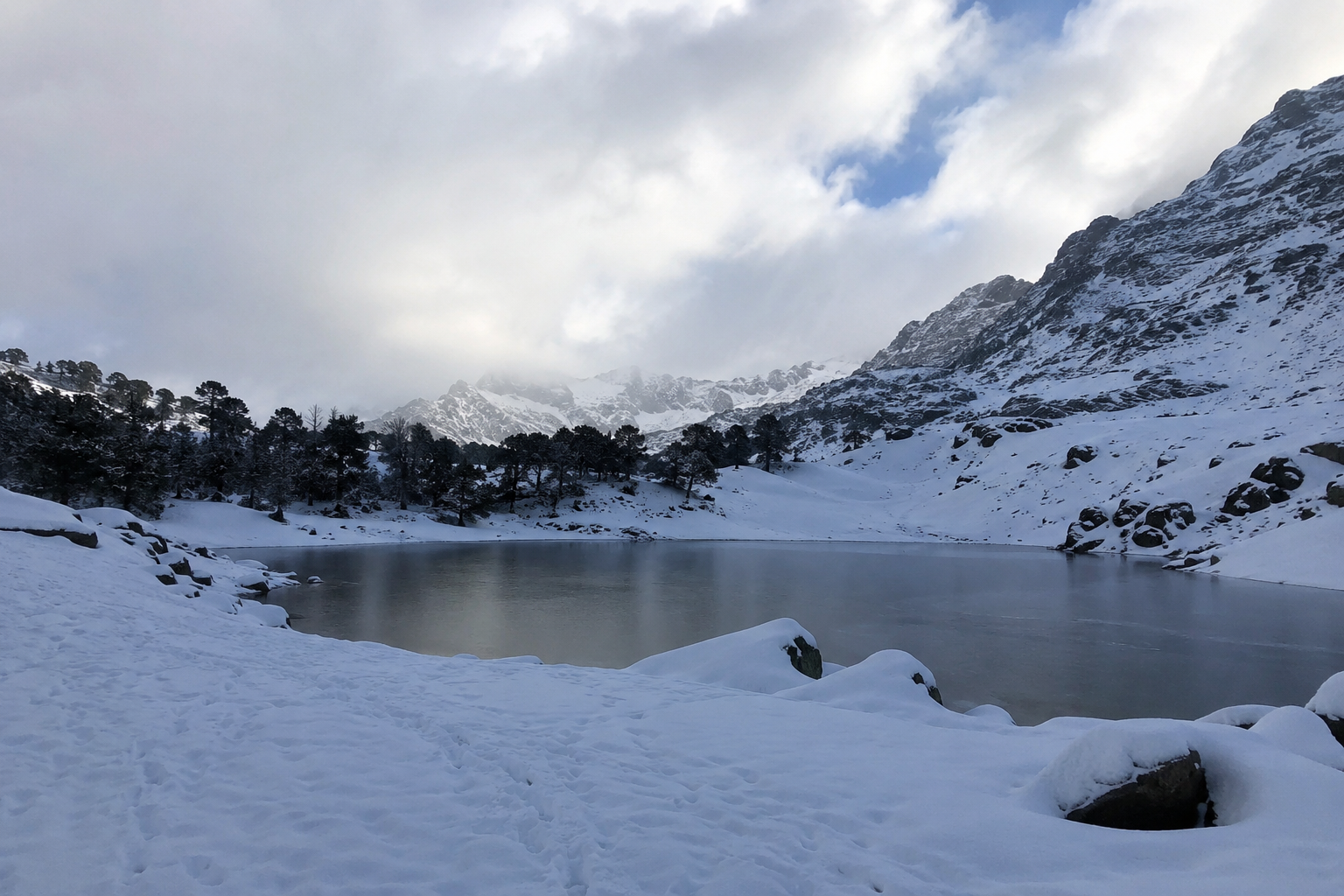
The winter version of Dayara Bugyal — blanketed in two to four feet of snow, with tracks visible only from previous trekking groups — offers a completely different photographic vocabulary. Tones shift from saturated green and colour to a study in white, shadow-blue, and the pale gold of winter sunlight at altitude.
Winter snow trekking photography at Dayara Bugyal requires both technical and compositional adjustments. Snow fools camera meters into underexposure, so adding one to two stops of positive exposure compensation is often necessary. The reduced colour palette means composition, texture, and light direction carry far more weight than they do in summer.
Look for:
- Long shadow lines cast across snowfields in the low-angle winter sun
- Boot or ski tracks creating graphic leading lines through the white expanse
- The contrast between dark forest edges and the blinding white of the open meadow
- Weather events — snowfall, mist, and clearing cloud — which create fleeting, unrepeatable frames
Photography Location 7 — Wildlife and Birds Along the Trail
The Himalayan monal, Uttarakhand’s brilliantly coloured state bird, is regularly spotted in the forest sections of the Dayara Bugyal trail. The male — with its iridescent copper, green, and blue plumage — is one of the most photogenic birds in the subcontinent. Patience, silence, and a telephoto lens are the three essential tools for this encounter.
Barking deer, Himalayan black bear (rarely), and several species of migratory birds also inhabit the forested lower sections of the trek. The early morning hours, before trekking groups set out, offer the best wildlife photography conditions.
For trekkers who see this trek as the start of deeper Himalayan exploration — seeking what might be called an Ultimate Himalayan Experience — building wildlife photography skills here is excellent preparation for longer, more technically demanding routes through the region.
Wildlife photography gear:
- Minimum 300mm focal length recommended for birds; 400mm or more for detail shots
- Use continuous autofocus mode and a fast shutter speed (minimum 1/1000s for birds in flight)
- Wear neutral or muted-coloured outer layers to avoid startling wildlife
- Move slowly, avoid sudden gestures, and stay downwind where possible
Protecting Your Camera Gear on the Trail
High-altitude trekking photography places significant demands on equipment. Temperature fluctuations between the warm valley and the cold meadow cause condensation inside lenses and camera bodies. Rapid movement from a warm sleeping bag into the cold morning air is particularly hazardous.
Gear protection essentials:
- Use silica gel packs inside your camera bag to manage moisture
- Allow equipment to acclimatise gradually when moving between temperature zones — don’t immediately remove a cold camera from its bag into a warm tent
- Bring two or three spare batteries per camera — cold drains lithium cells rapidly
- Keep memory cards in a waterproof case or a zip-lock bag
- A dry bag or weatherproof camera cover is worth its modest weight for rain and snow days
- Lens cloths and a blower brush are essential for managing dust and snowflakes on the front element
Frequently Asked Questions
1. What is the best time of year for photography at Dayara Bugyal?
October is widely considered the peak photography month for most disciplines — atmospheric clarity is at its best, autumn light is warm and directional, and early snowfall on the peaks creates stunning contrast. May is excellent for wildflower and rhododendron photography. Winter months from December to February offer extraordinary snowscape and astrophotography opportunities for those prepared for cold-weather conditions.
2. Do I need professional camera equipment for trekking here?
Not at all. Modern smartphone cameras — particularly those with computational night photography modes — are capable of producing impressive results in this landscape. That said, a mirrorless or DSLR system with interchangeable lenses gives you far more creative flexibility, especially for wildlife, astrophotography, and telephoto peak compression shots.
3. Is tripod use practical on this trek?
Yes, with the right tripod. A lightweight carbon fibre travel tripod that packs small is entirely manageable in a 45 to 55 litre trekking pack. A tripod is particularly valuable for astrophotography, long-exposure waterfall shots on the forest trail, and sharp telephoto work at the summit.
4. Are drone flights permitted at Dayara Bugyal?
Drone use in this region falls under civil aviation and forest department regulations that vary and change periodically. Always verify current permissions with local forest authorities before flying any unmanned aerial vehicle in ecologically sensitive zones. Unauthorised drone operation can result in fines and equipment confiscation.
5. Can I charge camera batteries on the trek?
Beyond Barsu village, there is no reliable electrical supply on the trail. Carry a high-capacity power bank (minimum 20,000 mAh) for device charging. For extensive camera use, spare batteries are more reliable than power banks in cold conditions.
Summary
The Best Photography Locations on the Dayara Bugyal Trek are not a handful of fixed viewpoints — they are woven into every kilometre of the trail, from the first forest path out of Barsu to the final sweeping panorama at Bakaria Top. The landscape here speaks in the full vocabulary of Himalayan beauty: dense forests, wildflower meadows, glaciated peaks, star-filled skies, and snowfields that stretch to the horizon. Bring your camera, bring your patience, and bring your willingness to get up before dawn — because the best light on this trail waits for no one.
With the dayara bugyal trek season approaching, it’s time to plan something truly extraordinary. From breathtaking Himalayan peaks to spiritually powerful temples hidden deep in remote valleys, this journey offers an experience that goes beyond a typical trek—it becomes a story you carry for life. To make your journey seamless and well-organised, choose the best trekking company in Uttarakhand for reliable trek packages, detailed itineraries, and hassle-free booking.
Visit this page for Trek Packages, Itinerary & Booking.