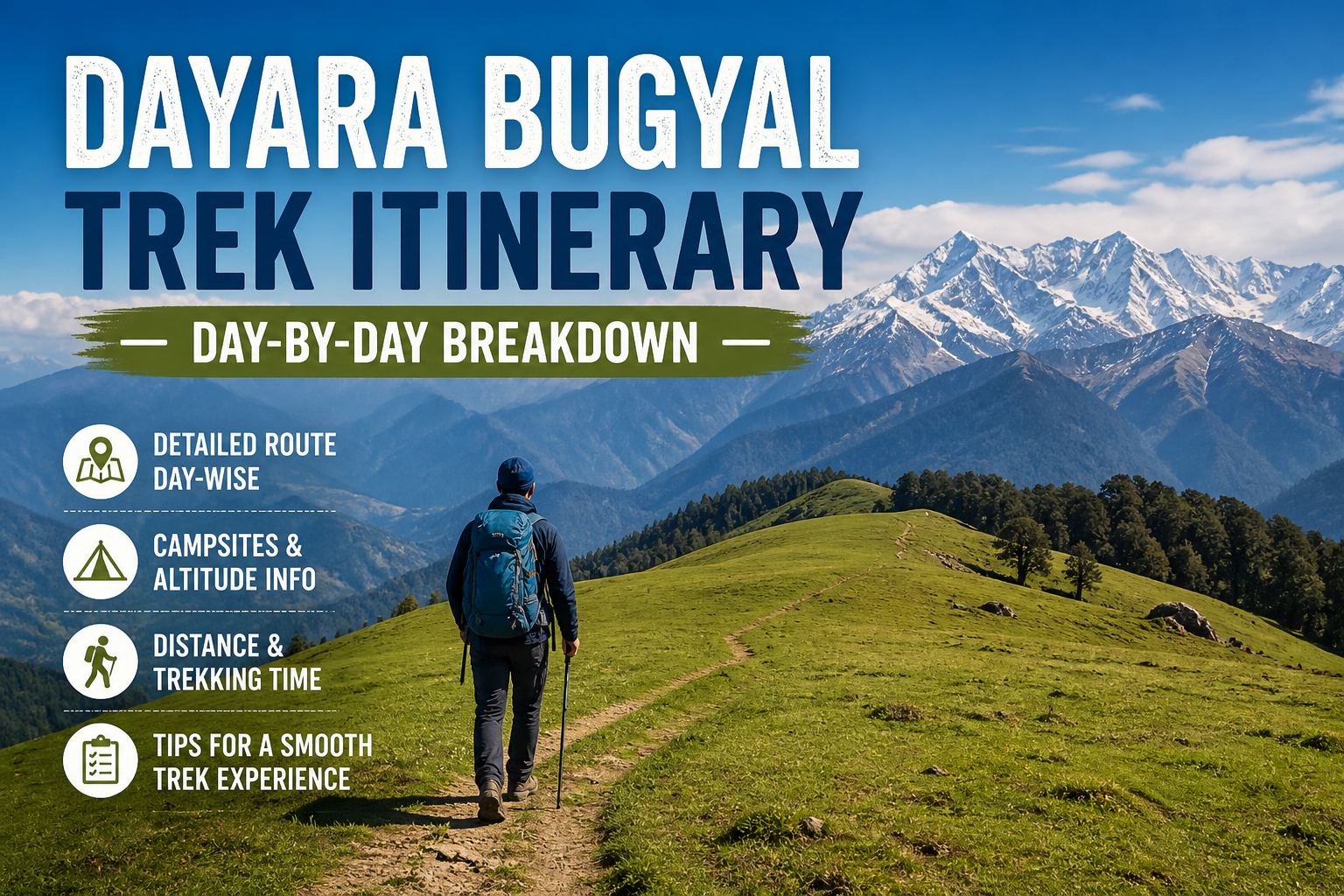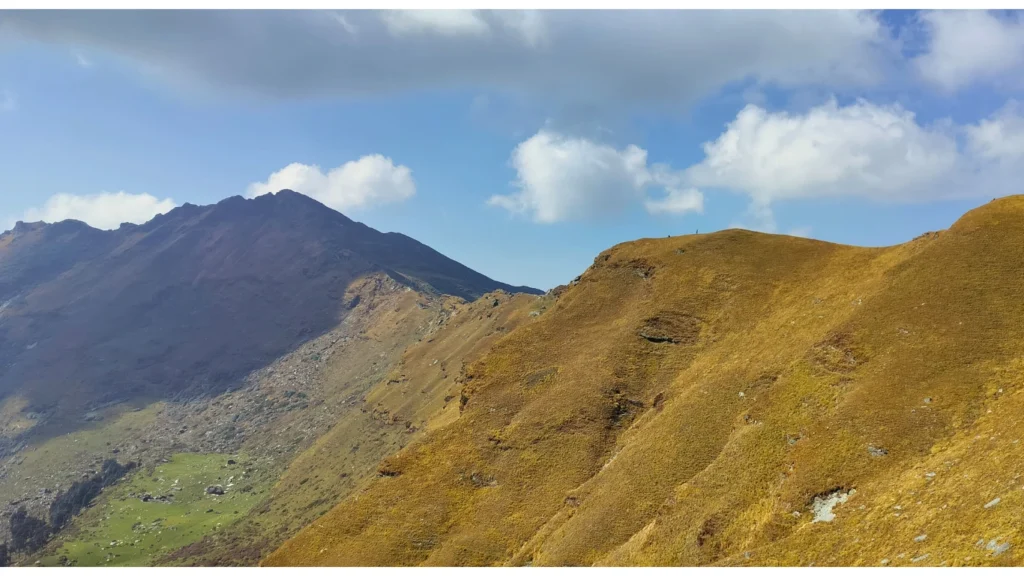
Nestled at an altitude of approximately 3,500 metres in the Uttarkashi district of Uttarakhand, Dayara Bugyal is one of the most breathtaking alpine meadows in the Garhwal Himalayas. Spread across a vast expanse of undulating grassland, it remains one of the few high-altitude meadows in India that rewards trekkers across multiple seasons rather than just one fixed window.
Unlike many Himalayan trails, where the weather offers a narrow slot of accessibility, Dayara Bugyal has a distinct character for each season. Whether you are drawn by the summer bloom of wildflowers, the golden light of autumn spilling across the ridgeline, or the silence of a snow-blanketed winter landscape, the meadow shapes a completely different experience depending on when you arrive.
Knowing the best time for the Dayara Bugyal trek is not just about avoiding bad weather. It is about aligning your goals, your fitness level, your camera settings, and your expectations with what the trail genuinely offers during that period. This guide breaks down each season with clarity so you can plan with confidence.
When Is the Best Time to Trek Dayara Bugyal?
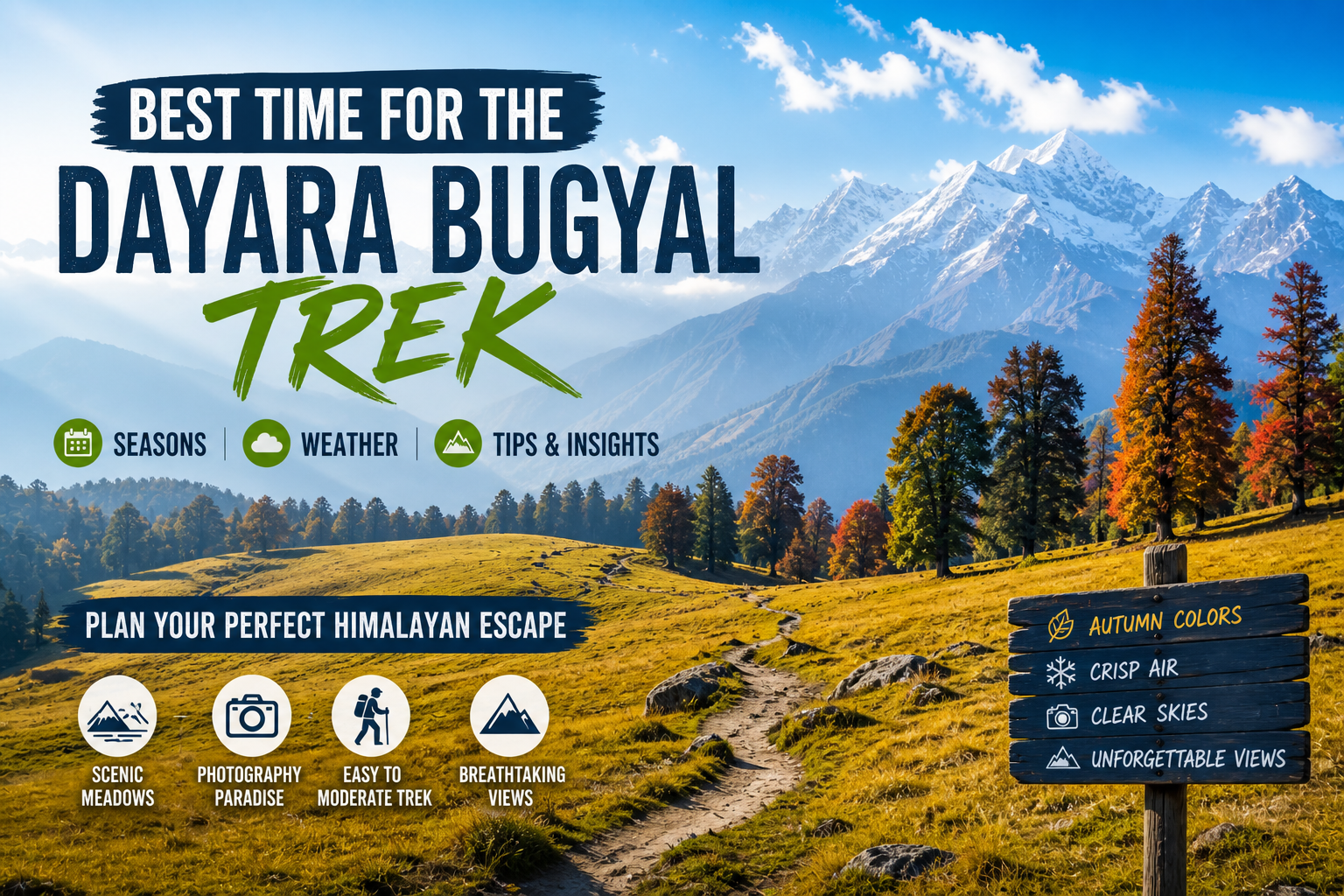
For most trekkers, the two peak windows are:
– Late May to mid-June: Wildflower bloom, green meadows, clear mountain views
– Mid-September to mid-November: Crisp post-monsoon air, golden autumn hues, excellent photography conditions
Winter trekking (December to February) is possible but demands experience and proper gear. Monsoon season (July to mid-September) is generally avoided due to trail hazards and limited visibility.
Understanding Dayara Bugyal: Location, Altitude, and Trail Overview
Dayara Bugyal covers its geographic location in Uttarakhand, altitude profile, and trekking trail details, helping travellers understand terrain, access routes, and what to expect during the journey.
Where Is Dayara Bugyal Located?
Dayara Bugyal sits in the Uttarkashi district of Uttarakhand, in the heart of the Garhwal Himalayas. The trek typically begins from Barsu village, which is approximately 26 kilometres from Uttarkashi town. The meadow itself stretches from around 3,200 metres to 3,800 metres above sea level, making it one of the highest and most expansive grassland treks in India.
Best Places of Dayara Bugyal for Views and Camping
The best places of Dayara Bugyal include the main meadow plateau, the Bakaria Top viewpoint at approximately 3,800 metres, and the hidden corners near the forest edge where the tree line gives way to open sky. Bakaria Top is widely regarded as the crown jewel of the entire circuit, offering a panoramic sweep of peaks including Bandarpunch, Srikanth, Draupadi Ka Danda, and the distant silhouettes of the Black Peak range.
The campsite in the middle of the meadow, with the sky unobstructed in every direction, is a favourite among Garhwal Himalayas photography enthusiasts chasing Milky Way and star-trail shots.
Trek Difficulty and Duration
The Dayara Bugyal trek is graded easy to moderate. Most itineraries complete the circuit in 4 to 5 days. The total trekking distance is approximately 22 to 25 kilometres, depending on the route variation. This accessibility makes it particularly suitable as a dayara bugyal trek for beginners or those making their first foray into alpine trekking in Uttarakhand.
Season-by-Season Guide to Dayara Bugyal Trek
Summer Season (Late April to Mid-June): The Wildflower Window
- Temperature Range: 5 degrees Celsius to 18 degrees Celsius during the day; 0 degrees to minus 3 degrees at night at higher campsites
- Trail Condition: Generally clear; some patches of residual snow possible in late April and early May
- Crowd Level: Moderate, rising toward June
Summer is when Dayara Bugyal transforms into a living canvas. As snow retreats from the meadow, the ground erupts with Brahmakamal, primulas, rhododendrons, and blue Himalayan poppies. The colours arrive in waves, starting from the lower reaches near Barsu and climbing progressively toward Bakaria Top through May.
This is also the season when the meadow feels most alive. Shepherds begin their seasonal migration upward with their flocks, adding an authentic pastoral texture to the landscape. For trekkers carrying cameras, this is prime territory for both macro wildflower shots and wide-angle mountain panoramas.
What to Expect in May and June
May: Snow remnants near Bakaria Top, excellent wildflower bloom in the lower meadow, cool and comfortable temperatures, clear morning skies.
June (first half): Peak bloom at higher elevations, warmer days, slightly more trekkers on trail, long daylight hours ideal for extended golden-hour photography sessions.
June (second half): Monsoon clouds begin to build. While the bloom is still strong, visibility can become unpredictable. This period is better avoided by those prioritising mountain views.
Photography Notes for Summer
For Garhwal Himalayas photography in summer, the best light falls in the 30 to 45 minutes after sunrise, when the meadow is illuminated by soft, low-angled light and the peaks behind catch the first warmth of the sun. Carry a wide-angle lens for meadow-to-mountain compositions and a macro lens for the extraordinary wildflower detail that only this season provides.
Monsoon Season (July to Mid-September): Proceed with Caution
- Temperature Range: 8 degrees Celsius to 14 degrees Celsius; nights around 3 to 6 degrees Celsius
- Trail Condition: Slippery, prone to landslides; leeches present below the tree line
- Crowd Level: Low
The Garhwal Himalayas receive substantial rainfall during the South Asian monsoon. While the meadow turns an almost unreal shade of emerald green during this period, the practical challenges are significant. The trail from Barsu through the forest zone becomes slippery and leech-infested. Cloud cover typically obscures mountain views, sometimes for consecutive days.
Trekkers who have completed the circuit during monsoon describe it as an immersive experience in mist and rain, with the meadow feeling surreal and isolated. However, it demands waterproof gear throughout, good navigation skills when trails are obscured, and a tolerance for wet campsites.
For most trekkers, especially those making their first visit, the monsoon window is best avoided. If you are planning a family trek or bringing children to Dayara Bugyal, this season is not recommended due to trail safety concerns and the added physical challenge of wet conditions. Save this for post-monsoon, which delivers everything the monsoon promises visually, but with clear skies above.
Autumn Season (Mid-September to Mid-November): The Photographer’s Favourite Window
Autumn (mid-September to mid-November) offers crisp visibility, golden meadows, stable weather, and dramatic skies, making it the most reliable window for capturing Dayara Bugyal’s expansive landscapes and rich seasonal colours.
- Temperature Range: 3 degrees Celsius to 14 degrees Celsius during the day; minus 2 degrees to minus 6 degrees at night
- Trail Condition: Excellent, dry and firm underfoot; crystal-clear visibility
- Crowd Level: Moderate to high in October
If summer is the season of colour and life, autumn is the season of clarity and light. The monsoon washes the atmosphere clean, and what follows from mid-September onward is the most visually dramatic period the meadow offers. The sky over Dayara Bugyal in October is a quality of blue that is difficult to describe in photographs and almost impossible to recreate in any other setting in India.
This is the season that serious photographers prioritise above all others. The golden hour at Bakaria Top during October is extraordinary, with the sun setting behind the western ridgeline and painting the entire meadow amber and rose. Star photography at this elevation during autumn nights, with minimal light pollution and the Milky Way arching over Bandarpunch, is among the finest night-sky experiences available on any trekking route in Uttarakhand.
October: The Peak Month for Dayara Bugyal
October sits at the intersection of ideal conditions: the trail is dry, temperatures are cold but manageable, the meadow grass has shifted from green to gold and bronze, and the mountains are sharp and snow-dusted after early-season snowfall on the high peaks. Visibility on a clear October day from Bakaria Top can extend well beyond 80 kilometres.
This is also the most popular month on the trail, so booking your operator and permits well in advance is essential. Most reputable operators running this route fill their October batches 6 to 8 weeks ahead.
November: Solitude Before the Snow
By November, the trail sees far fewer trekkers. Temperatures drop considerably, particularly at night, but the days can still be warm and sunny. The meadow in November takes on a stark, almost monochromatic beauty as the grasses dry and the first snow dusts the higher elevations. For experienced trekkers who want Dayara Bugyal largely to themselves, early to mid-November is a rewarding choice.
Photography Notes for Autumn
Autumn is the strongest season for Garhwal Himalayas photography at Dayara Bugyal. Golden-hour timing at Bakaria Top in October falls approximately 30 minutes before sunset. The low sun angle creates long shadows across the meadow that add extraordinary depth to wide compositions. Use a polarising filter to saturate the sky and manage reflections on snow-dusted peaks.
Winter Season (December to Mid-April): For the Bold and Prepared
Temperature Range: Minus 5 degrees Celsius to 5 degrees Celsius during the day; minus 10 degrees to minus 20 degrees at night
Trail Condition: Heavy snowfall; route-finding requires experience; some sections may be inaccessible
Crowd Level: Very low
Dayara Bugyal in winter is one of the most dramatic alpine landscapes in the Garhwal Himalayas. The entire meadow lies under a blanket of deep snow, the trees stand frosted and still, and the silence is profound. This is also when Dayara Bugyal hosts a ski festival, organised by the local administration, which draws both professional skiers and enthusiasts discovering Himalayan skiing for the first time.
Trekking the route in December or January requires proper winter gear, acclimatisation awareness, and ideally a guide familiar with the snow-covered trail. The path from Barsu is not always visible under snow, and navigation errors in these temperatures carry a serious risk.
For those specifically seeking a winter trekking experience in Uttarakhand, this is one of the more accessible high-altitude options. But it must be planned with proper preparation. This is not a suitable season for a family trek with young children or trekkers who are new to winter conditions in the Himalayas.
Dayara Bugyal vs Other Garhwal Himalayan Treks: Context and Comparison
Compares Dayara Bugyal with other Garhwal Himalayan treks based on difficulty, altitude, scenery, accessibility, and seasonal appeal, helping trekkers evaluate its suitability relative to routes like Kedarkantha and Har Ki Dun.
How Does Dayara Bugyal Fit into the Garhwal Himalayan Trek Calendar?
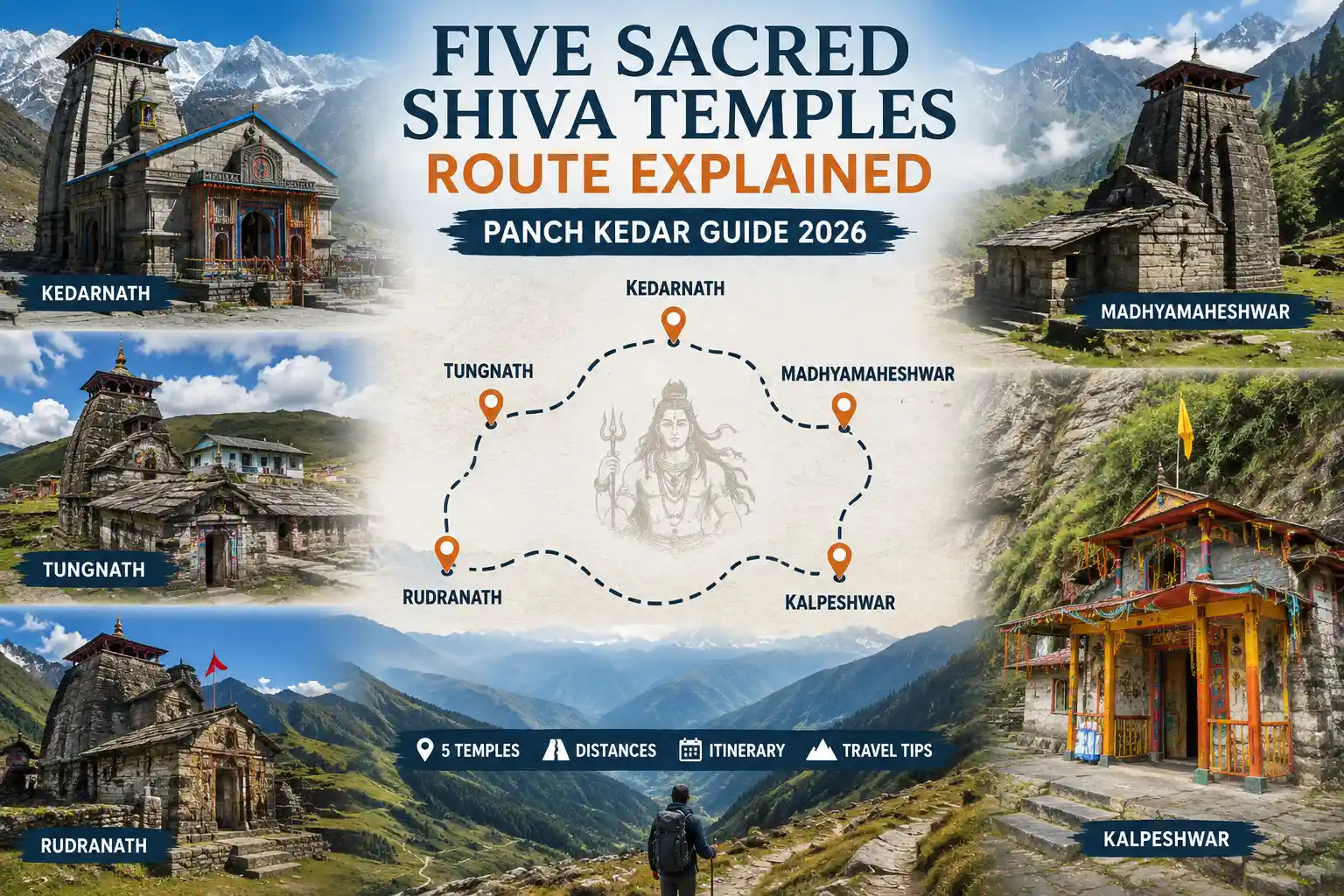
Understanding where Dayara Bugyal sits relative to other iconic routes helps with multi-trek planning. The Panch Kedar trek guide, for instance, is typically done between May and June and again from September to October, closely mirroring the best windows for Dayara Bugyal. If you are planning a longer Uttarakhand itinerary, combining Dayara Bugyal in October with a portion of the Panch Kedar circuit makes geographical and logistical sense.
Chandrashila Photography and Dayara Bugyal: A Comparison
Many photographers and nature-seeking trekkers compare Dayara Bugyal with Chopta and Chandrashila for photography conditions. Chandrashila photography is typically best in April (pre-monsoon) and October to November (post-monsoon), which overlaps well with Dayara Bugyal’s peak windows. However, Dayara Bugyal offers broader meadow compositions, more foreground variety, and a greater sense of open space, while Chandrashila provides higher elevation viewpoints and closer proximity to Kedarnath Wildlife Sanctuary.
If the goal is purely meadow and mountain photography, Dayara Bugyal edges ahead. If it is summit views and sacred geography, the Chandrashila route serves differently. Both reward the same seasonal calendar.
Essential Planning Tips for Dayara Bugyal Trek
Covers key planning aspects for the Dayara Bugyal trek, including best season, permits, fitness preparation, packing essentials, route options, and safety considerations to ensure a smooth and well-prepared trekking experience.
Permits and Regulations
The Dayara Bugyal trek falls under a protected forest zone and requires a trekking permit from the forest department. This is typically arranged through your registered trekking operator. Solo trekking without permits is not permitted.
How to Reach the Trailhead
The standard route to the trailhead is: Delhi to Dehradun (by train or flight), then Dehradun to Uttarkashi by road (approximately 5 to 6 hours), and finally Uttarkashi to Barsu village (approximately 1.5 hours by local taxi or jeep). Barsu sits at around 2,300 metres and serves as the trek’s starting point.
Gear Checklist by Season
Summer (May to mid-June):
– Lightweight trekking layers, fleece for evenings
– Rain cover for your backpack
– Sunscreen and UV-protection sunglasses
– Trekking poles for uneven meadow terrain
Autumn (September to November):
– Insulated down jacket for nights
– Thermal base layers
– Waterproof trekking boots
– Head torch and extra batteries
Winter (December to March):
– Full winter down jacket and salopettes
– Gaiters and microspike traction devices
– Balaclava and high-grade gloves
– Emergency bivouac equipment
Acclimatisation and Altitude Awareness
At Bakaria Top, you are approaching 3,800 metres. While this does not pose the same risk as treks above 4,500 metres, symptoms of mild altitude sickness can still occur, particularly if you ascend quickly from lower elevations. Plan an acclimatisation night at Barsu or Raithal before beginning the ascent. Stay hydrated and ascend slowly.
Dayara Bugyal for Families: Is It the Right Trek?
Dayara Bugyal ranks among the most suitable high-altitude meadow treks for families in Uttarakhand. The trail gradient from Barsu is gradual, the forest section is well-shaded and scenic, and the payoff of reaching the open meadow rewards even younger trekkers with the visual drama of the Himalayan landscape.
As an ideal dayara bugyal trek for beginners or as a family trek, the October window is strongly recommended. Days are warm enough to be comfortable, nights are cold but manageable with proper sleeping bags, and the trail is at its most stable and well-trodden. If travelling with children under 10, speak with your operator about a revised itinerary with additional acclimatisation days built in.
Avoid July to August and December to February for family groups. The monsoon brings trail hazards and visibility issues, while deep winter demands gear and experience that is not appropriate for children.
Frequently Asked Questions About Dayara Bugyal Trek
1. What is the best month to do the Dayara Bugyal trek?
October is the single best month, combining clear skies, autumn colours, dry trails, and spectacular mountain views. May is the second-best choice for wildflower enthusiasts.
2. Is the Dayara Bugyal trek open in December and January?
Yes, but the trail is covered in deep snow and requires winter gear, guide assistance, and significantly more preparation than the summer or autumn windows. The ski festival draws visitors during this period, but standard trekking is challenging.
3. Can beginners do the Dayara Bugyal trek?
Absolutely. The trail is graded easy to moderate, and the route from Barsu is one of the most beginner-friendly paths to a high-altitude meadow in the Garhwal Himalayas. Choosing May to June or September to October minimises risks and maximises the experience.
4. How difficult is the Dayara Bugyal trek in summer?
In summer, particularly May to early June, the trek is at its most accessible. Temperatures are comfortable, the trail is clear, and the gradual ascent through oak and rhododendron forests makes it manageable for most fitness levels.
5. What peaks can be seen from Dayara Bugyal?
From Bakaria Top, trekkers can see Bandarpunch, Srikanth, Draupadi Ka Danda II, Black Peak, and, on the clearest days in October and November, far-off peaks toward the Gangotri range.
Summary: Choosing the Right Time for Your Dayara Bugyal Journey
The best time for the Dayara Bugyal trek ultimately comes down to what you want from the experience. For wildflowers and lush meadow landscapes, choose late May to mid-June. For the most photogenic, clear, and accessible conditions, commit to October. For solitude and stark winter beauty, prepare carefully and plan for December. Whatever the season, Dayara Bugyal rewards those who come prepared.
This meadow does not offer the same experience twice. Every season reveals a different version of itself, and that is precisely what makes it one of the most compelling trekking destinations in the Garhwal Himalayas.
With the dayara bugyal trek season approaching, it’s time to plan something truly extraordinary. From breathtaking Himalayan peaks to spiritually powerful temples hidden deep in remote valleys, this journey offers an experience that goes beyond a typical trek—it becomes a story you carry for life. To make your journey seamless and well-organized, choose the best trekking company in Uttarakhand for reliable trek packages, detailed itineraries, and hassle-free booking.
Visit this page for Trek Packages, Itinerary & Booking.