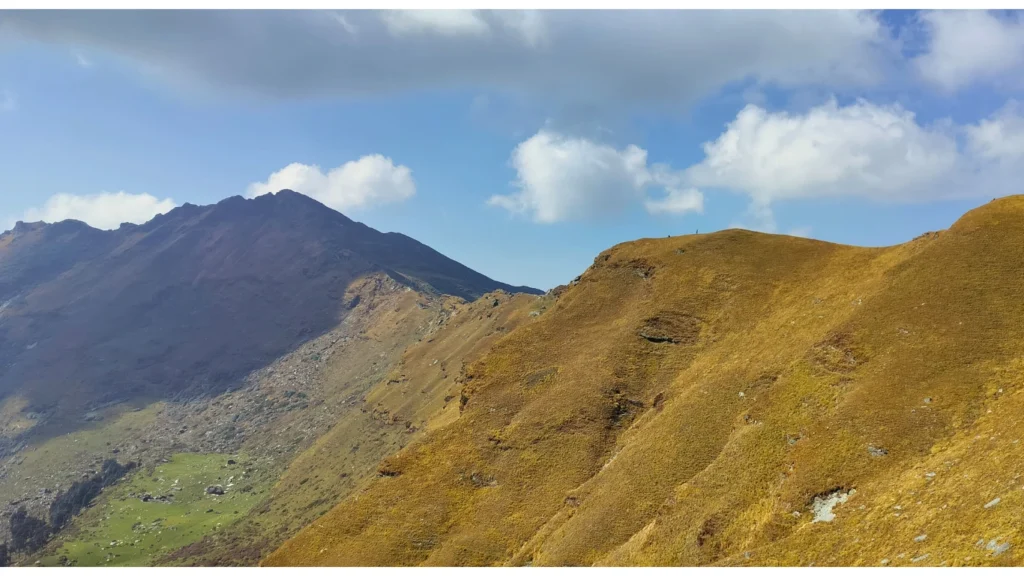
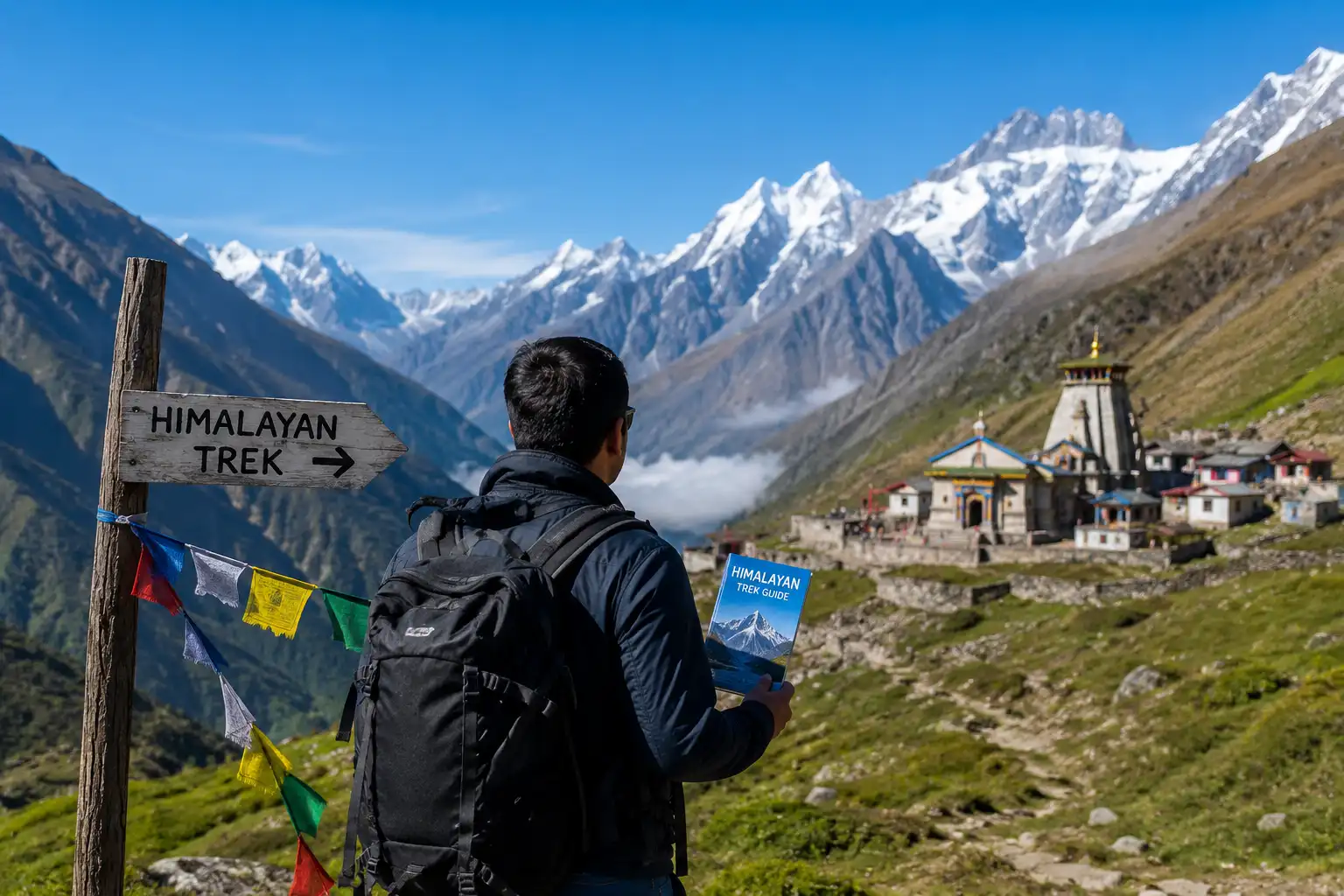
For millions of Indians living abroad, the Himalayas are more than a destination — they are a homecoming. The Panch Kedar circuit, encompassing five sacred shrines of Lord Shiva spread across the Garhwal range, holds a spiritual pull that grows stronger with distance. Yet for NRIs and overseas Indians planning this yatra, the practical logistics — booking from a foreign timezone, registering on Indian portals with non-Indian phone numbers, managing currency and SIM cards on arrival — can feel like a maze no travel blog has ever bothered to map.
This guide changes that. How NRIs & Indians Abroad Can Plan a Himalayan Trek is more than just a question—it requires careful preparation, especially when travelling from overseas. Whether you are based in the United States, United Kingdom, Canada, Australia, or the Gulf, every section here is designed to address your specific planning challenges. From OCI card requirements and pre-booking timelines to jet-lag acclimatisation and trek logistics, this is the most complete guide to planning your journey with confidence.
The Panch Kedar yatra for Indians abroad is not just spiritually significant — it is logistically achievable with the right preparation. This guide walks you through every step, six months before departure all the way to Day 1 on the trail.
Who Can Do the Panch Kedar Trek: OCI, PIO, and NRI Clarifications
One of the most common questions in Indian diaspora travel communities is whether OCI (Overseas Citizen of India) or PIO (Person of Indian Origin) cardholders face any special restrictions on trekking in Uttarakhand.
The short answer is no. OCI and PIO cardholders are treated on par with Indian citizens for all purposes related to the Panch Kedar yatra, including:
- Yatra registration through official Uttarakhand portals
- Entry into all five Kedar shrines (Kedarnath, Tungnath, Rudranath, Madhyamaheshwar, Kalpeshwar)
- Trekking permits in non-restricted zones
- Accommodation bookings at GMVN (Garhwal Mandal Vikas Nigam) guest houses
There are no Inner Line Permit requirements for any of the Panch Kedar routes. Foreign nationals (non-OCI, non-PIO) may require permits for certain sensitive border zones in Uttarakhand, but OCI holders are completely exempt from this. Clarifying this at the outset saves enormous anxiety for first-time planners.
If you are a panch kedar yatra for indians abroad planner holding an OCI card, carry both your OCI card and your foreign passport at all times during the trek. Checkpoints and accommodation providers may request identity verification, and having both documents prevents any confusion.
IRCTC Registration with a Foreign Phone Number
This is the genuine pain point that blocks hundreds of overseas Indians from completing their yatra bookings every season. IRCTC (Indian Railway Catering and Tourism Corporation) handles train bookings that form the backbone of most india trek booking from USA UK itineraries — typically the journey from Delhi or Dehradun toward Haridwar or Rishikesh.
The problem: IRCTC’s OTP verification system defaults to Indian mobile numbers (+91). Here is how to navigate it step by step.
- Step 1 — Use your foreign number during registration. IRCTC does accept international numbers during the sign-up process. Select your country code from the dropdown before entering your number. OTP delivery to international numbers can take 2–5 minutes, longer than domestic delivery.
- Step 2 — If OTP delivery fails repeatedly, use a trusted family member’s Indian number as the registered contact. You can still manage bookings through the account from abroad.
- Step 3 — Use a VPN set to an Indian server if the IRCTC portal is geo-blocking your access or displaying errors. Many overseas users report that the site functions more reliably with an Indian IP.
- Step 4 — For train tickets specifically, consider using third-party platforms like MakeMyTrip, Cleartrip, or Yatra, which accept international credit cards and do not have the same OTP restrictions as IRCTC’s native interface.
- Step 5 — Book Tatkal quota tickets if your dates are firm. Tatkal opens 24 hours before departure and does not require advance planning, though seats are limited and priced higher.
For Uttarakhand yatra registration overseas, the state government’s Devasthanam Board and Char Dham Yatra registration portals also require Indian mobile numbers for OTP. The same workaround of using a family member’s number applies. Alternatively, purchase a temporary Indian SIM on arrival (detailed in the next section).
Getting a Temporary Indian SIM Card on Arrival
For any panch kedar trek planning from abroad, securing an Indian SIM card immediately upon landing is one of the smartest moves you can make. Here is why it matters and which networks to choose.
Why you need it
UPI payments (mandatory at many trail-side dhabas and small hotels), Google Maps offline downloads, emergency contact with local guides, and completing any last-minute OTP verifications for bookings.
Where to buy
Both Indira Gandhi International Airport (Delhi) and Jolly Grant Airport (Dehradun) have Airtel and Jio counters at the arrivals hall. Bring your passport and one passport-size photograph. For OCI holders, your OCI card serves as valid address proof.
Which network to choose for the mountains
Airtel consistently outperforms Jio for coverage in the upper Garhwal valleys — Chopta, Ukhimath, Gopeshwar, and the approaches to Madhyamaheshwar and Rudranath. Both networks lose signal above 3,000 metres in many areas, but Airtel tends to maintain coverage at lower elevations along the approach routes. BSNL, often overlooked, has surprisingly reliable coverage at several Panch Kedar base points due to government infrastructure investment in the region.
For your first 24–48 hours in India, a prepaid tourist SIM with a data pack of at least 1.5 GB per day is sufficient. Recharges are available at most petrol stations, pharmacies, and general stores in Rishikesh, Rudraprayag, and Guptkashi.
Payments, UPI, and ATM Availability Beyond Guptkashi
Managing money during the Panch Kedar Trek requires advance preparation, especially for NRIs and Indians living abroad. If you have an Indian bank account such as an NRE or NRO account with SBI, HDFC, or ICICI, linking it to a UPI app through an Indian SIM is the most convenient option. Across the trail, particularly in Madhyamaheshwar and Rudranath valleys, small lodges, dhabas, porters, and mule operators mainly accept cash or UPI payments, while international cards are rarely supported.
International credit and debit cards generally work in larger towns like Rishikesh, Rudraprayag, and Guptkashi, but card acceptance becomes extremely limited beyond Guptkashi. ATMs are available in Guptkashi through SBI and Union Bank, though availability becomes unreliable toward Ukhimath, Ransi, and Sari. It is advisable to withdraw at least ₹15,000–20,000 per person before heading deeper into the trek region. For foreign travellers, currency exchange services at Delhi and Dehradun airports are more reliable than tourist-focused shops in Rishikesh. Services like Thomas Cook and BookMyForex also provide useful prepaid travel card options for Indian transactions.
This is one of the key reasons why selecting a guided package for your indian pilgrimage booking international can significantly simplify the experience. Reputable operators usually manage porter charges, mule payments, accommodation settlements, and other local cash logistics within the package cost. If you are still evaluating whether this spiritual circuit matches your expectations, exploring Panch Kedar Trek vs Other Himalayan Treks can help you compare the route’s logistics, physical demands, and spiritual experience before finalising your journey.
The Jet-Lag Acclimatisation Buffer: Why NRIs Need 2 Extra Days
This is perhaps the most underestimated factor in any panch kedar trek NRI plan from the western hemisphere. The Panch Kedar circuit begins at elevations between 1,800 and 2,500 metres and reaches above 4,000 metres at Madhyamaheshwar and Rudranath. Altitude sickness does not discriminate between fit trekkers and unfit ones — it responds primarily to the speed of ascent.
NRIs flying from North America typically experience a 9.5–13.5 hour time zone shift. This disrupts sleep architecture, suppresses appetite, and temporarily impairs cardiovascular efficiency — precisely the functions you need to be performing well before beginning any high-altitude trek.
The recommended buffer is a minimum of two full days at low elevation (Delhi, Rishikesh, or Haridwar) before your trek start date. Use these days to:
- Rest and restore normal sleep cycles
- Hydrate aggressively — air travel causes significant dehydration
- Eat light, familiar food to stabilise digestion
- Do a short 2–3 km walk to assess your body’s response
- Confirm all bookings and permits with your operator
For trekkers flying from the Gulf or Europe (a 3–5 hour time difference), one full rest day is the minimum, though two is still preferable at altitude.
The consequences of skipping this buffer are real. Acute Mountain Sickness (AMS) symptoms — headaches, nausea, fatigue — can appear within 6–12 hours of arriving at altitude, and they will end your yatra far more definitively than any logistical problem.
The 6-Month Planning Timeline for NRI Trekkers
Planning from 10,000 kilometres away demands a structured timeline. Here is how to approach it month by month.
6 Months Before Departure: Research and shortlist trek operators. Confirm dates around the temple opening and closing schedule (Panch Kedar temples typically open in May and close in November, following the Hindu calendar). Shortlist flights and set fare alerts.
5 Months Before: Book flights. Air India and IndiGo now offer competitive direct or one-stop routes from major diaspora hubs. Book your trek package with a reputable operator — peak season (June and September) slots fill 4–6 months in advance.
4 Months Before: Complete IRCTC registration. Book train or bus from Delhi to Rishikesh/Haridwar. Arrange travel insurance that covers high-altitude trekking and emergency helicopter evacuation (more on this below).
3 Months Before: Organise documents — OCI card, passport, passport photos. Purchase or rent trekking gear if you do not want to carry it from abroad.
2 Months Before: Download offline maps of the Garhwal region. Research Indian SIM card acquisition at your arrival airport. Inform your overseas bank of India travel to prevent card blocks.
1 Month Before: Confirm all bookings with your operator. Arrange INR cash or a forex card. Brief family members on the trek itinerary and emergency contacts.
1 Week Before Departure: Check Uttarakhand weather forecasts. Confirm your operator has emergency protocols in place. Reconfirm accommodation at your arrival city.
Day 1 in India: Buy SIM card at airport. Rest. Begin your acclimatisation buffer.
Panch Kedar vs Char Dham for NRI Trekkers
A common question in panch kedar vs char dham for NRI searches is which yatra is more appropriate for an overseas Indian making a once-in-a-few-years trip to India.
The Char Dham (Kedarnath, Badrinath, Gangotri, Yamunotri) is more accessible by vehicle for the most part, with trekking only required for the Kedarnath segment and partially for Yamunotri. The Panch Kedar, by contrast, involves genuine multi-day trekking across all five shrines — it is a fuller wilderness immersion but requires physical fitness and more time.
For NRIs who are reasonably fit, have 10–14 days available, and want a deeply immersive rather than a drive-and-visit experience, Panch Kedar is the more rewarding circuit. For older pilgrims or those with limited mobility, Char Dham offers more accommodation flexibility and vehicle-based access to most shrines.
The best himalayan trek for NRI indians overseas ultimately depends on your fitness level, available days, and what you want to carry home — a checklist or a transformation.
Travel Insurance and Emergency Contacts
This section is non-negotiable for any overseas planner. Standard international travel insurance typically excludes high-altitude trekking above 3,500–4,000 metres. You need a specialised adventure travel policy that explicitly covers:
- Trekking above 4,000 metres
- Emergency helicopter evacuation (costs can reach ₹1,50,000–3,00,000 per evacuation in Uttarakhand)
- Medical repatriation to your country of residence
- Trek cancellation due to weather or medical emergency
Recommended insurers with international-grade high-altitude coverage include World Nomads (widely used by the diaspora), Bajaj Allianz Travel Elite, and HDFC ERGO Travel Insurance for NRIs.
For Panch Kedar Trek Insurance, your operator should also carry group liability insurance. Confirm this before signing any package agreement.
Uttarakhand Emergency Contacts to save before departure:
- Uttarakhand Police Emergency: 112
- SDRF (State Disaster Response Force): 9557444486
- Kedarnath Helicopter Booking Helpline: 0135-2559898
- GMVN Rishikesh Office: 0135-2743308
Why a Guided Package Is Worth Every Rupee for NRI Planners
When you are coordinating from the United States, UK, or Australia, a fully managed guided package is not a luxury — it is efficient risk management. Here is what a quality operator pre-arranges that would otherwise require dozens of calls, local contacts, and fluency in Hindi:
- Mule and porter coordination at each trailhead
- GMVN guest house and campsite reservations months in advance
- Local guide with emergency protocol training
- Contingency re-routing if weather closes a shrine
- Cash payments to local service providers on your behalf
- 24-hour emergency contact during the trek
The premium for a well-organised guided package over a self-planned trip is typically 25–40%. For an NRI planner managing the logistics from 10,000 km away, that premium pays for itself in time, certainty, and peace of mind.
Frequently Asked Questions
1. Can NRIs do the Panch Kedar Trek?
Yes. OCI and PIO cardholders face no restrictions on the Panch Kedar circuit. No special trekking permits are required for any of the five shrine routes. Carry your OCI card and passport at all times during the trek.
2. Can I book the Panch Kedar Trek from abroad?
Yes. Most reputable operators accept international bookings online with a foreign card for the deposit. Full payment in INR or via wire transfer is typically settled closer to departure. Platforms like Mountainiax facilitate end-to-end booking for international planners.
3. How far in advance should NRIs book the Panch Kedar Trek?
For peak season months (June and September), book 5–6 months in advance. Accommodation at higher camps fills up quickly, and flight prices are significantly better when booked early from abroad.
4. Is IRCTC registration possible with a foreign phone number?
Yes, IRCTC accepts international numbers during registration. OTP delivery to foreign numbers may take longer. Alternatively, use a family member’s Indian number or purchase an Indian SIM on arrival.
5. What is the best time for NRIs to do the Panch Kedar Trek?
September and early October offer the clearest skies, post-monsoon greenery, and moderate temperatures — ideal conditions for trekkers who may not be acclimatised to extreme cold. May–June is the opening season and is popular but busier.
Summary
The Panch Kedar Trek is far more than a Himalayan pilgrimage — for NRIs and Indians abroad, it is a meaningful return to culture, spirituality, and the mountains of Uttarakhand. While planning the journey from overseas involves additional logistics like IRCTC registration, SIM cards, UPI payments, and acclimatisation, the trek becomes completely manageable with the right preparation and timeline.
From arranging documents and travel insurance to understanding altitude challenges and local payment systems, every stage of the yatra benefits from careful planning. Choosing a reliable guided operator can significantly reduce stress by managing permits, accommodation, porter coordination, and emergency support across remote Himalayan terrain.
For overseas Indians seeking a spiritually immersive Himalayan experience rather than a conventional tourist itinerary, the Panch Kedar circuit offers unmatched depth. With proper preparation, realistic pacing, and the right support system, this sacred journey becomes not only achievable, but genuinely transformative.
With the Panch Kedar Yatra season approaching, it’s time to plan something truly extraordinary. From breathtaking Himalayan peaks to spiritually powerful temples hidden deep in remote valleys, this journey offers an experience that goes beyond a typical trek—it becomes a story you carry for life. To make your journey seamless and well-organised, choose the best trekking company in Uttarakhand for reliable trek packages, detailed itineraries, and hassle-free booking.
Visit this page for Trek Packages, Itinerary & Booking.