Standing at the edge of one of the most breathtaking alpine meadows in the Garhwal Himalayas, you realise why the Dayara Bugyal trek keeps pulling people back year after year. But before you even lace up your boots, there is one decision that quietly shapes your entire experience: which trailhead do you start from?
The debate around the Dayara Bugyal Trek from Barsu vs Raithal is one of the most genuinely useful conversations in the trekking community. Both routes lead to the same vast, rolling meadow above 3,400 metres, yet they offer distinctly different journeys in terms of terrain, forest cover, difficulty gradient, and overall ambience. Choosing the right one can mean the difference between a deeply satisfying trek and a frustrating first day.
This guide breaks down both routes with honest, on-the-ground detail so you can pick the one that matches your fitness level, travel style, and what you are really looking for in the mountains.
Understanding the Two Starting Points
Before comparing the routes, it helps to understand where each one begins and why that geography matters.
Barsu is a small village located about 26 kilometres from Uttarkashi, sitting at an elevation of roughly 2,500 metres. It has a compact set of guesthouses, a few local dhabas, and a relatively straightforward road approach from Uttarkashi.
Raithal sits at around 2,200 metres and is located approximately 28 kilometres from Uttarkashi via a different road. It is a larger, more developed village with a longer tradition of hosting trekkers. Several homestays here have been running for over a decade and are considered some of the warmest in the region.
Both villages are in the Bhagirathi valley corridor and can be reached from Uttarkashi, which is itself connected to Dehradun via Rishikesh. The road conditions to both villages are generally manageable from April through November, though pre-trip confirmation is always advised.
The Barsu Route: A Closer Look
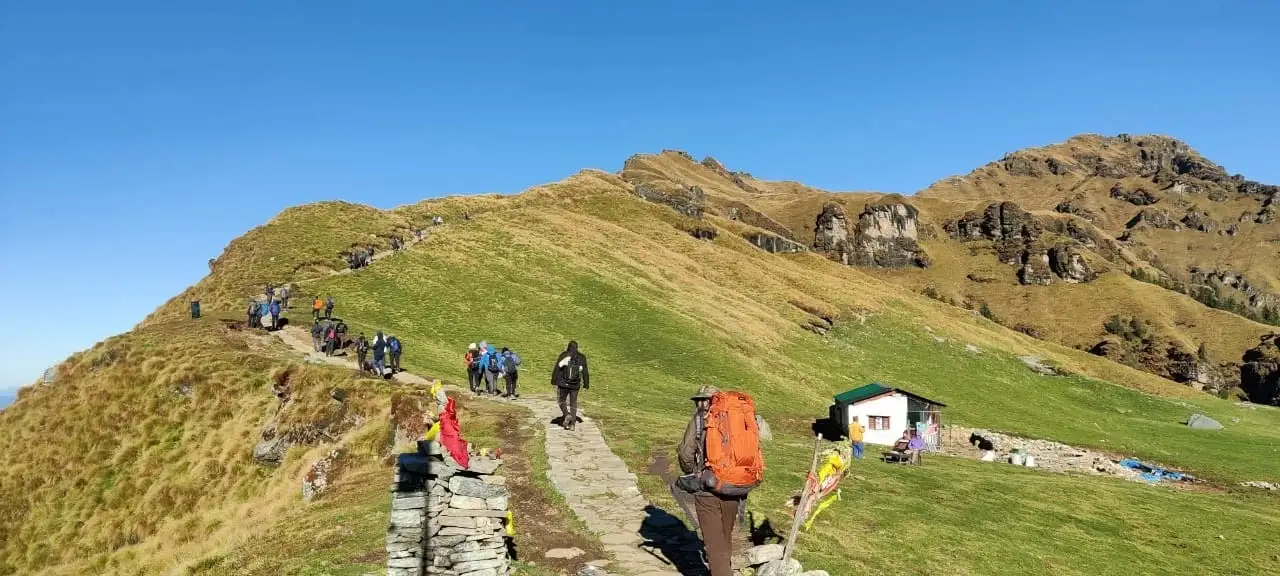
The Barsu route to Dayara Bugyal offers gradual ascents, dense forest trails, scenic mountain views, and a peaceful trekking experience, making it suitable for beginners and nature lovers alike.
Distance and Elevation
The Barsu to Dayara Bugyal trail is approximately 8 to 9 kilometres one way. The starting elevation at Barsu is around 2,500 metres, and the trail climbs steadily to reach Dayara Bugyal at approximately 3,400 to 3,600 metres.
Trail Character
The Barsu route is widely considered the more direct of the two. From the village, the path climbs quickly through dense oak and rhododendron forests before opening into the meadow. The ascent is steeper in its initial sections, which means you gain elevation faster but also feel the burn sooner.
One distinguishing feature of this route is how abruptly the treeline gives way to the meadow. Trekkers who prefer a dramatic reveal, stepping out of dense forest directly into an open alpine grassland, often favour this approach. The views of the Bandarpunch and Srikanth peaks appear relatively early once you clear the forest zone.
Time to the Bugyal
From Barsu, most trekkers with moderate fitness reach the meadow edge in about 3 to 4 hours. A fit group can do it faster, but there is little reason to rush. The final climb before the plateau is the most demanding stretch.
Campsites
Camping near the top of the Barsu trail offers good flat ground on the meadow edge. If you are interested in Camping at Dayara Bugyal, this side tends to offer slightly more sheltered spots because of how the tree cover transitions into the grassland. However, it can also feel more exposed to wind depending on the season.
Who Should Take the Barsu Route
The Barsu trail suits trekkers who want a shorter approach, prefer steep climbs to long gradual ascents, and enjoy the sensation of entering the meadow as if through a hidden door. It is also a slightly better choice for those with limited time who want to spend more of their day at the bugyal itself rather than on the approach trail.
The Raithal Route: A Closer Look
The Raithal route to Dayara Bugyal is shorter yet steeper, offering panoramic Himalayan views, alpine meadows, charming village landscapes, and a more adventurous trekking experience for trekkers.
Distance and Elevation
The Raithal to Dayara Bugyal route is longer, covering approximately 10 to 12 kilometres one way depending on the campsite chosen. The starting elevation at Raithal is around 2,200 metres, meaning the total elevation gain is slightly more, but it is distributed across a longer trail.
Trail Character
The Raithal route is more gradual and often described as more scenic throughout. The path winds through a much longer stretch of mixed forest, including oak, rhododendron, and birch, before approaching the bugyal from its gentler south-facing slopes.
This route passes through the Gui campsite, which sits at around 2,700 metres and serves as a mid-way resting point. Gui is a charming clearing in the forest and a popular overnight stop for those doing a two-day trek at a relaxed pace.
The views on the Raithal route build more slowly, but many experienced trekkers argue this makes the eventual arrival at the bugyal more earned and more emotionally impactful. The approach also gives you longer views along the ridgeline before you are fully on the meadow.
Time to the Bugyal
From Raithal, a steady walker takes around 5 to 6 hours to reach the main camping area on the bugyal. With an overnight stop at Gui, the trek feels entirely comfortable for beginners.
Campsites
The Raithal side of the bugyal tends to be more spacious in terms of open camping areas, with longer sightlines across the meadow. Both sides converge on the central plateau, but the approach from Raithal gives you a broader feel of the grassland as you arrive. For those thinking seriously about Camping at Dayara Bugyal and wanting a truly expansive meadow experience, many trekkers prefer arriving via Raithal for this reason.
Who Should Take the Raithal Route
The Raithal route is better suited for first-timers, families, those who prefer gradual acclimatisation, and anyone who wants to enjoy the forest journey as much as the destination. It is also the preferred route for guided group treks because the longer trail allows for better pacing and fewer altitude-related issues.
Head-to-Head Comparison: Barsu vs Raithal
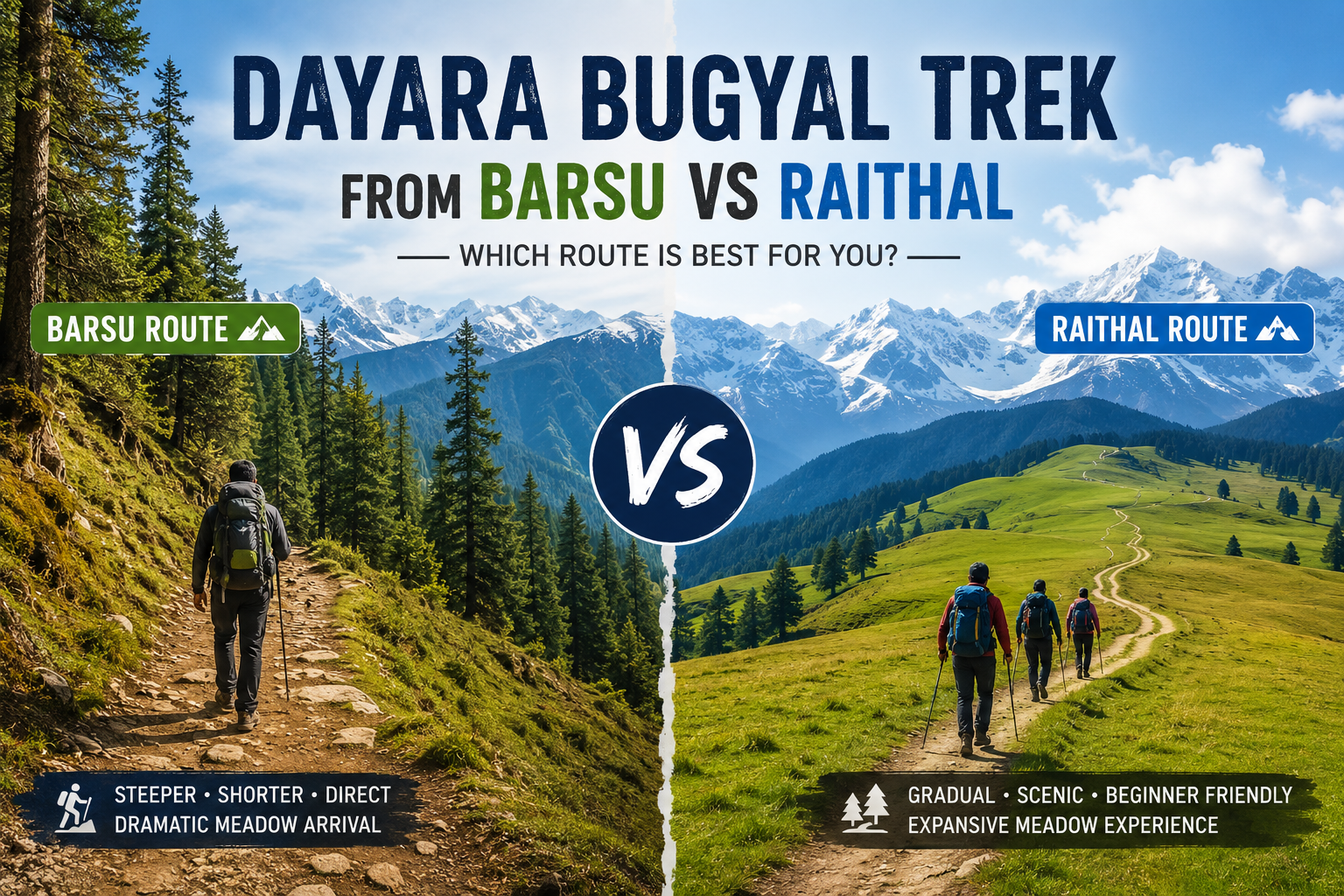
When comparing the two trekking routes to Dayara Bugyal, both Barsu and Raithal offer distinct experiences for trekkers. The Barsu route is shorter, covering around 8 to 9 kilometres one way, with a higher starting elevation of approximately 2,500 metres. It follows a steeper and more direct trail, making it suitable for fit trekkers or those with limited time. The forest section on this route is shorter but still scenic, and the arrival at the meadow feels sudden and dramatic as the landscape opens quickly.
In contrast, the Raithal route spans around 10 to 12 kilometres one way and begins at a lower elevation of approximately 2,200 metres. The trail is more gradual and forgiving, making it ideal for beginners, families, and trekkers seeking a relaxed journey. Raithal also offers the popular Gui campsite at around 2,700 metres, along with a longer and richer forest experience before the meadow gradually unfolds into wide alpine landscapes.
What About the Difficulty Level?
One of the most common questions before any high-altitude walk is whether someone with moderate fitness can handle it. The Difficulty Level Of Dayara Bugyal Trek is generally rated easy to moderate, which makes it one of the more accessible Himalayan treks in Uttarakhand. Neither the Barsu nor the Raithal route crosses technical terrain, and neither requires any prior trekking experience, though a baseline level of physical fitness makes both routes significantly more enjoyable.
That said, the Barsu route nudges slightly toward the moderate end due to its steeper initial gradient. Trekkers with knee sensitivities or those who have not trekked recently may find the descent from Barsu harder on the joints. The Raithal route, with its gentler slope, is kinder to beginners on both ascent and descent.
For anyone coming from a city at or near sea level, spending at least one night in Uttarkashi before starting the trek is highly recommended for basic acclimatisation, regardless of which route you choose.
Seasonal Considerations for Each Route
Both Barsu and Raithal routes offer unique seasonal experiences. Summer brings pleasant weather, monsoon adds lush greenery, autumn provides clear Himalayan views, and winter transforms Dayara Bugyal into a snow-covered trekking paradise.
April to June
Both routes are accessible. Patches of snow may still exist near the bugyal, especially on the Barsu side, which holds snow slightly longer due to its aspect. Rhododendrons are in full bloom on the Raithal trail in April and early May, which is spectacular.
July to September (Monsoon)
Both routes can be slippery and leeches are common below the treeline. Experienced trekkers who have done the route before sometimes still visit during this period for the lush green meadow, but beginners are advised to avoid it. If you do go, Raithal is marginally safer because of its more gradual terrain.
October to November
Widely regarded as the best season. Clear skies, crisp air, and brilliant golden light on the meadow. Both routes are at their finest. This is also peak season, so expect more company on the trail and in the campsites.
December to March
The bugyal sees snow cover, and both approach trails can be icy. Only experienced winter trekkers with proper gear should attempt this. The Raithal route in winter is slightly more manageable for those with snowshoeing experience.
Practical Planning: Permits, Guides, and Costs
Both routes require a forest permit, which can typically be arranged through a local trekking agency in Uttarkashi or at the respective village check post. Carrying a government-approved guide is not mandatory but is strongly recommended for first-timers, particularly on the Raithal route where trail junctions can occasionally cause confusion.
Understanding the Dayara Bugyal Trek Cost in 2026 helps you plan without surprises. For an independent trek without a guide, your main expenses will include transport to Uttarkashi, accommodation in the base village, the forest permit fee, and food on the trail. For a guided package through a reputable trekking operator, expect all-inclusive costs that cover transport from Dehradun, guide fees, camping equipment, and all meals. Costs vary depending on group size, the duration of the trek, and whether you are camping or using village homestays. It is worth noting that homestays in Raithal village are particularly well-regarded and can add genuine warmth to the experience beyond what camping alone offers.
Which Route Is Actually Better?
The honest answer depends entirely on what kind of trekker you are.
Choose Barsu if you are reasonably fit, have done a few treks before, prefer a faster gain in elevation, and want more time at the bugyal rather than on the approach. The shorter trail also suits weekend trekkers who are working with a tight schedule.
Choose Raithal if you are a first-timer, trekking with family or children, prefer a gradual and scenic walk, want to experience the Gui campsite, or simply love long forest walks as much as the open meadow. The Raithal route is also better for those interested in the Difficulty Level Of Dayara Bugyal Trek from a beginner’s perspective, as it represents the gentler, more forgiving introduction to high-altitude terrain in Uttarakhand.
Both routes converge on the same stunning meadow. Both offer the same Himalayan panorama. The difference is only in how you arrive.
Frequently Asked Questions
1. Which is the easier route to Dayara Bugyal, Barsu or Raithal?
Raithal is the easier route. It has a more gradual ascent spread over a longer distance, which is gentler on the body and better suited to beginners or those with limited trekking experience.
2. Can beginners do the Dayara Bugyal trek?
Yes, Dayara Bugyal is one of the best beginner treks in Uttarakhand. The Raithal route is especially recommended for first-time trekkers. Basic fitness, proper footwear, and a good trekking layer are the primary requirements.
3. How long does it take to reach Dayara Bugyal from each village?
From Barsu, most trekkers reach the meadow in 3 to 4 hours. From Raithal, it takes 5 to 6 hours. Both estimates assume a steady, moderate pace with short breaks.
4. Is camping allowed at Dayara Bugyal?
Yes, camping is permitted on the meadow. You will need a forest department permit. Trekkers can either carry their own camping gear or arrange it through a local trekking operator.
5. What is the best time of year to trek to Dayara Bugyal?
October and November are the best months for clear skies and stable weather. April to June is also excellent, especially for rhododendron blooms. Monsoon months (July to September) are best avoided by beginners.
Summary
Dayara Bugyal is one of those rare places in the Himalayas that does not demand a brutal approach to justify its beauty. Whether you walk up from Barsu through steep forest and arrive at the meadow like stepping through a curtain, or take the long, winding path from Raithal and let the landscape open up slowly around you, the destination delivers in full. The choice of route is not about which one is better in absolute terms. It is about which one is better for you, your pace, your group, and the kind of mountain experience you are chasing. Both trails are safe, well-trodden, and deeply rewarding in their own character.
What matters most is that you go. Dayara Bugyal is the kind of place that recalibrates your sense of scale and quiets the noise of everyday life in a way few destinations can. First-timers often come back the following season, sometimes taking the other route just to experience the difference. So pick your trailhead, pack your layers, and start walking. The meadow sits at over 3,400 metres above sea level, and it has all the patience in the world.
With the dayara bugyal trek season approaching, it’s time to plan something truly extraordinary. From breathtaking Himalayan peaks to spiritually powerful temples hidden deep in remote valleys, this journey offers an experience that goes beyond a typical trek—it becomes a story you carry for life. To make your journey seamless and well-organised, choose the best trekking company in Uttarakhand for reliable trek packages, detailed itineraries, and hassle-free booking.
Visit this page for Trek Packages, Itinerary & Booking.