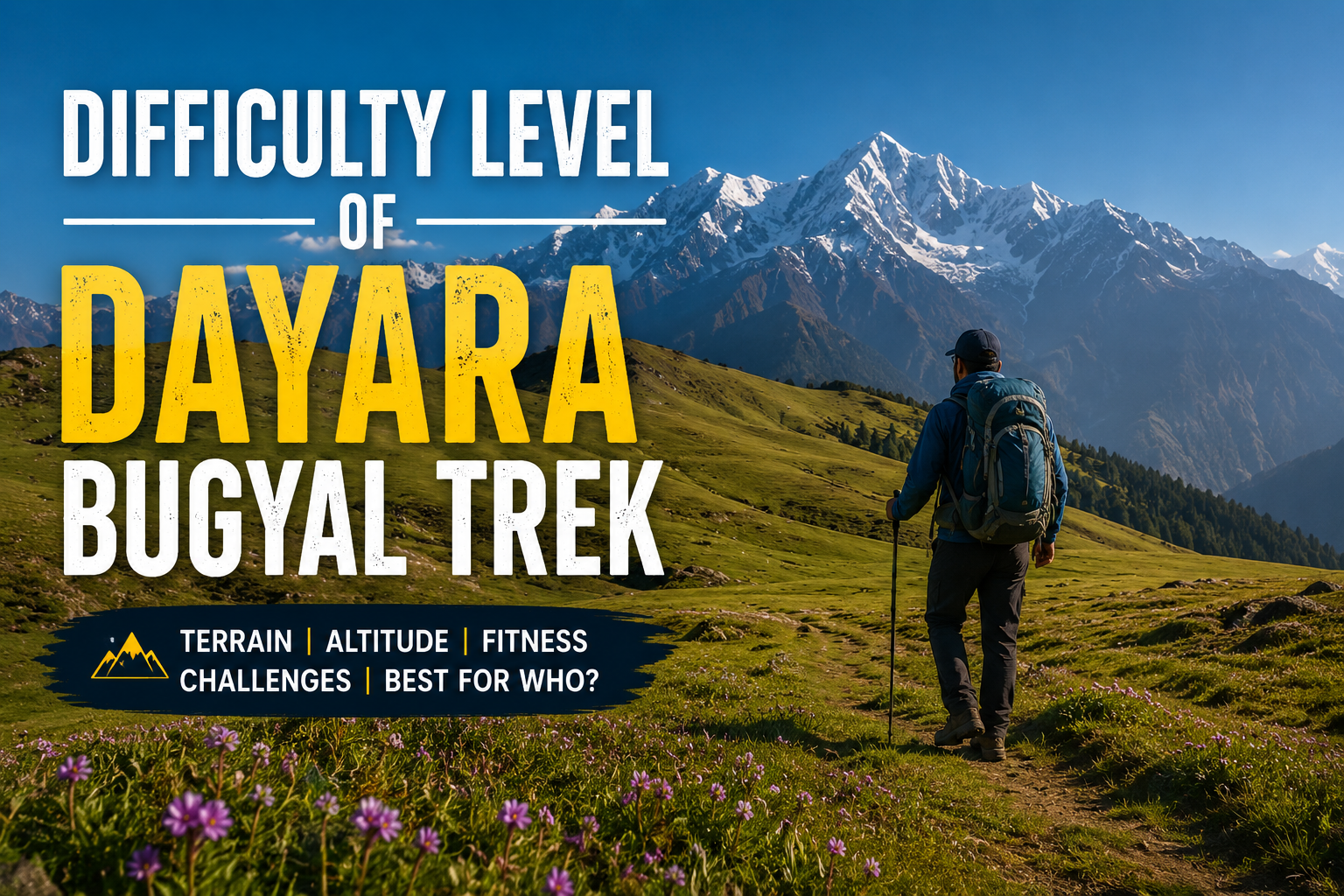
Tucked deep within the stunning landscapes of Uttarkashi, Uttarakhand, Dayara Bugyal is a Himalayan meadow that feels almost unreal. Perched at around 12,000 feet, this vast alpine grassland attracts everyone from first-time trekkers to experienced hikers chasing panoramic mountain views. But beyond the beauty, one practical question matters most before hitting the trail — is the Dayara Bugyal Trek actually easy, moderate, or more challenging than it looks?
Understanding the Difficulty Level Of Dayara Bugyal trek is not just about knowing whether you will “make it to the top.” It is about being prepared — physically, mentally, and logistically — so that your experience in the meadows is joyful rather than gruelling. Every trek has its own personality, and Dayara Bugyal is no exception. It rewards the prepared and humbles the overconfident.
This guide breaks down the trek’s difficulty in honest detail. From altitude challenges and terrain variations to seasonal considerations and fitness benchmarks, we cover everything you need to make a confident, informed decision. Whether you are a first-time trekker or returning to the mountains after a break, this article will help you approach Dayara Bugyal with clarity and excitement.
Quick Trail Facts You Should Know First
Before diving into the difficulty breakdown, here are the key numbers that frame the conversation:
- Trek Distance: Approximately 22 to 24 kilometres (round trip)
- Maximum Altitude: Around 3,660 metres (12,008 feet) at Dayara Bugyal
- Base Camp: Barsu or Raithal village
- Duration: Typically 4 to 5 days
- Trek Grade: Easy to Moderate
- Best Seasons: May to June and September to November (Summer); December to March (Winter/Snow)
These numbers tell a story — this is not a technical climb, but it is not a walk in the park either. The moderate grade hides nuances that every trekker must understand.
Is Dayara Bugyal an Easy or Difficult Trek?
The official grading of the Dayara Bugyal trek sits at Easy to Moderate, making it one of the most accessible high-altitude treks in Uttarakhand. However, “easy to moderate” is relative and depends on several personal and environmental factors.
For someone who exercises regularly, walks long distances, and has basic outdoor experience, the trek will feel manageable and deeply satisfying. For someone who leads a sedentary lifestyle or has never trekked above 8,000 feet, it may present real physical and psychological challenges, particularly during the ascent and at night when temperatures plummet.
The key is to not let the moderate label breed complacency. Altitude, unpredictable weather, and cumulative trail fatigue over multiple days are the real tests here — and they do not care about your confidence levels.
The Main Difficulty Factors Broken Down
Understanding trek difficulty requires evaluating multiple factors, including altitude, terrain, weather conditions, trail duration, physical fitness demands, acclimatisation needs, and accessibility. Breaking down these elements helps trekkers realistically assess challenges, prepare effectively, reduce risks, and choose routes that match their experience and endurance level.
1. Altitude and Acclimatisation
Altitude is the silent adversary on every Himalayan trek. As you ascend from Barsu (around 2,300 metres) to the bugyal (3,660 metres), your body must adapt to thinner air and reduced oxygen levels. Most trekkers begin feeling the altitude somewhere between Gui and Dayara, typically on day two or three.
Symptoms to watch for:
- Persistent headache that worsens with exertion
- Nausea or loss of appetite
- Disrupted sleep or fatigue beyond what exercise explains
- Dizziness or a feeling of mental fog
Acute Mountain Sickness (AMS) is rare on this trek, given the gradual ascent profile, but it is not impossible. The body needs time, hydration, and a slow pace to adjust. Rushing the ascent is the most common mistake trekkers make on moderate trails like this one.
Pro Tip: Spend a day in Uttarkashi or Barsu before beginning the trek. This one rest day can dramatically reduce the risk of altitude discomfort.
2. Terrain and Trail Conditions
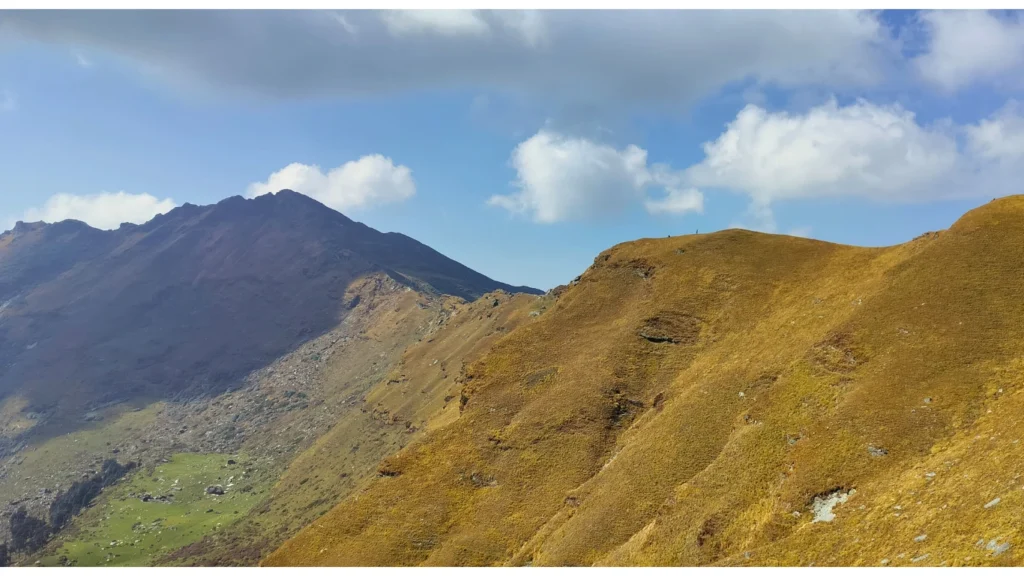
The trail from Barsu to Dayara Bugyal is largely a forest path through dense oak, rhododendron, and conifer trees before it opens into the sweeping meadows. The terrain shifts across the days:
- Day 1 (Barsu to Gui or Barnala Tal): Moderate ascent through forested terrain. The path is well-defined but includes stretches of loose soil and root-covered ground. Trekkers gain around 700 to 800 metres in elevation.
- Day 2 (Gui to Dayara Bugyal): The gradient eases as you approach the meadow, but the final push into the open bugyal can feel tiring at altitude.
- Winter Trek (Snow Conditions): From December onwards, the trail becomes snow-covered. This changes the difficulty significantly — crampons may be necessary, and route-finding requires experience or a guide.
The terrain is generally stable and non-technical in summer and autumn. There are no fixed ropes, rappels, or rock scrambles involved. However, the steeper sections before Gui do demand steady footing and a walking rhythm.
3. Weather and Temperature
The weather on Dayara Bugyal can shift fast. Sunny mornings can transform into cloudy, cold afternoons with little warning. At the campsite and bugyal level, temperatures at night can drop to -5°C or below, even in summer months.
Season-specific difficulty considerations:
- May to June: Trails are clear, skies are vivid, and rhododendrons bloom. The weather is mostly stable, but afternoon clouds are common. Difficulty remains low to moderate.
- September to November: Post-monsoon clarity offers the best visibility. Trails can be muddy in early September. Gradually cooling temperatures add a layer of difficulty in November.
- December to March: Snow dominates. The trek transforms into a winter adventure with deep snowpack. Difficulty escalates to moderate to challenging. Navigation, cold management, and layering become critical skills.
Always carry a rain cover for your backpack and a thermal layer, regardless of the season. Hypothermia risk is real when wet and exposed to high-altitude winds.
Physical Fitness Requirements
This is where honest self-assessment becomes critical. The Dayara Bugyal trek does not demand elite fitness, but it does require a functional baseline of cardiovascular endurance, leg strength, and mental resilience.
Minimum fitness benchmarks:
- Ability to walk 10 to 12 kilometres continuously without significant distress
- Comfortable climbing stairs for 20 to 30 minutes without stopping
- No active cardiovascular or respiratory conditions that respond poorly to altitude
- Basic core and lower body strength for uneven terrain stability
If you are uncertain about your current fitness level or starting from scratch, check out our detailed guide on How to Train for Dayara Bugyal Trek, which outlines a structured 6 to 8 week preparation plan including cardio, strength, and endurance-building exercises specifically designed for this trail.
Age is less of a barrier than fitness level. Well-prepared individuals in their 50s and 60s complete this trek comfortably, while unfit young adults often struggle. Start training at least 6 weeks before your departure date.
Seasonal Difficulty: A Comparative Look
| Season | Difficulty | Trail Condition | Best For |
| May – June | Easy-Moderate | Clear, dry | First-timers, families |
| July – August | Moderate | Monsoon mud, leeches | Avoid if possible |
| September – October | Easy-Moderate | Clear, crisp | Photography, experienced beginners |
| November | Moderate | Cold, possible snow | Those seeking solitude |
| December – March | Moderate-Challenging | Heavy snow | Snow trekking enthusiasts |
The monsoon window (July and August) is generally discouraged. Trails become slippery and waterlogged, visibility drops, leeches are abundant, and the risk of landslides increases significantly in some sections.
Understanding the Daily Effort
A common question is: “Which day is the hardest?” Based on the typical four-day structure:
Day 1 (Barsu/Raithal to Gui): This is statistically where most trekkers feel the greatest physical effort. The ascent through dense forest is sustained and the initial altitude jump of nearly 800 metres demands cardiovascular output. First-day fatigue, excitement-induced overexertion, and an unadjusted pack fit make this day deceptively demanding.
Day 2 (Gui to Dayara Bugyal): Shorter in distance but higher in altitude. Breathing feels slightly laboured compared to day one. Many trekkers, however, report this as the most rewarding day — the meadow arrival makes every step worth it.
Day 3 (Exploration of Bugyal / Side Hike to Bakaria Top): Optional ascent to Bakaria Top at around 3,800 metres adds an extra challenge. This side summit offers panoramic views of the Gangotri and Kedarnath ranges. Highly recommended but physically taxing.
Day 4 (Descent to Barsu): Descents are not effort-free. Knee strain and toe-box pressure in boots are common complaints. Trekking poles reduce stress on joints significantly.
For a complete day-by-day plan with campsite details, distances, and logistics, refer to our in-depth Dayara Bugyal Trek Itinerary, which maps out each stage with altitude profiles, food arrangements, and acclimatisation stops.
Essential Gear That Directly Affects Difficulty Perception
Poor gear makes easy treks feel hard. The right equipment does not make the trek easier per se, but it makes your body more efficient and comfortable throughout.
Non-negotiable items:
- Trekking boots with ankle support: Avoid trail runners on this terrain, especially in winter or wet conditions.
- Trekking poles: Reduce knee load by up to 25% on descents. A game-changer on steep sections.
- Layering system: Base layer (moisture-wicking), mid-layer (fleece or down), outer shell (waterproof and windproof).
- Backpack (40 to 50 litres): Properly fitted with a hip belt to transfer weight off shoulders.
- Headlamp with spare batteries: Early morning starts are common.
- High-SPF sunscreen and UV-protective sunglasses: Reflected glare from snow and open meadow is intense.
- Water purification tablets or filter: Reliable hydration sources are available but not always guaranteed to be clean.
Renting gear is possible in Uttarkashi, but quality varies. If you plan to trek regularly, investing in good boots and a layering system is worthwhile.
Who Should and Shouldn’t Attempt This Trek
Ideal candidates:
- First-time trekkers in reasonable physical condition
- Families with children above 10 years who have basic fitness
- Photographers seeking alpine meadow landscapes at a manageable difficulty
- Anyone seeking their first Himalayan snow experience (winter season)
Those who should reconsider or prepare more:
- Individuals with active asthma, heart conditions, or hypertension (consult a doctor first)
- Those who have not exercised in months and plan to trek without any preparation
- Solo trekkers in winter without prior snow travel experience (guide strongly recommended)
The trek is guided by licensed operators, and using a certified guide is strongly recommended for first-timers. Beyond safety, a local guide adds context, pacing discipline, and cultural richness to the experience.
Capturing Dayara Bugyal: When Difficulty Meets Beauty
One reason trekkers push through the physical challenge is the extraordinary visual reward at the top. The bugyal itself is a natural canvas — rolling grasslands with a 270-degree Himalayan panorama that includes peaks like Bandarpunch, Srikanth, and the Gangotri range.
For those who love photography, the meadow rewards patience. Golden hour light across the open expanse is particularly stunning in autumn, and fresh snowfall in winter creates scenes that look almost surreal. For a curated list of the best Photography Locations along this route — including specific vantage points, ideal timing, and compositional tips for landscape and astrophotography — explore our dedicated resource that covers the full trail from Barsu to Bakaria Top.
The meadow is not the only visual highlight. The forest trail through rhododendrons in bloom (April to May), the reflective surface of Barnala Tal at dawn, and the mist-wrapped ascent on early mornings all offer compelling photographic moments that justify carrying a slightly heavier pack.
Tips to Make the Trek More Manageable
- Start slow: The first two hours set the tone. Resist the urge to power-walk early.
- Hydrate consistently: At altitude, thirst signals lag behind actual dehydration. Drink 3 to 4 litres daily.
- Eat even when you don’t feel like it: Altitude suppresses appetite. Eat small, frequent, calorie-dense snacks.
- Follow the “climb high, sleep low” principle: On rest days or during acclimatisation, ascend briefly and return to lower camp for sleep.
- Listen to your body: Mild headaches are manageable; worsening symptoms are a signal to descend.
- Avoid alcohol and smoking: Both impair acclimatisation and increase AMS risk.
- Use poles on descents: Saves your knees and significantly reduces post-trek soreness.
Frequently Asked Questions
1. Is the Dayara Bugyal trek suitable for beginners?
Yes, it is one of the most recommended first Himalayan treks. The easy-to-moderate grading, well-marked trails, and multi-day structure with gradual altitude gain make it beginner-friendly when proper preparation is done in advance.
2. What is the hardest part of the Dayara Bugyal trek?
Most trekkers find the Day 1 ascent from Barsu to Gui the most physically demanding due to the sustained elevation gain. The optional ascent to Bakaria Top on Day 3 is the most challenging segment overall.
3. Can children do the Dayara Bugyal trek?
Children above 10 years with reasonable fitness can complete this trek comfortably, especially in the summer months. Parental supervision and a slow pace are essential. Avoid winter variants with children.
4. Do I need prior trekking experience for Dayara Bugyal?
No prior trekking experience is mandatory, but some hiking background helps with pacing, gear usage, and mental preparedness. Physical training in the weeks before is far more important than prior trek experience.
5. How do I manage altitude sickness on this trek?
Acclimatise at base before the trek, ascend gradually, hydrate well, and avoid overexertion. Carry Diamox if prescribed by a doctor. Descend immediately if symptoms worsen.
Summary
The Difficulty Level Of Dayara Bugyal trek sits comfortably in the easy-to-moderate range, making it one of the most accessible high-altitude experiences in Uttarakhand. The key variables — altitude gain, daily distance, terrain type, and seasonal weather — all point to a trek that is achievable for prepared beginners and deeply satisfying for experienced hikers.
What determines your experience more than any trail factor is how well you prepare. Train consistently, pack smartly, choose your season wisely, and respect the mountain’s pace. Dayara Bugyal is not the kind of trek you conquer — it is one you are invited into, and it gives back exactly what you bring to it.
Go prepared. Go humble. And let the meadows do the rest.
With the dayara bugyal trek season approaching, it’s time to plan something truly extraordinary. From breathtaking Himalayan peaks to spiritually powerful temples hidden deep in remote valleys, this journey offers an experience that goes beyond a typical trek—it becomes a story you carry for life. To make your journey seamless and well-organised, choose the best trekking company in Uttarakhand for reliable trek packages, detailed itineraries, and hassle-free booking.
Visit this page for Trek Packages, Itinerary & Booking.