Rudranath is not a temple most people reach by chance. It lies far from roads, crowds, and convenience, making it one of the least visited yet most demanding destinations in the Himalayas. For those undertaking the Panch Kedar yatra, Rudranath represents the point where the journey becomes truly remote.
Hidden deep in the alpine terrain of Uttarakhand, Rudranath Temple is the place where the face of Lord Shiva is worshipped. Unlike Kedarnath or Tungnath, reaching Rudranath requires multiple days of continuous trekking through forests, high-altitude meadows, and exposed ridgelines. There are no quick routes or backup options here—only long walking hours and limited shelter.
Because of this isolation, Rudranath is often considered the most challenging stop in the Panch Kedar trek. It demands preparation, physical stamina, and mental discipline. Those who reach it do so not because the path is easy, but because they were willing to commit fully to the journey.
Importance of Rudranath in the Panch Kedar Trek
Rudranath occupies a unique position in the Panch Kedar trek. Unlike Kedarnath and Tungnath, which are relatively accessible, Rudranath demands sustained effort over multiple days. This temple often becomes the deciding point—some pilgrims turn back before reaching it.
Within the Panch Kedar sequence, Rudranath represents confrontation. After endurance (Kedarnath) and effort (Tungnath), Rudranath asks for resolve.
Mythological Background of Rudranath
The origin of Rudranath is rooted in the same Mahabharata legend that binds all Panch Kedar temples. After Shiva disappeared into the earth to avoid the Pandavas, his body manifested at five locations.
At Rudranath, the face of Shiva appeared. Because the face is associated with identity and recognition, Rudranath is often linked with self-reflection and acceptance in traditional belief.
This makes Rudranath one of the most spiritually intense stops in the panch kedar trek.
Location and Access Routes
Rudranath lies deep in the alpine meadows of Chamoli district, surrounded by ridges, forests, and steep ascents.
There are multiple trekking routes to reach Rudranath, but all are demanding:
Common approach routes:
- Sagar Village → Panar Bugyal → Rudranath
- Mandoli → Anusuya Devi → Rudranath
- Urvashi River route (less used, very challenging)
Each route involves long walking hours and limited facilities, which adds to the difficulty of this stage of the panch kedar trek.
Trek Distance and Difficulty
Total trek distance:
- Approx. 20–25 km one way, depending on route
Difficulty level:
- Moderate to difficult
Time required:
- 2 to 3 days (one way with halts)
Unlike other Panch Kedar temples, Rudranath is not a single-day ascent. Trekkers must plan overnight stays, manage supplies, and be prepared for sudden weather changes.
This makes Rudranath the most logistically complex section of the panch kedar trek.
Terrain and Natural Landscape
The terrain leading to Rudranath is varied and demanding:
- Dense forest trails in lower sections
- Open alpine meadows like Panar Bugyal
- Narrow ridgelines with steep drops
- Rocky final ascents near the temple
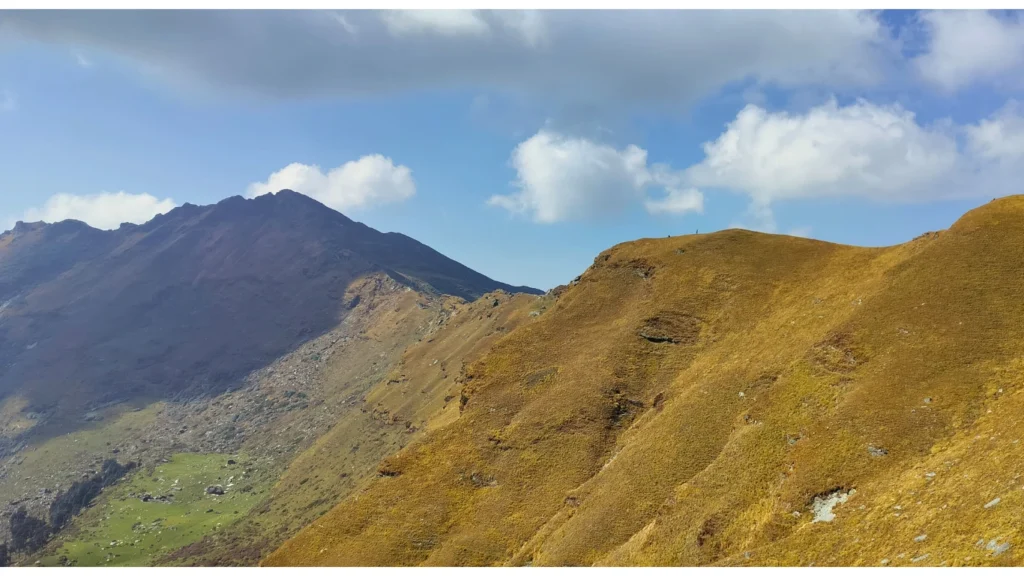
Panar Bugyal, often used as a night halt, is one of the most visually striking meadows in the region. From here, the isolation becomes complete.
Rudranath feels far removed from human activity — a rare experience even within the panch kedar trek.
Best Time to Visit Rudranath
Seasonal timing is critical for Rudranath due to its remoteness.
Best months:
- June to early July
- September to early October
Avoid:
- Monsoon months, when trails become slippery
- Winter, when heavy snowfall blocks routes completely
Because of snow and weather constraints, the window to complete this part of the panch kedar trek is shorter than other sections.
Rudranath Temple Structure
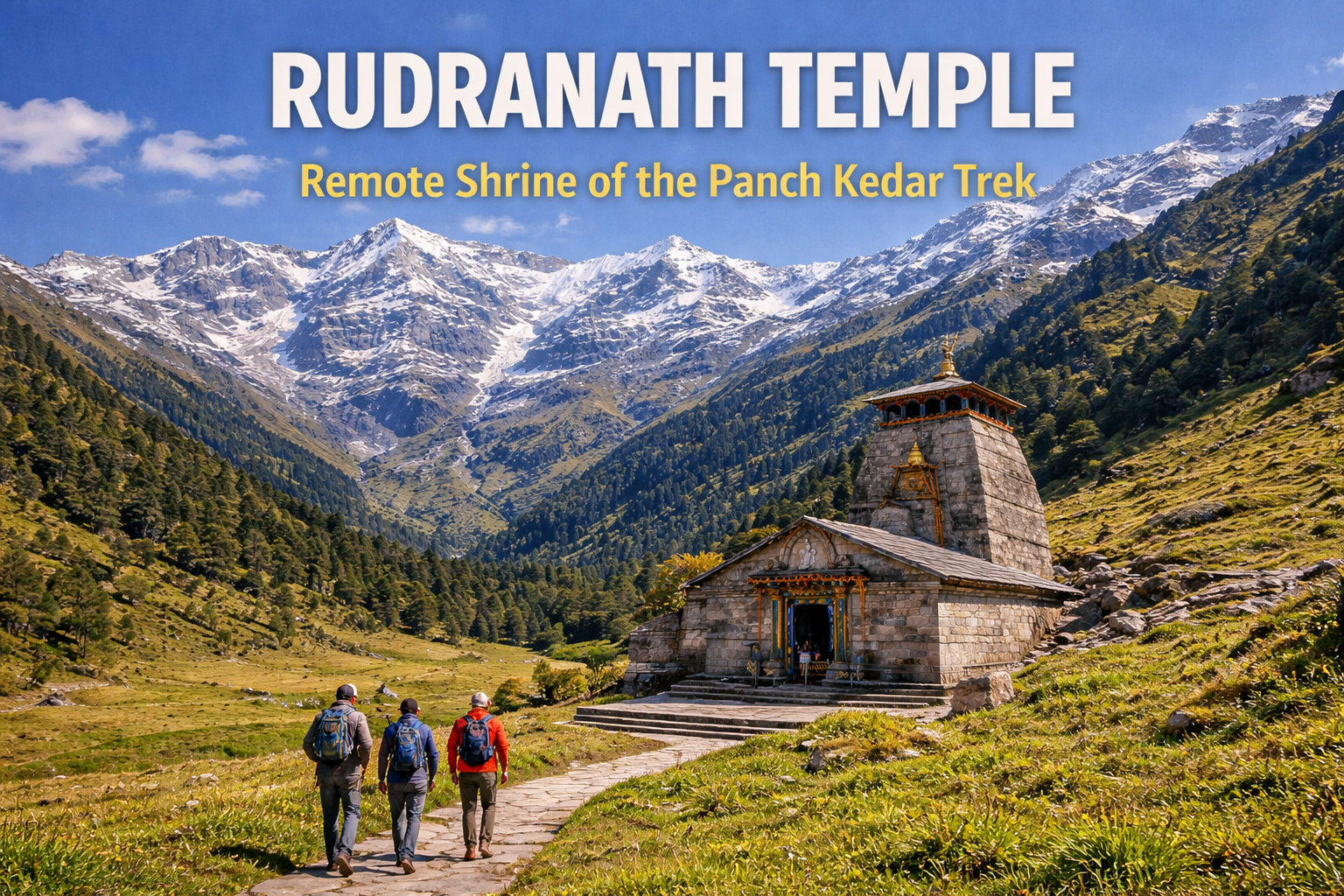
The Rudranath temple is small and simple, built from stone and designed to survive harsh mountain conditions. Unlike Kedarnath, the shrine here feels almost hidden within the landscape.
The sanctum houses a natural rock formation representing Shiva’s face. There is no grand structure — only a sacred presence integrated into the terrain.
This simplicity reinforces Rudranath’s reputation as the most austere stop of the panch kedar trek.
Weather Conditions at Rudranath
The weather around Rudranath is unpredictable.
Common conditions include:
- Sudden fog reducing visibility
- Cold winds even in summer
- Rapid temperature drops after sunset
Because of limited shelter, trekkers must be well-prepared. Weather awareness becomes essential for safety at this stage of the Panch Kedar trek.
Stay Options Near Rudranath
Accommodation near Rudranath is extremely basic:
- Seasonal huts at Panar Bugyal
- Limited local shelters
- Tents (commonly used)
There are no hotels or permanent lodges. Food options are limited and depend on seasonal arrangements.
This lack of infrastructure is one reason Rudranath remains less visited compared to other Panch Kedar temples.
What Rudranath Teaches During the Journey
Rudranath strips away convenience. Long walking hours, silence, and isolation force trekkers to confront fatigue and self-doubt.
This stage of the Panch Kedar trek teaches:
- Endurance over speed
- Self-reliance
- Respect for terrain and weather
Many pilgrims describe Rudranath as the most demanding yet most memorable part of the entire journey.
Practical Tips for Visiting Rudranath
Do:
- Plan extra buffer days
- Carry sufficient food and water
- Start early each day
- Travel with local route knowledge
Don’t:
- Attempt solo trekking without experience
- Underestimate distance and weather
- Rush the return journey
Mistakes at Rudranath are harder to correct due to its isolation.
Common Questions About Rudranath
Is Rudranath the hardest temple in the Panch Kedar trek?
Yes, due to distance, isolation, and limited facilities.
Is Rudranath suitable for beginners?
Only with proper preparation and guidance.
Is Rudranath open year-round?
No. It remains closed during winter months.