Few Himalayan pilgrimages demand as much weather awareness as the journey to Adi Kailash. The route from Dharchula climbs through some of the most geologically active terrain in Uttarakhand, passing through river gorges, high-altitude villages, and exposed ridgelines before reaching the sacred Jolingkong valley at over 4,700 metres. At every stage of that ascent, the weather tells a different story — and misreading it can mean the difference between a smooth journey and a difficult one.
Unlike more developed pilgrimage circuits, the Adi Kailash route has limited infrastructure for weather emergencies. When the Kali River swells during peak monsoon, roads close. When snowfall arrives early in October, passes become impassable. When afternoon thunderstorms build over the Jolingkong valley in August, there is nowhere to shelter except your tent or guesthouse. Understanding the weather pattern before you travel is not optional preparation — it is essential planning.
This month-by-month guide covers Adi Kailash Weather and Temperature across all three key altitude zones — Dharchula at the base, Gunji in the mid-section, and Jolingkong at the summit valley — for every month of the open season from May through October 2026. It includes temperature data, road condition forecasts, clothing guidance, and a clear recommendation matrix for different traveller profiles.
Understanding the Three Altitude Zones of the Adi Kailash Route
Before breaking down the monthly data, it is important to understand that this route spans a dramatic altitude gradient across a short horizontal distance. Each zone behaves differently in every season, and your preparation must account for all three.
Dharchula (915 m) serves as the gateway town and the last major urban settlement before the restricted zone begins. The weather here is relatively warm and humid throughout summer and is heavily influenced by monsoon rainfall between July and September.
Gunji (3,325 m) is the primary acclimatisation village and checkpoint. Temperatures here are significantly colder than those in Dharchula in every season. Night temperatures drop below freezing from October onward and can approach zero even in June. Wind chill is a consistent factor above 3,000 m throughout the season.
Jolingkong (4,740 m) is the sacred valley below Om Parvat and the spiritual heart of the pilgrimage. Day temperatures here rarely exceed 12 to 14 degrees Celsius even in peak summer. Night temperatures remain well below zero for most of the season. Snowfall can occur at this altitude in any month, including July. Weather windows at Jolingkong are narrow and must be taken when offered.
May: The Opening Month
Dharchula Temperature: 22 to 32 degrees Celsius (day), 14 to 18 degrees Celsius (night) Gunji Temperature: 8 to 14 degrees Celsius (day), minus 2 to 2 degrees Celsius (night) Jolingkong Temperature: 2 to 8 degrees Celsius (day), minus 8 to minus 4 degrees Celsius (night)
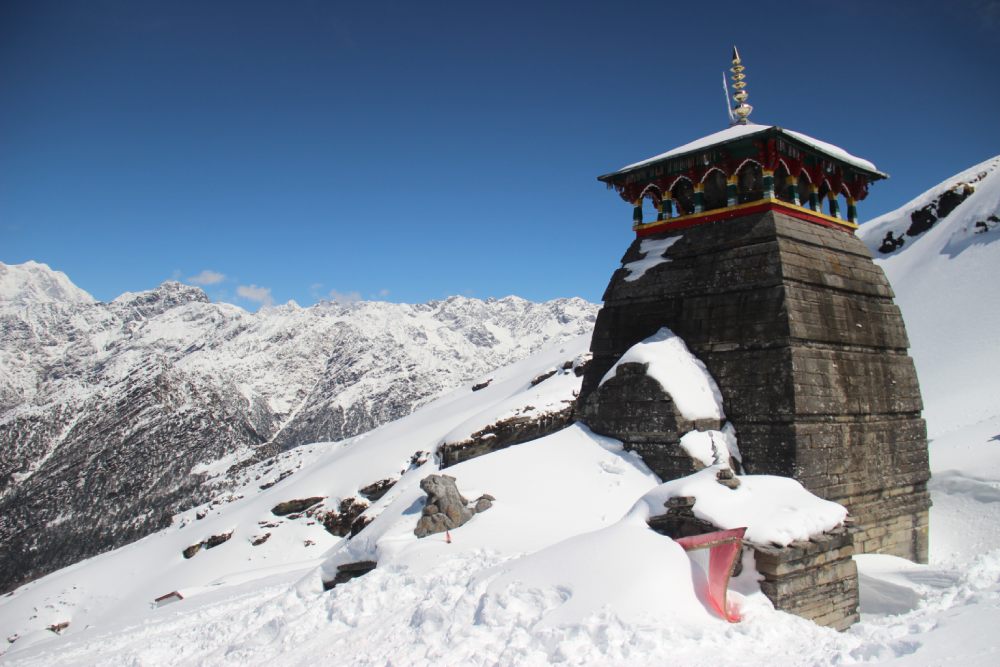
May marks the official opening of the Adi Kailash yatra 2026. The route typically clears of snow in the second or third week of May, depending on how heavy the previous winter snowfall was. Lower sections of the road from Dharchula to Tawaghat are clear and in reasonable condition. The section from Narayana Ashram onward may still have patchy snow on northern-facing slopes, and the final approach to Jolingkong often retains deep snow pockets through mid-May.
Road conditions in May are generally good between Dharchula and Gunji. The road between Gunji and Kuti and the Jolingkong access trail can be wet with snowmelt and require caution. Early morning departures on this section are advisable to avoid afternoon stream swelling from melt.
What to wear in May at Jolingkong: Thermal base layer, fleece mid-layer, down jacket, waterproof shell outer, warm hat, gloves, and UV-rated sunglasses. The sun at 4,700 m is intense even in cold conditions.
Best for: Trekkers who want the freshest mountain scenery, minimal crowds, and snow-dusted landscapes. Not recommended for senior citizens or first-timers due to residual snow on trail sections and cold night temperatures.
June: The Sweet Spot for Most Travellers
Dharchula Temperature: 24 to 34 degrees Celsius (day), 16 to 22 degrees Celsius (night) Gunji Temperature: 10 to 17 degrees Celsius (day), 1 to 5 degrees Celsius (night) Jolingkong Temperature: 5 to 12 degrees Celsius (day), minus 5 to minus 1 degrees Celsius (night)
June is widely considered the optimal Adi Kailash best time to visit for a broad range of travellers. Snow has cleared from all major trail sections by early June. Days are long, with 13 to 14 hours of daylight. The pre-monsoon atmosphere keeps skies relatively clear in the mornings, and the Adi Kailash trek route is in its best accessible condition before the rains arrive.
Road conditions in June are the most reliable of the entire season. The National Highway from Dharchula to Tawaghat is in good shape. The ITBP-maintained roads beyond the restricted zone checkpoint are functional and maintained. The approach to Jolingkong is walkable in standard trekking footwear.
Kalapani, the historically significant confluence point on the Kali River and a culturally important stop on the yatra route, is best experienced in June when river levels are moderate, visibility is high, and the surrounding landscape is at its greenest before the monsoon fully arrives. The walk through this section is steady and conditions are reliable.
What to wear in June: Light breathable trekking clothes for Dharchula and daytime sections of the trail. Warm layers become essential from Gunji onward. Always carry a rain jacket from mid-June onward as pre-monsoon showers become more frequent.
Best for: First-time trekkers, families, senior citizens, and photographers seeking clear mountain views. June offers the best balance of trail safety, weather stability, and scenic quality.
July: Monsoon Begins — Proceed with Caution
Dharchula Temperature: 22 to 30 degrees Celsius (day), 18 to 22 degrees Celsius (night) Gunji Temperature: 9 to 15 degrees Celsius (day), 3 to 7 degrees Celsius (night) Jolingkong Temperature: 4 to 10 degrees Celsius (day), minus 3 to 1 degrees Celsius (night)
July marks the arrival of the Southwest Monsoon in the Kumaon Himalayas, and the Adi Kailash route weather changes substantially. Rainfall at Dharchula increases dramatically — the town receives some of its highest monthly precipitation in July. The Kali River, which the road follows for much of the route, rises significantly. Landslide activity increases on all sections of the road beyond Tawaghat.
Road conditions in July are variable and sometimes closed for days at a time due to landslides and debris flows. The stretch between Tawaghat and Narayana Ashram is particularly vulnerable. Travellers in July must build buffer days into their itinerary to account for road closures. Departure flexibility is essential.
At Jolingkong, July can still offer clear morning windows. Afternoon thunderstorms build rapidly, often by 1 to 2 PM. The Om Parvat darshan is best attempted before 10 AM in July. Snow can fall at Jolingkong even in July, particularly after overnight thunderstorm activity.
What to wear in July: Full waterproof gear from Dharchula onward. Gaiters are useful on wet trail sections. At Gunji and above, down layers remain necessary for nights and early mornings.
Best for: Experienced trekkers with flexible itineraries who are comfortable navigating monsoon conditions. Not recommended for first-timers or senior citizens.
August: Peak Monsoon — High Risk, High Drama
Dharchula Temperature: 22 to 29 degrees Celsius (day), 18 to 22 degrees Celsius (night) Gunji Temperature: 8 to 14 degrees Celsius (day), 3 to 8 degrees Celsius (night) Jolingkong Temperature: 3 to 9 degrees Celsius (day), minus 2 to 2 degrees Celsius (night)
August is the peak monsoon month and carries the highest weather risk of the entire season. Road closures are common and sometimes extended. In 2023 and 2024, sections of the Dharchula-Gunji road were closed for multiple weeks in August due to continuous rain-triggered landslides. Travellers planning an August yatra should check the Border Roads Organisation (BRO) road status and the Uttarakhand Disaster Management Authority updates before departing.
Despite the risk, August has a loyal following among photographers. The landscape around Gunji, Gunji Village, Final Stop Before Adi Kailash, and the Kali valley at this time is saturated with green, waterfalls are active on every hillside, and cloud formations around Om Parvat create dramatic light conditions when windows open.
What to wear in August: Heavy-duty waterproof jacket and trousers. Waterproof backpack cover is essential. Lightweight trekking poles with rubber tips provide stability on wet trail surfaces.
Best for: Experienced trekkers and landscape photographers with a high tolerance for uncertainty and flexible return schedules. Not suitable for first-timers, families with children, or senior citizens.
September: The Monsoon Recedes
Dharchula Temperature: 20 to 28 degrees Celsius (day), 14 to 18 degrees Celsius (night) Gunji Temperature: 7 to 13 degrees Celsius (day), 0 to 4 degrees Celsius (night) Jolingkong Temperature: 2 to 8 degrees Celsius (day), minus 5 to minus 1 degrees Celsius (night)
September brings a gradual transition as the Southwest Monsoon retreats through the second half of the month. The first two weeks of September are still monsoon-affected, with road risks similar to August. The second half of September is generally more stable, and by late September, the atmosphere begins to clear significantly.
Post-monsoon clarity at Jolingkong is exceptional. As cloud cover reduces, the views of Om Parvat and the surrounding peaks sharpen into some of the most vivid mountain photography possible in the Kumaon Himalayas. The light in late September has a particular quality — golden, directional, and long — that experienced mountain photographers specifically target.
Night temperatures drop noticeably in September. Gunji records freezing nights from mid-September. Jolingkong nights in late September approach minus 5 to minus 7 degrees Celsius. Sleeping gear and layering must account for this shift.
What to wear in September: Transitional month. Carry both rain gear (for early September) and heavier insulation (for late September). A four-season sleeping bag rated to minus 10 degrees Celsius is recommended for Jolingkong stays in late September.
Best for: Photographers and experienced trekkers. The late September window is one of the best in the entire season for clear Om Parvat views.
October: The Closing Month
Dharchula Temperature: 15 to 24 degrees Celsius (day), 8 to 13 degrees Celsius (night) Gunji Temperature: 3 to 9 degrees Celsius (day), minus 5 to minus 2 degrees Celsius (night) Jolingkong Temperature: minus 2 to 5 degrees Celsius (day), minus 12 to minus 7 degrees Celsius (night)
October is the closing month for the Adi Kailash yatra route, and the weather closes in quickly. Daytime temperatures at Jolingkong frequently remain below freezing by mid-October. Early snowfall can arrive at any point from the first week of October onward. The route typically closes by late October, though the exact date depends on snowfall accumulation and BRO road clearance status.
The risk in October is not primarily rain — it is sudden and heavy snowfall that can close the high-altitude sections with little notice. Travellers booking October slots should have contingency plans and travel insurance that covers emergency evacuation or extended stays.
Road conditions in early October are generally good after the monsoon clears. The window between mid-September and mid-October is, in fact, considered by many experienced guides to be one of the finest times to do the yatra in terms of combined stability and post-monsoon clarity.
What to wear in October: Full winter trekking kit. Heavy down jacket, thermal underlayers, windproof outer shell, insulated gloves, and a balaclava for Jolingkong stays. A sleeping bag rated to minus 15 degrees Celsius is advisable for overnight stays above Gunji.
Best for: Experienced trekkers only. Not recommended for first-timers, families, or senior citizens due to sudden snowfall risk and extreme night temperatures.
Monsoon Risk Table: Month-by-Month at a Glance
| Month | Monsoon Risk | Road Closure Risk | Recommended For |
| May | None | Low | Experienced, Photographers |
| June | Low | Low | All Traveller Types |
| July | High | Moderate to High | Experienced Only |
| August | Very High | High | Experienced, Flexible |
| September (Early) | Moderate | Moderate | Experienced |
| September (Late) | Low | Low | All, Photographers |
| October | None | Low to Moderate (Snow) | Experienced Only |
Best Month by Traveller Profile
First-Timers: June is the clear recommendation. Stable weather, functional roads, manageable temperatures at all altitude zones, and strong guide availability make June the safest and most rewarding month for a first Adi Kailash yatra.
Photographers: Late September offers the finest light, clearest skies, and most dramatic mountain visibility. May is a secondary choice for snow-dusted landscape photography. Avoid July and August unless specifically targeting monsoon mood photography.
Senior Citizens: June is the safest option. May is an acceptable second choice if snowmelt sections have fully cleared. July through August carry too much uncertainty for senior travellers. October’s temperature extremes at Jolingkong make it unsuitable for most senior visitors.
Experienced Trekkers: May and late September to early October offer the most dramatic and least crowded experiences. Those seeking technical winter conditions and solitude should consider the October window with an experienced operator.
What the Route Looks Like: Key Waypoints and Weather Exposure
The route from Dharchula to Jolingkong passes through several distinct sections, each with different weather exposure profiles.
The Dharchula to Tawaghat section (22 km) follows the Kali River gorge and is the most landslide-prone section of the route in monsoon season. This section is paved and managed by BRO but is susceptible to debris flows on steep hillside sections.
The Tawaghat to Narayana Ashram section climbs through dense Himalayan forest and is the most biologically rich part of the route. Weather changes rapidly here. Morning sun gives way to afternoon cloud and occasional rain even in June.
The Narayana Ashram to Gunji section crosses open valley terrain and becomes significantly colder. Wind is a constant factor, and travellers transitioning from the forest section are often surprised by the temperature drop.
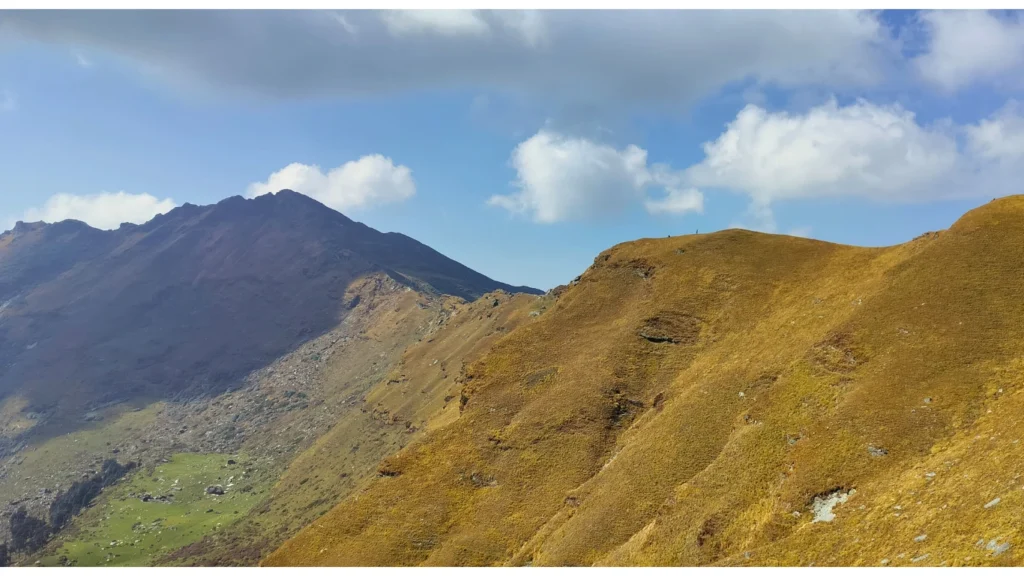
The Gunji to Jolingkong section is the most exposed. The trail crosses open bugyals and river crossings before reaching the Jolingkong valley. This section requires the most weather-aware decision-making, particularly around the timing of the daily final ascent.
The historically significant stop at Kalapani, situated at the confluence of the Kali River’s source streams, is an important cultural marker on this route. In terms of weather exposure, this section is moderately sheltered during most of the season, but should be crossed early in the morning during July and August to avoid afternoon rain and river level rises.
Packing List Organised by Weather Zone
For Dharchula (all months): Light breathable clothes, sun protection, rain jacket from June onward.
For Gunji village(May to October): Fleece mid-layer, wind jacket, warm hat, light gloves. Heavier insulation from September onward.
For Jolingkong (May to October): Down jacket rated to minus 10, thermal base layers, insulated gloves, balaclava, UV sunglasses, sunscreen SPF 60, four-season sleeping bag, waterproof trekking boots.
Year-round for all zones: Trekking poles, personal first aid kit, ORS sachets, headlamp, portable power bank, and offline maps of the route.
FAQ: Adi Kailash Weather and Temperature
1. What is the temperature at Jolingkong in June?
Daytime temperatures at Jolingkong in June range from 5 to 12 degrees Celsius. Night temperatures range from minus 5 to minus 1 degrees Celsius. A down jacket and a sleeping bag rated to minus 10 degrees Celsius are essential for overnight stays.
2. Is it safe to visit Adi Kailash in August?
August is the peak monsoon month and carries the highest landslide and road closure risk of the season. Experienced trekkers with flexible schedules and emergency contingency plans can attempt the route, but it is not recommended for first-timers, families, or senior citizens.
3. Which month has the clearest views of Om Parvat?
Late September offers the clearest and most consistent views of Om Parvat. Post-monsoon clarity, combined with golden autumn light, makes this the best window for photography and unobstructed darshan.
4. Does it snow at Adi Kailash in summer?
Snowfall can occur at Jolingkong in any month from May through October, particularly after overnight thunderstorm activity. May and October carry the highest probability of on-trail snow conditions.
5. When does the Adi Kailash yatra open and close in 2026?
The route typically opens in the second or third week of May and closes in late October, depending on snowfall. Official registration through the Uttarakhand government and ITBP is mandatory, and opening dates are announced approximately two to four weeks before the season begins.
Summary
The Adi Kailash pilgrimage spans six months of dramatically different weather, and the experience of visiting in June is fundamentally different from visiting in late September or May. Each month has its own character, its own risks, and its own rewards. Understanding those differences before you travel allows you to plan realistically, pack correctly, and manage the journey without being caught out by conditions you were not prepared for.
Adi Kailash Weather and Temperature vary across three distinct altitude zones on a single route — from the subtropical warmth of Dharchula to the sub-zero nights of Jolingkong — and this guide has given you the month-by-month data to plan every layer, every contingency, and every departure time with confidence. For most travellers, June and late September are the windows of finest opportunity. For experienced trekkers, May and early October offer solitude and drama in equal measure.
With the Adi Kailash Yatra season approaching, it’s time to plan a journey that blends spirituality with raw Himalayan adventure. From sacred lakes to the divine presence of Adi Kailash, every moment feels profound and transformative. If you seek purpose beyond travel, this is your path.
Visit this page for Yatra Packages, Itinerary & Booking.