Nepal sits just across the border, yet for millions of Indian trekkers it remains one of the most underplanned destinations in the entire Himalayan range. The trails are world-class, the mountains are staggering, and the logistics — visas, flights, permits — are far simpler than most people assume. What was once considered an international expedition is today a two-week journey that Indians from Mumbai, Delhi, Bangalore, and Kolkata complete every single season without drama or difficulty.
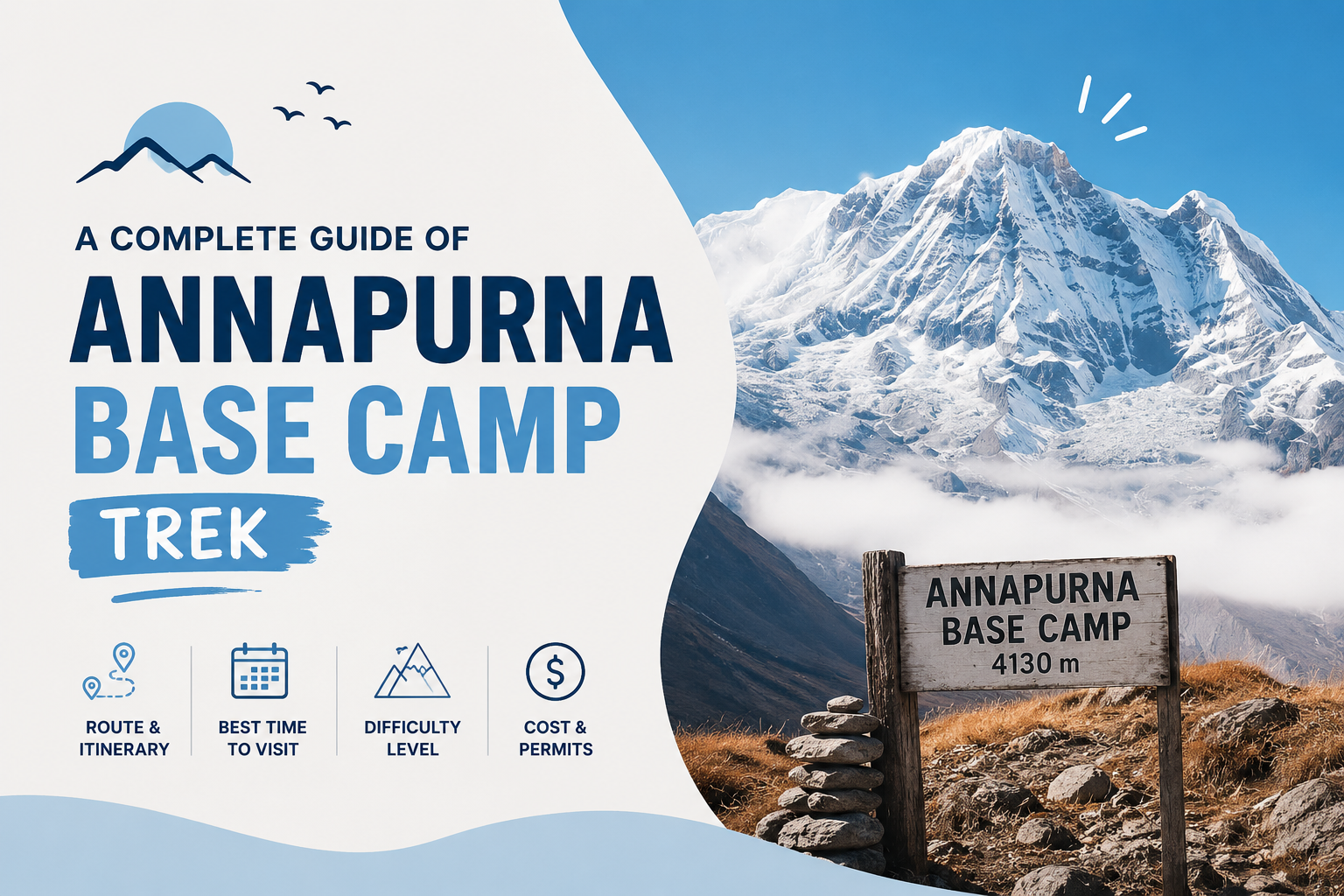
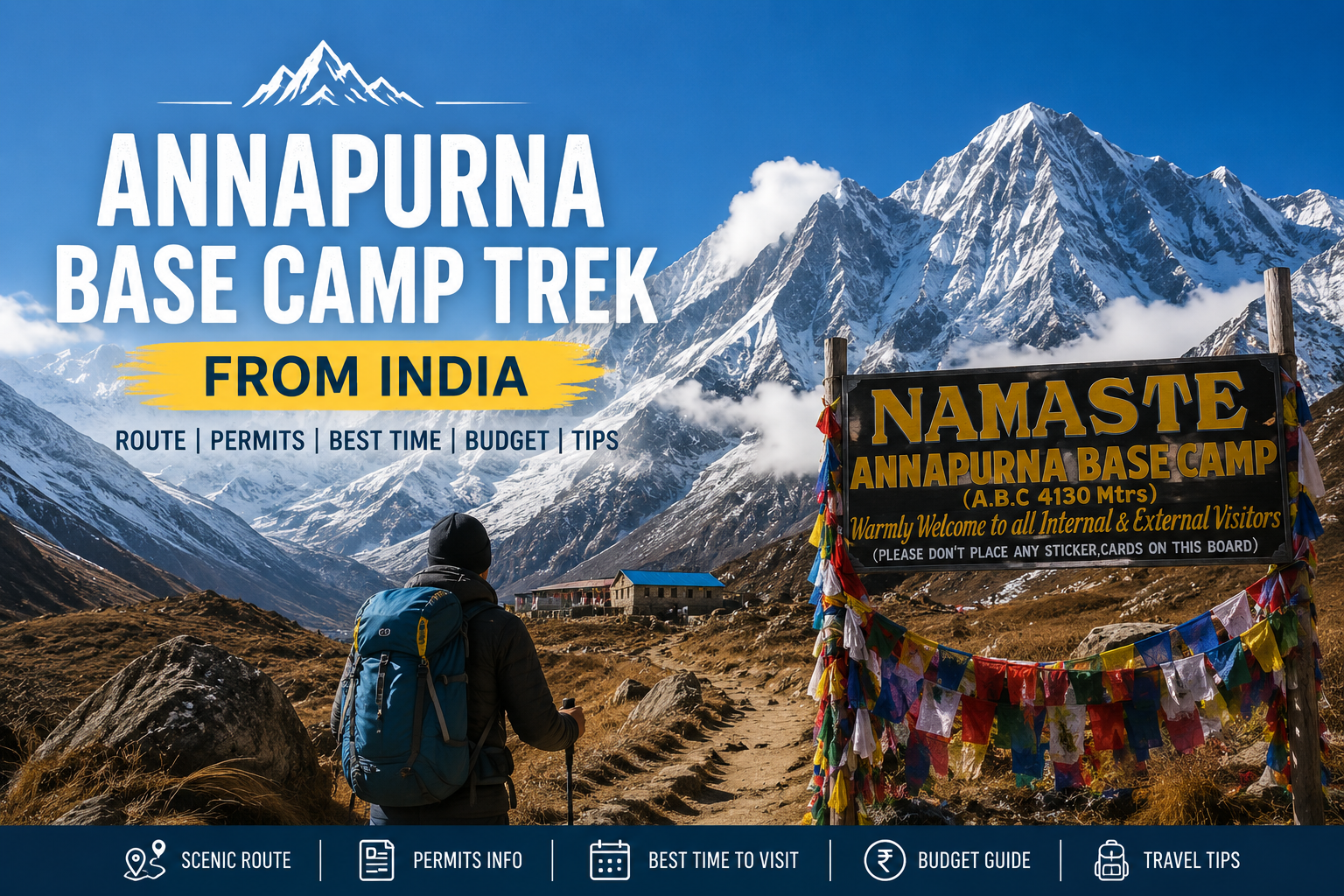
The Annapurna Base Camp Trek from India is one of the most complete trekking experiences available to Indian adventurers — combining high-altitude mountain scenery, rich Gurung and Magar cultural villages, steaming natural hot springs, and a dramatic amphitheatre of peaks that includes Annapurna I, the tenth highest mountain in the world. At 4,130 metres, the base camp sits at an altitude that challenges without punishing, making this trek accessible to fit beginners and deeply rewarding for experienced trekkers.
This guide is written specifically for Indian trekkers planning their first or next Nepal expedition. Every section addresses what Indian travellers actually need to know — from the most convenient entry points and visa process to budget planning in Indian rupees, gear packing in Indian conditions, and the best season windows from an Indian travel calendar perspective. Everything you need is here, laid out clearly and honestly.
Why Indian Trekkers Choose the Annapurna Base Camp Trek
The Annapurna Base Camp trek consistently ranks among the top five trekking destinations in the world, and Indian trekkers make up one of the largest non-Western visitor groups on this trail every year. The reasons are practical as much as they are scenic.
Nepal requires no visa in advance for Indian citizens — entry is granted at the border or airport with a valid Indian government ID. Indian currency is widely accepted in border towns, and the cultural familiarity between India and Nepal makes the transition seamless for first-time international trekkers.
Key reasons Indian trekkers prefer the ABC trek:
- No visa required for Indian nationals — entry on Aadhaar card or Voter ID
- Indian rupees accepted at the Nepal border and in many Pokhara establishments
- Direct flights from Delhi, Mumbai, Kolkata, and Bangalore to Pokhara via Kathmandu
- Trail infrastructure is excellent with teahouse accommodation throughout
- The trek does not require technical climbing skills or specialised equipment
- Cultural familiarity — Hindu and Buddhist traditions are deeply shared
Understanding the Annapurna Base Camp Route
The ABC trek route typically begins from Nayapul or Phedi, accessible by road from Pokhara, and winds through terraced farmland, rhododendron forests, and river valleys before climbing into the high alpine zone.
Classic Route Overview
- Pokhara to Nayapul — Road transfer, 1.5 hours
- Nayapul to Tikhedhunga — Trek begins through Birethanti, moderate trail
- Tikhedhunga to Ghorepani — Steep climb through rhododendron forest
- Ghorepani to Poon Hill — Pre-dawn hike for the most celebrated sunrise viewpoint on the route
- Ghorepani to Tadapani — Through dense forest
- Tadapani to Chhomrong — Entry into the Annapurna Sanctuary approach
- Chhomrong to Dovan to Himalaya Hotel — Deep gorge trail, bamboo and rhododendron
- Himalaya Hotel to Machapuchare Base Camp (MBC) — High alpine terrain begins
- MBC to Annapurna Base Camp — Final dramatic climb into the amphitheatre at 4,130 metres
- Return via same or alternate route — Typically via Jhinu Danda for hot spring soak
Alternative Starting Points
Some trekkers opt to begin from Ghandruk, a scenic Gurung village, which cuts the lower trail section. Others take a jeep from Pokhara directly to Kimche or Siwai, reducing road time and starting higher on the trail. These options are worth discussing with your trek operator based on time available.
How to Reach Pokhara from India
Getting to the trailhead from India involves reaching Pokhara, the gateway city to the Annapurna region. There are three main routes Indian trekkers use.
By Flight
The fastest option is flying from major Indian cities to Tribhuvan International Airport in Kathmandu, then taking a connecting flight or road transfer to Pokhara. Pokhara International Airport now also receives some international connections. Flight time from Delhi to Kathmandu is approximately 1 hour 45 minutes.
Airlines operating this route from India include Air India, IndiGo, and Nepal Airlines. Booking early in the season (January to February for spring departures) secures significantly better fares.
By Train and Road
A budget-friendly option popular with trekkers from eastern and northern India is taking a train to Gorakhpur or Nautanwa, crossing into Nepal at Sonauli border, then taking a bus or private vehicle to Pokhara. The border crossing is straightforward for Indian citizens. Total journey time from Delhi is approximately 12 to 14 hours by overnight train plus 6 to 8 hours road to Pokhara.
By Road from Delhi
Long-distance buses and private vehicles can cover the Delhi to Sonauli stretch. This is the most economical option but the most time-consuming. Best suited for trekkers with flexible schedules.
Permits Required for the Annapurna Base Camp Trek
Two permits are mandatory for the ABC trek. Both are obtained in Pokhara or at designated counters along the trail.
ACAP — Annapurna Conservation Area Permit
- Issued by the Nepal Tourism Board
- Cost: NPR 3,000 per person (approximately INR 1,875 at standard exchange)
- Required for all trekkers entering the Annapurna Conservation Area
TIMS Card — Trekkers Information Management System
- Individual trekkers: NPR 2,000
- Group trekkers: NPR 1,000
- Obtained at the Nepal Tourism Board office in Pokhara or Kathmandu
Indian nationals require their Aadhaar card or Passport for permit processing. No visa stamp is needed but valid photo ID is mandatory. Permits are checked at multiple points along the trail so carry them accessible at all times.
For a thorough breakdown of every logistical detail — from permit counters to teahouse booking strategies — the Complete Guide of Annapurna Base Camp on Mountainiax covers the full planning picture, particularly useful for first-time visitors to Nepal building their itinerary from scratch.
Ideal Itinerary for Indian Trekkers: 12 to 14 Days
Most Indian trekkers have 10 to 15 days of leave to work with. The following itinerary fits a 12-day window including travel days from India.
Sample 12-Day Itinerary
- Day 1 — Fly from India to Kathmandu or Pokhara; rest and acclimatise
- Day 2 — Reach Pokhara, collect permits, gear check
- Day 3 — Drive to Nayapul, trek to Tikhedhunga (1,540 m)
- Day 4 — Trek to Ghorepani (2,860 m)
- Day 5 — Pre-dawn hike to Poon Hill (3,210 m), trek to Tadapani
- Day 6 — Trek to Chhomrong (2,170 m)
- Day 7 — Trek to Dovan (2,600 m)
- Day 8 — Trek to Machapuchare Base Camp (3,700 m)
- Day 9 — Trek to Annapurna Base Camp (4,130 m) — summit day
- Day 10 — Descend to Bamboo or Sinuwa
- Day 11 — Descend to Jhinu Danda, enjoy natural hot springs, continue to Nayapul
- Day 12 — Return to Pokhara, onward travel to India
Rest Day Recommendation
Adding one buffer day at Chhomrong or Dovan is strongly advised for trekkers who have not trekked above 3,000 metres before. Altitude acclimatisation is not optional — it is what separates a successful summit day from a dangerous one.
Cost Breakdown for Indian Trekkers
Budget planning is one of the most searched aspects of the Annapurna Base Camp trek from India, and the good news is that this trek can be completed comfortably without breaking the bank.
Approximate Cost Breakdown (Per Person)
- Flights (India to Kathmandu return) — INR 8,000 to 18,000 depending on city and booking window
- Pokhara transfer — INR 1,500 to 3,000 (bus) or INR 5,000 to 8,000 (flight)
- ACAP + TIMS permits — Approximately INR 3,000 combined
- Teahouse accommodation — INR 300 to 800 per night per person
- Meals on trail — INR 500 to 1,000 per day
- Guide fees — INR 2,000 to 3,000 per day (strongly recommended for first-timers)
- Porter fees — INR 1,500 to 2,500 per day
- Gear and equipment — INR 5,000 to 15,000 if buying in India; rental available in Pokhara
Total estimated budget for 12 days: INR 35,000 to 60,000 per person including flights from Delhi, all permits, accommodation, food, and a guide.
Best Season for Indian Trekkers
Choosing the right season is one of the most critical planning decisions for the ABC trek, and it directly affects trail safety, visibility, and the overall quality of the experience.
The Best Time to Trek Annapurna Base Camp for Indian trekkers aligns conveniently with two leave windows that many working professionals can plan around.
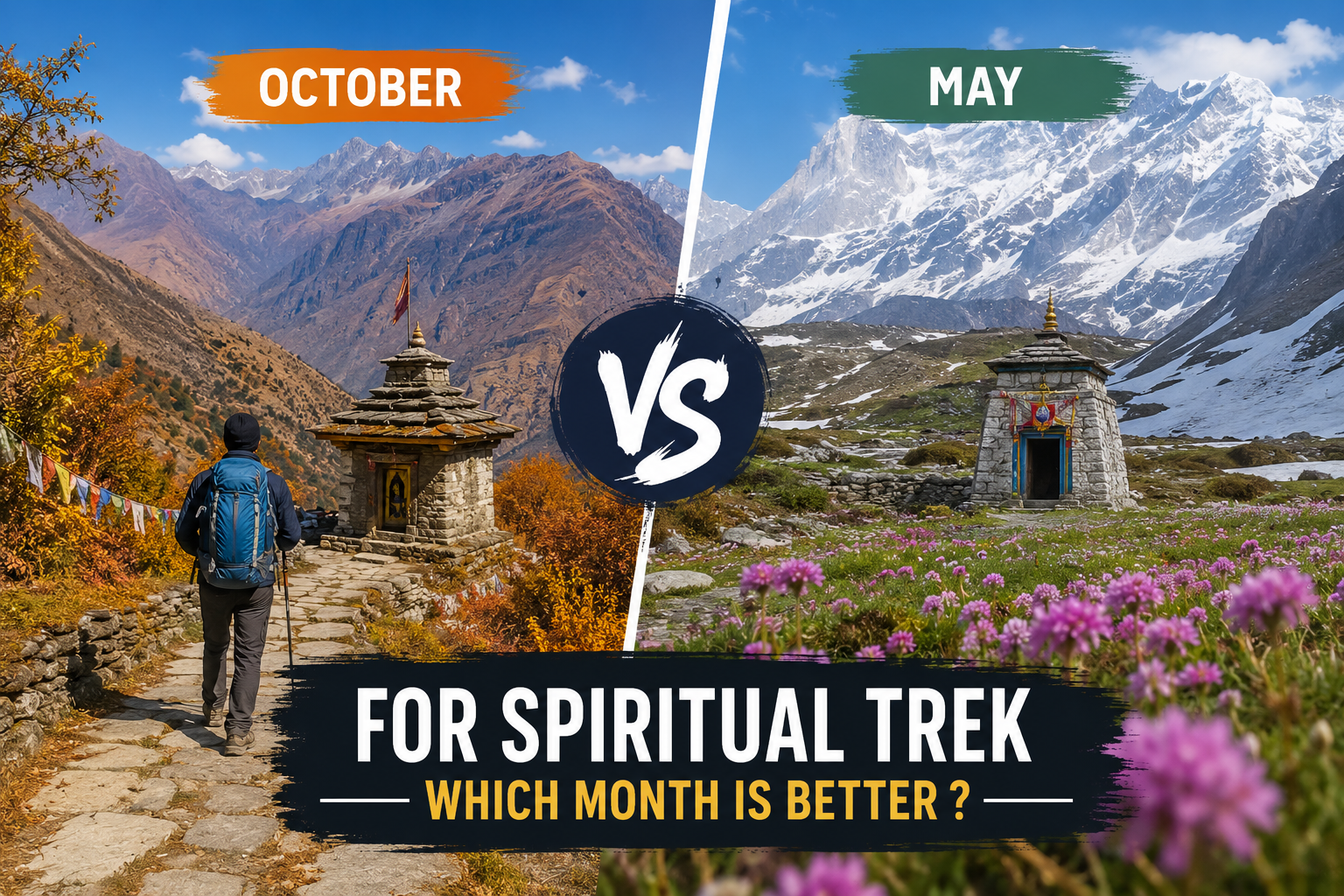
Spring Season: March to May
- Rhododendron forests bloom in vivid red, pink, and white along the trail
- Clear skies and stable weather for the most part
- Visibility at ABC is excellent for mountain views
- Busiest period on trail — teahouses fill up fast, book in advance
- Ideal for trekkers who want colour, warmth, and mountain clarity
Autumn Season: September to November
- Post-monsoon clarity makes this the most celebrated trekking window in Nepal
- Skies are crystal clear, mountain views are sharp and dramatic
- Temperatures are cooler and conditions are stable
- October is the absolute peak month — combine with Dashain and Diwali holidays if schedule allows
- Slightly less crowded than spring at lower elevations
Seasons to Avoid
- June to August (Monsoon) — Heavy rainfall, trail landslides, leeches on lower trail, poor visibility. Not recommended.
- December to February (Winter) — ABC and upper sections may be blocked by snow. Poon Hill is still accessible but full circuit is risky.
What to Pack: India-Specific Gear Advice
Packing for the Annapurna Base Camp trek from India requires accounting for the fact that you are crossing an international border with checked luggage and then switching to a trek pack.
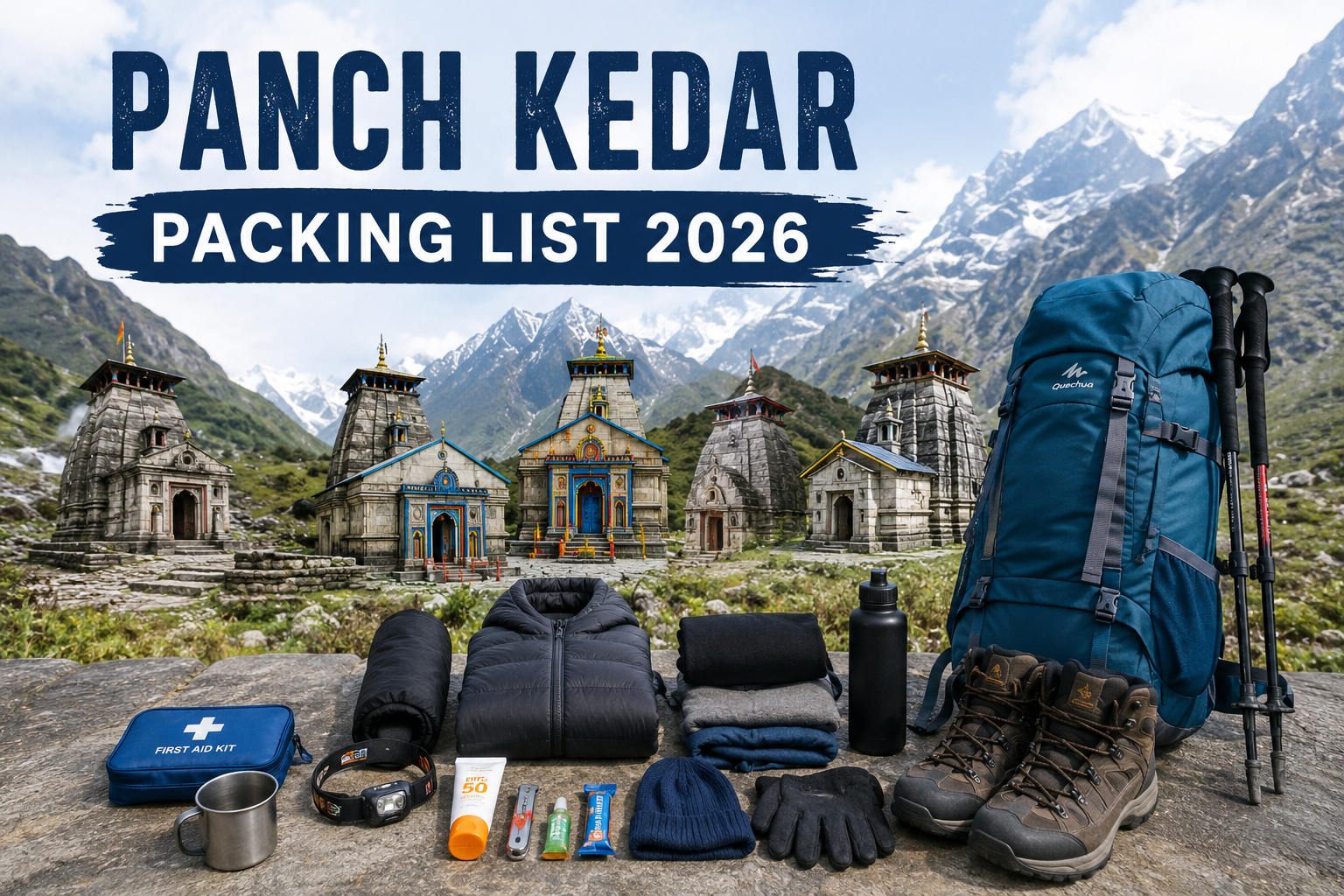
Essential Gear Checklist
- Trekking boots — Waterproof, ankle-supporting; do not break in new boots on the trail
- Layering system — Moisture-wicking base, insulating mid-layer, windproof outer shell
- Down jacket — Essential for evenings at Chhomrong and above; bitterly cold at ABC
- Trekking poles — Critical for descents and knee protection
- Rain gear — Lightweight poncho or hardshell jacket
- Sleeping bag — Rated to minus 5 degrees; teahouses provide blankets but a personal bag adds warmth
- Headlamp — For the Poon Hill pre-dawn start and evening use in teahouses
- Sunscreen SPF 50+ — UV intensity increases significantly above 3,000 metres
- Water purification tablets or filter — Tap and stream water must be treated above Chhomrong
- Snacks from India — Carry chikki, dry fruits, protein bars; trail snacks are expensive at altitude
Where to Buy or Rent Gear in India
Delhi’s Majnu Ka Tilla, Lajpat Nagar, and outdoor stores in Connaught Place stock trekking gear at competitive prices. Pokhara’s Lakeside market also has excellent rental and purchase options for those who prefer to travel light and gear up on arrival.
Hiring a Guide and Porter: Should Indian Trekkers Go Solo?
The Annapurna Base Camp trail is well-marked and heavily trafficked, which means solo trekking is technically possible. However, for Indian trekkers on their first Nepal expedition, hiring a guide is strongly recommended for several reasons.
A licensed guide provides local knowledge of trail conditions, weather changes, and altitude warning signs. They also act as a translator in remote villages, a safety net in emergencies, and a cultural bridge that significantly enriches the experience. A porter reduces physical load and allows trekkers — particularly those above 45 or carrying medical conditions — to conserve energy for the high-altitude sections.
Guides and porters are best hired through registered agencies in Pokhara or through your Indian tour operator if booking a package. Always verify that your guide holds a valid license from the Nepal Tourism Board.
Frequently Asked Questions
1. Do Indian citizens need a visa to trek in Nepal?
No. Indian nationals do not require a visa to enter Nepal. Entry is permitted on a valid Aadhaar card, Voter ID, or Passport. No advance visa processing is needed.
2. What is the best month for the Annapurna Base Camp trek from India?
October is widely considered the best single month. Spring (March to May) is the second-best window. Both offer clear skies, stable weather, and excellent mountain visibility.
3. How fit do I need to be for the ABC trek?
A reasonable level of cardiovascular fitness is required. If you can walk briskly for 5 to 6 hours daily over varied terrain, you are in the right zone. Prior trekking experience above 2,500 metres is an advantage but not mandatory.
4. Is the Annapurna Base Camp trek safe for solo Indian trekkers?
The trail is safe and well-trafficked, but solo trekking is best approached with prior experience. First-time visitors to Nepal are strongly advised to trek with a registered guide.
5. How much does the ABC trek cost from India in rupees?
A full 12-day trip including flights, permits, accommodation, food, and a guide costs approximately INR 35,000 to 60,000 per person from Delhi. Costs vary based on flight origin and travel style.
Conclusion
The Annapurna Base Camp Trek from India is one of those rare journeys that delivers on every promise — dramatic mountain scenery, cultural richness, physical challenge calibrated to human scale, and an ending point that feels genuinely earned. For Indian trekkers, it offers something additional: the familiarity of a neighbouring culture paired with the thrill of a world-class international trail. The logistics are manageable, the costs are reasonable in Indian rupees, and the experience is transformative in a way that stays with you long after the trail ends. With no visa requirement, direct flight connections, and a trail infrastructure that welcomes beginners and rewards experienced trekkers equally, there has never been a better time for Indians to make this journey a reality.
What makes this trek truly special for Indians is the seamless bridge it builds between the familiar and the extraordinary. You carry your chai habits, your festival calendar, and your deep reverence for the Himalayas into a landscape that mirrors all of it back in a distinctly Nepali key. The Annapurna Sanctuary, ringed by ten peaks above 6,000 metres, does not care where you flew in from — it simply asks whether you came prepared, whether you came with respect, and whether you are ready to be genuinely moved. If the answer is yes, this trail is already waiting for you.
With the Annapurna Base Camp Trek 2026 season approaching, now is the perfect time to plan an unforgettable Himalayan adventure. Surrounded by snow-covered peaks, diverse landscapes, and authentic mountain culture, the Annapurna Base Camp Trek offers an experience far beyond an ordinary trek—it becomes a lifetime memory filled with challenge, beauty, and achievement. To make your journey smooth, safe, and well-organised, choose a trusted trekking company for expertly designed trek packages, detailed itineraries, and hassle-free booking assistance.
Visit this page for Trek Packages, Itinerary & Booking.