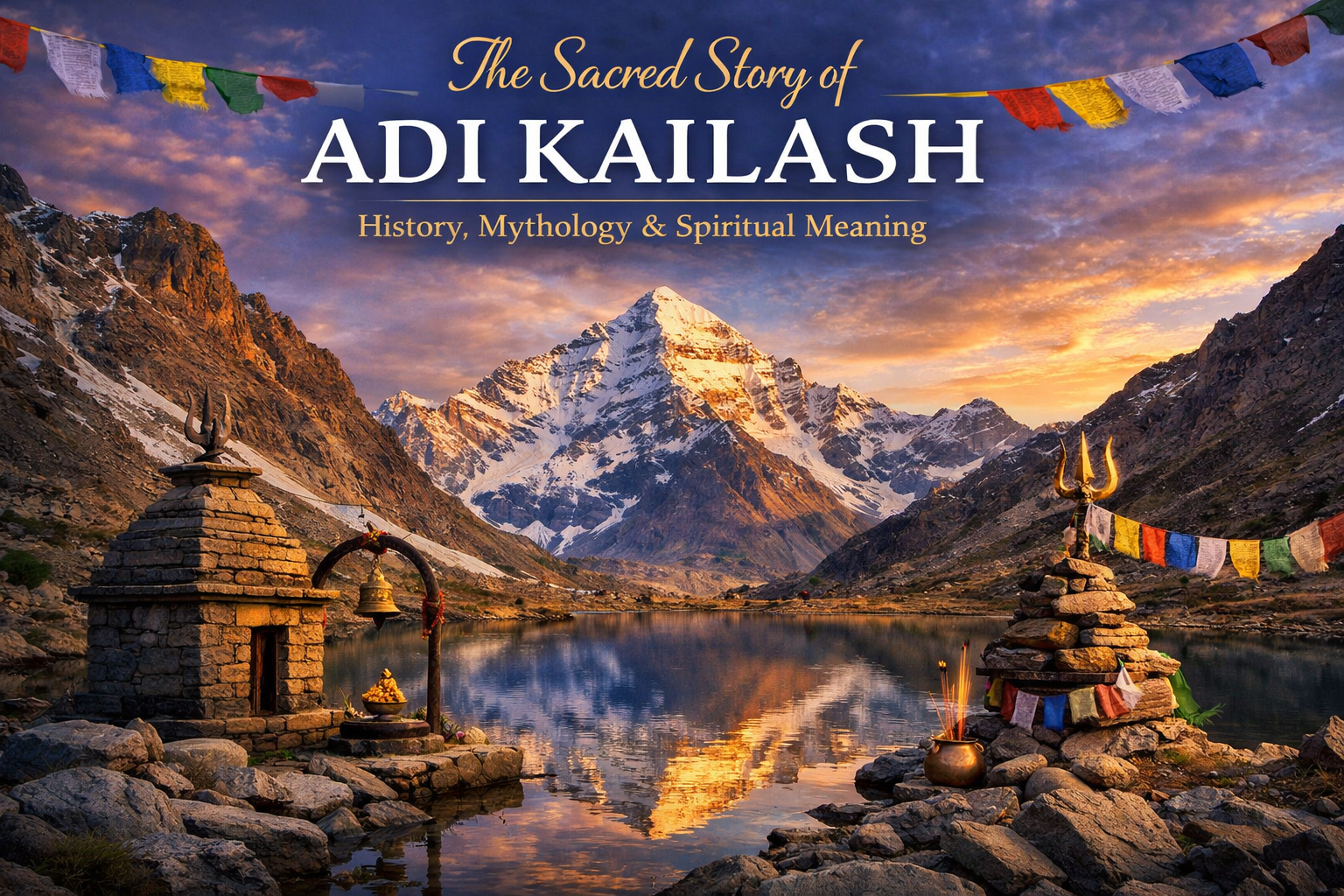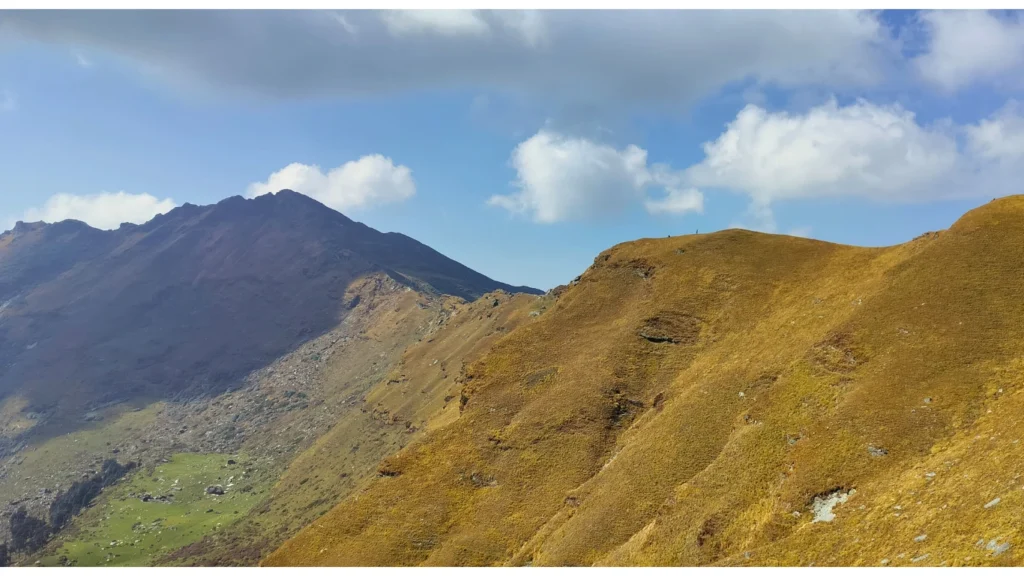
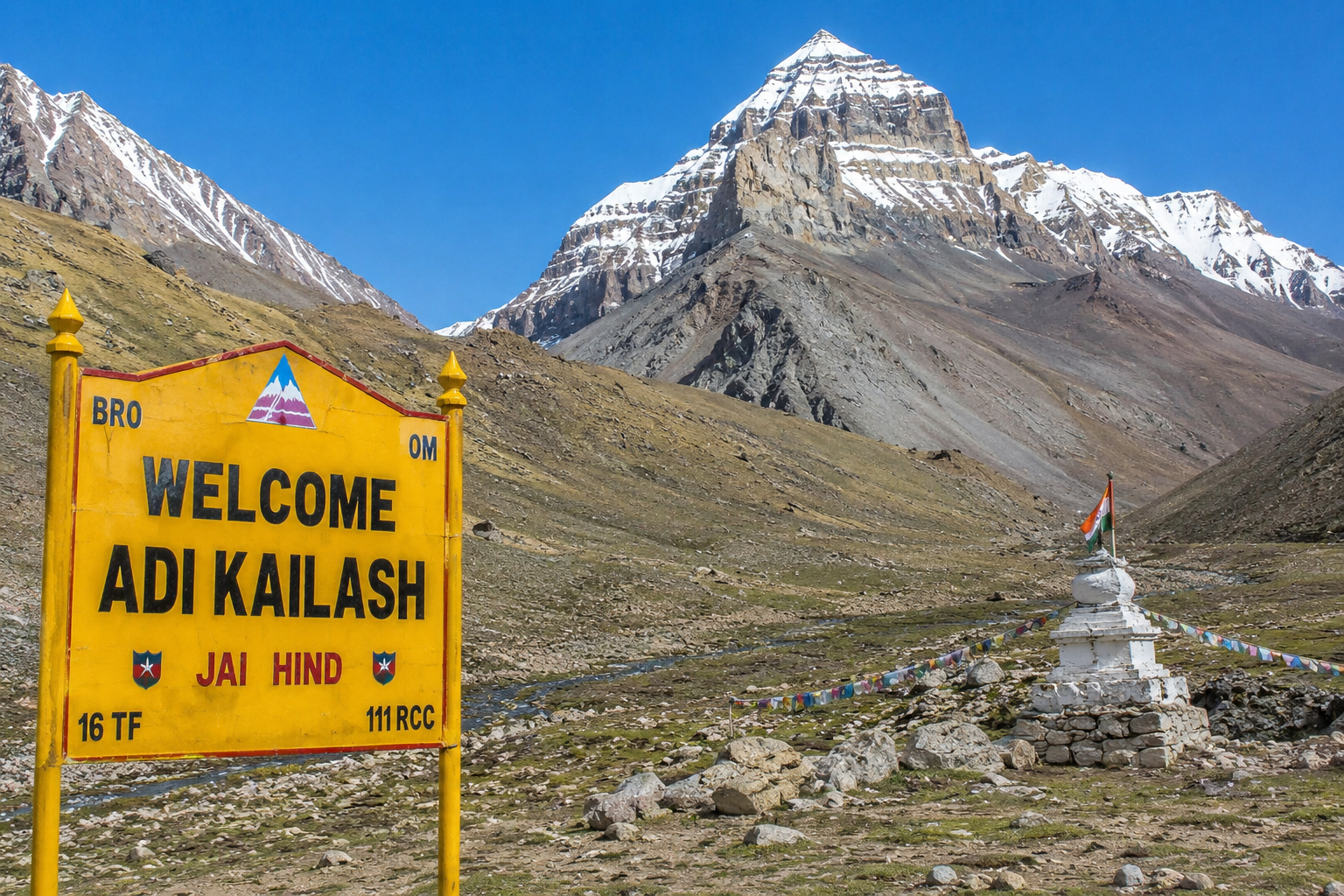
Solo travel to the Himalayas is not just a journey across geography. It is a journey inward. And when that journey leads you to Adi Kailash, the experience transcends the ordinary in ways that few destinations in India can match. Nestled in the Pithoragarh district of Uttarakhand, Adi Kailash is a sacred peak that mirrors the grandeur of Mount Kailash in Tibet, making it a deeply significant pilgrimage for Shaivites and a thrilling adventure for trekkers and solo explorers alike.
What makes this route particularly compelling in 2026 is the improved road connectivity, the streamlined permit process through the Kumaon Mandal Vikas Nigam (KMVN), and the growing infrastructure that now supports independent travellers. More solo pilgrims and adventure seekers are making this trip each year, drawn by the combination of spiritual depth, raw Himalayan landscapes, and the rare sense of solitude that still defines this trail.
This is your definitive Adi Kailash Yatra Solo Travel Guide 2026, covering every aspect from permits and best season to stay options, budget planning, safety tips, and the most rewarding side trips along the way. Whether you are a seasoned trekker or a first-time solo traveller, this guide will help you plan with confidence.
What Is Adi Kailash and Why Does It Matter?
Adi Kailash, also known as Chhota Kailash, sits at an elevation of approximately 6,191 metres in the Himalayan range near the Indo-Tibetan border. The peak is revered as one of the Panch Kedar equivalents in the Kumaon tradition, believed to be the abode of Lord Shiva. The base of the yatra features Om Parvat, a mountain whose snowfields naturally form the sacred symbol “Om,” drawing pilgrims and trekkers from across India and beyond.
Unlike the Mansarovar Kailash route in Tibet, Adi Kailash sits entirely within Indian territory, making it accessible without international travel documentation or the logistical complexities of a foreign journey. This accessibility, combined with its spiritual equivalence in many scriptures, has made it one of the most sought-after Himalayan pilgrimage treks in Uttarakhand.
The route also passes through strikingly beautiful villages like Dharchula, Gunji, Nabling, Jolingkong, and Kuti, each offering a window into the traditional cultures of Bhotiya communities who have inhabited these high-altitude valleys for centuries.
Best Time to Do Adi Kailash Yatra
The Adi Kailash Yatra season typically runs from late May to early October. This window aligns with post-snowmelt conditions and pre-winter accessibility.
Month-by-Month Breakdown
- May to June: The yatra officially opens. Roads are clear, wildflowers bloom across alpine meadows, and the air is crisp. Ideal for those who prefer a quieter experience before peak season rush.
- July to August: Monsoon season brings lush greenery but also landslide risks on mountain roads. If you choose this period, monitor road conditions through the Border Roads Organisation (BRO) updates and local district websites.
- September to mid-October: Widely considered the best window. Skies are clear after the monsoon, visibility of Om Parvat is excellent, temperatures are manageable, and trails are in good condition.
Going outside this window is not advisable for solo travellers. High-altitude trekking in Uttarakhand beyond October risks sudden snowfall and road closures that can strand you for days.
How to Reach Adi Kailash
Adi Kailash is accessible via a scenic road journey through Kumaon, Uttarakhand. Travelers usually reach Kathgodam or Pithoragarh first, then continue through Dharchula, Gunji, and Nabi villages. The route offers breathtaking Himalayan landscapes, cultural experiences, and spiritual significance.
Getting to Dharchula
The journey begins in earnest at Dharchula, a border town that serves as the gateway to the yatra. Your entry route will be:
- By Air: Nearest airport is Pantnagar (approximately 295 km away). From there, hire a taxi or take a bus to Dharchula via Pithoragarh.
- By Train: Kathgodam is the nearest railway station. From Kathgodam, shared taxis and state buses connect to Pithoragarh, from where you continue to Dharchula.
- By Road: Direct buses and shared jeeps run from Delhi, Haldwani, and Almora to Dharchula. The journey from Delhi takes roughly 18 to 22 hours depending on your route and stops.
Once in Dharchula, all further travel toward Gunji and beyond follows the Kailash Mansarovar Yatra road, recently improved and managed partly by BRO.
Dharchula to Jolingkong
The road journey from Dharchula to Gunji covers roughly 90 kilometres through dramatic gorges and river valleys. From Gunji, the yatra branches:
- Gunji to Nabling: 14 km, mostly flat terrain along the Kali River
- Nabling to Jolingkong (base camp): 12 km, gradual ascent with some steep patches
Solo travellers should note that the final stretch to Jolingkong involves altitude gain. Acclimatisation at Gunji for one to two nights is strongly recommended before proceeding.
Permits and Registration for Solo Travellers
This is perhaps the most critical section for independent travellers in 2026. The Adi Kailash Yatra permit process has been significantly streamlined but still requires attention to detail.
Inner Line Permit
Because the route passes close to the Indo-Tibetan border, an Inner Line Permit (ILP) is mandatory. For Indian nationals, this is obtained from:
- The District Magistrate’s office in Pithoragarh
- KMVN offices in major Uttarakhand cities
- Online through the official Uttarakhand government portal
The permit lists each traveller individually, so solo travellers apply independently. Carry multiple photocopies of your permit as checkposts at Tawaghat, Sirkha, and Gunji will require verification.
Additional Documentation
- Valid government-issued photo ID (Aadhaar, passport, or voter card)
- Recent passport-size photographs
- Self-declaration of medical fitness
- Emergency contact details
For solo travellers, it is advisable to register with the local police at Dharchula, who maintain a trekker register. This is not mandatory but significantly improves your safety net.
Accommodation Along the Route
Solo pilgrims will find a mix of KMVN guest houses, dharamshalas, and homestays along the trail. Advance booking through KMVN is strongly recommended in peak season (September), as available beds fill quickly for groups on organised yatras.
Key Stopover Points
- Dharchula: Multiple hotels ranging from budget guesthouses to mid-range options. Good base for a rest day before the yatra.
- Gunji: KMVN Tourist Rest House is the most reliable option. Basic but clean with hot meals available.
- Nabling and Jolingkong: KMVN camps and basic shelters. Sleeping bags are strongly recommended as temperatures drop sharply at night.
- Kuti Village: A detour worth making. Homestays with Bhotiya families offer an authentic cultural experience and warm meals.
Carrying a lightweight tent as backup is a wise choice for solo travellers. Situations like unexpected road closures or full guesthouses at higher camps can leave you without shelter if you depend entirely on fixed accommodation.
Budget Planning for Adi Kailash Yatra Solo
One of the advantages of doing this yatra independently is significant cost savings compared to organised group tours. Here is a realistic breakdown for solo travellers in 2026:
- Transport (Delhi to Dharchula, round trip): Rs 3,000 to 5,000 by bus or shared jeep
- Local transport (Dharchula to Gunji and back, shared vehicle): Rs 1,500 to 2,500
- Inner Line Permit: Rs 600 per person (subject to revision, verify at the time of application)
- Accommodation (8 to 10 nights, KMVN and homestays): Rs 4,000 to 7,000
- Food (dal-chawal, paranthas, local meals): Rs 3,000 to 5,000
- Miscellaneous (porter, medical kit, extra gear rental): Rs 2,000 to 3,000
Total estimated budget for a solo traveller: Rs 14,000 to 22,000 for a 10 to 12-day yatra. This is considerably more economical than the cost of travelling via a helicopter package. Many travellers who explore the Adi Kailash Yatra by Helicopter option do so for the return journey to save time, especially when combining the yatra with professional or family commitments.
Trekking the Adi Kailash Route: What to Expect Day by Day
The Adi Kailash trek is a remarkable Himalayan journey through remote villages, high-altitude valleys, and sacred landscapes. Each day brings unique experiences, from scenic drives and moderate treks to spiritual sites, culminating in breathtaking views of Adi Kailash and Parvati Sarovar.
Day 1 to 2: Arrival in Dharchula and Acclimatisation
Use these days to complete permit formalities, rest, and explore Dharchula’s market. Pick up any last-minute supplies here, as options become extremely limited beyond this point.
Day 3: Dharchula to Gunji
A road journey of approximately 90 km. The route follows the Kali River, offering stunning views of the Himalayan foothills. Reach Gunji by afternoon and check into the KMVN rest house. Spend the evening acclimatising and hydrating well.
Day 4: Acclimatisation at Gunji
Do not skip this day. Walk around the village, explore the local market, and let your body adjust to the altitude (roughly 3,300 metres). Short walks around Gunji help prepare your lungs for higher altitudes ahead.
Day 5: Gunji to Nabling
A 14 km walk through open terrain along the river. The landscape here is almost lunar in appearance, with vast rocky expanses interrupted by patches of green. Nabling sits at around 3,600 metres.
Day 6: Nabling to Jolingkong
This is the highlight trek day. The 12 km route climbs steadily to Jolingkong (approximately 4,600 metres), where the Adi Kailash peak first comes into view. The reflection of Adi Kailash in the Jolingkong lake is one of the most photographed sights in the Kumaon Himalayas.
Day 7: Jolingkong Darshan and Om Parvat View
This is the spiritual heart of the yatra. Circumambulate the Parvati Sarovar, attend morning prayers, and make your way to the Om Parvat viewpoint. Clear skies in September and October offer exceptional visibility of the natural Om formation.
Day 8 to 10: Return Journey
Retrace your steps to Dharchula over two to three days, with optional stops at Kuti Village. Many solo travellers extend their stay at Kuti to interact with local families and explore the surrounding meadows.
For those who prefer not to repeat the same road, this is where an Adi Kailash Yatra by Helicopter option for the descent becomes attractive, allowing you to cover the return journey in under two hours while fitting more into a limited travel window. The helicopter route also gives aerial perspectives of Om Parvat that are otherwise impossible to access on foot.
If you are planning your trip and want a detailed breakdown, our comprehensive guide on Adi Kailash Yatra Cost 2026 covers everything from transport and stays to optional add-ons and group versus solo expense comparisons.
Essential Gear for Solo Adi Kailash Trekkers
Packing right is non-negotiable when you are travelling solo at high altitude with no one to borrow from.
Must-Have Items:
- Layered thermal clothing suitable for sub-zero nights
- Waterproof trekking boots with ankle support
- Trekking poles (essential for the Jolingkong ascent)
- Personal first-aid kit with altitude sickness medication (Diamox, Dexamethasone)
- Water purification tablets or a UV pen
- Compact sleeping bag rated to at least -10 degrees Celsius
- Headlamp with extra batteries
- Offline maps downloaded on your phone (network is extremely limited beyond Dharchula)
- High-calorie energy snacks (dry fruits, protein bars, glucose)
- Emergency whistle and reflective gear
A lightweight satellite communicator like the Garmin inReach Mini is a worthy investment for solo trekkers in remote Himalayan zones where no mobile signal exists.
Safety Tips for Solo Travellers
Solo travel can be rewarding, but preparation is essential. Research your destination, share your itinerary with trusted contacts, stay aware of your surroundings, secure valuables, and follow local guidelines. Prioritizing safety helps ensure a smooth, enjoyable, and confident travel experience throughout your journey.
Altitude Sickness Awareness
Above 3,500 metres, the risk of Acute Mountain Sickness (AMS) increases significantly. Symptoms include headache, nausea, dizziness, and shortness of breath. The rule is simple: if you feel worse, descend. Do not attempt to push through AMS symptoms alone without telling someone.
Communication and Check-ins
- Register at every police checkpost along the route
- Share your daily plan and expected arrival times with a contact at home
- BSNL has the best network coverage in this region, though it is unreliable beyond Gunji
Wildlife and Trail Awareness
The Adi Kailash corridor passes through areas that are home to snow leopards, Himalayan black bears, and various bird species. Do not leave food unsecured at campsites and make noise on the trail to avoid startling wildlife.
Respect Local Culture
Bhotiya communities along this route have distinct traditions, dietary practices, and sacred sites. Ask before photographing locals or their homes. Dress modestly, particularly in village areas and near religious sites.
Combining Adi Kailash with Om Parvat and Kuti Village
The Adi Kailash route offers two excellent extensions for those with extra days.
Om Parvat is accessible as a side trip from Nabling via the Nabhidhang viewpoint. The natural snow formation that creates the Om symbol appears most clearly between September and October. Arriving at sunrise dramatically improves your chances of spotting it without cloud cover.
Kuti Village, one of the highest permanently inhabited villages in India, is located roughly 7 km from Gunji. The village is the ancestral home of the Bhotiya traders who historically conducted cross-border trade with Tibet. Walking through Kuti feels like stepping into a living museum of Himalayan culture.
If your time allows, and your fitness supports it, consider a full 12 to 14-day itinerary that includes an acclimatisation buffer day at Gunji, a full day at Jolingkong, an Om Parvat viewpoint visit, and at least half a day in Kuti.
Frequently Asked Questions
1. Can I do Adi Kailash Yatra solo without a guide?
Yes, solo travel is permitted on this route and many experienced trekkers complete it independently. However, hiring a local guide from Dharchula is strongly advisable for first-timers, particularly for the Jolingkong stretch. A guide provides navigation support, cultural context, and an additional safety layer in case of emergencies.
2. Is Adi Kailash Yatra safe for solo female travellers?
The route is considered relatively safe for solo female travellers, particularly in comparison to more isolated Himalayan routes. The presence of KMVN rest houses and police checkposts provides a structured safety framework. Connecting with other travellers in Dharchula to form informal groups for the higher sections is a commonly adopted and sensible approach.
3. How difficult is the Adi Kailash trek physically?
The trek is rated moderate to challenging. The distances are manageable (12 to 14 km per day maximum), but the altitude gain and thin air make it demanding. A reasonable baseline fitness level — comfortable with 5 to 7 km walks on hilly terrain — is adequate preparation.
4. What is the permit fee for Adi Kailash Yatra in 2026?
The Inner Line Permit fee is approximately Rs 600 for Indian nationals as of current guidelines. Fees are subject to annual revision by the Uttarakhand government. Always verify current rates at the DM office in Pithoragarh or through the official KMVN website before travel.
5. Can I combine Adi Kailash with the Kailash Mansarovar Yatra?
They are separate routes. Adi Kailash is entirely within India, while Kailash Mansarovar involves crossing into Tibet. They can be planned as back-to-back trips in the same season if your schedule allows, but require separate permits and logistics.
Final Thoughts
Adi Kailash is not a destination that shouts for attention. It earns its reverence quietly, through the sheer scale of its peaks, the devotion of those who walk its ancient trails, and the rare stillness that only the high Himalayas can offer. For solo travellers willing to prepare well and travel responsibly, this yatra offers one of the most profound experiences available on Indian soil in 2026.
If you are ready to begin planning, our team at Mountainiax has curated detailed resources to support every stage of your journey. For a complete understanding of what the trip will cost you end to end, explore our dedicated guide on Adi Kailash Yatra Cost 2026, which breaks down every expense category so you can plan without surprises.
With the Adi Kailash Yatra season approaching, it’s time to plan a journey that blends spirituality with raw Himalayan adventure. From sacred lakes to the divine presence of Adi Kailash, every moment feels profound and transformative. If you seek purpose beyond travel, this is your path.
Visit this page for Yatra Packages, Itinerary & Booking.