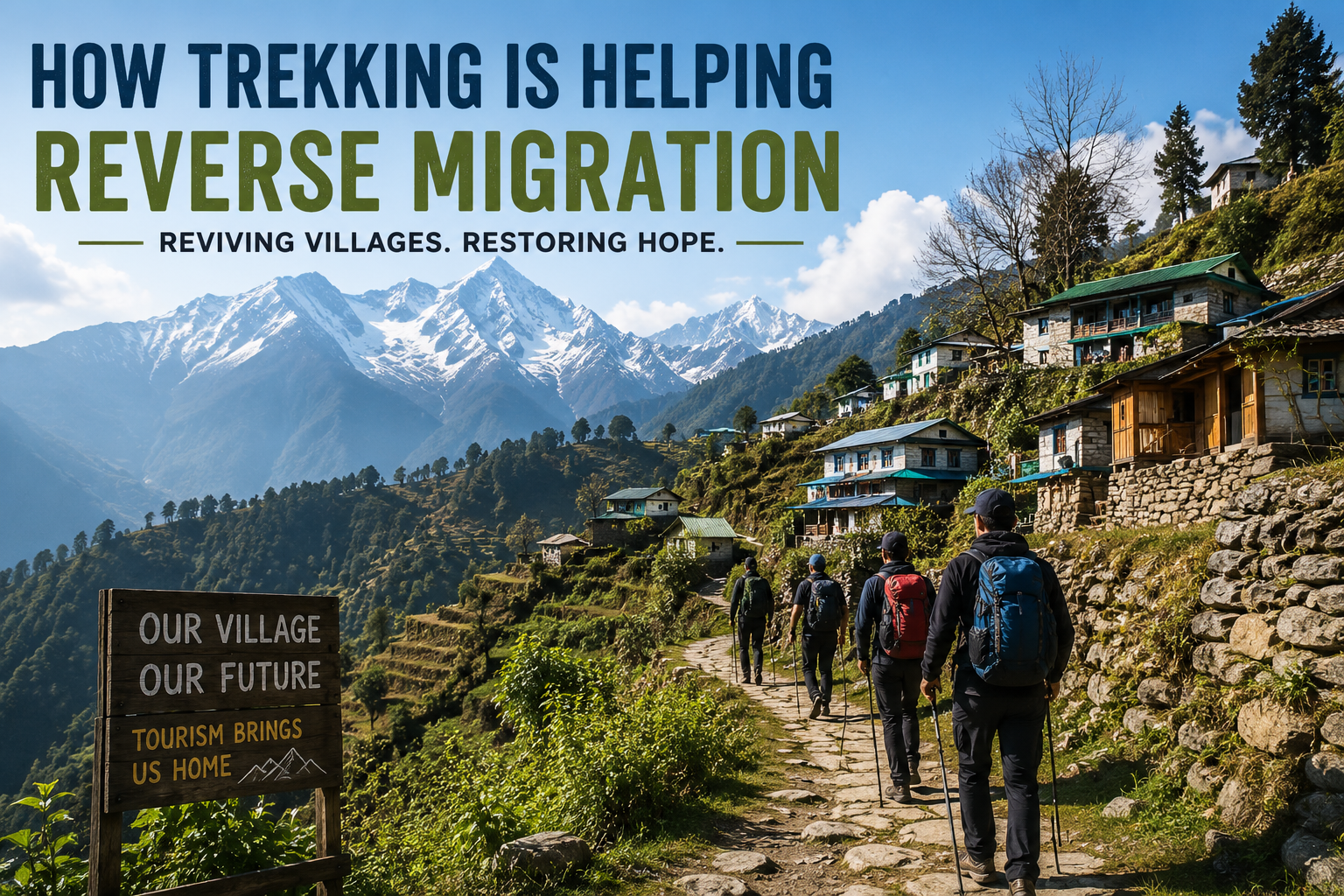
For decades, many Himalayan villages, especially in Uttarakhand, have faced migration as residents left in search of better jobs and opportunities. Limited employment and declining agricultural income resulted in shrinking populations and, in some cases, abandoned villages.
Today, its is becoming an important story across the Himalayas. Trekking tourism is creating local employment through homestays, guiding, portering, transportation, and small businesses, allowing many families to build sustainable livelihoods without leaving their villages.
This article explores how trekking is helping reverse migration, the opportunities created by trekking tourism, and why responsible travel is playing a growing role in revitalizing Himalayan communities.
What Is Reverse Migration in the Himalayan Context?
Reverse migration refers to people returning to their native villages after spending years living and working in cities. In Uttarakhand, this trend has gained momentum as more families discover sustainable livelihood opportunities in their hometowns.
Several factors are contributing to this shift:
- Tourism-driven employment: Trekking has created jobs in guiding, homestays, portering, transportation, and local hospitality.
- Return after COVID-19: The pandemic prompted many migrants to return home, with some choosing to build businesses instead of moving back to cities.
- Growing rural entrepreneurship: Local residents are now earning income by offering authentic trekking and cultural experiences.
As trekking tourism expands, it is becoming a practical way to support local economies and encourage more people to stay or return to Himalayan villages.
Why Are Himalayan Villages Emptying Out in the First Place?
Before understanding the solution, it helps to understand the scale of the problem. Uttarakhand’s Rural Development and Migration Prevention Commission has flagged some sobering figures.
Key Drivers of Out-Migration in the Himalayas
| Driver of Out-Migration | Impact on Himalayan Villages |
| Limited Employment Opportunities | Youth unemployment in Uttarakhand is around 20%, with many graduates unable to find suitable jobs locally, leading to migration to urban areas. |
| Declining Rural Economy | Traditional farming and small businesses often generate insufficient income, prompting younger generations to seek stable livelihoods elsewhere. |
| Poor Access to Essential Services | Limited access to quality education, healthcare, and infrastructure has contributed to migration from many remote villages. |
| Village Depopulation | Nearly 1,800 villages in Uttarakhand have become largely vacant, reflecting decades of continuous out-migration. |
| Difficult Mountain Agriculture | Steep terrain, fragmented landholdings, and low agricultural productivity make farming economically challenging for most households. |
| Climate Change Impacts | Glacial retreat, erratic rainfall, water scarcity, and increasing landslide risks have made agriculture and rural livelihoods even more uncertain. |
| Real-World Example | Villages such as Boundil in Pauri district have witnessed severe depopulation, highlighting the urgent need for sustainable livelihood opportunities such as trekking tourism. |
How Trekking Tourism Is Bringing People Back to the Hills
Trekking tourism is creating sustainable livelihoods by turning Uttarakhand’s natural landscapes into economic opportunities without large-scale industrial development.
Homestays Are Creating Local Income
Community-run homestays are helping families earn directly from tourism by offering accommodation, traditional food, and local hospitality. In districts like Chamoli, many households have diversified beyond agriculture, with tourism-linked income increasing by an estimated 30–40%. For many families, this additional income makes staying in their villages a more viable long-term choice.
Guiding, Portering, and Local Employment
- Creates direct employment opportunities for local residents, reducing the need for urban migration.
- Provides jobs for trekking guides, porters, mule handlers, cooks, and campsite staff.
- Generates reliable seasonal and year-round income through trekking tourism.
- Develops skills in guiding, first aid, hospitality, and outdoor safety.
- Preserves local culture by involving residents in visitor experiences.
- Encourages experienced trekking professionals to train younger generations.
- Supports sustainable livelihoods and contributes to reverse migration in Himalayan villages.
Reviving Culture, Crafts, and Local Cuisine
Tourism-driven demand is also breathing life back into traditions that were fading. Cultural tourism is enabling the revival of traditional crafts and festivals, leading to enhanced prestige for local communities and their heritage. Dishes like Jhangora kheer and Manduva roti, once at risk of being forgotten as younger generations moved away, are now finding fresh demand among trekkers curious about authentic Himalayan food.
Real Villages, Real Change: Case Examples from Uttarakhand
Across Uttarakhand, trekking tourism is creating sustainable livelihoods and supporting reverse migration. In Munsiyari, Dharchula, Niti & Nelang Valleys, and Chamoli, trekking has generated jobs for local guides, porters, homestay owners, transport providers, and small businesses. Community-based tourism is helping residents earn locally, preserve their culture, and reduce dependence on migration to cities. These examples demonstrate how responsible trekking can strengthen mountain economies and support long-term village development.
Government Policies Supporting Trekking-Led Reverse Migration
- Village-Based Tourism: Uttarakhand promotes village tourism to create local jobs and support reverse migration.
- Adventure & Trekking Economy: Policies encourage employment in trekking, hospitality, guiding, and homestays.
- Vibrant Village Programme: Infrastructure upgrades and tourism development are revitalizing border villages.
- Homestay Promotion: Government support helps local families generate sustainable tourism income.
- Reviving Ghost Villages: The state’s “ghost villages to host villages” initiative aims to rebuild rural economies through sustainable tourism.
The Role of Responsible Trekking Companies in Sustaining This Shift
Policy alone doesn’t move the needle without operators who actually route their business through these villages. This is where responsible trekking companies play a genuine role, not by simply passing through, but by structuring itineraries around local homestays, hiring village-based guides, and paying fair wages to porters and cooks.
What responsible trekking operators typically prioritise:
- Booking accommodation through registered local homestays instead of outside-owned lodges wherever possible.
- Hiring guides, porters, and cooks from the villages closest to the trailhead.
- Sourcing meals and supplies locally to keep spending within the community.
- Educating trekkers on Leave No Trace principles to protect the same terrain that sustains local income.
- Supporting fixed departure treks that generate predictable, repeat income rather than one-off visits.
For anyone planning a trip, choosing operators who follow these practices does more for a village’s long-term future than the price difference on a booking form ever will. If you’re comparing the Best Treks in Uttarakhand, it’s worth asking any operator directly how much of your trek cost actually reaches the village you’re passing through.
Challenges That Could Undo This Progress
Trekking tourism has created new opportunities, but its long-term impact depends on sustainable development. Key challenges include:
- Unregulated tourism can damage fragile ecosystems and local culture.
- Rising land prices in districts like Nainital, Dehradun, and Almora have made property less affordable for local residents.
- Uneven tourism revenue, where larger external businesses often benefit more than local homestays and guides.
- Seasonal overcrowding on popular trekking and pilgrimage routes puts pressure on infrastructure.
- Infrastructure gaps, including limited healthcare, internet, and education, continue to drive migration.
Studies on the Garhwal region suggest that tourism can support reverse migration only when combined with strong infrastructure, skill development, and year-round livelihood opportunities.
How Trekkers Can Directly Support Reverse Migration
Every trekker who books a Himalayan trail has more influence over this outcome than they might realise. Small, deliberate choices during trip planning compound into meaningful local impact.
Practical ways to make your trek count:
- Choose homestays over hotel chains whenever an itinerary allows it, especially in villages near the trailhead.
- Ask where your guides and porters are from. Locally hired staff means your trekking fee stays within the community you’re visiting.
- Buy local produce and crafts instead of packaged goods carried in from cities.
- Travel in the shoulder season where possible, spreading income across more months instead of concentrating it into a short peak window.
- Respect trail and campsite rules, since environmental damage directly threatens the tourism income these villages now depend on.
- Share honest reviews of homestays and local guides online, since visibility genuinely drives future bookings for small operators without marketing budgets.
None of these steps require extra effort or cost. They simply redirect spending toward the people the entire reverse migration effort is meant to support.
The Road Ahead: Building a Sustainable Trekking Economy in the Himalayas
The next phase of this story depends on whether growth stays balanced. Sustainable local jobs will require continued investment in climate-resilient practices, improved value chains, decentralised renewable energy, and mountain-friendly tourism models run by local cooperatives, alongside the digital skills needed for remote work. Trekking tourism can carry much of this weight, but only if growth stays distributed across many small operators and homestays rather than concentrated in a handful of large resorts.
There’s also a broader lesson worth borrowing from neighbouring regions. Community-owned lodge networks along established Treks in Nepal corridors have proven that decades of steady, locally anchored tourism income can outlast short-term booms far better than large-scale resort development ever does. Uttarakhand’s homestay and Vibrant Village initiatives appear to be moving in that same direction, adapted to its own valleys and communities.
Conclusion
Trekking alone won’t solve two decades of Himalayan out-migration, but it’s proving to be one of the few forces genuinely pulling people back to the hills. Every homestay booking, every local guide hired, and every rupee spent in a village instead of a city hotel chain adds up to a real, measurable shift. The path forward depends on keeping that growth fair and locally rooted, so the mountains that once emptied out can start filling back in, one trek at a time.
Choose Mountainiax, the best trekking agency in Uttarakhand, for expert guidance, safe routes, and unforgettable Himalayan adventures. Book your trek today and explore with confidence.