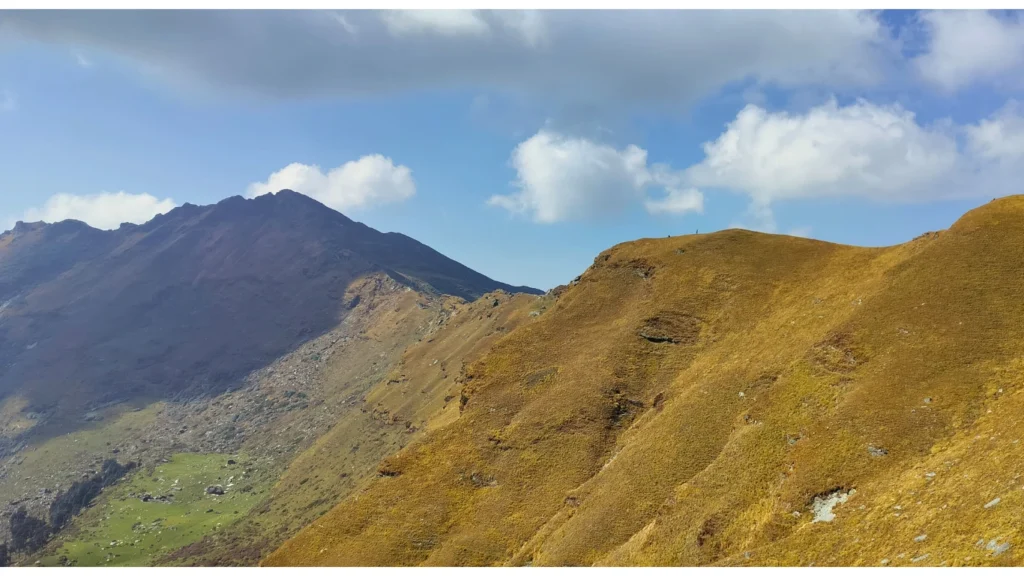
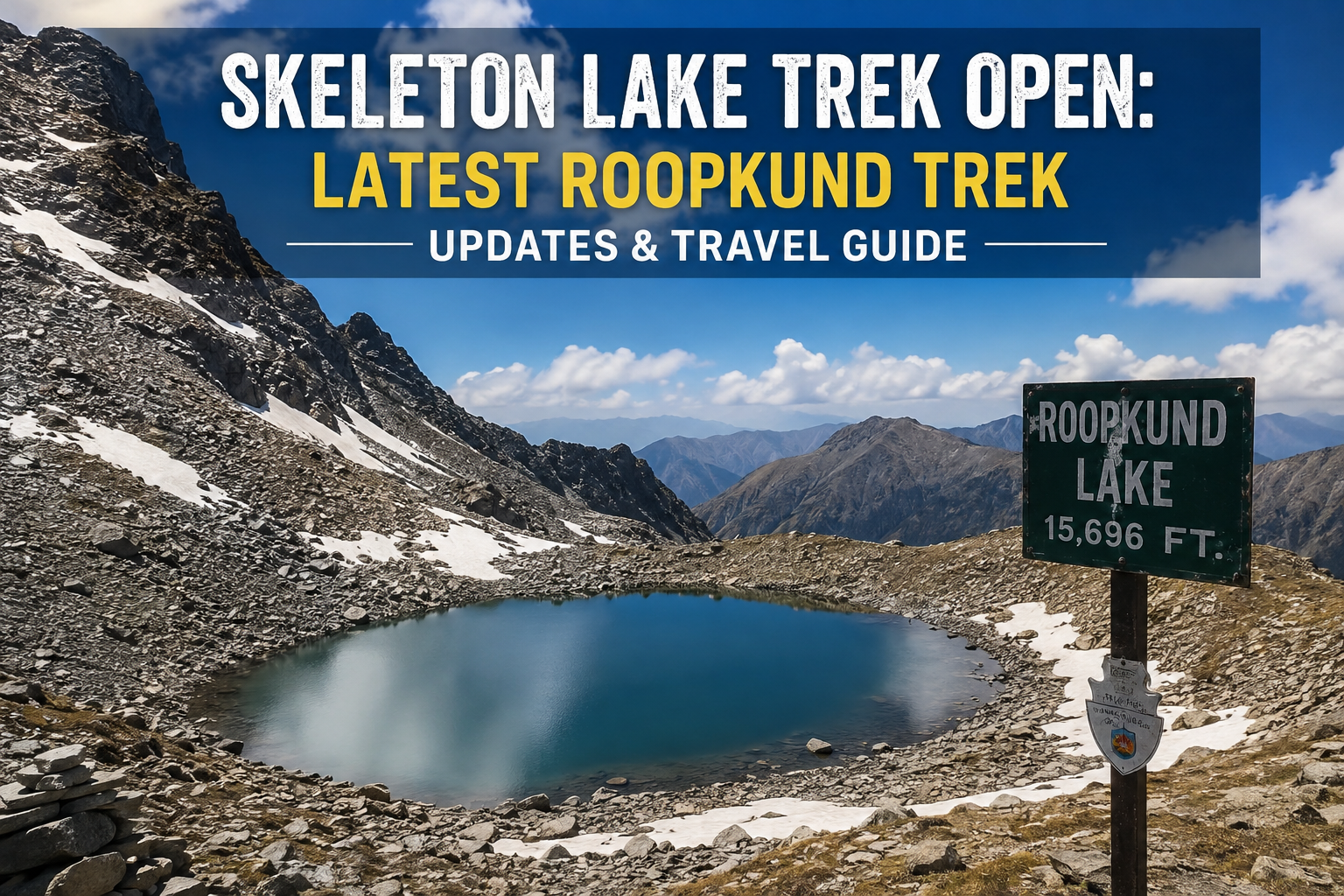
After eight long years, one of India’s most iconic high-altitude treks is finally back on the map. The Roopkund Trek, popularly known as the Skeleton Lake Trek, has officially reopened for trekkers in 2026, ending a prolonged closure that kept this Himalayan legend off-limits since 2018.
If you have had Roopkund on your bucket list for years — waiting, checking trek forums, hoping for an update — this is the news you have been waiting for. The trail to the mysterious glacial lake ringed by centuries-old human skeletons is open again, and trek operators across Uttarakhand are already scheduling fresh batches.
This guide covers everything you need to know before you book: why the trek was closed, what changed, the complete itinerary, difficulty level, best season, and the safety rules every trekker must now follow. Whether you are a first-timer or a repeat Himalaya trekker, here’s your complete, updated Roopkund travel guide.
Roopkund Trek Reopens After 8 Years: What’s Changed in 2026
In August 2018, the Uttarakhand High Court banned overnight camping on alpine meadows, locally called bugyals, across the state, to protect these fragile grasslands from unregulated tourism. The problem for Roopkund trekkers was that Bedni Bugyal, one of the largest and most scenic meadows in Asia, is also a critical acclimatisation campsite on the route. Without the ability to camp there, operators could not run the expedition safely, and Roopkund was effectively closed for nearly eight years.
On 20 July 2026, the Supreme Court of India set aside the bugyal camping ban, clearing the way for regulated camping to resume in Uttarakhand’s high meadows. Trekking companies wasted no time reopening their Roopkund itineraries, and the trail — largely untouched by crowds for almost a decade — is reportedly in excellent condition.
This isn’t a newly “discovered” trek. Roopkund has a long trekking history, dating back to when organised trekking companies in India first began running it in the late 2000s. What’s new is simply that access has been restored after a long legal gap.
Roopkund Trek at a Glance
Here are the essential facts for anyone planning the trek in 2026.
| Detail | Information |
| Also known as | Skeleton Lake Trek, Mystery Lake Trek |
| Location | Chamoli district, Garhwal Himalayas, Uttarakhand |
| Base camp | Lohajung |
| Max altitude | 15,750 ft (4,800 m) at Roopkund; Junargali ridge goes up to roughly 16,500 ft |
| Trek duration | 7–8 trekking days (8–9 days including travel to and from Rishikesh) |
| Trekking distance | Approximately 47–55 km round trip |
| Difficulty | Moderate to Difficult |
| Best season | May–June and September–October |
| Current status (2026) | Open, following the Supreme Court’s order lifting the bugyal camping ban |
| Nearest railhead/airport | Rishikesh (rail) / Jolly Grant Airport, Dehradun (air) |
Keep in mind that distances and altitude gains can vary slightly by a few hundred metres depending on the operator’s exact route and campsite choices, along with seasonal trail conditions.
Why Is Roopkund Called the Skeleton Lake?
Roopkund is a small, shallow glacial lake tucked below the Trishul massif, and it owes its fame almost entirely to what lies beneath its surface. When the snow melts each year, the lakebed reveals hundreds of ancient human skeletal remains, first reported by a forest ranger back in 1942.
For decades, the skeletons fuelled folklore. One enduring legend ties them to the sacred Nanda Devi Raj Jat Yatra, a pilgrimage held once every twelve years, in which a king’s royal procession is said to have angered the goddess Nanda Devi with their extravagance and were struck down by a sudden hailstorm near the lake. Trekkers curious about this pilgrimage route can dig deeper in our piece on Nanda Devi and her significance in Himalayan pilgrimage culture.
Modern science tells a more layered story. Radiocarbon dating and DNA analysis show the skeletons don’t belong to one event or population — researchers have identified distinct genetic groups from different eras, including one likely killed by a violent 9th-century hailstorm, and a separate, genetically distinct group dated to a much later period. The mystery isn’t fully solved, which is exactly what keeps drawing trekkers, historians, and researchers back to this remote corner of the Garhwal Himalayas.
Is the Skeleton Lake Trek Open in 2026?
The Roopkund Trek, popularly known as the Skeleton Lake Trek, has long attracted trekkers because of its high-altitude landscape, mysterious human remains and dramatic views of the Himalayan peaks. However, access to Roopkund is subject to government regulations and restrictions designed to protect the region’s fragile ecosystem and heritage.
If you are planning a visit, it is important to distinguish between the Roopkund trekking route being accessible and reaching Roopkund Lake itself being officially permitted. These are not necessarily the same thing.
Before making travel arrangements, trekkers should check the latest information from Uttarakhand authorities, forest officials and authorised local trekking operators. Regulations, permitted routes and access conditions can change depending on environmental concerns, weather and administrative decisions.
What Trekkers Should Check Before Planning
- Current Roopkund access status
- Whether trekking to the lake itself is permitted
- Forest and trekking permissions
- Current trail and weather conditions
- Restrictions within the Nanda Devi Biosphere Reserve
- Requirements from local authorities or registered operators
- Alternative routes if Roopkund access is restricted
Important: Avoid relying solely on old blog posts or social media claims about the trek being open. Verify the current status before booking transport, accommodation or a trekking package.
Best Time to Trek Roopkund in 2026
Roopkund can be trekked in two distinct windows, each offering a different experience.
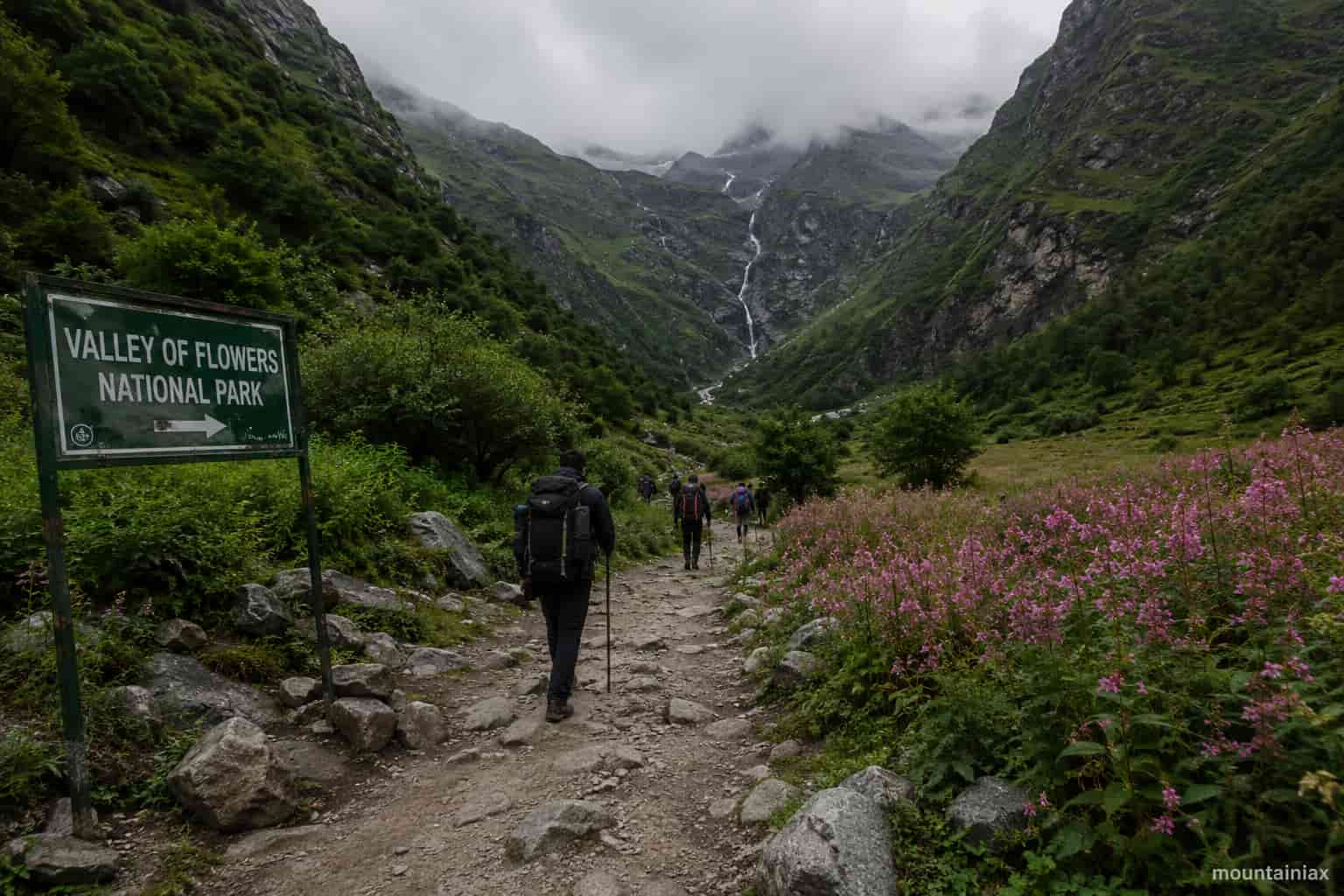
May to June (Summer): This is peak season for lush green meadows and blooming wildflowers across Ali and Bedni Bugyal. Snow often lingers at higher altitudes near Bhagwabasa and Roopkund well into June, giving trekkers a striking contrast of green valleys and white peaks. This is also when snow cover over the lake is at its deepest, so the skeletons themselves are less visible.
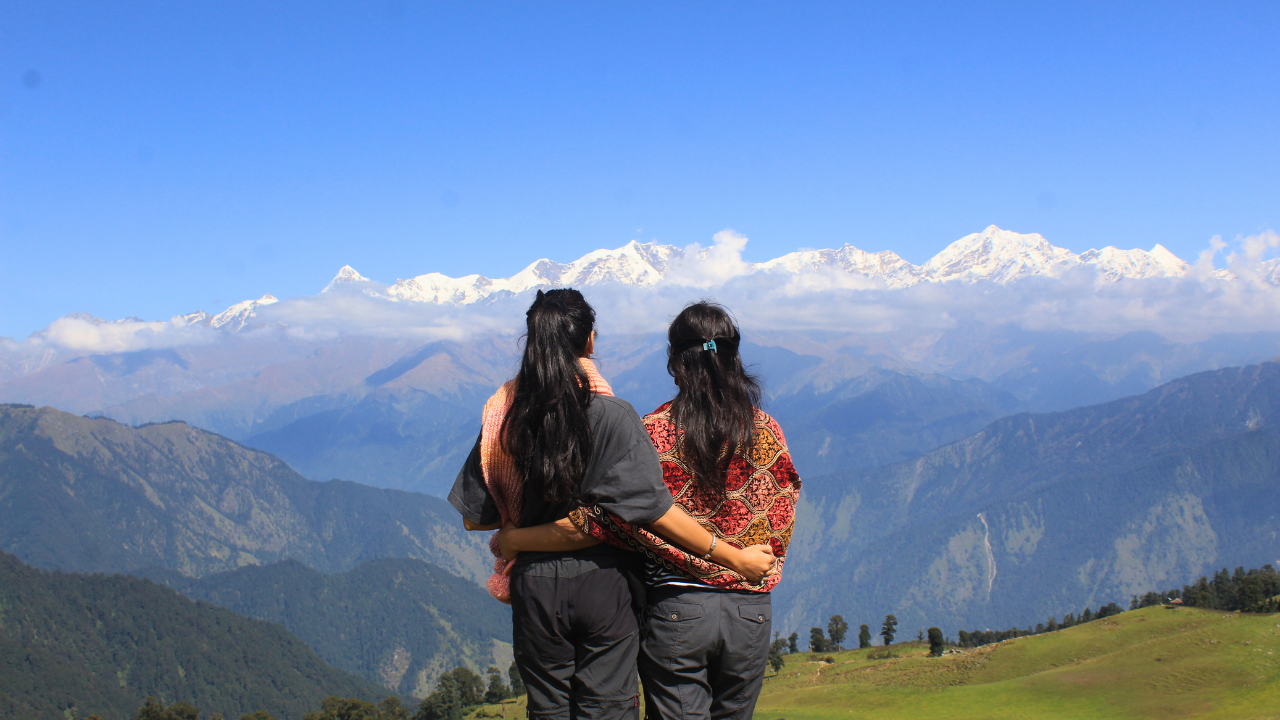
September to October (Post-monsoon/Autumn): Once the monsoon clears, the skies turn crisp and the mountain views are at their sharpest. This is generally considered the best window for photography and for actually spotting the skeletal remains, since the snow has largely melted by this point. Trails are also firmer and drier.
Avoid the monsoon months (July–August) due to landslide risk on approach roads, and the peak winter months (November–April), when heavy snow makes the upper sections inaccessible.
How Difficult Is the Roopkund Trek?
Roopkund is graded moderate to difficult, and it is not recommended as a first Himalayan trek. Over roughly seven trekking days, you climb from about 7,550 ft to 15,750 ft, covering close to 50 km with several steep, sustained ascents and one genuinely tough summit day.
A few things make Roopkund tougher than many other Uttarakhand treks:
- Sustained altitude gain: Several days involve 1,500–3,000 ft of elevation gain.
- Exposed high-altitude terrain: Above Bhagwabasa, the trail crosses permafrost and snow-covered slopes with limited shelter.
- Difficult evacuation: Getting an injured or unwell trekker down from the upper camps takes time, which is why fitness and preparation matter so much here.
- Altitude-related illness: Because the trek crosses 14,000 ft, awareness of altitude sickness, its symptoms, and prevention is essential, regardless of how fit or experienced you are.
Most trek operators expect trekkers to comfortably run or walk 5 km in around 30–35 minutes before registering, along with several weeks of cardio and strength preparation. If Roopkund feels like a stretch for your current fitness level, treks like Brahmatal offer a gentler introduction to winter Himalayan trekking with similar mountain views — you can read our complete Brahmatal trek guide for a comparison.
How to Reach Lohajung, the Roopkund Base Camp
Lohajung, a small village in the Chamoli district, is the starting and ending point for the Roopkund trek.
- By air: Fly into Jolly Grant Airport, Dehradun, roughly an hour from Rishikesh, then continue by road to Lohajung (about 10–11 hours).
- By train: Rishikesh’s own railway station or Haridwar Junction (about 30 km from Rishikesh) are the closest well-connected stations.
- By road: Most trekkers gather in Rishikesh and travel onward together, since the drive to Lohajung passes through Devprayag, Rudraprayag, and Karnaprayag — the sacred river confluences of the Garhwal region — before climbing into the mountains.
It’s worth arriving in Rishikesh a day early (commonly called “Day Zero”) to avoid missing your pickup due to flight or train delays.
Roopkund Trek Cost and Permits in 2026
Trek fees for Roopkund currently range roughly between ₹18,000 and ₹19,000 per person for the core package, plus GST, mandatory trek insurance, and optional transport charges between Rishikesh and Lohajung. Costs vary by operator and typically cover base camp accommodation, camping gear, meals during the trek, and a trek leader with a support team.
Since bugyal camping is now permitted again under the Supreme Court’s order, no separate special permit is required beyond what operators already arrange through the local forest department, though this could evolve as the regulatory framework is finalised. It’s worth confirming the latest permit status directly with your chosen operator closer to your trek date.
Trekking Responsibly: Rules Every Trekker Must Follow Now
The reopening of Roopkund comes with a renewed emphasis on protecting the very meadows that made the original camping ban necessary in the first place. As a trekker, that means:
- Sticking strictly to marked trails and designated campsites in Ali Bugyal and Bedni Bugyal
- Carrying out all non-biodegradable waste rather than burying or burning it
- Avoiding open fires in the meadows
- Respecting local customs around Bedni Kund and other sites connected to the Nanda Devi Raj Jat Yatra
- Booking with operators who follow Leave No Trace principles and work with certified local guides
Given how recently the ban was lifted, trekking conditions and rules may still be refined through the 2026 season, so it’s worth checking for the latest advisory before you travel.
Frequently Asked Questions
1. Is the Roopkund trek open in 2026?
Yes. The Roopkund trek is open as of 2026. It was closed for nearly eight years after the 2018 Uttarakhand High Court ban on bugyal camping, until the Supreme Court set aside that ban on 20 July 2026.
2. Why was the Roopkund trek closed for so long?
The trek wasn’t directly banned — overnight camping on Uttarakhand’s alpine meadows was. Since Bedni Bugyal is an essential acclimatisation campsite on the Roopkund route, the camping ban made it impossible to run the trek safely.
3. Why is Roopkund called the Skeleton Lake?
Hundreds of ancient human skeletons are visible around the lake’s edge when the snow melts each year. First documented in 1942, the remains are believed by researchers to belong to more than one group of people from different time periods, with theories ranging from a medieval hailstorm to pilgrims caught in sudden bad weather.
4. How difficult is the Roopkund trek?
It’s graded moderate to difficult, involving a climb from around 7,550 ft to 15,750 ft over roughly 47–55 km. It’s better suited to trekkers with some prior high-altitude experience, or beginners who commit to serious fitness preparation beforehand.
5. What is the best time to do the Roopkund trek?
May to June for lush meadows and lingering snow, or September to October for the clearest mountain views and the best chance of seeing the skeletal remains.
Conclusion:
Roopkund’s reopening isn’t just a trail update — it’s the return of one of the Himalayas’ most storied journeys, meadows, mystery, and all. After eight years, the window is open again, and given the pent-up demand, batches will fill fast this season.
“Ready for Skeleton Lake? Book your Roopkund Trek with Mountainiax today — small groups, expert local guides, and a truly unforgettable Himalayan adventure.”