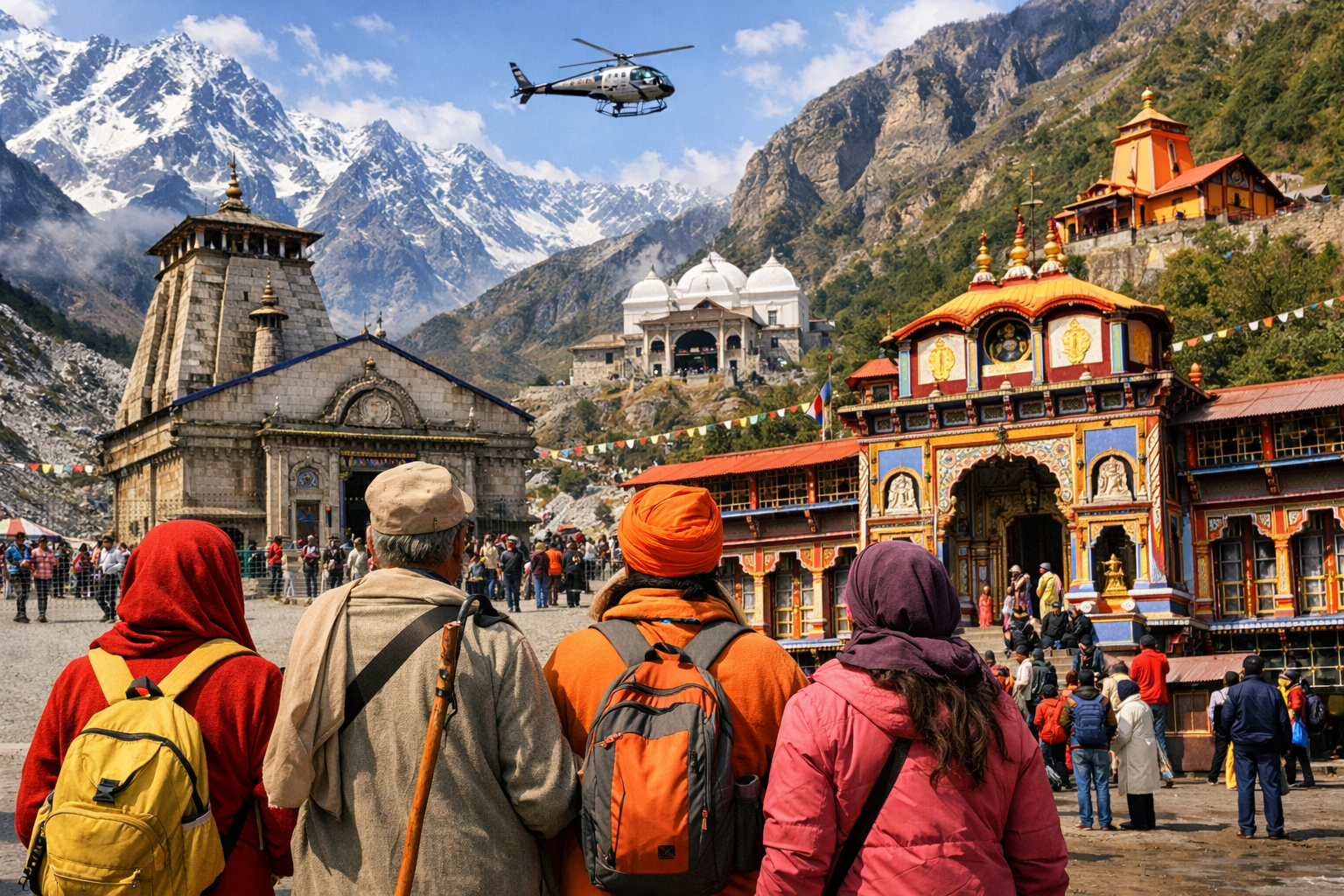

There are places you visit, and then there are places that change the way you breathe. Kedarnath is not a destination in the usual sense. It is silence broken only by bells, wind, and faith. At 11,657 feet above sea level, surrounded by raw Himalayan peaks, Kedarnath Temple stands like a reminder that devotion does not need comfort—it needs surrender.
People don’t come here for luxury or leisure. They come carrying pain, gratitude, questions, and sometimes nothing at all. Some walk for vows, some for forgiveness, and some because something inside them refused to stay quiet. Kedarnath answers everyone—but never in words.
If you are planning the Panch Kedar trek, Kedarnath is where your journey truly begins—not just geographically, but mentally and physically. This is not a temple you casually visit. Reaching Kedarnath demands effort, patience, and preparation, which is exactly why it holds such a central place in all Panch Kedar trek Yatra
Located deep in the Garhwal Himalayas at 11,657 feet, Kedarnath Temple is the most prominent temple among the five Panch Kedar shrines. For most pilgrims and trekkers, Kedarnath is the first major test before continuing towards Tungnath, Rudranath, Madhyamaheshwar, and Kalpeshwar.
Unlike regular tourist temples, Kedarnath filters people. Those who reach here understand that the Panch Kedar trek is not about ticking destinations—it is about endurance.
The Mahabharata Connection
After the Kurukshetra war, the Pandavas were burdened with guilt for killing their kin. Seeking liberation from sin, they went in search of Lord Shiva. Shiva, unwilling to forgive them immediately, disguised himself as a bull and fled into the Garhwal Himalayas.
When Bhima tried to stop him, the bull disappeared into the earth. His body reappeared in five different locations—these became the Panch Kedar temples.
- The hump surfaced at Kedarnath
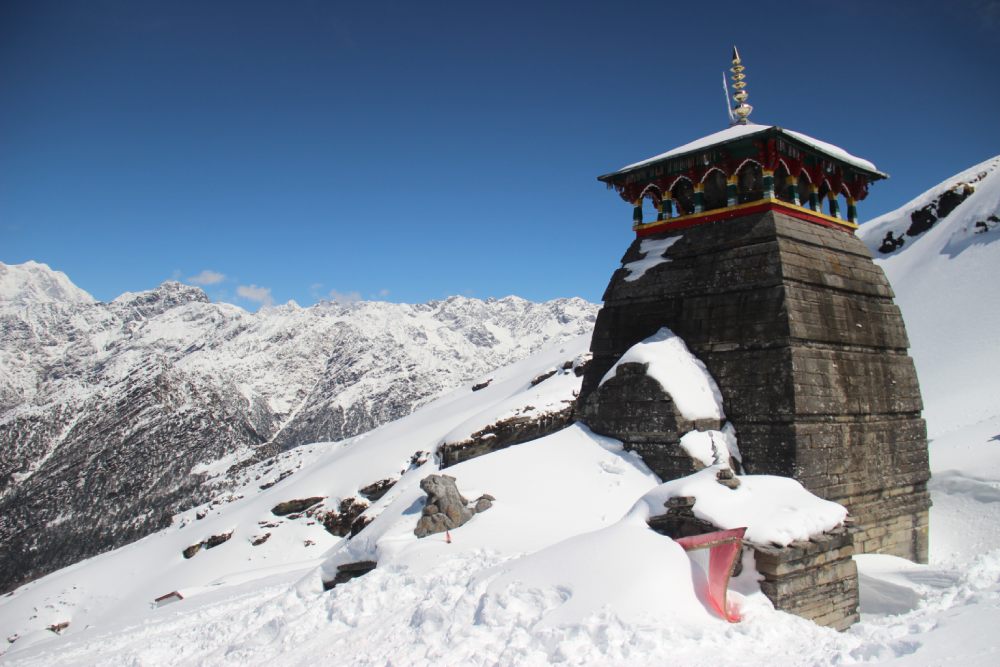
- Arms at Tungnath
- Face at Rudranath
- Navel at Madhyamaheshwar
- Hair at Kalpeshwar
Kedarnath is where the story begins—and spiritually, where it ends.
Why Kedarnath Is Considered One of the Most Powerful Shiva Temples
What makes Kedarnath different from other Jyotirlingas or Himalayan shrines?
1. Extreme Location, Absolute Faith
Reaching Kedarnath requires effort—physical, mental, and emotional. The 16 km trek from Gaurikund strips away comfort and ego. By the time you reach the temple, prayer becomes honest.
2. Survival Against Nature
The 2013 floods destroyed everything around Kedarnath—except the temple. A massive boulder (now called Bhim Shila) stood like a divine shield behind it. For believers, this was not coincidence; it was conviction.
3. Minimal Rituals, Maximum Impact
Unlike temples overloaded with ceremonies, Kedarnath’s rituals are simple. The silence does half the work. Many devotees say they feel lighter without knowing why.
Architecture of Kedarnath Temple
The temple is believed to have been built by Adi Shankaracharya in the 8th century. Constructed from massive stone slabs, interlocked without mortar, it reflects architecture meant to withstand time and terrain, not impress the eye.
The sanctum houses a conical Shiva lingam, representing the hump of the bull form. This shape is unique to Kedarnath and is not found in other Shiva temples.
Location & How to Reach Kedarnath Temple
Location: Rudraprayag district, Uttarakhand
Altitude: 11,657 ft
Route Breakdown:
- Rishikesh / Haridwar → Sonprayag
- Sonprayag → Gaurikund (by road)
- Gaurikund → Kedarnath (16 km trek)
Trek Options:
- On foot (recommended for spiritual experience)
- Pony or mule
- Helicopter (Phata, Guptkashi, Sersi)
Even if you take a helicopter, many pilgrims walk barefoot for the last stretch—out of pure devotion.
Best Time to Visit Kedarnath
Temple Opening:
- Late April / Early May (Akshaya Tritiya)
Temple Closing:
- November (Bhai Dooj)
Ideal Months:
- May–June: Pleasant weather, heavy crowds
- September–October: Fewer crowds, clearer skies
Monsoon (July–August) is risky due to landslides and should be avoided.
Winter: Where Does Kedarnath’s Shiva Go?
During winter, the idol of Lord Kedarnath is moved to Ukhi Math, where worship continues. This ensures that devotion never stops—even when snow blocks the path.
This concept reinforces a deep idea in Sanatan philosophy: places may close, but consciousness does not.
The Spiritual Experience: What Devotees Actually Feel
Many visitors struggle to explain Kedarnath. Some report:
- unexpected emotional release
- silence that feels “loud”
- a strange calm despite harsh weather
- Dreams become vivid after the visit
Kedarnath does not promise miracles. It offers clarity—and sometimes, that is more unsettling than comfort.
Do’s and Don’ts for Kedarnath Yatra
Do’s:
- Start trek early morning
- Carry warm layers and rain protection
- Respect temple silence
- Acclimatize properly
Don’ts:
- Don’t rush rituals
- Don’t litter (strict penalties apply)
- Don’t treat it like a tourist spot
Kedarnath Temple FAQs
1. Is Kedarnath one of the 12 Jyotirlingas?
Yes, Kedarnath Temple is one of the 12 sacred Jyotirlingas of Lord Shiva, symbolizing divine light. It holds immense spiritual significance and attracts devotees seeking liberation, purification, and deeper connection with Shiva.
2. Is Kedarnath safe now?
Yes, Kedarnath is considered safe for travel today. After the 2013 Kedarnath floods, infrastructure, trek routes, weather monitoring, and disaster response systems have been significantly improved, ensuring safer pilgrimage experiences.
3. Can beginners do the Kedarnath trek?
Yes, beginners can complete the Kedarnath trek with basic physical fitness and gradual pacing. Proper acclimatization, hydration, and rest are essential. Alternatives like ponies, palkis, or helicopters are also available if needed.
4. Why is Kedarnath so important in Hinduism?
Kedarnath holds deep importance in Hinduism as a site of penance, forgiveness, and spiritual endurance. Linked to the Mahabharata, it represents the journey of the soul seeking redemption and divine grace.
Summary
The blog presents Kedarnath Temple as more than a pilgrimage site—it is described as a deeply transformative spiritual experience rooted in endurance, faith, and inner reflection. Situated at 11,657 feet in the Himalayas, Kedarnath is the most significant shrine among the Panch Kedar and serves as both the physical and spiritual starting point of the journey.
It emphasizes that reaching Kedarnath requires effort—especially the 16 km trek from Gaurikund—making the experience meaningful and humbling. The temple’s origin is linked to the Mahabharata, where Lord Shiva, disguised as a bull, split into five parts, forming the Panch Kedar temples, with the hump appearing at Kedarnath.
The blog highlights key aspects that make Kedarnath unique:
- Its extreme location reinforces devotion and removes comfort-driven spirituality.
- The temple’s survival during the 2013 floods is viewed as symbolic of divine protection.
- The architecture, attributed to Adi Shankaracharya, is simple yet resilient.
Practical details are also covered, including travel routes, best visiting months (May–June and September–October), and seasonal migration of the deity to Ukhimath during winter.
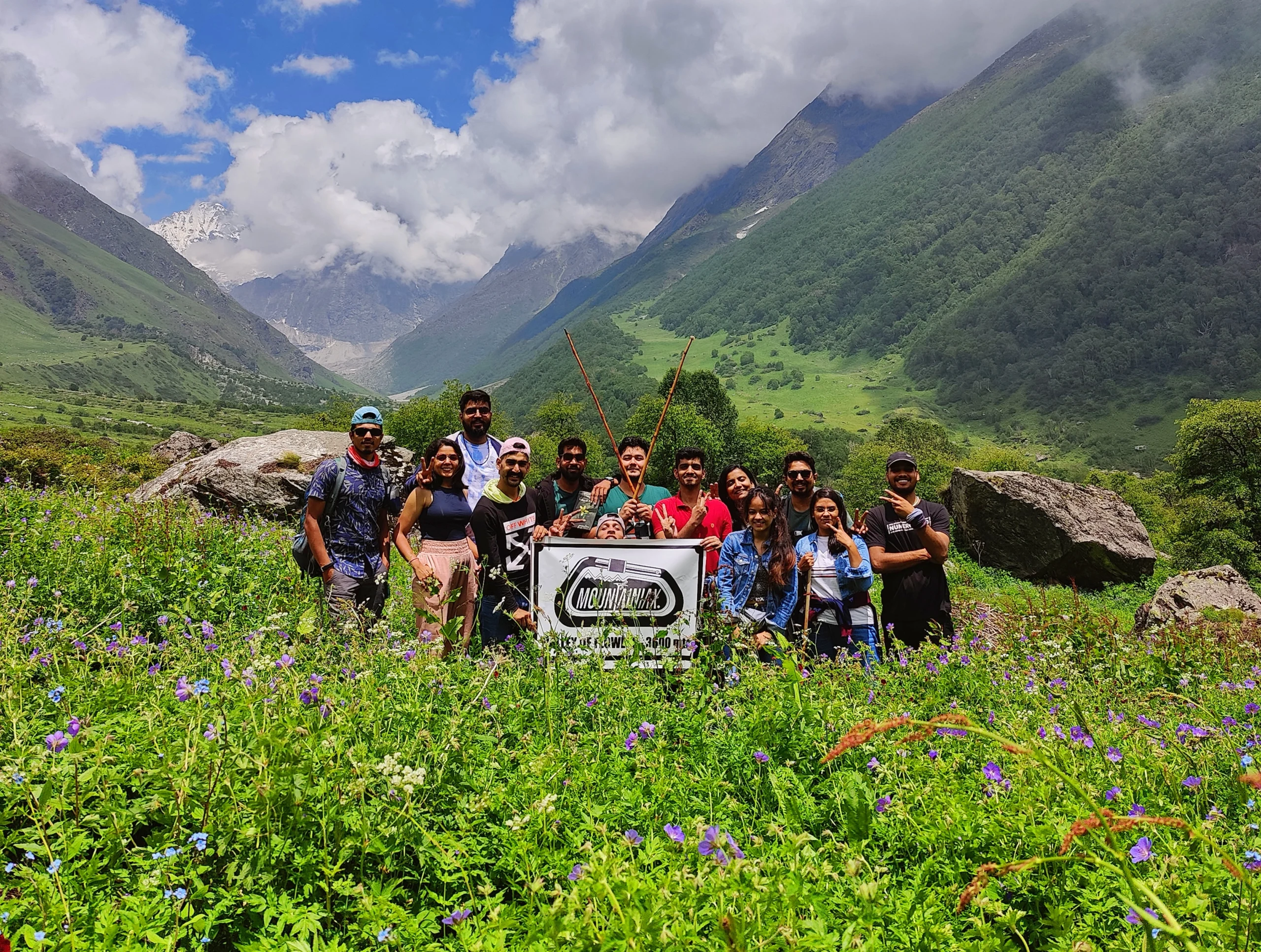
If you are planning for the Panch Kedar Yatra in 2026, Mountainiax offers the best Panch Kedar trek packages at affordable prices, with expert local guides, well-planned itineraries, safe accommodations, and complete support—so you can focus fully on the spiritual journey and the beauty of the Himalayas.