Madhyamaheshwar is not a place to be loud about. There are no bustling streets, no teeming bazaars, and no grand first impressions. The journey is slow, by way of villages and through forests for most of the film, and down long mountain paths in the final portion, until suddenly one finds oneself in a calm, open valley that feels like an embrace: Here at last rests the temple.
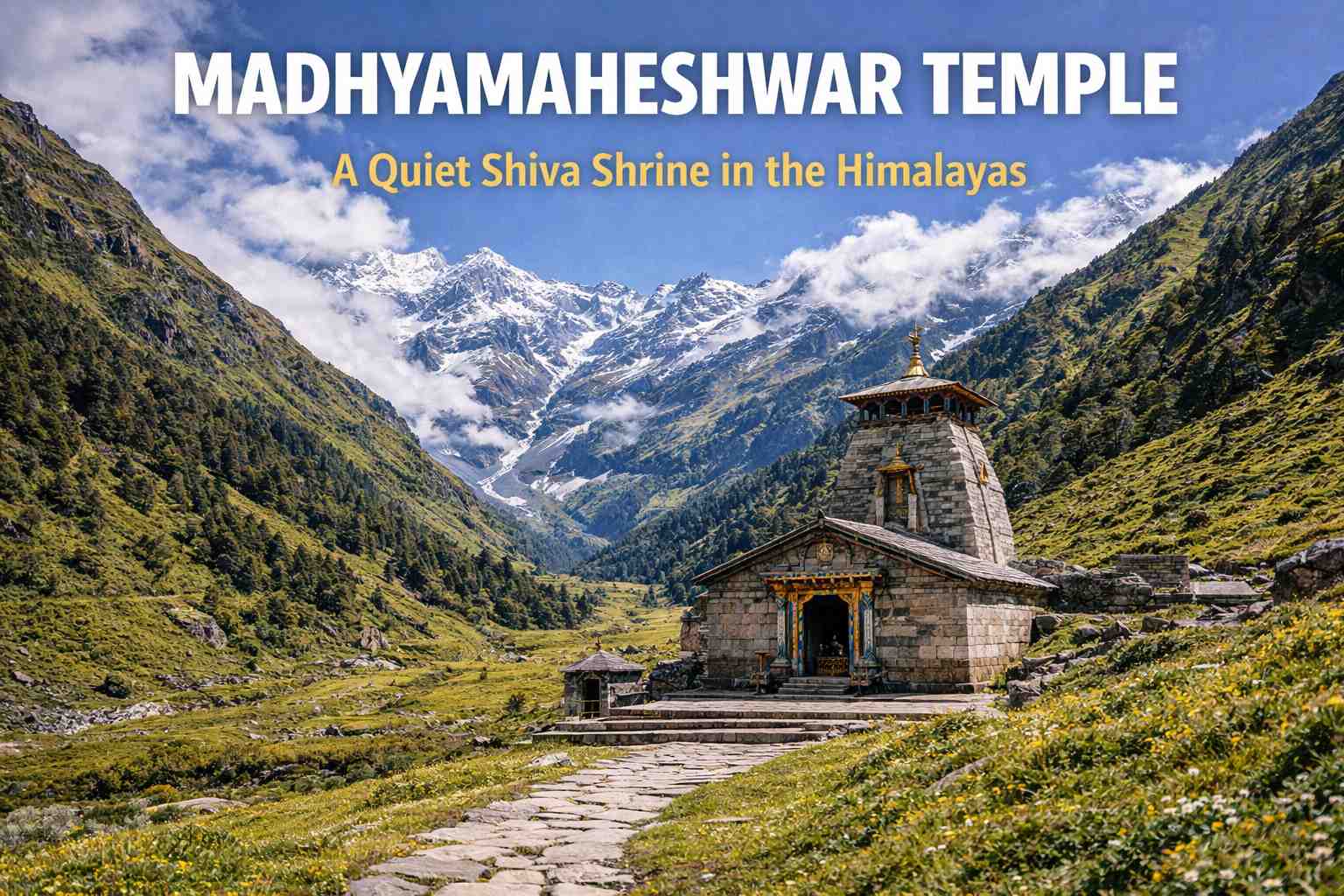
Situated far in the Rudraprayag district of Uttarakhand, Madhyamaheshwar Temple is a famous shrine devoted to Lord Shiva and is one of the five holy shrines dedicated to Panch Kedar Temples of uttarakhand . Enclosed by towering ridges and alpine meadows, the temple seems shielded by the mountains from a world that is never quite tamed; it has an air of silence, groundedness, and inward focus.
Madhyamaheshwar isn’t special because it’s extreme; it is remarkable for remaining steady.
The Spiritual Significance of Madhyamaheshwar
It is an important place of worship for the Shaivite sect. It is considered to be the spot where the navel (nabhi) of Lord Shiva emerged. In Indian philosophy, the navel is linked to equilibrium, stability, and a vital life force.
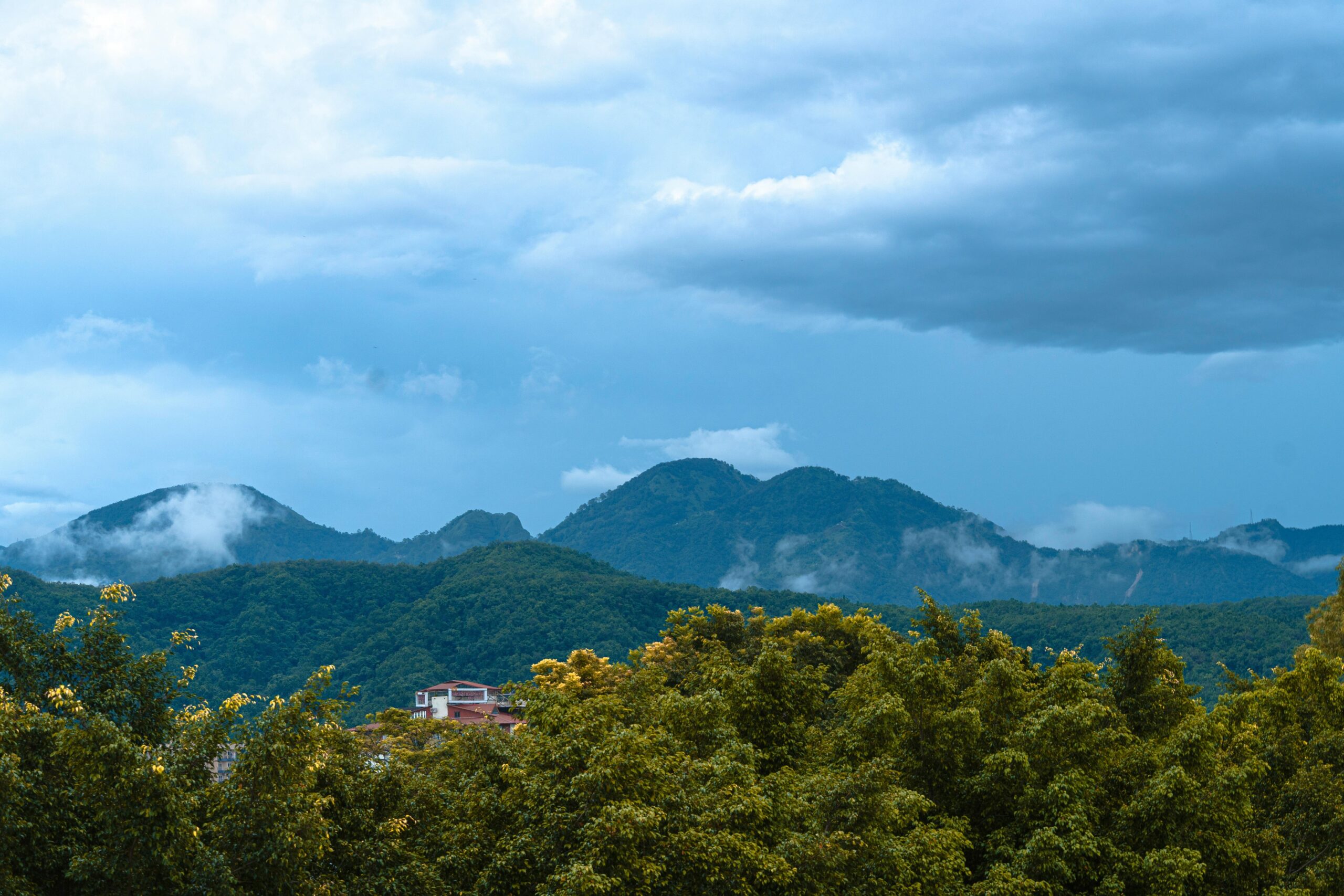
This symbolism is alive and well in the geographical location also. Unlike such exposed ridgelines or high passes, Madhyamaheshwar dwells within a valley that seems enclosed and gentle. The atmosphere promotes serenity rather than a sense of exigency.
Many pilgrims describe the experience here as grounding—less about dramatic emotion than quiet presence.
Location and Regional Setting
Madhyamaheshwar lies in the Garhwal Himalayas of Uttarakhand at a distance from Kedarnath (also Kedar) within the vicinity of the “Kedarnath wildlife sanctuary.” The area is characterized by:
- steep forested slopes
- wide grassy meadows
- glacial streams
- high ridges of the mountain encompassing the valley
The isolated nature of the region has contributed to its unspoiled environment, and beyond the road head, few human habitations exist.
How to Reach Madhyamaheshwar
The journey to Madhyamaheshwar is divided into two stages—road travel and trekking.
Road Route:
- Haridwar/Rishikesh → Rudraprayag
- Rudraprayag → Ransi village
Ransi is the last motorable point.
Trek Route:
- Ransi → Gaundar → Madhyamaheshwar
From Ransi, the remainder of the journey is completed on foot through well-defined mountain trails.
Trek Distance and Difficulty
Trek distance:
- Approximately 16–18 km one way
Difficulty level:
- Moderate
Time required:
- 1.5 to 2 days (one way), depending on pace and overnight halts
The trail involves continuous walking rather than steep climbs. The challenge lies in distance and duration rather than technical difficulty. This makes Madhyamaheshwar suitable for trekkers with average fitness who are comfortable with long walking hours.
Landscape Along the Route
The trek for Madhyamaheshwar runs through a varied landscape:
- shaded, streamed bottomland forest
- mid-altitude open slopes
- spacious alpine meadows around the temple
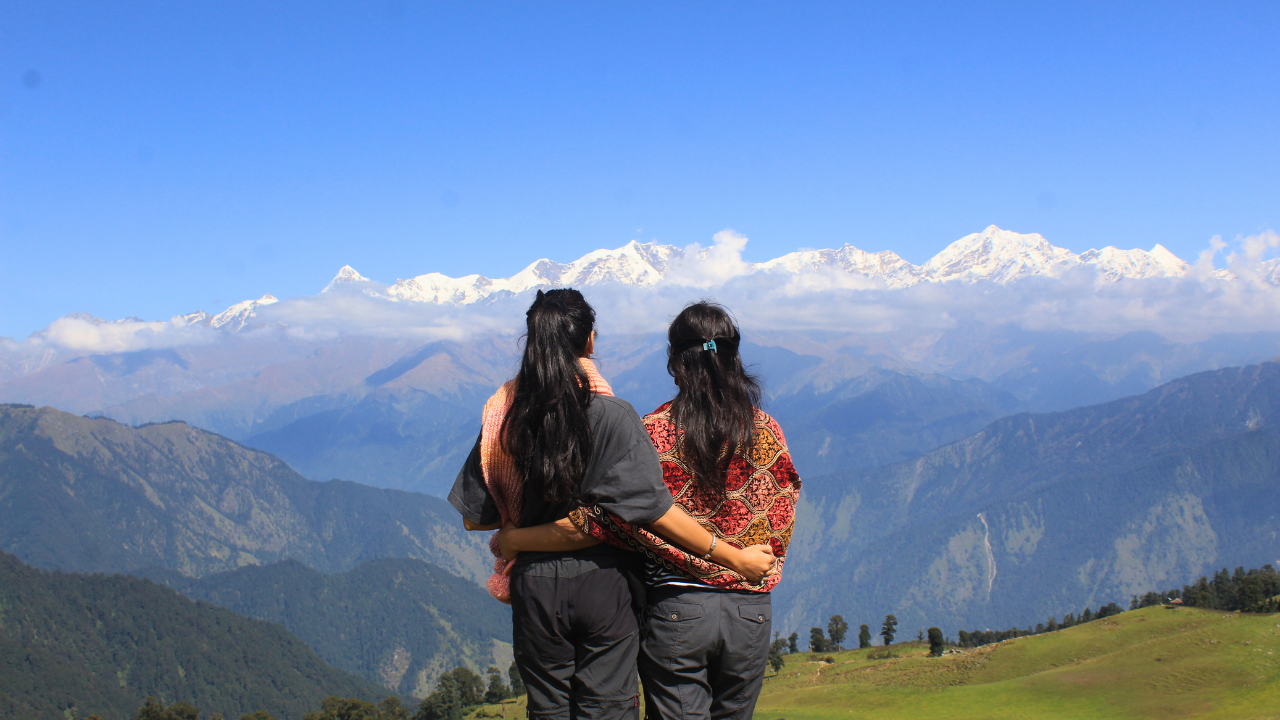
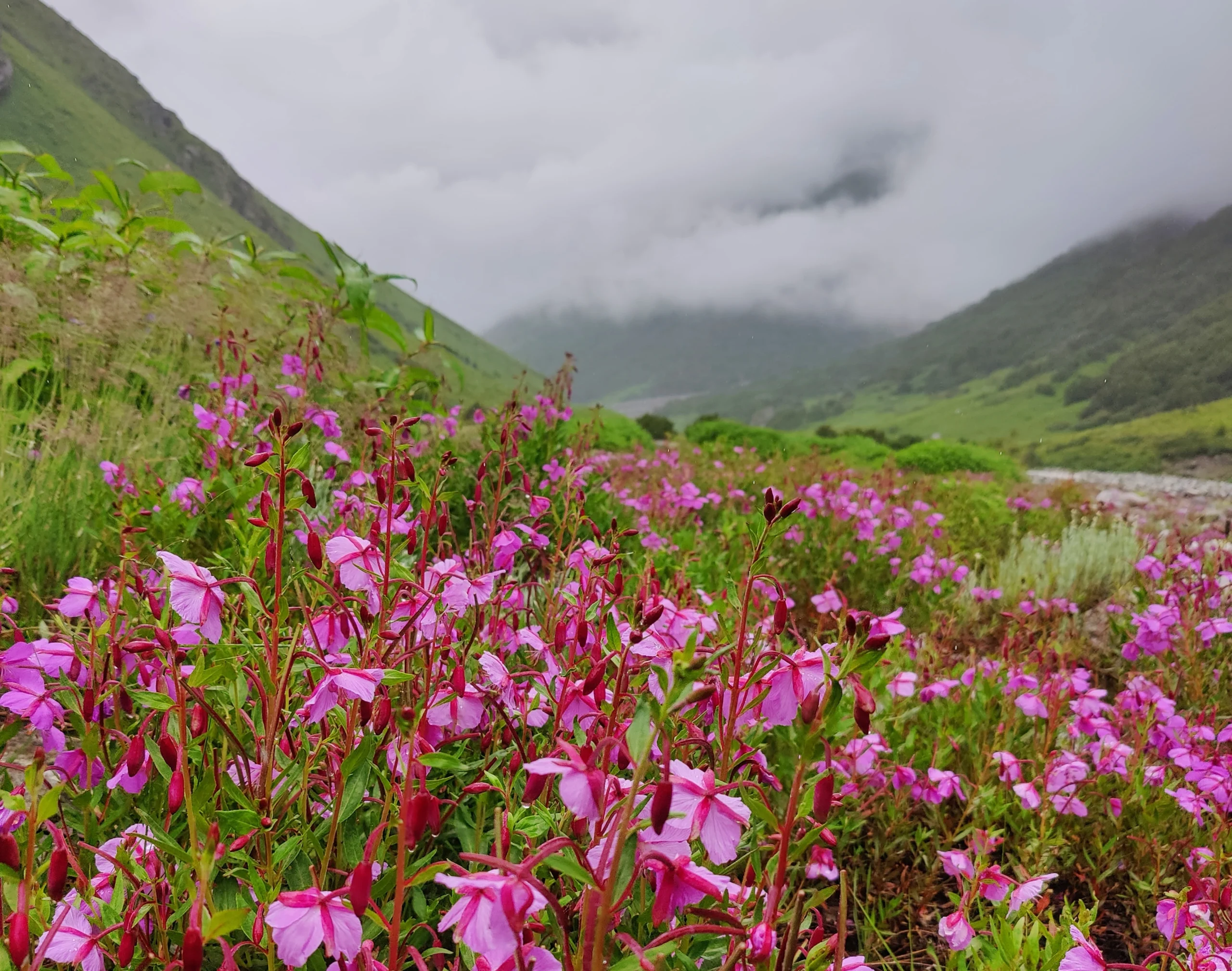
The valley widens as the last ascent opens up and the environment becomes less densely populated. The temple is surrounded by grasslands and rising peaks beyond the snow.
As we progress from forest to meadow, the transition is slow and natural, lending a rhythm to the trek.
Architecture of Madhyamaheshwar Temple
Architecture: The temple is a simple structure made entirely of stone. It is intended to withstand the elements, not impress with ornament. The sanctum has the divine icon of Shiva with hardly anything around.
The rear of the temple is a large meadow, where visitors can find some rest amid their reflections. Here are no grandiose corridors or great halls—just a compact building at one with its environment.
Best Time to Visit Madhyamaheshwar
Seasonal timing is important due to weather conditions in the region.
Ideal months:
- May to June – Pleasant temperatures, clear trails
- September to early October – Stable weather, fewer visitors
Avoid:
- July and August, when monsoon rains make trails slippery
- Winter months, when heavy snowfall blocks access
The temple usually remains closed during winter, and worship is shifted to lower-altitude locations.
Weather Conditions and Preparation
The weather in the Madhyamaheshwar region can change abruptly. And even in the summer, mornings can get hot, but evenings are chilly.
Common conditions include:
- sudden cloud cover
- light rain or fog
- cold winds after sunset
Visitors are advised to pack clothing in layers for nighttime cooler temperatures.
Stay Options Near the Temple
Accommodation for Madhyamaheshwar is basic and scarce:
- simple guesthouses
- seasonal lodges
- local shelters
Prisoners are given the facilities they need, not necessarily those that are comfortable. Electricity, heating, and mobile connectivity can be intermittent.
The Experience of Being There
Madhyamaheshwar is not difficult or lofty, but it is long. By walking for many hours, thinking slows. The valley environment also limits distractions. The movement to stillness is so seamless because there is no noise.
Many visitors will tell you that time is different here; it is not so much the measure of a schedule as it is bounded by daylight and weather.
Practical Tips for Visitors
Do:
- Start trekking early each day
- Carry sufficient water and snacks
- Walk at a steady, comfortable pace
- Keep buffer time for weather changes
Don’t:
- Rush the journey
- Underestimate total walking distance
- Depend on last-minute arrangements
Madhyamaheshwar is more about continuity than contrasts. Its long approach, narrowing valley, and isolated surrounds create a sense of balance and non-contrivance at the relationship’s core. Not that it requires urgency or extremity, but merely patience and consistency.
For most who make it, Madhyamaheshwar is memorable not for anything that happens there but because of how little it seems to care about the journey onward.
If you are planning for the Panch Kedar Yatra in 2026, Mountainiax offers the best Panch Kedar trek packages at affordable prices, with expert local guides, well-planned itineraries, safe accommodations, and complete support—so you can focus fully on the spiritual journey and the beauty of the Himalayas.