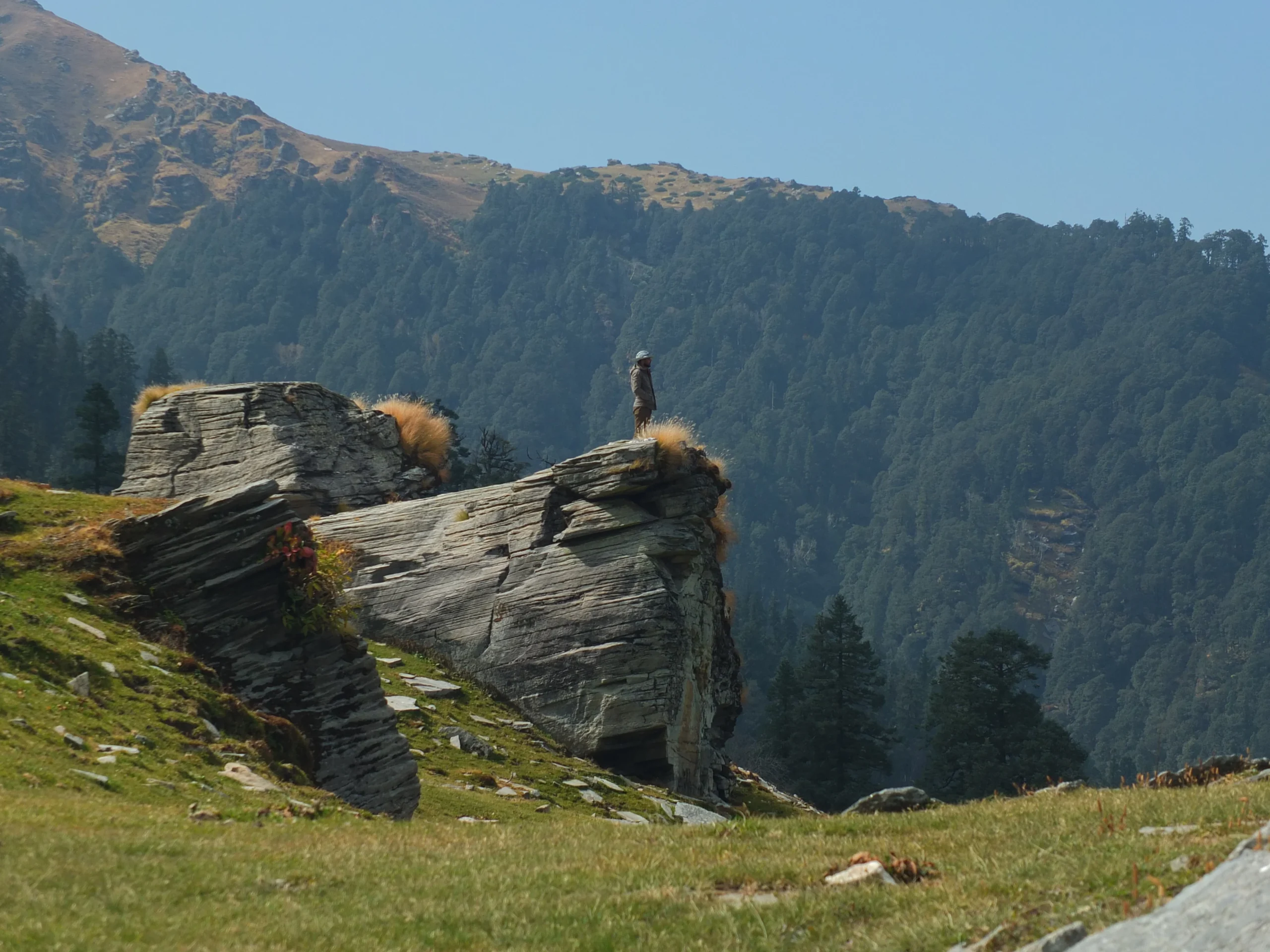
The Panch Kedar temples of Uttarakhand do not sit by roads, in proximity to towns, or for ease. They are spread across some of the most challenging Himalayan terrain, deliberately sited far from comfort. The way to understand Panch Kedar is not to commit five temple names by rote; it is to understand why each of them takes work, patience, and time still.
Unlike most pilgrimage circuits developed around habitats, the temples of Panch Kedar tracked movement. Walking is not incidental in this context; it’s central. The land sets the rhythm, the weather prescribes the course, and the body is not a mode of transport but part of the communion.
That is the reason Panch Kedar temples are not easy to attend. They are earned.
What Are the Panch Kedar Temples?
The Panch Kedar are five temples of Lord Shiva in the Garhwal region of Uttarakhand. Each temple of the monastery is dedicated to a specific part of Lord Shiva’s body, said to have reappeared after he had disappeared into the Himalayas.
The five temples are
- Kedarnath Temple—the hump
- Tungnath Temple – the arms
- Rudranath Temple—the face
- Madhyamaheshwar Temple—the navel
- Kalpeshwar Temple – the jata (hair)
Between them, these temples create one of the most physically rigorous and spiritually rewarding pilgrimages in India.
The Mahabharata Story That Shaped the Panch Kedar
Panch Kedar has its source in the post-Mahabharata war period. Once the Kauravas were vanquished, the Pandavas felt gripped by remorse. Looking for a way out of their guilt, they went looking for Lord Shiva, as only he could forgive them.
Shiva would not acquit them until they were chronicled with his lore, which states that by cursed by the ascetics who forced him to flee and take the form of a bull in the Garhwal Himalayas. When Bhima, who also saw him again, tried to obstruct him, the bull vanished into the earth. Various parts of Shiva’s body subsequently appeared at five places.
The Panch Kedar temple site is on the relics of this split.
Crucially, these are not symbolic places. They lie far and near on ridges, down in valleys, and over the forested slopes of hills; they occupy meadows high up, such that he who seeks must always travel into new country and new ground.
Why Panch Kedar Is Not a Typical Pilgrimage
The vast majority of pilgrimages direct people toward a single center. Panch Kedar yatra does the opposite. It forced us to be changed by one another—by different states and cultures.
Across the journey, one encounters:
- dense forests
- open alpine meadows (bugyals)
- exposed ridgelines
- deep river valleys
- high-altitude cold deserts
There is no single rhythm. Each temple requires a different type of effort.
Kedarnath: The Anchor of the Journey
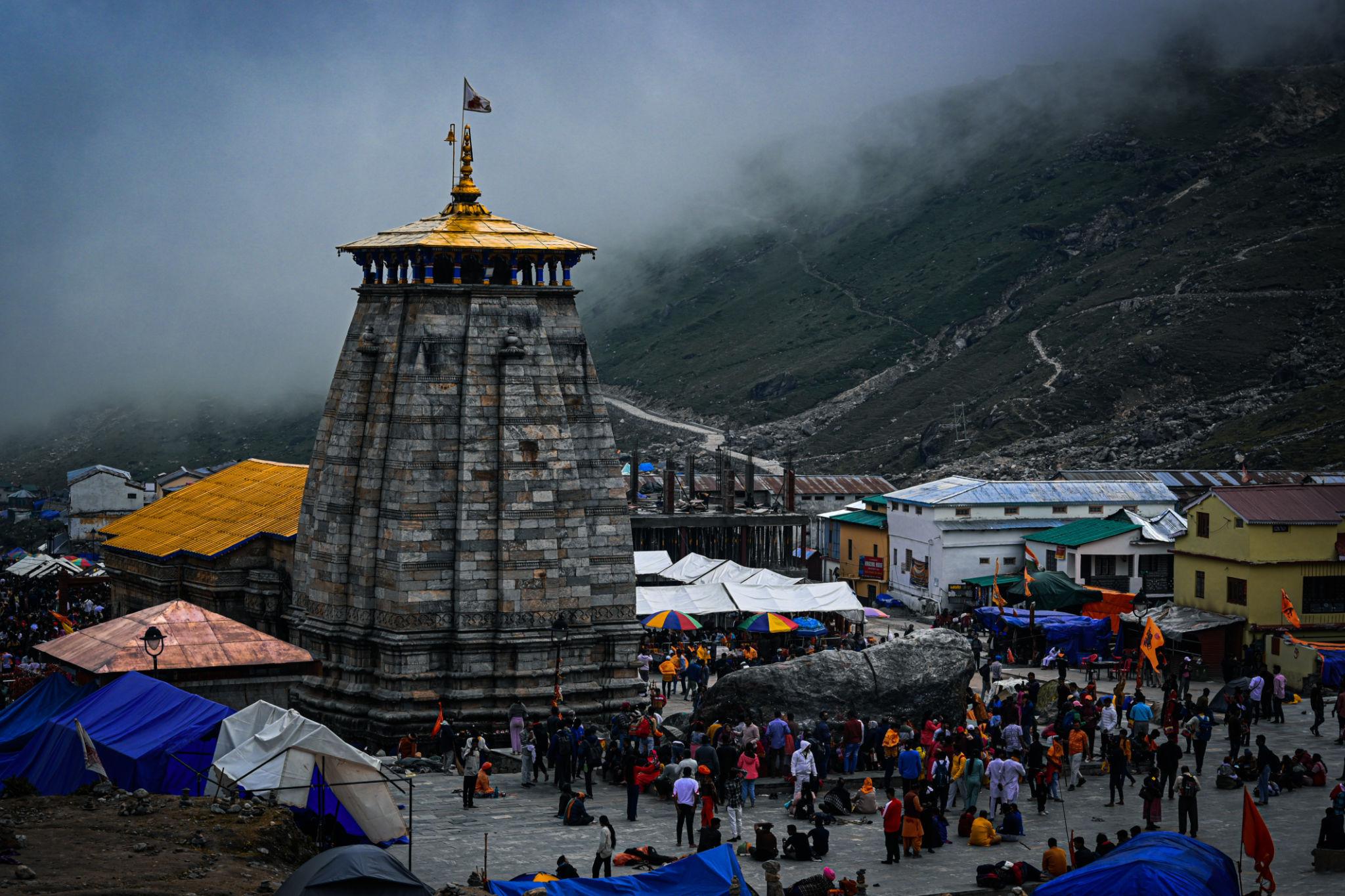
Kedarnath Temple is the best-known of the Panch Kedar temples, and many pilgrims report feeling touched by its elevation.
At 11,657 feet, Kedarnath involves long walking distances, cold winds, and thin air. There may be infrastructure, but the physical challenge is real. Kedarnath sets the groundwork—teaching about pacing, patience, and paying respect to the weather.
Kedarnath is the place where Shiva’s hump fell, which alludes to the burden and responsibilities of life. Physically, it teaches pilgrims what they can carry.
Tungnath: Where Height Replaces Distance
Tungnath, at an elevation of 12,073 feet, is the highest Shiva temple. Unlike Kedarnath, the trek here is a short one, but the altitude makes no concessions.
Open slopes replace forest cover. Wind replaces silence. The temple is small, open , and in the midst of the big sky. Here is where the arms of Shiva are venerated —arms that denote effort, motion.
The shorter distance typically takes people down a peg or two when supposing it is consequently easier.
Rudranath: The Test of Isolation
Rudranath is considered to be the toughest Kedar temple to reach. There are no shortcuts, no neighboring towns, and no promised facilities.
The trek includes multi-day treks through forests, high meadows such as the Panar Bugyal , and narrow ridges. The weather change is sudden, and shelter is scarce.
Rudranath is the face of Shiva—the aspect of the divinity that embodies truth and confrontation. When they reach it, pilgrims often have to face their own physical and mental weariness, not to mention self-will.
Many turn back before Rudranath. Those who remember it the longest.
Madhyamaheshwar: The Deep Valley Shrine
Madhyamaheshwar is located in a splendid valley, between peaks rising like walls. The approach hike is long and steady, for a consistent rather than powerful couple of hours.
This temple is the navel of Shiva, representing balance and grounding. The topography of the valley corroborates this—it’s closed in, it’s quiet, and it’s self-reflective.
Madhyamaheshwar does not feel as exposed as Rudranath. The key here is stamina over many days with minimal stopping off.
Kalpeshwar: The Only Year-Round Temple
Kalpeshwar is the last Panch Kedar temple and the only one open year-round. Near Urgam village, the trek is short.
Here, the jata (hair) of Shiva is worshipped. To see it all disappear like that is to see what’s foundational stripped away.” Metaphorically, hair symbolizes continuity—something that grows out, lasts, and continues even as the world changes around us.
Following the more visceral experiences of the previous temples, Kalpeshwar seems calmer and more rooted. It does not complete the journey with struggle but with peace.
The Geography That Shapes the Experience
The temples, which are part of Panch Kedar, are distributed in:
- Rudraprayag district
- Chamoli district
These regions experience:
- extreme seasonal variation
- heavy snowfall in winter
- monsoon-triggered landslides
- short, intense trekking windows
For this reason, the Panch Kedar is open only between the end of April (Akshay Tritiya) and mid-October.
Weather: The Unspoken Companion
Weather plays an active role in Panch Kedar. Clear mornings can turn into fog by afternoon. Wind can intensify without warning. Snow can block routes even in early summer.
The journey teaches adaptability:
- starting early
- accepting delays
- turning back when required
Those who treat the weather as an inconvenience struggle. Those who respect it succ
Why Panch Kedar Leaves a Lasting Impact
Describing Panch Kedar as transformative is something of a cliché, but not in the abstract. The transformation comes from:
- long walking hours
- silence
- physical exhaustion
- limited distractions
Phones lose relevance. Schedules lose rigidity. Your focus turns inward, not out of choice but because you have to.
This is not accidental. The landscape enforces it.
Despite harsh conditions, worship continues at all five temples every year. Priests move with the seasons. Deities shift locations in winter. Villages adapt around the pilgrimage cycle.
Panch Kedar is not frozen in the past. It is a living system, adjusting constantly to geography and climate.
The Panch Kedar temples of Uttarakhand are not connected by architecture or accessibility. They are united by effort.
Each temple peels back one layer—comfort, certainty, speed, and distraction. What you have is the movement, breath, and awareness of territory.
Those who make the trip often find it hard to express in words. Not in the sense of supernatural, but in terms of experiential. The mountains are not self-explanatory. They are simply crossed.
And in the overlapping, something moves quietly.
Those who want to undertake the Panch Kedar yatra must have acclimatization days and should be acquainted with the routes in the vicinity of and around the destinations because one would also traverse through tough terrains where weather is unpredictable.
If you are planning for the Panch Kedar Yatra in 2026, Mountainiax offers the best Panch Kedar trek packages at affordable prices, with expert local guides, well-planned itineraries, safe accommodations, and complete support—so you can focus fully on the spiritual journey and the beauty of the Himalayas.