
The Garhwal Himalayas hold five of Lord Shiva’s most sacred addresses — and reaching all of them demands far more than devotion alone. It demands planning, physical preparation, honest self-assessment, and one very important decision before you even pack your bag. Thousands of pilgrims attempt the Panch Kedar circuit every season, yet many arrive underprepared, overwhelmed by logistics they did not anticipate or physically humbled by terrain they underestimated. The difference between a transformative pilgrimage and a difficult ordeal often comes down to a single choice made weeks before departure.
That choice is whether you go with a structured package or carve your own independent path. If you are weighing Panch Kedar with Package vs Solo, you are already thinking smarter than most. There is no single correct answer — only the answer that is right for your fitness level, your budget, your experience in high-altitude terrain, and the kind of journey your soul is actually seeking. This guide walks you through every angle — costs, safety, logistics, pacing, and spiritual quality — so you can decide with clarity and confidence.
What Is Panch Kedar? A Quick Overview
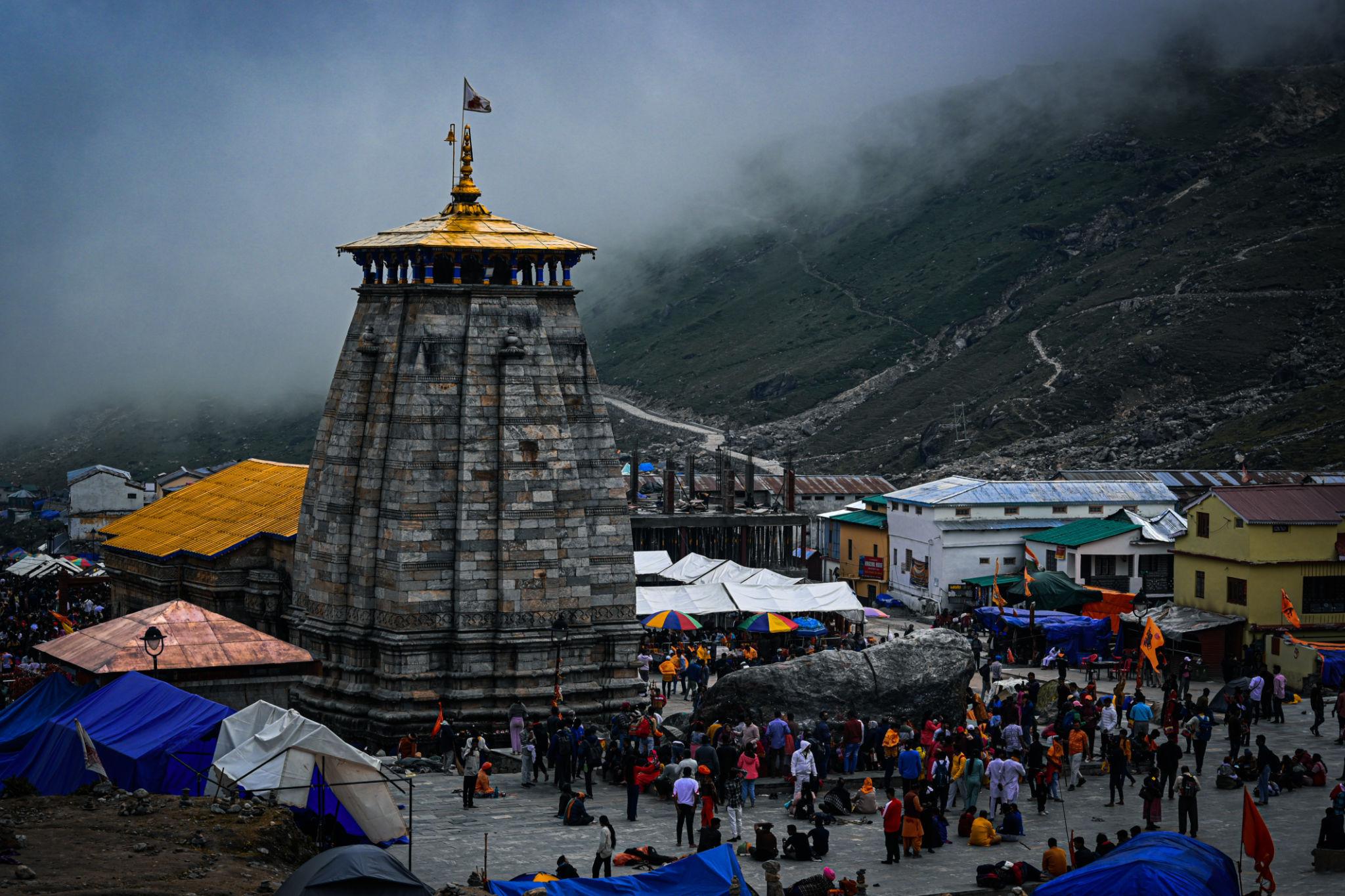
Panch Kedar refers to the five ancient temples dedicated to Lord Shiva scattered across the breathtaking Garhwal Himalayas in Uttarakhand. The five sacred shrines are Kedarnath, Tungnath, Rudranath, Madhyamaheshwar, and Kalpeshwar — each sitting at a dramatically different altitude, valley, and landscape, making every temple visit a distinct experience in itself.
The origin story is rooted in the Mahabharata. After the Kurukshetra war, the Pandavas sought Lord Shiva’s forgiveness for the sin of killing their own kin. Shiva, unwilling to grant them an easy absolution, disguised himself as a bull and disappeared into the earth at Kedarnath. Different body parts of this divine bull are believed to have emerged at five separate locations — his hump at Kedarnath, arms at Tungnath, face at Rudranath, navel and stomach at Madhyamaheshwar, and hair at Kalpeshwar. Each site became a temple, each temple became a pilgrimage.
Together, these five shrines form one of the most spiritually profound and physically demanding pilgrimage circuits in the entire Indian subcontinent. Completing all five is believed to cleanse the soul of accumulated sins across lifetimes and grant the devotee Shiva’s ultimate grace. For trekkers and pilgrims alike, it is a journey that redefines what devotion, endurance, and the mountains truly mean.
Panch Kedar Trek Opening Date 2026: What You Need to Know First
Before comparing packages versus solo travel, timing matters enormously.
The Panch Kedar trek opening date 2026 varies by shrine:
- Kedarnath — Opens around late April or early May (Akshaya Tritiya)
- Tungnath — Opens mid-May, usually a few days after Kedarnath
- Rudranath — Opens in May, dates confirmed by the local pujari committee
- Madhyamaheshwar — Opens late May, typically after Tungnath
- Kalpeshwar — Remains open almost year-round, making it a flexible start or end point
The best window to complete all five is May to June or September to October, avoiding the heavy monsoon rains of July and August, which make high-altitude trails genuinely dangerous.
Always verify the Panch Kedar temple opening date 2026 directly through the Badrinath-Kedarnath Temple Committee website or a registered operator, as exact dates shift based on the Hindu calendar and snowfall conditions each year.
Understanding the Panch Kedar Route
The Panch Kedar route is not a single linear trail. This is one of the biggest misconceptions among first-time pilgrims.
The five temples are spread across different valleys and ridgelines, which means you need to drive and trek between multiple base points. Here is the most common sequence:
Recommended Order:
- Kalpeshwar (Urgam Valley) — The easiest, often done first to ease into altitude
- Kedarnath (Gaurikund) — The most famous and most visited
- Madhyamaheshwar (Ransi Village) — Remote, pristine meadows
- Tungnath (Chopta) — The highest Shiva temple in the world at 3,680 metres
- Rudranath (Sagar Village) — The most challenging, through rhododendron forests and high ridges
Some trekkers reverse this order. Others begin with Kedarnath due to helicopter availability. The panch kedar route you choose affects your acclimatisation curve, total distance, and daily elevation gain — all of which matter deeply for your safety and experience.
Total approximate trekking distance: 85–110 km, depending on your route choices. Total trip duration: 14–18 days for a comfortable, spiritually unhurried journey
Going Solo: The Real Picture
Who Should Consider Solo Travel?
Solo travel on the Panch Kedar route suits:
- Experienced high-altitude trekkers (ideally with prior Himalayan experience above 3,500m)
- Physically fit individuals who have completed at least one comparable pilgrimage or trek
- Travellers comfortable with uncertainty, language barriers, and logistical problem-solving
- Those who want complete flexibility — starting when they want, staying as long as they like at each shrine
The Genuine Advantages of Going Solo
Freedom and flexibility — You are not locked into a group’s pace. If Madhyamaheshwar’s meadows move you deeply, you can spend an extra day there without negotiating with a tour operator.
Lower cost (potentially) — Solo travel can cost anywhere from ₹18,000 to ₹35,000 for the full circuit if you manage accommodation, food, and transport yourself. This assumes budget guesthouses, local dhabas, and shared jeeps.
Authentic local immersion — Without a guide translating every interaction, you tend to connect more directly with dhaba owners, local shepherds, and fellow pilgrims. These conversations often carry the real essence of the pilgrimage.
Spiritual depth — Many experienced pilgrims report that the solitude of solo travel — especially on the trail to Rudranath — creates a contemplative quality that group travel cannot replicate.
The Honest Challenges of Going Solo
- Navigation — The Panch Kedar route is not fully signposted. Trails branch unexpectedly, especially above Rudranath. Getting genuinely lost above 3,500m is a medical risk, not just an inconvenience.
- Language barrier — English is limited in remote villages like Sagar, Ransi, and Urgam. Basic Hindi is essential.
- Emergency response — If you suffer altitude sickness, a sprain, or weather-related trouble, having no support system delays your rescue significantly.
- Logistics complexity — Booking shared jeeps, coordinating timings between different valleys, managing permits, and finding reliable porters requires substantial planning.
- Accommodation uncertainty — Outside peak season, guesthouses in smaller base villages may be closed or full with no notice.
Going with a Package: What You Actually Get
What Do Panch Kedar Trek Packages Typically Include?
Well-structured Panch Kedar trek packages generally cover:
- Pickup and drop off from Haridwar or Rishikesh
- All inter-valley transportation (jeeps, local buses)
- Accommodation throughout (guesthouses or tented camps where guesthouses are unavailable)
- All meals on trek (breakfast, packed lunch, dinner)
- An experienced trek leader and local guide
- Porters for communal gear
- First aid kit and basic emergency support
- Permits and entry documentation
Some premium Panch Kedar trek packages also include helicopter options for Kedarnath, a personal porter for your backpack, and travel insurance.
The Real Advantages of Choosing a Package
Logistics taken off your plate — This is the defining benefit. The coordination between five different valleys, vehicle timings, and accommodation bookings is handled entirely for you. For most working professionals with limited planning bandwidth, this alone justifies the cost.
Safety net — A reputable operator has protocols for altitude sickness, weather delays, and medical emergencies. Their guides know which trails to avoid after rainfall, where snowfields become hazardous, and how to evacuate if needed.
Acclimatisation planning built in — Good operators design itineraries with rest days and gradual altitude gain, reducing your risk of acute mountain sickness considerably.
Camaraderie — For those travelling alone but wanting company, group packages offer a built-in community of fellow pilgrims sharing the same experience.
Time efficiency — Packages are typically designed to complete the circuit in 14–16 days with minimal dead time between temples.
The Limitations of Package Travel
- Pacing is fixed — You move on the group’s schedule, not yours. If you want extra time at Tungnath, you generally cannot take it.
- Variable quality — Not all operators are equal. Some cut corners on accommodation quality, food hygiene, or guide expertise. Research is critical.
- Higher cost — Packages typically range from ₹35,000 to ₹75,000 per person, depending on group size, inclusions, and operator quality.
- Less spontaneity — The sacred randomness of a pilgrimage — following your instinct, stopping where you feel called — is harder to honour within a fixed itinerary.
Cost Comparison: Solo vs Package
| Category | Solo Budget (Approx.) | Package (Mid-Range) |
| Transport | ₹8,000–12,000 | Included |
| Accommodation | ₹5,000–9,000 | Included |
| Food | ₹4,000–7,000 | Included |
| Guide / Porter | ₹0–8,000 | Included |
| Permits & Misc | ₹1,500–3,000 | Included |
| Total | ₹18,000–39,000 | ₹35,000–75,000 |
The solo cost advantage narrows significantly when you hire a good local guide (which is strongly recommended) and account for the inevitable unplanned expenses.
Who Should Choose What? An Honest Decision Framework
Choose Solo If:
- You have completed at least two prior high-altitude treks in India
- You speak basic Hindi
- You have 18–22 days and complete scheduling flexibility
- You are comfortable with uncertainty and independent problem-solving
- Budget is a genuine constraint, and you are willing to invest time in planning
Choose a Package If:
- This is your first Himalayan pilgrimage or high-altitude trek
- You have 14–16 days and a fixed travel window
- You are travelling with elderly family members, children, or anyone with limited trekking experience
- You value safety protocols and emergency support
- You prefer focusing on the spiritual experience rather than logistics
A Middle Path Worth Considering
Many seasoned travellers choose a hybrid approach: hire a reputable local guide for the full circuit independently, book accommodation in advance for the key bases, and arrange their own transport. This gives you safety and navigation support without being locked into a group itinerary. Expect to pay ₹28,000–45,000 total for this approach.
How to Choose a Reliable Panch Kedar Trek Package
If you decide to go with a package, here is what to look for:
- Verify registration — The operator should be registered with the Uttarakhand Tourism Development Board
- Check guide credentials — Lead guides should have a certification from the Nehru Institute of Mountaineering or equivalent
- Read recent reviews — Check Google, TripAdvisor, and travel forums from the same calendar year, not years-old testimonials
- Confirm inclusions in writing — Especially porter allowances, accommodation type, and emergency protocols
- Ask about group size — Ideal group size for this circuit is 8–14 people; larger groups compromise both safety and the pilgrim experience
- Confirm their evacuation plan — A trustworthy operator should be able to clearly describe their process for handling medical emergencies
FAQs
Q1: Is the Panch Kedar trek suitable for beginners? Rudranath and Madhyamaheshwar are genuinely challenging and not recommended for first-time trekkers without guide support. Kalpeshwar and Tungnath are more accessible. If you are a beginner aiming to complete all five, a package with experienced guides is strongly advisable.
Q2: What is the best time to do the Panch Kedar circuit in 2026? May–June and September–October are the ideal windows. Confirm exact dates aligned with the Panch Kedar trek opening date 2026 for each temple before finalising your travel.
Q3: Can I do Panch Kedar in 10 days? Technically possible but not recommended. Rushing the circuit increases altitude sickness risk, reduces your spiritual experience, and leaves no buffer for weather delays. Fourteen days minimum is advisable; sixteen to eighteen is ideal.
Q4: How fit do I need to be? You should be able to walk 12–18 km per day on uneven terrain with a daypack, for consecutive days. Begin cardio and hill training at least two months before departure.
Q5: Is solo travel safe for women on the Panch Kedar route? The route passes through predominantly pilgrimage communities with a respectful atmosphere. Solo women travellers have completed this circuit. However, having at least a local guide is recommended for safety on the more remote trails, particularly towards Rudranath.
Final Verdict
There is no universally right answer. The Panch Kedar circuit, done with sincerity and adequate preparation, will transform you regardless of whether you travel solo or with a package. What matters more than the format of your travel is your physical preparation, your respect for altitude, your reverence for the landscape, and the intention with which you make the journey.
If you are experienced and crave freedom, go solo with a local guide. If you are new to the Himalayas or value structured safety, choose a vetted package.
If you are planning for the Panch Kedar Yatra in 2026, Mountainiax offers the best Panch Kedar trek packages at affordable prices, with expert local guides, well-planned itineraries, safe accommodations, and complete support—so you can focus fully on the spiritual journey and the beauty of the Himalayas.