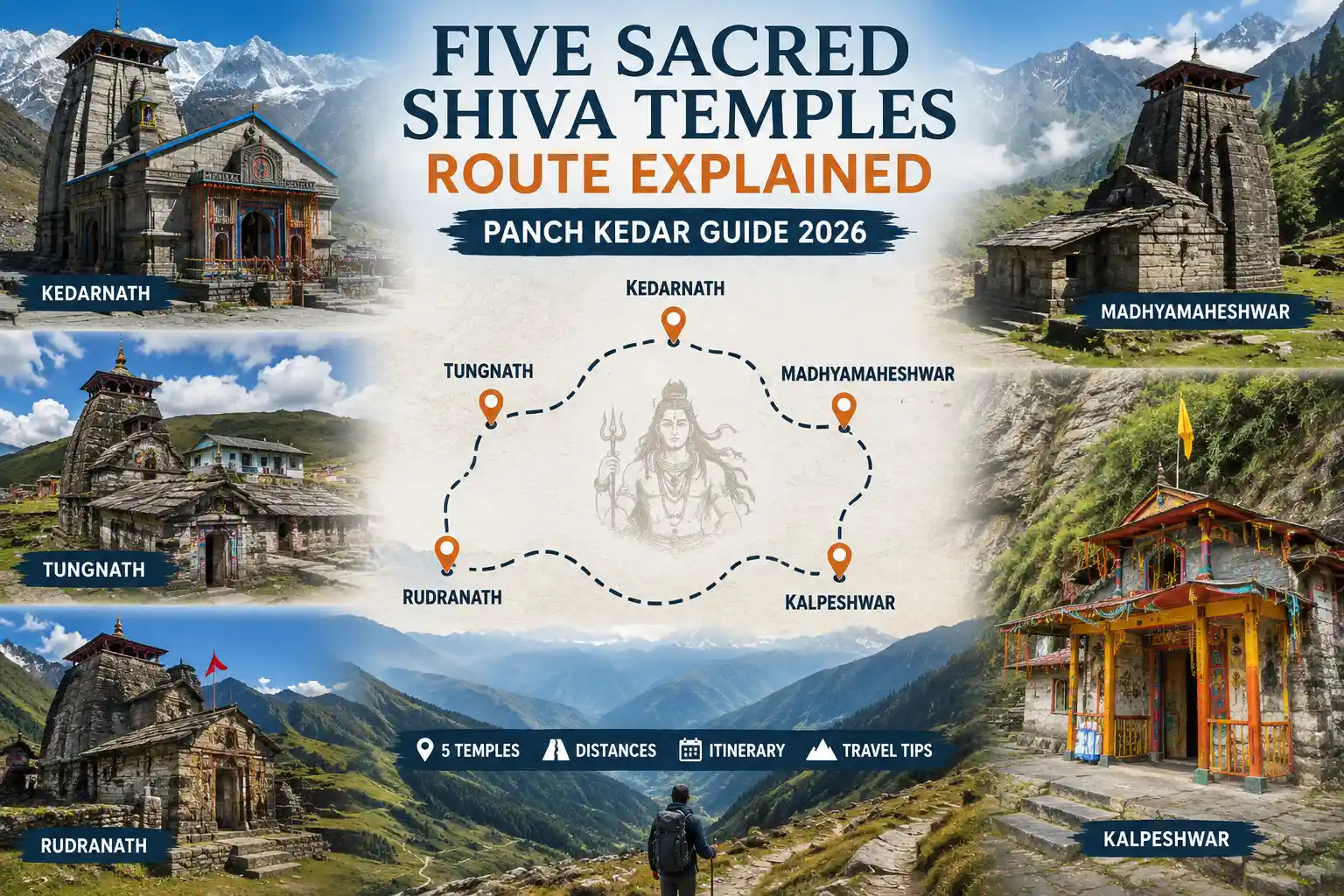
If you have been thinking about doing the Panch Kedar yatra, you have probably already spent a fair amount of time trying to piece together the full route. Which temple comes first? How far is each segment? How high does it actually go? These are the questions most people have, and the answers are not always easy to find in one place.
Five Sacred Shiva Temples Route Explained — every temple, every altitude figure, every distance, all laid out in plain, simple terms, so you have a clear picture before you start planning. No scattered information across ten different pages, no confusion about sequencing, just the full route from start to finish in one place.
Whether you are approaching it as a pilgrimage, a high-altitude adventure, or simply a long-held item on your bucket list, understanding the route properly is the first step. The Panch Kedar yatra covers five temples spread across different valleys in the Garhwal Himalayas, and each one comes with its own trail, its own altitude, and its own character.
What Is the Panch Kedar Yatra?
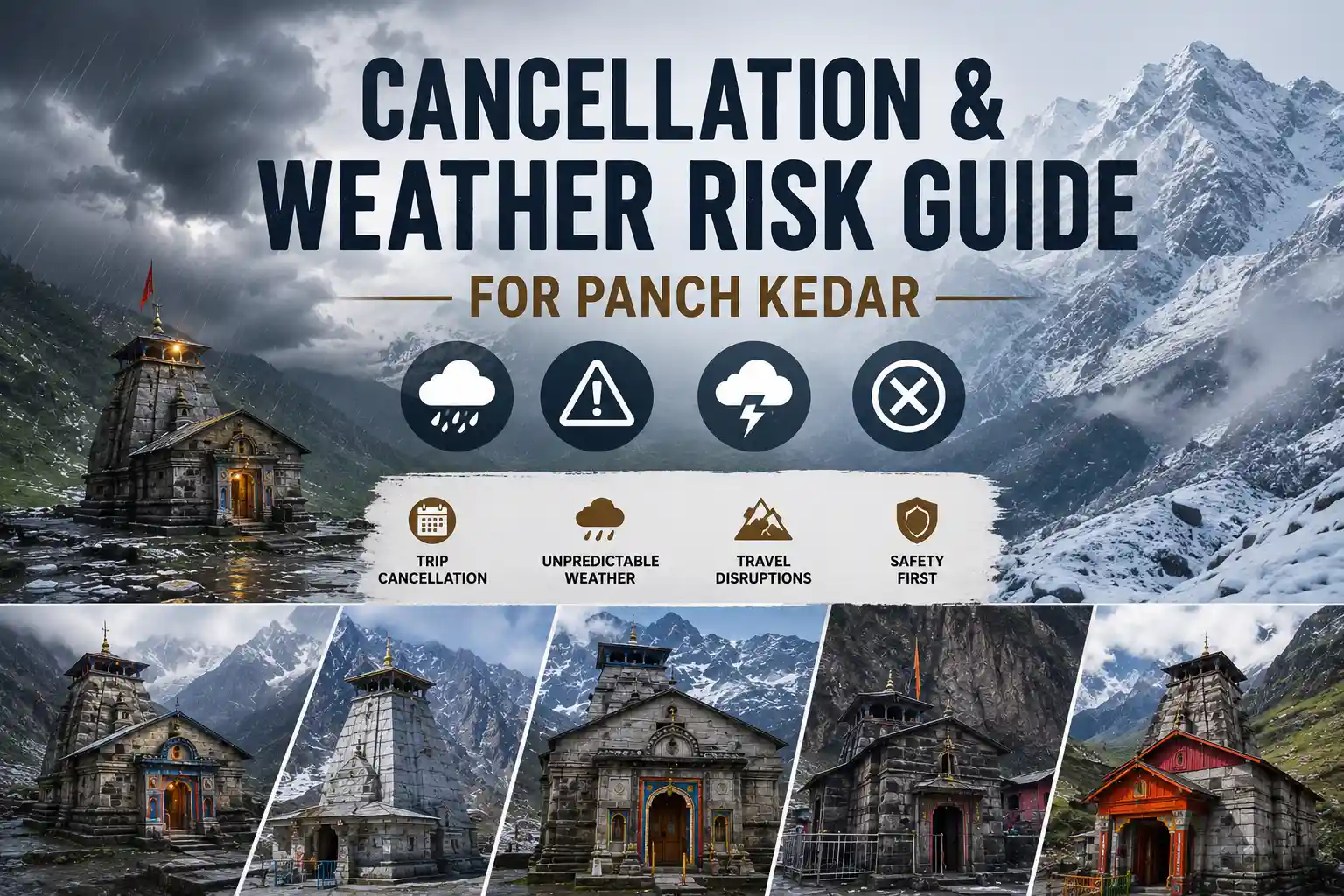
Panch Kedar means “five Kedars.” It refers to a circuit of five ancient Shiva temples located in the Garhwal Himalayas of Uttarakhand. According to Hindu mythology, these five shrines mark the spots where different parts of Lord Shiva’s body appeared when he took the form of a bull to evade the Pandavas. The five temples are Kedarnath, Tungnath, Rudranath, Madhyamaheshwar, and Kalpeshwar — each sitting at a different altitude, in a different valley, accessible by a different trail.
The Panch Kedar yatra is not a single continuous trail. It is a combination of road travel and trekking across multiple valleys. In total, you are looking at roughly 107 kilometres of trekking and around 500 kilometres of road travel. That is what makes the Panch Kedar trek 2026 a serious undertaking — not just physically, but logistically.
Most people complete it in 12 days, though that timeline depends on how you sequence the temples and how much acclimatisation time you allow. The traditional order followed by most pilgrims and trekkers starts from Kedarnath and ends at Kalpeshwar, though some groups do it in reverse.
How to Reach the Starting Point
Most trekkers begin their Panch Kedar journey from either Rishikesh or Dehradun. Both cities are well connected by road and rail to the rest of India.
From Rishikesh: Rishikesh is the most common gateway for the Panch Kedar trek for travellers from Rishikesh. From here, you take a road journey of around 200 kilometres to reach Gaurikund or Sonprayag — the base for the first temple, Kedarnath. The road passes through Devprayag, Rudraprayag, and Ukhimath.
From Dehradun: If you are flying in, Jolly Grant Airport in Dehradun is the nearest airport. The Panch Kedar trek from Dehradun follows a similar road route through Rishikesh before heading into the mountains.
The Full Panch Kedar Yatra Route: Temple by Temple
Here is the complete route breakdown, segment by segment, in the order most commonly followed.
Temple 1 — Kedarnath (3,583 metres)
Trek Distance: 16 km one way from Gaurikund Base Town: Sonprayag / Gaurikund
Kedarnath is where most people begin the Panch Kedar yatra, and it is also the most visited of the five shrines. The trek starts at Gaurikund (1,982 metres) and climbs steadily to the temple at 3,583 metres. The trail is well-developed, with tea shops and rest points along the way.
The Kedarnath temple itself is one of the twelve Jyotirlingas and sits against a dramatic backdrop of snow-capped peaks, with the Kedarnath and Kedar Dome mountains looming behind it. The shrine is believed to enshrine the hump of the bull (Shiva’s form).
After your darshan at Kedarnath, you descend back to Gaurikund and then drive toward the next temple’s base. This segment alone involves significant altitude gain — from around 1,982 metres to 3,583 metres — so it sets the tone for the trek ahead.
Temple 2 — Madhyamaheshwar (3,497 metres)
Trek Distance: 24 km one way from Ransi village Base Town: Ukhimath / Ransi
After Kedarnath, you drive to Ukhimath and then to Ransi village, which serves as the trailhead for Madhyamaheshwar. This is often considered the most scenic stretch of the entire Panch Kedar trek route.
The trail passes through dense forests of oak and rhododendron in the lower sections before opening into high-altitude meadows. The temple at Madhyamaheshwar sits at 3,497 metres and is believed to enshrine the navel of the divine bull. On a clear day, the views from here include peaks like Kedarnath, Chaukhamba, Neelkanth, and Kedardome.
The trek to Madhyamaheshwar is 24 kilometres each way — longer than Kedarnath and considerably less crowded. You will likely spend a night near the temple before descending.
Temple 3 — Tungnath (3,680 metres)
Trek Distance: 4 km one way from Chopta Base Town: Chopta
Tungnath is the highest Shiva temple in the world, sitting at 3,680 metres. It is also the shortest trek of the five, with a relatively easy 4-kilometre climb from the meadows of Chopta (around 2,680 metres). Because of this, Tungnath is sometimes done as a day trek even by beginners — but in the context of the Panch Kedar yatra, it comes after back-to-back demanding treks and deserves full respect.
The trail from Chopta is steep in sections but manageable. From the temple, you can continue another kilometre uphill to Chandrashila peak (4,130 metres) for a panoramic view of the Garhwal Himalayan range. Tungnath enshrines the arms of the divine bull.
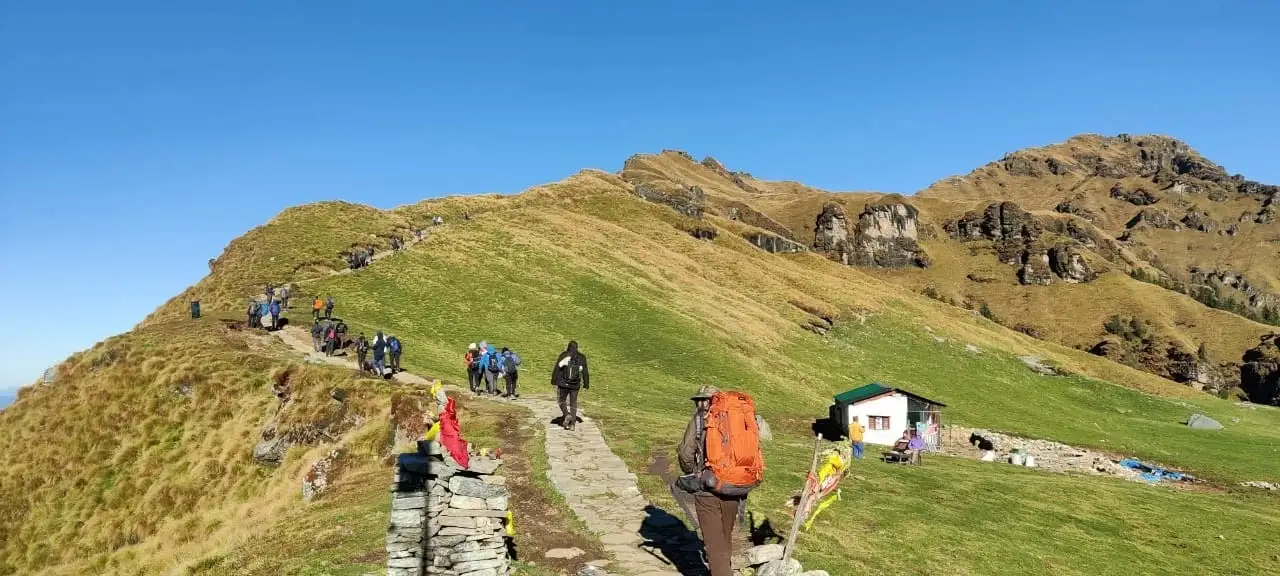
Chopta itself is a beautiful camping spot surrounded by bugyal — the Garhwali word for high-altitude grasslands. If you are doing the Panch Kedar trek 2026, this segment often works as a slight breather compared to what comes before and after.
Temple 4 — Rudranath (2,286 metres)
Trek Distance: 20 km one way from Sagar village Base Town: Gopeshwar / Sagar
Rudranath is, without question, the most remote and wild of the five temples. The trek starts from Sagar village near Gopeshwar and takes you through dense rhododendron forests, wide bugyals, and rocky terrain before reaching the shrine at 2,286 metres.
The altitude figure can be misleading — Rudranath sits lower than Tungnath on paper, but the trail is far more rugged and isolated. The distance is 20 kilometres each way, and the path is not as well-marked as the other temples. This is where a good guide becomes important.
Rudranath enshrines the face (mukha) of the divine bull, which is why it is also called the “mukha lingam” of the Panch Kedar. The temple has a raw, ancient quality to it that feels completely different from the more visited shrines. The surrounding landscape — with small alpine lakes, flowering meadows, and distant peaks — is strikingly beautiful.
Plan to spend a night at Rudranath before descending.
Temple 5 — Kalpeshwar (2,134 metres)
Trek Distance: 2 km one way from Urgam village Base Town: Helang / Urgam
Kalpeshwar temple trek is the final temple in the Panch Kedar sequence and also the shortest trek — just 2 kilometres from Urgam village. It is the only one of the five that remains open throughout the year. The temple is located inside a natural cave and enshrines the matted hair (jata) of Shiva.
The approach through the Urgam valley is lush and green, quite different from the high-altitude landscapes of the other temples. While the trek itself is brief, the setting is serene, and the journey to reach Urgam by road from Helang adds to the overall distance of the yatra.
Kalpeshwar is often reached via Joshimath, which also serves as a major junction on this route.
Altitude and Distance Overview of Panch Kedar Yatra
Understanding the altitude and trekking distance of each temple is crucial for planning your Panch Kedar journey effectively. Each temple sits at a different elevation and requires varying levels of effort, which directly impacts your itinerary, acclimatisation, and physical preparation.
Starting with Kedarnath, the temple is located at an altitude of 3,583 meters. The trek begins from Gaurikund and covers a distance of approximately 16 kilometres one way. This is the most popular and well-developed route among all five temples.
Next is Madhyamaheshwar, situated at 3,497 meters above sea level. The trek starts from Ransi village and stretches around 24 kilometres one way. This route is longer and more demanding, passing through dense forests and remote Himalayan terrain.
Tungnath, the highest Shiva temple in the world, stands at an altitude of 3,680 meters. The trek is relatively short, covering just 4 kilometres from Chopta. Despite the shorter distance, the high altitude can make the climb slightly challenging.
Rudranath is located at a lower altitude of 2,286 meters, but the trek is quite long and strenuous. Starting from Sagar village, the one-way distance is about 20 kilometres. This route is known for its raw natural beauty and isolated trails.
Finally, Kalpeshwar sits at an altitude of 2,134 meters. It is the easiest trek among the Panch Kedar temples, with only a 2-kilometre walk from Urgam village. The trail is relatively simple and accessible throughout most of the year.
The trekking distance across all five temples comes to approximately 66 kilometres one way. When you include the return journeys and connecting routes, the complete Panch Kedar yatra involves around 107 kilometres of trekking. This makes it a moderately to highly challenging pilgrimage that requires both physical endurance and proper planning.
Trekking in the Garhwal Himalayas: What the Terrain Is Actually Like
One thing worth saying clearly — trekking in the Garhwal Himalayas is not like trekking in other parts of India. The trails are varied, the weather can shift without warning, and the remoteness of certain sections (especially Rudranath) means you need to be genuinely prepared.
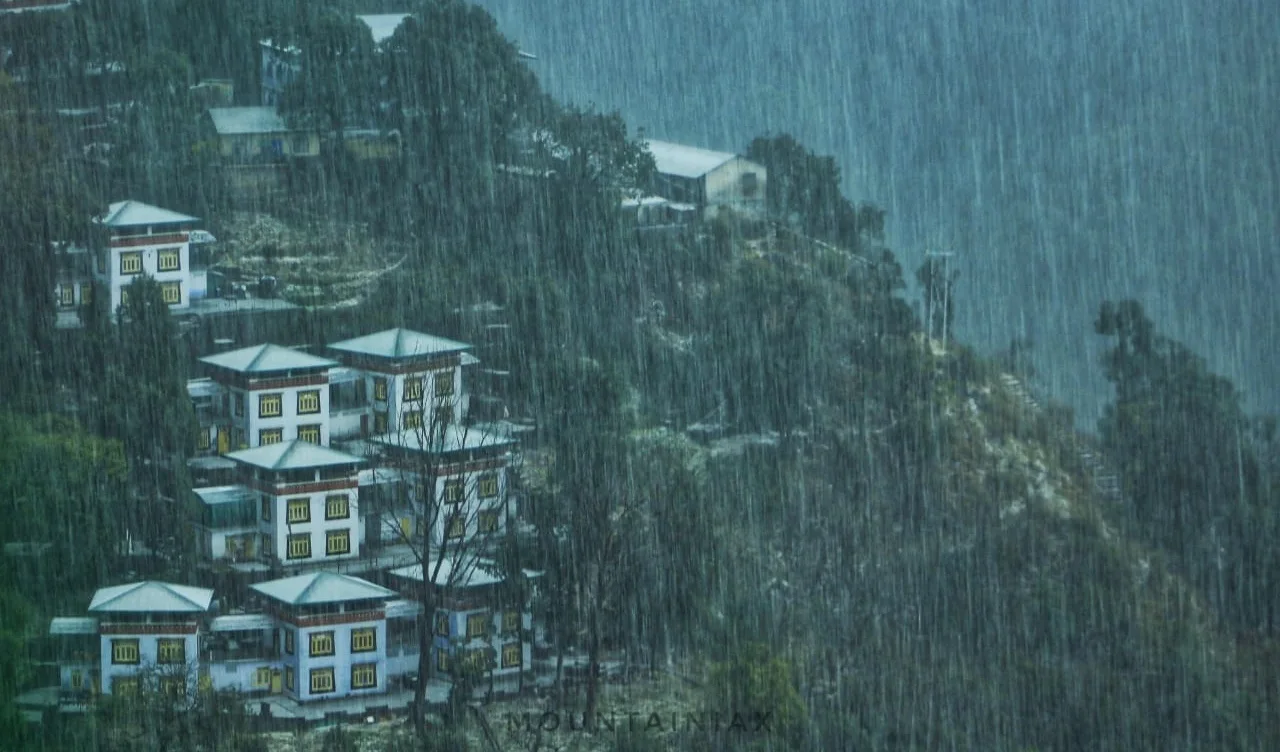
The lower sections of most temples involve forested paths that are mossy, sometimes slippery, and often narrow. As you climb, the forests give way to meadows and then to rocky alpine zones. The monsoon months (July–August) bring heavy rain that makes trails muddy and river crossings tricky. Post-monsoon (September–October) and pre-monsoon (May–June) are the best windows for the full Panch Kedar yatra.
Snow can be present at higher elevations — especially near Tungnath and Madhyamaheshwar temple trek — even in May and October. Good trekking shoes with a solid grip are non-negotiable.
How to Do the Panch Kedar Yatra: Practical Pointers
A few things that will make your Panch Kedar trek guide actually useful in practice:
- Season: May to June and September to November are the two main windows. The temples close for winter (usually by November), and Kedarnath in particular has fixed opening and closing dates that are announced annually.
- Fitness: The yatra involves five separate treks across 12 days or more. You do not need to be an athlete, but consistent fitness — the ability to walk 12–20 kilometres a day on uneven terrain — is necessary.
- Accommodation: Kedarnath and Tungnath have the most organised accommodation options. Madhyamaheshwar and Rudranath are more basic — small dhaba-style shelters or tents. Carry a sleeping bag.
- Guides: For Rudranath, especially, a local guide is strongly recommended. The trail is not always obvious, and the weather can close in quickly.
- Altitude sickness: With four of the five temples above 2,000 metres and three above 3,400 metres, acclimatisation matters. Do not rush the itinerary. Build in rest days where possible.
- Permits and registration: Kedarnath requires registration. Keep your ID documents handy throughout the yatra. Rules can change year to year, so check the current requirements before your Panch Kedar yatra 2026 trip.
Why 2026 Is a Good Year to Plan This Trek
Interest in the Panch Kedar route has grown considerably in recent years, with more people seeking longer, more meaningful treks rather than quick summit attempts. The Panch Kedar trek 2026 season falls in line with updated road infrastructure in the Garhwal region, which has made some of the longer road journeys between temples faster and less gruelling than they used to be.
That said, popular windows — especially the October post-monsoon season — do get booked up early. Accommodation near Kedarnath fills quickly around auspicious dates. If you are planning the full yatra, doing your groundwork at least three to four months in advance is a smart call.
A Trek That Is More Than the Sum of Its Parts
What makes the Panch Kedar different from most Himalayan treks is not any single temple or any single viewpoint. It is the cumulative experience of moving through different valleys, different terrains, and different moods of the mountains over nearly two weeks.
Kedarnath is grand and crowded. Madhyamaheshwar is serene and vast. Tungnath is brief but stunning. Rudranath is raw and remote. Kalpeshwar is quiet and intimate. Together, they form a circuit that covers more of the Garhwal Himalayas — emotionally and geographically — than most treks twice its length.
Whether you are approaching it as a pilgrimage, an adventure, or somewhere in between, the Panch Kedar yatra has a way of staying with you long after you are back home.
Final Thoughts
The Panch Kedar yatra route is not a single trail you can just show up for. It is a multi-valley, multi-week journey that demands planning, physical readiness, and a genuine respect for mountain conditions. The 107 kilometres of trekking across five separate segments, combined with nearly 500 kilometres of road travel through the Garhwal Himalayas, makes it one of the most demanding yatras in Uttarakhand — and also one of the most rewarding.
What you get at the end of it is hard to put into words. Five ancient temples, each with its own character and landscape. Five completely different trail experiences. Views of some of the most iconic peaks in the Garhwal range. And a sense of having actually covered the mountains — not just passed through them.
If the Panch Kedar trek 2026 is on your list, use this route breakdown as your foundation. Know your altitudes, understand the distances, plan your rest days, and do not underestimate the more remote segments like Rudranath. The logistics of this yatra are just as important as the trekking fitness.
Done right, the Panch Kedar yatra is the kind of journey that most trekkers only do once — but never forget.