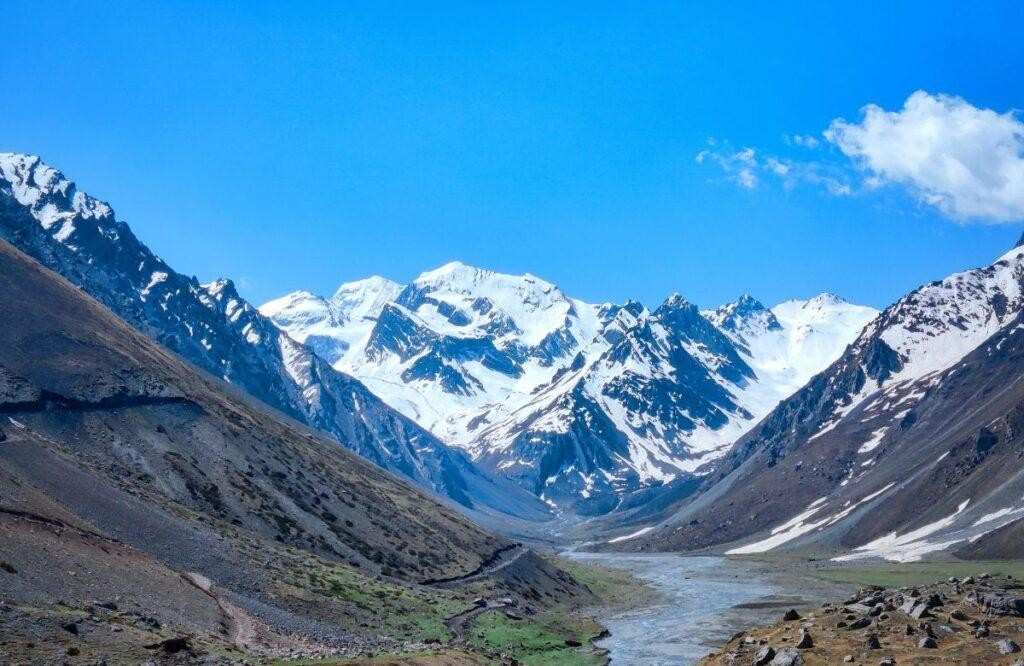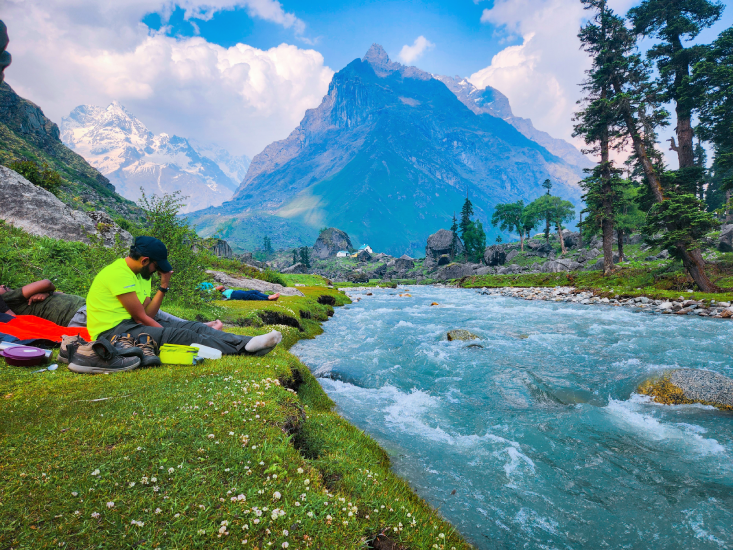
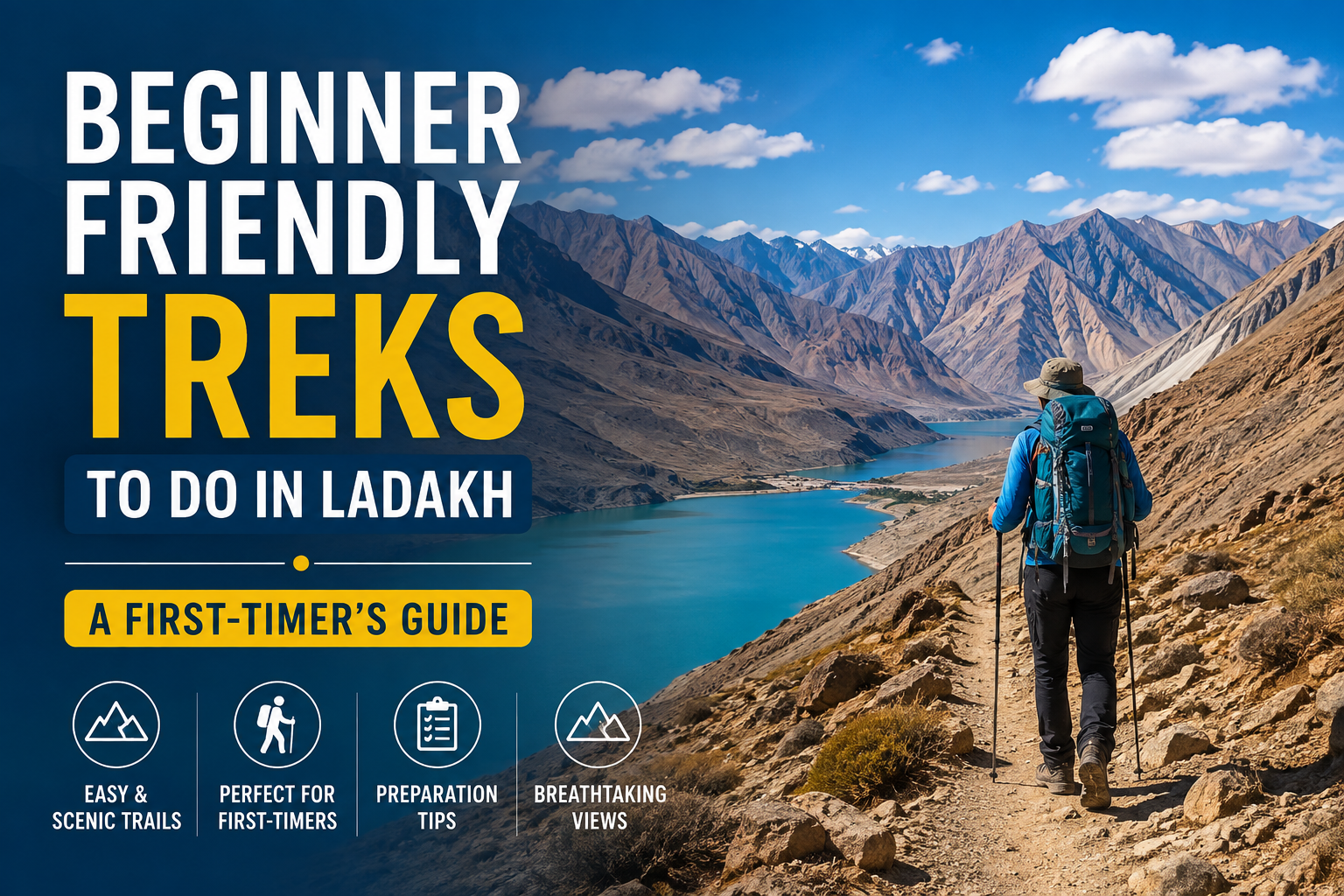
Ladakh has a reputation for being extreme, and in some ways that reputation is earned. Leh itself sits at 3,500 metres, higher than most trek summits in the rest of the Himalayas, and the region’s nickname, “Land of High Passes,” is not marketing copy. But that reputation also scares off a lot of first-time trekkers who would otherwise love what Ladakh has to offer: stark desert mountains, whitewashed monasteries clinging to cliffs, and villages that still run on barley farming and yak herding.
The good news is that beginner friendly treks to do in Ladakh genuinely exist, and they are not a watered-down version of the “real” experience. Routes like the Sham Valley trek were built around shorter days, homestays instead of high camps, and altitudes that stay well under the passes that make treks like Markha Valley or Stok Kangri so demanding. You get the same monastery visits, the same barley fields, and the same night skies, minus the punishing pass crossings.
This guide walks through which Ladakh treks actually suit a first-timer, what altitude and distance figures to expect from each, how to acclimatise properly before you start walking, and the permits and gear you will need to sort out in advance. Everything here is based on verified route data rather than marketing claims, so you can plan with realistic expectations.
What Makes a Trek Beginner Friendly in Ladakh
Every trek in Ladakh involves some degree of altitude exposure, so “beginner friendly” here does not mean “easy” in the way a forest walk in the lower Himalayas might be. It means the trek is structured in a way that a reasonably fit first-timer can handle with proper preparation. A few things separate the gentler routes from the demanding ones:
- Lower base and peak altitudes, typically staying under 4,000 metres rather than crossing 5,000-metre passes
- Shorter daily walking hours, usually four to six hours instead of seven or eight
- Homestay-based itineraries, which mean better food, real beds, and less exposure to overnight cold than tented high camps
- Gradual altitude gain, giving your body time to adjust instead of climbing a pass on day one
- Well-marked trails close to villages, so getting lost or being stranded is far less likely
Trekking in Ladakh for beginners works best when these five factors line up together, and the routes below are chosen because they do.
Trek Comparison at a Glance
| Trek | Duration | Max Altitude | Difficulty | Best Suited For |
| Sham Valley Trek | 3 to 4 days | 3,874 m (12,710 ft) | Easy to moderate | True first-timers, families |
| Spituk to Stok Trek | 3 to 4 days | 4,900 m (16,076 ft) | Moderate | Fit beginners wanting a short pass crossing |
| Markha Valley (Chilling start) | 5 to 6 days | 5,260 m (17,060 ft) | Moderate to difficult | Beginners with prior multi-day trekking experience |
| Nubra Valley Village Walks | 2 to 3 days | 3,600 m (11,811 ft) | Easy | Combining trekking with a Ladakh road trip |
Best Beginner Treks in Ladakh
Sham Valley Trek: The Baby Trek of Ladakh
Locally nicknamed the “baby trek,” the Sham Valley trek is the route most guides recommend when someone asks about beginner friendly treks to do in Ladakh. It runs through the lower Sham region west of Leh, connecting villages like Likir, Yangthang, and Hemis Shukpachan over three to four days.
- Starting point: Likir Monastery, about a two-hour drive from Leh
- Altitude range: 3,200 m to 3,874 m, well below the passes on Ladakh’s harder routes
- Daily walking time: four to six hours, mostly on gentle gradients between villages
- Accommodation: homestays in traditional Ladakhi houses rather than tents
The trail crosses a few minor passes, including Phobe La and Tsermangchan La, none of which involve technical climbing. What makes this route valuable beyond its easy grade is the cultural access it gives you. You sleep in family homes, eat meals cooked on traditional stoves, and pass through apricot orchards that most tourist circuits skip entirely. It is worth pairing this trek with a short stay in Leh beforehand, similar to how our guide on planning a first Himalayan trek recommends building in acclimatisation days before any high-altitude route.
Spituk to Stok Trek: A Short Taste of a Real Pass Crossing
If Sham Valley feels too tame and you want one genuine high-altitude pass without committing to a week-long expedition, the Spituk to Stok trek is the next step up. It starts just outside Leh at Spituk Monastery and finishes in Stok village, crossing the Stok La at around 4,900 metres.
- Duration: three to four days
- Distance: roughly 26 kilometres
- Highlight: a single pass crossing that gives you a real sense of high-altitude trekking without the extended exposure of longer routes
This trek demands more fitness than Sham Valley because of the pass, but it stays short enough that a well-acclimatised beginner can manage it. It is a sensible warm-up if Markha Valley or a similar route is on your list for a future trip.
Markha Valley Trek: Beginner Friendly Only With the Right Preparation
The Markha Valley trek shows up on almost every list of popular Ladakh treks, and it is often mislabelled as beginner-friendly. It is not, at least not in the way Sham Valley is. Starting from Chilling, the route climbs from roughly 3,200 metres to 5,260 metres at Kongmaru La, the highest point on the trek, over five to six days.
- The Chilling start point is gentler than the Spituk start, which gains over 750 metres in a single day
- Daily walking stretches to six or seven hours through the Hemis National Park region
- The final descent from Kongmaru La is long and steep, which tires the legs more than the climb itself
Markha Valley suits a beginner only if that person has already done at least one shorter Himalayan trek and has built genuine cardiovascular fitness beforehand. If this is your very first trek anywhere, start with Sham Valley or Spituk to Stok first and treat Markha as the follow-up.
Nubra Valley Village Walks: Trekking Combined With a Road Trip
For travellers doing a broader Leh-Nubra-Pangong circuit who still want a walking component, short village-to-village hikes around Nubra Valley offer an easy add-on. These are not structured multi-day expeditions in the way the other three are, but rather two to three days of gentle walking between Sumur, Panamik, and nearby villages at altitudes under 3,600 metres, often combined with the region’s famous double-humped Bactrian camel safaris near the sand dunes.
Best Time to Trek in Ladakh for Beginners
Timing affects both trail conditions and how your body handles altitude, so it matters as much as picking the right route.
- June to September is the standard trekking season, when snow has cleared from the lower passes
- July and August bring the warmest daytime temperatures but also the most trekkers on popular routes
- September offers cooler days, clearer skies, and thinner crowds, making it a strong choice for first-timers who want a quieter trail
- Winter access is possible only on the specialised Chadar frozen river route, which is not a beginner trek under any circumstances
How to Acclimatise Before a Beginner Ladakh Trek
Altitude, not distance, is what actually derails most first-time trekkers in Ladakh. Leh sits higher than the summit of many treks elsewhere in India, so your acclimatisation plan matters more here than almost anywhere else in the Himalayas.
- Spend at least two full days resting in Leh before starting any trek, doing only short, flat walks
- Avoid alcohol and heavy exertion during those first 48 hours while your body adjusts to reduced oxygen
- Drink more water than you think you need, since dehydration worsens altitude symptoms
- Choose a trek with a gradual altitude gain over the first two days rather than a steep early climb
- Watch for early symptoms of acute mountain sickness, including persistent headache, nausea, or unusual fatigue, and descend if they worsen rather than pushing through
This sequence is the same one we recommend across our Himalayan trek planning guides, and it holds particularly true for high-altitude trekking in Ladakh, where the starting elevation alone puts most trekkers above 3,000 metres before they take a single step on the trail.
Permits You Will Need
Most beginner-friendly routes in Ladakh, including Sham Valley and Spituk to Stok, fall outside restricted zones and do not require an Inner Line Permit for Indian nationals. Markha Valley, since it passes through Hemis National Park, requires a permit and an environment fee that your trekking operator typically arranges. Foreign nationals should carry a valid Protected Area Permit where applicable, along with photocopies of their passport and visa, since some checkpoints along the route ask for these.
Packing Essentials for First-Timers
- Layered clothing, since daytime sun in Ladakh can feel warm while nights regularly drop below freezing even in July
- A sleeping bag rated for at least minus 5 degrees Celsius if your trek includes any camping nights
- Broken-in trekking shoes with ankle support, never new shoes straight out of the box
- Sunscreen with high SPF and UV-protective sunglasses, since the thin air at altitude intensifies sun exposure
- A basic first-aid kit including altitude sickness medication, after consulting a doctor before departure
Common Mistakes First-Time Trekkers Make in Ladakh
- Flying into Leh and starting a trek the next morning without any acclimatisation buffer
- Choosing Markha Valley or a similarly demanding route as a first-ever trek instead of building up to it
- Underestimating how much colder nights get compared to daytime temperatures
- Skipping travel insurance that covers high-altitude evacuation, which most standard policies exclude
Frequently Asked Questions
1. Which is the easiest trek in Ladakh for a complete beginner?
The Sham Valley trek, often called the baby trek, is the easiest genuine trekking route in Ladakh. It stays under 3,900 metres, involves four to six hours of walking per day, and uses homestays instead of tented camps.
2. Is the Markha Valley trek suitable for first-time trekkers?
Not usually. Markha Valley crosses Kongmaru La at around 5,260 metres and involves five to six days of sustained walking. It is better suited to trekkers who already have one shorter Himalayan trek behind them.
3. How many days should I spend in Leh before starting a trek?
Most trek operators and medical guidelines recommend a minimum of two full rest days in Leh before beginning any trek, to allow your body to adjust to the altitude.
4. What is the best month for a beginner to trek in Ladakh?
September is often considered ideal for first-timers, offering stable weather, clear trails, and fewer crowds than the peak July-August season, while June still carries some residual snow on higher sections.
5. Do I need a permit for beginner-friendly Ladakh treks?
Routes like Sham Valley and Spituk to Stok generally do not require an Inner Line Permit for Indian nationals, though Markha Valley requires a Hemis National Park permit that your operator arranges.
6. Is prior trekking experience necessary for Sham Valley?
No. Sham Valley is specifically designed as an entry-level route, and reasonably fit trekkers with no prior high-altitude experience complete it regularly, provided they acclimatise properly beforehand.
Ready to Plan Your First Ladakh Trek
Picking the right route matters more in Ladakh than almost anywhere else in the Himalayas, since altitude affects everyone differently regardless of fitness level. If you are weighing a beginner-friendly route against a more demanding one, or want help building an acclimatisation schedule around your travel dates, reach out to the Mountainiax team for personalised trek planning support, or browse our full range of guided Himalayan treks to find the route that matches your experience level.