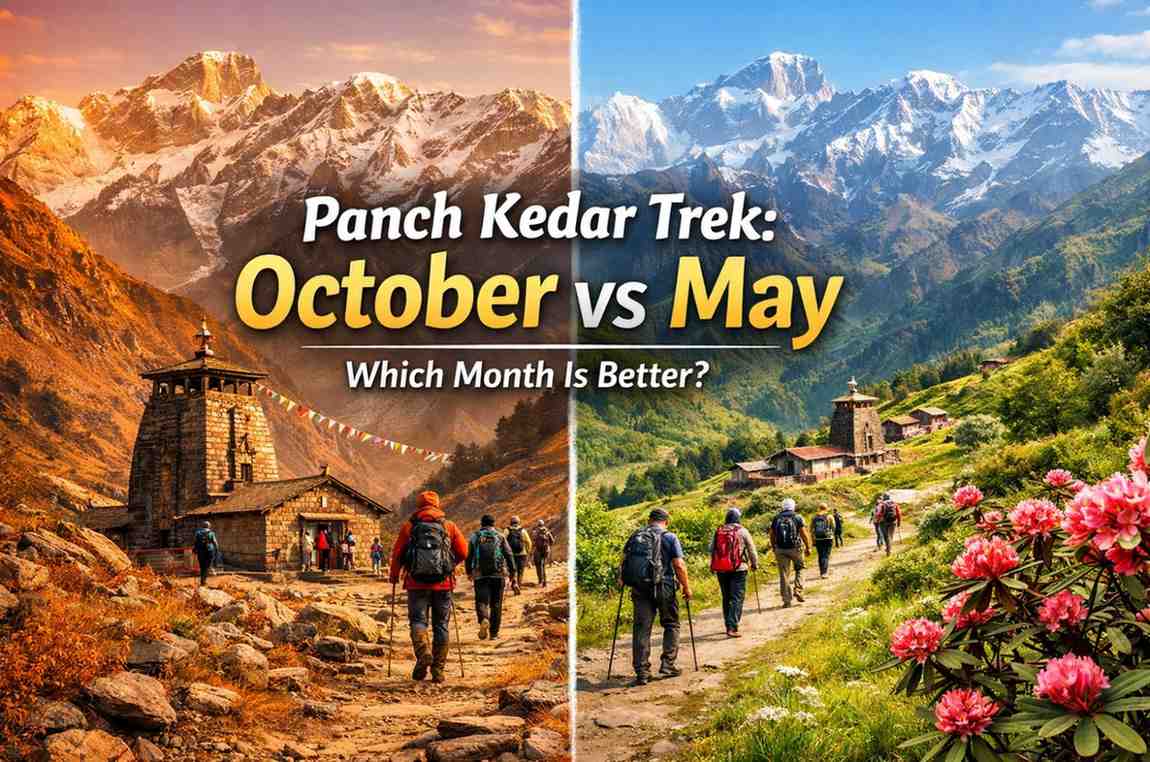
Planning the Panch Kedar Trek requires careful timing as seasonal conditions significantly influence the overall trekking experience. The comparison of Panch Kedar Trek in October vs May is one of the most important considerations for trekkers aiming to balance safety, scenery, and trail accessibility within the limited operational window.
Both months offer distinct advantages shaped by Himalayan weather patterns and terrain dynamics. May introduces trekkers to blooming landscapes, residual snow patches, and relatively moderate temperatures, creating a vibrant and refreshing trail environment. In contrast, October delivers post-monsoon clarity, stable weather, and dry trails, making it ideal for those prioritising visibility and consistent trekking conditions.
This guide provides a structured evaluation of key factors, including weather, trail quality, crowd levels, and overall experience. It is designed to help you make a precise and informed decision based on your trekking objectives, physical preparedness, and preferred environmental conditions.
What Makes the Panch Kedar Unique
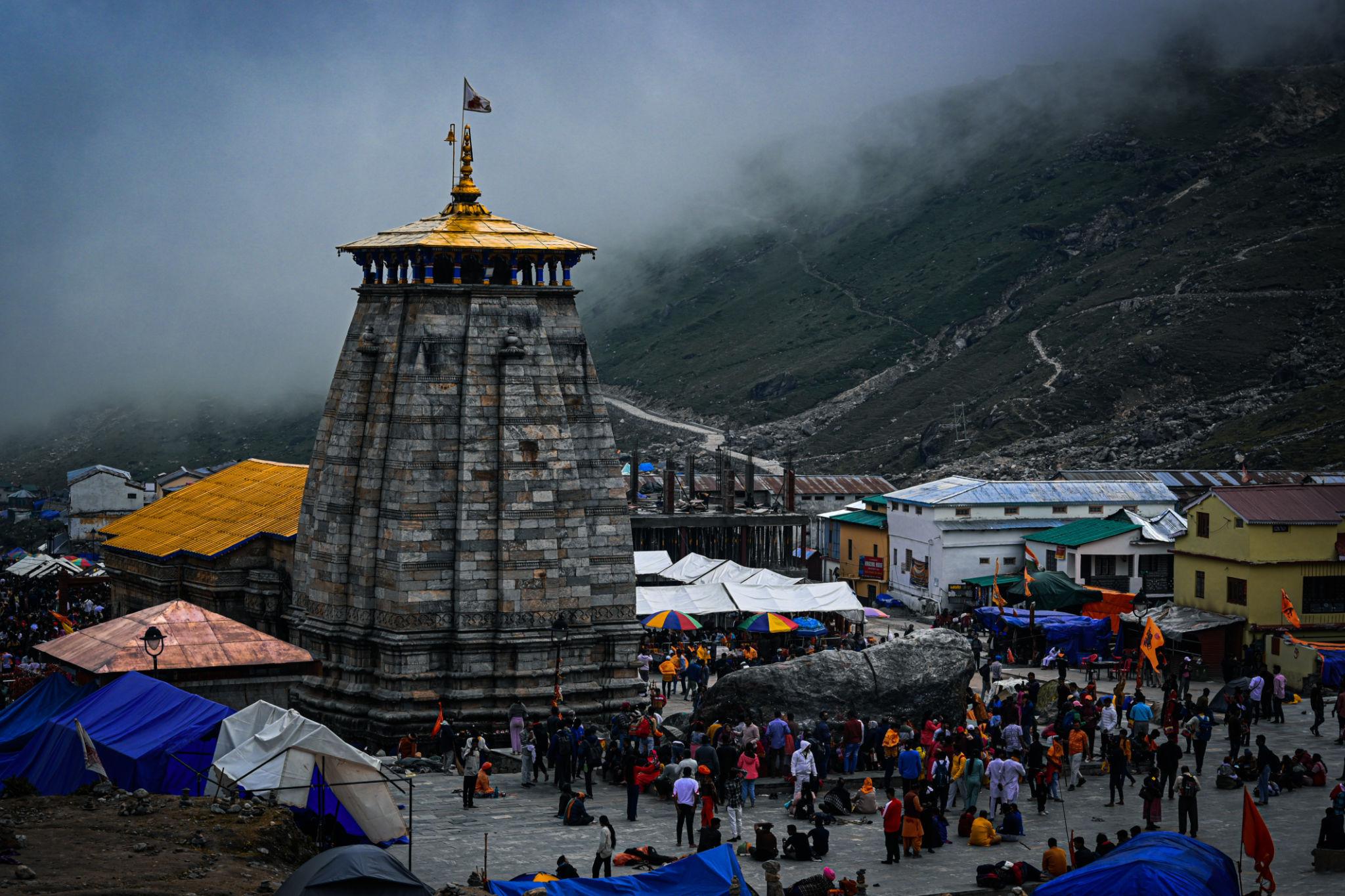
The Panch Kedar Yatra connects five ancient Shiva temples — Kedarnath, Tungnath, Rudranath, Madhyamaheshwar, and Kalpeshwar — spread across the upper reaches of Uttarakhand’s Rudraprayag and Chamoli districts. Unlike a single-peak trek, this is a multi-section pilgrimage trail that passes through multiple valleys, distinct altitudes, and several microclimates.
That is precisely why the timing question matters more here than on most Himalayan treks. What’s beautiful or safe in one section may be slippery, snowed-in, or fog-bound in another, depending on the month you travel.
The Panch Kedar Trek difficulty varies significantly by section. Rudranath (altitude ~3,600 m) and Madhyamaheshwar (~3,497 m) are the most physically demanding, involving multi-day approaches over high-altitude terrain. Tungnath (~3,680 m, the highest Shiva temple in the world) is moderately challenging. Kedarnath (~3,583 m) is the most frequented and best-served. Kalpeshwar (~2,200 m) is the most accessible and can be visited almost year-round.
Both May and October fall within the official Panch Kedar open season (roughly May to June, and September to November), but the on-ground trekking conditions within that window differ substantially.
Trekking Panch Kedar in May
May marks the reopening of the Panch Kedar shrines after the long Himalayan winter. The temples typically open in the first or second week of May, with Kedarnath’s opening date announced by the local Jyotirmath peethadhishwar based on auspicious timings (usually coinciding with Akshaya Tritiya).
Early May — roughly the first two to three weeks — is widely considered a sweet spot. Snowmelt is recent, the Madmaheshwar and Rudranath bugyals (high-altitude meadows) are transitioning from white to vivid green, and temperatures at mid-altitude hover between a pleasant 8–18°C during the day. Nights can be cold (2–8°C at base camps), so proper layering is essential.
The most visually striking aspect of a May trek is the combination of rhododendron blooms and residual snow on the high ridgelines. The approach forests below Rudranath and on the Chopta–Tungnath trail are among the finest rhododendron corridors in Uttarakhand, turning crimson and pink between 1,800–3,000 m. Simultaneously, peaks above 5,000 m still carry their full winter snowpack, creating a dramatic contrast against blue skies.
Kedarnath’s backdrop is especially photogenic in May. The Kedarnath peak (6,940 m) and the surrounding Chaukhamba massif appear in full glory before monsoon clouds obscure the high peaks.
Downsides of May
May is not without its complications. Trail conditions can be inconsistent, particularly at elevations above 3,200 m:
• Sections of the Rudranath approach (especially between Panar and Pitradhar) may carry patches of old snow and ice in early May, requiring trekking poles and careful footing.
• The Kedarnath upper trail beyond Gaurikund may involve wading through snowmelt streams and crossing snow bridges that are firm in the morning but become soft and unstable by afternoon.
• By late May (after the 20th), pre-monsoon moisture begins building up. Afternoon cloud formation, occasional rain showers, and reduced visibility are common, particularly on the Rudranath and Madhyamaheshwar sections.
• Higher footfall near Kedarnath during the Char Dham season opening can feel crowded on shared sections of the trail, especially around long weekends.
May at a Glance
• Temperature (day): 8–18°C at mid-altitudes
• Temperature (night): 2–8°C at high camps
• Trail condition: Mixed — lower trails excellent, higher trails may have snow patches
• Visibility: Good in early May; reduces late May
• Best window: May 5–20
• Highlight: Rhododendron blooms + snow-capped peaks
Trekking Panch Kedar in October
October is widely regarded as the optimal month for high-altitude trekking across Uttarakhand, and the Panch Kedar Trek is no exception. The monsoon retreats from the Garhwal Himalayas by mid-to-late September, leaving trails firm, consolidated, and completely free of mud. The atmosphere is scrubbed clean by months of rain, and visibility on clear October days can extend beyond 200 kilometres.
From the Rudranath ridge on a clear October morning, it is possible to identify individual peaks of the Nanda Devi massif (7,816 m) to the east, the Gangotri group to the northwest, and the Kedarnath and Chaukhamba peaks to the south. These are the kinds of panoramas that define Himalayan trekking — and October consistently delivers them on the Panch Kedar route.
October also brings a distinct seasonal beauty to the bugyals (high-altitude meadows). The lush green of monsoon gives way to burnished gold and amber as the grasslands transition toward their winter dormancy. The sky takes on a deep cobalt quality that photographers and peak-baggers prize above all other months.
Trail conditions in October are as reliable as they get on any Himalayan trek. Paths are firm underfoot, erosion is minimal, ice patches are absent (until late October at the highest elevations), and the weather windows are predictable. Experienced trekkers and guides consistently rate October Panch Kedar Trek difficulty as the most manageable of the season — not because the terrain changes, but because the trail behaves reliably.
There is also a distinct ceremonial energy to October treks. Most of the five shrines close for the winter in late October or early November (dates are announced annually by the temple trusts). Trekkers who arrive in October are participating in the final weeks of a pilgrimage season that stretches back centuries — a sense of occasion that adds a layer of meaning to the journey.
Downsides of October
• October is the busiest trekking month in Uttarakhand. Popular campsites on the Kedarnath and Rudranath routes, in particular, see elevated footfall. Near Diwali (typically mid-to-late October), sections close to Kedarnath can be genuinely crowded with last-minute pilgrims completing their yatra before the shrine closes.
• Nights become significantly colder in October. At high camps near Rudranath and Madhyamaheshwar, temperatures can drop to -2°C to -5°C. Proper cold-weather sleeping gear (sleeping bags rated to at least -10°C) and insulation layers are non-negotiable.
• By late October (after the 20th), there is an increasing risk of early winter snowfall at elevations above 3,500 m. While this is rare before November, it can happen, and trekkers cutting it close to the shrine-closing dates should monitor forecasts carefully.
• Batch availability is tight. October dates — especially the October 5–25 window — fill well in advance with trekking groups from across India and internationally.
October at a Glance
• Temperature (day): 10–16°C at mid-altitudes
• Temperature (night): -2–6°C at high camps
• Trail condition: Excellent — firm, dry, no snow patches
• Visibility: Exceptional — 200+ km on clear days
• Best window: October 5–25
• Highlight: Panoramic Himalayan views + golden bugyals
May vs October: Side-by-Side Comparison
Here is how the two months compare across the factors that matter most on a multi-day Himalayan trek:
| Factor | May | October | Verdict |
| Weather | Cool, 5–18°C; some afternoon clouds late May | Crisp, dry, 4–16°C; clear blue skies daily | October |
| Trail Condition | Patches of old snow at high elevation; muddy after snowmelt | Firm, dry, well-consolidated trails | October |
| Temple Crowds | Moderate; slightly lower footfall on most sections | Higher near Diwali; otherwise manageable | May |
| Wildflowers & Snow | Spectacular — rhododendrons in bloom, snow still on peaks | Golden bugyals, amber foliage, minimal snow | May |
| Mountain Visibility | Good; occasional cloud cover reduces panoramas | Exceptional — long-range visibility on clear days | October |
| Slot Availability | Good availability, especially early May | Fills up 2–3 months in advance | May |
| Day Temperature (High) | 12–18°C at mid altitudes | 10–16°C at mid altitudes | Even |
| Night Temperature | 2–8°C depending on altitude | -2–6°C at high camps | May |
| Overall Trek Feel | Fresh, vibrant, adventurous | Classic, clear, deeply rewarding | October |
Which Month Should You Choose?
For most trekkers, October is the better month for the Panch Kedar Trek. The combination of dry and firm trails, exceptional mountain visibility, stable weather, and the ceremonial atmosphere of the closing season creates the most consistently rewarding experience. If you are doing this trek once in your lifetime — and for many people, the Panch Kedar Yatra is exactly that — October gives you the clearest views of the Himalaya and the most enjoyable day-to-day trekking conditions.
That said, May has a genuinely compelling case. If you value wildflowers and snow scenery over trail perfection, if you have a personal or spiritual connection to the opening of the shrines, or if your schedule simply does not permit October travel, early May — roughly the first 15 days of the month — is an excellent time to trek. The rhododendron forests and snow-capped peak backdrops are things October cannot offer.
Quick Recommendation by Trekker Type
• First-time trekker to Uttarakhand: October — dry trails, great visibility, classic high-Himalayan experience
• Wildlife & flora enthusiast: May — rhododendrons in full bloom, fresh green meadows, snowmelt streams
• Photographer or peak-bagger: October — panoramic clarity is unmatched across the Garhwal skyline
• Pilgrim completing the full Yatra: May — aligns with the sacred reopening of the shrines
• Budget-conscious trekker: May — slightly lower demand often means more flexible batch timing and pricing
• Experienced trekker wanting solitude: Early May or late September — quieter windows with fewer crowds
Panch Kedar Weather Month-Wise at a Glance
Understanding trekking in the Garhwal Himalayas means understanding the seasonal weather cycles that govern trail access, safety, and visibility. Here is a full month-wise snapshot:
• March – April: Shrines still closed. High-altitude trails inaccessible due to heavy snowpack. Best suited for lower valley explorations only. Pre-season acclimatisation walks are possible below 2,500 m.
• May (Early, 1–15): Shrines reopen. Ideal trekking window. Rhododendron blooms at its peak. Snow is still visible on high ridges. Temperatures pleasant. Best recommended window of the month.
• May (Late, 16–31): Pre-monsoon moisture begins to build. Afternoon cloud cover and occasional showers. Still trekkable, but conditions are less consistent. Visibility reduces.
• June: Rapidly deteriorating conditions as the Southwest Monsoon approaches and then arrives. Trails become slippery, streams swell, and landslide risk increases on several approach roads. Not recommended for trekking.
• July – August: Full monsoon. Trails can be hazardous due to waterlogging, swollen river crossings, and active landslide zones. Shrines remain open for pilgrims, but recreational trekking is strongly inadvisable.
• September (Early, 1–15): Monsoon still active. Similar constraints to August. Not recommended.
• September (Late, 16–30): Monsoon retreating. Trails recovering. The second half of September can be a viable low-season option, though trails remain slightly damp and leeches persist at lower elevations.
• October (Early to Mid, 1–20): Peak season. Optimal conditions across the board. Dry trails, exceptional visibility, and stable weather. This is the premier trekking window of the year.
• October (Late, 21–31): Still good, though nights turn colder. Increasing risk of early snowfall above 3,500 m toward the month’s end. Shrines begin closing for winter (dates announced by temple trusts each year).
• November: Most shrines close in the first half of November. High risk of winter snowfall above 3,000 m. Post-closure, high-altitude trekking becomes dangerous. Kalpeshwar remains accessible, but other temples are locked.
Essential Gear for Each Season
Proper seasonal gear ensures safety and comfort on treks. May demands protection against snow, water, and sun exposure, while October requires insulation against cold, wind, and freezing nights. Packing according to seasonal conditions significantly enhances performance, safety, and overall trekking experience.
May-Specific Gear
• Microspikes or trekking poles with snow baskets (for ice patches above 3,200 m in early May)
• Waterproof outer layer and gaiters (snowmelt and stream crossings are common)
• Sunglasses with UV protection (snow glare at altitude is intense)
• Insect repellent (leeches can be present at lower elevations in late May)
• Sun protection: high-SPF sunscreen, lip balm, and UV-protective clothing
October-Specific Gear
• Sleeping bag rated to -10°C or lower (nights get very cold at high camps)
• Down jacket and thermal base layers (temperatures drop sharply after sunset)
• Windproof outer shell (ridgeline winds in October can be biting)
• Warm gloves, balaclava, and insulated hat
• Hand warmers as backup for pre-dawn starts at high camps
Panch Kedar Trek Difficulty by Section
Difficulty ratings below are for the standard May/October season. Conditions outside these windows will be significantly harder.
| Temple | Max Altitude | Trek Days | Difficulty | Best Month |
| Kedarnath | 3,583 m | 1–2 days | Moderate | May / Oct |
| Tungnath | 3,680 m | 1 day | Easy–Mod | May / Oct |
| Rudranath | ~3,600 m | 3–4 days | Challenging | Oct preferred |
| Madhyamaheshwar | 3,497 m | 4 days | Moderate | Oct preferred |
| Kalpeshwar | ~2,200 m | 1 day | Easy | Year-round |
Acclimatisation & Altitude Considerations
Both May and October involve trekking to altitudes between 3,400 and 3,700 m across multiple days. Altitude sickness (Acute Mountain Sickness or AMS) is a real risk at these elevations, regardless of fitness level. A few principles that apply across both seasons:
• Ascend gradually: Avoid gaining more than 300–500 m of altitude per sleeping day above 2,500 m.
• Hydrate well: Drink 3–4 litres of water per day at altitude. Avoid alcohol in the first 48 hours after ascending.
• Know the symptoms: Headache, nausea, dizziness, and loss of appetite are early signs of AMS. Descent is the definitive treatment.
• Rest days matter: Both the Madhyamaheshwar and Rudranath segments benefit from an acclimatisation night at an intermediate camp before ascending to the shrine.
• Carry a basic altitude kit: Pulse oximeter, Diamox (consult a doctor before use), and basic first aid are recommended on any trek above 3,000 m.
Planning Your Panch Kedar Trek
Whether you choose May or October, the Panch Kedar Trek requires careful planning, proper physical conditioning, and ideally an experienced local guide team — particularly given the multi-section nature of the route, the remoteness of Rudranath and Madhyamaheshwar, and the variable weather that can affect the Garhwal Himalayas even within the open season.
Start physical preparation at least 8–10 weeks before your departure. The trek involves cumulative elevation gains of 700–1,200 m per day on the more demanding sections, and long walking days of 15–20 km. Cardiovascular fitness, leg strength, and experience carrying a loaded daypack are all important.
Permits and registrations for sections of the Panch Kedar Yatra are managed through the Uttarakhand Tourism Development Board and local forest department checkposts. Ensure all permits are arranged before the trek start date, and keep your Aadhaar or passport copies accessible for checkpost registrations at Gaurikund, Sari, and Mandal.
The Garhwal Himalayas do not wait. The shrines close every winter without exception, and the October trekking window in particular is short. The best time for the Panch Kedar Trek is ultimately the window you prepare well for — whichever month that turns out to be.
Summary
Choosing between May and October ultimately depends on what you value most in a high-altitude Himalayan trek. Both months fall within the ideal trekking window, yet they offer distinctly different experiences shaped by terrain behaviour, weather stability, and visual appeal. May delivers a dynamic landscape filled with blooming rhododendrons, lingering snow, and a sense of seasonal transition, making it visually rich but slightly unpredictable in terms of trail conditions.
October, on the other hand, stands out for its consistency. Dry and well-defined trails, exceptional mountain visibility, and stable weather patterns make it the most reliable choice for a majority of trekkers. The clarity of the Garhwal Himalayas during this period, combined with manageable trekking conditions, ensures a smoother and more rewarding journey across all five temples.
From a practical standpoint, first-time trekkers, photographers, and those seeking a well-structured experience will benefit more from October. However, early May remains a strong alternative for those prioritising natural beauty and a quieter spiritual atmosphere.
Ready to Begin Your Panch Kedar Yatra?
Our Panch Kedar trek packages include certified local guides, acclimatisation-built itineraries, accommodation, and end-to-end logistics — so you can focus entirely on the journey.