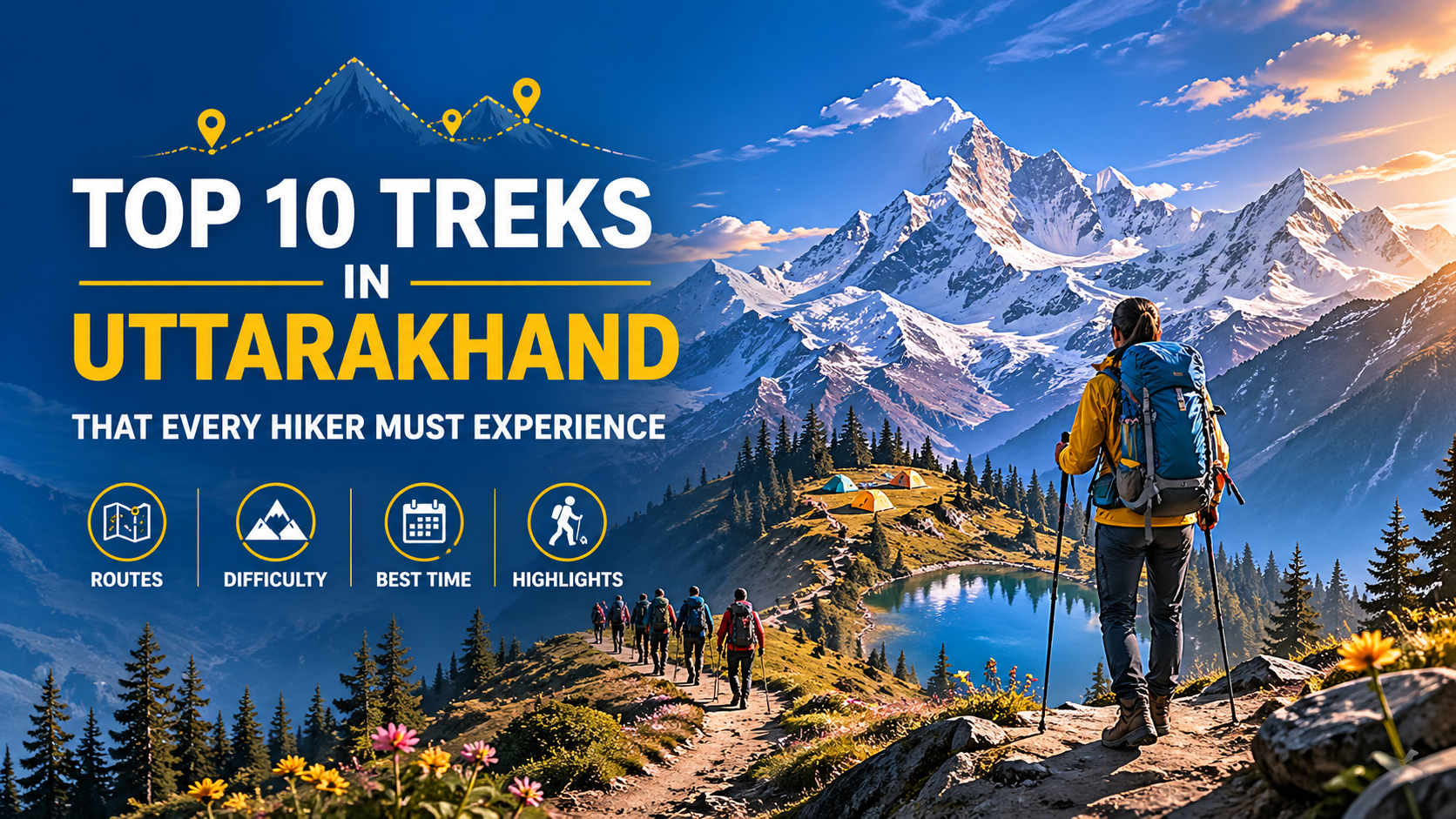
Uttarakhand is not just a state on the map. It is where the Himalayas breathe, where ancient pilgrimage trails cut through rhododendron forests, and where every ridge reveals a view that quietly rewires something inside you. From meadows carpeted in alpine flowers to frozen lakes resting beneath 6,000-metre giants, this mountain state in northern India holds some of the most diverse and rewarding trekking routes on the planet.
The trekking season here runs almost year-round, with each month offering a different mood. Spring brings colour to the forests. Summer opens the high passes. Autumn delivers the clearest skies. And winter wraps the upper valleys in a silence that only deep snow can create. Whether you are a first-time hiker or a seasoned mountaineer chasing altitude, Uttarakhand has a trail designed for your ambitions.
This guide covers the Top 10 Treks In Uttarakhand, curated with real trail insights, difficulty ratings, best-season advice, and practical tips. Each trek on this list has been chosen not just for its scenic value but for its cultural depth, physical accessibility, and long-term memorability. Let this be your trusted starting point before you lace up your boots.
Why Uttarakhand Is India’s Premier Trekking Destination
Uttarakhand sits at the crossroads of biodiversity, spirituality, and high-altitude adventure. The state houses two UNESCO World Heritage candidate zones, five glacial river systems, and over 50 recognised trekking corridors. Himalayan trekking in Uttarakhand draws over 300,000 trekkers annually, a number that continues to grow as travellers seek meaningful outdoor experiences over passive tourism.
The terrain transitions rapidly here. You can begin a trek in subtropical foothills at 1,200 metres and reach a glacial moraine at 4,800 metres within three to four days. That dramatic vertical range packs in multiple ecosystems, multiple microclimates, and genuinely varied trail experiences within a single journey.
The Top 10 Treks In Uttarakhand Ranked By Experience
1. Roopkund Trek
Altitude: 5,029 metres Duration: 7 to 9 days Difficulty: Moderate to Difficult Best Season: May to June, September to October
No list of Uttarakhand treks is complete without Roopkund. The trail winds through the Bedni Bugyal meadow, one of the most scenic high-altitude grasslands in India, before ascending to the edge of a glacial lake where centuries-old skeletal remains still rest beneath the surface. The mystery surrounding those remains, believed to be from the 9th century, adds a haunting layer to what is already a visually stunning destination.
The route passes through Lohajung, Ali Bugyal, and Pathar Nachauni before the final push to the lake. The views of Trishul and Nanda Ghunti peaks on the approach are consistently rated among the finest mountain panoramas in the Garhwal Himalayas.
Tip: Acclimatisation rest days at Bedni Bugyal are non-negotiable for avoiding altitude sickness at the summit.
2. Valley of Flowers Trek
Altitude: 3,658 metres Duration: 5 to 6 days Difficulty: Easy to Moderate Best Season: July to September
A UNESCO World Heritage Site, the Valley of Flowers trek is unlike anything else in India. The valley blooms from late June through September, filling a 90-square-kilometre basin with over 500 species of wildflowers, including blue poppy, brahmakamal, and cobra lily. The colours shift week by week, which is why returning trekkers often describe two different journeys to the same place.
The trail begins at Govindghat near Joshimath and passes through Ghangaria, the base camp for both this trek and the Hemkund Sahib pilgrimage. The Nanda Devi National Park that surrounds the valley adds a layer of wildlife possibility, with sightings of Himalayan black bear, snow leopard, and musk deer documented here.
3. Kedarkantha Trek
Altitude: 3,800 metres Duration: 4 to 6 days Difficulty: Easy to Moderate Best Season: December to April (for snow), May to June (for clear skies)
Kedarkantha is the benchmark for winter trekking in India. Located in the Govind Pashu Vihar National Park of the Uttarkashi district, the summit offers a 360-degree panoramic view that includes Swargarohini, Black Peak, Bandarpoonch, Kala Nag, and Ranglana. On a clear winter morning, standing on Kedarkantha with fresh snow underfoot and ten Himalayan peaks in your sightline is the kind of moment that converts day hikers into lifelong mountaineers.
The base village of Sankri is increasingly well-connected, and the trail infrastructure has improved significantly over the past few years. This makes Kedarkantha one of the most beginner-friendly high-altitude treks in Uttarakhand.
4. Har Ki Dun Trek
Altitude: 3,566 metres Duration: 6 to 8 days Difficulty: Easy to Moderate Best Season: April to June, September to December
Har Ki Dun translates roughly to the Valley of Gods, and the name earns its weight. This ancient glacial valley in the Govind Wildlife Sanctuary receives relatively fewer trekkers than the more popular circuits, making it one of the best offbeat treks in Uttarakhand for those who prefer solitude over spectacle. The surrounding villages of Osla and Gangad maintain a lifestyle that has barely changed over centuries, with wooden temples and festivals that connect deeply to the Mahabharata.
The trail follows the Tons River through dense coniferous forests and opens gradually into a wide bowl of meadows ringed by snow-capped peaks. For those interested in extending the journey, the Ruinsara Lake and Jaundhar Glacier are accessible via short detours.
Tip: The path to Har Ki Dun passes through Netwar and Taluka, both of which offer basic yet clean homestays, ideal for trekkers who prefer an immersive cultural experience over a camping-only itinerary.
5. Panch Kedar Trek
Altitude: Up to 4,590 metres (Tungnath) Duration: 14 to 18 days Difficulty: Moderate to Difficult Best Season: May to June, September to October
For those seeking a trek that blends high-altitude terrain with deep spiritual significance, the Panch Kedar trek is in a class of its own. The circuit covers five sacred shrines dedicated to Lord Shiva, namely Kedarnath, Tungnath, Rudranath, Madhyamaheshwar, and Kalpeshwar, each perched at dramatic altitudes and connected by trails that have been walked by pilgrims for thousands of years.
Tungnath, at 3,680 metres, is the highest Shiva temple in the world. Rudranath, surrounded by alpine meadows and Himalayan lakes, is considered the most scenic. Doing all five shrines on foot rather than relying on ponies or helicopters gives trekkers an experience that blends physical challenge with meditative depth in a way few other journeys in India can match.
The cultural immersion is dense throughout. Villages along the route carry oral histories, local rituals, and architectural styles that have remained intact for generations.
6. Brahmatal Trek
Altitude: 3,723 metres Duration: 5 to 6 days Difficulty: Moderate Best Season: December to February
While most winter trekkers know Kedarkantha, Brahmatal offers a quieter, equally beautiful alternative. The frozen lake at the summit reflects the surrounding peaks of Mt. Trishul and Nanda Ghunti with unusual clarity, making it a favourite subject for landscape photographers. The trail begins at Lohajung and traverses dense oak and rhododendron forests before climbing into open snowfields.
What makes Brahmatal particularly compelling for experienced trekkers is the sense of genuine isolation. On most days in January and February, you will encounter virtually no other trekking group on the upper sections of the trail.
7. Kuari Pass Trek
Altitude: 3,640 metres Duration: 5 to 7 days Difficulty: Easy to Moderate Best Season: March to June, October to December
Known as the Lord Curzon Trail, named after the British Viceroy who trekked this route in the early 1900s, Kuari Pass delivers arguably the finest viewpoint of the central Himalayan range that any moderate trek in India can offer. The panorama from the pass includes Nanda Devi, Dronagiri, Kamet, Mana Parvat, Hathi Parvat, and Bethartoli Himal, a continuous sweep of peaks that stretches across the entire northern horizon.
The trail passes through the Nanda Devi Biosphere Reserve and includes nights at campsites like Khullara and Tali that have become legendary among Indian trekking enthusiasts. The trail is also a strong choice for those interested in Sunset Treks in Uttarakhand, as the alpenglow on Nanda Devi from Kuari Pass is widely regarded as one of the most photogenic moments in Himalayan trekking.
8. Nag Tibba Trek
Altitude: 3,022 metres Duration: 2 to 3 days Difficulty: Easy Best Season: November to March
Nag Tibba, meaning Serpent’s Peak, is the highest peak in the Lesser Himalayas of the Garhwal region and the perfect entry point for anyone new to trekking in Uttarakhand. Located just 90 kilometres from Dehradun, it is accessible enough for a long weekend yet rewarding enough in terms of views and forest trail experience to satisfy genuine trekkers.
The summit offers clear sightlines to Bandarpoonch, Kedarnath, Gangotri, and the Swargarohini ranges. The trail through the Nag Tibba temple forest and the oak-and-rhododendron sections leading to the summit campsite are consistently rated as among the most enjoyable in the lower Himalayan range.
Tip: A night at the ridge campsite with a bonfire, open skies, and the panorama of distant peaks is far more memorable than a day return from the base. Always plan to camp.
9. Adi Kailash Yatra
Altitude: 5,945 metres (Adi Kailash peak, viewed from base) Duration: 7 to 10 days Difficulty: Moderate to Difficult Best Season: May to June, September to October
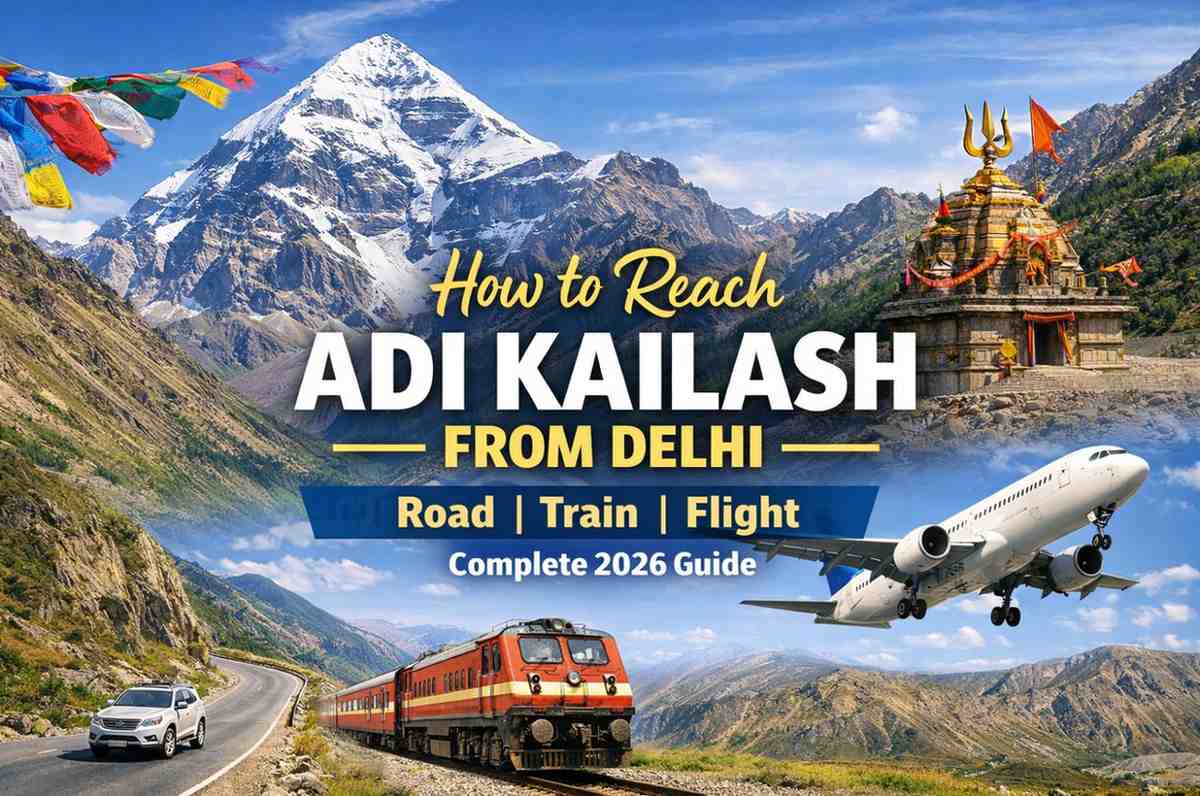
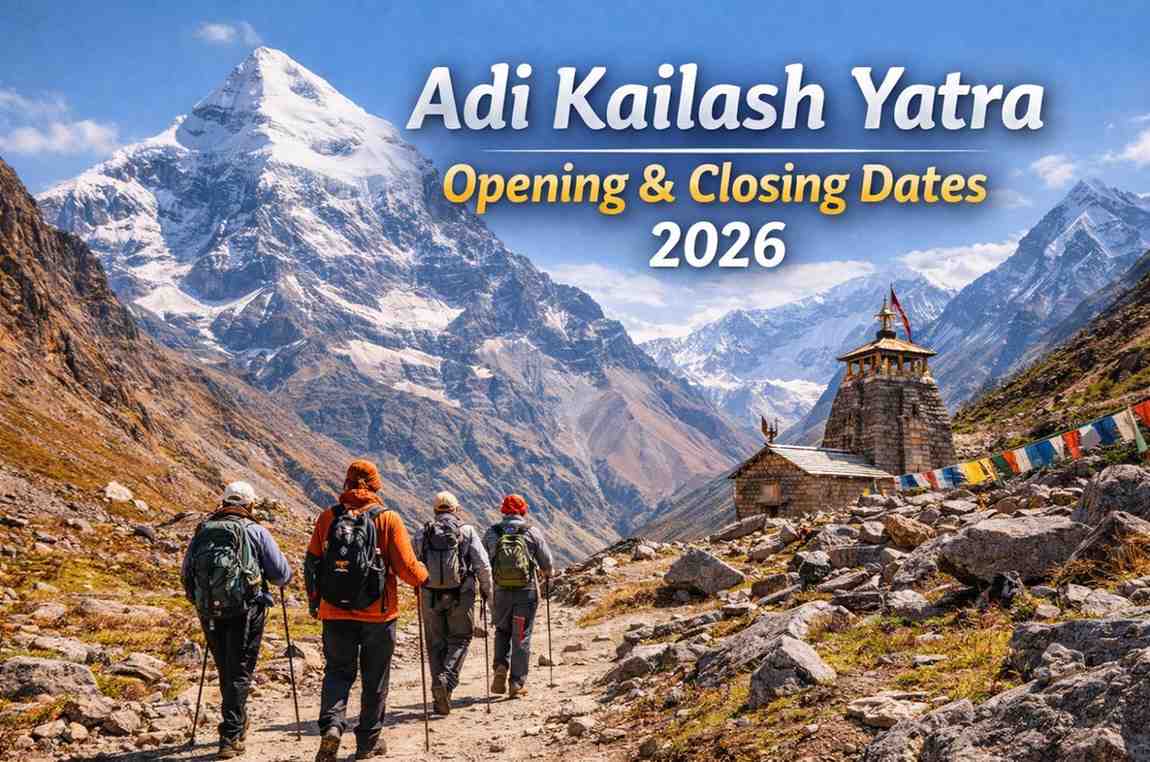
The Adi Kailash yatra is for those who want the spiritual gravity of the original Kailash Mansarovar journey without crossing international borders. Located in the Pithoragarh district near the India-China border, the route to Adi Kailash and Om Parvat passes through some of the most remote and visually striking terrain in Uttarakhand.
The journey involves crossing the Lipulekh Pass approach trail, travelling through the ancient border village of Gunji, and gaining views of Om Parvat, a mountain whose glacial snowfield naturally forms the sacred Om symbol. This trail sits within the Kumaon Himalayas, a region that remains less developed than Garhwal in terms of trekking infrastructure, which in turn preserves its raw, unfiltered character.
Access to this route requires an Inner Line Permit, which is arranged through registered operators. The limited annual footfall ensures the trail retains both ecological integrity and an unmatched sense of remoteness.
10. Rupin Pass Trek
Altitude: 4,650 metres Duration: 8 to 9 days Difficulty: Difficult Best Season: May to June, September to October
Rupin Pass is consistently voted as one of the most scenically diverse treks in India. The trail changes character almost every day, moving from low-altitude village paths along the Rupin River to suspended waterfalls frozen mid-cascade in spring, to snow bridges over the river, to a dramatic headwall climb that leads to the pass itself. The descent into the Sangla Valley in Himachal Pradesh provides a satisfying sense of completion.
For trekkers who want a technical challenge without requiring specialist mountaineering gear, Rupin Pass hits the ideal mark. The varied terrain, the physical demands of the headwall section, and the sheer visual variety of the route combine to make this one of the most talked-about adventure treks in Uttarakhand and Himachal borderlands.
Quick Comparison: Top Uttarakhand Treks At A Glance
| Trek Name | Max Altitude | Duration | Difficulty | Best For |
| Roopkund | 5,029 m | 7–9 days | Moderate–Difficult | Mystery + Scenic Views |
| Valley of Flowers | 3,658 m | 5–6 days | Easy–Moderate | Wildflowers + UNESCO Site |
| Kedarkantha | 3,800 m | 4–6 days | Easy–Moderate | Winter Snow Trek |
| Har Ki Dun | 3,566 m | 6–8 days | Easy–Moderate | Culture + Solitude |
| Panch Kedar | 4,590 m | 14–18 days | Moderate–Difficult | Spiritual Pilgrimage |
| Brahmatal | 3,723 m | 5–6 days | Moderate | Photography + Isolation |
| Kuari Pass | 3,640 m | 5–7 days | Easy–Moderate | Panoramic Himalayan Views |
| Nag Tibba | 3,022 m | 2–3 days | Easy | Beginners + Weekend Trek |
| Adi Kailash | 5,945 m | 7–10 days | Moderate–Difficult | Remote Spiritual Experience |
| Rupin Pass | 4,650 m | 8–9 days | Difficult | Diverse Terrain + Adventure |
Essential Trekking Tips For Uttarakhand
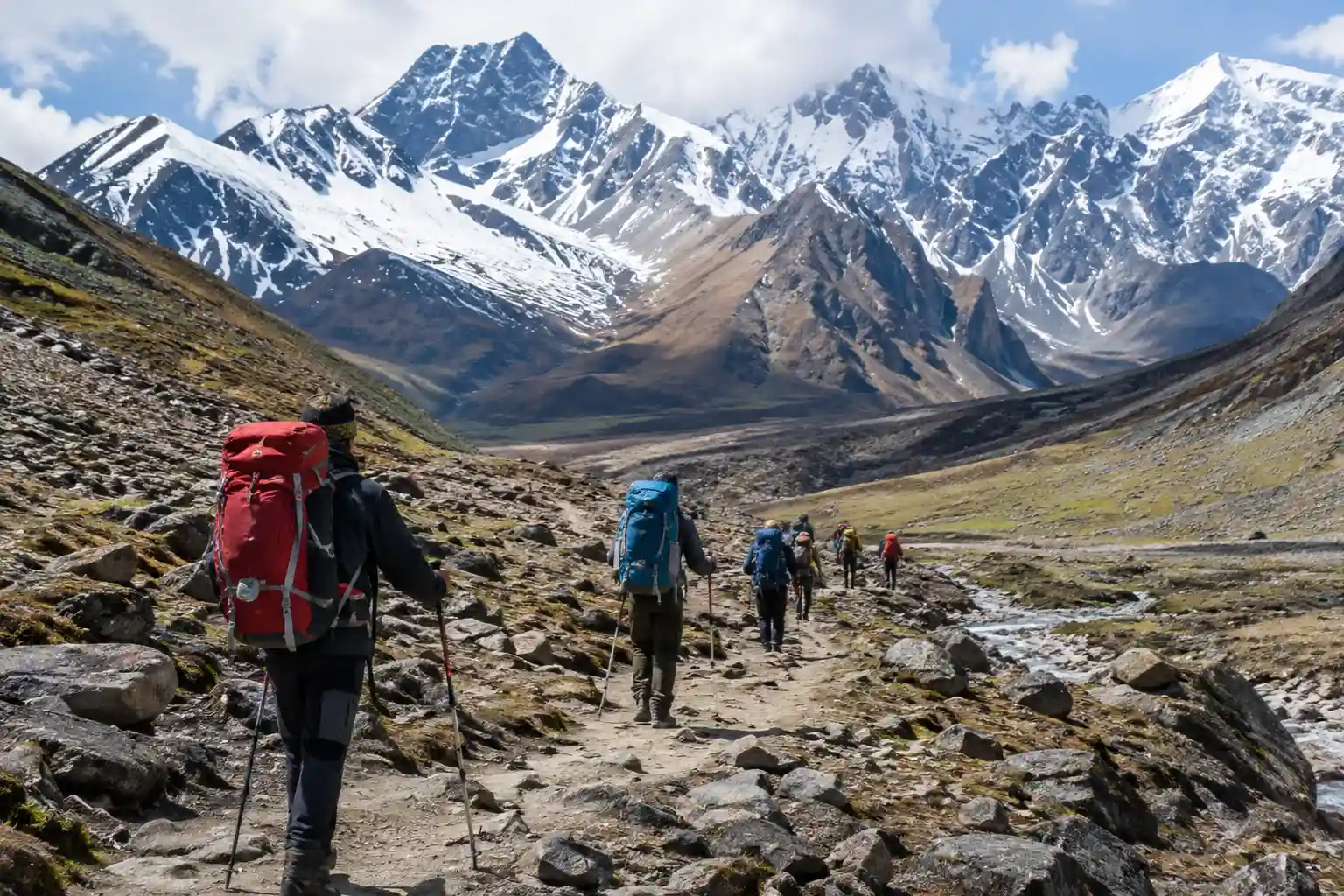
Preparation separates an extraordinary trek from a painful one. Here is what experienced mountain guides consistently emphasise before any Himalayan trek in Uttarakhand:
- Acclimatise properly. Even moderate-altitude treks above 3,500 metres carry altitude sickness risk. Schedule rest days and never ascend more than 500 metres per day once above 3,000 metres.
- Book permits in advance. Many routes, including Adi Kailash and areas within the Nanda Devi Biosphere Reserve, require government permits that must be arranged 2 to 4 weeks before departure.
- Hire certified local guides. Beyond safety, a knowledgeable local guide adds cultural context that no guidebook can replicate. Most mountain villages depend on trekking for livelihoods, and hiring locally distributes economic benefit directly into those communities.
- Pack for temperature swings. A sunny afternoon at 3,500 metres can turn into a -10 degree night within hours. Layering systems, not single heavy jackets, is the correct strategy.
- Register with local forest and district authorities. Many trailheads have registration points. Signing in is both a legal requirement and a safety measure that ensures rescue teams know where to look if something goes wrong.
- Practice Leave No Trace principles. The trails that look pristine in photographs stay that way only because past trekkers carried out everything they carried in. Pack a small waste bag and use established campsites.
Best Time To Trek In Uttarakhand: Month-By-Month Breakdown
March to May is ideal for lower to mid-altitude treks. Rhododendrons bloom along most forest trails. Snow begins melting on the passes, opening routes to Roopkund and Kuari Pass by late May.
June to July brings the pre-monsoon heat to lower elevations, but this is peak season for the Valley of Flowers, which blooms from late June. Higher-altitude passes like Rupin and Roopkund are fully accessible in June before the monsoon arrives.
August to September is monsoon season at lower elevations, but the upper Himalayas receive significantly less rainfall. The Valley of Flowers peaks in August. Har Ki Dun and Adi Kailash remain manageable. Leeches appear on lower forest trails.
October to November offers the clearest skies of the year. Post-monsoon trails are crisp, visibility is exceptional, and the golden-brown meadows of Bedni Bugyal and Har Ki Dun are at their most atmospheric.
December to February is the winter trekking season. Kedarkantha and Brahmatal see fresh snow every few days. This is also the quietest period, with long stretches of uninterrupted solitude above the snowline.
Frequently Asked Questions
1. Which is the easiest trek in Uttarakhand for beginners? Nag Tibba is the most recommended starting point. At 3,022 metres with well-defined trails and proximity to Dehradun, it provides a genuine Himalayan experience without demanding prior trekking experience.
2. What is the most scenic trek in Uttarakhand? Kuari Pass and Roopkund are consistently cited for panoramic views. Kuari Pass has the broader mountain panorama while Roopkund is more dramatic in terms of terrain variety and the unique glacial lake destination.
3. Is trekking in Uttarakhand safe? Yes, when done with proper preparation, certified guides, valid permits, and awareness of altitude sickness symptoms. Uttarakhand has well-established rescue protocols, and most popular trailheads have emergency contact points.
4. What permits are needed for Uttarakhand treks? Requirements vary by route. Adi Kailash requires an Inner Line Permit. Valley of Flowers requires a National Park entry fee. Most treks in forest reserve areas require registration with the Forest Department. Operators typically arrange these on your behalf.
5. Can Uttarakhand treks be done without a guide? Some easier trails, like Nag Tibba, are navigable independently. However, for high-altitude routes, routes in national parks, or any trek above 4,000 metres, a registered guide is strongly recommended for both safety and legal compliance.
Summary
Uttarakhand’s trekking routes are more than physical journeys; they are layered experiences shaped by geography, culture, and history. Each trail reflects a distinct character—whether it is the stark, high-altitude enigma of glacial landscapes, the rhythm of ancient pilgrimage routes, or the biodiversity of alpine meadows. The diversity across these treks ensures that both novice trekkers and experienced mountaineers can find routes aligned with their endurance, intent, and curiosity. Terrain variation, altitude profiles, and seasonal changes further influence the nature of each expedition.
Beyond terrain, these treks offer a deeper psychological and cultural dimension. The silence of early mornings on a ridge, the gradual ascent through remote villages, and the sense of isolation in higher altitudes create a reflective environment rarely found elsewhere. Uttarakhand’s Himalayas are not passive scenery; they actively shape the trekking experience. For many, the journey becomes less about reaching a destination and more about immersion, discipline, and perspective shaped by the mountains themselves.
Choose Mountainiax, the best trekking agency in Uttarakhand, for expert guidance, safe routes, and unforgettable Himalayan adventures. Book your trek today and explore with confidence.