Most trekking mistakes happen not on the trail but three days before departure, when the backpack is open on the floor and decisions are being made under pressure. The Rupin Pass trek is a route that punishes over-packing and under-preparation in equal measure. At 15,250 feet, crossing a snow-laden pass between Uttarakhand and Himachal Pradesh, your pack weight is not a comfort issue — it is a performance variable that directly affects how well you move, breathe, and recover at altitude.
The Rupin Pass route is widely regarded as one of India’s most visually diverse treks. In a single itinerary, you move through river gorges, dense forests, terraced villages, alpine meadows, and finally the dramatic snow wall that leads to the pass itself. Each of these environments demands something different from your clothing and gear, which is precisely what makes packing for this trek more nuanced than most.
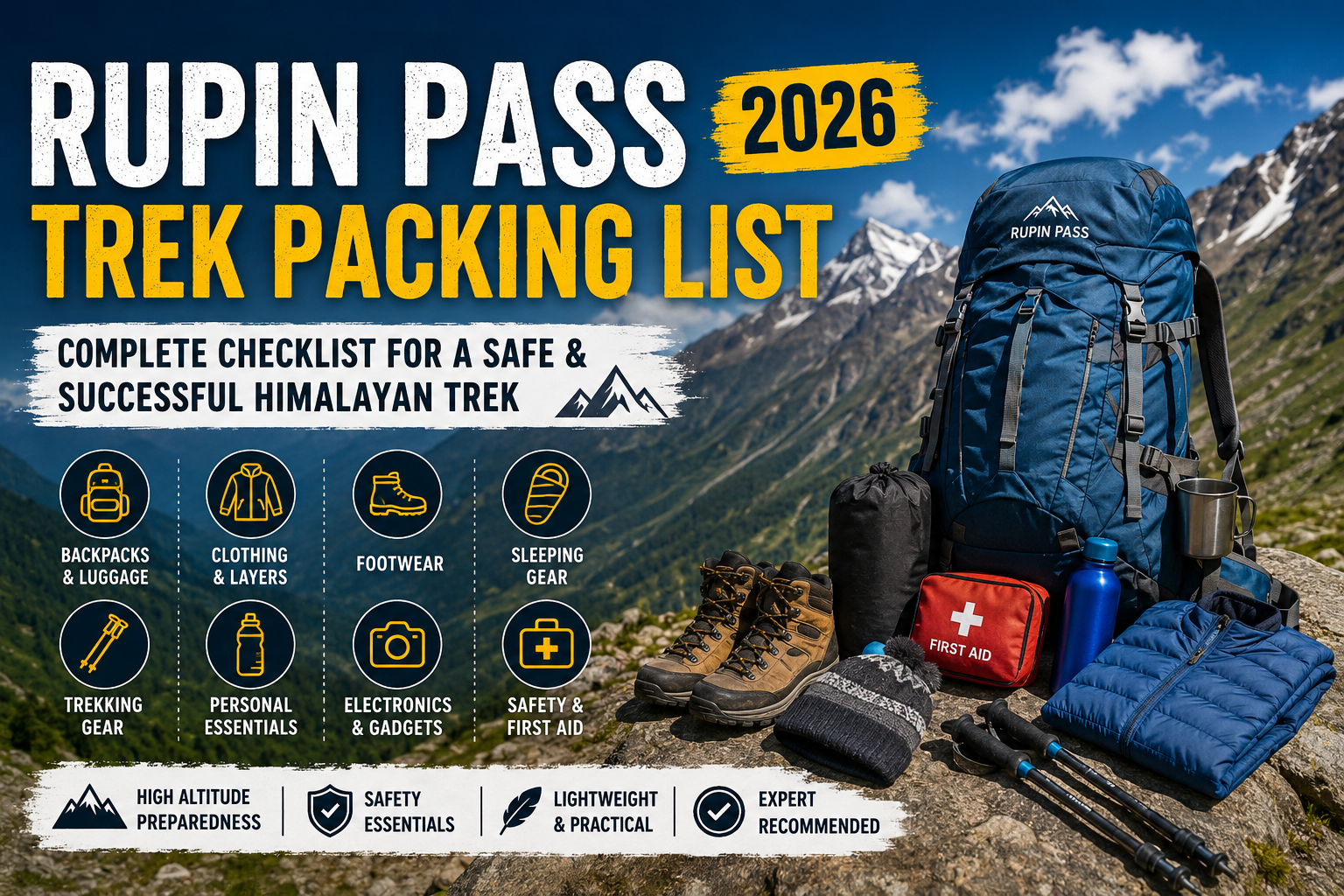
This complete Rupin Pass Trek Packing List 2026 is built for trekkers who are already committed to the route and need a precise, experience-informed guide on what earns its place in the bag and what stays home. Every category below is written with weight, functionality, and high-altitude practicality as the deciding criteria — not brand loyalty or generic advice.
Understanding the Rupin Pass Trek Before You Pack
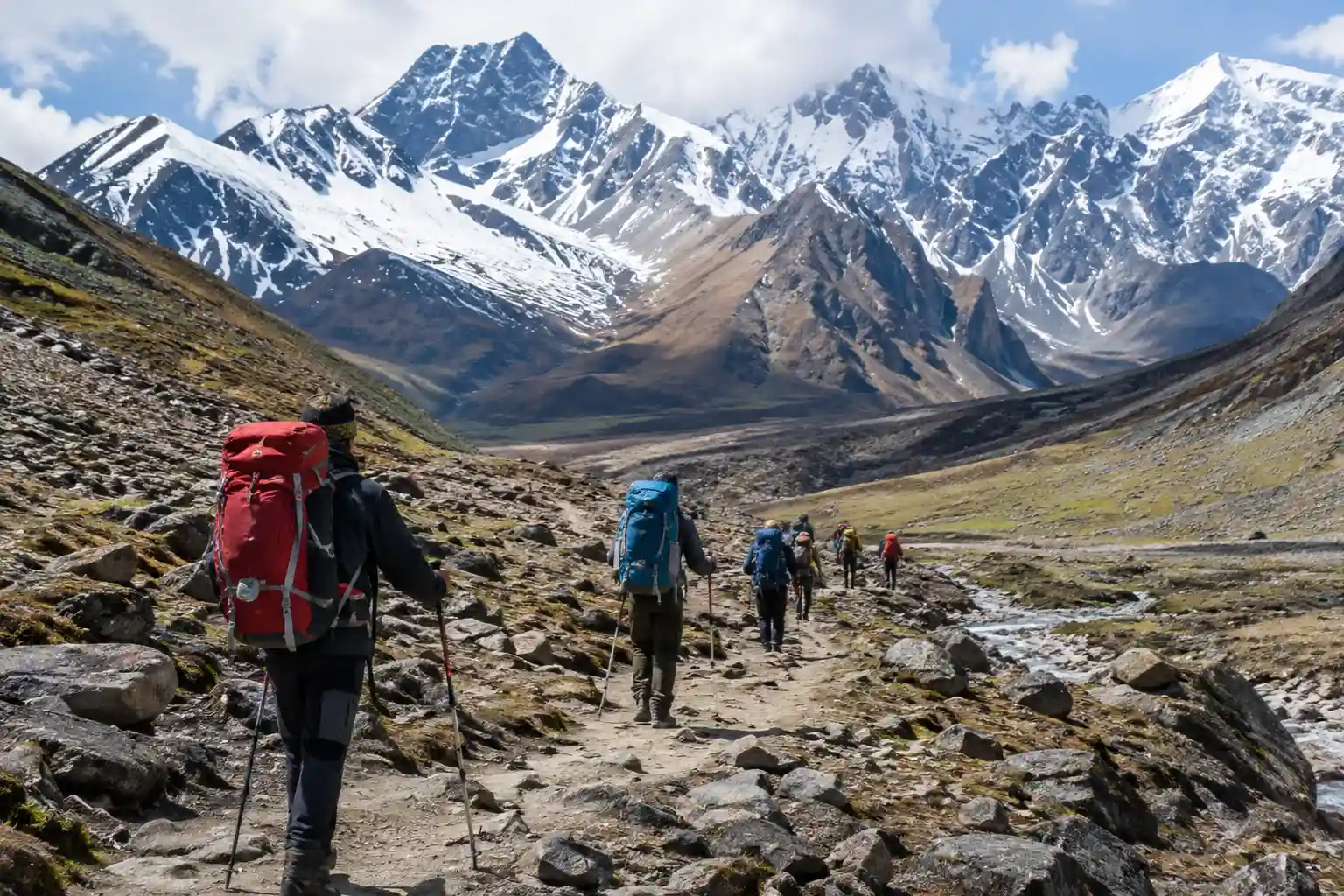
Before building your kit, understand what the trail actually asks of your gear. The Rupin Pass trek starts from Dhaula in Uttarakhand (or Sangla in Himachal for those doing the reverse route) and crosses the pass at approximately 4,650 metres over 8 days. The terrain shifts dramatically across the route:
- Days 1–3: Moderate forest and river-valley walking at 1,900–2,700 metres. Temperatures are mild, trails are wet near stream crossings.
- Days 4–5: Ascent through the upper Rupin valley and campsite at Rupin Upper Waterfall. Alpine conditions begin here — cold nights, unpredictable afternoon showers.
- Day 6: The high camp below the pass, where temperatures drop below freezing overnight.
- Day 7: Pass crossing. Snow travel is virtually guaranteed. The descent into Sangla valley is steep and requires confidence on loose terrain.
This range — from subtropical valley to glacial snowfield — means your packing list must account for layering, waterproofing, and traction without tipping your base pack weight above 12–13 kg. That ceiling is the benchmark experienced Rupin Pass trekkers use, and it should guide every decision below.
The Layering System: Your Most Important Packing Decision
The single most valuable concept in high-altitude packing is the three-layer clothing system. On the Rupin Pass route, temperatures can range from 28°C at Dhaula to -6°C at high camp on the same trip. No single piece of clothing manages that range — the layering system does.
The base layer is the foundation of your trekking clothing system and is worn directly against the skin. Its primary purpose is moisture management — moving sweat away from the body to keep you dry during long ascents and physically demanding sections of the trek. Merino wool and synthetic polyester base layers are the preferred choices because they dry quickly and retain warmth even in cold conditions. Cotton should be completely avoided at altitude, as it absorbs moisture, dries slowly, and loses insulation when wet, significantly increasing the risk of hypothermia. For the Rupin Pass trek, carrying two complete base layer sets is essential — one for trekking and another clean, dry set reserved exclusively for sleeping.
The mid layer provides insulation and helps retain body heat in cold mountain conditions. A lightweight fleece jacket, typically in the 100-weight or 200-weight category, is one of the most practical and versatile options for Himalayan trekking. It offers a balance between warmth, breathability, and mobility during active movement. In colder sections of the trek, particularly near higher camps and during the pass crossing, a down jacket with at least 600-fill insulation becomes your primary warmth layer. This layer is especially important during evenings, early morning starts, and sudden temperature drops at higher elevations.
The outer layer acts as your protection against wind, rain, and rapidly changing mountain weather. A waterproof and windproof shell jacket, along with shell trousers, is critical on the Rupin Pass trek due to the possibility of afternoon rain, strong winds, and snowfall near the pass. A quality outer shell should feature taped seams and a Durable Water Repellent (DWR) coating to prevent moisture penetration while maintaining breathability. Reliable outerwear not only keeps you dry but also helps preserve body heat in harsh alpine conditions, making it one of the most important investments for the trek.
Clothing Checklist
- Merino wool or synthetic base layer top and bottom (2 sets)
- Fleece mid-layer jacket (100 or 200 weight)
- Down jacket (600-fill minimum, packable)
- Waterproof shell jacket with hood
- Waterproof shell trousers
- Trekking trousers — 2 pairs (zip-off legs are practical for lower elevation days)
- Lightweight camp trousers or joggers for evenings
- Warm beanie hat
- Sun hat or cap with brim
- Buff or neck gaiter
- Lightweight liner gloves
- Insulated waterproof gloves or mittens for the pass
- Trekking socks — wool or synthetic, 5 pairs minimum
- Camp sandals or lightweight slippers (your feet need rest at camp)
Footwear: The Decision That Most Affects Your Trek
Your boots are doing more work than any other item in your pack. On the Rupin Pass trek, the terrain demands ankle support, waterproofing, and traction on snow — preferably from a single pair of boots.
- Trekking boots: Waterproof, mid-cut or high-cut, with a rigid midsole for support on steep terrain. Brands with strong track records on technical Himalayan routes include Salomon, La Sportiva, Scarpa, and Quechua’s upper range. Whatever you choose, break them in for a minimum of 4–6 weeks of regular walking before the trek. Blisters at altitude on Day 2 will compromise every day that follows.
- Gaiters: Essential for the snow crossing at the pass. Low gaiters keep snow out of your boots during descent and are lightweight enough to carry even if conditions are dry.
- Trekking poles: Non-negotiable on this route. The descent from Rupin Pass into Sangla valley is steep and loose — poles protect your knees, improve balance on snow, and reduce fatigue significantly over the full itinerary. Carry two.
- Microspikes or crampons: Depending on the season, the pass crossing may involve hard-packed snow or ice. Most operators recommend microspikes as the minimum traction device. Full crampons are rarely necessary but worth confirming with your operator before departure.
If you are exploring other technically demanding routes in the region as part of a broader Himalayan itinerary, the Best Treks in Uttarakhand page offers a well-curated overview of routes by difficulty, season, and terrain type — useful context for trekkers planning beyond Rupin Pass.
Backpack and Sleeping Gear
- Backpack size: For a guided trek where a porter or mule carries the bulk of the load, a 40–50 litre backpack is sufficient for your daily essentials. If you are carrying everything yourself, size up to 55–65 litres, but be disciplined about total weight.
- Daypack: A 20–25 litre daypack is useful for summit days or side excursions when you leave the main pack at camp. Many trekkers use a packable daypack that compresses to almost nothing when not in use.
- Pack rain cover: Your backpack’s waterproofing will fail in sustained rain. A fitted rain cover is a small, lightweight insurance policy that protects everything inside.
- Sleeping bag: Rated to at least -10°C. High camp temperatures on the Rupin Pass trek regularly drop below freezing, and a sleeping bag that is merely “3-season” will leave you shivering through the night before the hardest day of the trek. Down-fill sleeping bags are lighter and more compressible than synthetic alternatives for the same temperature rating.
- Sleeping bag liner: Adds 3–5°C of warmth and keeps your sleeping bag cleaner on long treks. A silk or fleece liner weighs almost nothing and significantly extends the effective range of your bag.
- Sleeping mat: Most operators provide foam mats at camps. If you are doing a self-supported trek, a lightweight inflatable sleeping mat with an R-value of at least 3.5 is recommended for insulation from cold ground.
Navigation, Lighting, and Electronics
Reliable lighting and navigation tools are essential on the Rupin Pass trek, especially during early morning summit pushes and low-visibility conditions. A quality headlamp with at least 200 lumens and a red-light mode helps preserve night vision while moving through dark trails before sunrise. Carry spare batteries or a USB-rechargeable option for backup. It is also advisable to download offline maps of the Rupin Pass region on apps like Maps.me or Google Maps before losing mobile connectivity. While the trail is generally clear, offline navigation adds an important safety layer during uncertain weather or route diversions.
Power management becomes equally important because electricity is extremely limited beyond the initial stages of the trek. A high-capacity power bank of around 20,000 mAh is usually sufficient to keep phones, cameras, and headlamps charged throughout the expedition. Some trekkers also carry compact solar chargers that can be clipped to backpacks during hiking hours for passive charging. For solo trekkers or those attempting unsupported traverses, a satellite communicator such as a Garmin inReach or SPOT device can provide emergency messaging capability in areas without mobile coverage.
Photography enthusiasts will find the Rupin Pass trek exceptionally rewarding. Landscapes such as the hanging villages, cascading waterfalls, massive snow walls, and the dramatic descent into Sangla Valley create outstanding visual opportunities throughout the route. A lightweight mirrorless camera paired with a wide-angle and short telephoto lens is ideal for capturing the terrain and changing mountain conditions. However, modern smartphones with advanced camera systems are also capable of producing excellent results for trekkers aiming to travel lighter.
This route attracts trekkers from across the country, including a growing number from western and southern India discovering Himalayan trekking for the first time. Interestingly, several of the most committed Rupin Pass trekkers we have spoken to discovered their Himalayan interest through introductory routes — and for those beginning that journey, Trekking Places Near Mumbai is a practical starting point that covers accessible weekend and short-haul options before committing to a high-altitude route like Rupin.
The Medical and Safety Kit
This section is where most trekkers under-invest, particularly first-timers. A well-stocked medical kit on the Rupin Pass trek is not about preparing for disaster — it is about managing the small problems that become big problems if left unaddressed at altitude.
Altitude medication:
- Diamox (acetazolamide) 250 mg — consult a physician before carrying. Reduces risk of AMS symptoms during rapid ascent.
- Dexamethasone — emergency-only, prescribed for severe AMS. Carry only if medically advised.
Pain and fever:
- Ibuprofen 400 mg — anti-inflammatory useful for headaches, muscle soreness, and mild AMS symptoms
- Paracetamol 500 mg — fever and general pain
Digestive health:
- ORS (Oral Rehydration Salts) sachets — altitude and exertion cause rapid fluid and electrolyte loss
- Norfloxacin or Ciprofloxacin for bacterial gastroenteritis (traveller’s diarrhoea)
- Ondansetron for nausea and vomiting
Wound care:
- Antiseptic liquid (Betadine) or wipes
- Blister plasters (Compeed or equivalent) — carry more than you think you need
- Sterile gauze pads and surgical tape
- Elastic bandage for sprains
Tools:
- Pulse oximeter — the single most useful altitude safety device. Measures blood oxygen saturation (SpO2). A reading below 85% at altitude warrants immediate attention.
- Thermometer
- Tweezers and surgical scissors
UV intensity at altitude is significantly higher than at sea level. SPF 50+ sunscreen and UV-blocking sunglasses or goggles are essential for the pass crossing day when snow reflection amplifies exposure.
Toiletries, Hygiene, and Camp Essentials
This category is where the most weight is unnecessarily added. The principle here is simple: travel-size everything, and question every item that has no altitude-specific function.
Essential toiletries:
- Biodegradable soap and shampoo (mandatory in ecologically sensitive zones)
- Toothbrush and toothpaste (travel size)
- Toilet paper and a lightweight trowel for waste disposal
- Ziplock bags for used waste — leave no trace principles apply strictly on this trail
- Hand sanitiser (60 ml minimum)
- Lip balm with SPF — lips crack badly at altitude, particularly on pass-crossing days
- Sunscreen SPF 50+ (minimum 100 ml for a full trek)
- Microfibre towel (fast-drying, packs small)
- Wet wipes (invaluable when water is limited or frozen)
Personal items:
- Personal ID and permits in a waterproof document pouch
- Emergency cash in INR — beyond Dhaula, no ATMs exist until Sangla on the Himachal side. The infrastructure around remote village stops like Jiskun and Jakha is minimal. For context on how remote villages along high-altitude trade routes function and what to expect from facilities, Gunji Village offers a useful reference point from a comparable Uttarakhand corridor.
- Small notebook and pencil — phones die at altitude; written records of medical readings and emergency contacts are a practical backup
What to Leave Behind
This section matters as much as the list above. Every item that does not earn its place in the pack is a burden that compounds over 60+ km of trail.
Leave behind:
- Cotton clothing of any kind — jeans, cotton t-shirts, cotton underwear
- Full-size toiletries — decant into travel containers or purchase small sizes
- Multiple pairs of shoes — one pair of trekking boots plus camp sandals is the maximum
- Books or heavy reading material — download e-books or audiobooks instead
- Excessive camera equipment — unless photography is the primary purpose, one body and one versatile lens is sufficient
- Anything you have not used in the last two treks — if it did not earn its place before, it will not earn it here
- Jewellery, valuables, or anything irreplaceable — safe at home, a source of anxiety on trail
FAQs
1. What is the ideal pack weight for the Rupin Pass trek?
For a guided trek with porter or mule support for the main load, your daypack should stay under 8–10 kg. For a fully self-supported traverse, target a base weight under 12–13 kg including food and water.
2. Is a sleeping bag necessary or do operators provide one?
Most reputable operators provide sleeping bags, but their temperature ratings vary. Confirm the rating with your operator before departure. If it is not rated to at least -10°C, carry your own or rent a quality bag in Dehradun before the trek.
3. Do I need crampons or microspikes for Rupin Pass?
Microspikes are recommended for most season windows. Full crampons are rarely necessary but confirm current snow conditions with your operator close to your departure date, as conditions vary significantly between May and September.
4. Can I rent trekking gear near the Rupin Pass trailhead?
Basic gear is available for rent in Dehradun. Rental options near Dhaula (the trailhead) are very limited. Source and confirm all equipment in Dehradun before proceeding to the trail.
5. What documents do I need to carry on the Rupin Pass trek?
A government-issued photo ID is required. The route passes through Uttarakhand and into Himachal Pradesh, and forest department or check-post officials may request identity verification. No special permit is currently required for Indian nationals on this route, but confirm this with your operator for your travel season.
Summary
Packing for the Rupin Pass trek is ultimately an exercise in honest self-assessment. Every item you carry should justify its weight against the demands of the trail — the river crossings, the snow wall, the steep descent into Sangla. The trekkers who move most freely and recover most effectively at camp are rarely the ones with the most gear. They are the ones who packed with intention, tested their kit before departure, and resisted the temptation to treat the backpack as a safety net for every possible scenario.
Use this list as a working document, not a one-time reference. Return to it a week before departure, check each category against what you have sourced, and cut anything that cannot justify its gram count. The mountain will ask nothing of you that good preparation cannot answer. Pack light, pack right, and let the route itself be the only thing that surprises you when you finally stand at the pass.
Choose Mountainiax, the best trekking agency in Uttarakhand, for expert guidance, safe routes, and unforgettable Himalayan adventures. Book your trek today and explore with confidence.