
The Himalayas have always been India’s spiritual backbone, home to ancient temples, forgotten trails, and sacred silences that no city can replicate. Among its countless pilgrimages, one circuit stands apart — not just for its altitude or terrain, but for the depth of devotion it demands and rewards. Why Panch Kedar Is India’s Best Spiritual Trek is a question that answers itself the moment you set foot on these trails and feel the weight of centuries pressing gently against your chest.
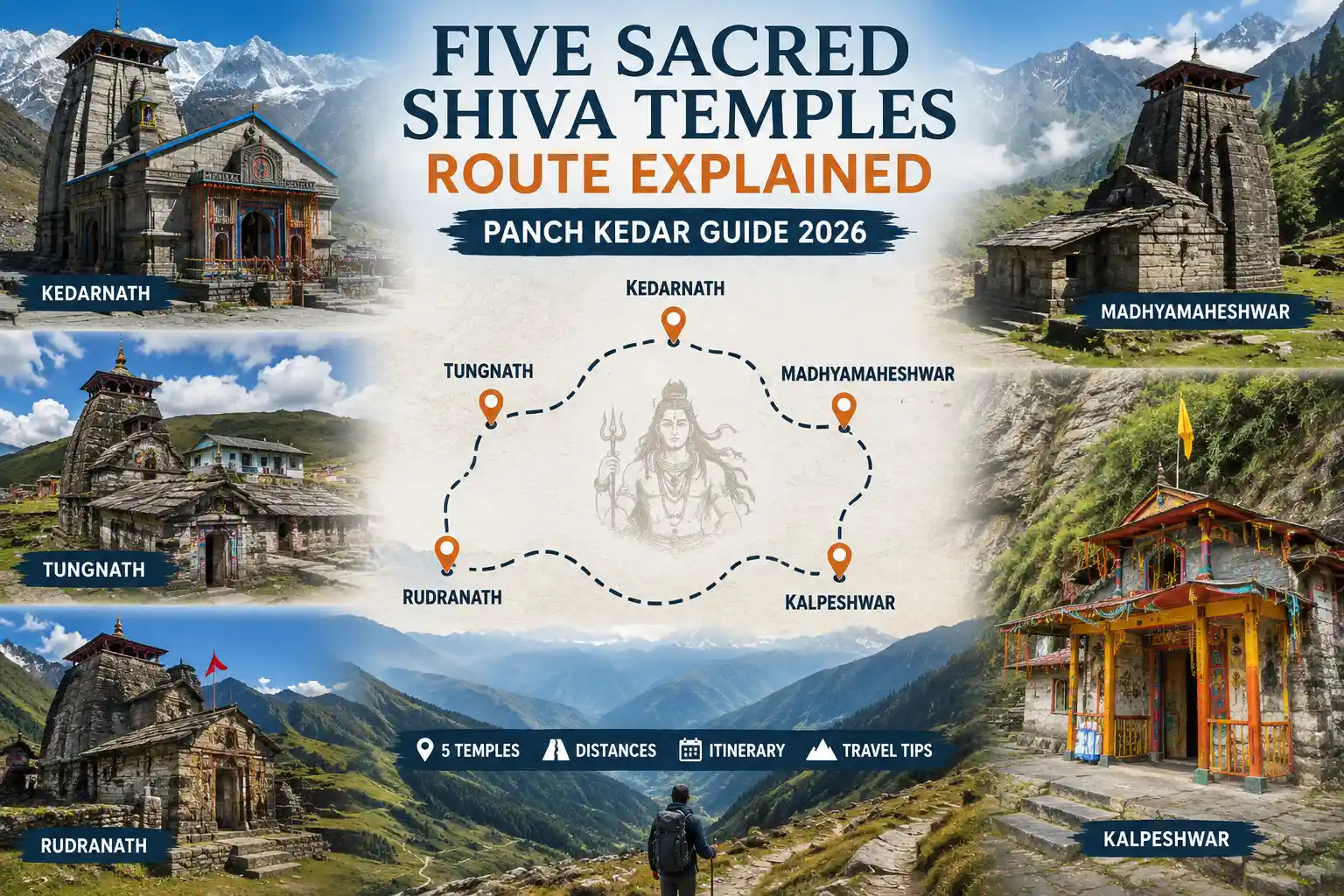
The Panch Kedar circuit is a journey through five high-altitude Shiva temples nestled deep in the Garhwal Himalayas of Uttarakhand. Each shrine holds a piece of the Mahabharata’s sacred mythology, believed to be the spot where parts of Lord Shiva’s divine form appeared after he evaded the Pandavas. Together, these five temples — Kedarnath, Tungnath, Rudranath, Madhyamaheshwar, and Kalpeshwar — form one of the most complete spiritual experiences any trekker can undertake in India.
What separates this trek from every other high-altitude trail in the country is the rare convergence of mythology, monastery culture, alpine meadows, and raw Himalayan beauty. Whether you are a seasoned trekker seeking purpose beyond peak summits, or a devotee chasing divine darshan across the clouds, the Panch Kedar circuit offers something irreplaceable. It is not just a trek. It is a transformation.
The Mythology Behind the Five Temples
Understanding the spiritual significance of this circuit requires stepping back into the Mahabharata. After the Kurukshetra war, the Pandavas sought Lord Shiva’s blessings to atone for the sin of killing their kinsmen. Shiva, reluctant to forgive them easily, disguised himself as a bull and hid in the Garhwal hills. When Bhima spotted him and tried to seize him, Shiva submerged into the earth — but different parts of his body are said to have resurfaced at five different locations.
These five locations became the Panch Kedar:
- Kedarnath — the hump (prishtha) of the bull
- Tungnath — the arms (bahu)
- Rudranath — the face (mukha)
- Madhyamaheshwar — the navel (nabhi)
- Kalpeshwar — the hair (jata)
Each temple thus carries a fragment of a divine being, and completing all five is believed to liberate the soul from the cycle of birth and rebirth. This mythology is not just folklore — it is the spiritual engine that has drawn pilgrims here for over a thousand years.
The Five Shrines: What to Expect at Each
Explore the spiritual essence of all five Panch Kedar temples, their trekking difficulty, scenic beauty, mythological significance, altitude, and the unique experience devotees and trekkers encounter at each shrine.
Kedarnath (3,583 metres)
Kedarnath needs no introduction. One of the twelve Jyotirlingas, it is the most visited and most revered of the five shrines. The temple itself dates back centuries, with its stone structure having survived floods, avalanches, and the merciless Himalayan winters. The trek from Gaurikund covers 16 km through dense forests and glacial terrain, culminating in a view of the temple framed by snow-capped peaks that is nothing short of humbling.
Tungnath (3,680 metres)
Sitting at the highest altitude of any Shiva temple in the world, Tungnath is a gem few pilgrims truly appreciate. The path from Chopta is gentle by Himalayan standards — roughly 3.5 km — but the arrival is majestic. Trekkers who push further to Chandrashila summit (4,130 metres) are rewarded with a 360-degree view of Nanda Devi, Trishul, Kedarnath, and Chaukhamba peaks. The temple is small, ancient, and achingly beautiful.
Rudranath (2,286 metres base, temple at 3,600 metres)
The most remote and demanding of the five, Rudranath is where the Panch Kedar circuit separates casual tourists from true seekers. The trek from Sagar village is approximately 20 km, winding through rhododendron forests, alpine meadows called bugyals, and lonely shepherd trails. The temple sits surrounded by rocky outcrops and seasonal flowers. There are no crowds here. Just silence, wind, and stone.
Madhyamaheshwar (3,497 metres)
Translated as the “middle Maheshwar,” this temple sits in one of the most pristine meadows in Uttarakhand. The trek from Ransi village covers around 24 km and passes through forests of oak and birch before opening into stunning bugyals with unobstructed views of the Kedarnath massif. The temple is relatively small, but the setting is grand and the walk to the nearby Budha Madhyamaheshwar is one of the hidden rewards of the entire circuit.
Kalpeshwar (2,200 metres)
The only shrine accessible year-round, Kalpeshwar is located in the Urgam Valley near Helang in Chamoli district. The trek is short — barely 2 km — making it accessible even for those with limited trekking experience. Yet its spiritual weight is equal to its peers. The temple is partially cave-hewn, and the lingam worshipped here is said to be Shiva’s matted hair. It is a fitting conclusion to the circuit — quiet, intimate, and deeply sacred.
Best Time to Do the Panch Kedar Trek
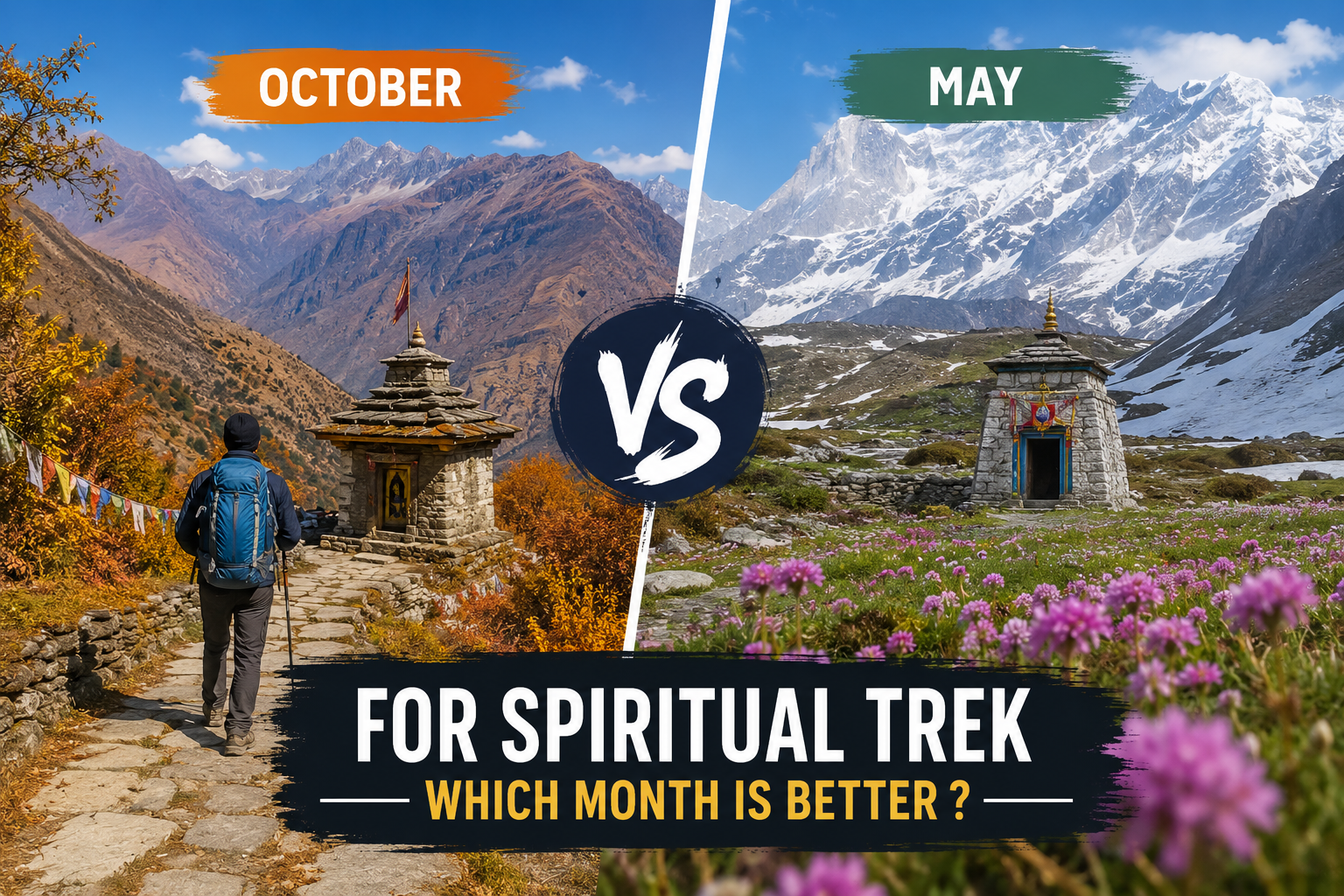
The temples of Panch Kedar open during the summer season and remain closed during winter due to heavy snowfall. The general window is May to June and then September to November, with October being widely regarded as the finest month for clear skies, post-monsoon greenery, and stable trails.
- May to June: Fresh snowmelt, blooming rhododendrons, and ideal visibility
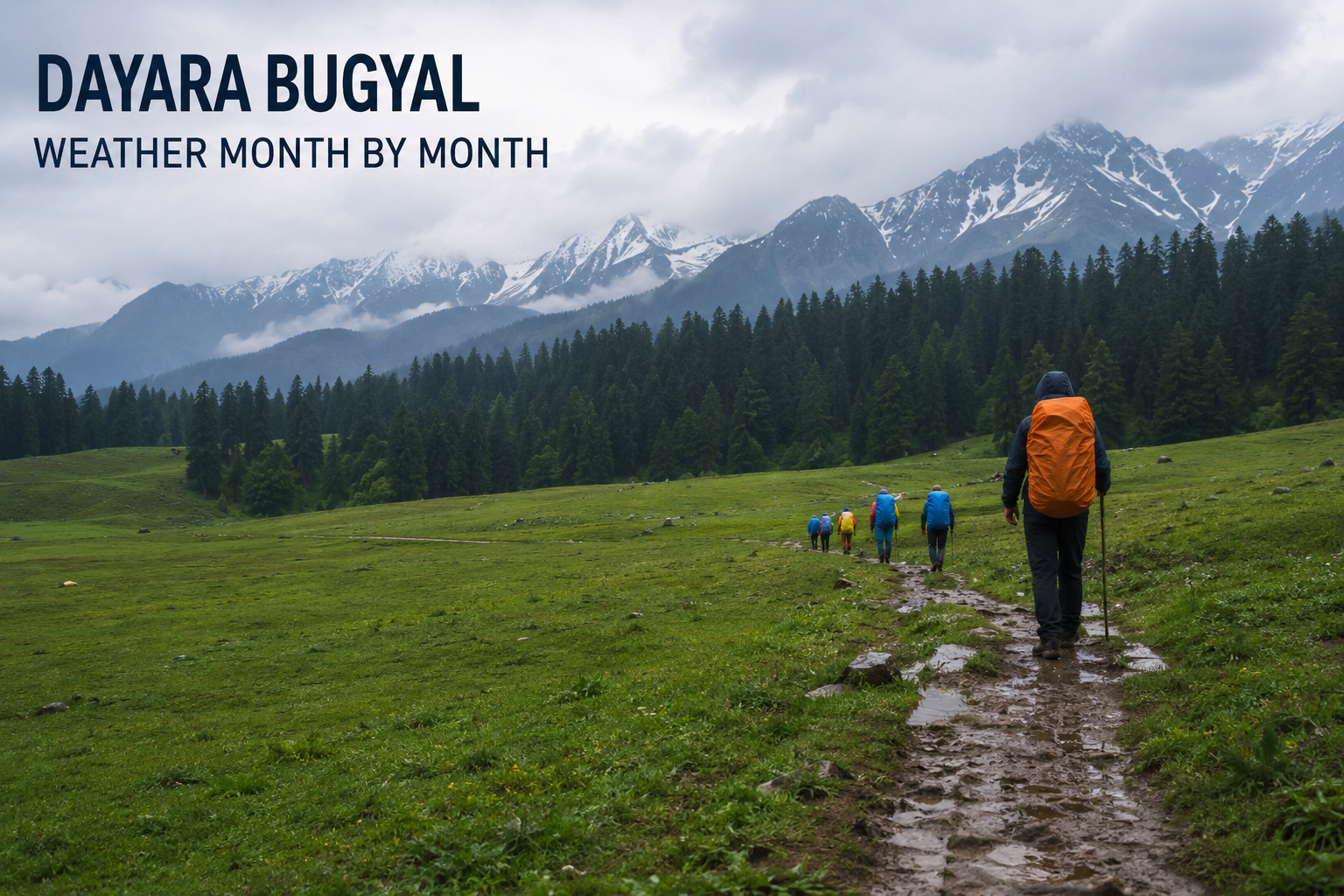
- July to August: Monsoon season — trails become slippery; recommended only for experienced trekkers
- September to November: Best weather, stable conditions, rich autumn colours
Pilgrims planning their visit around specific religious dates should check Panch Kedar Darshan Timings before finalising their itinerary, as temple opening hours vary by shrine and season, and some shrines have specific morning and evening aarti windows that are spiritually significant moments not to be missed.
Complete Panch Kedar Circuit: Suggested Itinerary
A full circuit typically takes 18 to 24 days depending on your pace, fitness level, and time spent at each shrine. Most seasoned trekkers recommend doing the temples in a specific order for logistical efficiency:
Recommended order: Kedarnath → Madhyamaheshwar → Tungnath → Rudranath → Kalpeshwar
This sequence moves from the most accessible shrine to the most remote and then gradually back to lower altitudes, allowing for progressive acclimatisation and a natural rhythm.
Day-by-day overview:
- Days 1-4: Kedarnath (via Gaurikund)
- Days 5-8: Madhyamaheshwar (via Ransi or Ukhimath)
- Days 9-11: Tungnath and Chandrashila (via Chopta)
- Days 12-17: Rudranath (via Sagar village)
- Days 18-19: Kalpeshwar (via Urgam Valley)
Base towns like Guptkashi, Ukhimath, and Chopta serve as essential staging points along the route, offering accommodation, guides, and transport connections. Guptkashi, in particular, is one of the most strategically located towns for the Panch Kedar circuit — sitting roughly midway between Kedarnath and Madhyamaheshwar, with a revered Vishwanath temple of its own. Many experienced trekkers treat it as their operational base while planning acclimatisation days and logistics.
Physical Demands and Fitness Preparation
The Panch Kedar circuit is rated moderate to difficult. No technical climbing is involved, but the sustained duration, altitude gain, and back-to-back trekking days demand a good baseline of cardiovascular fitness. Most days involve 6 to 10 hours of walking.
Recommended preparation:
- Begin cardio training (running, cycling, swimming) at least 6-8 weeks before departure
- Incorporate incline walking with a loaded pack to simulate conditions
- Practice breathing techniques such as pranayama to improve oxygen efficiency at altitude
- Stay hydrated and avoid alcohol in the days before and during the trek
Fitness preparation should be taken especially seriously for the Rudranath segment, which involves steep descents and rocky terrain that can be hard on knees.
Panch Kedar Trek After 60: Is It Possible?
One of the most common questions asked by older devotees is whether they can complete this circuit. The answer, reassuringly, is yes — but with careful planning.
The Panch Kedar Trek After 60 is entirely achievable for those who maintain a reasonable level of fitness, have no serious cardiac or respiratory conditions, and approach the journey with patience rather than speed. Kedarnath offers pony and doli (palanquin) services. Tungnath’s gentle gradient is manageable for most. Kalpeshwar, with its short trail, is one of the easiest treks in the Himalayas regardless of age.
Rudranath and Madhyamaheshwar are the more challenging shrines for seniors. Those above 60 are advised to:
- Carry a fitness certificate from their doctor
- Trek with a certified guide who understands altitude response
- Allow extra buffer days for rest and acclimatisation
- Choose May or late September when trails are dry and temperatures moderate
With the right support and mindset, completing the Panch Kedar circuit after 60 is not just possible — it becomes one of the most meaningful achievements of a lifetime.
Permits, Costs, and Practical Essentials
The Panch Kedar trek does not require a special trekking permit, but temple registration may be required at some shrines. Pilgrims are required to register at the biometric counters near Kedarnath.
Estimated costs for a 20-day circuit (per person):
- Budget: Rs. 25,000 to Rs. 35,000 (basic accommodation, local guides, food)
- Mid-range: Rs. 45,000 to Rs. 65,000 (organised tour package with porter support)
- Premium: Rs. 80,000 and above (private camp stays, helicopter options for Kedarnath)
Essential gear:
- Trekking poles (critical for steep descents)
- Layered clothing for temperatures ranging from 5°C to 25°C
- Waterproof jacket and pack cover
- Altitude sickness medication (consult a doctor before carrying Diamox)
- Headlamp, basic first-aid kit, and high-energy snacks
Why We Recommends the Panch Kedar Circuit
At mountainiax.com, we have guided trekkers through the Panch Kedar circuit for years, and one truth remains constant: no two people complete this journey the same way. Some arrive seeking adventure and leave with faith. Others come with devotion and return with renewed physical confidence. The circuit demands everything from you — time, endurance, presence — and gives back far more.
The combination of Panch Kedar yatra, Garhwal Himalayan trekking, high-altitude Shiva temples, and sacred pilgrimage routes in India makes this circuit uniquely irreplaceable in the country’s spiritual trekking landscape. There is no comparable experience.
Whether you plan your journey through our guided packages or strike out with your own team, we strongly recommend treating the circuit with the reverence it deserves — not as a checklist, but as a conversation with something much older and larger than yourself.
Frequently Asked Questions
1. What is the total distance of the Panch Kedar circuit?
The full circuit covers approximately 170 to 200 km on foot across all five temple treks, depending on the route taken. Individual treks range from 4 km (Kalpeshwar) to 24 km (Madhyamaheshwar).
2. Which is the most difficult temple trek in the Panch Kedar circuit?
Rudranath is widely considered the most challenging due to its remote location, long trail, and lack of facilities. The path from Sagar village involves roughly 20 km of trekking through dense forests and high meadows with minimal support infrastructure.
3. Can I do the Panch Kedar circuit in parts over multiple trips?
Yes. Many pilgrims complete the circuit over two or three seasons. Kedarnath and Tungnath are commonly done in year one, followed by Rudranath and Madhyamaheshwar, with Kalpeshwar — being open year-round — completed any time.
4. Is there mobile network connectivity on the Panch Kedar route?
BSNL offers the widest, though still limited, coverage on these trails. Kedarnath and Chopta (near Tungnath) have the best connectivity. Remote segments like Rudranath and parts of Madhyamaheshwar may have no signal at all.
5. What languages are spoken by locals and guides in the region?
Garhwali is the primary local language, though most guides and lodge owners in popular areas speak Hindi fluently. English is available in larger towns and with organised trekking companies.
Conclusion
The Panch Kedar circuit is proof that the most meaningful journeys are never just about the destination. Every step on these trails — through rhododendron forests, across frozen streams, and up into thin alpine air — carries the weight of ancient devotion and the quiet joy of personal discovery. The five shrines are not merely temples scattered across the Garhwal Himalayas. They are milestones of a story that began in the Mahabharata and continues every time a pilgrim laces up their boots and begins the climb. Few experiences in India match the sheer spiritual density of this circuit, where mythology, mountains, and inner stillness meet at every turn.
What makes the Panch Kedar trek truly India’s finest spiritual journey is not any single shrine, summit, or sunset — it is the cumulative experience of earning each darshan on foot, in all weather, through all doubt. By the time you reach the fifth temple, something has shifted inside you that is difficult to name but impossible to ignore. The mountains have a way of doing that. And the Panch Kedar circuit, more than any other trail in India, does it with grace, depth, and unforgettable beauty.
With the Panch Kedar Yatra season approaching, it’s time to plan something truly extraordinary. From breathtaking Himalayan peaks to spiritually powerful temples hidden deep in remote valleys, this journey offers an experience that goes beyond a typical trek—it becomes a story you carry for life. To make your journey seamless and well-organised, choose the best trekking company in Uttarakhand for reliable trek packages, detailed itineraries, and hassle-free booking.
Visit this page for Trek Packages, Itinerary & Booking.