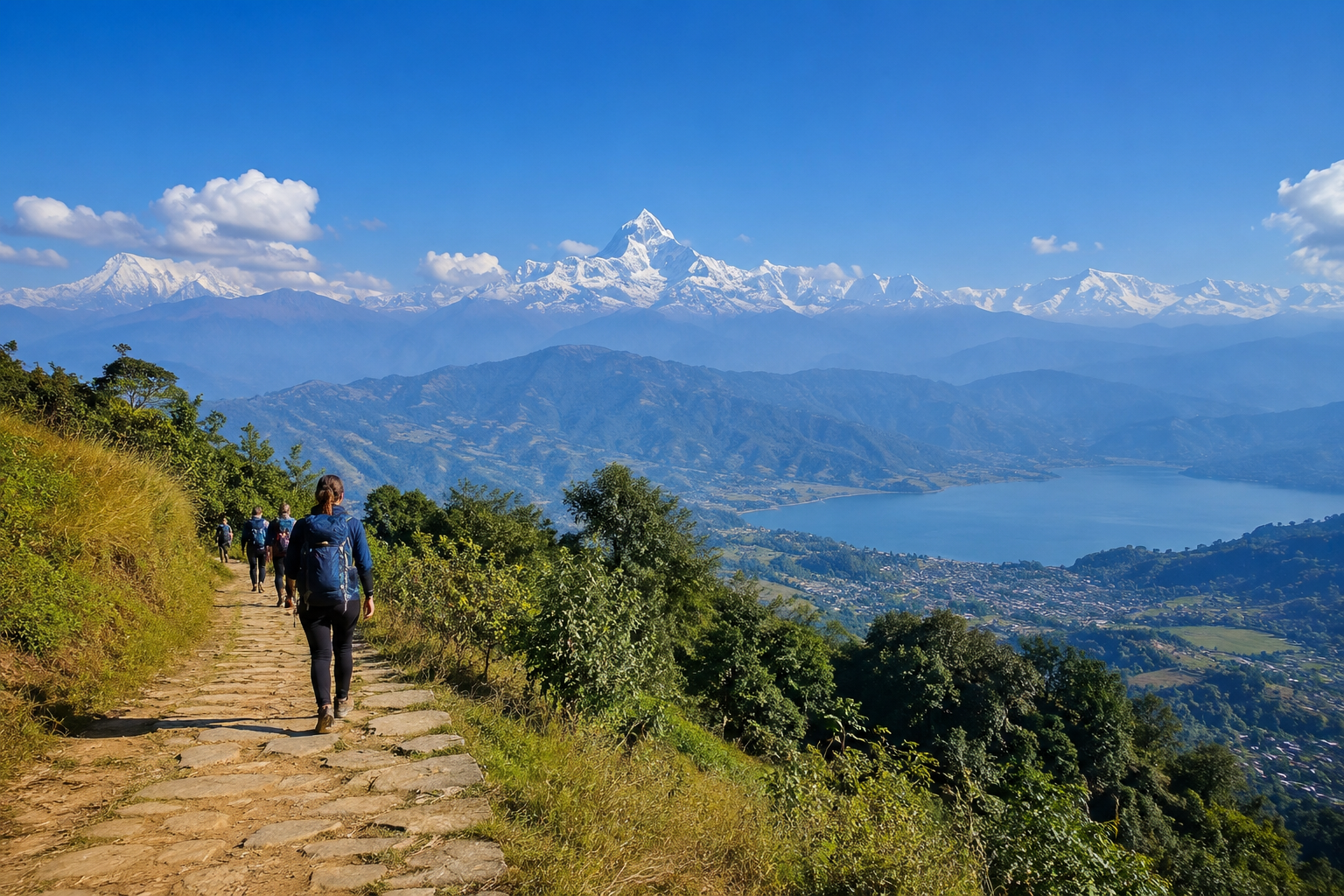
Pokhara isn’t just Nepal’s prettiest lakeside town — it’s the launchpad for some of the most rewarding beginner treks near Pokhara in the entire Himalayan region. If you’ve never strapped on a trekking backpack before, this city gives you direct access to snow peaks, rhododendron forests, and sunrise viewpoints without months of prior training.
This guide covers 5 Beginner friendly treks near Pokhara that balance stunning mountain views with manageable difficulty levels. Each route has been chosen because it suits first-time trekkers, offers good teahouse infrastructure, and doesn’t demand technical climbing skills.
Whether you have two days or two weeks, one of these five trails will fit your schedule, fitness level, and travel dates. Let’s break down what makes each one worth your time.
Why Pokhara Is Nepal’s Best Base for Beginner Treks
Pokhara sits at roughly 820 metres above sea level, directly facing the Annapurna range. This proximity means shorter approach times compared to treks starting from Kathmandu, and it explains why the region has some of Nepal’s best-maintained teahouse trails.
According to the Nepal Tourism Board, the Annapurna region remains the most visited trekking area in the country, largely because of this easy access combined with well-established trail infrastructure and permit systems managed by the Annapurna Conservation Area Project (ACAP).
For beginners, this matters because:
- Trailheads are a short drive from the city
- Teahouses offer food, beds, and charging points along most routes
- Permits (TIMS and ACAP) are straightforward to arrange in Pokhara itself
- Local guides are widely available for solo or first-time trekkers
1. Mardi Himal Trek
Mardi Himal trek is often the first recommendation for anyone searching for a short, dramatic Himalayan trek near Pokhara.
- Duration: 4 to 5 days
- Maximum altitude: Around 4,500 metres at Mardi Himal Base Camp
- Difficulty: Moderate, suitable for fit beginners
- Highlights: Close-up views of Machapuchare (Fishtail), rhododendron forest trails, fewer crowds than nearby routes
This trail was only opened to trekkers in the early 2010s, which is part of why it still feels less commercialised than other Annapurna routes. The final push to base camp involves a steep, narrow ridge, so it’s best attempted with decent stamina and proper acclimatization days built in.
Tip: Trek in October–November or March–April for clear mountain visibility and stable weather.
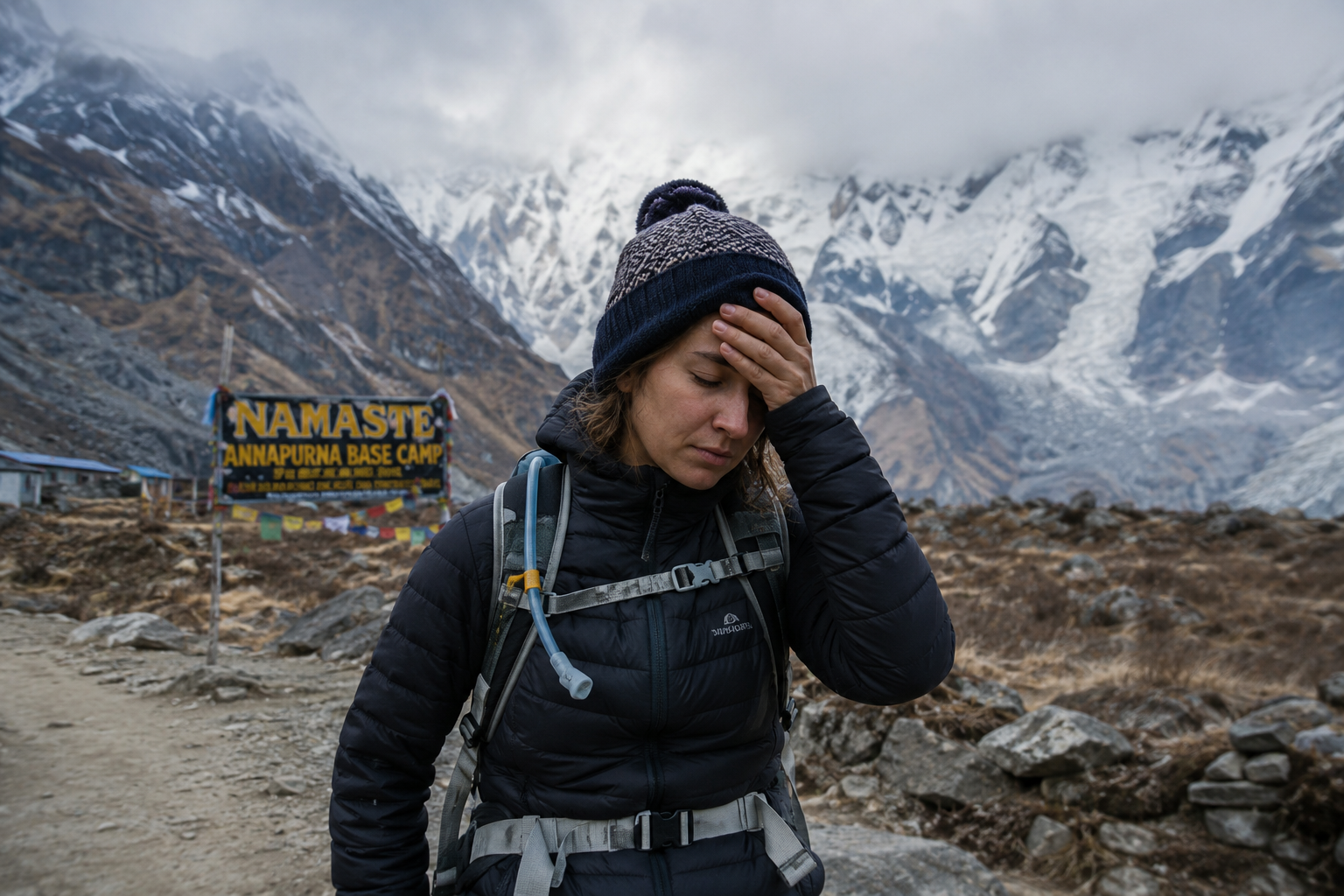
2. Annapurna Base Camp Trek
The Annapurna Base Camp trek (also called the ABC trek) is the most iconic of the five and technically the longest, but it’s still considered achievable for determined beginners with reasonable fitness.
- Duration: 7 to 10 days
- Maximum altitude: 4,130 metres
- Difficulty: Moderate to challenging due to daily elevation gain
- Highlights: A natural amphitheatre of peaks including Annapurna I, Machapuchare, and Hiunchuli
Unlike Mardi Himal, this trek gains altitude more gradually, which actually helps with acclimatization. The trail passes through Gurung and Magar villages, giving trekkers a real look at local Himalayan culture alongside the mountain scenery.
If you’re comparing this to other Himalayan regions, it’s worth noting that many trekkers who complete ABC later look into Treks in Nepal further east, such as the Everest or Langtang regions, once they’ve built confidence on this route.
Tip: Budget at least one extra buffer day in your itinerary for weather delays, especially during shoulder seasons.
3. Mulde (Muldai) Viewpoint Trek
The Muldai viewpoint trek, sometimes written as Mulde view point, is one of the least crowded options on this list despite offering panoramic views that rival much longer treks.
- Duration: 4 to 5 days (often combined with Ghorepani or Ghandruk)
- Maximum altitude: Approximately 3,637 metres
- Difficulty: Easy to moderate
- Highlights: 360-degree views of Dhaulagiri, Annapurna South, and Machapuchare from a single ridge
This viewpoint is usually approached from Ghorepani or Tadapani, making it an excellent add-on for trekkers already doing the Poon Hill circuit. Because it sees far fewer visitors than Poon Hill itself, sunrise here often means having the entire ridge to yourself.
Tip: Combine this with the Ghorepani Poon Hill route below to maximise viewpoints without adding much extra trekking time.
4. Ghorepani Poon Hill Trek
If there’s one trail that defines “beginner-friendly” in the Annapurna region, it’s the Ghorepani Poon Hill trek.
- Duration: 4 to 5 days
- Maximum altitude: 3,210 metres at Poon Hill
- Difficulty: Easy, ideal for first-time trekkers and families
- Highlights: Sunrise over Dhaulagiri and Annapurna ranges, thick rhododendron forests (especially vivid in March–April), stone-paved village trails
Poon Hill has earned its reputation because the effort-to-reward ratio is hard to beat. The final climb to the viewpoint is done in darkness before dawn, and the payoff is one of the most photographed mountain sunrises in Nepal.
Because the trail is well-marked and passes through villages like Ulleri, Ghorepani, and Tadapani, it’s commonly recommended for trekkers travelling with children or older family members.
Tip: Expect crowds at the Poon Hill viewpoint during peak season (October–November); arrive at least 30 minutes before sunrise to secure a good spot.
5. Khumai Danda Trek
Khumai Danda is not the easiest or shortest route on this list; Poon Hill and Muldai are easier. Khumai Danda features an incredibly steep, relentless ridge climb that many beginners find much tougher than the stone steps of Poon Hill.
- Duration: 1 day (can be done as a day hike from Pokhara)
- Maximum altitude: Around 2,500 metres
- Difficulty: Easy
- Highlights: Sweeping views of the Annapurna and Dhaulagiri ranges without a multi-day commitment
This trail is largely undiscovered by mainstream trekking crowds, which is exactly its appeal. It’s a practical option for travellers with limited leave days, or as a warm-up hike before attempting one of the longer treks above.
Tip: Hire a local guide from Pokhara for this one, since trail markings are less developed than on the more popular routes.
How to Choose the Right Beginner Trek Near Pokhara
With five solid options, picking the right one depends on three factors:
- Time available: Khumai Danda and Muldai suit short trips; ABC needs the most days
- Fitness level: Poon Hill and Khumai Danda are gentler; Mardi Himal and ABC involve steeper daily climbs
- Crowd tolerance: Poon Hill and ABC are busier; Muldai and Khumai Danda offer more solitude
Many trekkers based in Uttarakhand who’ve already tackled routes like Kedarkantha or Har Ki Dun often find these Nepal trails a natural next step, since the teahouse system removes the need to carry camping gear. If you’re weighing regional options first, it’s worth comparing these against the Best Treks in Uttarakhand before deciding which Himalayan range suits your first big trek.
Essential Tips for First-Time Trekkers in Nepal
- Arrange your TIMS card and ACAP permit in Pokhara before starting any of these trails
- Pack layered clothing; temperatures swing significantly between daytime and night at altitude
- Stay hydrated and walk at a steady pace, especially above 3,000 metres
- Hire a licensed local guide if trekking solo, particularly for Mardi Himal and Khumai Danda
- Carry basic altitude sickness medication and know the symptoms of acute mountain sickness (AMS)
Frequently Asked Questions
1. Which is the easiest trek near Pokhara for beginners?
The Ghorepani Poon Hill trek is generally considered the easiest, with a well-marked trail, shorter daily walking hours, and reliable teahouse stops.
2. How many days do I need for a beginner trek near Pokhara?
It depends on the route. Khumai Danda can be done in a single day, while Poon Hill and Mardi Himal typically take 4 to 5 days, and Annapurna Base Camp needs 7 to 10 days.
3. Do I need a guide for these treks?
It isn’t always mandatory, but it’s strongly recommended, especially for Mardi Himal and Khumai Danda where trail markings are less consistent.
4. What’s the best season to trek near Pokhara?
October to November and March to April offer the clearest skies and most stable weather across all five routes.
5. Is the Annapurna Base Camp trek suitable for a first-time trekker?
Yes, with proper acclimatization days and moderate fitness, ABC is achievable for beginners, though it’s more demanding than the other four treks on this list.
Conclusion
Pokhara has quietly become Nepal’s best starting point for anyone new to Himalayan trekking, and these five routes prove you don’t need years of experience to stand face-to-face with 4,000-metre peaks. Whether it’s the single-day reward of Khumai Danda, the sunrise drama of Ghorepani Poon Hill, or the longer commitment of Annapurna Base Camp, each trail offers a genuine taste of the mountains at a pace beginners can handle.
The real advantage of trekking near Pokhara isn’t just the scenery — it’s the infrastructure. Well-marked trails, established teahouses, and accessible permits mean first-timers can focus on enjoying the walk instead of worrying about logistics. Start with whichever route matches your available days and fitness level, build confidence on the trail, and you’ll likely find yourself planning the next one before you’ve even left the mountains.
Ready to Plan Your Pokhara Trek?
Choosing between these five trails doesn’t have to be complicated. If you want a personalised itinerary, permit assistance, or a guide matched to your fitness level, reach out to our Mountainiax trekking team today and let’s plan your first Himalayan adventure near Pokhara.