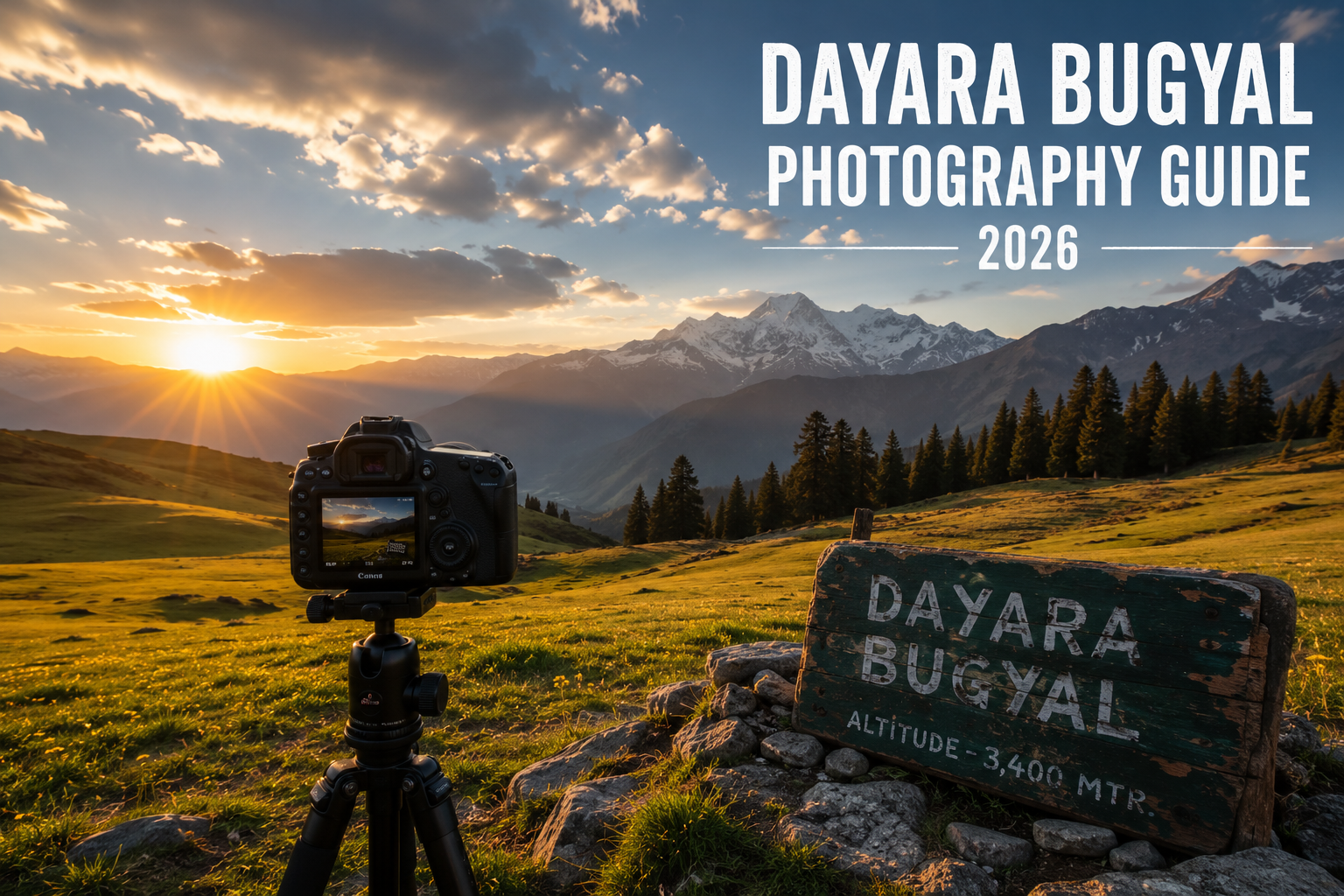
Nestled in the Uttarkashi district of Uttarakhand, Dayara Bugyal is one of those rare landscapes that stops you in your tracks the moment you lay eyes on it. A sweeping alpine meadow sitting at an altitude of approximately 3,408 metres, it transforms with every season — from a riot of wildflowers in summer to a pure white canvas of snow in winter. For photographers, it is not just a destination; it is an open-air studio gifted by the Himalayas.
Whether you are a seasoned travel photographer chasing that cinematic golden-hour frame or a hobbyist trekker who wants to document every breathtaking switchback, this destination rewards patience and preparation equally. The landscape here is deceptively dynamic — open meadows, dense oak and rhododendron forests, glacial streams, and the sharp silhouettes of peaks like Bandarpunch and Srikanth form a layered visual world that demands thoughtful composition.
This Dayara Bugyal Photography Guide 2026 is built for people who want more than just a lucky snapshot. It covers the best shooting windows, gear recommendations tailored to high-altitude conditions, composition techniques, season-by-season visual opportunities, and practical tips grounded in first-hand experience on this trail. Read on and start planning your most rewarding Himalayan photography trek yet.
The Visual Soul of Dayara Bugyal: Why Photographers Keep Coming Back
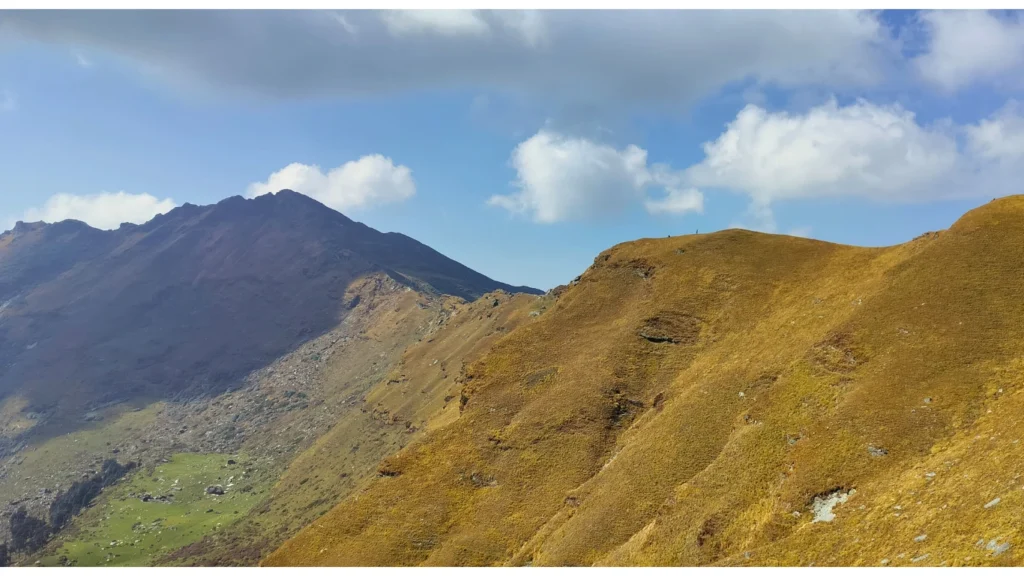
Dayara Bugyal occupies a photographic niche that very few Indian trekking destinations can match. Unlike densely forested routes where the canopy limits your sky, the bugyal (high-altitude meadow) opens up in every direction. You get 180-degree horizon lines, unobstructed sky, and a foreground that changes character by the hour.
The combination of high-altitude meadow photography, pristine snowfields, and up-close Himalayan peak views creates layered depth in a single frame. The Bandarpunch peak photography opportunities from the meadow’s upper reaches are particularly stunning — the twin summits frame beautifully against both sunrise alpenglow and a deep blue midday sky.
What makes the bugyal visually distinct from other alpine destinations in Garhwal is the textural variety. In October, the grasslands turn golden-amber. In January and February, snow drifts sculpt themselves into abstract forms. During the monsoon shoulder period in September, low clouds drag across the meadow floor, creating a mystical, soft-focus effect that landscape photographers dream of.
The Dayara Bugyal trek landscape is also intimate in scale — you are not shooting from a viewpoint across a valley. You walk through the frame, which means your camera can be active at every step.
Best Time to Visit Dayara Bugyal for Photography
Timing your visit is arguably the single most important creative decision you will make. Each season at Dayara Bugyal offers a completely different photographic palette.
October to November — The Golden Season
This is widely considered the peak period for Dayara Bugyal autumn photography. The monsoon has cleared, visibility is exceptional, and the meadow grass shifts to warm amber and golden tones. The sky is a deep, saturated blue — ideal for wide-angle landscape shots. Snow has not yet blanketed the upper meadow, so trails and natural textures remain visible. Sunrise at Barnala Tal, the small lake near the meadow, creates reflections that mirror the surrounding peaks.
• Best light: 6:00 AM to 8:00 AM and 4:30 PM to 6:00 PM
• Snow peaks: Sharply visible with minimal atmospheric haze
• Wildlife: Occasional Himalayan Monal sightings for bird photography
December to February — Snow and Silence
Dayara Bugyal snow photography during winter is for the committed photographer. The meadow lies under deep snow, the sky is crystalline on clear days, and the entire colour palette becomes a study in whites, blues, and steel greys. Long exposure shots of star trails over the snowfield are extraordinary in winter owing to zero light pollution. Conditions are demanding — temperatures drop to -10°C or below — but the visual payoff is unlike anything the rest of the year offers.
• Best for: Minimalist snowscapes, star trails, blue-hour abstractions
• Gear concern: Battery drain accelerates sharply; always carry spares
April to June — Bloom and Life
As snow retreats, rhododendron forests burst into red and pink below the treeline. By May, the meadow begins greening rapidly. This is the best window for wildflower trek photography in Uttarakhand with soft, diffused morning light through the forest being a particular highlight. Barnala Tal reflects lingering snow on the peaks while the meadow itself is beginning to bloom.
• Best for: Forest photography, wildflower macro shots, reflections in Barnala Tal
• Light quality: Soft and warm before 8:00 AM
July to September — Monsoon Drama
Most trekking guides recommend avoiding this period, but photographers willing to manage wet gear are rewarded with dramatic cloudburst light, fog-filled valleys, and super-lush greenery. The Dayara Bugyal monsoon landscape has a quality that is moody, ethereal, and unlike any other season.
• Risk factor: Slippery trails, unpredictable weather windows
• Reward: Cinematic fog, rich greens, dramatic storm light
Camera Gear Guide for High-Altitude Himalayan Photography
Packing for a photography trek requires a careful balance between creative capability and physical load. Here is a gear framework that works for Dayara Bugyal specifically.
Camera Body
A mirrorless full-frame body is ideal for the dynamic range required in high-contrast mountain scenes (bright snow against dark forest). If you are shooting on APS-C, ensure your sensor handles ISO 1600 cleanly for low-light alpine shots. Weather-sealing is important given the variable conditions.
Lenses to Prioritise
A wide-angle zoom (16–35mm full-frame equivalent): For sweeping Himalayan meadow landscape shots, expansive sky compositions, and environmental portraits of fellow trekkers
• A mid-range zoom (24–70mm): Versatile for forest, trail, and campsite photography
• A telephoto (100–400mm): For Bandarpunch peak close-up photography and distant ridge detailing
• A fast prime (50mm or 85mm f/1.8): For portraits and low-light campfire shots
Accessories That Matter at Altitude
• Polarising filter: Cuts glare off snow and deepens the blue sky — essential for alpine landscape photography in Garhwal
• Graduated ND filter: Balances bright sky against darker foreground
• Extra batteries (minimum 3): Cold temperatures drain batteries up to 40% faster
• Microfibre cloths and zip-lock bags: Protect lenses from condensation when moving between temperature zones
• Lightweight tripod or gorilla pod: For long exposures, star trails, and sunrise compositions
Storage and Protection
Carry your camera body in a front-mounted chest pouch rather than the back of your rucksack. It protects against impact and keeps the camera accessible at all times. Use a dry bag liner inside your pack for memory cards and electronics.
Composition Techniques for Dayara Bugyal’s Unique Terrain
The meadow’s open, uncluttered nature is both a gift and a challenge. Without foreground interest, wide shots can feel flat. Here is how experienced mountain photographers work the landscape.
Use Natural Leading Lines
The trekking trail itself winds beautifully across the meadow — it is a natural leading line that draws the eye toward the peaks on the horizon. Shoot low and use the trail as a compositional device. The edge where snow meets exposed grass is another powerful line.
Foreground Anchoring
In wide-angle compositions, include a foreground element — a snow-dusted boulder, a wildflower cluster, the ripple of Barnala Tal — to give the image a sense of scale and depth. This is one of the most effective landscape photography techniques for Himalayan treks.
Shooting Into the Light
Backlit photography during early morning at Dayara Bugyal produces silhouette shots and rim-lit grass textures that feel almost painterly. Do not always shoot with the sun behind you.
Vertical Frames for Peak Drama
When shooting Bandarpunch or the wider Garhwal skyline, a vertical (portrait) composition captures both the full height of the peaks and the foreground meadow in one frame. This works particularly well for social media and editorial use.
Timing Golden Hour Precisely
At 3,400 metres altitude, golden hour is more intense and shorter than at sea level. The warm light window is approximately 20–25 minutes after sunrise and before sunset. Be positioned and ready before the light arrives — scrambling for the right angle during golden hour is a costly mistake.
Understanding the Trek Before You Shoot
No photography guide for this destination is complete without acknowledging the physical demands of the journey. Knowing the Difficulty Level Of Dayara Bugyal trek helps you plan your shooting schedule realistically. The trek is rated easy to moderate, making it accessible to first-time high-altitude trekkers, but the altitude still demands acclimatisation before you can wander off-trail for composition scouting.
The base camp at Barsu or Raithal, the forest walk through oak and rhododendron, the gradual climb to Barnala Tal, and the final push to the meadow top — each section has its own photographic character. Plan to stop and shoot deliberately at each transition zone rather than rushing through to the meadow. The rhododendron forest between 2,500 and 3,000 metres is particularly underrated photographically.
Once you are on the meadow, morning light hits the eastern slopes of Bandarpunch first — position yourself on the northwestern edge of the bugyal for the best sunrise angle. For sunset, move toward the eastern boundary of the meadow where the sky over the Gangotri range turns a deep amber-rose.
Packing Smart for a Photography Trek to Dayara Bugyal
Photography gear adds meaningful weight to your pack, which means everything else needs to be lean. Following a well-researched Dayara Bugyal Trek Packing List allows you to carry all necessary camera equipment without overloading yourself for the 4–5 day trail.
Key principles for a photographer’s packing strategy:
• Distribute camera weight evenly — one lens on the body, others in your main pack
• Pack lens cloths and a portable blower in the top lid for quick access
• Carry a packable down jacket specifically for early morning and late evening shooting sessions when you are stationary for extended periods
• A headlamp with a red-light mode is valuable for setting up for pre-dawn shoots without ruining your own night vision
• Trekking poles free up your arms for handheld shooting on the move
Do not compromise on trekking essentials for the sake of extra lenses. A fit, comfortable trekker will always get better shots than an exhausted one carrying too much gear.
Ethical Photography Practices on the Dayara Bugyal Trail
As responsible trekking photography in Uttarakhand gains more visibility, it is worth being explicit about on-trail ethics.
• Stay on marked trails when moving for compositions — off-trail walking damages fragile alpine vegetation
• Do not move or disturb rocks, natural formations, or flowers for the sake of a composition
• Ask for permission before photographing local shepherds, villagers, or fellow trekkers in close-up
• Avoid using drones unless you have the required permissions — flying drones in ecologically sensitive areas near forest zones may require DGCA and forest department clearances
• Carry out all packaging material including lens wipe packaging and filter cases
Post-Processing Tips for Himalayan Meadow Images
Field captures from high altitude often need specific post-processing attention.
• Snow scenes tend to be underexposed by camera metering — check your histogram and restore highlights in Lightroom or Capture One
• Polariser effects can be enhanced in post by gently boosting the blue channel and reducing haze in the Dehaze slider
• Autumn meadow shots benefit from a subtle split tone — warm shadows and cool highlights — to reflect the real quality of mountain light
• For peak detail shots, apply selective sharpening only to the rocky faces and snow textures, leaving the sky clean
Avoid over-saturating — the natural colour palette of Dayara Bugyal in October and November is already rich; heavy saturation quickly looks artificial
Frequently Asked Questions
What is the best month for photography at Dayara Bugyal?
October and November offer the clearest skies, golden grasslands, and sharp peak visibility, making them the most consistently rewarding months for photography. December through February is ideal for snow photography if you are prepared for extreme cold.
Can beginners do the Dayara Bugyal trek with camera gear?
Yes. The trek is rated easy to moderate, and the total altitude gain is manageable over 4–5 days. First-time trekkers should keep their camera kit compact — a mirrorless body with one or two lenses is sufficient.
Is a tripod necessary for Dayara Bugyal photography?
For golden-hour long exposures, star-trail photography, and sharp telephoto peak shots, a tripod or gorilla pod is strongly recommended. During active daytime shooting, handheld is fine with a stabilised lens.
What permits are needed for photography at Dayara Bugyal?
Currently there are no specific commercial photography permits required for personal and travel photography on this trek. However, drone usage requires DGCA approvals and forest department clearances. Always verify current regulations before your visit.
Is wildlife photography possible at Dayara Bugyal?
The Himalayan Monal pheasant, Himalayan Snowcock, and various raptors have been documented in the area. October to November and April to May offer the best sighting windows. A telephoto lens of 300mm or more is recommended for bird photography.
How cold does it get during winter photography trips?
Temperatures can drop to -10°C or lower at the meadow in December and January. Camera batteries must be kept close to your body, and all gear should be stored in insulated camera bags overnight.
What is the nearest photography base camp to the bugyal?
Barnala Tal campsite is the most popular base for meadow photography. Raithal village, the typical trek starting point, also offers composition opportunities with stone architecture, terraced fields, and mountain backdrops.
Final Thoughts: Plan the Trip, Earn the Frame
Dayara Bugyal rewards the photographer who arrives prepared — not just with the right gear, but with a genuine understanding of how the light, terrain, and seasons interact on this particular piece of the Himalaya. The best images from this meadow are rarely accidental. They are the result of arriving early, staying patient, and letting the landscape reveal itself on its own terms.
If you are planning your trek and want detailed route guidance, seasonal conditions, and gear advice curated specifically for Indian mountain treks, explore more at mountainiax.com. Start with the trail overview, align your dates to the season that matches your photographic goals, and give yourself at least one extra day on the meadow for weather windows and composition exploration.
With the dayara bugyal trek season approaching, it’s time to plan something truly extraordinary. From breathtaking Himalayan peaks to spiritually powerful temples hidden deep in remote valleys, this journey offers an experience that goes beyond a typical trek—it becomes a story you carry for life. To make your journey seamless and well-organised, choose the best trekking company in Uttarakhand for reliable trek packages, detailed itineraries, and hassle-free booking.
Visit this page for Trek Packages, Itinerary & Booking.