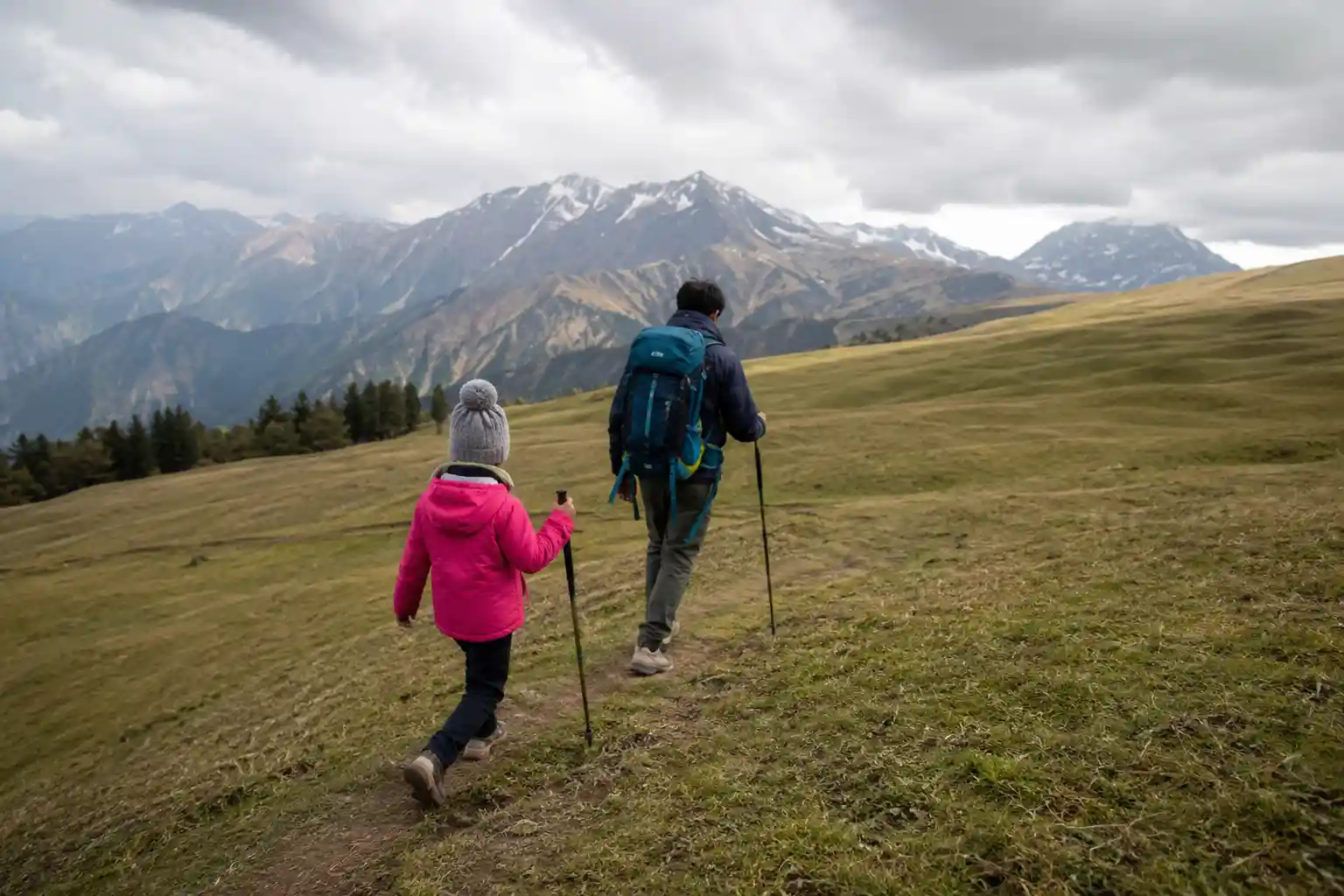
The Dayara Bugyal Trek with Kids is often considered one of the most family-friendly Himalayan treks in Uttarakhand due to its moderate altitude, gradual trails, and vast alpine meadows. Many families successfully complete this trek with children, making it an excellent introduction to Himalayan trekking.
However, factors such as a child’s age, fitness level, weather conditions, and proper preparation play a crucial role in ensuring a safe and enjoyable experience. This guide covers everything parents need to know, including safety, ideal age groups, essential gear, and practical planning tips for a memorable family adventure.
Why Dayara Bugyal Is Considered Family-Friendly
Dayara Bugyal is widely regarded as one of the best beginner-friendly meadow treks in Uttarakhand. Its well-defined trails, moderate altitude gain, and relatively short itinerary make it a suitable option for families planning their first Himalayan adventure with children.
Moderate and Beginner-Friendly Terrain
Dayara Bugyal is generally classified as an easy to moderate trek. The route follows gradual ascents through forests and open meadows rather than steep, technical climbs. Most trekking days involve manageable walking distances, allowing families to maintain a comfortable pace while giving children adequate time for rest and acclimatization.
Short Duration Reduces Fatigue
Most Dayara Bugyal trek itineraries are completed within 4–5 days, including travel to and from the base village. A shorter schedule is particularly beneficial for families, as younger trekkers are less likely to experience physical exhaustion or lose interest compared to longer Himalayan expeditions.
Meadows and Forests Keep Children Engaged
One of the biggest advantages of Dayara Bugyal is its diverse landscape. The trail passes through dense oak forests, scenic clearings, and expansive alpine meadows spread across thousands of acres. These constantly changing surroundings help keep children engaged throughout the trek while offering opportunities to observe nature, wildlife, and Himalayan views.
Easy Access from Dehradun
The trek starts from the villages of Raithal or Barsu in Uttarkashi district, both of which are connected by road from Dehradun. The relatively straightforward journey to the trailhead minimizes travel-related fatigue and makes logistical planning easier for families traveling with young children.
Spacious Campsites and Safe Trekking Environment
Dayara Bugyal is known for its broad camping areas, well-marked trails, and open terrain. Reputed trek operators regularly conduct family and beginner batches here because the route allows trekkers to walk safely while enjoying panoramic views of Himalayan peaks such as Bandarpoonch, Srikanth, Jaonli, and the Gangotri range. These factors contribute to a comfortable and confidence-building trekking experience for both parents and children.
What Age Is Right for Dayara Bugyal Trek
One of the most common questions parents ask before planning a family trek is whether their child is old enough for Dayara Bugyal. Based on recommendations followed by experienced trek leaders and operators, age should be considered alongside fitness, outdoor experience, and overall health.
Recommended Age Range
- Children aged 8 years and above are generally well-suited for the trek, as they can comfortably walk for several hours, follow trail instructions, and adapt to changing mountain conditions.
- Kids between 5 and 7 years old may also complete the trek if they are physically active, have prior hiking experience, and are accompanied by parents prepared for occasional assistance.
- Children below 5 years are usually not recommended due to altitude exposure, unpredictable weather, and the physical demands of multi-day trekking.
Why Age Matters More Than You Think
Dayara Bugyal reaches an altitude of approximately 12,000 ft, where some trekkers may experience mild altitude-related discomfort. Younger children often struggle to communicate symptoms such as headaches, fatigue, or nausea, making it harder for parents to identify early warning signs. Older children are generally better at expressing discomfort and maintaining a steady trekking pace.
Physical and Mental Readiness
Age alone does not determine trekking ability. An active 7-year-old who regularly participates in outdoor activities may perform better than an older child with limited physical activity. Equally important is mental preparedness—children should be comfortable with walking on mountain trails, adapting to basic campsite facilities, and spending multiple days away from urban comforts.
A Family-Friendly Approach
According to established trek operators, Dayara Bugyal is often recommended as a beginner-friendly Himalayan trek because of its gradual ascents, well-defined trails, and relatively short trekking distances. The trek also starts from villages that are accessible from Dehradun within a manageable road journey, helping reduce travel fatigue for children before the trekking portion begins.
Best Time to Trek Dayara Bugyal with Family
Choosing the right season is one of the most important factors when planning a family trek. Based on trail conditions, weather patterns, and recommendations from leading Himalayan trekking organizations, spring and autumn are generally the most comfortable seasons for families with children.
| Season | Months | Trail Conditions | Temperature Range | Family Suitability | Key Highlights |
| Spring & Early Summer | April – June | Dry trails, stable weather, blooming landscapes | Day: 10°C to 20°CNight: 2°C to 8°C | Best Time | Lush green meadows, comfortable trekking weather, longer daylight hours, ideal for first-time family trekkers |
| Monsoon | July – August | Wet and slippery trails, reduced visibility | Day: 12°C to 18°CNight: 5°C to 10°C | Not Recommended | Frequent rainfall, muddy paths, leeches in lower forest sections, challenging conditions for children |
| Autumn | September – November | Clear trails and excellent visibility | Day: 8°C to 18°CNight: 0°C to 5°C | Very Good | Crystal-clear mountain views, pleasant trekking weather, fewer crowds, excellent photography opportunities |
| Winter | December – February | Snow-covered trails and campsites | Day: -2°C to 10°CNight: -8°C to 0°C | For Experienced Families | Snow trekking experience, winter landscapes, suitable for older children with proper winter gear and prior trekking exposure |
Family Recommendation
For most families, April to June remains the best time to visit Dayara Bugyal. The weather is predictable, the meadows are vibrant, and trail conditions are safest for children. September to November is another excellent option for families seeking clear Himalayan views and cooler temperatures. Winter treks can be rewarding but require additional preparation, quality cold-weather gear, and children who are comfortable trekking in snow.
Essential Packing List for Trekking with Kids
Packing thoughtfully reduces stress significantly once you’re on the trail. Here’s a practical checklist tailored for family treks.
Clothing Essentials
- Moisture-wicking base layers to keep kids dry during the walk
- A warm fleece or down jacket for evenings at the campsite
- Waterproof or windproof outer shell
- Comfortable trekking pants, avoiding jeans which restrict movement
- Woolen socks and a spare pair to prevent blisters
- A warm cap, sun hat, and gloves depending on the season
Footwear
- Well broken-in trekking shoes with ankle support
- Avoid brand-new shoes that haven’t been tested on shorter walks beforehand
Health and Safety Items
- A basic first aid kit including bandages, antiseptic cream, and motion sickness tablets
- Any prescribed medication your child regularly takes
- Sunscreen with high SPF and lip balm for high-altitude sun exposure
- A reusable water bottle and electrolyte sachets to prevent dehydration
Comfort and Engagement Items
- Snacks your child already enjoys, since unfamiliar trail food can be a hard sell for picky eaters
- A small notebook or simple game to keep them occupied during rest breaks
- A headlamp or torch for nighttime camp movement
Tips to Make the Trek Enjoyable for Children
Beyond gear and timing, how you approach the trek day-to-day shapes whether kids actually enjoy it or simply endure it.
Set Realistic Daily Goals
Avoid rushing through the itinerary. Build in extra rest stops and accept that children will walk slower than adults. Trying to match adult pace usually backfires and leads to exhaustion or frustration.
Make It Interactive
Encourage kids to spot birds, identify trees, or count colourful flowers along the trail. Turning the walk into a mini nature exploration keeps their attention away from fatigue.
Involve Them in Preparation
Letting children pack their own small backpack with snacks or a water bottle gives them a sense of ownership over the trip, which often translates into better enthusiasm on the trail.
Watch for Early Signs of Discomfort
Teach kids simple ways to communicate if they feel tired, cold, or unwell, even if it’s just a thumbs down signal. Catching discomfort early prevents bigger issues later.
Reward Milestones
Small celebrations at viewpoints or campsites, like a favourite snack or a few extra minutes of play, keep morale high throughout the journey.
Planning Your Dayara Bugyal Family Trip
Good planning is what separates a smooth family trek from a chaotic one. Here’s how to approach the logistics.
Choosing Between Barsu and Raithal Base Camps
Both villages serve as starting points, with Barsu generally offering slightly gentler initial gradients, which can be preferable for families with younger kids.
Hiring an Experienced Guide
A guide familiar with handling families, not just fitness-focused trekking groups, makes a noticeable difference in pacing and reassurance for nervous parents.
Budgeting for the Trip
Costs can vary depending on group size, season, and whether you opt for a private family batch versus a shared group. Understanding the full financial picture in advance helps avoid surprises once you’re already committed. For a transparent breakdown of expenses including permits, guide fees, food, and accommodation, our guide on Dayara Bugyal Trek Cost in 2026 covers everything you need to budget accurately for a family trip.
Permits and Documentation
Carry valid ID proof for all family members, including children, since forest department checkpoints often require verification before entry into the trek zone.
Insurance Considerations
While not mandatory for this particular trek, travel insurance covering trekking activities adds a layer of financial protection in case of unexpected medical needs.
Common Challenges Parents Should Prepare For
Being aware of potential hurdles in advance helps you respond calmly rather than reactively.
Toilet and Hygiene Facilities
Campsite facilities are basic. Carrying wet wipes, hand sanitiser, and teaching kids about using temporary toilet setups in advance reduces discomfort.
Limited Network Connectivity
Most of the trail has no mobile network, which can be unsettling for parents used to constant connectivity. Informing family back home about limited contact beforehand avoids unnecessary worry.
Food Adjustments
Trek meals are simple and repetitive, often consisting of dal, rice, and seasonal vegetables. Carrying a few familiar snacks helps bridge the gap for fussy eaters.
Sleep Disruptions
Camping in tents means a different sleeping environment than home. Bringing a comfortable sleeping bag liner or a familiar small pillow can ease the transition for younger children.
Frequently Asked Questions
1. Is Dayara Bugyal trek suitable for a 6-year-old child?
It can be attempted by a 6-year-old only if the child has prior hiking experience and parents are prepared to assist or carry them during steeper sections. Most experts recommend waiting until at least 7 or 8 years for a smoother experience.
2. How many days does the Dayara Bugyal trek take?
The trek typically takes four to five days including travel from Dehradun or Uttarkashi to the base village and back.
3. What is the maximum altitude of Dayara Bugyal?
The highest point of the trek reaches approximately 3,024 metres above sea level, which is considered moderate in terms of altitude-related risks.
4. Do I need a guide for Dayara Bugyal trek with kids?
Yes, hiring an experienced local guide is strongly recommended, particularly one familiar with pacing treks for children and handling family groups.
5. What is the best season to trek Dayara Bugyal with family?
Summer months from April to June offer the most favourable conditions, with green meadows, moderate temperatures, and stable weather.
Summary
For families looking for a safe and rewarding introduction to Himalayan trekking, Dayara Bugyal remains one of the most suitable options in Uttarakhand. With its gradual trails, manageable altitude of around 12,000 ft, short trekking duration, and expansive alpine meadows, it offers an experience that many active children aged 7–8 years and above can comfortably enjoy with proper preparation.
However, a successful family trek depends on more than choosing the right destination. Parents should carefully consider their child’s fitness level, select the most suitable season, pack appropriate clothing and essentials, and maintain a flexible trekking pace throughout the journey. Trekking with an experienced operator and following basic altitude and safety guidelines can further enhance the experience.
When planned thoughtfully, Dayara Bugyal is more than just a trek—it becomes an opportunity for children to experience the Himalayas, develop confidence outdoors, and create lasting family memories. For many young trekkers, it serves as the perfect first step into the world of mountain adventures.
With the dayara bugyal trek season approaching, it’s time to plan something truly extraordinary. From breathtaking Himalayan peaks to spiritually powerful temples hidden deep in remote valleys, this journey offers an experience that goes beyond a typical trek—it becomes a story you carry for life. To make your journey seamless and well-organised, choose the best trekking company in Uttarakhand for reliable trek packages, detailed itineraries, and hassle-free booking.
Visit this page for Trek Packages, Itinerary & Booking.