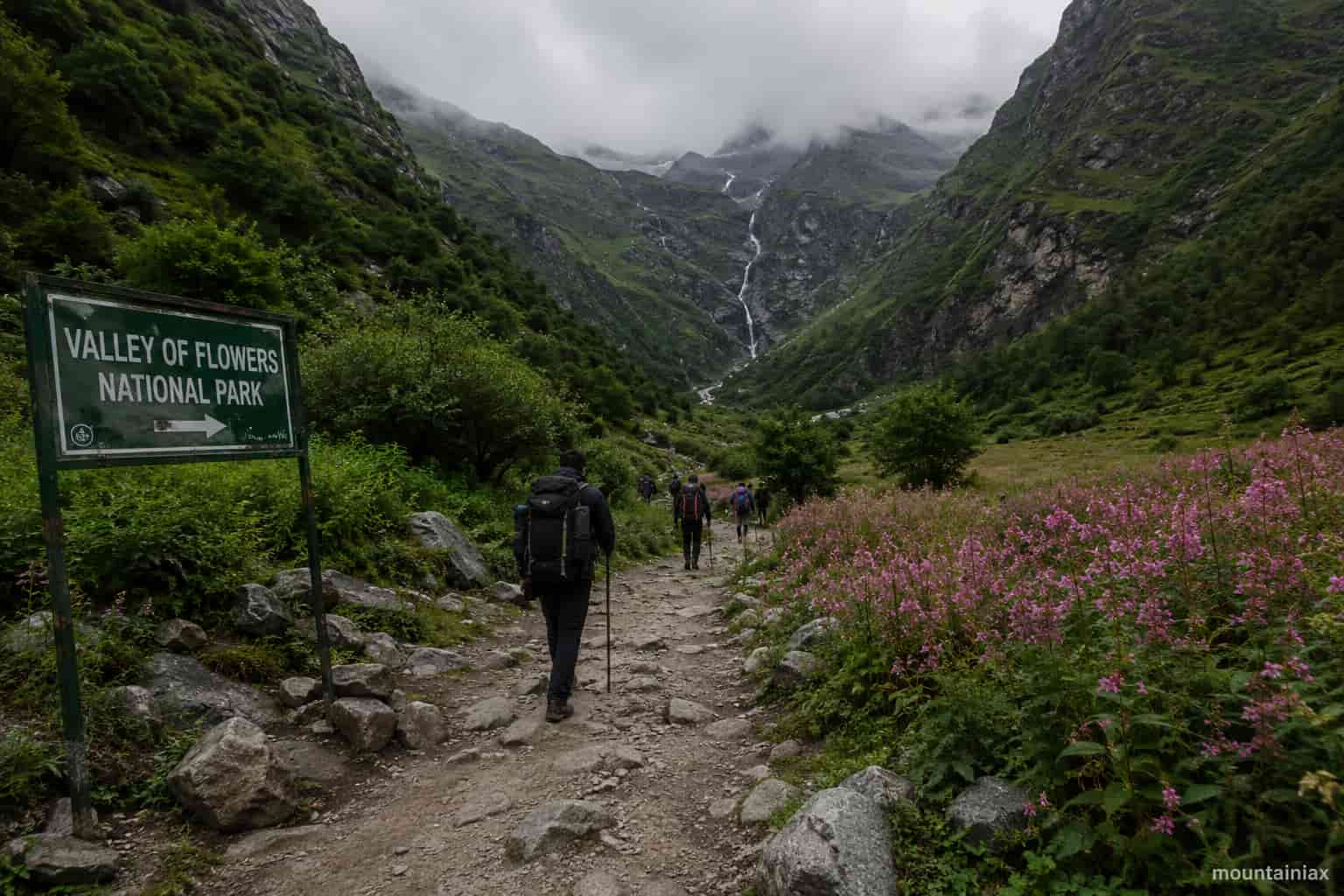
The Valley of Flowers is one of Uttarakhand’s most popular monsoon treks, known for its breathtaking alpine meadows, rare Himalayan wildflowers, waterfalls, and panoramic mountain views. Located within the UNESCO World Heritage-listed Valley of Flowers National Park in Chamoli district, the trek reaches an altitude of 3,658 metres and offers a perfect blend of natural beauty, biodiversity, and adventure.
The journey begins with a 290–300 km drive from Dehradun to Govindghat, followed by a short transfer to Pulna and a scenic trek to Ghangaria, the base camp for both Valley of Flowers and Hemkund Sahib. Whether you’re a first-time trekker, nature enthusiast, or photographer, this guide covers everything you need to know about the Valley of Flowers Trek from Dehradun, including the route, distance, costs, permits, best time to visit, and essential preparation tips.
So here’s the honest version: how far it actually is, what the road and trail look like, what it costs, and the 2026 permit details.
What is Ghangaria? Ghangaria (also called Govind Dham) is a small base camp settlement at around 3,049 metres in the Bhyundar Valley, Chamoli district, Uttarakhand. It’s the last point with hotels, food stalls, and mobile network — and the starting point for both the Valley of Flowers and Hemkund Sahib treks.
The Road from Dehradun to Govindghat: 290 km You Need to Respect
The journey from Dehradun to Govindghat covers approximately 290 km and typically takes 9–10 hours, depending on road and weather conditions. The route follows Dehradun → Rishikesh → Devprayag → Srinagar → Rudraprayag → Karnaprayag → Joshimath → Govindghat, tracing the Alaknanda River through some of Uttarakhand’s most dramatic mountain landscapes.
While the distance may not seem overwhelming, this is a mountain highway, not an expressway. Road conditions generally remain good until Rudraprayag, but narrower sections, traffic congestion, and occasional landslide-prone stretches near Joshimath can increase travel time during the monsoon season. Most experienced trek operators, including Indiahikes and Trek The Himalayas, recommend reaching Govindghat a day before starting the trek to avoid fatigue and allow for a smoother transition into the hiking portion of the journey.
Pro Tip: If your schedule allows, consider an overnight stop at Joshimath or Pipalkoti. Breaking the drive makes the journey more comfortable and leaves you better acclimatised and energised for the trek to Ghangaria the following day.
If you’re starting your trip in the city itself, our Dehradun Travel Guide covers where to stay and eat before you head out — useful if you’re flying or training into Dehradun a day early.
Govindghat to Pulna: The Last 4 Km by Road
At Govindghat, your vehicle stops. From here, a shared jeep covers the next 4 km to Pulna for about ₹50 per person — this is the last motorable point on the route.
Honest warning: during Char Dham season (which overlaps with Valley of Flowers season), Govindghat gets crowded with pilgrim traffic headed to Badrinath. Parking and jeep queues can eat up 30–45 minutes you didn’t budget for.
Pulna to Ghangaria: 9–10 Km of Real Climbing
This is where the trek actually starts. From Pulna, you climb roughly 9–10 km to Ghangaria, gaining altitude from about 1,920 m to 3,049 m. It’s a steady, gradual ascent through forest, alongside the Pushpawati river, crossing a few wooden and suspension bridges along the way.
What surprised me the first time was how social this stretch is — pilgrims heading to Hemkund Sahib share the same trail, so you’ll be walking alongside families, mule trains, and porters carrying everything from gas cylinders to suitcases.
Mules are available at Pulna for around ₹700 one way if you’d rather not carry your bag. Locals-only tip: book your mule a day in advance through your hotel in Govindghat — the morning rush at Pulna means the good mules go fast.
This stretch is also where altitude starts to matter. If you’ve never trekked above 3,000 m before, it’s worth reading our guide on High Altitude Sickness, HACE, and HAPE before you go — not to scare you, just to know what to watch for.
Ghangaria to the Valley of Flowers: The Final 3.5–4 Km
From Ghangaria, it’s another 3.5–4 km to reach the Valley of Flowers entrance at 3,050 m. The forest checkpoint, where your permit is verified, sits just outside Ghangaria.
According to Uttarakhand Tourism, the park gate operates on fixed daily timings, and overnight stays inside the national park are not permitted — everyone must return to Ghangaria before closing. Entry costs ₹150 per person for Indian nationals and ₹600 for foreign nationals, per day.
Honest opinion: don’t rush this part. The valley stretches out gradually, and the best flowers — depending on the month — are often a 30–40 minute walk past the entrance, not right at the gate.
For a deeper look at what’s actually blooming and when, our Valley of Flowers Complete Guide 2025 breaks down the flower calendar in detail.
Should You Add Hemkund Sahib?
From Ghangaria, a separate trail climbs 6 km to Hemkund Sahib, sitting at 4,329 m — making it one of the highest gurudwaras in the world.
Here’s what I tell every first-timer: don’t combine both treks on the same trip unless you’ve got at least one extra acclimatisation day in Ghangaria. The jump from 3,049 m to 4,329 m in a single push is where most altitude problems happen, not on the Valley of Flowers side.
If you want the full picture before deciding, we’ve covered it separately in A Sacred Journey to Hemkund Sahib.
Permits & 2026 Rules: What’s Changed
As of June 2026, the Valley of Flowers National Park is open from June 1 to October 31. Permits and entry tickets are issued at the forest checkpoint near Ghangaria, and updates on online registration are being rolled out through the Uttarakhand Tourist Care portal.
For the latest official advisories on fees, seasonal closures, and permit rules, check the Uttarakhand Tourism official site before you travel — these details get revised year to year.
The Valley of Flowers National Park was recognised as a UNESCO World Heritage Site on 17 July 2005, and according to Wikipedia, the park spans roughly 87 sq km and shelters over 600 species of alpine flowers.
Best Time to Visit: Month by Month
July/August- Best
This is the window most people are talking about when they say they want to trek the Valley of Flowers. The monsoon brings generous rainfall from late June onwards, and by mid-July, the meadow is at its most spectacular — a dense, layered carpet of 500+ wildflower species in full simultaneous bloom. Mid-July to mid-August is the absolute peak. Blue Himalayan poppies, cobra lilies, Brahmakamals, primulas, anemones, bistort, marsh marigolds, and hundreds more are all flowering at once. Yes, it rains — often every afternoon — but that’s precisely what makes the flowers bloom. Pack your waterproofs and embrace it.
June/September – Good
The Valley opens officially in the first week of June (date varies by snowmelt). Early June means fewer crowds, clear mornings, and the first blooms appearing — but the flower density won’t match July. A good option if you want a quieter experience and don’t mind fewer species in bloom. Hemkund Sahib also opens in June (typically the second or third week, depending on snow conditions).
October/May- Closed
By September, the main bloom is thinning out, but late-season flowers take over — asters, gentians, and other autumn species create a different but still beautiful palette. Monsoon rain eases in late September. Crowds thin significantly. A good choice for those who prefer clearer skies and quieter trails.
All Year – Hemkund Sahib
The National Park closes officially in October. By November, the valley is deep under snow and inaccessible. It remains closed through winter and spring, reopening the following June.
For a flower-by-flower seasonal breakdown, our dedicated post on the Best Time to Visit Valley of Flowers goes deeper than this section.
What to Carry for the Valley of Flowers Trek
Packing correctly can make a significant difference to your comfort and safety during the Valley of Flowers Trek, especially during the monsoon season when weather conditions can change rapidly. Based on standard trek requirements and local Himalayan conditions, here are the essentials you should carry:
Essential Trekking Gear
- A sturdy backpack with rain protection to keep your belongings dry during unexpected showers.
- Waterproof trekking shoes with good grip are highly recommended, as the Govindghat–Pulna–Ghangaria trail often becomes slippery due to rain and mud.
- A trekking pole for added stability on steep ascents and descents.
- An LED torch or headlamp for early morning starts and emergency use.
- At least one 1-litre water bottle to stay hydrated throughout the trek.
- A reusable lunch box for packed meals and snacks during trekking days.
- Any basic or prescribed medications, along with personal first-aid essentials recommended by your doctor.
Clothing for Mountain Weather
- A warm trekking jacket to handle chilly mornings and evenings.
- Additional warm layers for changing temperatures at higher elevations.
- Two trek pants that dry quickly and provide comfort during long walks.
- Full-sleeve dry-fit T-shirts to protect against sun exposure and moisture.
- One pair of thermals for colder nights, especially if temperatures drop unexpectedly.
- A raincoat or poncho (mandatory). A poncho is often preferred because it covers both you and your backpack, offering better protection during prolonged rainfall.
Accessories You Shouldn’t Skip
- UV-protected sunglasses to reduce glare at higher altitudes.
- Sunscreen (SPF 50 or above), as mountain UV exposure can be surprisingly intense even on cloudy days.
- Lip balm with SPF protection to prevent dryness and cracking.
- Synthetic hand gloves for protection from cold winds and light rain.
- A woollen cap to retain body heat during mornings and evenings.
- At least three pairs of moisture-wicking socks to keep your feet dry and comfortable.
Documents & Important Extras
- A lightweight daypack for carrying water, snacks, and essentials during day hikes.
- Plastic covers or dry bags to protect clothes, electronics, and documents from rain.
- A power bank (10,000mAh or higher), as charging facilities in Ghangaria can be limited and network connectivity becomes unreliable beyond the village.
- Cash in small denominations, since ATM access is unavailable after Govindghat and local services such as mule or porter assistance generally operate on cash payments.
- Original and photocopies of a valid Government Photo ID (Aadhaar Card, Passport, Driving Licence, or Voter ID), which may be required during registration and verification checkpoints.
Expert Tip: If you plan to carry a DSLR, mirrorless camera, or other electronics, keep them in a waterproof dry bag or sealed ziplock pouch. Sudden rain showers are common throughout the Valley of Flowers trekking season, and protecting your equipment is essential.
This packing list is designed to help trekkers stay comfortable, prepared, and safe throughout the Valley of Flowers Trek, while accounting for the region’s unpredictable Himalayan weather and terrain.
Frequently Asked Questions
Q1: How many days do I need for the Valley of Flowers trek from Dehradun? A: Plan for 5–6 days total. This includes 2 days of road travel (Dehradun to Govindghat and back) and 3–4 days for the trek itself, including a day to explore the valley and an optional day for Hemkund Sahib.
Q2: What is the entry fee for Valley of Flowers in 2026? A: The entry fee is ₹150 per person per day for Indian nationals and ₹600 per day for foreign nationals, payable at the forest checkpoint near Ghangaria.
Q3: Can I stay overnight inside the Valley of Flowers? A: No. Overnight stays inside the national park are not allowed. All visitors must return to Ghangaria, where hotels and GMVN guesthouses are available, before the park gate closes.
Q4: Is the Valley of Flowers trek from Dehradun suitable for beginners? A: Yes, with preparation. The trail itself is moderate, but the long road journey and altitude gain to Ghangaria (3,049 m) mean first-timers should build in an extra acclimatisation day and avoid combining it with Hemkund Sahib on the same trip.
Q5: When does the Valley of Flowers open and close in 2026? A: The park is open from June 1 to October 31, 2026. Peak bloom falls between late July and September, though exact flowering depends on the monsoon that year.
Summary
The Valley of Flowers Trek from Dehradun is more than just a scenic Himalayan hike—it is a journey through one of India’s most remarkable natural landscapes. From the long drive along the Alaknanda Valley to the vibrant alpine meadows of the national park, every stage of the trek offers a unique experience. With proper planning, the right gear, and realistic expectations about weather and altitude, even first-time trekkers can enjoy this adventure safely. Whether you’re visiting for the world-famous wildflower bloom, the surrounding mountain views, or the spiritual extension to Hemkund Sahib, the Valley of Flowers Trek remains one of Uttarakhand’s most rewarding monsoon treks.
With the Valley of Flowers trek season approaching, it’s time to plan something truly extraordinary. From breathtaking Himalayan peaks to spiritually powerful temples hidden deep in remote valleys, this journey offers an experience that goes beyond a typical trek—it becomes a story you carry for life. To make your journey seamless and well-organised, choose the best trekking company in Uttarakhand for reliable trek packages, detailed itineraries, and hassle-free booking.
Visit this page for Trek Packages, Itinerary & Booking.