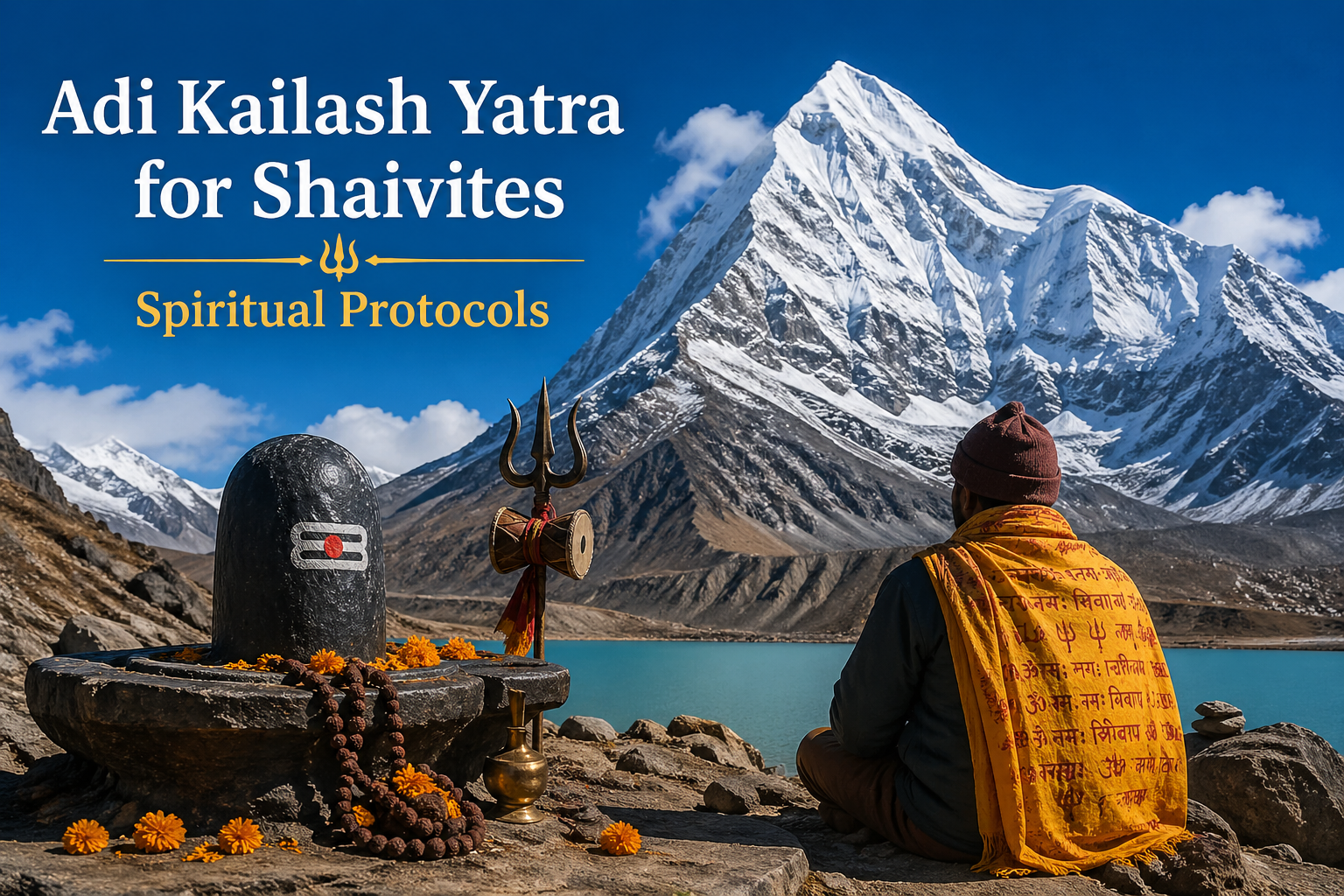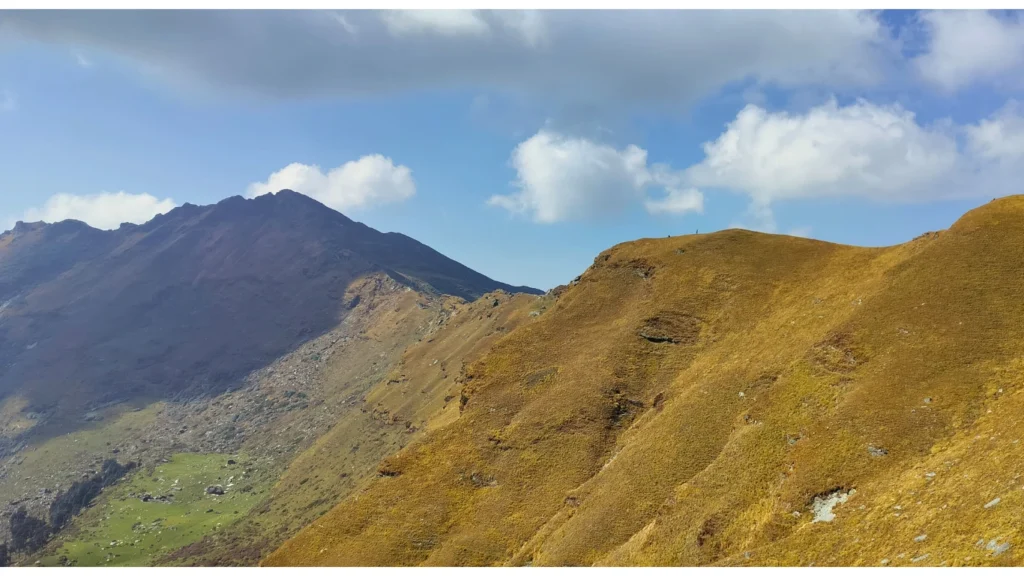
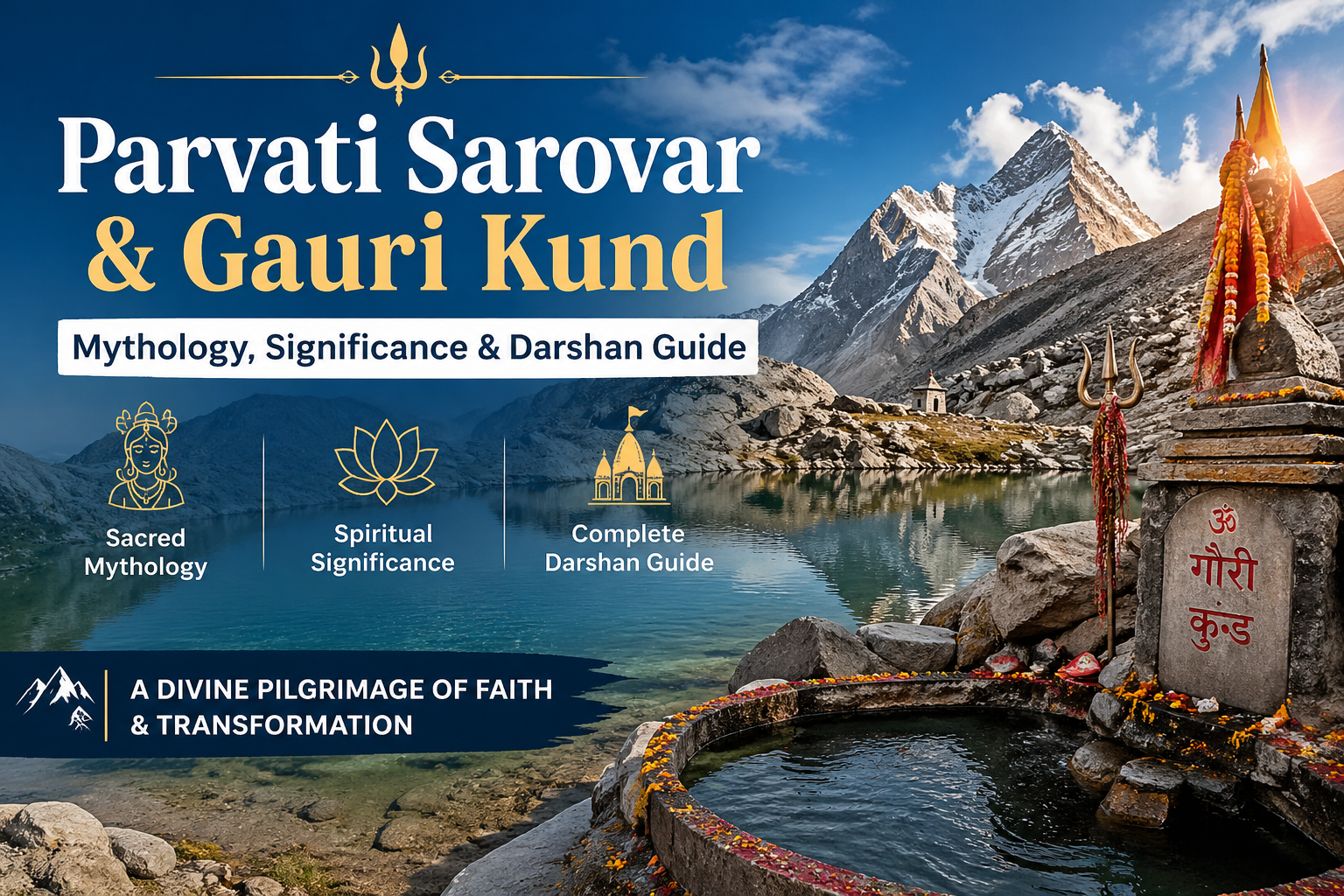
Nestled at the edge of the known Himalayan world, where glaciers meet ancient mythology and the mountains hold their deepest silences, lies a spiritual zone unlike any other in India. At an altitude of over 4,700 metres in the Pithoragarh district of Uttarakhand, the upper Kali Ganga valley harbours sacred secrets that have drawn saints, sadhus, and devoted pilgrims for thousands of years. This is the terrain of Adi Kailash — and at its heart lies a story written not in stone but in water.
The ancient Puranas describe this region as a second abode of Lord Shiva and Goddess Parvati — a high-altitude sanctuary where divine energies gather in their most undiluted form. Here, in the brief summer months when snow retreats and the mountain opens itself to the faithful, two remarkable water bodies emerge from the glacial cold. Each carries a name rooted in Puranic scripture. Each is believed to carry the direct grace of the Goddess herself.
This article is your complete guide to Parvati Sarovar & Gauri Kund — covering their mythological origins, religious significance, ritual bathing tradition, seasonal existence, distance from Jolingkong camp, water temperature, and everything a pilgrim or spiritual seeker needs to know before making the journey.
Where Are Parvati Sarovar and Gauri Kund Located?
Both Parvati Sarovar and Gauri Kund are situated near Jolingkong, the highest camp on the Adi Kailash Yatra route, resting at approximately 4,750 metres above sea level. Jolingkong lies in the far northeastern reaches of Pithoragarh district, deep in the upper Kali Ganga valley, and shares its horizon with the India-Tibet border.
Gauri Kund is a small, naturally formed sacred pool located roughly 1 to 1.5 kilometres from the Jolingkong camp. The path to it winds through rocky, glacial terrain, passing beneath the dramatic rock face of Adi Kailash itself. The mountain’s presence here is overwhelming — every step toward the kund feels like a step deeper into sacred geography.
Parvati Sarovar lies close to Gauri Kund and is typically visited as part of the same morning excursion from camp. It is a larger glacial lake that forms seasonally, its existence dependent on snowmelt and the brief warmth of the high-altitude summer.
Together, these two sacred water bodies near Adi Kailash form the spiritual epicentre of the entire Adi Kailash pilgrimage, making the Jolingkong plateau one of the most revered high-altitude zones in the Kumaon Himalaya. Pilgrims universally consider the darshan of both incomplete without the other.
The Puranic Origin Story — Mythology Behind These Sacred Waters
Rooted in ancient Puranic lore, these sacred waters are believed to be associated with Goddess Parvati’s penance to attain Lord Shiva. Legends describe Parvati Sarovar as her meditation site and Gauri Kund as the place of her divine purification, symbolizing devotion, austerity, and spiritual union.
The Legend of Goddess Parvati’s Penance
To truly understand Gauri Kund and Parvati Sarovar, one must return to the world of the Puranas — the ancient Hindu scriptures that document the divine relationships, cosmic events, and sacred geographies of the gods.
According to the Shiva Purana and regional oral traditions preserved by the priests and communities of the Kumaon hills, Goddess Parvati — in her unwavering determination to attain Lord Shiva as her husband — chose the high Himalayan wilderness as her site of tapas (penance). She sat in deep, unbroken meditation through the harshest winters and most blistering mountain storms, refusing to be moved by either comfort or obstacle. Her resolve is considered one of the most celebrated acts of devotion in all of Hindu tradition.
The region around Adi Kailash — itself a terrestrial echo of the great Kailash Mansarovar in Tibet — was chosen for this penance because of its raw, undiluted spiritual energy. Sages and Shaivite monks had long described this landscape as the younger Kailash, a place where the boundary between the human and the divine is at its thinnest.
How Gauri Kund Got Its Name
The name Gauri Kund is directly derived from “Gauri” — one of the many sacred names of Goddess Parvati, meaning the radiant one, she who is pure and luminous. The kund is believed to be the very spot where Parvati bathed and purified herself before her divine union with Lord Shiva.
Some oral traditions of the region also carry a story connecting this kund to the creation of Lord Ganesha — a narrative that parallels a similar tradition associated with the more widely known Gauri Kund near Kedarnath. In the Adi Kailash version, however, the emphasis rests on the primal, feminine divine energy that saturates the water — an energy that pilgrims claim to feel the moment they step close to the kund’s edge.
The Story Behind Parvati Sarovar
Parvati Sarovar carries a mythology entirely its own. Local tradition holds that the lake formed from the tears of devotion shed by the Goddess during her long years of penance. The transient nature of the lake — appearing in the summer pilgrimage season and receding as winter closes in — is interpreted as a divine metaphor: the Goddess reveals herself only to those who make the effort to seek her, and only within the sacred window of the yatra season.
This notion of a sacred site that appears and disappears is deeply woven into Himalayan spiritual culture, where impermanence and grace are understood as two faces of the same truth. The lake’s seasonal existence only deepens its sanctity.
The Ritual of Sacred Bathing — What Pilgrims Experience at Gauri Kund
Taking a dip in Gauri Kund is widely regarded as the most sacred act a pilgrim can perform during the Adi Kailash Yatra. After days of walking through rugged mountain terrain, crossing high passes, and enduring unpredictable weather, the moment of stepping into the kund represents a kind of arrival — not just at a physical destination but at a threshold of being.
Water Temperature and the Physical Reality
The water in Gauri Kund is glacially cold. Even in peak summer — June through August — water temperatures hover between 2°C and 6°C. The cold is immediate, total, and humbling. Yet across countless testimonials from pilgrims who have made this journey, the overwhelming response is not discomfort but liberation.
At over 4,700 metres, the body is already operating under significant physiological stress. Reduced oxygen availability, elevated breathing rate, and deep fatigue from the trek all compound the challenge. This is precisely why understanding Altitude Sickness at Adi Kailash is essential before attempting the sacred dip at Gauri Kund. Symptoms such as persistent headache, dizziness, nausea, and breathlessness can be significantly worsened by sudden immersion in cold water. Pilgrims with cardiovascular conditions, respiratory issues, or those who are not adequately acclimatised should consult a physician before entering the kund. Listen to your guide and to your body — the Goddess honours intention as much as action.
The Spiritual Dimension of the Sacred Dip
In Hindu tradition, bathing at a sacred tirtha is not merely ritual cleansing — it is considered a profound act of surrender. The devotee enters the water not as an individual seeking spiritual merit but as a soul acknowledging its smallness before the infinite. At Gauri Kund, this dimension is amplified by everything surrounding it: the glacial cold, the mountain silence, the looming rock face of Adi Kailash, and the awareness of mythology made tangible underfoot.
Pilgrims typically chant the names of Goddess Parvati — Gauri, Uma, Ambika, Bhavani, Haimavati — as they take the dip. A brief puja is conducted by the priest stationed at the site during the yatra season, with offerings of flowers, incense, coconut, and red cloth. The ritual, though simple in form, carries centuries of accumulated devotion.
Seasonal Appearance — When Do These Sacred Sites Open?
One of the most remarkable qualities of both Parvati Sarovar and Gauri Kund is their seasonal nature. Unlike permanent pilgrimage sites accessible throughout the year, these high-altitude water bodies exist within a narrow window — a fact that only amplifies their mystique and sanctity.
The Adi Kailash Yatra season typically opens in late May or early June, subject to road conditions and snowmelt progress, and closes by early October. Within this window, the ideal time to visit is between mid-June and mid-August, when water levels are fullest and the surrounding landscape is carpeted in high-altitude wildflowers and golden meadow grasses.
Parvati Sarovar is at its most striking during July, when snowmelt from the surrounding peaks maximises the volume of the glacial lake. By September, water levels begin to recede noticeably as temperatures fall. Gauri Kund, being a smaller and more sheltered pool, retains water slightly longer into the season, though the trail leading to it becomes increasingly cold and slippery in late September.
Before finalising your travel dates, always research the current Adi Kailash Weather and Temperature thoroughly. Weather in this zone shifts with extraordinary speed — what begins as a clear, sunny morning at Jolingkong can become a snowstorm by early afternoon. Your yatra operator should be able to provide live updates from the route. Planning around this variability is not optional; it is fundamental to a safe and meaningful visit.
Distance from Jolingkong and How to Reach These Sacred Sites
For pilgrims already based at Jolingkong camp, reaching Gauri Kund and Parvati Sarovar requires a short but deeply meaningful walk.
Gauri Kund to Parvati Sarovar
- Very short distance; both sites are visited together
- Typically covered in a single darshan circuit
- Total excursion time (round trip): 3–4 hours from Jolingkong camp
Ideal Timing for Darshan
- Recommended start: 5:00 AM – 7:00 AM
- Benefits: clear weather, शांत surroundings, safer return before afternoon changes
Access to Jolingkong (Main Route)
- Starting point: Dharchula
- Route passes through: Tawaghat → Sirkha → Budhi → Gunji → Nabidang
- Includes a halt at Kalapani
- Historical relevance: ancient Indo-Tibetan trade and pilgrimage route
Key Considerations
- High altitude may cause fatigue; pace yourself
- Weather shifts quickly—early movement is critical
- Carry essentials: water, energy snacks, layered clothing
- Local guidance is recommended for first-time pilgrims
What to Expect During Darshan — A Pilgrim’s Perspective
Darshan offers a deeply spiritual experience marked by serene surroundings, sacred rituals, and high-altitude devotion. Pilgrims can expect basic facilities, cold weather, and a calm yet powerful atmosphere that fosters reflection, faith, and inner connection.
The Darshan Ritual at Gauri Kund
Upon reaching Gauri Kund, pilgrims are typically greeted by a small idol or image of Goddess Gauri installed near the water’s edge. A local pujari, present during the yatra season, conducts the aarti and puja for arriving groups. Offerings of flowers, incense, red cloth, coconut, and sugar crystals are made in the traditional manner.
The bathing ritual follows the puja. Pilgrims descend carefully to the water’s edge, and those who wish to take the sacred dip do so with intention, chanting the Goddess’s name as they enter the cold water. The priest recites mantras throughout. The entire atmosphere is sincere, unrushed, and deeply charged.
What is striking at Gauri Kund is the absence of commercialism. At over 4,700 metres, the isolation itself acts as a filter — only the genuinely devoted and the physically prepared make it this far. The result is a gathering that feels, by all accounts, intensely authentic.
Darshan at Parvati Sarovar — The Open-Sky Temple
Parvati Sarovar has no fixed shrine, no permanent priest, and no prescribed ritual beyond personal prayer. The experience here is entirely self-directed. Pilgrims sit at the water’s edge, look out at the glacial blue-green expanse, and absorb the view of Adi Kailash reflected on the surface of the lake.
Many pilgrims describe this as the most emotionally powerful moment of the entire yatra — quieter, more personal, and in many ways more confronting than the structured ritual at the kund. It is the kind of stillness that strips away distraction and leaves only the essential. Several accounts from returning yatris describe simply sitting at the sarovar in silence for an extended period, unable to speak.
Those drawn to unique high-altitude experiences in Uttarakhand beyond structured pilgrimage should also consider exploring Sunset Treks in Uttarakhand, many of which traverse the same ridgelines and valleys that frame the Adi Kailash horizon — offering dramatic evening light over some of the most sacred terrain in the Indian Himalaya.
Gauri Kund vs Parvati Sarovar — Key Differences Explained
Many pilgrims and travellers arrive at the Adi Kailash zone unsure whether Gauri Kund and Parvati Sarovar are the same site. They are distinct from each other in character, mythology, size, and the nature of the experience they offer.
Gauri Kund is a small, contained sacred pond — a kund — where formalised puja rituals take place, and the ceremonial bathing tradition is observed. It is the more ritualistically active of the two sites, directly tied to the legend of Parvati’s purification and the cosmically significant moment before her union with Shiva. The presence of a priest, the structure of the ritual, and the intimacy of the pool all give this site an intensely personal, devotional quality.
Parvati Sarovar is a larger glacial lake with no permanent shrine and no assigned priest. The darshan here is open, meditative, and self-directed. At its fullest in July, the lake is visually breathtaking — a wide expanse of glacial water framed by snowfields and high-altitude rock, with Adi Kailash rising behind it. This site functions less as a place of ritual and more as a place of presence — a natural temple where the landscape itself performs the puja.
Visiting both in a single morning excursion is not only feasible but strongly recommended. Together, they offer a complete spiritual experience — active devotion at the kund, and silent surrender at the lake.
Practical Darshan Guide — Tips for Every Pilgrim
This practical darshan guide outlines essential tips for pilgrims, including best travel timings, route planning, altitude precautions, and local customs. It ensures a smooth, safe, and spiritually fulfilling experience while visiting sacred Himalayan sites like Parvati Sarovar and Gauri Kund.
Best Time to Visit
The ideal pilgrimage window for these sites is mid-June through mid-August. This period offers the fullest water levels, relatively stable daytime weather, and the most visually rewarding conditions at both sites. Avoid planning for late September and beyond unless you have prior high-altitude experience and your operator has confirmed trail safety.
What to Carry
- Warm, windproof layered clothing — temperatures at 4,700-plus metres are extreme even in summer mornings
- A dry set of clothes if you intend to take the sacred dip at Gauri Kund
- High-energy snacks such as dry fruits, energy bars, and glucose biscuits
- A filled water bottle — hydration is critical at this altitude
- A lightweight trekking pole for stability on rocky trail sections
- Any altitude medication prescribed by your physician before the yatra
Do’s and Don’ts
Do respect the sanctity of both sites. Speak softly, avoid playing audio aloud, and carry your waste back to camp without exception. Do carry a small offering — flowers and a coconut are appropriate and available at lower camps along the route. Do start from Jolingkong early to reach before midday, when conditions change rapidly.
Do not attempt to swim or wade far into Parvati Sarovar — the depth of the glacial lake can be deceptive, and sudden muscle cramps in cold water at this altitude are a genuine risk. Do not visit alone or without a local guide during early or late season when trail conditions are uncertain. Do not push through symptoms of altitude sickness to complete the darshan — your safety is paramount, and the mountains will wait for your return.
Frequently Asked Questions About Gauri Kund and Parvati Sarovar
1. Is the Gauri Kund at Adi Kailash different from the Gauri Kund near Kedarnath?
Yes, they are entirely separate sacred sites. The Gauri Kund associated with Adi Kailash is located near Jolingkong in Pithoragarh district. The widely known Gauri Kund near Kedarnath lies in the Rudraprayag district. Both are connected to Goddess Parvati in their respective mythologies, but belong to entirely distinct pilgrimage circuits.
2. Can everyone take a dip in Gauri Kund?
The sacred dip is voluntary and not a compulsory part of the Adi Kailash Yatra. However, individuals with heart conditions, high blood pressure, respiratory issues, or active altitude sickness symptoms should not attempt cold-water immersion at this height. Always consult a physician before the yatra if you have pre-existing medical conditions.
3. What is the water temperature at Gauri Kund?
Water temperatures typically range between 2°C and 6°C even during peak summer months of June through August. The cold is immediate and significant — adequate physical and mental preparation is advisable before the dip.
4. Is Parvati Sarovar accessible throughout the entire yatra season?
Parvati Sarovar is at its fullest and most accessible between mid-June and mid-August. By September, water levels recede noticeably, and the surrounding trail becomes more challenging due to cold and snow. Plan your visit during the summer peak for the best experience.
5. Do I need special permits to visit these sites?
Yes. Both Gauri Kund and Parvati Sarovar are accessed as part of the Adi Kailash Yatra, which requires an Inner Line Permit (ILP) for Indian nationals and a Protected Area Permit (PAP) for foreign nationals, as the route passes through a restricted border zone. A reputed yatra operator like Mountainiax handles all permit documentation as part of the package.
Summary
The Parvati Sarovar & Gauri Kund are among the most extraordinary pilgrimage destinations in the Indian Himalaya — not merely for their natural beauty, but for the depth of mythology, ritual, and lived devotion that surrounds them. Rising from glacial snow at over 4,700 metres above sea level, these two water bodies exist in a liminal space where the physical and the spiritual are inseparable.
Gauri Kund offers the seeker a structured encounter with the divine — a puja, a cold plunge, and the tangible presence of Goddess Parvati through centuries-old ritual. Parvati Sarovar offers something quieter and harder to name — the vast, open grace of a glacial lake framed by one of the most sacred mountains on earth.
Together, they complete a journey that begins on a mountain road in Pithoragarh and ends in the stillness of the highest sacred zone in the Kumaon Himalaya. Every pilgrim who has stood at these waters carries something back that no photograph can fully hold.
With the Adi Kailash Yatra season approaching, it’s time to plan a journey that blends spirituality with raw Himalayan adventure. From sacred lakes to the divine presence of Adi Kailash, every moment feels profound and transformative. If you seek purpose beyond travel, this is your path.
Visit this page for Yatra Packages, Itinerary & Booking.