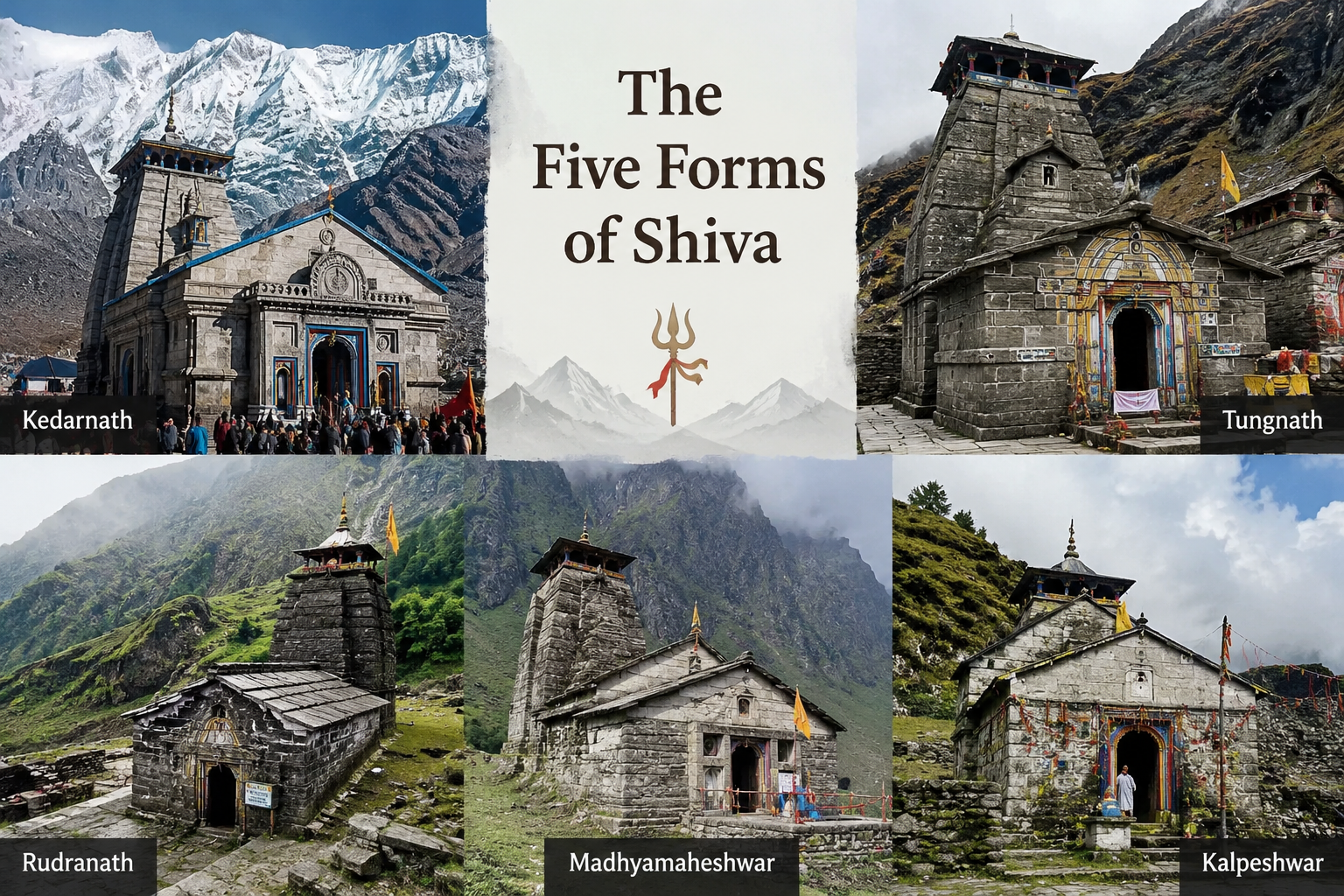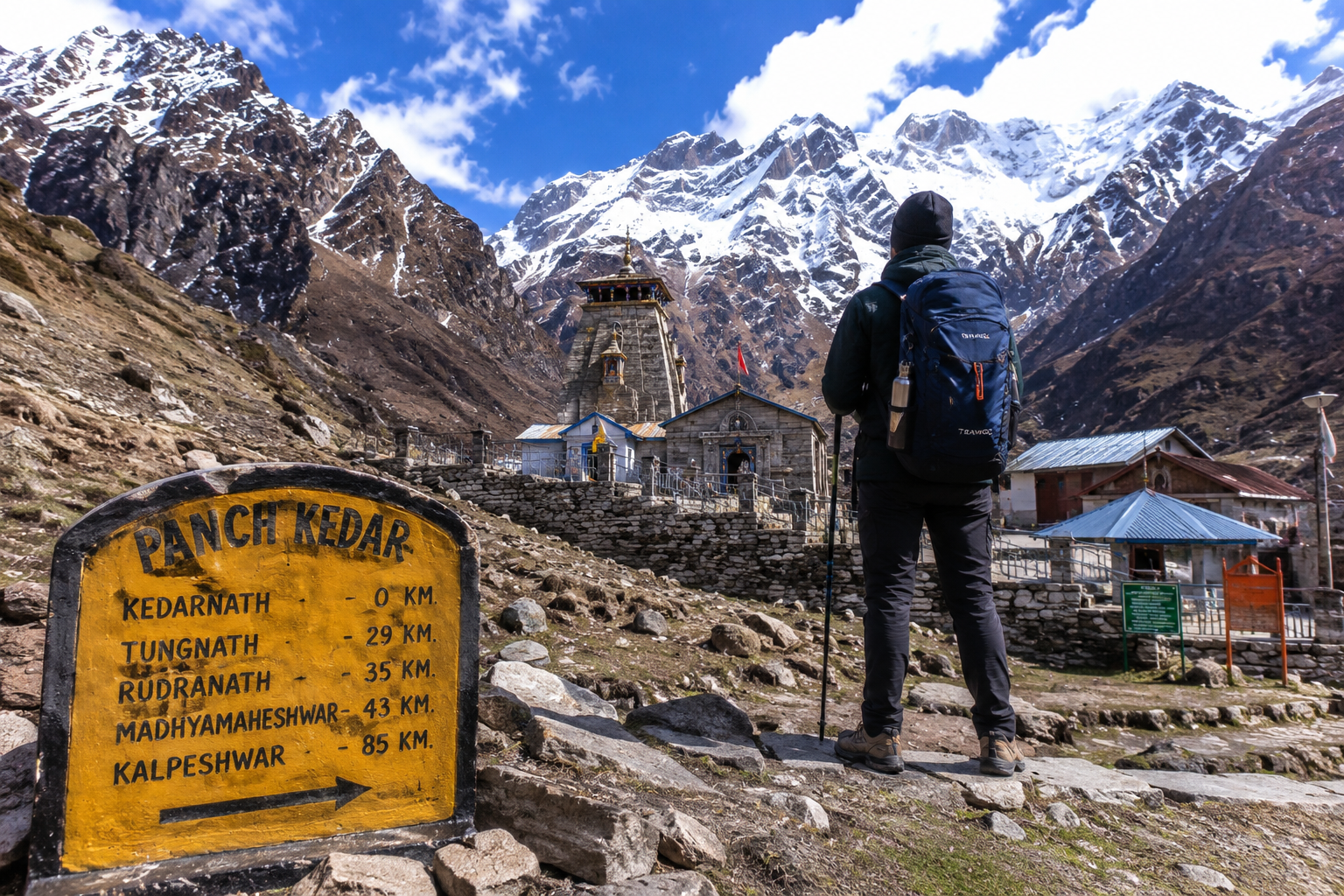

The Panch Kedar circuit is one of the most spiritually significant pilgrimage routes in the Indian Himalayas, connecting five ancient shrines dedicated to Lord Shiva across the Garhwal region of Uttarakhand. For centuries, devotees have walked these high-altitude trails through dense forests, river crossings, and snow-dusted ridges to seek blessings at each of the five temples. The journey is demanding by any measure, covering altitudes that range from 1,160 metres at Ukhimath to nearly 4,100 metres at Kedarnath, spread across a route that can take anywhere from 12 to 18 days on foot.
In recent years, a growing number of pilgrims and travellers have started asking a specific question: is a All Five Kedar Temples by Helicopter possible? The answer is nuanced. Helicopter access exists for some shrines on the circuit but not all, and the logistics of completing all five temples by air alone involve a set of practical realities that are worth understanding before you plan. The aviation infrastructure across Garhwal has expanded significantly, but the mountains still dictate what is and is not feasible.
This article breaks down the helicopter options available at each of the five Kedar shrines, what combinations of air and road travel are realistic, what the experience actually involves, and what you need to know before deciding whether a helicopter-assisted Panch Kedar yatra suits your situation. Whether you are planning for health reasons, time constraints, or simply want to understand what is available, the information below is designed to give you clarity.
Understanding the Panch Kedar Circuit First
Before evaluating helicopter options, it helps to know what the five shrines are and where they sit geographically. Each temple is distinct in location, altitude, and accessibility, which directly affects what helicopter services are possible.
The five shrines of the Panch Kedar circuit:
- Kedarnath — 3,583 metres, Rudraprayag district, the most visited and best-connected shrine
- Tungnath — 3,680 metres, Rudraprayag district, the highest Shiva temple in the world
- Rudranath — 3,600 metres, Chamoli district, the most remote shrine on the circuit
- Madhyamaheshwar — 3,497 metres, Rudraprayag district, surrounded by alpine meadows
- Kalpeshwar — 2,200 metres, Chamoli district, the only shrine accessible year-round
These five shrines are not located along a single linear route. They are spread across two districts, require different base villages, and involve separate trekking trails. This geography is the first thing that shapes the helicopter conversation.
Helicopter Access at Each of the Five Shrines
Helicopter access is available near most Panch Kedar shrines, reducing travel time for pilgrims. Kedarnath has direct heli services, while other temples require short treks after landing at nearby helipads, combining convenience with scenic Himalayan views and spiritual adventure.
Kedarnath: The Most Developed Helicopter Route
Kedarnath is the only shrine on the Panch Kedar circuit with a fully established, commercially operated helicopter service. Multiple operators run scheduled and charter flights from Phata, Guptkashi, Sirsi, and Agastymuni helipads to a helipad located approximately 500 metres from the Kedarnath temple.
Key facts about the Kedarnath helicopter service:
- Operators include Himalayan Heli Services, ARIES Aviation, Pawan Hans, and several others
- Flight duration from Phata or Guptkashi is approximately 7 to 10 minutes
- Both shared and charter flights are available
- Online booking is possible and recommended, especially during peak season from May to June
- The Kedarnath helicopter yatra cost varies by operator and season, typically ranging between Rs 4,000 and Rs 9,000 per person one way
- Weather cancellations are common, particularly in the afternoon; morning slots are more reliable
This is by far the most organised helicopter operation on the circuit and the one most pilgrims are familiar with.
Tungnath: No Direct Helicopter Service
Tungnath does not have a dedicated helipad or commercial helicopter service as of 2026. The trek to Tungnath from Chopta is approximately 3.5 kilometres, with a manageable gradient that takes most pilgrims 1.5 to 2.5 hours. While the altitude is high at 3,680 metres, the trail is well-defined and relatively short.
Charter helicopter landings in the broader Chopta-Tungnath area have been explored in the past, but no regular commercial operation exists. Pilgrims reaching Tungnath do so on foot or, for those with mobility constraints, by pony or palanquin from Chopta.
Rudranath: No Helicopter Access
Rudranath is the most remote of the five shrines and has no helicopter infrastructure. The trek to Rudranath from Sagar village covers approximately 20 kilometres one way through forests and high-altitude bugyal terrain, gaining significant altitude along the way. The area does not have a helipad, and the terrain is not suitable for casual helicopter landings.
For trekkers planning the full circuit, Rudranath demands the most preparation and is often the most spiritually rewarding precisely because of its remoteness. Those considering the Panch Kedar Trek for NRIs or pilgrims travelling from abroad should factor in that Rudranath cannot be shortcut by air and requires at least two to three days of dedicated trekking in this section.
Madhyamaheshwar: No Commercial Helicopter Service
Madhyamaheshwar also lacks a commercial helicopter service. The trek from Ransi village covers about 24 kilometres round trip, passing through Bantoli and the scenic meadows below the shrine. No scheduled helicopter operation serves this temple, though the terrain in certain areas near the meadow could theoretically support a charter landing under specific conditions.
In practice, pilgrims trek to Madhyamaheshwar. There is no alternative air option available through any registered operator as of the current season.
Kalpeshwar: Road Accessible, No Helicopter Needed
Kalpeshwar is the only shrine among the five that can be reached almost entirely by road and a short walk. The temple sits in the Urgam Valley near Helang in Chamoli district, at a relatively modest altitude of 2,200 metres. A short walk of under one kilometre leads from the road to the cave-shrine.
Because of its road accessibility, helicopter service has never been established or required for Kalpeshwar. This shrine is often visited first or last on the circuit and adds minimal physical demand to the overall yatra.
So Can You Do the Entire Panch Kedar Yatra by Helicopter?
The direct answer is no, not entirely. Of the five shrines, only Kedarnath has a functioning commercial helicopter service. The other four require trekking, road travel, or a combination of both. A complete Panch Kedar yatra by helicopter alone is not currently possible.
However, a helicopter-assisted Panch Kedar yatra is entirely possible and is a practical option for many pilgrims. This means using the helicopter for Kedarnath, which saves the most physically demanding ascent on the circuit, while trekking or using road and pony services for the remaining four shrines.
What a realistic helicopter-assisted itinerary looks like:
- Kedarnath: helicopter from Phata or Guptkashi, both ways
- Tungnath: trek from Chopta, approximately 3.5 km, manageable for most fitness levels
- Kalpeshwar: road access with a short walk, no significant exertion
- Madhyamaheshwar: trek from Ransi, the most physically demanding remaining section
- Rudranath: trek from Sagar, the most remote section, non-negotiable on foot
For elderly pilgrims, those with medical conditions, or those with limited time, this hybrid approach allows completion of the full circuit with the most challenging ascent covered by air.
Who Is This Option Best Suited For?
A helicopter-assisted approach to the Panch Kedar circuit is particularly relevant for specific categories of pilgrims and travellers.
Elderly pilgrims and those with health conditions are the most obvious beneficiaries. The Kedarnath ascent from Gaurikund involves a 16-kilometre trek with significant altitude gain. For anyone with cardiac conditions, joint problems, or reduced mobility, the helicopter removes the single most physically demanding section of the entire circuit.
Pilgrims with limited time also benefit significantly. A complete Panch Kedar trek on foot typically requires 12 to 18 days. Using the helicopter for Kedarnath can compress the overall itinerary by two to three days without compromising the spiritual completeness of the yatra.
International pilgrims and NRIs who cannot take extended leave often prioritise efficiency without sacrificing the devotional experience. Understanding the full scope of planning considerations, including the Panch Kedar Trek for NRIs in terms of visa timing, acclimatisation windows, and travel insurance requirements, is essential before booking any combination itinerary.
Corporate or group pilgrimages where participants have varying fitness levels can also use the helicopter option selectively, allowing the group to stay together and adjust the itinerary to the needs of those who cannot trek the full Kedarnath route.
Booking the Kedarnath Helicopter: Practical Details
Since Kedarnath is the only shrine with a working helicopter service, booking this correctly is the most important logistical step in a helicopter-assisted Panch Kedar plan.
How to book:
- The official IRCTC portal manages a portion of Kedarnath helicopter bookings and is the most reliable online source
- Individual operators such as Himalayan Heli, ARIES, and Thumb Impression Tours also accept direct bookings on their websites
- Booking at least 4 to 6 weeks in advance is strongly recommended during the May to June peak season
- For the September to October post-monsoon window, bookings 2 to 3 weeks ahead are typically sufficient
- Carry a government-issued photo ID and the booking confirmation; both are checked at the helipad
Important considerations before booking:
- Weather cancellations are not rare and most operators offer a rebooking option rather than a refund; confirm the cancellation policy in writing before paying
- Morning departure slots between 6 a.m. and 10 a.m. have the highest completion rate due to mountain weather patterns
- The helipad at Kedarnath is at high altitude; even after landing, the walk to the temple involves some exertion and acclimatisation time is advisable
- Do not plan a same-day return to lower altitude immediately after the temple visit; stay at least one night at or near Kedarnath for the full experience
Before finalising any helicopter booking, also ensure your overall trip planning accounts for Panch Kedar Trek Cancellation policies across both your helicopter operator and your ground tour operator, since weather-related disruptions can cascade across multiple legs of the itinerary.
Combining Helicopter Travel With the Rest of the Circuit
A well-planned itinerary for a helicopter-assisted Panch Kedar yatra typically follows this general structure, starting from Rishikesh or Haridwar:
Suggested hybrid itinerary outline:
- Day 1: Rishikesh or Haridwar to Ukhimath or Guptkashi
- Day 2: Guptkashi to Phata helipad, helicopter to Kedarnath, temple darshan, overnight at Kedarnath
- Day 3: Morning puja, helicopter return to Phata, drive to Chopta
- Day 4: Chopta to Tungnath temple and Chandrashila, overnight at Chopta
- Day 5: Drive to Urgam Valley, Kalpeshwar darshan, overnight at Helang or Chamoli
- Day 6: Drive to Ransi village, begin Madhyamaheshwar trek, overnight at Bantoli
- Day 7: Trek to Madhyamaheshwar, darshan, overnight at the shrine
- Day 8: Return trek to Ransi, drive to Sagar village
- Day 9: Trek towards Rudranath, overnight at Panar or Pitu Bugyal
- Day 10: Rudranath darshan, begin return trek
- Day 11: Complete return trek to Sagar, drive back to Rishikesh or Haridwar
This is a compressed itinerary. Those who prefer a more relaxed pace or need additional acclimatisation days should add buffer days, particularly around Rudranath. The circuit is spiritually complete only when all five shrines are visited, and rushing the non-helicopter sections defeats the purpose of careful planning.
Weather, Season, and Timing Considerations
The Panch Kedar temples follow a strict opening and closing calendar aligned with the Hindu religious calendar. All five shrines are closed during winter, typically from November to April or May, depending on the year.
Best season for a helicopter-assisted Panch Kedar yatra:
- May to June: The most popular window, warm enough for trekking, helicopter services fully operational, but crowded at Kedarnath
- September to October: Arguably the best combination of clear weather, fewer crowds, and good trail conditions across all five shrines
- Avoid July and August for Kedarnath helicopter bookings in particular, as monsoon weather causes frequent cancellations and service disruptions
One practical planning note: since disruptions to helicopter bookings are not uncommon, ensuring your trip has adequate protection against unexpected changes is a responsible step. Reviewing the Panch Kedar Trek Insurance options available for pilgrimage trips, including coverage for weather-related cancellations, medical evacuation, and altitude-related health events, is something every traveller on this circuit should do before departure.
FAQs: Panch Kedar Helicopter Yatra
1. Is a complete Panch Kedar yatra possible entirely by helicopter?
No. Only Kedarnath has a commercial helicopter service. The other four shrines, Tungnath, Rudranath, Madhyamaheshwar, and Kalpeshwar, require trekking or road travel. A hybrid itinerary using helicopter for Kedarnath and trekking for the rest is the most practical approach.
2. How much does the Kedarnath helicopter cost per person?
As of 2026, one-way helicopter fares for Kedarnath range approximately between Rs 4,000 and Rs 9,000 per person depending on the operator, helipad, and season. Round-trip fares are typically between Rs 8,000 and Rs 18,000. Prices change each season and should be verified directly with operators or the IRCTC portal.
3. Can elderly pilgrims do the Panch Kedar circuit with helicopter assistance?
Yes. With the helicopter covering the Kedarnath ascent, elderly pilgrims can realistically complete the full circuit. However, Rudranath and Madhyamaheshwar still involve multi-day treks and should be assessed honestly against the individual’s fitness and health condition. Pony and palanquin services are available on some sections.
4. How far in advance should I book the Kedarnath helicopter?
For the May to June season, book 4 to 6 weeks in advance. For September to October, 2 to 3 weeks is usually sufficient. Same-day or walk-in bookings are very difficult to secure during peak season.
5. What happens if my helicopter flight gets cancelled due to weather?
Most operators offer rebooking on the next available slot rather than a cash refund. Confirm the cancellation and rebooking policy before payment. Building one or two buffer days into your Kedarnath itinerary is the most practical way to manage weather-related delays.
Conclusion
The Panch Kedar circuit is not a journey that aviation can fully replace, and it was never designed to be. Four of the five shrines sit in terrain that roads and helicopters do not reach, and that remoteness is part of what gives the yatra its spiritual weight. But for pilgrims who need to make thoughtful adjustments due to age, health, time, or physical capability, a helicopter-assisted Panch Kedar yatra is not a compromise. It is a practical and legitimate way to complete one of Hinduism’s most revered pilgrimage circuits without excluding those who cannot trek every metre of it.
The key is honest planning. Use the helicopter for Kedarnath where it is available, well-organised, and genuinely saves the most demanding ascent on the entire circuit. Approach the remaining four shrines with realistic preparation, the right gear, and an itinerary that does not rush what the mountains ask you to slow down for. The circuit rewards pilgrims who arrive prepared, whether they walk all of it or fly part of it. What matters at the end is that all five temples are visited with intention, and that the journey is undertaken with the respect this ancient route deserves.
With the Panch Kedar Yatra season approaching, it’s time to plan something truly extraordinary. From breathtaking Himalayan peaks to spiritually powerful temples hidden deep in remote valleys, this journey offers an experience that goes beyond a typical trek—it becomes a story you carry for life. To make your journey seamless and well-organised, choose the best trekking company in Uttarakhand for reliable trek packages, detailed itineraries, and hassle-free booking.
Visit this page for Trek Packages, Itinerary & Booking.