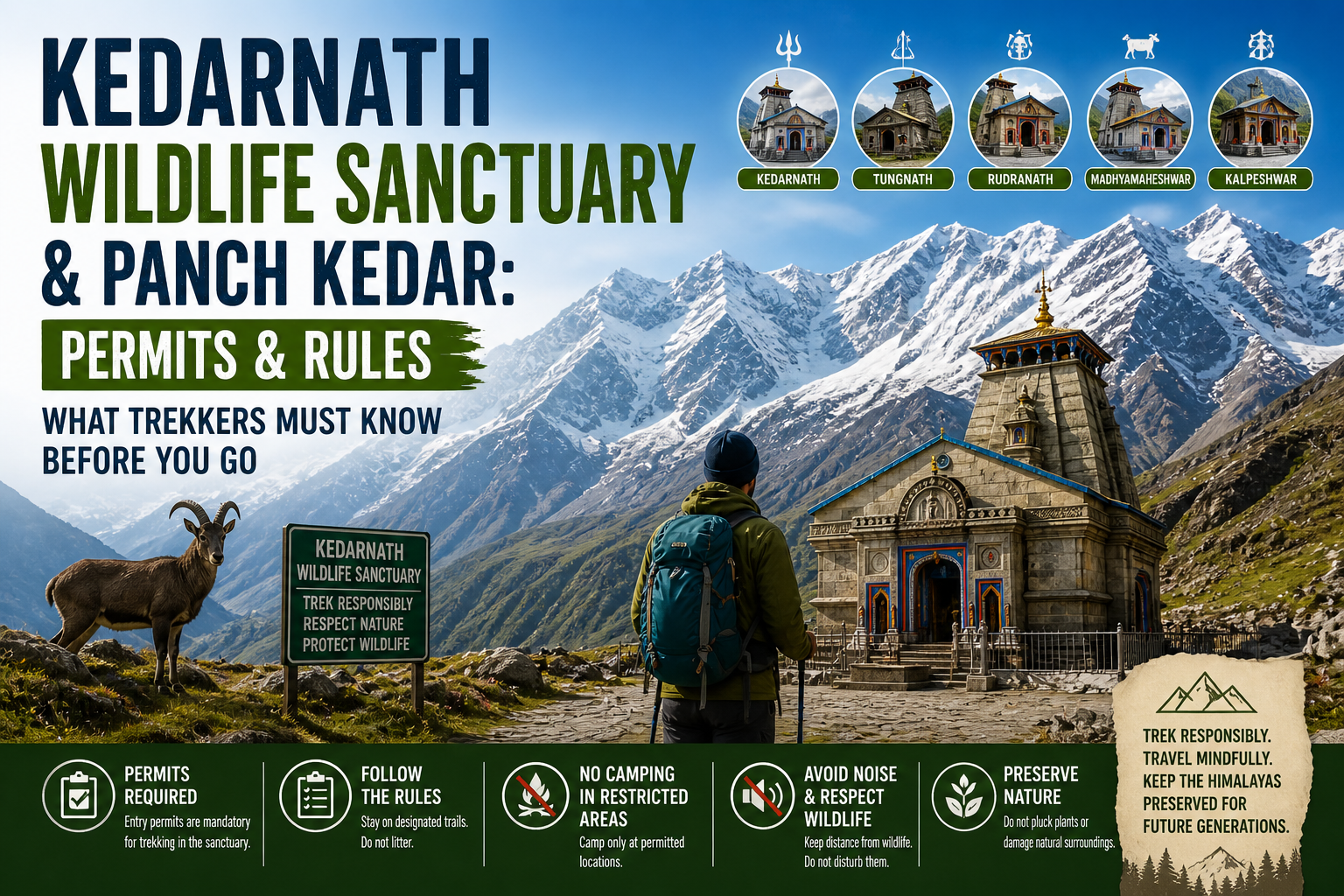
Most trekkers who plan a Panch Kedar pilgrimage spend months researching temple sequences, route difficulty, and accommodation options. Very few realise that two of the five sacred Kedar trails — Madhyamaheshwar and Rudranath — pass directly through one of India’s most strictly regulated ecological zones. The Kedarnath Wildlife Sanctuary in Uttarakhand spans over 975 square kilometres of protected Himalayan terrain, and entering it without the correct documentation can result in fines, trail access denial, or a forced return from the forest gate. This is not a technicality that can be sorted at the trailhead.
The sanctuary is not simply a conservation label applied to a scenic route. It is a functioning protected area under the Wildlife Protection Act of 1972, home to snow leopard, Himalayan musk deer, brown bear, Himalayan tahr, and over 200 bird species. The forest department enforces its regulations actively during the high trekking season between May and October. Drone bans, campfire prohibitions, plastic carry-in restrictions, and mandatory camping zones are all in effect — and ignorance of these rules does not exempt any trekker from accountability at the checkpoint.
This guide exists to close that information gap entirely. If you are planning a Kedarnath Wildlife Sanctuary & Panch Kedar itinerary, this is the permit and rule briefing every solo trekker, group organiser, and pilgrimage planner needs before taking the first step onto the trail. Knowing these rules in advance is also the clearest reason a structured, guided departure consistently proves to be the smarter choice.
What Is the Kedarnath Wildlife Sanctuary and Why Does It Matter for Trekkers
The Kedarnath Wildlife Sanctuary was established in 1972 and is managed by the Uttarakhand Forest Department under the Ministry of Environment, Forest and Climate Change. It covers portions of Rudraprayag and Chamoli districts, forming a crucial ecological buffer for the upper Bhilangana, Mandakini, and Alaknanda river systems.
Which Panch Kedar Trails Pass Through the Sanctuary
The Madhyamaheshwar trail from Ransi and the Rudranath trail from Sagar village both enter the sanctuary boundary at specific gate points. Beyond those gates, all sanctuary regulations apply in full. The trail you are walking is not an ordinary forest — it is a legally protected habitat where wildlife, vegetation, water sources, and terrain fall under specific legal provisions that carry real consequences if violated.
Why the Ecological Significance Matters on the Trail
The sanctuary functions as a primary migration corridor between the lower Garhwal valleys and the high-altitude meadows above. The Madhyamaheshwar trek passes through habitat that directly supports the active snow leopard range. Every rule covered in the sections below stems from this ecological reality. These are not arbitrary restrictions — they are the operational conditions that keep this environment intact and accessible.
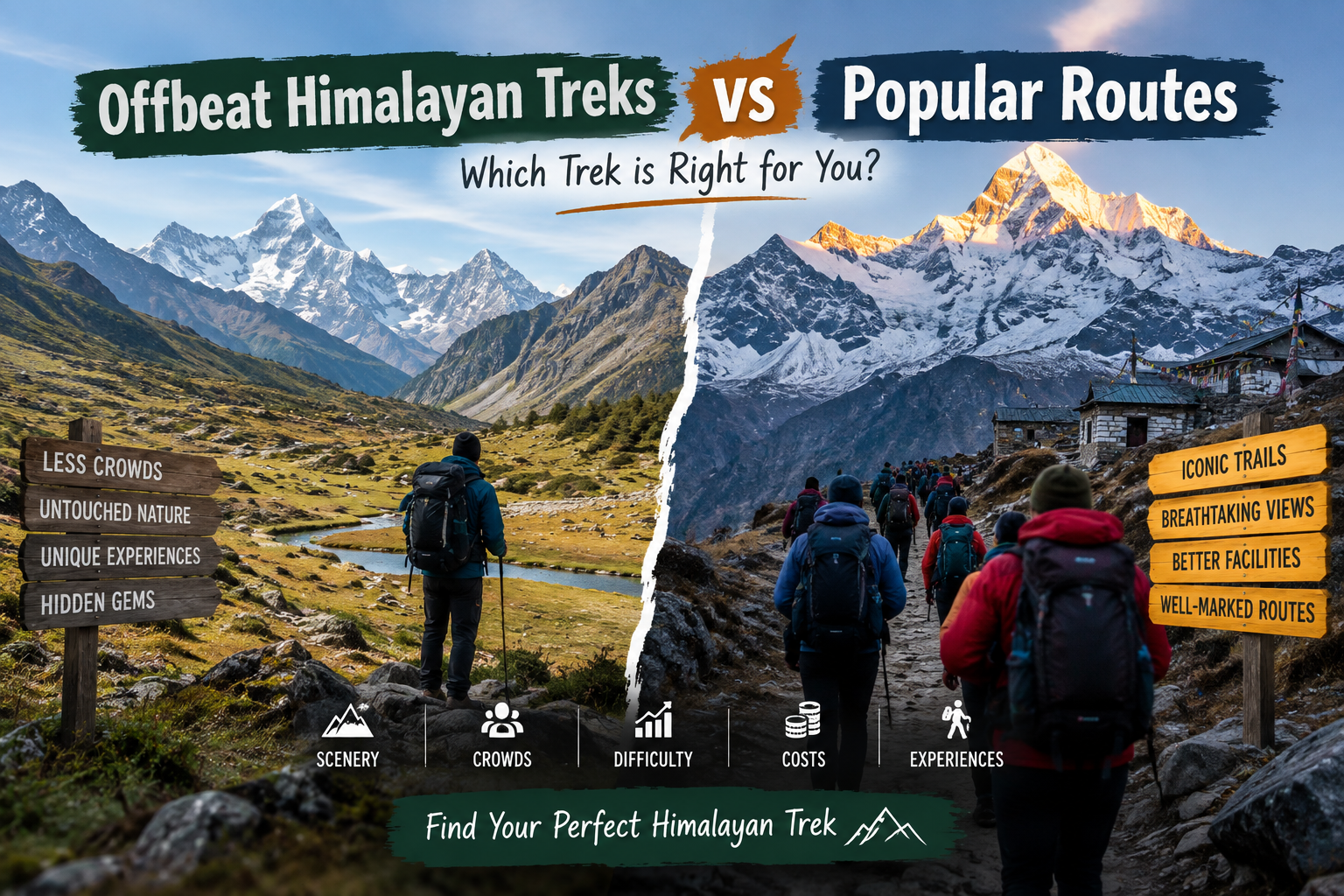
Trekkers considering how the Panch Kedar routes compare in scope, mythology, and trekking complexity against other sacred circuits of the region should read Panch Kedar vs Panch Badri — a detailed comparison of both pilgrimage networks that clarifies why the Kedar circuit carries a distinct set of ecological and logistical considerations absent from the Badri routes.
The Forest Entry Permit: Everything You Need to Know Before the Trailhead
This is the rule most trekkers discover too late. Entering the Kedarnath Wildlife Sanctuary for trekking purposes requires a valid forest entry permit issued by the Uttarakhand Forest Department. This permit is entirely separate from the Char Dham Yatra registration and from any temple authority documentation.
Who Requires a Permit
Every individual entering the sanctuary boundary on foot — Indian nationals, foreign nationals, certified guides, support staff, and porters accompanying groups — must hold valid permit documentation. There are no exemptions for religious pilgrimage, media coverage, or educational visits without prior written approval from the department.
Where to Obtain Your Permit
For the Madhyamaheshwar route, permits are issued at the forest check post in Ransi or Bantoli. For the Rudranath trek forest rules corridor, permits are obtained at the Sagar check post. Physical presence at the check post is required for self-organised trekkers. Guided group operators handle this documentation in advance as part of a structured departure.
Current Permit Fee Structure
- Indian nationals: Rs. 150 per person per day inside the sanctuary
- Foreign nationals: Rs. 600 per person per day
- Still photography camera permit: Rs. 500 per entry
- Video camera permit: Rs. 2,000 per entry
- Drone or UAV permit: Applied separately through DGCA and forest department — almost universally denied in practice
All fees are subject to annual revision by the Uttarakhand Forest Department. Confirm current rates at the check post or through your operator before departure.
Permit Validity and a Common Mistake to Avoid
Permits are issued on a per-day basis. Multi-day treks require documentation that covers each individual day of planned sanctuary presence. The most common administrative error among self-organised groups is arriving with a single-day permit for a three or four-day route. This results in access denial at the inner checkpoint and disrupts the entire itinerary.
The forest permit for the Garhwal Himalayas is comparable in structure to the Valley of Flowers entry system under the Nanda Devi Biosphere Reserve. When evaluated against the Kedarnath Wildlife Sanctuary vs Valley of Flowers permit framework, both sites enforce daily entry fees with separate photography permissions, but the Kedar sanctuary applies trail-level checkpoint enforcement rather than a single-gate model, making the per-day documentation requirement more critical to get right.
For a broader picture of how the Panch Kedar routes sit within the full landscape of regulated and accessible trails across Garhwal and Kumaon, exploring the Top 10 Treks In Uttarakhand gives useful context on which routes fall within protected zones and which do not.
The No-Drone Rule: UAV Ban Inside the Sanctuary
The Kedarnath Wildlife Sanctuary is a declared no-fly zone for all unmanned aerial vehicles. This is not an advisory — it is a legally enforceable ban, and forest department staff at checkpoints confiscate drones actively during the high trekking season.
Why Drones Are Prohibited
UAV noise and movement directly disrupts nesting birds, grazing musk deer, and snow leopard territorial behaviour. Documented drone incidents within the sanctuary have triggered stampede responses in mountain ungulate groups. Under the Wildlife Protection Act, any device that disturbs wildlife or its habitat is subject to restriction, and drones fall squarely within that provision. The sanctuary’s altitude profile and proximity to militarily sensitive Himalayan zones also place much of the airspace under DGCA restricted categories, independent of forest rules.
What Happens If You Carry a Drone
Confiscation at the gate checkpoint is the standard outcome. Legal proceedings under the Wildlife Protection Act are possible for deliberate or repeat violations. Guides and operators who allow clients to carry drones face permit suspension and may lose operational authorisation for the route entirely. Do not carry a drone onto any Panch Kedar trek in the Uttarakhand permit corridor with the intention of flying it. The enforcement is active, and the consequences are real.
Campfire Prohibition and the Plastic Carry-In Ban
These two rules see the highest rate of unintentional violation among trekkers who arrive without a proper briefing. Enforcement at both the entry gate and inner campsite checkpoints has intensified significantly since 2023.
Campfire Prohibition: What It Covers
Open fires are completely prohibited within all sanctuary boundaries. This includes firewood collection from the sanctuary forest — a criminal offence under forest law — open flame cooking at undesignated locations, and campfire building at any campsite regardless of how remote it appears. Designated campsites used by authorised operators use LPG and carry-in fuel systems exclusively. All self-organised trekkers must carry a gas stove with sealed fuel canisters. The older practice of wood fires on the upper Panch Kedar routes is no longer legally permissible under any circumstance.
Plastic Carry-In Ban and Biodegradable Packaging Requirements
The sanctuary operates under Uttarakhand’s state-wide plastic ban with strict enforcement at the entry checkpoint. Specific rules include:
- No single-use plastic bags, bottles, or wrappers beyond the sanctuary gate
- All food packaging must be biodegradable or carried in reusable containers
- Trekkers must carry a certified waste bag and exit with all non-biodegradable waste
- Styrofoam containers, disposable cups, and foil packaging without organised carry-out systems are flagged and confiscated at entry
Operators like Mountainiax enforce these rules at the packing stage before departure. Packaged food is transferred into approved containers, and every group carries waste bags that are collected and properly disposed of at the trail exit.
Wildlife Encounter Protocol: What to Do Inside the Sanctuary
The Kedarnath Wildlife Sanctuary rules that trekkers must understand include specific behavioural protocols for wildlife encounters. The sanctuary supports active populations of animals that require calm, informed human response — not instinctive reaction.
If You Encounter a Himalayan Musk Deer
Stop walking immediately. Do not make sudden movements or raise your voice. Allow the animal to move away at its own pace. Never approach, attempt a close photograph, or feed it under any circumstances. Musk deer populations face ongoing pressure from poaching, and any human behaviour that increases stress response causes measurable ecological harm.
If You Encounter a Brown Bear
Do not run. Raise your arms to appear larger and back away slowly while speaking in a calm, low voice. Bears typically avoid confrontation when they are not surprised or cornered. Never position yourself between a female and her cubs. Report the encounter to your guide immediately and avoid retracing the exact path until the trail is confirmed clear.
If You Find Signs of Snow Leopard Activity
Fresh tracks, territorial scrapes, or scat indicate an active snow leopard range. Do not follow tracks off the designated trail. Alert your guide and maintain strict trail discipline. Direct snow leopard encounters are rare, but human disturbance to territorial zones has been documented to have long-term effects on range use and mating behaviour.
This is one of the strongest practical arguments for trekking with a certified guide on any Panch Kedar trek guide itinerary. Wildlife response protocols require training and presence of mind — particularly in the remote terrain between Ransi and Madhyamaheshwar or Sagar and Rudranath — that experienced guides provide and uninformed solo trekkers cannot replicate in real time.
For trekkers planning to document the trail visually, understanding what is and is not permitted under Panch Kedar Photography rules is important before investing in camera equipment. Wildlife photography requires a valid camera permit. Close approach to wildlife for photographic purposes is treated identically to any other form of deliberate disturbance under sanctuary law.
Designated Camping Zones: Where You Can and Cannot Camp
Unregulated camping anywhere within the sanctuary is prohibited. Forest department-designated campsites exist at specific points on each route and are the only legally permissible locations for overnight stays.
Madhyamaheshwar Route Designated Campsites
- Bantoli — outside the sanctuary boundary, suitable for pre-entry night
- Bekal Tal — mid-route designated forest campsite
- Madhyamaheshwar meadow zone — operator-allocated sections only
Rudranath Route Designated Campsites
- Panar — lower trail designated site
- Pitradhar — mid-route forest camp
- Rudranath meadow zone — specific areas allocated to authorised operators only
Camping outside these zones — on open ridgelines, unmarked meadow sections, or near any water source not designated in the permit — is a forest offence. This rule exists to protect vegetation recovery zones, ground-nesting bird habitats, and the integrity of water courses that feed the valley systems below.
Authorised operators receive annual zone allocations from the forest department and coordinate campsite use within the permitted system. Self-organised trekkers who camp improvisationally face the highest risk of unintentional violation of this specific regulation.
How a Guided Package Handles Every One of These Rules
The compounding complexity of Kedarnath wildlife sanctuary trek permit documentation, plastic compliance, campfire restrictions, wildlife protocols, and designated camping logistics creates a situation where self-organisation is not merely inconvenient — it is genuinely risky for both the trekker and the ecosystem.
A Mountainiax Panch Kedar departure manages the following for every group member without exception:
- Forest entry permit application and fee payment for all participants before the departure date
- Photography permit documentation, where applicable
- Complete repackaging of food and supplies into biodegradable and plastic-free formats before the trailhead
- Provision of carry-out waste bags with post-trek verified disposal
- Campsite bookings within designated zones on both the Madhyamaheshwar and Rudranath routes
- Certified guide briefing on all wildlife encounter protocols before the sanctuary gate
- LPG cooking systems with sealed carry-in fuel at every camp — zero firewood dependency
- Real-time coordination with the forest department in case of wildlife alerts or trail closure notifications
Planning the full Panch Kedar sequence also requires understanding temple access hours, which vary significantly between shrines and across seasons. Reviewing the Panch Kedar Darshan Timings before finalising your itinerary ensures the pilgrimage component is not compromised by permit delays, trail timing errors, or sanctuary gate closure windows.
Frequently Asked Questions
1. Do I need a separate permit to trek in the Kedarnath Wildlife Sanctuary?
Yes. A forest entry permit from the Uttarakhand Forest Department is mandatory for all trekkers entering the sanctuary. It is completely separate from Char Dham Yatra registration. Permits are issued at the forest check post at the sanctuary boundary on the day of entry.
2. Are drones allowed on the Panch Kedar trek?
No. The Kedarnath Wildlife Sanctuary is a declared no-fly zone for all UAVs. Drones are confiscated at sanctuary checkpoints. Both the Wildlife Protection Act and DGCA civil aviation regulations apply. No exceptions are granted for recreational trekking, photography, or content creation.
3. Do I need a permit specifically for the Rudranath trek?
Yes. The Rudranath trail from Sagar enters the Kedarnath Wildlife Sanctuary and requires a forest entry permit at the Sagar check post before accessing the trail. Day-specific documentation covering each full day of sanctuary presence is required — a single-day permit does not cover a multi-day route.
4. What is the current forest permit fee for the Kedarnath Wildlife Sanctuary?
Indian nationals pay approximately Rs. 150 per person per day. Foreign nationals pay approximately Rs. 600 per person per day. Camera permits cost Rs. 500 per entry and video permits cost Rs. 2,000 per entry. All fees are subject to annual revision by the forest department.
5. Can I light a campfire on the Madhyamaheshwar trek?
No. Open fires are completely prohibited within the sanctuary. Firewood collection from the sanctuary forest is a criminal offence under forest law. All cooking must use gas stoves with carry-in sealed fuel.
Summary
The forests, meadows, and ridgelines of the Kedarnath Wildlife Sanctuary & Panch Kedar corridor are among the most ecologically significant and visually compelling landscapes in the Indian Himalaya. They are also among the most regulated. The Kedarnath wildlife sanctuary rules trekkers must follow — covering forest entry permits, drone bans, campfire restrictions, plastic carry-in limits, designated camping zones, and wildlife encounter protocols — are not bureaucratic hurdles to navigate around. They are the conditions that keep this environment intact and accessible for every generation of trekkers that follows.
Planning your Panch Kedar journey with a documentation-compliant, experienced operator is not a compromise on the experience. It is the decision that transforms a complex, permit-heavy itinerary into a clean, purposeful, and deeply rewarding mountain journey. The sanctuary rewards those who enter it correctly and respectfully. Make sure your preparation begins with the right information — and the right team behind you.
With the Panch Kedar Yatra season approaching, it’s time to plan something truly extraordinary. From breathtaking Himalayan peaks to spiritually powerful temples hidden deep in remote valleys, this journey offers an experience that goes beyond a typical trek—it becomes a story you carry for life. To make your journey seamless and well-organised, choose the best trekking company in Uttarakhand for reliable trek packages, detailed itineraries, and hassle-free booking.
Visit this page for Trek Packages, Itinerary & Booking.