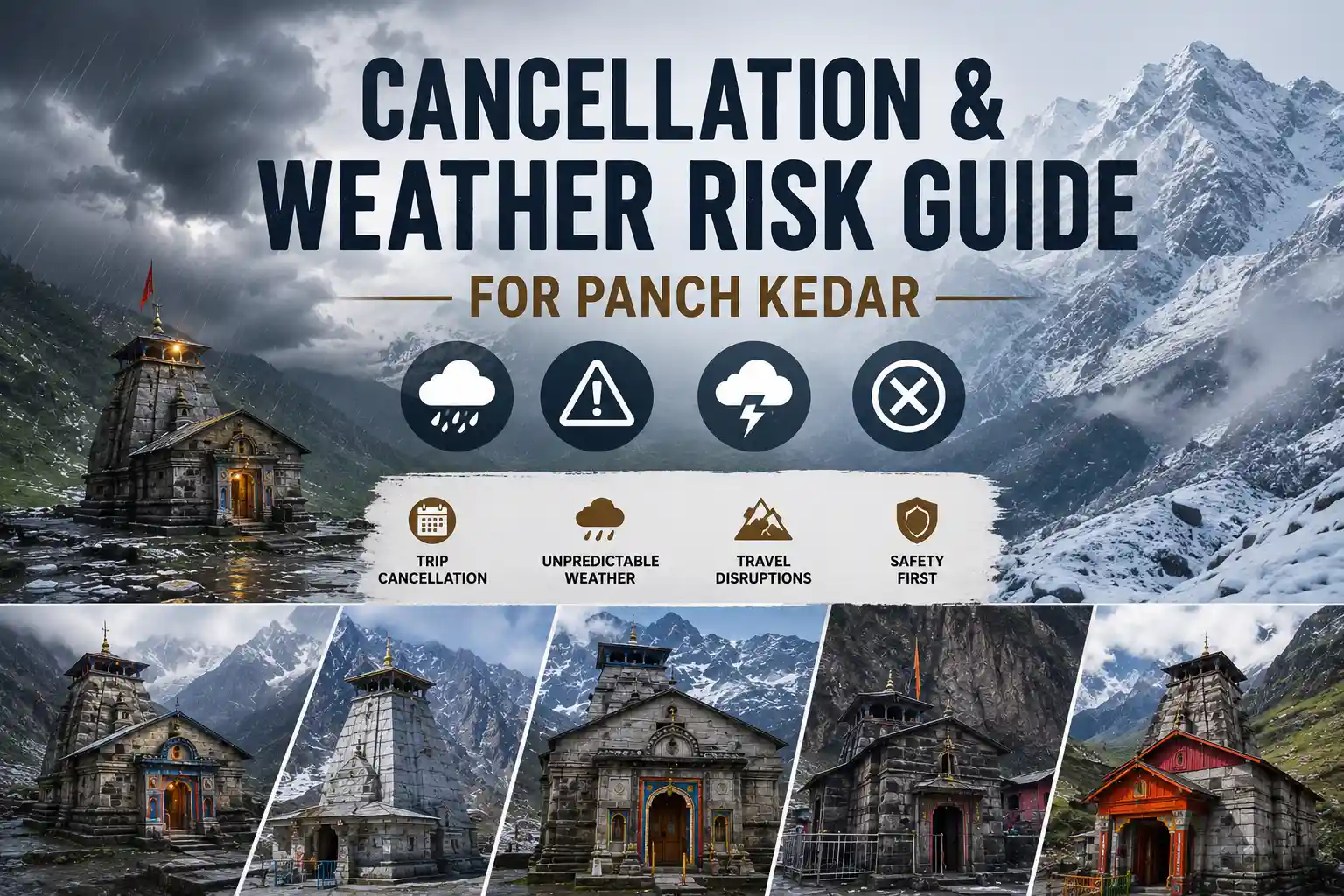
The Panch Kedar circuit is one of the most rewarding high-altitude pilgrimage treks in Uttarakhand, but it is also one of the most misunderstood when it comes to weather, access, and cancellation risk. Many trekkers plan only for temple visits and route mileage, then get surprised by landslides, snow closures, road blocks, or an operator’s no-refund terms. That gap between expectation and reality is exactly why this Cancellation & Weather Risk Guide for Panch Kedar matters.
If you are booking the trek for the first time, the biggest worry is usually not the climb itself. It is the uncertainty: what happens if the route is blocked, what if Kedarnath closes due to snowfall, and whether a booked package can be moved without losing the entire payment. In the Himalayas, these are not theoretical questions. They are common trip-shaping factors, especially during shoulder season and monsoon-transition periods.
This guide breaks down the real cancellation landscape, the most vulnerable trek legs, how operators usually handle rescheduling, how to interpret weather windows, and what a practical backup plan should look like. It is written for travellers who want clarity before they commit, not vague reassurance after the booking is already made.
Why Cancellation Risk Is Real on the Panch Kedar Route
The Panch Kedar region runs through terrain that is sensitive to rainfall, snow, and slope movement. Unlike city-based tourism, Himalayan trekking depends on road stability, pedestrian trail conditions, and temple access being open at the same time. A smooth forecast in one valley does not guarantee movement on the next leg.
The most common disruption patterns include:
- landslides after heavy rain
- road washouts on approach routes
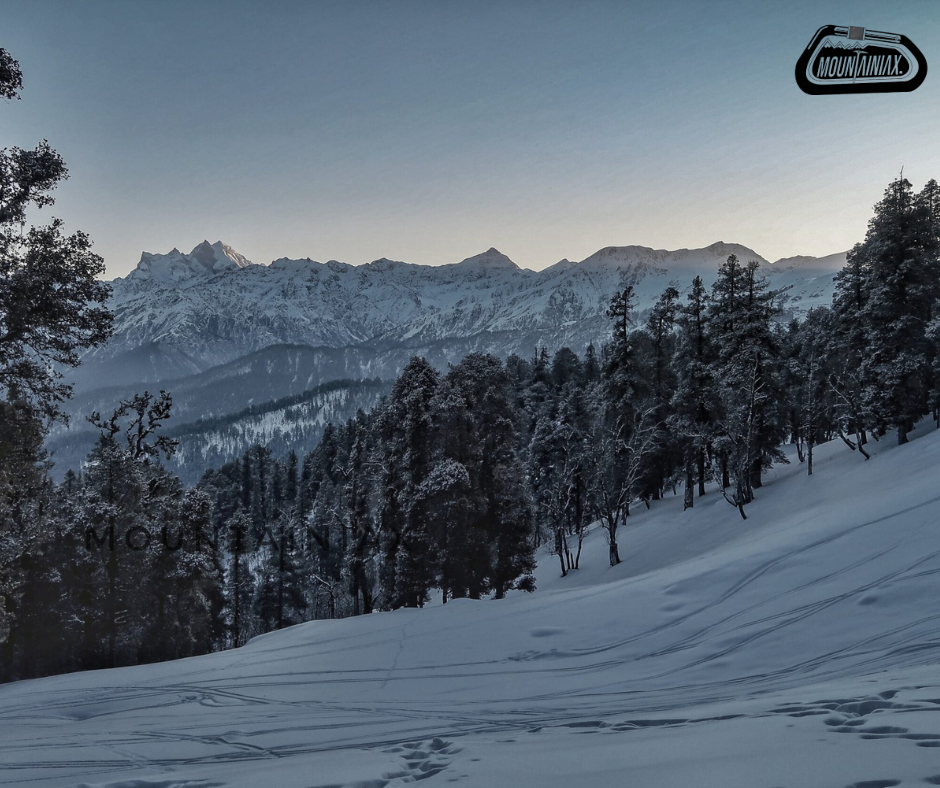
- sudden snowfall at higher elevations
- forest-track closures due to unsafe footing
- temporary temple closure when the weather becomes extreme
This is why the Panch Kedar trek cancellation policy should never be treated as a minor clause at the bottom of a booking page. It is one of the first things a serious trekker should examine. A good policy explains what happens if the operator cancels, what happens if the group delays, and whether a trek can be shifted to a later date without financial loss.
The Risk Map: Which Legs Are Most Vulnerable
Not every segment of the Panch Kedar circuit carries the same weather exposure. Some sections are relatively manageable in stable conditions, while others are known for frequent access disruption.
Rudranath Access Road from Sagar
The most vulnerable leg is the Rudranath access road from Sagar. This stretch is widely regarded as the most landslide-prone part of the wider route network because of slope instability and rainfall sensitivity. A blocked approach here can delay the start of the trek itself, even when the trail above is technically walkable.
Kedarnath Approach Roads
Other high-risk disruption points include:
- Kedarnath approach roads during heavy rain or snow
- connecting mountain roads used to move between shrine access points
- steep forest sections where water runoff makes trails slippery
- Lower Valley roads that become blocked before the trek even begins
This is where a realistic Panch Kedar trek in Uttarakhand weather risk assessment becomes useful. Trekkers often focus on altitude alone, but in practice, the road to the trek matters as much as the trail inside it. A route can be “open on paper” and still be unusable because the connecting road is under repair or clearance work is underway.
Panch Kedar Trek Risk Matrix
| Trek Leg | Landslide Risk Level | Alternative Route | What Operators Usually Do |
| Kedarnath Route | Moderate to High | Delay ascent or shift sequence | Reschedule the movement after clearance |
| Rudranath via Sagar | Very High | Alternate village entry where possible | Delay the trek or offer a partial circuit |
| Tungnath Route | Moderate | Flexible same-day movement | Adjust timing based on rainfall |
| Madhyamaheshwar Route | Moderate | Temporary halt at the base village | Continue after the trail inspection |
| Kalpeshwar Route | Low to Moderate | Usually remains accessible | Used as a backup accessible temple |
What Happens When Kedarnath Closes Due to Weather
One of the most common panic points for trekkers is the Kedarnath temple closed due to weather. This can happen during freak snowfall in early May, late October, or a sudden weather reversal during an otherwise normal travel window. In those moments, the issue is not just religious access. It affects itinerary sequencing, vehicle movement, accommodation planning, and guide allocations.
How Operators Usually Respond
When the temple closes or access is restricted, operators generally respond in one of three ways:
- Shift the itinerary to another accessible leg
- Delay the schedule until the weather normalises
- Convert the booking into a partial circuit or alternate plan
A trustworthy operator does not pretend that the issue is avoidable. They tell you upfront whether the package includes a rescheduling option, partial-route substitution, or weather-based postponement. That is the practical difference between a professionally managed trek and a rigid sale.
Understanding Panch Kedar Trek Rescheduling
Most trekkers ask for a refund first, but in the Himalayas, the more common and realistic outcome is panch kedar trek rescheduling. Rescheduling is often better than cancellation because both the traveller and the operator have already committed resources. Vehicles, accommodation holds, guide schedules, and food logistics are hard to recover once blocked.
What a Good Rescheduling Policy Includes
A proper rescheduling model usually includes:
- date shifting within an agreed season window
- credit transfer to a future departure
- Partial package adjustment if the route changes
- new reporting instructions based on weather clearance
Force-Majeure vs Operator Cancellation Policy
This is also where the difference between an operator cancellation rule and a force-majeure clause matters.
- An operator cancellation policy is the company’s own commercial rule for refunds, postponements, and booking changes.
- A force-majeure clause covers events outside human control, such as extreme snowfall, landslides, road collapse, or administrative restrictions.
Understanding this difference helps trekkers avoid confusion during emergencies.
Panch Kedar Weather Risk During Monsoon
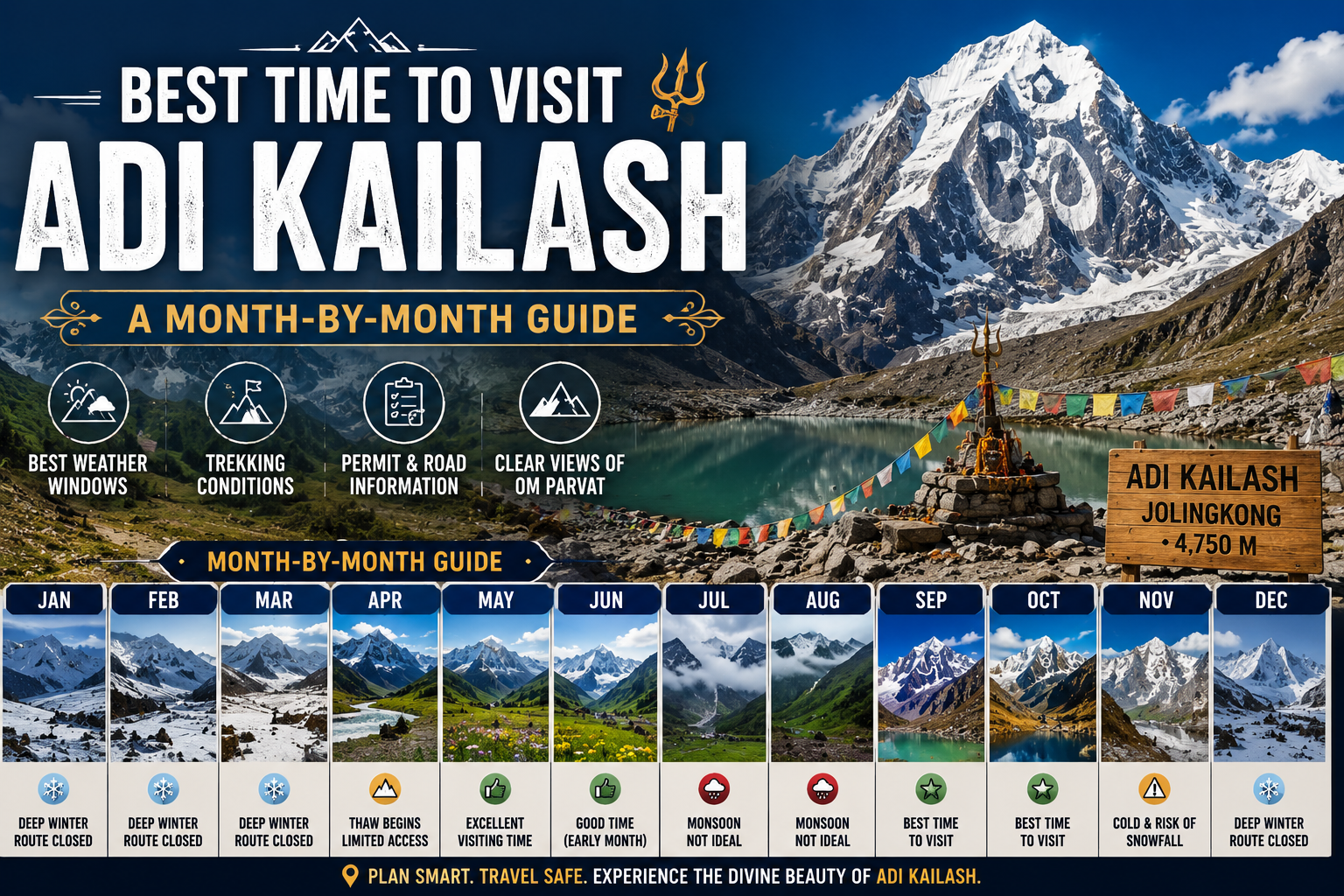
The phrase panch kedar weather risk monsoon does not automatically mean the trek should be avoided. It means trekkers must understand the narrow window when conditions can remain manageable with local guidance.
The Monsoon Grey Zone
In the Panch Kedar region, there is often a grey zone of roughly 15–20 days each year when experienced trekkers attempt August legs with the support of local guides.
This period is suitable only for:
- flexible travellers
- experienced trekkers
- small guided groups
- pilgrims comfortable with delays and rerouting
Local knowledge becomes essential because broad weather forecasts rarely capture real trail conditions, loose rock sections, or unstable slopes after overnight rain.
How to Read Panch Kedar Weather Forecasts Properly
A serious trek plan starts with weather interpretation, not hope. For Panch Kedar, trekkers should study both regional forecasts and high-altitude prediction systems.
Best Weather Resources for Panch Kedar
Useful forecasting tools include:
- IMD Uttarakhand
- Windy.com
- local administration alerts
- guide-based route updates
What a 3-Day Forecast Means at 12,000 Feet
At high altitude, a forecast must be interpreted differently. The key indicators include:
- wind speed and direction
- overnight snowfall possibility
- cloud ceiling and visibility
- freeze-thaw conditions
- heavy evening rainfall buildup
If you are checking the weather only once before booking, you are not planning correctly. Himalayan conditions can shift within hours.
What Happens If Only 3 of 5 Temples Are Accessible
One of the least discussed realities of the route is the partial circuit option. Many trekkers assume the trip is either fully successful or fully cancelled. In reality, there are many cases where only three temples remain accessible.
Understanding the Partial Circuit Option
A good operator should clearly explain what happens in that situation. Common responses include:
- completing the accessible shrines
- rescheduling the blocked temples
- adjusting the package cost proportionally
- offering future credits for the remaining circuit
This flexibility becomes especially important for families and travellers on limited leave schedules.
Panch Kedar vs Char Dham Weather Disruption
The comparison between Panch Kedar vs Char Dham weather disruption matters because many travellers assume all Uttarakhand pilgrimages operate under the same conditions.
Key Differences
Char Dham routes usually have:
- heavier infrastructure support
- faster road restoration
- larger administrative presence
- higher daily movement capacity
Panch Kedar routes are:
- more terrain-sensitive
- dependent on local route conditions
- narrower and less commercialised
- slower to recover after heavy disruption
This is why flexible trekking packages matter far more in Panch Kedar.
Best Backup Plan for Himalayan Trek Cancellation
The safest approach is not avoiding risk entirely. It is building a backup structure before departure.
What a Reliable Backup Plan Should Include
A proper backup plan for the Himalayan trek cancellation setup should include:
- rescheduling guarantees
- alternate route planning
- emergency communication
- partial-circuit flexibility
- weather-based itinerary adjustment
- local support teams
A guided package with a clear rescheduling guarantee removes a major portion of trek-related uncertainty.
Why Base Locations Matter During Trek Disruptions
The route itself is only part of the risk conversation. Support towns and base locations also influence how smoothly a trek adapts during disruption.
For example, Guptkashi often acts as an operational regrouping point during delays, rerouting, or weather-related stoppages. Staying near reliable logistics hubs improves flexibility when road conditions suddenly change.
Common Causes of Landslide Disruption on Panch Kedar Routes
The phrase landslide panch kedar route is commonly searched because landslides remain one of the biggest operational risks in the region.
Main Causes of Route Blockage
The most common causes include:
- continuous heavy rainfall
- weak mountain slopes
- road widening activity
- loose rock movement
- water runoff erosion
Trekkers should also monitor updates related to the Kedarnath road blocked landslide situations because disruptions on connecting roads can affect the broader circuit.
Importance of Trek Insurance for Panch Kedar
Weather delays and medical emergencies can create unexpected costs during Himalayan travel. This is why Panch Kedar Trek Insurance should be considered essential rather than optional.
A reliable trek insurance plan may help cover:
- emergency evacuation
- weather-related delays
- medical treatment
- trip interruption
- accidental injury
Always check whether high-altitude trekking is included in the policy wording before purchasing insurance.
Photography Challenges During Bad Weather
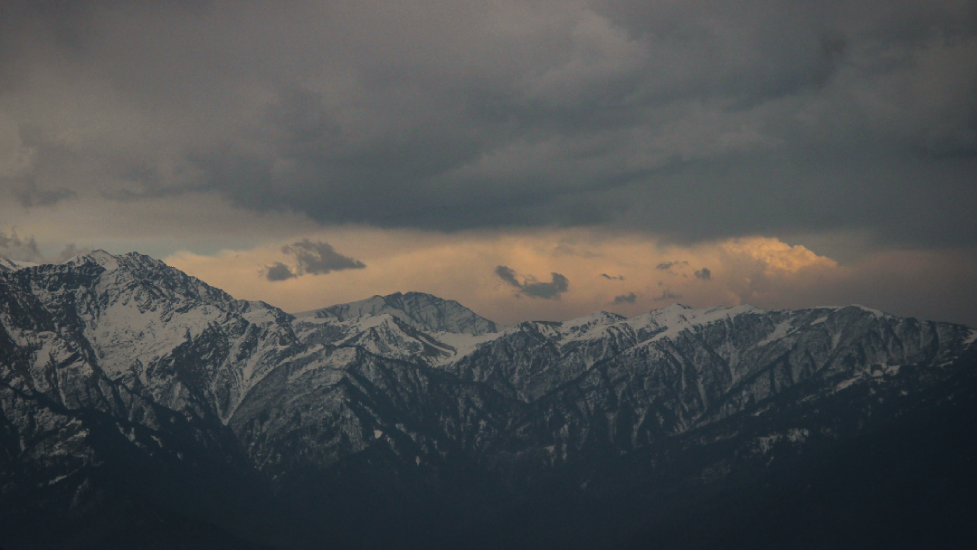
Many trekkers underestimate how dramatically unstable mountain weather can affect visual storytelling during the Panch Kedar circuit. Rain, dense fog, snowfall, low cloud cover, and sudden visibility drops can completely transform the photography experience from one hour to the next. Even professionally planned shots may become impossible when valleys disappear under mist or mountain peaks remain hidden for an entire day. Wet conditions also create technical difficulties such as lens fogging, moisture damage, slippery shooting surfaces, and reduced battery performance in cold temperatures.
For travellers interested in Panch Kedar Photography, flexibility is extremely important because the best landscape frames usually appear only during short weather-clear windows between storms. Early morning after overnight rainfall often produces the clearest mountain visibility, dramatic cloud movement, and richer natural colours across alpine meadows and temple surroundings. Trekkers carrying cameras should use waterproof covers, dry bags, microfiber cloths, and extra batteries to protect equipment during unpredictable Himalayan weather shifts.
How to Reduce Cancellation Anxiety Before Booking
The best way to avoid stress is to verify operational clarity before making a payment.
Questions Every Trekker Should Ask
Before booking, ask:
- What is your Panch Kedar trek cancellation policy?
- Do you offer guaranteed Panch Kedar trek rescheduling?
- What happens at the Kedarnath temple during closed weather situations?
- How do you handle landslide panch kedar route disruption?
- Is there a partial-circuit option available?
Transparent answers to these questions usually indicate a trustworthy operator.
FAQs
1. Can the Panch Kedar trek be done in the monsoon?
Yes, but only with strong local route knowledge, flexible timing, and acceptance of delays. Risk levels increase significantly during periods of heavy rainfall.
2. What happens if the Kedarnath temple closes due to the weather?
The itinerary may be delayed, rescheduled, or converted into a partial circuit depending on local conditions and the operator’s policy.
3. Which Panch Kedar route is most vulnerable to landslides?
The Rudranath access road from Sagar is widely considered the most landslide-prone segment of the Panch Kedar circuit.
4. Is Panch Kedar riskier than Char Dham in bad weather?
In many cases, yes. Panch Kedar routes are more remote and terrain-sensitive, while Char Dham generally has stronger infrastructure support.
5. Should I buy insurance for the Panch Kedar trek?
Yes. Trek insurance can reduce financial loss from delays, medical emergencies, evacuation, or itinerary disruption.
Conclusion
The purpose of this Panch Kedar Trek Cancellation & Weather Risk Guide is to help trekkers make informed decisions before booking. Weather risk in the Himalayas is real, but it becomes manageable when travellers understand route vulnerability, seasonal patterns, rescheduling systems, and partial-circuit planning.
Instead of avoiding the trek because of uncertainty, focus on choosing experienced operators, flexible schedules, proper insurance, and realistic expectations. That combination reduces risk far more effectively than depending on luck or last-minute decisions.
With the Panch Kedar Yatra season approaching, it’s time to plan something truly extraordinary. From breathtaking Himalayan peaks to spiritually powerful temples hidden deep in remote valleys, this journey offers an experience that goes beyond a typical trek—it becomes a story you carry for life. To make your journey seamless and well-organised, choose the best trekking company in Uttarakhand for reliable trek packages, detailed itineraries, and hassle-free booking.
Visit this page for Trek Packages, Itinerary & Booking.