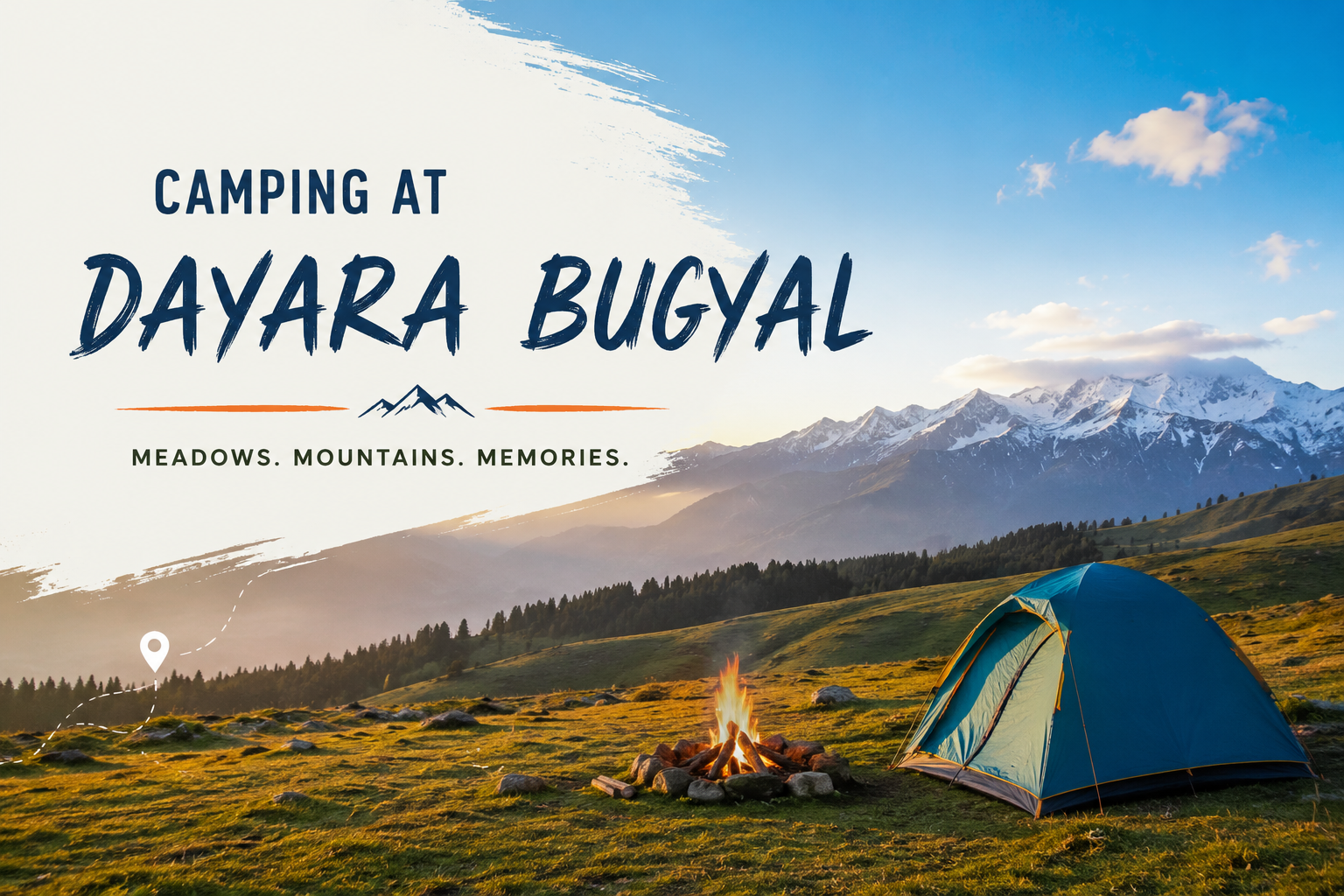
If you have ever scrolled through photos of vast alpine meadows blanketed in snow or golden grass swaying under a clear Himalayan sky, there is a fair chance Dayara Bugyal was in that frame. Situated at an altitude of roughly 3,408 metres in the Uttarkashi district of Uttarakhand, this high-altitude meadow is one of the most accessible yet genuinely wild camping destinations in the Indian Himalayas. It draws solo travellers, families, and seasoned trekkers alike, each searching for that rare combination of raw nature and manageable terrain.
What makes Camping at Dayara Bugyal stand apart from other popular Himalayan treks is the sheer quality of the night sky, the unhurried pace of the trail, and the meadow itself, which stretches across nearly 28 square kilometres. You are not just passing through a pretty landscape. You are sleeping inside it, waking up to frost on your tent, and watching the Gangotri range turn amber at sunrise. That kind of experience does not come from a day hike.
This guide is written for people who want honest, experience-backed information before they commit to the trip. We will walk through what the campsites are actually like, how the weather behaves, what a typical night feels like at that altitude, and everything in between, so you arrive prepared rather than surprised.
What Kind of Trek Is Dayara Bugyal?
Before diving into the camping details, it helps to understand the nature of this trek. Dayara Bugyal is classified as an easy to moderate trail, making it suitable for first-time trekkers who are physically active. The base village is Barsu, located about 26 kilometres from Uttarkashi. The standard trail from Barsu to the meadow covers roughly 9 kilometres one way, passing through dense oak and rhododendron forest before opening up into the meadow.
The trail gains about 1,000 metres in altitude from the base. While there are no technical sections, the continuous uphill gradient through the forest can feel demanding for those not acclimatised to the altitude. Most trekkers take 4 to 5 hours to reach the main camping area on the meadow. Porters and horses are available at Barsu for those who need support with luggage.
Key trail facts:
- Starting point: Barsu village, Uttarkashi district
- Trail length: Approximately 9 km one way
- Altitude gain: Around 1,000 metres
- Trek grade: Easy to moderate
- Nearest major town: Uttarkashi (approx. 26 km)
- Base camp road access: Motorable road up to Barsu
The Camping Grounds: Where You Actually Sleep
The primary camping area sits on the lower edge of the meadow, at an altitude just above 3,400 metres. This is where most organised trek operators pitch their camps. The ground here is a mix of soft grass and compacted soil, which makes tent pitching straightforward during summer and autumn months. In winter and early spring, the meadow is covered in snow, and the campsite takes on an entirely different character.
There are a few natural landmarks that experienced trekkers use to orient themselves. The ridge leading towards Bakaria Top, the highest accessible point at around 3,780 metres, acts as a natural windbreak on the western side of the campsite. This matters a great deal when temperatures drop at night.
What the campsite genuinely feels like:
- Silence that is almost unsettling after city life, broken only by wind and distant birds
- A 360-degree view of snow peaks on clear days, including Bandarpunch, Srikanth, and the Black Peak
- Stargazing conditions that rank among the best in northern India due to minimal light pollution
- Temperatures that drop to between 2 degrees Celsius and minus 5 degrees Celsius at night, depending on the season
- Morning frost on tents from October onwards, which thaws quickly once the sun rises over the ridge
One thing that surprises most first-time visitors is how exposed the meadow feels. There are no trees at the campsite itself. Once you are on the open grass, the Himalayan sky is above you in every direction. This is beautiful during clear weather and genuinely demanding during rain or hail, which can arrive with little warning in the monsoon months.
Seasons and What They Mean for Your Camp Experience
Choosing the right season is probably the single most important decision you will make about this trek, and it shapes everything from tent selection to sleeping bag rating.
Summer (May to June)
The meadow is lush and green, rhododendrons are in bloom on the lower trail, and daytime temperatures sit comfortably between 10 and 18 degrees Celsius. Nights are cold but manageable with a decent sleeping bag rated to minus 5 degrees. This is the most pleasant season for first-time campers.
Post-Monsoon (September to November)
This is arguably the best season for photography and clear views. The air is washed clean by the monsoon, and the meadow still retains some greenery before the grass turns golden. October nights are cold, dropping close to zero, and there may be early snowfall on the upper ridges. Trekkers who plan their visit around the Dayara Bugyal Trek Packing List specifically for this window tend to have the most visually rewarding experience.
Winter (December to February)
The meadow receives heavy snowfall, often 3 to 4 feet deep. Camping in this season is only advisable for experienced trekkers with proper four-season gear. The landscape is surreal but the risks, from whiteout conditions to hypothermia, are real and require serious preparation.
Monsoon (July to August)
While the meadow is at its greenest and most dramatic, the monsoon season brings persistent rain, slippery trails, leeches in the lower forest section, and reduced visibility at camp. Camping is still done during this period but demands waterproof gear and a higher tolerance for discomfort.
A Typical Day and Night at Camp
Understanding the rhythm of a camping stay helps you mentally prepare for what the experience actually involves rather than what you imagine it to be.
Morning begins before sunrise for most campers, not by choice but because the cold makes staying in a sleeping bag beyond 6 a.m. difficult once you are even slightly awake. The first hour at camp in the early morning is genuinely magical. The meadow is silent, frost clings to the grass, and the eastern ridge starts to glow before the sun actually clears it. Most trekkers walk to a small rise above camp during this window, which offers an unobstructed view of the Gangotri range.
Breakfast is typically prepared by the camp cook if you are on an organised trek, and it consists of parathas, omelettes, and tea. If you are doing a self-supported trek, a gas stove works reliably at this altitude, though boiling water takes noticeably longer than at sea level.
The afternoon is the most active part of the day. Most campers use this window to walk up to Bakaria Top, explore the far edges of the meadow, or simply sit with a view that does not get old. The light quality in the afternoon, particularly in October, is extraordinary.
Evening at camp:
- Sunset from the meadow is worth building your entire itinerary around
- Dinner is usually served inside the dining tent if you are with an operator
- The temperature drops sharply after 7 p.m., often by 8 to 10 degrees within an hour
- By 9 p.m., most trekkers retreat to their sleeping bags
- If skies are clear, stepping out between 10 p.m. and midnight for stargazing is absolutely worth the cold
Facilities and Honest Expectations
This is where many trekkers, particularly those new to high-altitude camping, need realistic information rather than polished marketing.
Toilets
There are no permanent toilet structures on the meadow. Most operators set up a basic tent toilet with a pit. In self-supported camps, the standard practice is to go at least 200 metres from water sources and bury waste. This is not an inconvenience to take lightly, especially for trekkers who have not camped before.
Water
A small stream runs near the lower section of the camping area during summer and early autumn. Water must be treated before drinking. Iodine tablets, UV pens, or a portable filter are standard kit. Organised operators typically boil and treat water for cooking.
Network Connectivity
Mobile network coverage is extremely limited on the meadow. Airtel and BSNL may show one bar of signal at certain points, but do not rely on connectivity for navigation, communication, or emergencies. Download offline maps before leaving Uttarkashi.
Medical Facilities
There are no medical facilities on the meadow. The nearest hospital is in Uttarkashi. Altitude sickness is a genuine risk for some trekkers, particularly those who ascend too quickly. Symptoms including headache, nausea, and dizziness should not be dismissed. Descending is always the correct first response.
Gear That Actually Makes a Difference
Preparation is the difference between a memorable experience and a miserable one. The gear you carry matters at 3,400 metres in a way it simply does not on a day hike at lower altitudes.
Essentials that trekkers frequently underpack:
- Sleeping bag rated to at least minus 10 degrees Celsius, even in summer
- Down or synthetic insulated jacket for camp use specifically, separate from your hiking layers
- Waterproof tent with decent pole strength for wind resistance
- Trekking poles, which are especially useful on the descent through the forest
- Headlamp with fresh batteries, as camp tasks after sunset require both hands
- Thermal base layers in merino or synthetic, not cotton
- Gaiters for snow camping in winter or post-monsoon
A detailed Dayara Bugyal Trek Packing List covering everything from footwear to first aid is worth consulting before you finalise your kit, since packing mistakes at high altitude have consequences that are much harder to reverse than on a lower-elevation trip.
Getting to the Trailhead
Most trekkers reach Uttarkashi by road from Rishikesh or Dehradun. From Uttarkashi, Barsu village is roughly a 45-minute to one-hour drive by shared taxi or private vehicle.
Route summary:
- Dehradun to Uttarkashi: approximately 4.5 to 5 hours by road
- Rishikesh to Uttarkashi: approximately 5 to 6 hours by road
- Uttarkashi to Barsu: approximately 45 minutes to 1 hour
- Barsu to Dayara Bugyal campsite: 4 to 5 hours on foot
There is no public bus service directly to Barsu. Shared taxis run from Uttarkashi bus stand and are the most cost-effective option. Private vehicles can be arranged through local operators.
If you are working out the cost of your full trip, understanding the Dayara Bugyal Trek Cost in 2026 across different operator packages, equipment rental options, and self-supported routes gives you a clearer picture of the actual budget involved before you book.
What Makes the Experience Worth It
There are dozens of treks in Uttarakhand, and many of them offer impressive scenery. What sets Dayara Bugyal apart for most people who have done it is not one single thing but the accumulation of small moments over two or three days.
It is the way the meadow opens up after two hours in the forest, and the instinctive pause that follows. It is the specific quality of silence at 3,400 metres that you cannot replicate anywhere else. It is waking up before sunrise, stepping out of a cold tent, and watching a mountain range you can name turn gold. It is the physical tiredness of the hike combined with the psychological rest of being completely disconnected.
Trekkers who have done more demanding Himalayan routes often come back to Dayara Bugyal specifically because of its accessibility without a sense of sacrifice. You do not need crampons or a permit. You do not need a fitness level that takes months to build. You just need to show up prepared.
That said, prepared is the operative word. Every year, trekkers arrive without adequate sleeping bags, without rain gear, or without any understanding of how quickly weather changes at altitude. The meadow rewards the prepared visitor and tests the unprepared one.
FAQ: Camping at Dayara Bugyal
1. Is Dayara Bugyal suitable for beginners?
Yes, Dayara Bugyal is one of the most recommended first Himalayan camping experiences. The trail is well-marked, the gradient is manageable, and the altitude, while requiring some acclimatisation, is not extreme. Beginners should focus on physical preparation in the four to six weeks before the trek.
2. What is the best time to camp at Dayara Bugyal?
May to June and September to November are the two best windows. October is widely considered the finest month for views and trail conditions. Summer offers the most comfortable temperatures for first-time campers.
3. Can I camp independently at Dayara Bugyal without a guide or operator?
Yes, independent camping is permitted. There are no mandatory permits required for the meadow itself as of 2026. However, first-time trekkers are strongly advised to go with a registered operator or at minimum hire a local guide from Barsu for navigation and safety.
4. How cold does it get at the campsite?
Temperatures at the campsite can drop to minus 5 degrees Celsius in October and significantly lower in winter months. A sleeping bag rated to minus 10 degrees Celsius is the safe standard for most seasons.
5. Is there a fee or permit required for Dayara Bugyal?
There is a nominal forest entry fee collected at the trailhead. This may vary slightly by season or operator. Confirm the current fee directly with local authorities or your trek operator before departure.
Summary
Dayara Bugyal is one of those rare places that genuinely delivers on its reputation. The meadow is not overhyped. The views are not exaggerated. What you see in photographs is real, and what you feel standing on that open grassland at 3,400 metres, surrounded by peaks and complete quiet, is something that photographs simply cannot carry. For trekkers stepping into Himalayan camping for the first time, it offers the full experience without demanding an extreme level of fitness, technical skill, or expensive gear. For experienced trekkers, it offers a reset, a reminder of why they started doing this in the first place. The trail is forgiving, the meadow is generous, and the nights are the kind that stay with you long after you have returned to city life.
What this trek asks of you in return is simple: respect the environment, prepare honestly, and arrive with the right expectations. The campsites have no infrastructure to bail you out if your sleeping bag is inadequate or your rain gear is packed wrong. The mountain does not adjust to your comfort level. But when you get the preparation right, Dayara Bugyal rewards you with an experience that is difficult to find anywhere else in northern India at this altitude and accessibility. It is not just a trek worth doing. It is a trek worth doing properly.
With the dayara bugyal trek season approaching, it’s time to plan something truly extraordinary. From breathtaking Himalayan peaks to spiritually powerful temples hidden deep in remote valleys, this journey offers an experience that goes beyond a typical trek—it becomes a story you carry for life. To make your journey seamless and well-organised, choose the best trekking company in Uttarakhand for reliable trek packages, detailed itineraries, and hassle-free booking.
Visit this page for Trek Packages, Itinerary & Booking.