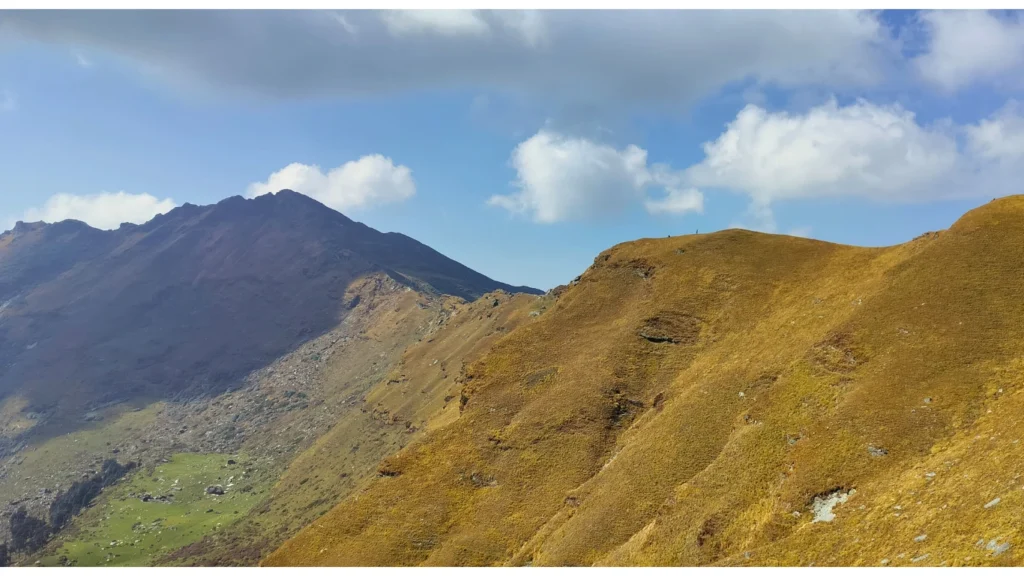
Nestled in the Uttarkashi district of Uttarakhand, Dayara Bugyal is one of India’s finest high-altitude meadows, sitting at an elevation of approximately 3,408 metres above sea level. This sweeping alpine grassland delivers unobstructed panoramic views of iconic Gangotri peaks — Bandarpunch, Draupadi Ka Danda, and Srikanth — against a sky that feels impossibly close. Every season brings a different version of this landscape, from emerald meadows carpeted with wildflowers in summer to a deep white silence in winter that makes you feel like the last person on earth.
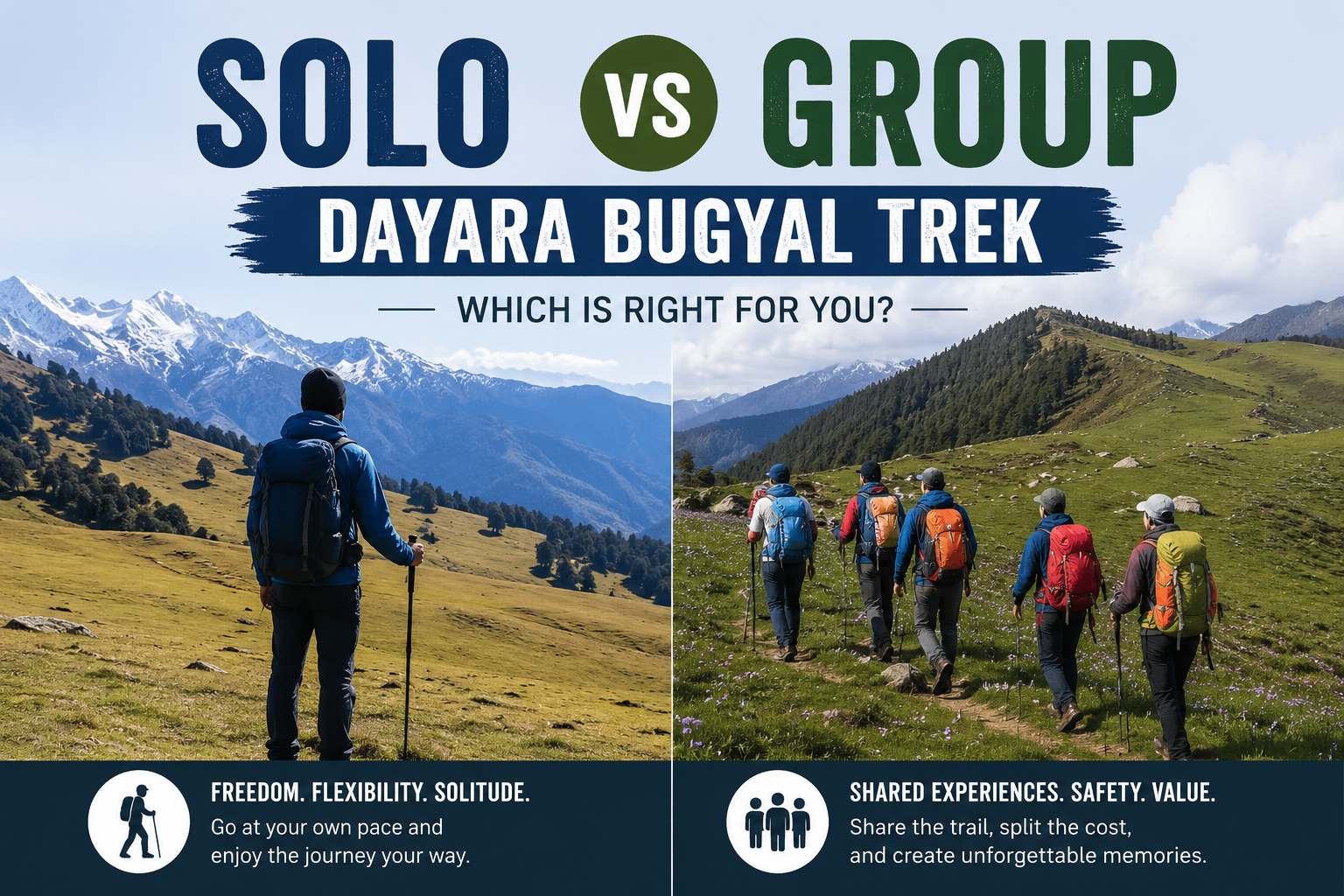
Before booking a single night’s stay or packing a single piece of gear, every trekker arrives at the same unavoidable question: should I go alone or join a group? It sounds like a simple preference, but the decision reshapes your entire experience — from safety and daily pace to total cost and the kind of stories you bring home.
This comprehensive guide on the Solo vs Group Dayara Bugyal Trek cuts through the noise and gives you a clear, honest breakdown of both approaches. Whether you are an experienced mountaineer chasing solitude or a first-time trekker looking for community and guidance, everything you need to make an informed decision is right here.
The Trek Itself: What You Are Signing Up For
Understanding the trail is the first step before choosing how to experience it. The Dayara Bugyal trek begins from Barsu village, located roughly 26 kilometres from Uttarkashi town in the Garhwal Himalayas. From Barsu, the trail ascends steadily through dense forests of oak, rhododendron, and silver birch before emerging into the vast open meadow at the summit.
The standard itinerary runs 3 to 4 days, covering 21 to 25 kilometres depending on the route variation. The total elevation gain from base camp at Barsu (approximately 2,300 metres) to the meadow summit (3,408 metres) is a comfortable 1,100 metres — demanding enough to feel like an achievement, accessible enough to reward reasonably fit trekkers without being elite athletes.
The best seasons for the Dayara Bugyal trek are April to June, when rhododendrons bloom across the hillsides, and September to November, when post-monsoon skies deliver pristine mountain clarity. Winter treks from December to February transform the meadow into a snowshoeing and ski-touring destination, though they demand experience, specialised gear, and significantly higher risk management.
Understanding what the trail demands physically and logistically sets the foundation for every solo-versus-group decision that follows.
Solo Trekking at Dayara Bugyal: Everything You Need to Know
Solo trekking is not just trekking without companions — it is a fundamentally different relationship with the mountains. It places every decision, every risk, and every reward squarely in your own hands.
Why Trekkers Choose to Go Solo
Many trekkers choose solo trekking for complete freedom, a deeper connection with nature, personal growth, flexible budgeting, self-discovery, and the ability to experience the mountains entirely on their own terms.
Complete Autonomy Over Your Journey
- Your trekking schedule remains completely flexible.
- You can walk at your own pace without group pressure.
- Freedom to rest, explore viewpoints, or pause for photography anytime.
- Creates a more immersive and personal trekking experience.
Deeper Immersion in the Natural Environment
- Solo trekking removes constant social distractions.
- Helps you connect more deeply with the Himalayan landscape.
- Natural sounds and surroundings become more noticeable and meaningful.
- Many trekkers find the experience mentally calming and restorative.
Tangible Personal Growth
- Builds confidence through independent decision-making.
- Improves survival awareness and mountain judgment.
- Helps develop self-reliance during uncertain situations.
- Many solo trekkers describe the experience as personally transformative.
Cost Flexibility
- Full control over accommodation, food, and trekking expenses.
- Budget options like local homestays and self-managed camping become easier.
- Can reduce overall trekking costs compared to fixed group packages.
- Best suited for trekkers who already own quality trekking gear.
The Real Challenges of Going Solo
Solo trekking brings challenges like isolation, navigation difficulties, safety risks, unpredictable weather, heavier backpack loads, limited connectivity, and the mental pressure of handling emergencies without immediate support or assistance.
Safety in Remote and Isolated Sections
- Some trail sections remain highly isolated.
- Mobile connectivity becomes unreliable beyond Barsu village.
- Injuries or sudden weather changes can become difficult to manage alone.
- Lack of immediate support increases overall trekking risk.
Navigation in Challenging Conditions
- Snowfall, fog, and rain can hide trail markers.
- Navigation errors become more dangerous during poor visibility.
- Offline maps and GPS tracking become essential.
- Hiring a local guide is strongly recommended for beginners.
Carrying a Heavier Load
- Solo trekkers must carry all personal and emergency gear themselves.
- Backpack weight increases significantly without shared equipment.
- Extra load causes faster fatigue during long ascents.
- A proper packing strategy becomes very important.
The Psychological Dimension
- Long periods of isolation can feel mentally challenging.
- Some trekkers enjoy solitude, while others struggle with it.
- Emotional preparedness is as important as physical fitness.
- Honest self-assessment is necessary before attempting a solo trek.
Group Trekking at Dayara Bugyal: Community, Safety, and Structured Adventure
Group trekking reshapes the trail experience from the inside out. The mountains become a shared canvas, and the meaning of the journey is shaped as much by the people alongside you as by the landscape itself.
1. What Makes Group Trekking at Dayara Bugyal Valuable
Group trekking at Dayara Bugyal creates a safer, more social, and budget-friendly Himalayan experience while offering shared memories, guided support, motivation, and easier logistics for beginners.
A Genuine Safety Network
Trekking with others fundamentally changes your risk profile in remote terrain. If a trekker develops altitude sickness, sustains an injury, or gets caught in deteriorating weather, having experienced companions and a certified trek leader present is not merely reassuring — it can be life-saving. Registered group trek operators also carry structured emergency protocols, comprehensive first-aid kits, and communication equipment that individual solo trekkers rarely have access to.
Economical Cost Structure
For many trekkers, the biggest advantage of joining a group departure is the reduced Dayara Bugyal Trek Cost. Shared expenses such as guide charges, porter support, camping equipment, meals, and transportation are divided among multiple participants, making the overall trek far more economical. If you do not already own trekking gear, a solo expedition can become significantly more expensive due to equipment rentals or purchases. In comparison, an organised group trek often delivers better value at a similar comfort and safety level while keeping the total Dayara Bugyal Trek Cost much more manageable.
Everything Organized for You
Permits, transport from Dehradun or Uttarkashi, campsite bookings, meals, and safety gear are managed entirely by the operator. For trekkers with demanding professional schedules who cannot dedicate weeks to Himalayan trip planning, this level of logistical support is genuinely transformative. It removes the single biggest barrier between a busy person and a great mountain experience.
The Energy of Shared Adventure
There is a specific kind of motivational force that emerges in a well-matched group on a challenging trail. On steep pre-dawn ascents or cold mornings when leaving the tent feels impossible, group energy carries individuals past their own resistance. And the collective experience of arriving at the meadow together — the shared exhaustion and shared awe — creates the kind of emotional memories that people describe for years afterward.
Expert Knowledge on the Trail
Certified trek leaders and local guides bring layered knowledge of the trail — its microweather patterns, historical context, local culture, and ecological details — that most individual trekkers simply do not have access to. This transforms the trek from a physical challenge into a deeply informed experience.
Packing the right gear is equally important whether you go solo or with a group. Our detailed Dayara Bugyal Trek Packing List covers everything from layering systems and footwear to emergency essentials, so you are fully prepared for conditions on the trail before you take your first step.
2. Where Group Trekking Falls Short
Group trekking often limits flexibility, slows pace, reduces personal comfort, and creates crowded experiences, making it difficult for trekkers to enjoy solitude, customization, privacy, and freedom fully.
Fixed Itineraries and Reduced Spontaneity
Group treks operate on a shared schedule. Wake-up times, departure windows, daily distances, and meal routines are predetermined. For trekkers who value the freedom to linger, explore side trails, or simply sit in silence for longer than the schedule permits, this structure can feel limiting.
Variable Group Dynamics
Organized group treks bring together strangers. Differences in fitness levels, personal pace, and personality can occasionally create friction, particularly on multi-day itineraries in physically demanding terrain. Researching the operator’s group composition policies and reading verified participant reviews before booking significantly reduces this risk.
Shared Campsites During Peak Season
Popular trekking windows, particularly the October-November window, can mean sharing campsite locations with multiple groups simultaneously. For trekkers specifically seeking solitude on the meadow at sunrise, a crowded campsite is a genuine trade-off worth considering.
Comparing the Two Approaches: A Clear Framework
Safety Solo trekking carries a moderate risk for experienced trekkers who prepare thoroughly and hire a local guide; it carries a substantially higher risk for beginners. Group trekking offers a significantly lower risk profile through shared resources, professional guidance, and peer support.
- Budget and Cost: Solo trekking offers maximum budget flexibility for self-sufficient trekkers with their own equipment. Group trekking provides better value per head through shared costs, especially for those without personal gear. Neither is categorically cheaper — it depends on your specific situation.
- Flexibility and Pace: Solo trekking gives you complete control over your daily schedule and pace. Group trekking operates on a fixed itinerary that leaves limited room for deviation.
- Experience Required: Solo trekking at Dayara Bugyal is best suited for trekkers with prior multi-day Himalayan trekking experience. Group trekking is appropriate for beginners through experienced trekkers, with guides filling the knowledge and safety gaps.
Understanding the physical demands of this specific trail will clarify which approach fits your current fitness and experience level. Our honest, detailed guide on the Difficulty Level of Dayara Bugyal Trek gives you a complete picture of what the trail asks of your body — from elevation gain profiles to terrain type, trail surfaces, and altitude adjustment timelines.
Who Should Trek Solo at Dayara Bugyal?
Solo trekking is the right choice if you:
- Have prior experience with multi-day trekking in the Himalayan or high-altitude environment, and are confident in basic navigation and altitude management
- Are seeking solitude, personal reflection, or a specific physical challenge as the primary goal of the trip
- Have a flexible travel schedule and want to build your own itinerary around optimal weather windows
- Already own quality trekking gear — including tent, sleeping bag rated for sub-zero temperatures, trekking poles, and layered clothing systems — and have used it in similar conditions
- Are comfortable with independent logistics management and plan to hire a local guide directly from Barsu village
Who Should Trek in a Group at Dayara Bugyal?
A group trek is the right choice if you:
- Are you a first-time or beginner trekker who needs the safety net and day-to-day guidance of a certified trek leader
- Are travelling without a pre-formed group of trekking companions and want the social and motivational dimension of a shared experience
- Have limited time for trip planning and want permits, transport, accommodation, meals, and gear handled under a single booking
- Want the cultural and ecological depth that knowledgeable local guides bring to the trail
- Are uncertain about your current fitness level and want the reassurance of a professionally paced, structured program
If you are leaning toward a structured, supported experience, exploring a well-designed Dayara bugyal trek package from a certified, reviewed operator is the most efficient way to get everything organised — from forest permits and transport logistics to emergency protocols and campsite management. A quality Dayara bugyal trek package ensures that your focus on the mountain, not on administration.
Practical Tips for Solo Trekkers
Hire a local guide from Barsu village, even if you have prior trekking experience. Per-day rates are reasonable, and the local knowledge, trail familiarity, and safety cover they provide are invaluable. Download offline GPS maps of the Barsu-Dayara Bugyal route before you lose mobile connectivity. Apps like Gaia GPS and Maps.me are reliable offline options.
Register your planned route and expected return date with your Barsu accommodation. This creates a simple early-warning system if you do not check in on time. Carry a personal locator beacon (PLB) or satellite messenger device for off-season or winter treks where emergency evacuation delays can be life-threatening.
Adopt a conservative turnaround policy. In deteriorating weather, solo trekkers should turn back earlier than a guided group might, because there is no shared risk assessment buffer.
Start each day at first light. The Dayara Bugyal meadow at dawn — before cloud cover moves in and other trekkers arrive — is among the finest sights in the Indian Himalayas.
Practical Tips for Group Trekkers
Vet your operator carefully. Look for operators with certified trek leaders holding valid Wilderness First Responder or equivalent qualifications, clear cancellation and emergency policies, and participant reviews that speak specifically to safety standards and communication quality.
Be accurate about your fitness level when booking. Being matched to a pace group that suits your genuine capabilities — not your optimistic estimate — makes an enormous difference to daily enjoyment and safety.
Pack with discipline. Even on a fully supported group trek, your personal daypack is your own responsibility. Refer to the Dayara Bugyal Trek Packing List to make sure you carry what matters and leave behind what does not.
Trust your trek leader’s judgment on turnaround calls, weather decisions, and altitude protocols. Their experience on this specific trail is a resource — use it.
Frequently Asked Questions
1. Is Dayara Bugyal safe for solo trekking?
Yes, Dayara Bugyal is safe for solo trekking if you have prior multi-day Himalayan trekking experience, hire a local guide from Barsu village, carry appropriate emergency communication equipment, and trek during established seasons. It is not recommended as a first solo trek for trekkers without prior high-altitude experience.
2. Can beginners do the Dayara Bugyal trek?
Beginners can absolutely do this trek. The trail does not require technical climbing skills. However, beginners are strongly advised to join an organized group with a certified trek leader rather than attempting it solo. The combination of altitude, remoteness, and variable weather demands proper support for those without prior experience.
3. What is the best time to do the Dayara Bugyal trek?
The two prime windows are April to June — for rhododendron blooms, green meadows, and moderate temperatures — and September to November, which offers exceptional post-monsoon visibility and crisp mountain air. Winter treks from December to February are stunning but require specialized gear, prior cold-weather experience, and higher risk tolerance.
4. How difficult is the Dayara Bugyal trek?
The trek is rated as moderate in difficulty. There are no technical sections, but the sustained ascent through forested terrain and the altitude gain demand a reasonable level of aerobic fitness. The upper meadow sections can become challenging in snow or fog conditions. Our full guide on the difficulty level of the Dayara Bugyal Trek covers this comprehensively.
5. Is a guide compulsory for Dayara Bugyal?
A guide is not legally mandatory on this trail, but it is strongly recommended — particularly for solo trekkers, first-time visitors, and anyone trekking outside the core April-to-November season. A local guide from Barsu significantly reduces navigation risk and adds meaningful safety cover.
Final Thoughts
There is no objectively superior way to experience Dayara Bugyal — only the approach that is right for who you are and what you are seeking from the mountains. The Solo vs Group Dayara Bugyal Trek question does not have a universal answer, but it does have a personal one, and hopefully, this guide has made yours clearer.
Solo trekking rewards the self-reliant, the reflective, and the experienced. It gives you the meadow on your own terms — your pace, your silence, your discovery. Group trekking gives you safety, structure, community, and the depth of guided knowledge. Both paths end at the same extraordinary plateau, surrounded by the same peaks. What changes is how you arrive and what meaning you carry home with you.
With the dayara bugyal trek season approaching, it’s time to plan something truly extraordinary. From breathtaking Himalayan peaks to spiritually powerful temples hidden deep in remote valleys, this journey offers an experience that goes beyond a typical trek—it becomes a story you carry for life. To make your journey seamless and well-organised, choose the best trekking company in Uttarakhand for reliable trek packages, detailed itineraries, and hassle-free booking.
Visit this page for Trek Packages, Itinerary & Booking.