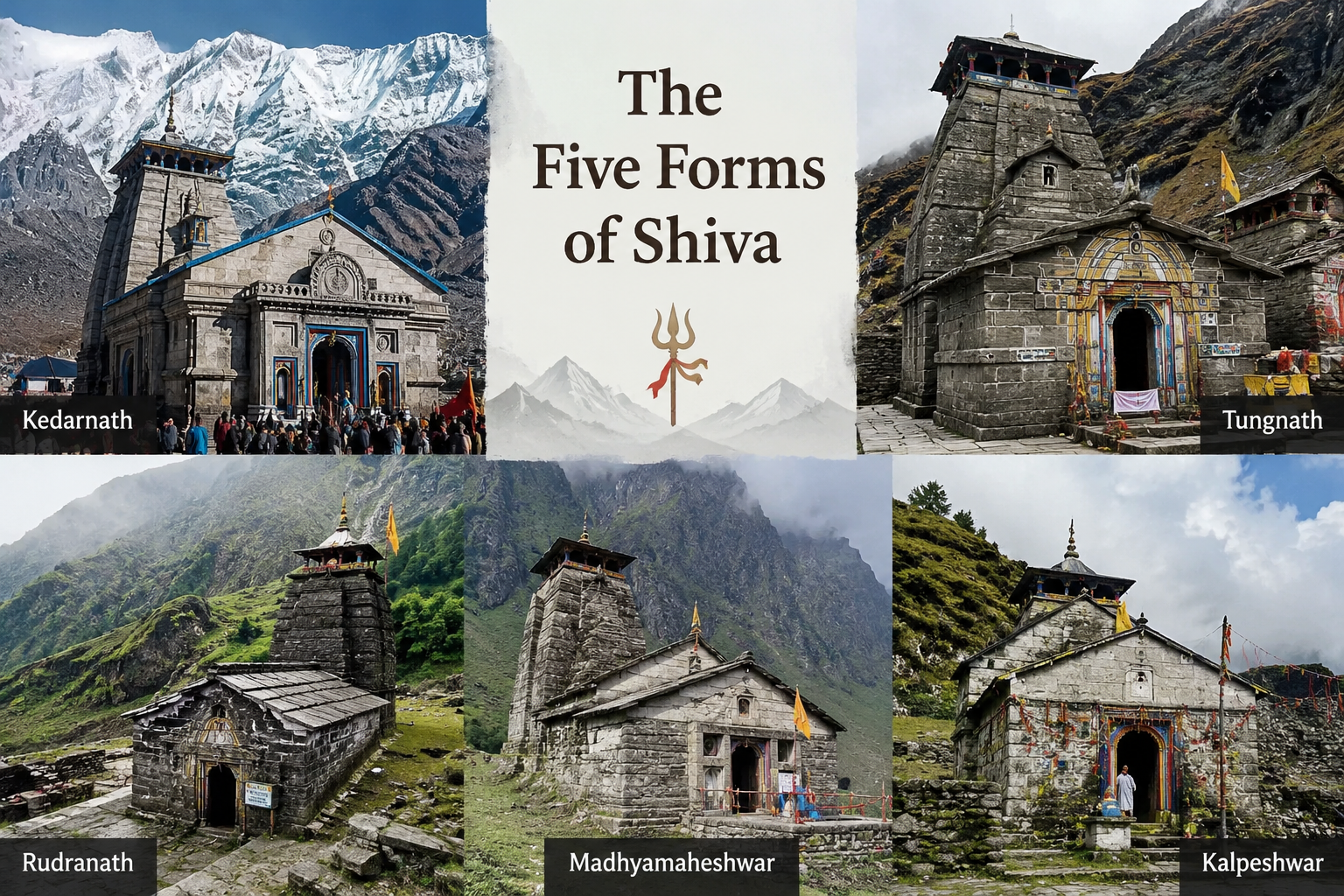
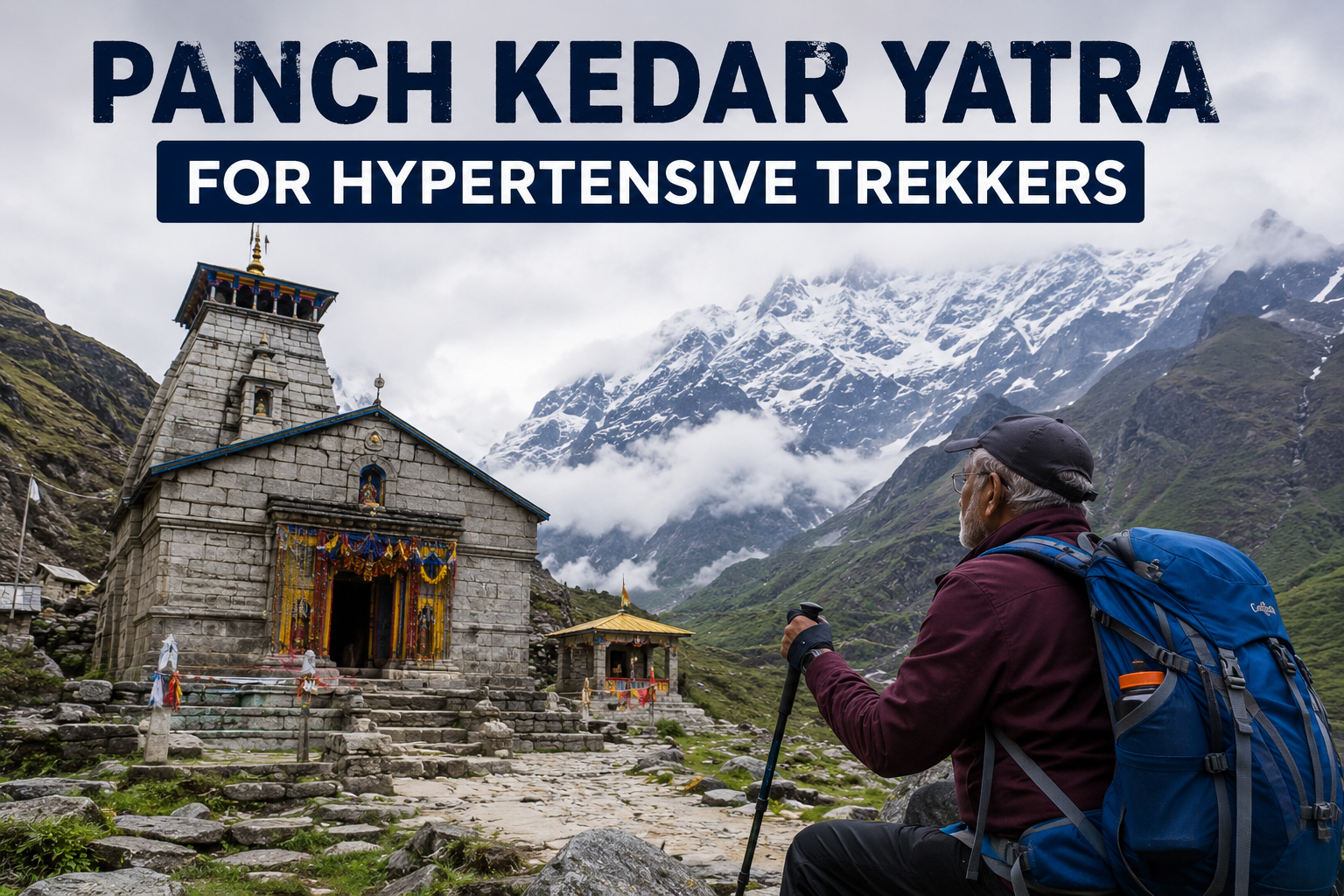
The Panch Kedar yatra for hypertensive trekkers is not a simple yes-or-no question — it is a conversation that begins long before you lace up your boots. Nestled deep in the Garhwal Himalayas of Uttarakhand, the Panch Kedar circuit connects five sacred Shiva temples — Kedarnath, Tungnath, Rudranath, Madhyamaheshwar, and Kalpeshwar — across altitudes ranging from 2,200 metres to over 3,680 metres. For millions of devotees and trekkers, this is a journey of a lifetime. But for those managing hypertension, the stakes are higher than just sore legs and steep trails.
High altitude trekking and blood pressure have a well-documented and complex relationship. As you ascend, atmospheric pressure drops, oxygen levels fall, and your heart works harder to compensate. For someone already dealing with elevated blood pressure, this physiological stress can pose real risks — from hypertensive headaches to, in rare cases, more serious cardiac events. That is why doctors, cardiologists, and high-altitude medicine specialists increasingly find themselves being consulted by patients who want to complete this pilgrimage.
This article brings together medical guidance, expert recommendations, and practical trekking advice so that hypertensive trekkers can make informed, safe decisions. Whether you are a seasoned trekker with a controlled condition or someone newly diagnosed, what follows could genuinely change how you approach this sacred route.
What Happens to Blood Pressure at High Altitude?
Understanding the physiology is the first step toward responsible trekking. At elevations above 2,500 metres, the body responds to reduced oxygen availability through a series of mechanisms — increased heart rate, elevated breathing, and vasoconstriction — all of which can push blood pressure upward.
Key physiological changes include:
- Increased sympathetic nervous system activity, which raises heart rate and BP
- Reduced oxygen saturation leading to hypoxic vasoconstriction
- Cold temperatures causing peripheral blood vessels to constrict
- Dehydration from exertion and dry mountain air, further concentrating blood volume
- Disrupted sleep patterns at altitude reducing the body’s overnight BP recovery window
Studies published in high-altitude medicine journals consistently show that even healthy trekkers can experience a 10–20 mmHg rise in systolic blood pressure during the initial days of ascent. For someone with pre-existing hypertension, this elevation can be sharper and more sustained.
Dr. Priya Bhatnagar, a cardiologist with over 15 years of experience treating adventure trekkers, notes that altitude does not automatically disqualify a hypertensive patient from trekking. “What matters most is how well the condition is controlled, the medications being used, and whether the trekker has done a proper pre-trek cardiac evaluation,” she explains.
What Doctors Actually Recommend Before the Trek
Doctors recommend a pre-trek health check-up, regular cardio training, strength-building exercises, proper hydration, and gradual acclimatization. They also advise carrying essential medications, maintaining a balanced diet, and avoiding overexertion to reduce the risk of altitude sickness and trekking-related injuries.
Get a Comprehensive Pre-Trek Medical Clearance
This is non-negotiable. Before attempting any segment of the Panch Kedar circuit, hypertensive trekkers should undergo a full cardiac evaluation that includes:
- Resting ECG and, ideally, a stress ECG (treadmill test)
- 24-hour ambulatory blood pressure monitoring
- Echocardiography if there is any history of chest pain or breathlessness
- Blood tests including renal function, lipid profile, and fasting glucose
- Ophthalmological screening if BP has been uncontrolled for extended periods
A cardiologist familiar with high-altitude physiology should review these results and clear the patient specifically for altitude trekking — not just general fitness.
Understand Your Medication in the Mountain Context
Different antihypertensive medications behave differently at altitude, and this is something many trekkers overlook.
- Beta-blockers may reduce the heart’s ability to compensate for exertion and altitude-related hypoxia. Some cardiologists prefer switching patients to calcium channel blockers before a high-altitude trek.
- ACE inhibitors and ARBs are generally considered altitude-friendly, but diuretic combinations need careful monitoring due to dehydration risk.
- Diuretics, if part of your BP regimen, require extra hydration discipline — something physically demanding treks naturally challenge.
- Nifedipine, a calcium channel blocker, is often prescribed for altitude-related hypertension and sometimes as prophylaxis for Acute Mountain Sickness (AMS).
Never self-adjust medications based on online advice. Discuss specific drug adjustments with your treating cardiologist at least four to six weeks before departure to allow stabilisation time.
Acclimatisation Is Non-Negotiable, Not Optional
The standard advice to “climb high, sleep low” is especially important for hypertensive trekkers. Rushing altitude gain is the single most preventable cause of BP spikes and AMS on Himalayan treks.
Recommended acclimatisation principles for the Panch Kedar route:
- Spend at least two nights at an intermediate altitude before crossing 3,000 metres
- Limit daily altitude gain to 300–500 metres once above 2,500 metres
- Include at least one full rest day every three to four days
- Monitor blood pressure twice daily — morning and evening — using a portable digital BP monitor
- Descend immediately if systolic BP crosses 180 mmHg or diastolic crosses 110 mmHg
Temple-by-Temple Risk Assessment for Hypertensive Trekkers
Each of the five temples presents a different altitude and exertion challenge. Here is a doctor-informed breakdown:
Kalpeshwar (2,200 m)
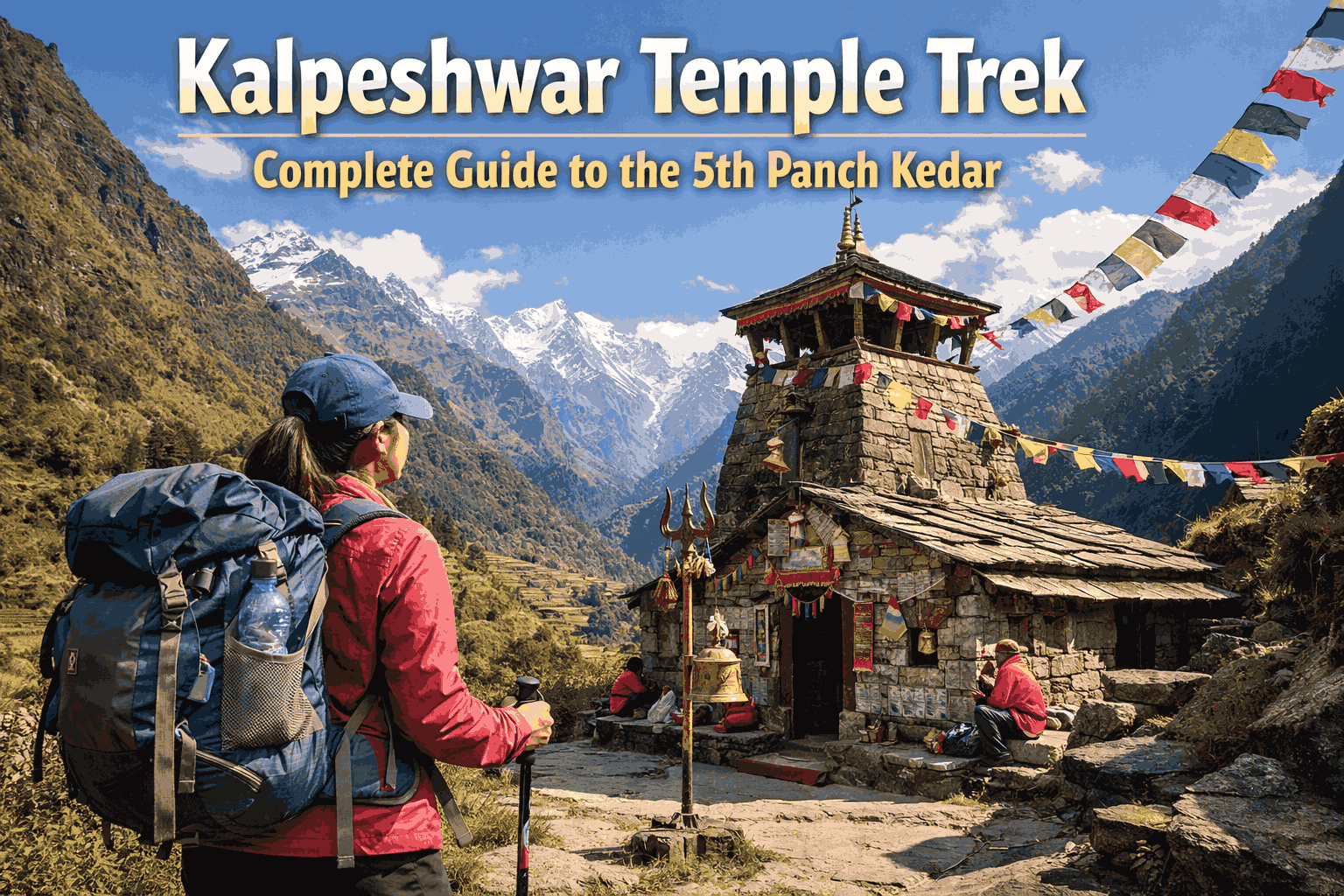
The lowest of the five shrines, accessible with a short trail through a cave. This is generally considered the safest for hypertensive trekkers. The moderate altitude and limited trekking distance mean minimal cardiovascular stress. An excellent starting point to test altitude tolerance.
Kedarnath (3,583 m)
The most visited and the most demanding from an altitude perspective. The 16 km trek from Gaurikund involves significant elevation gain. Hypertensive trekkers should take two days for the ascent, use pony or palanquin services if needed, stay an acclimatisation night at intermediate camps, and monitor BP closely on day two of ascent.
Tungnath (3,680 m)
The highest temple of the circuit and the highest Shiva temple in the world. The trail from Chopta is relatively well-paved, but the altitude is the primary concern. For hypertensive trekkers with well-controlled BP, this is achievable with proper pacing. Those with poorly controlled BP or history of hypertensive urgency should reconsider or consult their cardiologist again at this point.
Rudranath (3,600 m)
Considered the most physically demanding trek of the five, requiring 20–24 km of rugged terrain through alpine meadows and dense forests. High exertion combined with significant altitude makes this the riskiest segment for hypertensive trekkers. Only those with excellent cardiovascular fitness and fully controlled BP should attempt this without additional medical supervision.
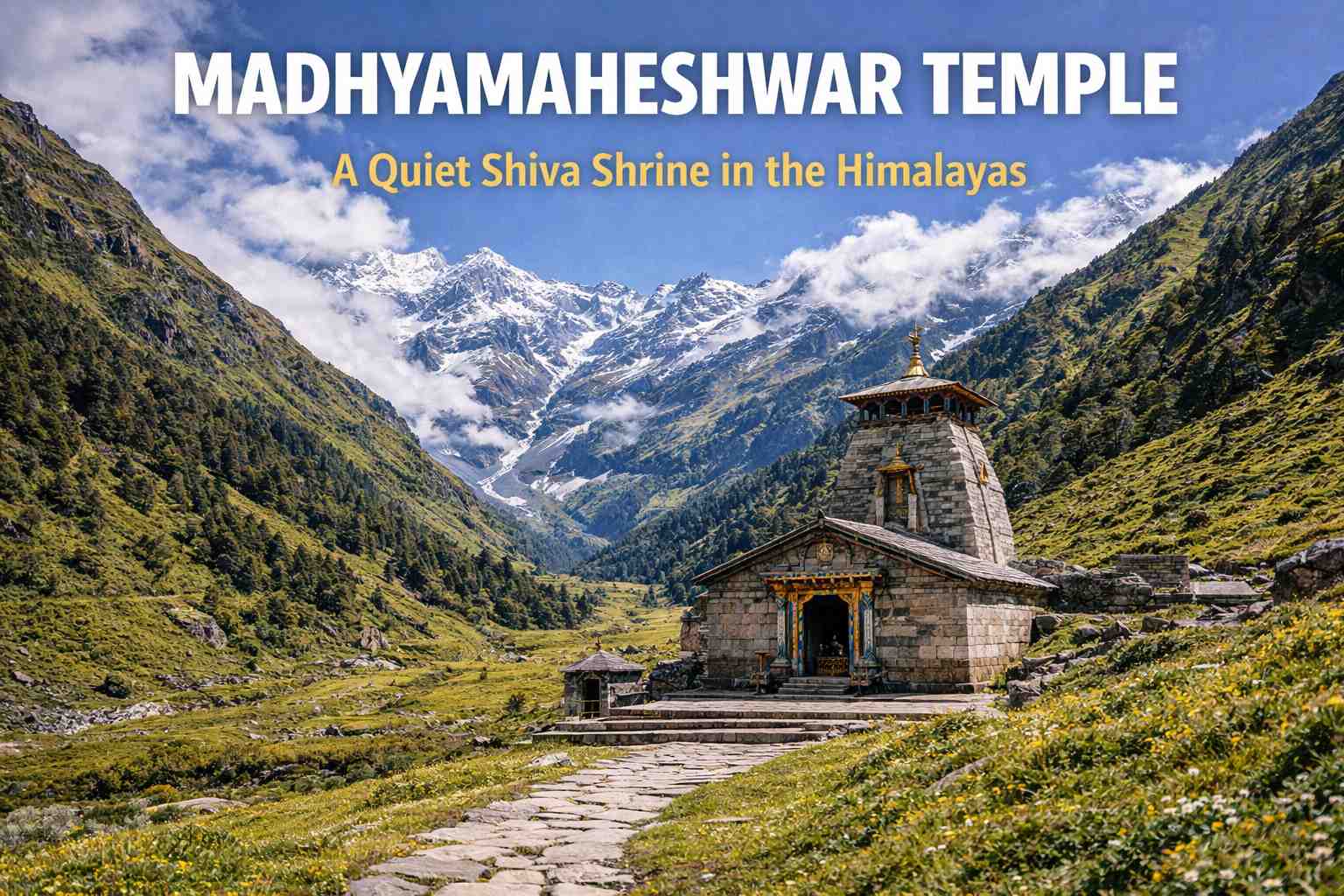
Madhyamaheshwar (3,497 m)
A moderate-to-challenging two-day trek. Less commercially developed than Kedarnath, which means fewer medical facilities en route. Trekkers should carry a complete medical kit and have an emergency contact plan in place.
If you are planning the full circuit and want to understand your options regarding route modifications or unforeseen health issues, reviewing the Panch Kedar Trek Cancellation policy of your tour operator is a practical step that many hypertensive trekkers overlook until it is too late.
Warning Signs Every Hypertensive Trekker Must Know
Your body communicates. The challenge in the mountains is that many altitude-related symptoms overlap with exertion, dehydration, and cold — making it easy to dismiss warning signs that deserve urgent attention.
Stop trekking and seek medical help if you experience:
- Systolic BP above 180 mmHg at any point during the trek
- Severe headache that does not respond to paracetamol or rest
- Blurred vision, visual disturbances, or sudden loss of peripheral vision
- Shortness of breath disproportionate to exertion level
- Chest tightness, pressure, or pain
- Palpitations lasting more than a few minutes
- Confusion, loss of coordination, or memory lapses
- Swelling of the face, hands, or feet (possible signs of high-altitude pulmonary or cerebral oedema)
Carry a written emergency protocol card with your current medications, dosages, emergency contacts, and nearest hospital details. AIIMS Rishikesh, Srinagar Base Hospital (Pauri Garhwal), and district hospitals in Rudraprayag are the most accessible referral centres along the Panch Kedar route.
Building the Right Medical Kit for the Trail
No hypertensive trekker should set foot on this circuit without a purpose-built medical kit. Beyond standard first aid, your kit should include:
- Portable digital blood pressure monitor (validated for altitude use)
- Extra supply of all prescribed medications (at least double the trek duration)
- Nifedipine 10 mg immediate-release (for AMS or hypertensive urgency — only use on doctor’s advice)
- Dexamethasone (for cerebral oedema — only for trained users or on prescription)
- Paracetamol and ibuprofen for pain and fever management
- Oral rehydration salts to manage dehydration-induced BP fluctuation
- Acetazolamide (Diamox) if prescribed for AMS prevention
- Pulse oximeter to monitor oxygen saturation
Pack medications in your personal daypack — never in luggage that travels separately on ponies or porters.
Choosing the Right Trek Package and Support Infrastructure
Not all trek packages are created equal when it comes to medical support. For hypertensive trekkers, the quality and preparedness of your operator can be as important as your own medical readiness.
When evaluating a Best Panch Kedar Trek Package, look specifically for operators who offer wilderness first aid-trained guides, altitude sickness response protocols, satellite communication devices for remote segments, flexible itineraries that allow extra acclimatisation days, and reliable porter support so you control your exertion level.
Avoid ultra-budget packages that rush the circuit in under ten days with no built-in rest days. The financial saving is not worth the physiological risk.
Fitness Preparation: What to Do in the 12 Weeks Before Departure
Medical clearance is step one. Fitness preparation is step two. For hypertensive trekkers, the goal is not peak athletic performance — it is cardiovascular resilience.
A 12-week preparation plan should include:
Weeks 1–4: Daily 30–45 minute brisk walks on flat terrain. Focus on consistent pace, not speed. Monitor BP before and after each session.
Weeks 5–8: Introduce incline walking — stairs, hillside trails, or treadmill incline. Gradually increase duration to 60–75 minutes. Begin light strength training for legs and core.
Weeks 9–12: Weekend hikes on uneven terrain with a loaded daypack (5–8 kg). Practice the daily BP monitoring routine you will follow on the trek. Include at least one overnight camping experience to assess sleep-related BP changes.
Throughout preparation, share your exercise logs with your cardiologist. Any new symptoms during exercise — chest discomfort, breathlessness, or BP spikes above 160/100 — warrant immediate review before proceeding.
The Role of Trek Insurance in Hypertensive Trekking Safety
This section is often skipped in trekking blogs, but for hypertensive trekkers, it is critical. Standard travel insurance frequently excludes high-altitude trekking above 3,000 metres, and many policies contain blanket exclusions for pre-existing cardiovascular conditions.
When arranging Panch Kedar Trek Insurance, confirm the following with your insurer:
- The policy covers trekking to altitudes of at least 3,700 metres
- Pre-existing hypertension is declared and explicitly covered (or a waiver obtained)
- Medical evacuation by helicopter is included
- The policy covers hospitalisation costs at government and private facilities in Uttarakhand
- There is a 24-hour emergency assistance helpline functional in India
Some specialised adventure travel insurers offer hypertension-inclusive policies at a premium — this cost is trivial compared to what an uninsured helicopter evacuation from Rudranath or Tungnath can cost.
What Doctors Say: A Summary of Expert Consensus
Drawing together guidance from sports medicine physicians, cardiologists, and high-altitude medicine specialists, the consensus can be summarised as:
- Hypertension alone does not disqualify a trekker from the Panch Kedar circuit
- Well-controlled BP (below 140/90 at rest, on stable medication) significantly reduces risk
- Pre-trek evaluation, medication review, and acclimatisation planning are the three pillars of safe trekking with hypertension
- Trekkers should be empowered with self-monitoring skills, not just prescribed a list of restrictions
- Any BP reading above 160/100 at altitude should prompt a descent decision, not observation
The mountains do not reward stubbornness. They reward preparation.
Frequently Asked Questions
1. Can a person with high blood pressure do the Panch Kedar trek?
Yes, with proper medical clearance, well-controlled blood pressure, and a carefully planned itinerary, many people with hypertension have successfully completed parts or all of the Panch Kedar circuit. The key is preparation, not avoidance.
2. Which Panch Kedar temple is safest for hypertensive trekkers?
Kalpeshwar, at 2,200 metres, is the safest due to its low altitude and minimal trekking distance. Kedarnath and Tungnath are achievable with preparation but carry higher altitude risk.
3. What blood pressure level is considered too high to trek at altitude?
Most cardiologists recommend not trekking if resting BP exceeds 160/100 mmHg. During the trek, if systolic BP crosses 180 mmHg, immediate descent is advised.
4. Should I carry a blood pressure monitor on the Panch Kedar trek?
Absolutely. A portable, validated digital BP monitor is an essential item for any hypertensive trekker on this circuit.
5. Can altitude itself cause a hypertensive crisis?
In rare cases, yes. Rapid ascent, cold exposure, exertion, dehydration, and poor sleep can combine to produce significant BP spikes. Proper acclimatisation and hydration are the best preventive measures.
Summary
The Panch Kedar circuit is not just a trek — it is a pilgrimage of the body, mind, and spirit across some of the most breathtaking terrain the Himalayas have to offer. For hypertensive trekkers, this journey demands one additional layer of preparation that goes beyond packing lists and booking confirmations. It demands an honest conversation with your doctor, a disciplined pre-trek fitness routine, and a genuine respect for what altitude does to the human cardiovascular system.
The medical consensus is clear and encouraging in equal measure. Hypertension, when well-controlled and properly managed, does not have to be a barrier to completing this sacred route. What it does require is structured planning, the right medications, reliable self-monitoring, and a willingness to descend when the body asks you to. Pride has no place at 3,600 metres.
Every temple on this circuit — from the cave sanctuary of Kalpeshwar to the wind-swept heights of Tungnath — carries the energy of centuries of devotion. You owe it to yourself, your fellow trekkers, and the mountains themselves to arrive prepared.
With the Panch Kedar Yatra season approaching, it’s time to plan something truly extraordinary. From breathtaking Himalayan peaks to spiritually powerful temples hidden deep in remote valleys, this journey offers an experience that goes beyond a typical trek—it becomes a story you carry for life. To make your journey seamless and well-organised, choose the best trekking company in Uttarakhand for reliable trek packages, detailed itineraries, and hassle-free booking.
Visit this page for Trek Packages, Itinerary & Booking.