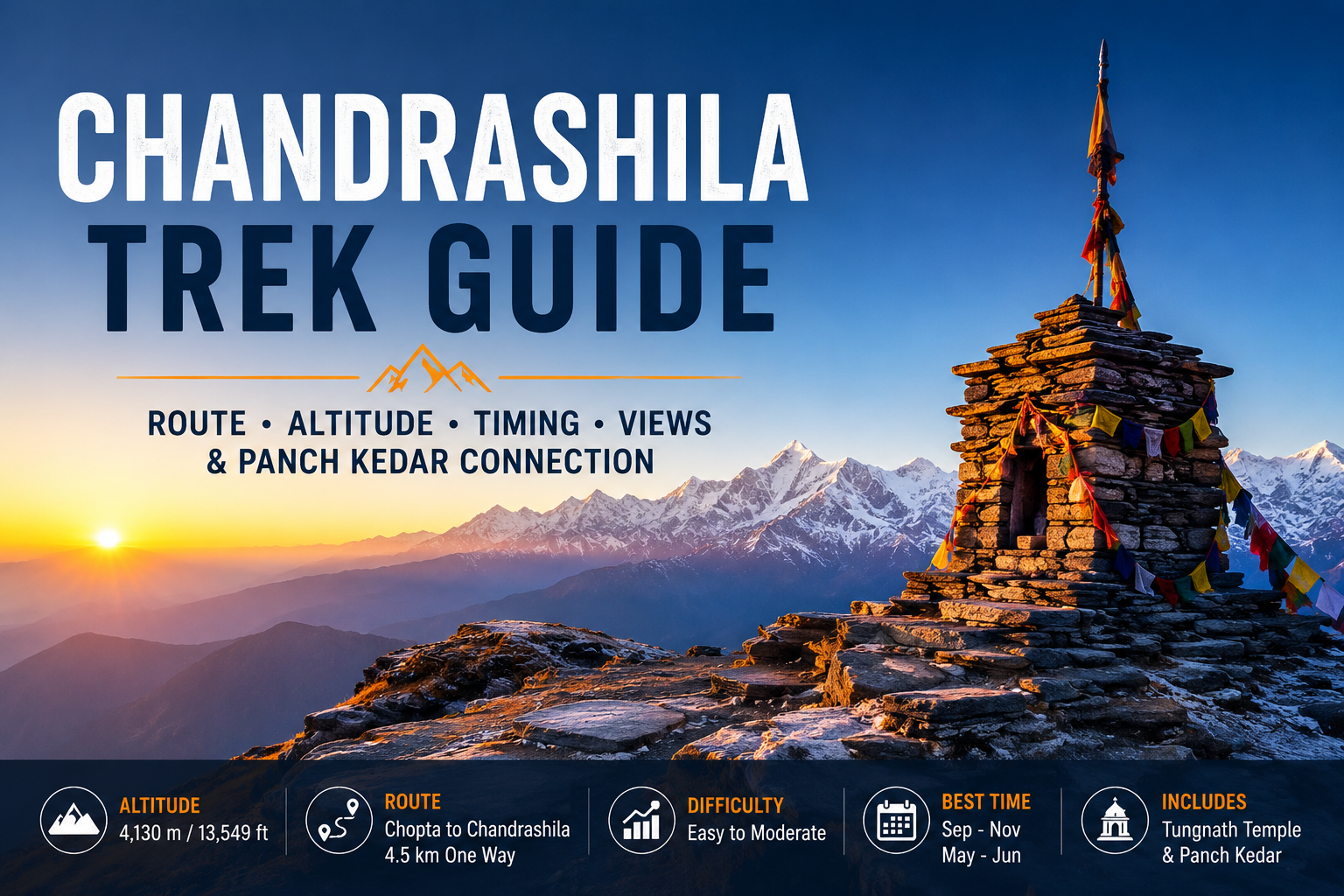
Standing at 4,130 metres as dawn spills across Nanda Devi, Trishul, and the Chaukhamba massif — Chandrashila is one of those Himalayan moments that does not need a photograph to be remembered. Chandrashila sits directly above the Tungnath temple in the Rudraprayag district of Uttarakhand, making it the highest point on the entire Panch Kedar circuit. At 13,549 feet, it is accessible yet genuinely alpine — a summit that rewards both the first-time trekker and the seasoned high-altitude explorer.
What makes this Chandrashila Trek Guide particularly compelling is that the trek suits two completely different travel styles. You can plan a quick weekend journey from Delhi, reach the summit at sunrise, and return within a couple of days. Alternatively, Chandrashila can also be experienced as part of the sacred Panch Kedar pilgrimage, serving as the high-altitude highlight of one of Uttarakhand’s most spiritually significant Himalayan circuits.
The Legend Behind Chandrashila
Every great Himalayan peak carries a story older than the trails that lead to it. According to local lore and ancient Hindu texts, this is the summit where Lord Rama came to meditate after returning victorious from Lanka, seeking peace from the weight of war. The name itself — Chandra meaning moon, Shila meaning rock — is said to derive from the summit’s crescent-shaped formation visible from the valley below.
The Tungnath temple just below the summit is dedicated to Lord Shiva and is believed to be over 1,000 years old. Together, the temple and the peak form one of the most spiritually charged locations in the Garhwal Himalayas.
Chandrashila Trek at a Glance
| Detail | Info |
| Summit Name | Chandrashila Peak |
| Altitude | 4,130 m / 13,549 ft |
| Base Camp | Chopta (2,680 m / 8,792 ft) |
| Trail Distance | 4.5 km one way (Chopta to summit) |
| Elevation Gain | ~800 m / 2,625 ft |
| Difficulty | Easy to Moderate |
| Best Months | September, October, November, May, June |
| Nearest Motorable Point | Chopta, Uttarakhand |
| Nearest Major City | Rishikesh (210 km), Haridwar (220 km) |
Chandrashila Trek Route: Chopta to Summit
The trail is well-marked, regularly used, and requires no technical climbing gear — but the altitude demands respect. Total distance from Chopta to the Chandrashila summit is 4.5 km one way.
Starting Point: Chopta (2,680 m)
Chopta is often called the “Meadow of Uttarakhand” and sits along the Ukhimath–Gopeshwar road. The trailhead begins at the Chopta forest gate, just beyond a small cluster of tea stalls and local dhabas. Parking is available for private vehicles; shared jeeps from Ukhimath or Sari village also pass through regularly.
Section 1: Chopta to Tungnath Temple — 3.5 km (approx. 2 hours)
The trail from Chopta to Tungnath is a consistent uphill walk through dense rhododendron and oak forest. The path is stone-paved in most sections, making it manageable even in light rain.
- September: Meadows flanking the trail are carpeted in Himalayan wildflowers — Brahma Kamal, Anemones, and blue Gentians.
- October–November: The same slopes carry snow, and views open dramatically as the tree line recedes.
At roughly 3,680 metres, the Tungnath temple appears — ancient, stone-built, and commanding. Spend 15–20 minutes here. During peak season, the temple caretakers open as early as 5 AM.
Section 2: Tungnath to Chandrashila Summit — 1 km (approx. 45–60 minutes)
This final kilometre is where the terrain shifts. The trail steepens noticeably and transitions from stone steps to a rocky scramble. One short section near the top requires using hands for balance — not technical climbing, but worth preparing for mentally.
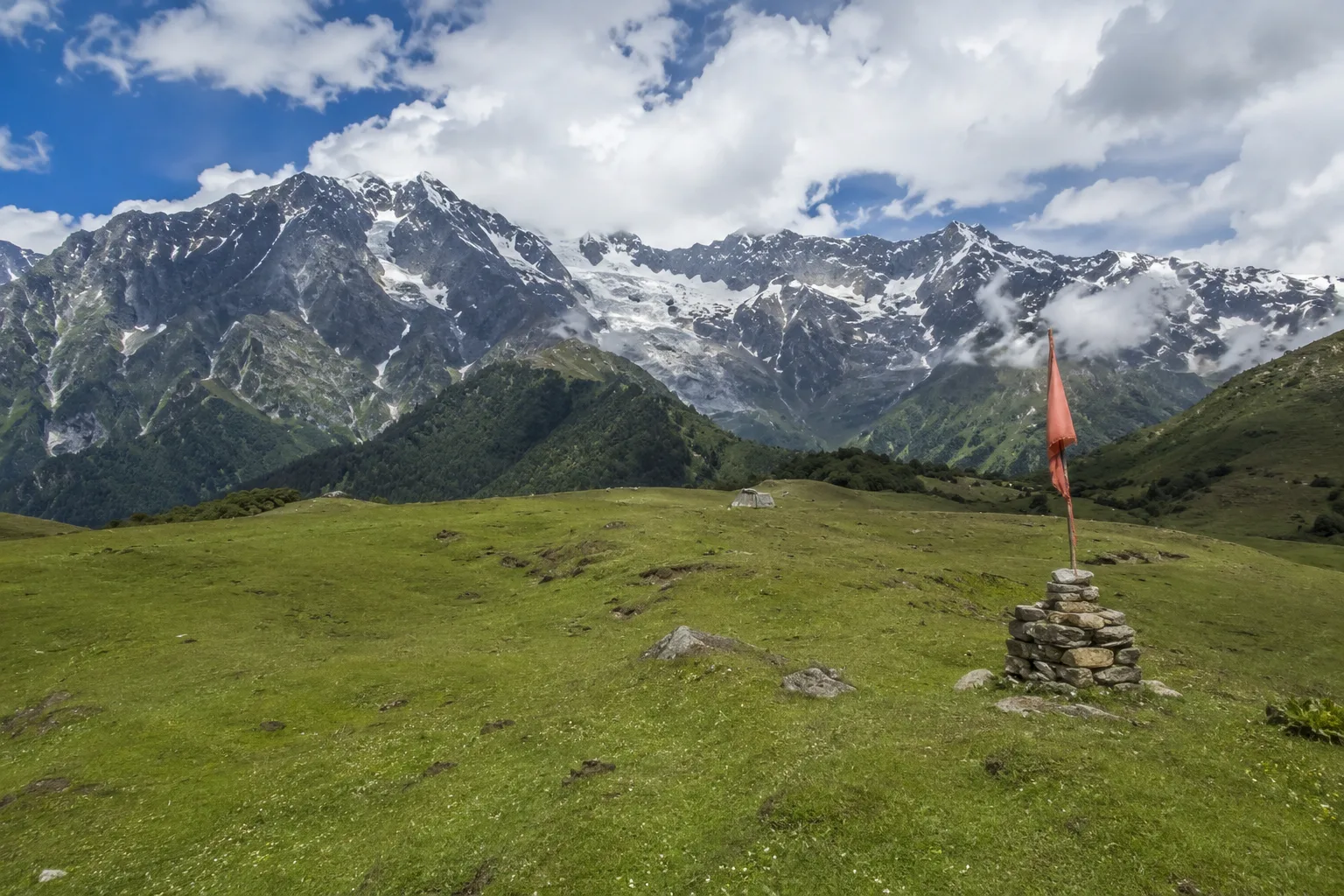
The summit is marked by a small shrine and prayer flags, with an unrestricted 360-degree panorama on clear days:
- North: Nanda Devi (7,816 m), Trishul (7,120 m), Kedarnath Peak
- West/South: Chaukhamba massif, Neelkanth, valleys of the Mandakini and Alaknanda rivers
- On exceptional days: Bandarpunch and Gangotri peaks are also visible
Sunrise at Chandrashila: Timing Your Ascent
The summit experience changes entirely depending on when you arrive. The best window for the Nanda Devi–Trishul–Chaukhamba panorama is 5:30 AM to 6:30 AM. This means leaving Chopta no later than 3:30 AM with headlamps.
Month-by-Month Summit Timing Guide
| Month | First Light | Golden Hour | Recommended Summit Arrival | Conditions |
| September | 5:50 AM | 6:10–6:40 AM | 5:45 AM | Wildflower meadows, occasional early cloud cover |
| October | 6:10 AM | 6:30–7:00 AM | 6:00 AM | Crystal-clear skies, light snowfall possible above 3,800 m |
| November | 6:30 AM | 6:50–7:20 AM | 6:15 AM | Full snow from Tungnath upward, crampons may be needed |
| May & June | 5:15 AM | 5:35–6:05 AM | 5:10 AM | Snow patches at summit, trail clear below Tungnath |
Arriving early also means beating the day-tripper crowd that arrives around 9 AM and can make the final scramble feel congested.
Best Season for Chandrashila Trek
The best season for the Chandrashila Trek is from September to November and May to June. Autumn offers crystal-clear Himalayan views, cold weather, and occasional snowfall, while summer brings pleasant temperatures, blooming rhododendrons, and accessible trails, making both periods ideal for trekking and sunrise summit experiences.
September to November — Peak Trekking Season
This is when Chandrashila earns its reputation.
- September offers lush green meadows transitioning into gold, with wildflowers at their peak and dramatic cloud formations.
- October delivers what many experienced trekkers call the finest visibility in the Garhwal Himalayas — sharp, cold air and skies that reveal peaks 200 km away.
- November brings the first deep snowfall; the summit looks genuinely alpine. Nights at Chopta drop below −10°C, and the Tungnath-to-summit section may require microspikes.
May and June — Pre-Monsoon Window
The temple reopens in April or May after winter closure. Snow at the summit is softening but still present, rhododendrons are in full bloom below the tree line, and the trail is uncrowded compared to autumn.
July and August — Monsoon (Not Recommended)
The Chopta area receives heavy rainfall during the monsoon. Landslides on the Ukhimath road are common, the trail becomes slippery, and cloud cover blocks all summit views. Most operators advise avoiding this window specifically for the Chandrashila summit.
Chandrashila and the Panch Kedar Circuit
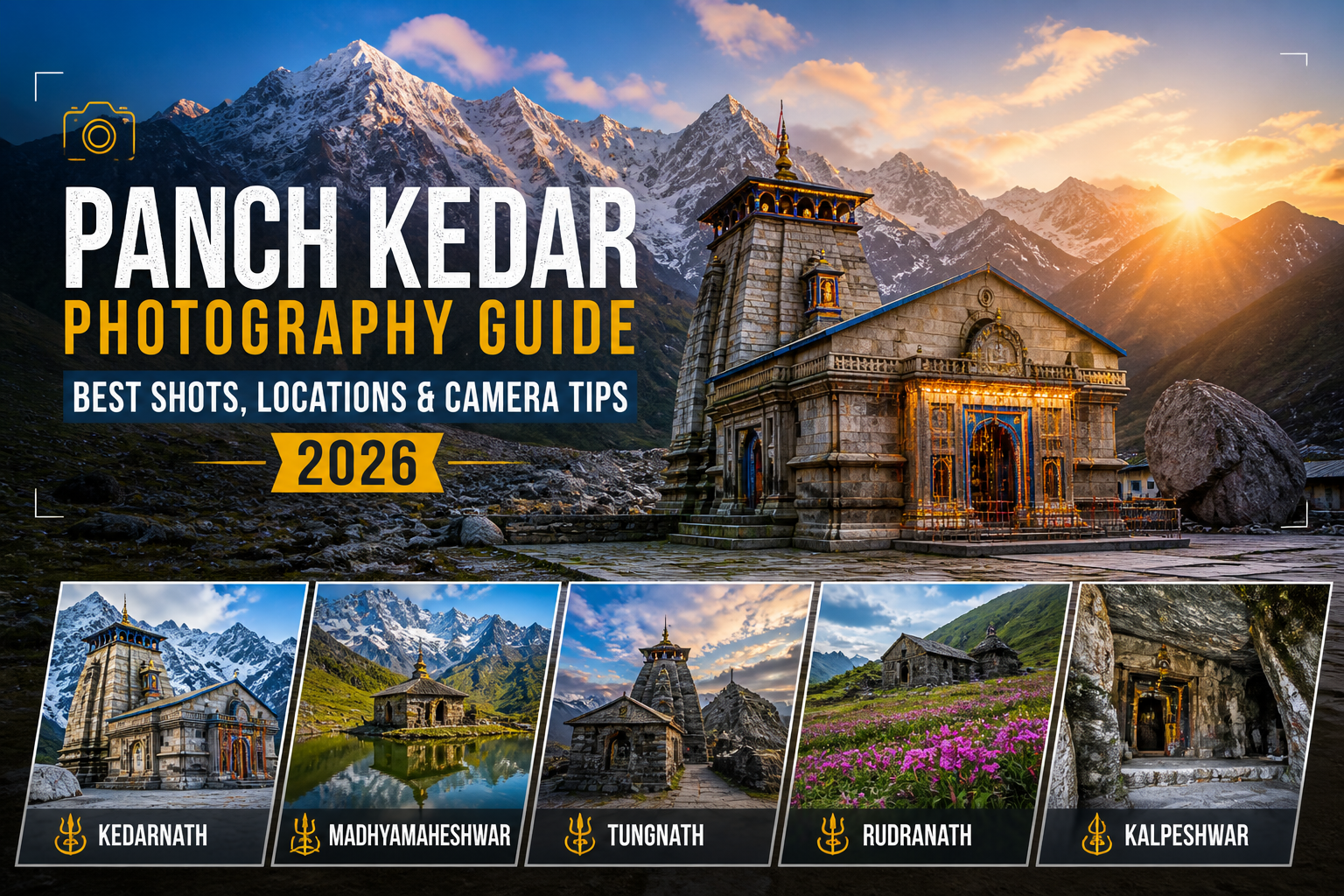
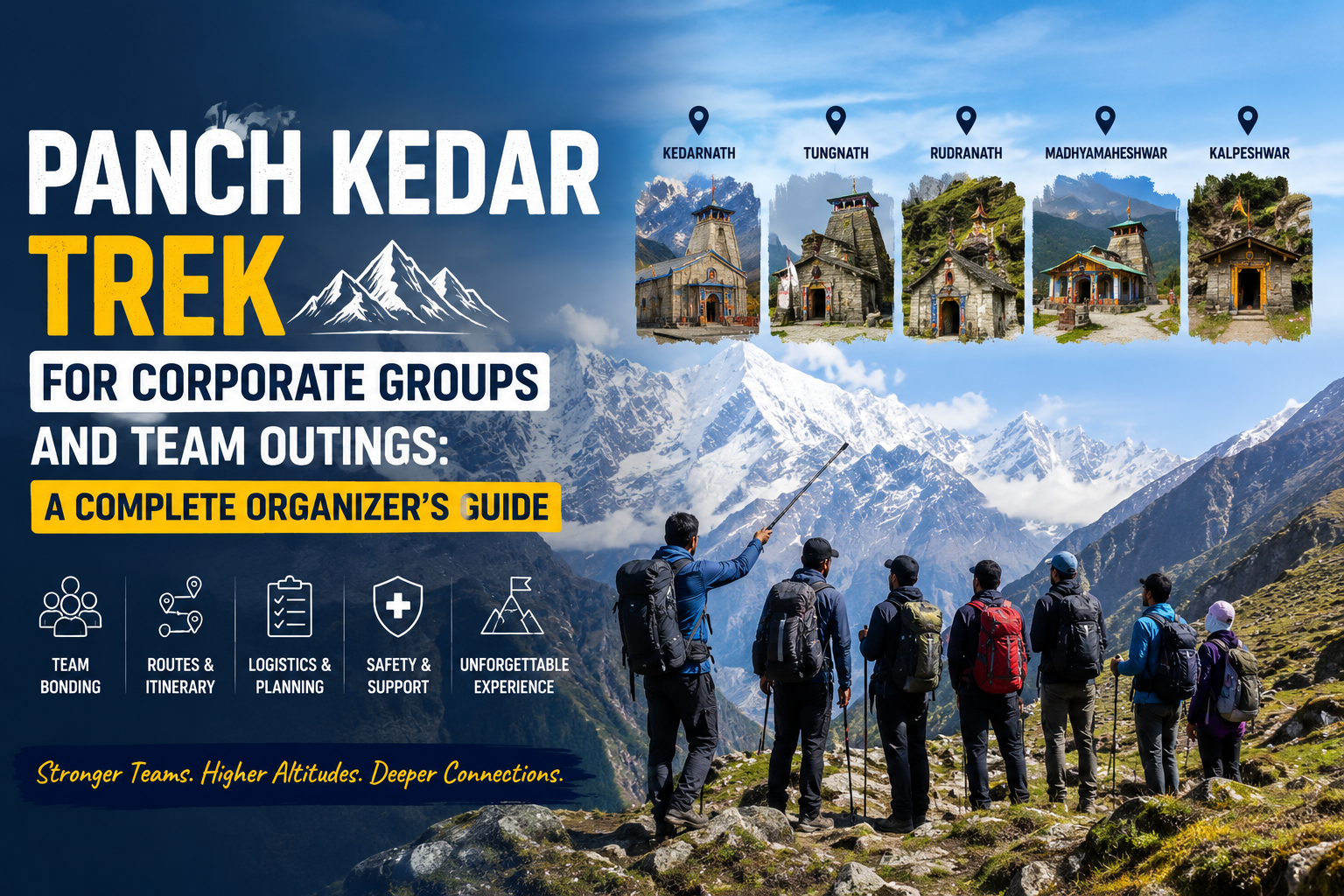
For pilgrims undertaking the full Panch Kedar circuit — visiting all five Shiva shrines of Kedarnath, Tungnath, Rudranath, Madhyamaheshwar, and Kalpeshwar — Chandrashila is typically scheduled on Day 6 or 7 of the 12 to 14-day itinerary.
Tungnath is the third Kedar in the traditional circuit sequence. Most groups spend a night at Chopta before ascending to the temple, with the Chandrashila summit added as an extension of the Tungnath day. Trekkers summit before sunrise and descend to Chopta in time for breakfast and onward movement toward Rudranath.
Why Chandrashila Is Unique on the Panch Kedar Circuit
Unlike the other four shrines nestled in valleys or deep forest, Chandrashila is fully exposed and entirely above the treeline. It is the only point on the circuit where you can see all four remaining shrines from a single vantage — a detail that pilgrims consistently find profound.
If you are still deciding whether the Panch Kedar circuit fits your fitness level and timeline, exploring the best treks in Uttarakhand will help you see how Chandrashila sits within the broader landscape of Garhwal trekking routes — from short weekend summits to multi-week pilgrimages.
Can Chandrashila Be Done as a 2-Day Trip from Delhi?
Yes — and it is one of the most practical high-altitude summit experiences available within a long weekend from Delhi.
Suggested 3-Day Itinerary from Delhi
Day 0: Overnight bus or self-drive from Delhi to Rishikesh or Haridwar.
Day 1: Drive from Rishikesh to Chopta (approx. 8–10 hours via Devprayag–Rudraprayag–Ukhimath). Arrive by evening, acclimatise, rest.
Day 2: Pre-dawn start from Chopta. Summit Chandrashila by 6:30 AM. Descend to Chopta by 10 AM. Drive back toward Rishikesh.
Day 3: Return to Delhi.
Total driving distance from Delhi to Chopta is approximately 450 km. A private cab or self-drive in a 4WD vehicle is strongly recommended from Ukhimath onward, especially from October onwards when the road surface deteriorates.
Before confirming your departure date, review your Panch Kedar trek insurance policy carefully. Medical evacuation from Chopta altitude is possible by helicopter but must be pre-arranged, and altitude sickness — while rare at 4,130 m — can escalate quickly if acclimatisation has been skipped. Most standard travel policies do not cover high-altitude trekking above 4,000 m, so verify your coverage before you travel.
The Deoria Tal Extension: An Underrated Add-On
One of the most rewarding and least-discussed extensions is combining Chandrashila with Deoria Tal, a glacial lake at 2,438 metres that reflects the Chaukhamba peaks on clear mornings.
How the Deoria Tal Loop Works
After summiting Chandrashila and descending to Chopta, instead of returning the same way toward Ukhimath, continue toward Sari village (approximately 12 km by road from Chopta). From Sari, a short 2 km trail leads to Deoria Tal.
The reflection of Chaukhamba in the still surface of the lake at sunrise is one of the defining images of Uttarakhand. Camping at Deoria Tal and driving back via Ukhimath the following morning turns a 2-day summit trip into a 3-day loop covering two completely different ecosystems — high-altitude rocky summit and mid-altitude lakeside meadow — without repeating a single trail section.
Chandrashila vs Kedarkantha: Which Trek Is Right for You?
Both are excellent — but for different trekkers. Here is an honest comparison.
| Factor | Chandrashila | Kedarkantha |
| Altitude | 4,130 m | 3,800 m |
| Time from Delhi | 2–3 days | 5–6 days |
| Best Season | Sept–Nov, May–June | December–February |
| Trail Style | Short, steep day-summit | Multi-day camping trek |
| Views | Nanda Devi, Chaukhamba group | Swargarohini, Black Peak range |
Choose Chandrashila if you have limited time and want a genuine alpine summit with cultural and spiritual depth.
Choose Kedarkantha if you want a classic multi-day snow trek with a structured camping experience.
Essential Planning Information
Planning the Chandrashila trek requires attention to weather, accommodation, permits, fitness, and gear. Proper acclimatisation, layered clothing, early bookings during peak season, and carrying essentials like trekking poles, water, and headlamps significantly improve safety, comfort, and the overall summit experience.
Permits and Entry Fees
No special trekking permit is currently required for Chopta–Chandrashila. Entry into the Kedarnath Wildlife Sanctuary (which covers the Chopta area) is managed by the forest department, and fees apply at the gate.
Accommodation at Chopta
Several small guesthouses and tent camps operate from May through November. Advance booking is essential during October due to high demand.
What to Pack
- Layered clothing and a waterproof jacket
- Trekking poles (highly recommended for the summit scramble)
- Headlamp with extra batteries
- Warm gloves and hat
- Minimum 2 litres of water
- High-energy snacks (nuts, chocolate, energy bars)
- Microspikes or crampons (November onwards)
Altitude Precautions
If coming directly from Delhi or the plains, spend at least one night at Rishikesh or Haridwar (around 300 m) before driving to Chopta. Do not ascend to the summit on the same day you arrive at Chopta if you feel any headache or breathlessness.
Mobile Connectivity
BSNL works intermittently at Chopta. No reliable signal above Tungnath.
Food Along the Trail
Tea stalls and basic dhabas at Chopta serve hot meals — dal, rice, parathas, and Maggi — throughout the trekking season. Options thin out above Chopta, so carry your own snacks for the summit push. If you are planning the full Panch Kedar circuit, the Panch Kedar food guide covers the complete eating landscape across all five shrine stops, including what to expect at high-altitude dhabas, which sections have no food available, and how to manage dietary needs on a multi-day itinerary.
Frequently Asked Questions
1. Is the Chandrashila trek difficult?
The trek is rated Easy to Moderate. The Chopta to Tungnath section is well-paved and suitable for beginners with basic fitness. The Tungnath to summit section involves steep, rocky terrain and is moderately demanding. No technical climbing is required.
2. Can Chandrashila be done in one day?
Yes, as a day trek from Chopta. The ascent takes 3–4 hours and the descent 2–2.5 hours. Starting at 3:30 AM allows a sunrise summit and return to Chopta by 10 AM.
3. What is the best month for the Chandrashila trek?
October is widely considered the best month — post-monsoon clarity, moderate temperatures, and high chances of snowfall at higher elevations without trail closure. September is excellent for wildflowers; November offers snow-covered landscapes.
4. Is a guide required for Chandrashila?
The trail is well-marked and a guide is not mandatory. However, for the pre-dawn departure in October or November, hiring a local guide from Chopta is strongly recommended for safety. Guides are available at Chopta at standard day rates.
5. How do I reach Chopta from Delhi?
The most reliable route is Delhi to Rishikesh by road or train, then Rishikesh to Ukhimath to Chopta by road. The total journey is approximately 450 km and takes 10–12 hours. Shared jeeps from Ukhimath to Chopta are available during season.
Summary
Chandrashila is far more than a short Himalayan summit trek. It combines spiritual history, high-altitude adventure, panoramic Himalayan views, and accessibility in a way few treks in Uttarakhand can match. Whether you approach it as a standalone weekend escape from Delhi or as a key part of the sacred Panch Kedar circuit, the experience remains unforgettable.
From the ancient Tungnath temple to the sunrise over Nanda Devi and Chaukhamba, every section of the trail offers something distinct. With proper planning, seasonal awareness, and basic fitness, the Chandrashila trek delivers one of the most rewarding summit experiences in the Garhwal Himalayas.
Choose Mountainiax, the best trekking agency in Uttarakhand, for expert guidance, safe routes, and unforgettable Himalayan adventures. Book your trek today and explore with confidence.