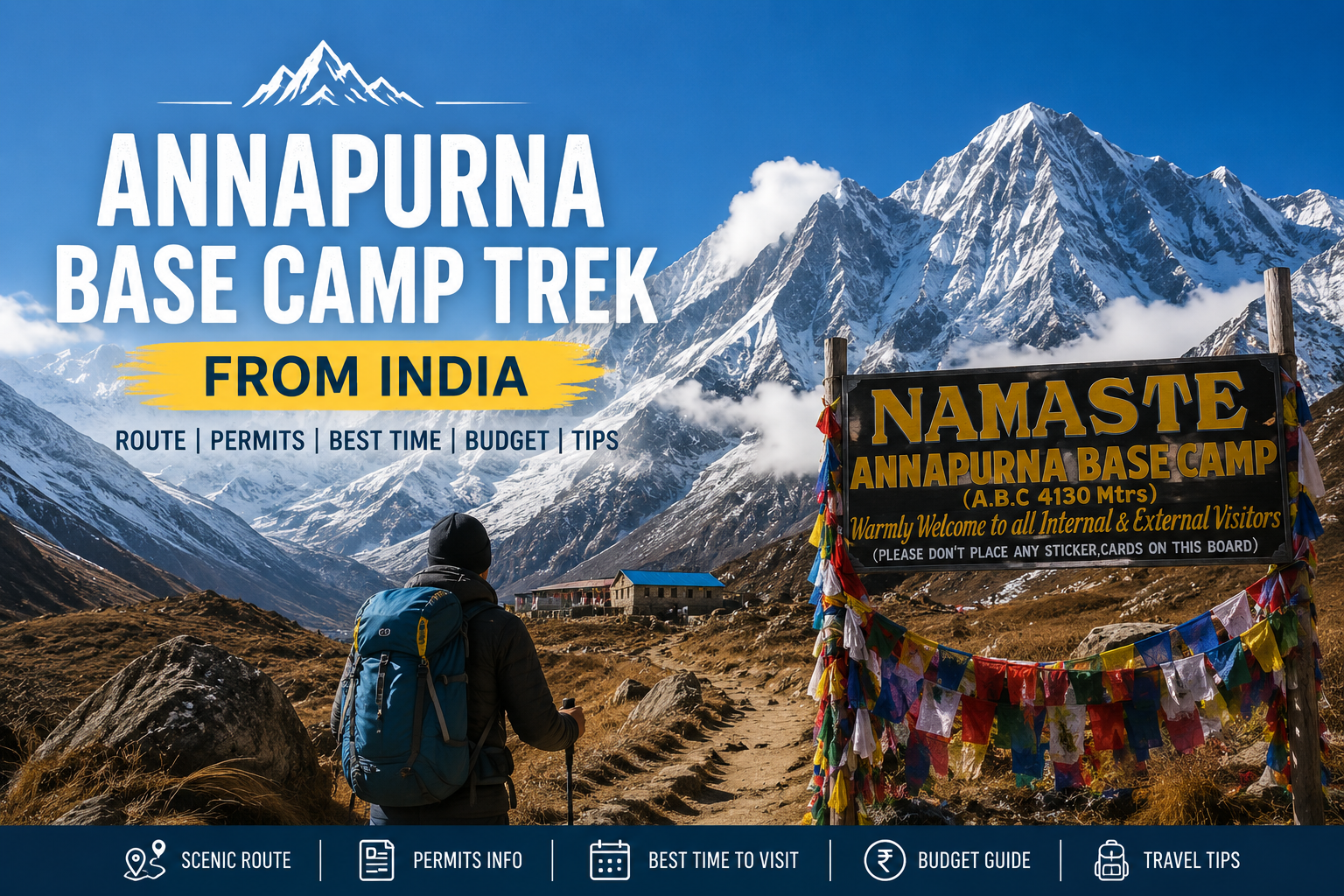
India and Nepal share one of the most unique bilateral relationships in South Asia, and that bond extends to the way citizens of both countries travel across the border. For most Indian passport holders, Nepal feels like a natural extension of the subcontinent, culturally familiar yet breathtakingly different in landscape. The allure of the Annapurna region in particular draws thousands of Indian trekkers every year, with trails that offer some of the most rewarding high-altitude walking experiences available anywhere in Asia.
Yet despite this close relationship, there is consistent confusion around what Indian travellers actually need when crossing into Nepal for a trek. Do Indians need a visa? What documents should they carry? Are there any recent changes to the entry process in 2026? These questions come up repeatedly, and getting the wrong answer before you leave home can derail your entire trip.
This guide addresses every aspect of the Nepal Visa for Indian Trekkers question in one place, with up-to-date information, practical advice, and specific guidance for those heading to the Annapurna Base Camp region. Read it before you book your flights or your permits.
Do Indian Citizens Need a Visa for Nepal?
The short answer is no. Indian citizens do not require a visa to enter Nepal. This is one of the most distinctive travel arrangements in the world, a product of the 1950 Treaty of Peace and Friendship between India and Nepal, which grants both nations’ citizens reciprocal rights of travel, residence, and work.
This means Indian trekkers can enter Nepal without a visa, without paying any entry fee, and without applying through an embassy or consulate. However, this does not mean you can travel without documentation. The confusion between “no visa required” and “no documents required” is where many travellers run into trouble at the border or airport.
The entry requirements for Indian nationals in Nepal are clear and non-negotiable, even if the process is simpler than for third-country nationals.
What Documents Do Indian Trekkers Need to Enter Nepal?
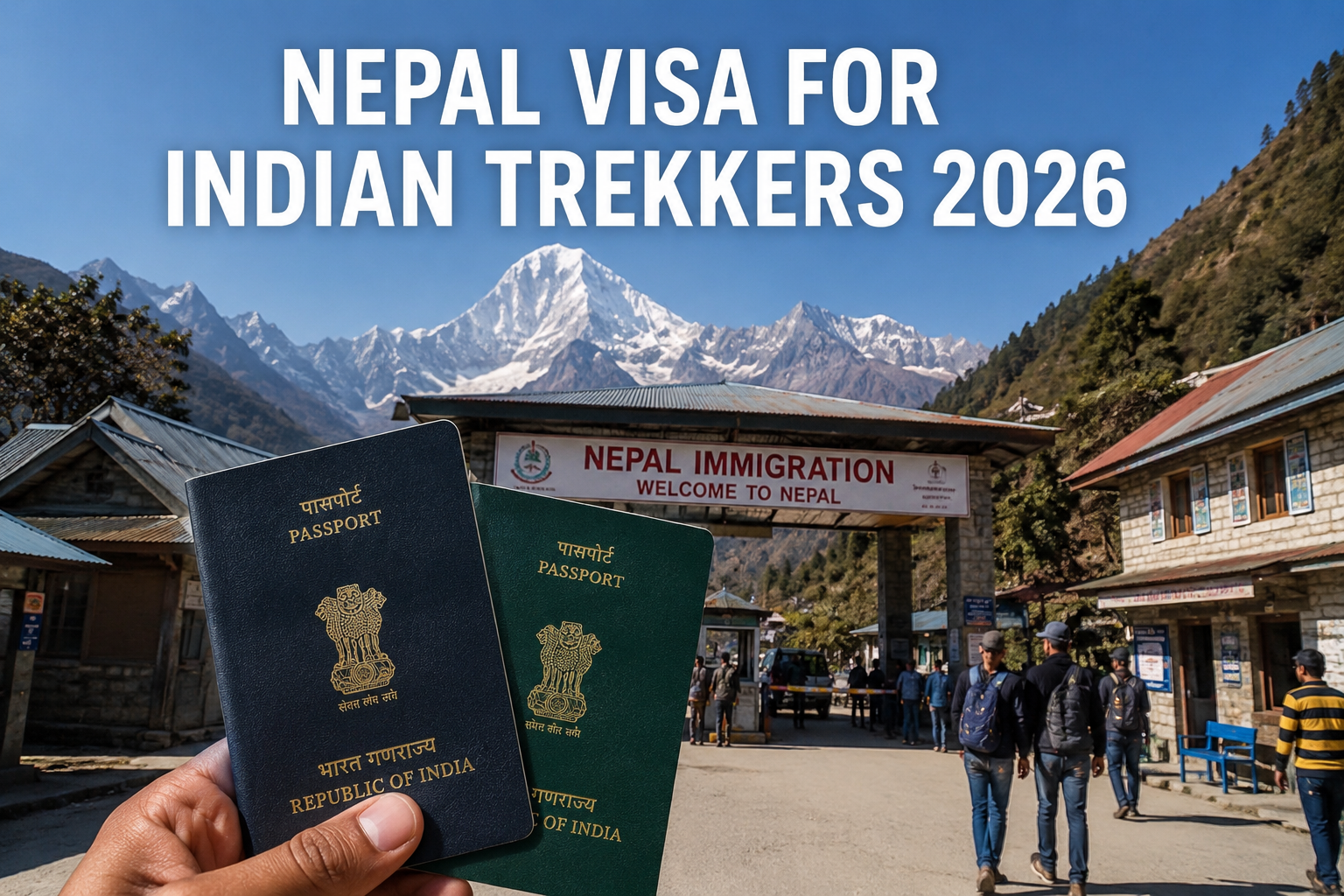
Indian trekkers entering Nepal generally need a valid government-issued photo ID such as a Passport, Voter ID, or Aadhaar (accepted at many entry points). Carry multiple photocopies, passport-size photographs, travel permits where required, and Indian trekkers entering Nepal must carry a valid government-issued photo identity document. While several documents may be accepted at certain entry points, the Voter ID Card is the most important and widely recommended document for Indian citizens crossing into Nepal, especially through land border checkpoints. It is the most consistently accepted proof of Indian citizenship by Nepalese immigration authorities.
Valid Proof of Identity
Indian travellers should carry at least one of the following valid government-issued photo identity documents:
- Voter ID Card (Election Commission of India issued) – Highly recommended and considered the most reliable document for entry into Nepal.
- Indian Passport – Valid passport accepted for both air and land travel.
- Aadhaar Card – Accepted at many land border crossings and by some domestic travel operators within Nepal, but travellers should not rely solely on Aadhaar where stricter verification may apply.
Important Note
A driving licence, PAN card, student ID, or other local identification documents are not accepted as proof of Indian citizenship at the Nepal border. To avoid delays or entry issues, travellers should carry their original Voter ID card or Passport, along with multiple photocopies and digital backups.
Additional Documents to Carry
For a smooth trekking experience, Indian trekkers should also keep:
- Multiple photocopies of identity documents
- Passport-size photographs
- Trekking permits where required
- Travel insurance documents (recommended)
- Digital copies stored securely on a phone or cloud service
Carrying a Voter ID Card along with a Passport (if available) provides the highest level of convenience and reduces the likelihood of verification issues while entering Nepal and obtaining trekking-related permits.
What About Minors Travelling Solo?
Children below 15 years of age require a birth certificate along with a parent or guardian’s identity document. For minors travelling without both parents, a notarised consent letter from the absent parent is advisable, though not always checked at borders. For a trek like Annapurna Base Camp, minors generally travel with adults, but this is worth noting if you are part of a family group.
No Visa Stamp, No Entry Fee
To be completely clear: as of 2026, Indian nationals do not receive a visa stamp when entering Nepal through any recognised entry point. There is no sticker, no fee, and no processing time. What you will encounter is an immigration check where your identity document is verified and your details may be logged in the immigration register.
H2: Entry Points into Nepal Commonly Used by Indian Trekkers
Depending on how you are travelling to Nepal for the ABC trek, your entry point will differ.
By Air
For Indian trekkers planning the Annapurna Base Camp Trek, the most common route is to fly into Kathmandu’s Tribhuvan International Airport, Nepal’s main international gateway. Although Pokhara is the actual starting hub for the Annapurna region, there are currently no widely available direct commercial flights from Indian cities to Pokhara. Most travellers first arrive in Kathmandu and then continue to Pokhara.
Indian travellers can fly directly to Kathmandu from several major cities, including Delhi, Mumbai, Bengaluru, Kolkata, and Varanasi. Airlines operating these routes include Air India, IndiGo, Nepal Airlines, Air India Express, Buddha Air, Bhutan Airlines, and other regional carriers.
From Kathmandu, trekkers typically take a 25-minute domestic flight to Pokhara, operated by airlines such as Buddha Air, Yeti Airlines, and Shree Airlines. Budget-conscious travellers may also choose a tourist bus or private vehicle, although the journey takes significantly longer.
Carry your Voter ID Card or Passport in your hand baggage, as airlines will verify your identity during check-in before departure from India. Upon arrival in Nepal, immigration and security authorities may also request to see your travel documents.
Since Pokhara serves as the gateway to the Annapurna region, most Annapurna Base Camp itineraries begin with a short flight or overland transfer from Kathmandu to Pokhara before the trek officially starts.
By Land
Common land border crossings used by Indian travellers include:
- Sonauli (Uttar Pradesh) to Bhairahawa: Popular route for those coming from North India by road or bus
- Raxaul (Bihar) to Birgunj: Used heavily by travellers from eastern India
- Banbasa (Uttarakhand) to Mahendranagar: Less commonly used but accessible for travellers from Uttarakhand and Himachal Pradesh
For trekkers heading to the Annapurna Base Camp Trek from India, the Sonauli-Bhairahawa crossing followed by a bus to Pokhara is a budget-friendly overland option that many adventure travellers choose for the scenic journey through the Terai plains.
Trekking Permits for the Annapurna Region in 2026
This is where many Indian trekkers get confused. While entry into Nepal requires no visa, trekking in the Annapurna Conservation Area requires specific permits that every trekker, Indian or otherwise, must obtain.
Annapurna Conservation Area Permit (ACAP)
The ACAP permit is mandatory for all trekkers entering the Annapurna Conservation Area, which encompasses the ABC trek route. As of 2026, the fee for SAARC nationals (which includes Indian citizens) is significantly lower than for non-SAARC nationals.
Current fee structure:
- SAARC nationals: NPR 1,000 (approximately Rs 625 Indian Rupees)
- Non-SAARC nationals: NPR 3,000
This permit is obtained from the Nepal Tourism Board office in Kathmandu or Pokhara, or from the Annapurna Conservation Area Project (ACAP) office at the trekking entry points.
TIMS Card (Trekkers’ Information Management System)
The TIMS card is a trekker registration document required for most popular trekking routes in Nepal, including the Annapurna circuit. It serves as a tracking system that helps authorities locate trekkers in case of emergencies.
As of recent updates, TIMS may be waived for certain routes within the Annapurna region, as the ACAP permit has been consolidating some of these functions. However, always verify the current requirement at the time of your trek with the Nepal Tourism Board or your trekking agency, as these regulations have been subject to change in 2025 and 2026.
Where to Get These Permits
- Nepal Tourism Board office, Kathmandu (Pradarshani Marg, near Bhrikutimandap)
- ACAP office, Pokhara (Damside area)
- Online pre-registration is being phased in; check the Nepal Tourism Board’s official website for the latest updates
Carry passport-size photographs (minimum two) and a copy of your identity document when collecting permits in person.
Currency, SIM Cards, and Practical Pre-Trek Preparations
While not strictly a visa or documentation matter, these practical elements directly affect your experience crossing from India into Nepal.
Currency
The official currency of Nepal is the Nepalese Rupee (NPR). Indian travellers can carry Indian Rupees and exchange them at banks, authorised money changers, and exchange counters in Kathmandu and Pokhara.
Indian currency is widely recognised in Nepal, particularly in tourist areas and border regions. Following recent regulatory changes, ₹100, ₹200, and ₹500 Indian notes are generally accepted and can be carried by travellers within the permitted limits. However, acceptance may vary in remote mountain villages, so carrying Nepalese Rupees is always recommended once you reach Kathmandu or Pokhara.
Nepal maintains a fixed exchange rate of approximately ₹1 = NPR 1.60, making currency conversion straightforward for Indian travellers.
For the Annapurna Base Camp Trek, carry sufficient cash in smaller denominations because ATMs become scarce after leaving Pokhara, and many teahouses do not accept cards or digital payments.Indian Rupees are widely accepted in Nepal, but only in denominations of Rs 100 and below. Rs 200, Rs 500, and Rs 2,000 notes are not accepted in Nepal. Exchange Indian currency for Nepali Rupees at authorised money changers in Kathmandu or Pokhara. The exchange rate is fixed at approximately 1 Indian Rupee to 1.6 Nepali Rupees.
Mobile Network and SIM Cards
Your Indian SIM card may work in Nepal on roaming, but rates can be high and coverage is inconsistent in the Annapurna hills. A local Nepali SIM from Ncell or Nepal Telecom is strongly recommended for trekkers who want reliable network access in Pokhara and lower sections of the trail. Ncell has the widest coverage on the ABC route up to certain elevations.
Travel Insurance
Travel insurance that covers high-altitude trekking and helicopter evacuation is not a requirement for entry but is non-negotiable from a safety standpoint. The ABC trek altitude peaks at Annapurna Base Camp at 4,130 metres, and altitude-related emergencies requiring helicopter evacuation can cost upward of USD 3,000 without insurance. Many Indian credit cards and travel policies now offer adventure trekking coverage. Verify the altitude limit before purchasing.
If you are still in the planning stages and exploring route options, the Complete Guide of Annapurna Base Camp on Mountainiax covers the full trail breakdown, daily itinerary, difficulty ratings, and what to expect at each campsite along the route. It is a useful companion to this visa and documentation guide.
Common Mistakes Indian Trekkers Make at the Nepal Border
Many Indian trekkers face delays at the Nepal border due to incomplete documents, insufficient ID copies, ignoring permit requirements, carrying restricted items, or lacking cash for local expenses. Proper preparation, document verification, and understanding border regulations help ensure a smooth entry process.
Carrying Only a Driving Licence
A driving licence does not prove Indian citizenship. It is not accepted as a standalone entry document at Nepal immigration. Always pair it with a voter ID, Aadhaar, or passport.
Assuming Aadhaar Works Everywhere
Aadhaar is accepted at most land borders and by airlines but has occasionally been flagged at Tribhuvan Airport due to inconsistencies in the information field (some Aadhaar cards do not explicitly state “India” as nationality). Carrying a voter ID or passport alongside your Aadhaar eliminates this risk entirely.
Not Obtaining Trekking Permits in Advance
During peak trekking season, the ACAP permit office in Pokhara can have queues. Spending half a day on permit paperwork when you should be resting before the trek is a common frustration. If your trekking agency in Pokhara can handle permit collection, it is worth using that service.
Exchanging Rs 500 or Rs 2,000 Notes After Crossing
Trekkers who carry larger denomination Indian notes find themselves unable to use or exchange them in Nepal. Sort your currency before you cross. ATMs in Kathmandu and Pokhara dispense Nepali Rupees and accept most Indian debit and credit cards.
Planning the ABC Trek as an Indian Trekker: Where to Begin
The documentation and visa clarity is the foundation, but planning the trek itself is equally important. The Annapurna Base Camp Trek from India is one of the most well-established international treks undertaken by Indian adventure travellers, with a strong network of guides, teahouses, and trekking agencies catering specifically to Indian trekking groups and solo travellers.
Key decisions you will need to make include:
- Trek duration: The standard ABC trek takes 10 to 14 days from Pokhara and back. A shorter version via Jhinu Danda is possible in 7 to 9 days for those with limited leave.
- Guide or solo: Solo trekking is permitted in the Annapurna region, unlike some other Himalayan routes. However, hiring a local guide significantly improves safety, cultural experience, and navigation confidence.
- Agency or self-planned: Indian trekkers who book through a Nepal-based or India-based trekking agency typically have permits, teahouse bookings, and transportation sorted. Independent trekkers handle these themselves and have more flexibility but require more preparation time.
- Physical preparation: The ABC route is classified as moderate. It does not require technical climbing skills, but daily walking of 5 to 8 hours on steep trails demands basic fitness. Begin a 6 to 8 week conditioning programme before your trek date.
Timing your visit is equally critical. Understanding the Best Time to Trek Annapurna Base Camp is essential to having a safe and rewarding experience. October to November is widely considered the golden window, offering stable skies, clear mountain views, and manageable temperatures at altitude. March to April is the second-best period, when rhododendron forests along the trail bloom in vivid reds and pinks. Both monsoon season (June to August) and deep winter (December to February) present significant challenges for the ABC route and are generally not recommended for first-time trekkers.
2026 Updates: What Has Changed for Indian Trekkers?
Several developments in 2025 and early 2026 are worth noting for Indian travellers heading to Nepal.
- The Pokhara International Airport has expanded its flight connectivity, with direct services from Delhi, Mumbai, and Bengaluru now more frequent than before. This reduces the need for a Kathmandu stopover for trekkers heading directly to the Annapurna region.
- The Nepal Tourism Board has been piloting a digital permit system that allows advance registration online. Physical permit collection is still required in most cases, but the process is faster when pre-registered.
- SAARC discount structures on trekking permits have been maintained into 2026, with no announced fee hikes for Indian nationals as of publication.
- The Annapurna Sanctuary trail has seen infrastructure improvements, with newer teahouses at Deurali and Machhapuchhre Base Camp offering better facilities for all trekkers.
Always check the Nepal Tourism Board’s official website or contact a registered trekking agency for the most current updates immediately before travel, as permit structures and entry regulations in Nepal can change with limited advance notice.
Frequently Asked Questions
1. Do Indian citizens need a visa to go to Nepal for trekking?
No. Indian citizens are exempt from Nepal’s visa requirement under the bilateral treaty between the two countries. You only need a valid government-issued photo identity document such as a passport, voter ID, or Aadhaar card.
2. Is Aadhaar card enough to enter Nepal from India?
Aadhaar is accepted at most land borders and by airlines operating India-Nepal routes. However, carrying a passport or voter ID alongside your Aadhaar is advisable to avoid any inconsistencies at Tribhuvan Airport’s immigration counter.
3. What is the cost of ACAP permit for Indian trekkers in 2026?
SAARC nationals, including Indian citizens, pay NPR 1,000 for the Annapurna Conservation Area Permit. This is roughly equivalent to Rs 625 and significantly lower than the fee for non-SAARC nationals.
4. Can Indian travellers use Indian Rupees in Nepal?
Yes, but only denominations of Rs 100 and below are accepted. Higher denomination notes (Rs 200, Rs 500, Rs 2,000) are not valid currency in Nepal. Exchange before crossing or at authorised money changers in Kathmandu or Pokhara.
5. Do I need a TIMS card for the Annapurna Base Camp trek?
TIMS requirements for the Annapurna region have been subject to change with the consolidation of the ACAP permit system. Verify the current requirement with the Nepal Tourism Board or your trekking agency at the time of planning.
Final Thoughts and Call to Action
The documentation barrier between Indian trekkers and Nepal is genuinely minimal, which is one of the many reasons the Annapurna Base Camp trail remains a top choice for Indian adventure travellers. No visa, no fee, no advance embassy appointment. What matters most is that you carry the right identity documents, secure your trekking permits before you hit the trail, plan your trek with the right seasonal window in mind, and respect the mountain environment you are entering.
At Mountainiax, we specialise in helping Indian trekkers plan their Nepal adventures with the clarity and confidence that comes from on-ground experience. Whether you are heading out solo or as part of a group, our guides, itineraries, and permit assistance services are built specifically for Indian travellers navigating the Annapurna region.
With the Annapurna Base Camp Trek 2026 season approaching, now is the perfect time to plan an unforgettable Himalayan adventure. Surrounded by snow-covered peaks, diverse landscapes, and authentic mountain culture, the Annapurna Base Camp Trek offers an experience far beyond an ordinary trek—it becomes a lifetime memory filled with challenge, beauty, and achievement. To make your journey smooth, safe, and well-organised, choose a trusted trekking company for expertly designed trek packages, detailed itineraries, and hassle-free booking assistance.
Visit this page for Trek Packages, Itinerary & Booking.