The Annapurna Base Camp Trek is one of the most sought-after Himalayan adventures in the world, drawing thousands of trekkers every year through terraced farmlands, rhododendron forests, and glacial valleys. But while most people research altitude, permits, and gear before setting off, far fewer think carefully about what they will actually eat during ten to fourteen days on the trail. Food matters enormously on a high-altitude trek. It is your fuel, your comfort after a hard day’s climb, and often your only source of warmth when the temperatures drop after sunset.
Understanding Food on the Annapurna Base Camp Trek before you go helps you set realistic expectations, pack smarter, and make better choices along the route. The tea house network along this trail is impressively developed, and you will rarely go hungry. However, the menus change as you gain altitude, prices shift, and the food itself follows a logic deeply rooted in Nepali mountain culture. Knowing what to expect transforms a potential source of anxiety into one of the most enjoyable parts of the experience.
This guide covers everything from what tea house menus look like at different elevations, to the cultural significance of dal bhat, to practical tips on staying energised and healthy throughout your trek. Whether you are a first-time Himalayan trekker or returning for another adventure in the Annapurna Sanctuary, this is your complete food guide for the trail.
What Are Tea Houses and How Does the Food System Work?
Tea houses, locally called bhattis or lodge-restaurants, are the accommodation and dining backbone of the Annapurna Base Camp route. They are family-run guesthouses that offer a bed and a menu of cooked meals throughout the day. Unlike more remote Himalayan routes where trekkers carry camping supplies, the ABC trail is well-serviced, meaning you do not need to carry your own food at all.
Each tea house has a central dining hall where trekkers gather to eat, drink hot beverages, and warm themselves by a wood or gas stove. The kitchen is usually attached or adjacent, and meals are cooked to order. Do not expect fast food speed. A meal can take twenty to forty minutes, sometimes longer if the lodge is full. Patience is part of the experience.
The tea house menu system works on a standard laminated card model. Every lodge along the trail carries a similar menu, often with identical structure, covering breakfast, lunch, dinner, snacks, and drinks. Prices are regulated along the popular sections of the trail, but you will still notice prices climbing as you gain altitude, primarily because everything in remote areas must be carried in by porter or mule.
What Is Dal Bhat and Why It Dominates the Trail?
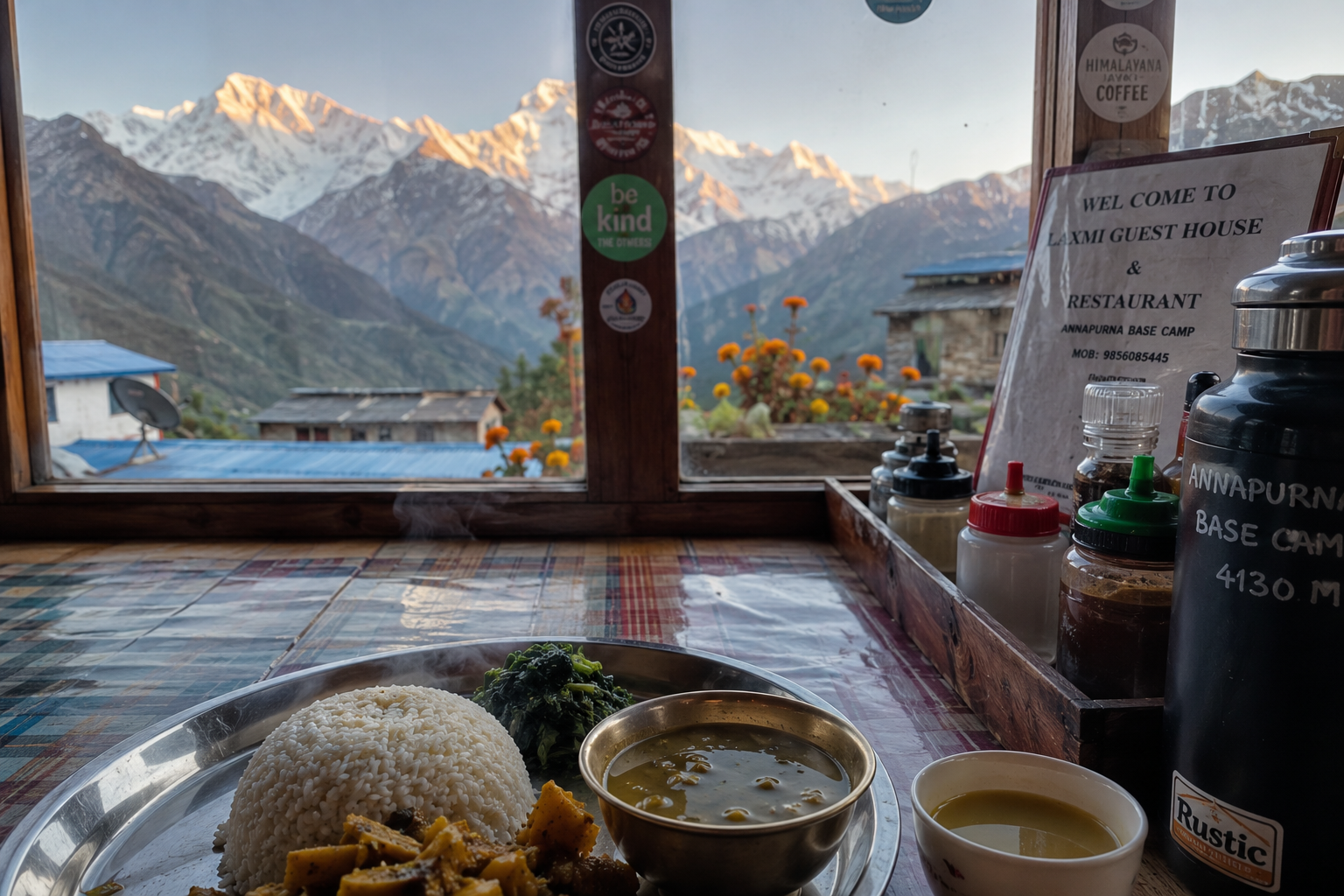
Dal bhat is Nepal’s national dish and the undisputed king of trek food on the Annapurna circuit and base camp routes. It consists of steamed rice, lentil soup, a rotating vegetable curry, pickled condiments called achar, and sometimes a small portion of meat or fried egg. It is nourishing, well-balanced, high in carbohydrates and protein, and perfectly calibrated for the physical demands of high-altitude trekking.
The phrase most beloved among trekkers is: “Dal bhat power, twenty-four hour.” It is both a joke and a sincere tribute. Porters who carry loads of thirty to forty kilograms up steep mountain trails typically eat dal bhat twice a day, and that alone speaks to its nutritional efficiency.
What makes dal bhat exceptional value on the trail is the refill rule. In almost every tea house, when you order dal bhat, the rice, lentil soup, and vegetables are unlimited. You can ask for more, and they will bring it. This makes it the best caloric deal on the menu, especially at higher altitudes where your body burns calories at a dramatically faster rate to stay warm and keep moving.
Dal bhat is also the safest food choice from a food safety perspective. Because it is cooked thoroughly at high heat, the risk of stomach illness is lower than with raw salads, cold items, or foods prepared with unboiled water. Experienced trekkers and guides consistently recommend dal bhat as your primary meal, particularly once you are above Chhomrong.
Beyond nutrition, ordering dal bhat is a cultural act. It supports the local food economy, it connects you to the daily rhythm of Nepali mountain life, and it shows a respect for the culture you are moving through. Many trekkers who start the trip planning to eat pasta and pizza every night discover by day three that dal bhat is what they crave most.
Tea House Menu Breakdown: What You Can Order at Different Stages
Lower Trail: Nayapul to Chhomrong
At the lower elevations of the trek, from the starting point near Nayapul through Tikhedhunga, Ulleri, Ghorepani, and down toward Chhomrong, the tea house menus are at their most varied and the cooking at its most elaborate. You are still within reasonable supply chain distance of Pokhara, so ingredients are fresher and more diverse.
Breakfast options typically include:
- Porridge made with oats, sometimes served with honey, banana, or apple
- Pancakes, often made with buckwheat flour, with jam or honey
- Tibetan bread, a fried dough bread served with butter and jam
- Eggs prepared any style, from fried to omelette with vegetables or cheese
- Muesli with hot or cold milk
- Toast with peanut butter, jam, or Nepali honey
- Chapati with curry, especially popular among local workers
Lunch and dinner options in the lower section include:
- Dal bhat in its full form
- Noodle soups, both Tibetan thukpa and lighter broth-based noodles
- Fried rice with vegetables or egg
- Pasta with tomato or garlic butter sauce
- Pizza, basic but satisfying at places like Ghorepani and Chhomrong
- Mo:mo, the Nepali steamed dumpling filled with vegetables or buff (water buffalo)
- Macaroni in soup or pan-fried
- Spring rolls and garlic bread at some lodges
Soups are popular and warming, including tomato soup, vegetable soup, and garlic soup. Garlic soup deserves a special mention. Beyond being flavourful and comforting, garlic is widely believed among mountain communities to aid acclimatisation and circulation at altitude. Whether or not the science fully supports this, the warming effect and the taste make it a favourite.
Hot drinks available throughout the trail include:
- Black tea, milk tea, ginger tea, and lemon tea
- Masala chai made with spices
- Instant coffee, which is the standard on the trail
- Hot lemon with honey, a go-to for sore throats and cold mornings
- Hot chocolate, available at most lodges but quality varies
- Tongba, a fermented millet drink served warm in bamboo containers, popular in lower lodges
If you are interested in the full range of gear and essentials needed for the trek, including snacks and personal supplies to carry, a detailed Annapurna Base Camp Packing List will give you a comprehensive breakdown of what experienced trekkers bring from home.
Mid-Trail: Bamboo to Deurali
As you pass through the Modi Khola gorge section, moving through Bamboo, Doban, Himalaya Hotel, and Deurali, the trail narrows and supply logistics become more demanding. Tea house menus simplify noticeably. You will still find dal bhat, noodles, fried rice, and basic egg dishes, but pizza disappears, fresh vegetables become less common, and portions may feel smaller.
This is the zone where dal bhat becomes the smart default choice. The lentils and rice are shelf-stable and easy to transport, so quality remains consistent. Meat dishes are available but should be approached with more caution. Buff (water buffalo) and chicken are the most commonly offered proteins. Chicken at this altitude is often frozen and carried up from lower villages, which is fine if cooked thoroughly, but less ideal than the freshly sourced products you find in lower lodges.
Snack options narrow here too. Biscuits, chocolate bars, and energy bars are available but at higher prices. A Mars bar or Snickers that costs forty rupees in Kathmandu might cost two hundred and fifty rupees at Deurali. Budget for this if you rely on commercial snacks for energy between meals.
Hydration becomes increasingly important in this section. Bottled water is available but environmentally damaging and expensive. Most tea houses offer boiled water or have access to filtered water with a small charge. Bringing a water bottle and purification tablets or a filter from your Annapurna Base Camp Packing List significantly reduces both cost and plastic waste.
Upper Trail: Machhapuchhre Base Camp and Annapurna Base Camp
At Machhapuchhre Base Camp, sitting at approximately 3,700 metres, and Annapurna Base Camp at 4,130 metres, the food options are at their most stripped back. You are in glacial terrain, far from any road, and everything on your plate has been carried up by a human being. This context deserves appreciation.
Dal bhat remains available and remains the best option. Noodle soups are common and warming. Fried rice is a staple. Simple egg dishes are prepared most mornings. The menus are short, the cooking is basic, and that is completely appropriate given the altitude and supply constraints.
What changes most at these elevations is your appetite. Many trekkers find that altitude suppresses hunger. You may not feel like eating a full plate of rice, but your body still needs fuel. Soups, noodles, and porridge are easier to manage when appetite is low. Listen to your body but make yourself eat, even in small amounts, to maintain energy and aid acclimatisation.
Beverage selection at ABC and MBC focuses on hot drinks. Ginger tea, lemon honey tea, and hot lemon with ginger are popular for their warming and soothing properties. Coffee quality drops at this altitude, as instant coffee is the only option. Alcohol is available but strongly discouraged at altitude, as it accelerates dehydration and impairs your body’s ability to acclimatise.
Food Safety and Stomach Health on the Trail
Stomach illness is one of the most common reasons trekkers struggle on the Annapurna Base Camp route. The combination of unfamiliar food, altitude effects, possible water contamination, and general fatigue creates real risk. The following practices help protect your gut:
Stick to cooked food: Raw salads, unpeeled fruits, and cold foods carry higher contamination risk, particularly at lodges with limited refrigeration.
Drink safe water only: Use filtered, boiled, or purified water consistently. Never drink directly from streams, taps, or bottles of unknown origin.
Favour dal bhat: Its thorough cooking process makes it consistently safer than mixed dishes.
Be cautious with meat above Chhomrong: The further up the trail, the longer meat has been in transit. Order it only if it arrives piping hot and smells fresh.
Carry rehydration salts: If you do get an upset stomach, rehydration salts dissolved in safe water are your first line of defence.
Wash hands before every meal: Many lodges provide soap and water basins outside the dining area. Use them consistently.
Many trekkers carry a small pharmacy kit that includes antidiarrheal medication, antacids, and water purification tablets. These, combined with sensible food choices, dramatically reduce the likelihood of losing days to illness.
The Cultural Significance of Eating in Tea Houses
Sharing a meal in a Nepali tea house is more than a logistical transaction. The families who run these lodges have often lived in these mountains for generations. The food they serve, particularly dal bhat, represents a way of life tied to land, seasons, and hard work. When you sit down in a tea house dining hall, you are briefly entering that world.
It is good practice to greet the hosts, to thank the cook, and to be patient about waiting times. The kitchen may be small, the gas supply limited, and the cook may also be responsible for running every other aspect of the lodge. Tipping is appreciated but not obligatory. A small tip for good service is a warm gesture.
To understand more about the sacred geography you are moving through, including the cultural and spiritual meaning of the high sanctuary at the heart of this trek, exploring the question of What Is the Annapurna Sanctuary? gives a rich perspective on why this place holds such deep significance for local communities and mountain peoples.
Dietary Requirements on the Trail: Vegetarian, Vegan, and Gluten-Free
The Annapurna Base Camp route is one of the more accommodating trekking trails in the Himalayas for diverse dietary needs.
Vegetarian trekkers are very well served. Dal bhat in its standard form is vegetarian. Most noodle soups, fried rice, and pasta dishes are made with vegetables and eggs. Egg dishes are available at virtually every lodge on the route.
Vegan trekkers can manage reasonably well but need to communicate clearly. Dal bhat without egg is vegan. Many soups and noodle dishes can be made without dairy if requested. The challenge increases at higher elevations where menu options shrink. Planning ahead and being willing to eat simple dishes makes the experience more comfortable.
Gluten-free trekkers often face the greatest dietary challenges on the trail. Dal bhat, made with rice and lentils, is naturally gluten-free and is usually the safest option. However, in small teahouse kitchens, avoiding cross-contamination can be difficult. Foods such as momos, noodles, pasta, and Tibetan bread are typically made with wheat and should be avoided by those with gluten sensitivity or celiac disease. It is helpful to communicate your dietary requirements in writing and learn a few basic Nepali phrases related to gluten intolerance before your trek.
Budget Planning for Food on the Trek
Food costs on the Annapurna Base Camp Trek are reasonable by global standards but vary significantly depending on where you are on the trail. As a general framework:
- In lower trail lodges from Tikhedhunga to Chhomrong, breakfast costs roughly three to five US dollars, lunch and dinner range from four to seven dollars each, and hot drinks average one to two dollars.
- In mid-trail lodges from Bamboo to Deurali, prices increase by roughly thirty to fifty percent compared to lower elevations.
- At MBC and ABC, prices are highest. A plate of dal bhat might cost eight to ten dollars, and a simple hot drink can reach two to three dollars.
A realistic daily food budget for most trekkers ranges from fifteen to twenty-five US dollars per day, depending on how much you eat, your drink habits, and your altitude on any given day. Carrying some small-denomination Nepali rupee notes is important, as cash is the only payment method and ATMs do not exist above Chhomrong.
Snacks to Carry from Home or Pokhara
While tea houses cover your main meals, having personal snacks is genuinely useful for long ascent days, early morning starts before breakfast is served, and moments when altitude suppresses your appetite for a full meal.
Useful snacks to pack from Pokhara or bring from home include:
- Energy bars or protein bars
- Nut and dried fruit mixes
- Dark chocolate
- Instant oats in individual sachets
- Electrolyte powder packets
- Peanut butter in a small container
- Herbal tea bags for personal preference
These lightweight additions complement the tea house food system without adding meaningful weight to your pack. They are particularly valuable on summit day from MBC to ABC and the long descent that follows.
Frequently Asked Questions
1. Is the food safe to eat on the Annapurna Base Camp Trek?
Yes, generally safe when you make sensible choices. Stick to thoroughly cooked meals, avoid raw salads and unpeeled fruit, drink only boiled or purified water, and prioritise dal bhat for its consistent cooking standards. Stomach issues are common on the trail but largely preventable with careful habits.
2. Can I eat enough food to stay energised at high altitude?
Yes, though altitude can suppress appetite. Force yourself to eat regularly even if hunger is reduced. Dal bhat, noodle soups, and porridge are all calorie-dense enough to fuel your trekking days when consumed consistently.
3. Are there vegetarian options at every tea house?
Yes. Vegetarian food is available at every stage of the trek. Dal bhat is inherently vegetarian, and egg dishes, noodle soups, and fried rice are universally available. Vegan options are manageable with clear communication.
4. How much should I budget for food per day?
Budget fifteen to twenty-five US dollars per day for food and drinks. This covers three meals, hot drinks, and occasional snacks from the tea house. The upper end applies to higher altitude lodges where supply costs are higher.
5. Should I carry my own food or can I rely on tea houses?
You can rely entirely on tea houses for all meals along the standard Annapurna Base Camp route. Personal snacks for energy between meals and at altitude are useful supplements but not essential for survival.
Summary
Understanding the food landscape of this trek turns one of the practical unknowns into a genuine pleasure. The dal bhat culture, the warmth of a tea house dining room after a hard day’s climb, the ginger tea steaming in your hands as the Himalayas turn golden at sunset: these are among the defining memories of the Annapurna Base Camp experience.
If you are ready to plan your trek in full detail, explore the complete trekking resources at mountainiax.com, where you will find route guides, gear advice, permit information, and everything else you need to prepare for one of the most extraordinary walks in the world. The mountains are waiting. Your bowl of dal bhat is already on the stove.
With the Annapurna Base Camp Trek 2026 season approaching, now is the perfect time to plan an unforgettable Himalayan adventure. Surrounded by snow-covered peaks, diverse landscapes, and authentic mountain culture, the Annapurna Base Camp Trek offers an experience far beyond an ordinary trek—it becomes a lifetime memory filled with challenge, beauty, and achievement. To make your journey smooth, safe, and well-organised, choose a trusted trekking company for expertly designed trek packages, detailed itineraries, and hassle-free booking assistance.
Visit this page for Trek Packages, Itinerary & Booking.