Most trekkers planning the Panch Kedar pilgrimage circuit begin their research in Rishikesh — booking hotels, hiring cabs, and drawing up routes from there. It feels logical on paper. But Rishikesh sits nearly 200 kilometres from the nearest trek base, and tackling a five-shrine circuit from that far out means burning half your days in transit. For a journey this demanding, your base matters as much as your boots.
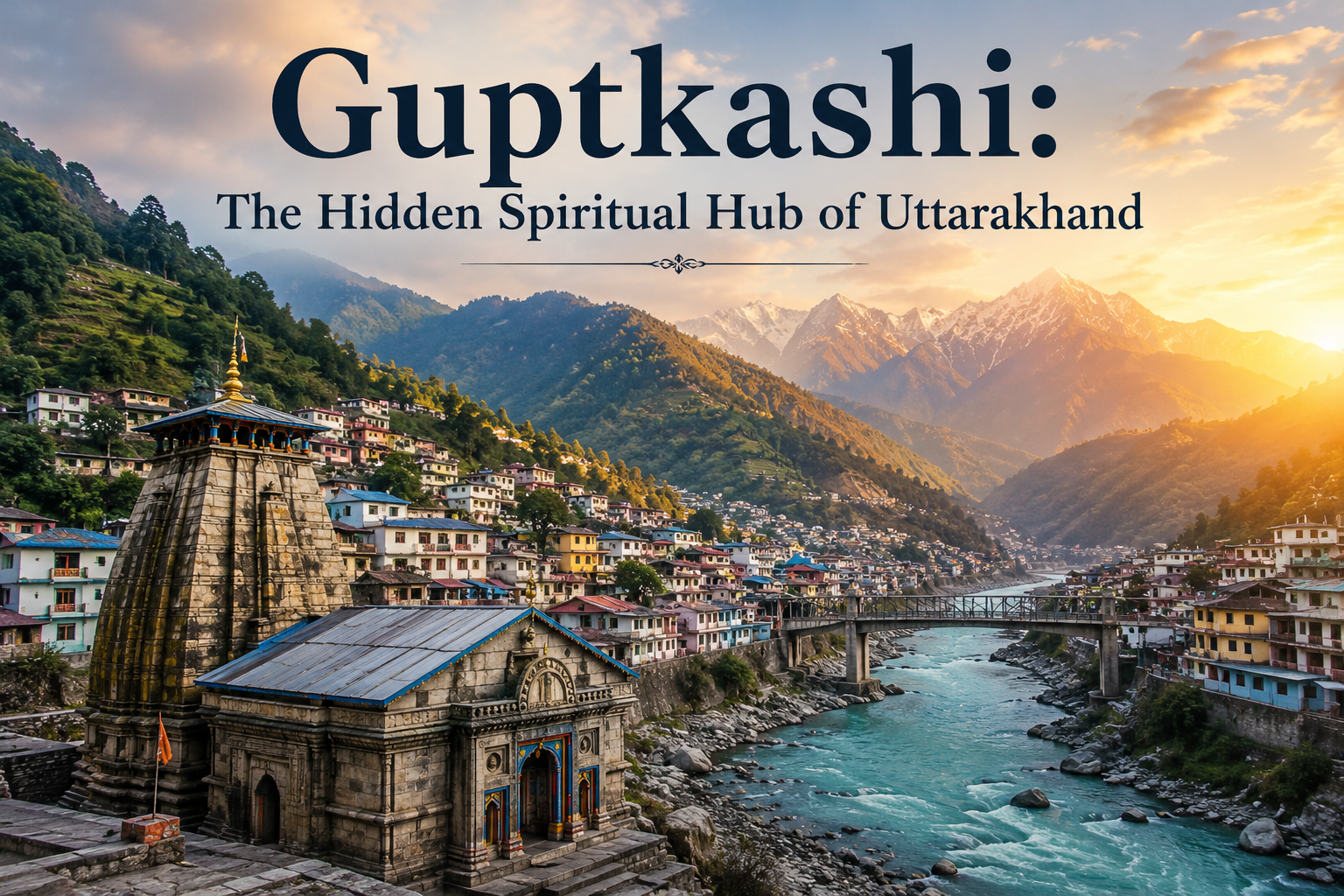
Tucked into the Rudraprayag district of Guptkashi, Uttarakhand at around 1,319 metres, Guptkashi is the true nerve centre of the entire Panch Kedar pilgrimage. It sits at the geographic crossroads of all five shrine routes — equidistant and accessible to Kedarnath, Madhyamaheshwar, Tungnath, Rudranath, and Kalpeshwar. It has hotels for every budget, functioning ATMs, a government hospital, and a taxi union that runs on fixed government rates. And yet, not a single dedicated travel guide has treated it for what it actually is.
This article does exactly that. Whether you are flying into Dehradun or driving up from the plains, understanding Guptkashi: The Hidden Spiritual Hub of Uttarakhand will save you hours on the road, spare you logistical headaches, and help you start every trek leg rested, prepared, and on time.
Why Staging from Guptkashi Changes Everything
The core argument is simple: time. Every hour spent inside a vehicle on mountain roads is physically draining and tactically wasteful. From Rishikesh to Sonprayag — the base for Kedarnath — is roughly 200 km, a journey of 6 to 7 hours on a good day. From Guptkashi to Sonprayag, that same journey is 72 km and takes under 2.5 hours.
Multiply that across five shrine bases over a 10-to-14-day circuit, and the time saving from basing in Guptkashi instead of Rishikesh is conservative at 3 to 4 hours per leg. That is the time you spend sleeping, acclimatising, or actually trekking — not pressed against a jeep window as hairpin bends roll by.
Guptkashi, Uttarakhand, is also where the region’s civilian infrastructure actually exists. Shared jeep pool here. Bus services to Kedarnath-bound towns originate from or pass through here. Trekkers converge at its guesthouses in the evenings to exchange route information. The local market stocks everything from trekking poles to propane canisters to glucon-D. If something goes wrong on the trail, the closest functioning clinic is in Guptkashi.
For trekkers flying into Jolly Grant Airport in Dehradun, the drive to Guptkashi is around 6 to 7 hours via Rishikesh and Rudraprayag. Once you arrive and check in, your position for the rest of the circuit is strategically sound. Every subsequent move toward a trek base becomes a manageable 2 to 3-hour drive rather than an all-day commitment.
Planning the full circuit before you leave? The Panch Kedar Circuit Trek guide on Mountainiax.com walks through the optimal sequence for visiting all five shrines, recommended seasonal windows, and multi-day itinerary frameworks built around Guptkashi as the central staging point.
How to Reach Guptkashi
Learn how to reach Guptkashi by road, rail, and air with the best travel routes, transport options, and essential travel tips for pilgrims and trekkers.
From Rishikesh
The standard route runs Rishikesh → Devprayag → Srinagar (Garhwal) → Rudraprayag → Kund → Guptkashi. Total distance is approximately 186 to 200 km. Drive time: 6 to 7 hours. Private cabs from Rishikesh to Guptkashi cost approximately ₹3,500 to ₹4,500 (2026 rates). Shared jeeps run from Rishikesh to Rudraprayag, where you change to a local Guptkashi-bound vehicle.
From Haridwar
The distance from Haridwar to Guptkashi is approximately 220 km, taking 7 to 8 hours by road. GMVN buses run seasonally from Haridwar during the pilgrimage season (May–June and September–October), with stops at key towns including Guptkashi.
From Dehradun (Jolly Grant Airport)
Fly into Dehradun and hire a cab or take a shared vehicle to Rishikesh (approximately 30 km), then continue to Guptkashi. Private airport-to-Guptkashi transfers are available through most local cab operators and cost between ₹5,000 and ₹7,000 depending on vehicle type.
Guptkashi to Each Trek Base: Distance, Time & Taxi Fares
This is the table that should exist on every Panch Kedar planning page — and rarely does. The following reflects 2026 fixed-rate taxi union charges operating out of Guptkashi.
| Trek Base | Shrine | Distance from Guptkashi | Drive Time | One-Way Fare (₹) |
| Sonprayag | Kedarnath | ~72 km | 2 – 2.5 hrs | ₹1,800 – ₹2,200 |
| Ransi Village | Madhyamaheshwar | ~55 km | 2 – 2.5 hrs | ₹1,500 – ₹1,800 |
| Chopta | Tungnath | ~65 km | 2 – 2.5 hrs | ₹1,600 – ₹2,000 |
| Sagar Village | Rudranath | ~85 km | 3 – 3.5 hrs | ₹2,000 – ₹2,500 |
| Helang | Kalpeshwar | ~140 km | 4 – 5 hrs | ₹3,000 – ₹3,800 |
These are private jeep fares. Shared jeep fares are lower, but availability is limited outside peak hours. Always confirm rates with the Guptkashi Taxi Union board near the bus stand before finalising.
The Guptkashi to Kedarnath distance via Sonprayag is 72 km — one of the shortest road connections from any major town to a Panch Kedar shrine base. The Guptkashi to Ransi distance of approximately 55 km makes Madhyamaheshwar one of the most conveniently staged shrines on the entire circuit.
For the Guptkashi to Chopta taxi, the road passes through Ukhimath before climbing toward Dugalbitta and the pine and rhododendron belt approaching Chopta. It is a scenic but narrow route — morning departures by 6:00 AM are highly recommended.
Best Hotels in Guptkashi 2026
Guptkashi hotels 2026 have seen meaningful improvements, with several mid-range properties upgrading hot water reliability and adding room heaters for the shoulder seasons. Here is a tier-by-tier breakdown.
Budget
GMVN Tourist Rest House: Government-regulated rates, clean rooms, and reliable basic amenities. Ideal for solo trekkers or those managing costs tightly. Book through the GMVN official portal ahead of peak season.
Mid-Range
Hotel Snow View: A consistent favourite among returning trekkers. Mountain-facing rooms, reliable hot water, and an in-house kitchen that does a decent thali. Rates typically fall between ₹1,200 and ₹2,000 per night.
Hotel Kedar Valley: Well-maintained and efficiently managed, with spacious rooms and a front desk experienced in helping trekkers arrange taxi bookings and route-specific logistics. A practical choice for those running multi-leg itineraries.
Premium
Shivalik Inn: The most complete accommodation option in Guptkashi, Shivalik Inn offers well-appointed rooms, a full-service restaurant serving Garhwali and North Indian dishes, and a lobby that functions as an informal trekker information exchange during pilgrimage season. Rates start at ₹2,500 to ₹3,500 per night.
Before locking in your accommodation and transport bookings, make sure your documentation is complete. The Panch Kedar Trek Insurance guide on Mountainiax.com covers the specific policy features that matter for high-altitude Himalayan trekking — helicopter evacuation coverage, altitude sickness clauses, and why standard travel insurance policies routinely fall short for treks above 3,500 metres.
Local Taxi Union, ATMs & Medical Facilities
Find essential information about local taxi services, ATMs, hospitals, pharmacies, and emergency medical facilities available in Guptkashi for a safe and convenient journey.
Guptkashi Transport Guide
There is no app-based cab service in Guptkashi, Uttarakhand. All local transport runs through the Guptkashi Taxi Union, which operates on government-approved seasonal fixed rates. Union representatives are stationed near the main bus stand and the Vishwanath Temple square. Rates are posted on a visible board near the stand at the start of each season.
For early morning trek departures — recommended for all five routes — negotiate and book your cab the evening before. Drivers are generally familiar with all five trek bases and can advise on approximate trail conditions.
Shared jeeps run between Guptkashi and Sonprayag, Ukhimath, and Rudraprayag at lower shared fares, though timing is less predictable.
ATMs in Guptkashi
- SBI ATM: Near the main market area
- Union Bank ATM: Adjacent to the Vishwanath Temple square
- Punjab National Bank: On the highway entering Guptkashi from Kund
This is critical: there are no ATMs beyond Guptkashi on any of the five Panch Kedar trek routes. Ransi, Chopta, Sagar, and Helang are cash-only zones. Withdraw generously before you leave town.
Medical Facilities
A government CHC (Community Health Centre) operates in Guptkashi and handles routine and emergency cases through the pilgrimage season. A private clinic near the market serves trekkers with more specific needs. Stock up on any prescription medications, altitude medication (Diamox, if your doctor recommends it), blister treatment, and basic first aid supplies before leaving Guptkashi.
The Vishwanath Temple: A Pre-Trek Stop Most Guides Miss
At the centre of Guptkashi town stands the Vishwanath Temple — a deeply significant Shiva shrine that almost no trek guide bothers to mention. According to local tradition, this is where Lord Shiva concealed himself in a hidden (gupt) form to evade the Pandavas after the Kurukshetra War, an act that gives the town its name: Guptkashi, meaning “hidden Kashi.”
The temple complex also houses an Ardhanareeshwar idol — the combined male-female form of Shiva and Parvati — and a natural spring that local devotees venerate. Morning aarti here, held as the valley fills with soft light and temple bells roll through the ridges, is an experience that anchors you before any demanding climb. It takes 20 to 30 minutes, costs nothing, and has a quiet power that the more commercial ghats of Rishikesh and Haridwar cannot replicate.
Most trekkers pass through Guptkashi’s market, eat a quick dinner, and sleep. The ones who visit the Vishwanath Temple in the morning carry something different with them onto the trail.
If you are still comparing pilgrimage circuits, the Panch Kedar vs Panch Badri guide on Mountainiax.com breaks down the differences in terrain difficulty, spiritual significance, accessibility, and trekking demands between the two great Himalayan circuits — a useful read for first-timers deciding which journey to undertake.
Guptkashi vs Ukhimath: Which Is the Better Base Camp?
The Guptkashi vs Ukhimath base camp question comes up often, and the honest answer is: it depends on your route, but Guptkashi wins for most trekkers.
Ukhimath, located around 12 km from Guptkashi toward Chopta, is a quieter and more intimate settlement. It serves as the winter abode of the Kedarnath and Madhyamaheshwar deities and has its own sacred temple complex. Trekkers focusing specifically on Tungnath or Madhyamaheshwar will find Ukhimath marginally closer to those bases and genuinely peaceful for an overnight stay.
For everything else, Guptkashi is the clear winner as the best base for the Panch Kedar trek. More hotel options across all budget tiers, functioning ATMs, the local taxi union, a hospital, a proper market, and road connectivity to all five trek start points — Ukhimath cannot match any of that.
A smart hybrid strategy: base in Guptkashi for the first two or three legs of the circuit (Kedarnath, Rudranath, Kalpeshwar), then shift briefly to Ukhimath or stay at Chopta camp for the Tungnath and Madhyamaheshwar days. This spreads fatigue, reduces backtracking, and lets you experience both towns.
Practical Trekker Tips for Using Guptkashi as Your Base
- Arrive in Guptkashi the evening before your first trek day. Use the time to confirm transport, withdraw cash, stock provisions, and rest.
- The Panch Kedar route map, Guptkashi, can be sourced from your hotel’s reception or the tourist information board near the bus stand. Physical maps are more reliable than mobile data in this region.
- Airtel and Jio function reasonably well in Guptkashi town but degrade significantly on mountain roads beyond Ukhimath. Download offline maps (Google Maps, Maps.me) before departing.
- Carry a printed or photographed copy of the taxi fare chart to avoid negotiation disputes on early mornings.
- The local market carries basic trekking essentials — energy bars, ORS sachets, light rain ponchos, and dry snacks — at fair prices.
- If you are carrying camera equipment for the trail, prep your gear the night before in Guptkashi, where the power supply is stable. The Panch Kedar Photography Guide on Mountainiax.com covers ideal light windows at each shrine, altitude-specific lens recommendations, and practical tips for protecting equipment across multi-day treks in variable mountain weather.
Frequently Asked Questions
1. How far is Guptkashi from Kedarnath?
The Guptkashi to Kedarnath distance by road is approximately 72 km to Sonprayag, the Kedarnath trek base. From Sonprayag, the trail to the Kedarnath temple is an additional 16 km by foot, pony, or helicopter.
2. How do I reach Guptkashi from Rishikesh?
Guptkashi is approximately 200 km from Rishikesh via the Devprayag–Srinagar–Rudraprayag corridor. The drive takes 6 to 7 hours. Both private cabs and shared jeeps are available, with private cab rates around ₹3,500 to ₹4,500.
3. Which is the best hotel in Guptkashi for trekkers?
GMVN Rest House is the top budget pick. Hotel Snow View and Hotel Kedar Valley cover the mid-range. For the most comfortable stay in Guptkashi hotels 2026, Shivalik Inn is the recommended premium option.
4. Is Guptkashi or Ukhimath better as a Panch Kedar base?
Guptkashi is the best base for the Panch Kedar trek for most trekkers — better hotels, full ATM access, medical facilities, and taxi connectivity to all five shrine bases. Ukhimath suits trekkers focusing specifically on Tungnath or Madhyamaheshwar.
5. What is the taxi fare from Guptkashi to Chopta?
The Guptkashi to Chopta taxi fare for a private jeep is approximately ₹1,600 to ₹2,000 one way (2026 rates). Shared jeep fares are lower, but availability outside peak hours is limited.
Summary
Guptkashi is not a destination in itself — it is the base from which every successful Panch Kedar adventure begins. Its central position cuts hours off every road leg of the circuit. Its accommodation scene serves every budget. Its working infrastructure — ATMs, clinics, taxi unions — means you leave prepared rather than improvising.
Guptkashi: The Hidden Hub of Panch Kedar earns that title through geography, logistics, and local character. While mainstream travel content still routes trekkers through Rishikesh or Haridwar, experienced Himalayan trekkers know that Guptkashi is where real Panch Kedar planning happens: over chai in a guesthouse the night before, studying a hand-drawn route map, and offering a quiet prayer at the Vishwanath Temple as the valley begins to glow.
With the Panch Kedar Yatra season approaching, it’s time to plan something truly extraordinary. From breathtaking Himalayan peaks to spiritually powerful temples hidden deep in remote valleys, this journey offers an experience that goes beyond a typical trek—it becomes a story you carry for life. To make your journey seamless and well-organised, choose the best trekking company in Uttarakhand for reliable trek packages, detailed itineraries, and hassle-free booking.
Visit this page for Trek Packages, Itinerary & Booking.