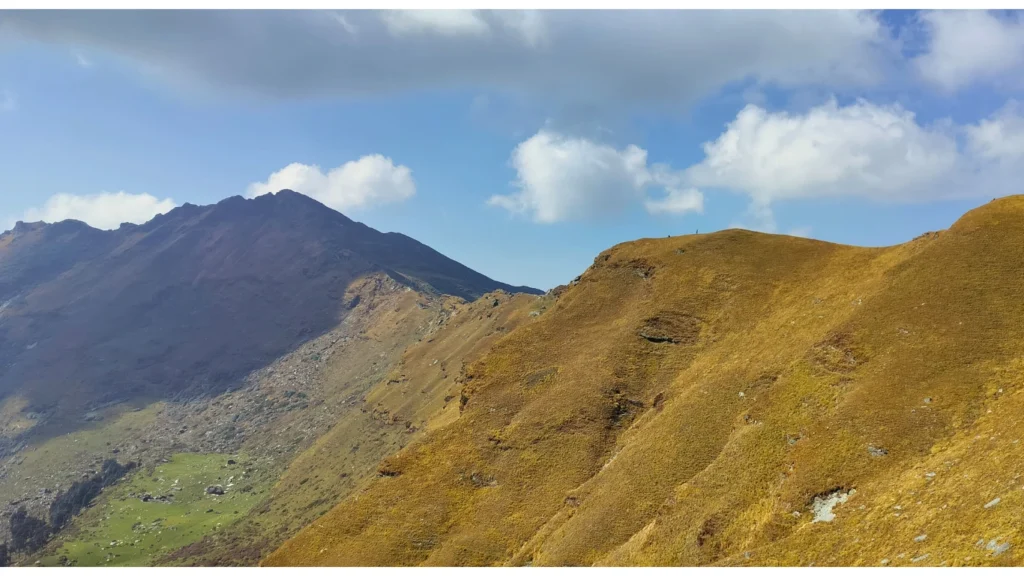
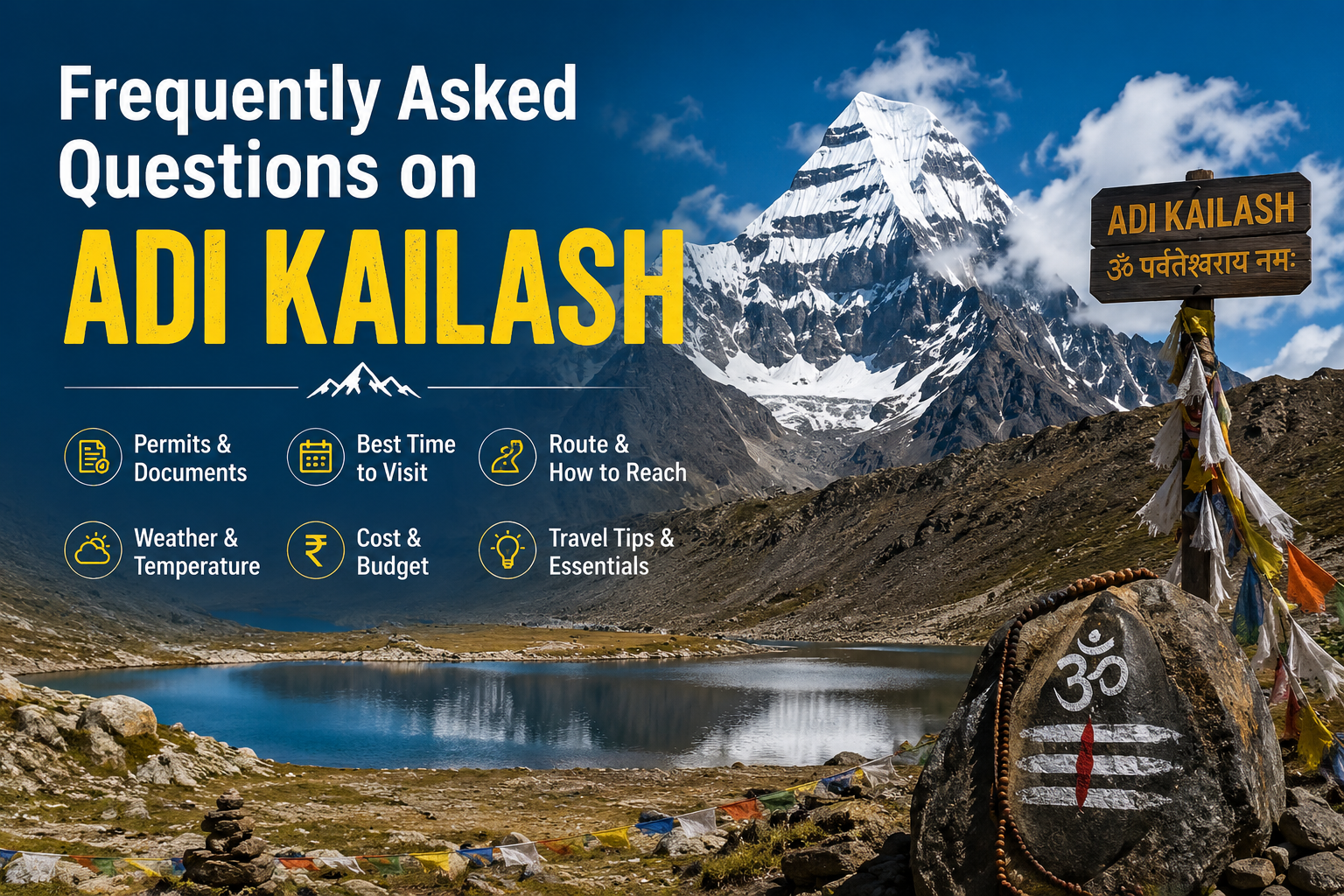
Adi Kailash is one of the most spiritually charged destinations in the Indian Himalayas, yet it remains far less crowded than its Tibetan counterpart, Mount Kailash. Sitting in the Pithoragarh district of Uttarakhand, near the border with Tibet and Nepal, this sacred peak draws pilgrims, trekkers, and seekers who want the Kailash experience without crossing an international border. Its striking resemblance to Mount Kailash has earned it the name “Chota Kailash” in local tradition — a title that understates nothing about its grandeur.
Despite growing interest, reliable and detailed information about Adi Kailash remains scattered across outdated travel forums and vague itinerary pages. First-time visitors carry a long list of unanswered questions: permit requirements, route conditions, temple timings, altitude concerns, the role of the Inner Line Permit, and what to realistically expect on the trail. These are not trivial questions — they directly affect safety, planning, and the quality of the entire experience.
This guide addresses the most important Frequently Asked Questions on Adi Kailash in one place, written with the depth and accuracy that this destination deserves. Whether you are a first-time pilgrim or an experienced trekker adding this circuit to your Himalayan list, every answer here is designed to help you plan with confidence.
What Is Adi Kailash and Why Is It Significant?
Adi Kailash, also known as Chota Kailash or Baba Kailash, is a Himalayan peak in the Pithoragarh district of Uttarakhand, standing at approximately 6,191 metres. It is considered one of the most sacred sites in Hinduism, believed to be the earthly abode of Lord Shiva — mirroring the sanctity attributed to the Tibetan Mount Kailash.
The significance of Adi Kailash is rooted in ancient texts. The Mahabharata references this region as the path taken by the Pandavas during their final journey (Mahaprasthan). The Adi Kailash yatra is considered equivalent in religious merit to completing the Kailash Mansarovar Yatra by many Hindu traditions — a particularly meaningful equivalence for pilgrims who cannot access Tibet.
At the base of the peak lies the Om Parvat viewpoint, from which the naturally occurring snow formation on the mountain face takes the shape of the Sanskrit symbol “Om.” This sight alone draws thousands of visitors each season and remains one of the most photographed natural formations in the Himalayas.
The circuit also passes through the Jolingkong Lake — a glacial lake situated at around 4,783 metres, believed to be the spot where Parvati performed penance to win Lord Shiva’s love. The combination of myth, landscape, and altitude makes this one of the most layered pilgrimage experiences in India.
Who Can Do the Adi Kailash Trek?
The Adi Kailash trek is accessible to a broad range of visitors, but it demands reasonable physical fitness. Here is a realistic breakdown:
Fitness level required: Moderate to moderately difficult. The trek involves multi-day walking at altitudes between 1,800 metres (Dharchula) and 4,783 metres (Jolingkong). No technical climbing skills are required.
The route is commonly undertaken by pilgrims between 30 and 65 years of age. Older pilgrims with good cardiovascular health complete it regularly. Children below 10 and individuals with heart or respiratory conditions should consult a doctor before planning.
Vehicle-assisted option: Part of the route from Dharchula to Gunji can be covered by jeep or shared vehicle on the motorable road, making the journey more accessible for those who cannot undertake the full trek on foot.
The Adi Kailash yatra distance from Dharchula to Jolingkong and back covers approximately 110–130 km depending on the route taken, over 8–12 days.
What Permits Are Required for Adi Kailash?
This is among the most searched questions for anyone planning the Adi Kailash yatra, and the answer involves two distinct permit layers.
Adi Kailash lies in a protected border zone, and all visitors — Indian citizens and OCI cardholders included — require an Inner Line Permit to enter the restricted area beyond Dharchula. The ILP is issued by the District Magistrate’s office in Dharchula or through the Uttarakhand Tourism portal. Processing is typically done in 1–2 working days.
Documents required for ILP:
- Valid government-issued photo ID (Aadhaar, passport, or voter ID)
- Two passport-size photographs
- A filled application form (available at the DM office or online)
Foreign nationals: Non-Indian citizens (including those without OCI status) require a Protected Area Permit (PAP) in addition to the ILP. This is obtained from the Ministry of Home Affairs in Delhi and takes significantly longer to process. Foreign nationals must plan at least 8–10 weeks in advance for permit procurement.
Group size requirement: Foreign nationals must travel in a group of minimum two persons and must be accompanied by a registered Indian tour operator at all times.
OCI cardholders: Treated as Indian nationals for ILP purposes. No PAP required.
The permit requirements make advance planning essential, particularly for the peak Adi Kailash yatra season between May and June and September to October.
What Is the Best Route for the Adi Kailash Yatra?
The standard Adi Kailash route begins in Dharchula and follows the Kali River valley, passing through several villages and high-altitude settlements before reaching the base of the sacred peak.
Key stops on the route:
- Dharchula (1,715 m) — The starting point and nearest town with reliable banking, ATMs, and medical facilities. Most trekkers arrive here from Pithoragarh by shared jeep or private vehicle.
- Tawaghat — The first significant stop beyond Dharchula, where the road begins climbing into the restricted zone.
- Narayan Ashram — A famous spiritual retreat and rest point, often used as an overnight halt.
- Gunji (3,325 m) — The administrative hub of the inner valley, where ILP verification takes place. Accommodation is available here.
- Kalapani (3,600 m) — A deeply significant stop on the route. The confluence of rivers here and its position on the historical trade route to Tibet give it a layered history that goes beyond the pilgrimage. For anyone researching the historical and geographical context of this corridor, the Kalapani page offers detailed background on why this location holds enduring geopolitical and cultural importance.
- Nabhi (3,600 m) — The final village before the trek ascends to the sacred sites.
- Jolingkong (4,783 m) — The glacial lake at the base of Adi Kailash, the spiritual high point of the yatra.
- Om Parvat viewpoint — Typically visited on a side trip from Jolingkong or on the return leg. The Om snow formation is best visible in the early morning hours.
When Should You Plan the Adi Kailash Yatra?
The Adi Kailash yatra season runs from mid-May to mid-June and from mid-September to mid-October. These windows offer the most stable weather, clearest views, and safest trail conditions.
- Mid-May to mid-June: Snow from winter is receding, the landscape is vivid green, and temple rituals are in full swing following the annual opening ceremony. Temperatures at Jolingkong range from 2°C to 12°C during the day. Nights can drop to -5°C.
- Mid-September to mid-October: Post-monsoon clarity produces the sharpest mountain views of the year. The Om snow formation is often most distinct during this period. Rhododendron and alpine meadow colours are at their peak.
- July and August: The monsoon makes the trail dangerous due to landslides, flooded stream crossings, and poor visibility. Most tour operators suspend operations during this period.
- November to April: The route is closed due to snowfall. The temples are shut following the annual closing ceremony, which follows the Hindu Diwali calendar.
For a more detailed breakdown of seasonal conditions, crowd levels, and weather data specific to this circuit, the Best Time to Visit Adi Kailash page provides month-by-month guidance that goes beyond the typical seasonal summary.
What Are the Accommodation Options on the Adi Kailash Route?
Accommodation on the Adi Kailash route varies significantly depending on the altitude and remoteness of each stop. In Dharchula, travellers can find hotels and guesthouses offering attached bathrooms, hot water, and proper meals, making it the most comfortable stay during the journey. Narayan Ashram provides a more spiritual experience with simple but clean rooms, vegetarian food, and a peaceful atmosphere. Since this location attracts many pilgrims during peak months, advance booking is highly recommended.
Further along the Adi Kailash trek, accommodation becomes more basic and functional. In Gunji, the KMVN (Kumaon Mandal Vikas Nigam) tourist rest house offers dormitory and twin-sharing facilities with simple meals. At higher-altitude locations like Nabhi and Jolingkong, camping becomes the primary accommodation option. Most organised trek operators provide tents, sleeping bags, kitchen equipment, and support staff for these sections of the route.
For NRI and international travellers planning the Adi Kailash yatra from abroad, accommodation planning should never be left until arrival. Beyond Dharchula, availability is limited and seasonal demand is high. All rest house and camping arrangements should ideally be confirmed at least 4–6 weeks before departure. Choosing a guided package with pre-arranged accommodation significantly reduces logistical risks and ensures a smoother Himalayan pilgrimage experience.
What Should You Pack for the Adi Kailash Yatra?
Packing for the Adi Kailash trek requires balancing warmth, weight, and practicality across a wide elevation range.
Clothing essentials:
- Thermal base layers (top and bottom)
- Insulated mid-layer fleece or down jacket
- Waterproof outer shell jacket and pants
- Trekking trousers (2 pairs)
- Warm hat, gloves, and neck gaiter
- Wool or synthetic trekking socks (4–5 pairs)
- Sun hat or cap for lower elevations
Footwear: Waterproof trekking boots with ankle support are non-negotiable. Break them in before departure — blisters at altitude are a serious problem.
Trek equipment:
- Trekking poles (strongly recommended for descent)
- Daypack (25–30 litres) for items needed during the day
- Headlamp with spare batteries
- Sleeping bag rated to -10°C
Medical kit: Diamox (acetazolamide) for altitude sickness prevention — consult a doctor before use. Ibuprofen, ORS sachets, antiseptic cream, blister plasters, and a pulse oximeter.
Documents: ILP, ID proof, two spare passport photos, emergency contact details in physical written form.
Photography gear: The landscape along this route is extraordinary. If photography is a priority for your trip, the Adi Kailash Photography Guide covers the best viewpoints, golden hour timings, and gear recommendations for capturing the Om Parvat formation and Jolingkong Lake in their full clarity.
How Do You Handle Altitude Sickness on the Adi Kailash Trek?
Altitude sickness — or Acute Mountain Sickness (AMS) — is a genuine risk on this route, particularly at Jolingkong (4,783 m) and the Om Parvat viewpoint.
Symptoms to watch for: Persistent headache, nausea, dizziness, loss of appetite, and disrupted sleep. Severe AMS can progress to High Altitude Pulmonary Edema (HAPE) or High Altitude Cerebral Edema (HACE), both of which are life-threatening without immediate descent.
Prevention strategies:
- Spend at least one acclimatisation day at Gunji (3,325 m) before ascending further
- Follow the golden rule: climb high, sleep low
- Stay hydrated — aim for 3–4 litres of water per day
- Avoid alcohol for the first 48 hours at altitude
- Consider prophylactic Diamox after consulting a physician
- Never ascend if you have symptoms — rest or descend
Evacuation: There is no helicopter landing zone at Jolingkong. In a medical emergency, the patient must be evacuated on foot or by mule to Gunji or Dharchula before helicopter extraction becomes possible. This underscores why physical preparedness and genuine acclimatisation are not optional on this trek.
Is the Adi Kailash Yatra Different from the Kailash Mansarovar Yatra?
This is one of the most common comparison questions for pilgrims choosing between the two circuits. Here is a direct comparison.
Location: Adi Kailash is in Uttarakhand, India. Kailash Mansarovar is in the Tibet Autonomous Region of China and requires a Chinese government-issued visa via Ministry of External Affairs allocation.
Accessibility: Adi Kailash requires only an Indian Inner Line Permit for Indian nationals. Kailash Mansarovar involves a lengthy government application process, limited annual spots (under the MEA lottery system), and significant international travel logistics.
Cost: The Adi Kailash yatra cost for a guided 10–12 day package typically ranges from ₹30,000 to ₹70,000 per person depending on the operator, group size, and accommodation level. The Kailash Mansarovar Yatra costs ₹1,50,000 to ₹2,50,000 or more, inclusive of all government fees.
Spiritual equivalence: Many Hindu scholars and temple authorities consider the religious merit of Adi Kailash equivalent to Kailash Mansarovar, making it the natural choice for pilgrims who cannot undertake the Tibetan circuit due to age, health, cost, or political uncertainty.
Difficulty: Both are demanding. Adi Kailash maxes out at 4,783 m; Kailash Mansarovar involves passes above 5,600 m. Adi Kailash is significantly more achievable for a wider range of pilgrims.
What Are the Temple Timings at Adi Kailash?
The Shiva temple at Jolingkong near the Adi Kailash base is a small but deeply sacred structure maintained by local priests. During the yatra season:
- Morning aarti: Approximately 6:00 AM to 7:00 AM
- Evening aarti: Approximately 6:00 PM to 7:00 PM
- Temple remains open for darshan between aarti timings during daylight hours
Temple timings can vary based on the Hindu calendar and the presiding priest’s schedule. It is advisable to confirm current timings with your operator before departure.
The Om Parvat viewpoint does not have fixed timings — it is a natural viewpoint — but early morning between 6:00 AM and 9:00 AM offers the best light conditions for viewing the Om snow formation before clouds build over the summit.
Summary
Adi Kailash is not simply a trek or a pilgrimage — it is one of those rare journeys that changes how you relate to the mountains, to faith, and to yourself. Every question answered in this guide exists to remove the friction between you and that experience. The permits, the packing lists, the altitude protocols — these are not obstacles, they are the preparation that lets you arrive at Jolingkong fully present rather than anxiously unprepared.
The window to experience this route at its finest is short each year, and the planning deserves the same seriousness as the yatra itself. Whether you are a first-time pilgrim or a seasoned Himalayan trekker, Adi Kailash rewards those who come prepared and leaves everyone who reaches Jolingkong with something no itinerary can fully describe. Start your planning early, choose your operator wisely, and let the mountain do the rest.
With the Adi Kailash Yatra season approaching, it’s time to plan a journey that blends spirituality with raw Himalayan adventure. From sacred lakes to the divine presence of Adi Kailash, every moment feels profound and transformative. If you seek purpose beyond travel, this is your path.
Visit this page for Adi Kailash Yatra Packages, Itinerary & Booking.