Most people assume that a Himalayan pilgrimage to a site as remote and revered as Adi Kailash is reserved for seasoned trekkers and the physically elite. That assumption is worth questioning. The Adi Kailash Yatra has quietly become one of the most accessible high-altitude spiritual journeys in Uttarakhand, with a well-developed road network, government-regulated tour options, and accommodation that makes it genuinely suitable for a wider range of pilgrims than most people realise.
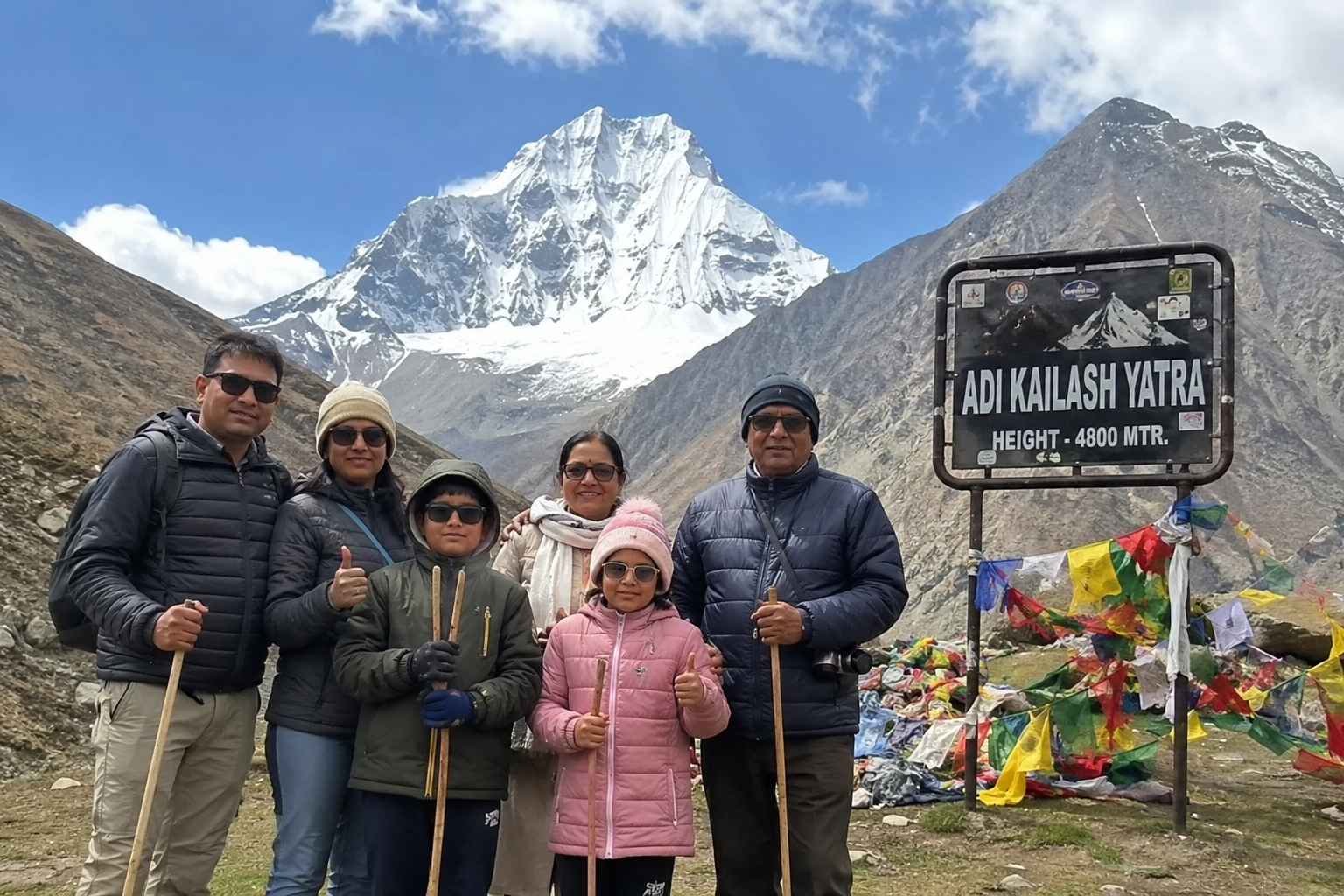
The Adi Kailash Yatra for Senior Citizens and Families with Kids is not just possible — it is increasingly popular. Grandparents completing lifelong spiritual goals, parents introducing their children to the sacred Himalayas, and multigenerational families making shared memories at 5,945 metres — these are not rare exceptions. With the right preparation, the right timing, and honest awareness of your group’s physical limits, this journey is far more within reach than the altitude numbers might suggest.
This guide is written specifically for those who want practical, honest, and experience-backed information — not just inspiration. You will find everything here from route details and fitness requirements to packing lists, child-specific tips, and senior-friendly advice that actually reflects conditions on the ground in the Kumaon Himalayas.
What Is Adi Kailash and Why Does It Matter?
Adi Kailash, also known as Chota Kailash, is a sacred peak in the Kumaon Himalayas of Uttarakhand, located near the India-Tibet border in the Pithoragarh district. The mountain bears a striking resemblance to the legendary Mount Kailash in Tibet and is believed by devotees to be the original abode of Lord Shiva — hence the name “Adi,” meaning primordial or first.
The pilgrimage includes the revered Om Parvat, a mountain face where natural snowfall forms the sacred symbol Om, visible from designated viewpoints. For many Hindu families, seeing Om Parvat is considered a once-in-a-lifetime divine experience.
Key highlights of the Adi Kailash Yatra:
- Darshan of Adi Kailash peak and Parvati Sarovar lake
- Sighting of the natural Om symbol on Om Parvat
- Visit to Jolingkong meadows at high altitude
- Temples at Kalapani, Narayan Ashram, and Gunji village
- Scenic drive through Dharchula, Tawaghat, and the Kali River valley
Is Adi Kailash Yatra Suitable for Senior Citizens?
The straightforward answer is yes — with caveats that are important and honest.
Unlike the Panch Kedar or Valley of Flowers, which require multi-day treks on foot, the Adi Kailash route is largely motorable. Government vehicles and private 4x4s can take pilgrims to Jolingkong and its surroundings, making this one of the few high-altitude spiritual destinations in Uttarakhand where significant trekking is optional rather than mandatory.
That said, the altitude is real. Jolingkong sits at approximately 4,572 metres, and even vehicle-based access places pilgrims at elevations where altitude sickness is a genuine risk, particularly for older adults with cardiovascular or respiratory conditions.
What Senior Citizens Should Realistically Expect
- The drive from Dharchula to Gunji covers rough mountain roads that are bumpy and physically tiring
- Nights at high altitude can be bitterly cold even in summer months
- Acclimatisation stops are essential and should not be skipped under any pressure
- Portable oxygen, basic medications, and pulse oximeters are strongly recommended
- Walking on uneven terrain at Jolingkong requires sturdy footwear and a trekking pole
Medical Conditions That Require Prior Consultation
Senior citizens with the following conditions should consult a doctor before confirming the yatra:
- Heart disease or a history of cardiac events
- Uncontrolled hypertension
- Chronic respiratory illness including COPD or asthma
- Severe diabetes with complications
- Recent surgeries or major joint replacement
Is Adi Kailash Safe for Children and Families?
Families with children above the age of eight generally manage the Adi Kailash Yatra well when the journey is paced correctly. The motorable route removes the physical barrier of long-distance trekking, which makes a significant difference for young children.
However, children are often more vulnerable to altitude sickness than adults, and their symptoms can escalate quickly. Parents need to be informed, watchful, and never dismiss complaints of headache, nausea, or unusual fatigue at altitude.
Age Recommendations for Children
- Under 6 years — Not recommended due to altitude risk and unpredictable health response
- 6 to 10 years — Possible with extreme caution, medical clearance, and only if the child is accustomed to hill environments
- 10 years and above — Generally manageable with proper acclimatisation and pacing
Tips for Travelling with Kids on the Adi Kailash Yatra
- Keep children well-hydrated throughout the journey — dehydration accelerates altitude effects
- Carry a pulse oximeter and check oxygen saturation regularly, especially after 3,500 metres
- Pack familiar foods and snacks — children eat better when they have something they recognise
- Plan for rest days and do not rush the itinerary to meet deadlines
- Keep the journey framed as an adventure and a story — children engage better when they feel part of something meaningful
- Carry a small first aid kit including altitude sickness medication (Diamox) after consulting your paediatrician
The Adi Kailash Yatra Route: Stage by Stage
Understanding the route is essential for families and senior pilgrims who need to plan rest stops, accommodation, and contingency options realistically.
Stage 1: Delhi to Kathgodam or Pantnagar
Most pilgrims begin with an overnight train or flight to Kathgodam, the gateway to the Kumaon Himalayas. From here, the road journey to Dharchula begins.
Stage 2: Kathgodam to Dharchula (via Almora or Pithoragarh)
Dharchula is the last major town before the restricted zone begins. This is where Inner Line Permits are arranged for the border region. The drive from Kathgodam to Dharchula covers approximately 280 kilometres and is best broken into two days for senior citizens and families.
Stage 3: Dharchula to Gunji
The road from Dharchula to Gunji passes through Tawaghat, Pangu, Narayana Ashram, and Kalapani — each a significant cultural and spiritual waypoint. Gunji at 3,418 metres is the main base camp for the Adi Kailash Yatra and the last point with reliable accommodation and medical support.
Stage 4: Gunji to Jolingkong
From Gunji, the route to Jolingkong at 4,572 metres is the spiritual heart of the journey. The Parvati Sarovar lake and the view of Adi Kailash peak are located here. Depending on the road condition, vehicles can cover most of this stretch.
Stage 5: Om Parvat Viewpoint
The Om Parvat viewpoint near Nabhi allows pilgrims to see the natural Om formation on the mountain face. This is a short excursion and does not require significant physical effort.
For those planning their trip timing, the Best Time to Visit Adi Kailash directly impacts road conditions, snowfall, weather windows, and the overall safety of travel for senior citizens and children alike. Getting the season right is not optional — it is one of the most important decisions of the entire journey.
Accommodation Options Along the Adi Kailash Route
Accommodation on this route is basic but adequate. Pilgrims should set expectations accordingly, particularly if travelling with elderly family members or young children.
Key Stops and Stay Options
- Dharchula — Best accommodation on the route; hotels with attached bathrooms, hot water, and reliable food
- Narayana Ashram — Ashram-style dormitory accommodation; clean but minimal; a deeply peaceful stop
- Gunji — KMVN (Kumaon Mandal Vikas Nigam) tourist rest house and basic guesthouses; recommended to book in advance
- Jolingkong — Very basic tented or hut-style accommodation; cold nights require quality sleeping bags
Packing Essentials for Senior Citizens and Families
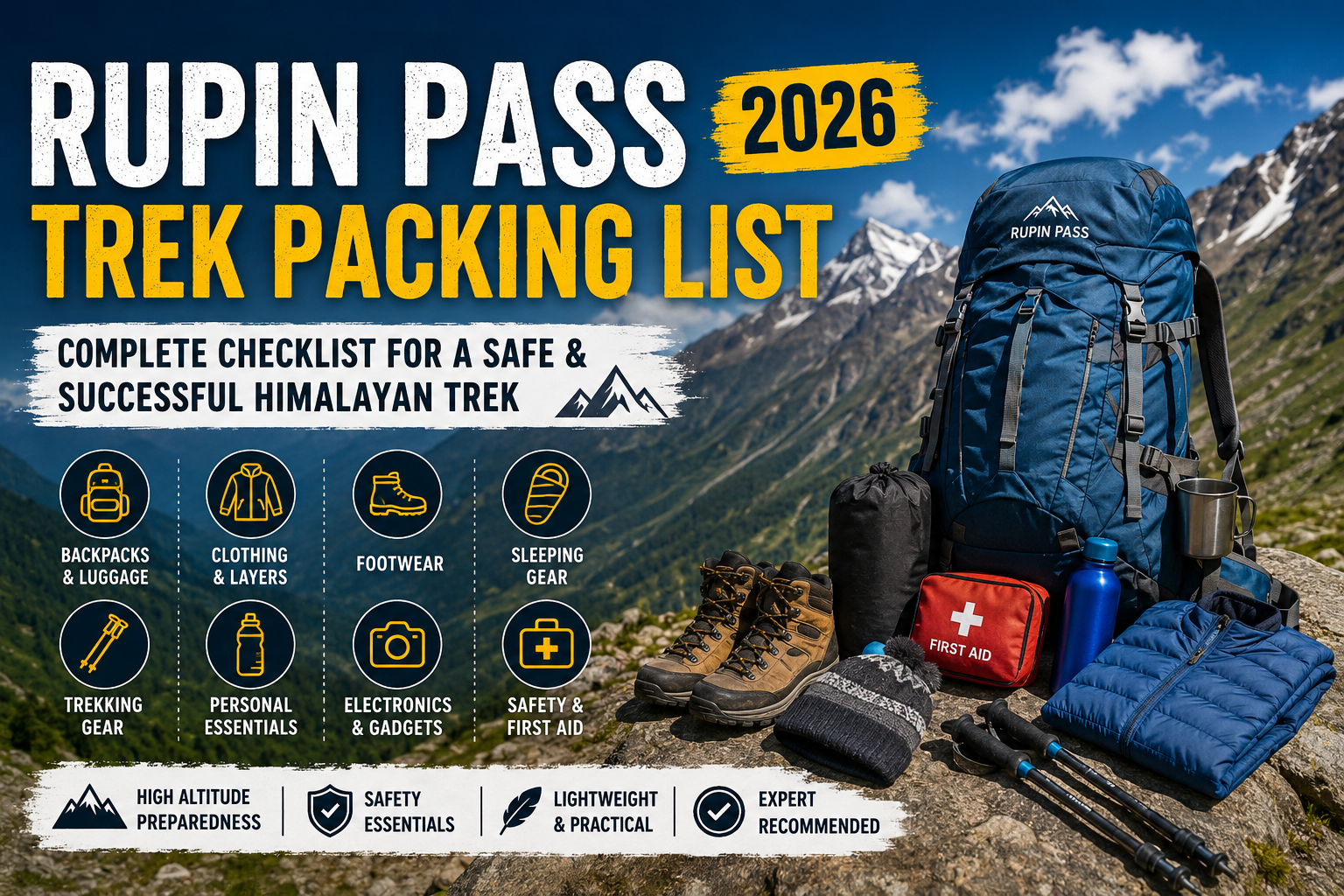
- Layered warm clothing including thermal inners, fleece, and a windproof outer jacket
- Sturdy, ankle-supporting trekking shoes for all members including children
- Trekking poles for senior citizens
- Portable pulse oximeter
- Altitude sickness medication (consult a doctor before carrying Diamox)
- High-SPF sunscreen — UV radiation is significantly stronger at altitude
- Reusable water bottles and electrolyte sachets
- Personal medications with at least a week’s extra supply
- Lightweight sleeping bag rated to minus five degrees Celsius
How to Get the Inner Line Permit for Adi Kailash
The Adi Kailash route passes through a border-sensitive zone and requires an Inner Line Permit (ILP) issued by the District Magistrate of Pithoragarh. This is non-negotiable and must be arranged before the journey into the restricted zone begins.
Permit Process
- Apply in person at the DM office in Pithoragarh or through a registered tour operator in Dharchula
- Carry passport-size photographs and a valid government ID for every member of the group including children
- Tour operators registered with Uttarakhand Tourism can handle permit paperwork on behalf of groups
- The permit specifies dates and entry points — ensure your itinerary matches the permit exactly
KMVN and Government-Organised Adi Kailash Yatra Packages
KMVN (Kumaon Mandal Vikas Nigam) organises fixed-departure group yatras to Adi Kailash and Om Parvat every season. These packages are particularly well-suited for senior citizens and families because:
- Transport, accommodation, and meals are pre-arranged
- Medical assistance and oxygen support are included at key points
- Groups travel together, reducing isolation risk
- Cost is significantly lower than private arrangements
- Permit processing is handled as part of the package
For those who prefer independent travel, private tour operators from Dharchula and Pithoragarh also offer customised packages with flexible pacing — an important consideration for groups with elderly members or young children who may need extra acclimatisation days.
For answers to the most common planning questions pilgrims raise before booking, the Frequently Asked Questions on Adi Kailash page on our site covers everything from permit timelines to what to expect on the road — a useful reference before you finalise any itinerary.
Physical Preparation: How to Get Ready for the Yatra
Spiritual intent alone does not prepare the body for high altitude. Both senior citizens and parents of young children should begin preparation at least six to eight weeks before departure.
For Senior Citizens
- Begin daily walking at a brisk pace — build up to 45 to 60 minutes per day
- Practise deep breathing exercises and pranayama to improve lung capacity
- Consult your cardiologist or physician for a pre-trek health evaluation
- Reduce or eliminate alcohol and smoking at least three weeks before departure
- Stay well-hydrated in the weeks leading up to the journey
For Families with Children
- Take children on weekend hill walks to gauge their response to inclines and exertion
- Talk to them about altitude and explain symptoms they should immediately report
- Ensure vaccinations are up to date before travel
- Pack an entertainment kit for long road stretches — restless children in moving vehicles on mountain roads is a safety concern
Spiritual Significance: Why Families Choose Adi Kailash
For many Hindu families, the Adi Kailash Yatra is not just travel — it is a generational act of faith. Grandparents who could not make the journey to Mount Kailash in Tibet find in Chota Kailash an equally sanctified alternative, closer to home and within the borders of India.
The Parvati Sarovar is believed to have the same sanctity as Lake Mansarovar. The Om Parvat darshan is considered a profound blessing that many pilgrims describe as their most spiritually moving experience in a lifetime of worship. Bringing children on this journey is seen as planting seeds of devotion early — an act of spiritual inheritance that families across Uttarakhand, Rajasthan, Gujarat, and Maharashtra undertake each season.
The Best Time to Visit Adi Kailash for families with children is May to June or September to October, when weather windows are stable, roads are clear, and the risk of sudden snowfall or landslide is at its lowest. Monsoon months from July to August bring heavy rainfall, unstable roads, and heightened risk — not suitable for senior citizens or children.
Frequently Asked Questions
1. Is Adi Kailash Yatra safe for senior citizens above 65?
It can be safe with proper medical clearance, pacing, and preparation. The motorable route removes the need for long treks, but altitude remains a genuine health factor. A pre-travel consultation with a physician is essential.
2. What is the minimum age for children on the Adi Kailash Yatra?
Most experienced tour operators recommend a minimum age of 10 years. Children younger than 6 should not undertake this journey due to the altitude and unpredictable health risks.
3. How many days does the Adi Kailash Yatra take?
A standard itinerary covers 10 to 14 days including travel from Delhi or Kathgodam. Families with children or senior citizens should opt for the longer itinerary to allow for acclimatisation days.
4. Do senior citizens need a medical certificate for the Adi Kailash Yatra?
KMVN organised yatras typically require a medical fitness certificate for all participants above 60 years of age. Even for private travel, carrying a recent health report is strongly advisable.
5. What is the altitude of Adi Kailash base camp at Jolingkong?
Jolingkong, the base camp for Adi Kailash darshan, sits at approximately 4,572 metres above sea level.
Conclusion
The Adi Kailash Yatra stands apart from most Himalayan pilgrimages precisely because it opens its arms to those who are often left out of high-altitude travel narratives — the elderly, the very young, and families who want to share a sacred experience across generations. It is a journey that asks for respect, preparation, and humility rather than physical heroism. With a motorable route, government-backed infrastructure through KMVN, and flexible pacing options, the barriers are far lower than they appear from the outside. Senior citizens who have spent a lifetime dreaming of Adi Kailash darshan and parents who want to give their children a first encounter with the sacred Himalayas will both find this yatra deeply rewarding when approached with the right information and honest planning.
What makes this journey genuinely unforgettable for families and senior pilgrims is not just the altitude or the dramatic scenery — it is the feeling of standing together at the foot of a sacred peak, at the edge of the known world, and knowing that you made it. Whether it is a grandparent witnessing Om Parvat for the very first time or a child asking why the mountain carries the shape of Om in the snow, Adi Kailash has a way of answering questions that no guidebook can fully anticipate. Prepare well, travel slowly, and let the mountains do the rest.
With the Adi Kailash Yatra season approaching, it’s time to plan a journey that blends spirituality with raw Himalayan adventure. From sacred lakes to the divine presence of Adi Kailash, every moment feels profound and transformative. If you seek purpose beyond travel, this is your path.
Visit this page for Adi Kailash Yatra Packages, Itinerary & Booking.