If you have ever stood at Dayara Bugyal and wondered what lies beyond the far edge of the meadow, this article has your answer. Barnala Tal — a glacially-fed alpine lake at 3,750 metres in the Uttarkashi district — sits just two to three kilometres past the main camping zone, visited by only a small fraction of trekkers who reach the bugyal.
Most people walk past the trail junction without realising it exists. That is, in many ways, exactly what makes it worth finding.
This guide covers everything a trekker planning the Dayara Bugyal trek needs to know before heading to Barnala Tal: precise location and elevation, the day-by-day trail breakdown, the best months to visit, essential packing, altitude considerations, and the cultural context of the Garhwali villages at the base. If you are planning your first Himalayan trek or building a more ambitious Uttarakhand itinerary, you will find clear, actionable answers here.
What Is Barnala Tal — And Where Exactly Is It?
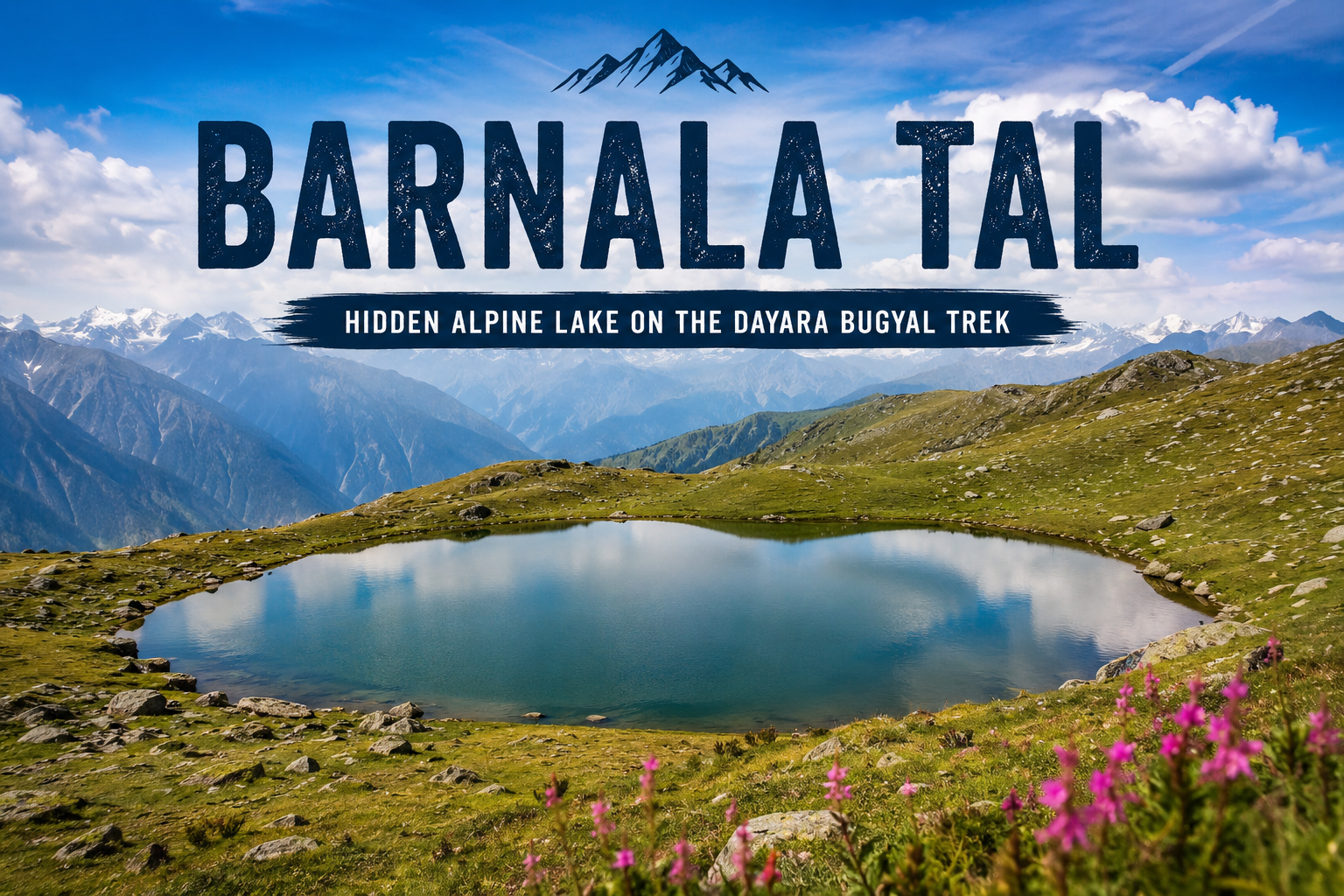
Barnala Tal is a small, glacially-fed Himalayan tarn sitting at approximately 3,750 metres (12,300 feet) above sea level in the Uttarkashi district of Uttarakhand. It sits at the upper edge of the Dayara Bugyal meadow — one of India’s largest and most celebrated high-altitude grasslands — and is fed by seasonal snowmelt that keeps the water exceptionally clear through summer and early autumn.
Key location facts:
- District: Uttarkashi, Uttarakhand
- Elevation: ~3,750 metres (12,300 feet)
- Distance from Dayara Bugyal campsite: 2–3 km
- Base villages: Barsu (26 km from Uttarkashi town) or Raithal (~195 km from Dehradun)
- Nearest city: Dehradun (~195 km via Mussoorie and Barkot, 7–8 hours by road)
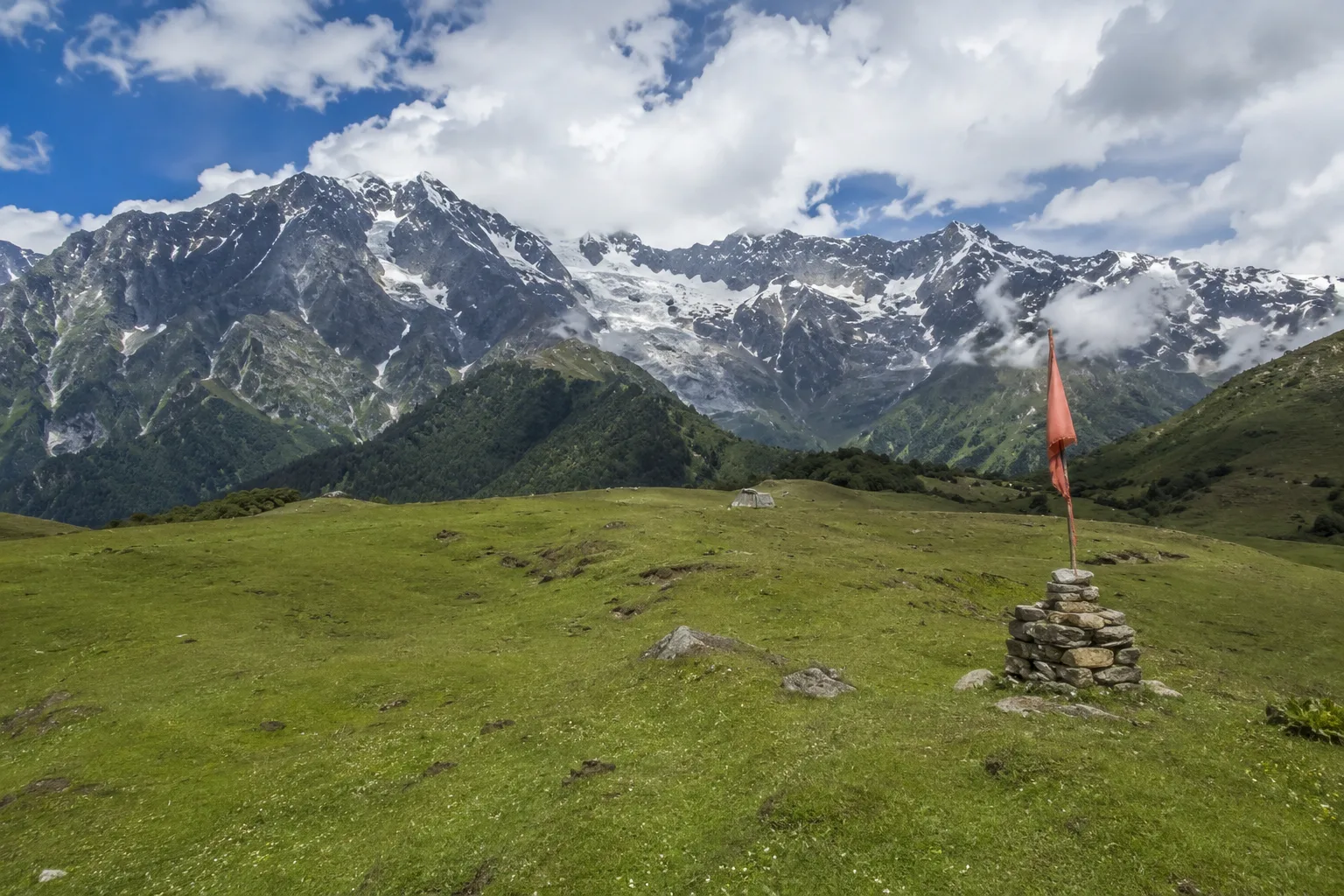
The Dayara Bugyal meadow itself sits at 3,408 metres — a 28 sq km alpine grassland framed by views of Bandarpoonch (6,316 m), Draupadi Ka Danda, Black Peak, and the Gangotri range. Barnala Tal is the natural reward waiting at the meadow’s upper edge, offering an additional dimension that pure grassland treks rarely deliver: a mirror-still body of water reflecting snowfields and open sky in a setting of genuine alpine quietness.
How to Reach Barnala Tal: The Full Trail Breakdown
Getting to the Trailhead
From Dehradun: The base village of Raithal is 195 km by road — a 7 to 8 hour drive through Mussoorie and Barkot. Regular shared Tempo Travellers and private taxis cover this route. Mountainiax includes Dehradun return transport in all Dayara Bugyal trek packages.
From Delhi: An overnight Volvo or drive via Rishikesh reaches Dehradun by early morning, from where the Raithal drive begins. Jolly Grant Airport and Dehradun railway station are both well-connected from major Indian cities.
From Uttarkashi town: Barsu village is approximately 26 km and reachable by shared taxi or local bus in about 45 minutes.
Day 1 — Raithal / Barsu Village to Dayara Bugyal (4–5 hours)
Elevation gain: ~950 metres (from ~2,200 m to ~3,408 m at Barsu or 2,700 m at the forest base)
The trek begins from Raithal or Barsu village and immediately enters dense oak, maple, deodar, and rhododendron forest. This forest section is one of the most underappreciated parts of the Dayara Bugyal trek — rich with birdlife (Himalayan Monal, snow pigeons, vultures) and particularly striking in April when rhododendrons bloom in deep red and pink, and in October when the deciduous canopy turns amber and gold.
After 3 to 4 hours through the forest, the treeline breaks and the trail opens onto the vast expanse of Dayara Bugyal at 3,408 metres. The first view of the meadow with Bandarpoonch and the Gangotri range visible beyond it produces a specific and reliable reaction in trekkers who have never seen it before.
Camping at Dayara Bugyal is the standard overnight arrangement. Mountainiax campsites here include quality alpine tents, sleeping bags rated to -10°C, foam mattresses, and a dedicated dining tent. The sunset from this meadow on a clear evening — peaks turning deep orange then crimson — is the kind of thing that converts people to repeat trekkers.
Day 2 — Dayara Bugyal to Barnala Tal and Back (3–4 hours return)
Elevation gain from camp: ~342 metres (from ~3,408 m to ~3,750 m)
This is the day that separates the Dayara Bugyal trek from every other meadow trek in Uttarakhand.
The trail from the main camping zone to Barnala Tal continues upward along the southeastern edge of the bugyal. Path markings are less defined here than on the main trail — this is one of the primary reasons a local guide is strongly recommended for the Barnala Tal extension. Experienced Mountainiax guides, most of them born and raised in Uttarkashi district, know the approach route in every season and every visibility condition.
The route passes through patches of dwarf juniper and scattered boulders before the terrain levels. The first sight of Barnala Tal — a clear body of water rimmed with short alpine grass, backed by a ridge of snow — tends to produce a specific kind of quiet in trekkers. The lake is more intimate than the larger, more famous lakes of the Himalayan circuit, and more still.
Visiting early morning (before 8 AM) is strongly recommended. Before afternoon breezes disturb the surface, the water reflects surrounding peaks with unusual fidelity. Carrying breakfast to the lake and eating it beside the water is an experience that justifies the Barnala Tal detour on its own.
Optional Extension — Bakaria Top (~45 minutes from the lake)
From Barnala Tal, a further ascent of roughly 45 minutes reaches Bakaria Top at approximately 3,900 metres. The 360° panorama from here includes the entire Dayara meadow spread below you and a wide arc of peaks — Gangotri range, Bandarpoonch, and the Kedarnath range visible to the south on clear days. The elevation gain is moderate and well within the reach of most trekkers who have already made it to the lake.
Best Time to Visit Barnala Tal
Timing your visit correctly changes what you experience at Barnala Tal — not marginally, but significantly.
April to June — Wildflower Season
The bugyal turns vivid green by late May. Wildflowers carpet the meadow in April and May. Snow lingers on higher ridges and around the lake, making reflections particularly dramatic. Rhododendron forest is in full bloom on the ascent. Daytime temperatures at Dayara: 12–20°C.
September to October — Peak Trekking Season (Recommended)
Widely regarded as the finest months on this trail. Deep blue skies, exceptional mountain visibility, comfortable daytime temperatures, and autumn colour in the forest sections below. Some residual snow remains on the ridge around Barnala Tal. This is when the lake looks most like the photographs that make people want to go in the first place. Daytime temperatures at Dayara: 10–18°C; nights drop to 0–5°C.
November — Shoulder Season
First serious snowfall begins. Possible to visit early November with proper gear, but conditions become challenging quickly. The trail is generally closed from December through April for most trekkers.
July to August — Monsoon (Not Recommended)
Slippery trails, leeches in the forest sections, poor visibility, and elevated landslide risk on the access roads from Uttarkashi. Most experienced operators — including Mountainiax — advise against this window.
December to March — Winter Trek
The Dayara Bugyal trek in winter is a completely different and equally extraordinary experience — natural ski slopes, deep snowpack, and temperatures dropping to -10°C at night. Barnala Tal and the upper approach may be inaccessible. Specialised winter gear is required and provided by Mountainiax on all winter departures.
Trek Difficulty and Physical Preparation
Difficulty Rating: Easy to Moderate
The Dayara Bugyal trek — including the extension to Barnala Tal — is rated Easy to Moderate. Total trail distance over two to three days is approximately 22 to 26 kilometres, with a cumulative elevation gain of around 1,200 metres. There are no technical sections, no use of ropes or fixed lines, and no glacier crossings.
For a precise comparison of this route against other Uttarakhand options, see the Difficulty Level Of Dayara Bugyal Trek — a detailed side-by-side analysis covering elevation gain, trail conditions, and required fitness level.
Altitude: Give It Genuine Respect
Although 3,750 metres is not extreme by Himalayan standards, Acute Mountain Sickness (AMS) can affect even physically fit individuals above 3,000 metres. Taking one acclimatisation night at Dayara Bugyal before proceeding to Barnala Tal is strongly advised.
Practical altitude management:
- Ascend slowly and never rush the pace
- Drink 3–4 litres of water daily
- Avoid alcohol at altitude
- Watch for headache, nausea, or disorientation — these are AMS warning signs
- Diamox (acetazolamide) can help with prevention; consult a doctor before use
All trek leaders are Wilderness First Aid certified, and emergency evacuation protocols are tested and in place.
Physical Preparation
First-time Himalayan trekkers should begin a conditioning routine at least six to eight weeks before departure. Effective preparation includes trail running or brisk walking (with elevation where possible), stair climbing with a weighted daypack (10–12 kg), sustained aerobic exercise three to four times per week, and basic lower body strength training to protect knees on descents.
What to Pack for the Barnala Tal Trek
Temperatures span from around 20°C at Barsu base to well below zero at night at higher camps in autumn. Pack for the cold end of that range.
Clothing and Layering
- Moisture-wicking base layer (synthetic or merino wool) — not cotton
- Insulating mid-layer: fleece jacket or lightweight down jacket
- Waterproof and windproof outer shell
- Warm gloves, thermal hat, and neck gaiter
- Gaiters for early-season snow crossings or November visits
Footwear and Equipment
- Ankle-support trekking boots with good grip — trail runners are not adequate for wet or icy sections
- Trekking poles to reduce knee load on descents (particularly from Bakaria Top back to camp)
- Headlamp with spare batteries for early morning starts to the lake
Health and Safety Essentials
- Diamox (acetazolamide) for AMS prevention — consult a doctor before use
- Oral rehydration salts, ibuprofen, and blister plasters
- Sunscreen SPF 50+, UV-protective sunglasses, and lip balm — UV intensity at altitude is considerably higher than at sea level
- Personal medications in original packaging
All confirmed trekkers with Mountainiax receive a full packing checklist tailored to their departure month.
Local Villages and Cultural Context
The villages of Barsu and Raithal are inhabited by the Garhwali community — a people whose tradition of welcoming mountain pilgrims, traders, and travellers stretches back centuries. These are gateway communities to the high Himalayan routes, and spending time in them before and after the trek enriches the experience considerably beyond the trail itself.
Staying in a local homestay is strongly recommended over tourist-operated lodges, both for the experience and for keeping money in the local economy. Homestay hosts serve fresh-cooked Garhwali meals — dal bhat, seasonal vegetables, simple rotis — that fuel a trek far more effectively than packaged alternatives.
The Uttarkashi district is deeply steeped in pilgrimage history. The Gangotri temple and the source of the Ganga at Gaumukh lie further up the same valley system. Many trekkers who come expecting a landscape experience find that Dayara Bugyal — and the stillness at Barnala Tal — carries a quality that goes beyond the geographical.
The Butter Festival (Andhuri) is a distinctive Garhwali cultural event associated with the Dayara Bugyal area — a celebration in which local communities bring butter offerings from summer pastures. If your trekking window coincides with it, it is worth witnessing.
Leave No Trace — Trekking Responsibly at Barnala Tal
Barnala Tal is not yet a crowded destination, and preserving its character requires deliberate effort from every visitor who reaches it.
- Carry all non-biodegradable waste out with you — packaging, batteries, sanitary products
- Campfires are not permitted within the bugyal area; use a gas stove
- Bury human waste at least 200 metres from the lake or any water source
- Do not wash dishes or personal items directly in or near the lake
- Stay on established paths; avoid trampling vegetation at the lake’s edge
- Travel with a registered operator who enforces these norms actively at camp
Waste management is active, not passive, on our treks — guides carry designated waste bags and enforce no-trace norms at every campsite.
Guided vs. Independent Trekking
Barnala Tal can be reached independently by experienced trekkers with prior Himalayan exposure, reliable GPS tracks, and solid altitude management knowledge. For most trekkers — particularly those on their first or second Himalayan route — a guided trek is the wiser and safer choice.
A good local guide brings:
- Route knowledge for the less-marked sections near the lake
- Weather pattern awareness for Uttarkashi district specifically
- Basic wilderness first aid and emergency protocol
- Community relationships in Barsu and Raithal
The cost of a guided Dayara Bugyal trek from Dehradun typically ranges from ₹8,999 per person (all-inclusive with Mountainiax) covering transport from Dehradun, all vegetarian meals, camping equipment, permits, guides, first aid kit, oxygen cylinder, and your trek completion certificate.
Har Ki Dun, located in the Govind Wildlife Sanctuary, is a comparable Uttarakhand meadow destination — longer in approach and different in character but worth understanding alongside Dayara. The Difficulty Level Of Dayara Bugyal Trek and Har Ki Dun Trek – Mountainiax resource covers both routes in detail for trekkers making a comparison.
Photography at Barnala Tal
Barnala Tal rewards patience far more than equipment. The strongest images come from early morning light before 8 AM when the lake surface is undisturbed and peaks catch the first warm tones of sunrise.
- Wide-angle lens: captures the lake within the context of its surrounding landscape
- Polarising filter: reduces surface glare and deepens water and sky colour
- Long exposure: just after sunset when the sky holds deep blue tones
- Spare batteries: keep them in an inner pocket — cold temperatures at altitude drain batteries fast
- Camera equilibration: allow the camera to warm up slowly when moving from cold to warm environments to prevent condensation on the lens
The best photography locations on the Dayara Bugyal trek are covered in a dedicated guide — worth reading before departure if photography is a priority on your trek.
Frequently Asked Questions About Barnala Tal
1. How difficult is the Barnala Tal trek?
The trek is rated Easy to Moderate. The main challenge is cumulative elevation gain and altitude management, not technical terrain. Most reasonably fit individuals without prior Himalayan experience can complete it with six to eight weeks of cardio preparation.
2. Is a permit required for Dayara Bugyal and Barnala Tal?
No separate trekking permit is currently required, though requirements can change seasonally. All trekkers must register at the Forest Department checkpoint at the trailhead. Mountainiax handles all permits for guided groups. Confirm current requirements with the Uttarakhand Tourism Department before an independent visit.
3. Can I do the trek without a guide?
Experienced trekkers with prior Himalayan exposure can attempt this independently. For the Barnala Tal extension specifically, a local guide is strongly recommended — trail markings fade beyond the main bugyal and the approach to the lake is not well-defined.
4. What is the best month to see Barnala Tal with snow?
Late May and early November offer the possibility of snow around the lake. October is the sweet spot — clear skies, some residual snow on the ridge, and none of the monsoon dampness.
5. Are there accommodation options on the trail?
Homestays in Barsu and Raithal provide accommodation at the start and end of the trek. On the trail, camping is the primary option. All Mountainiax guided packages include full camping setup with tents, sleeping bags, mattresses, and all meals.
Summary
Barnala Tal rewards the trekker who arrives with genuine attention. It reveals itself slowly — first as a shimmer in the distance beyond the meadow’s far edge, then as a clear, still body of water that reflects everything around it with almost uncomfortable precision, and finally as something that stays with you long after you have returned to the city.
At Mountainiax, we take trekkers to places like this with small groups, experienced local guides from Uttarkashi district, and an approach that prioritises the quality of the experience over the size of the itinerary. The Dayara Bugyal trek package starts at ₹8,999 per person — all-inclusive from Dehradun, with weekly departures through the trekking season.
With the dayara bugyal trek season approaching, it’s time to plan something truly extraordinary. From breathtaking Himalayan peaks to spiritually powerful temples hidden deep in remote valleys, this journey offers an experience that goes beyond a typical trek—it becomes a story you carry for life. To make your journey seamless and well-organised, choose the best trekking company in Uttarakhand for reliable trek packages, detailed itineraries, and hassle-free booking.
Visit this page for Trek Packages, Itinerary & Booking.