Planning a trek to Dayara Bugyal and wondering what the weather will be like when you arrive? You are not alone. Weather is one of the first things trekkers ask about before booking, and for good reason. The conditions at 3,408 metres can shift dramatically between seasons, and a single month’s difference can mean lush meadows in full bloom or knee-deep snow. Getting this right is the difference between a seamless mountain experience and an underprepared one.
Located in the Uttarkashi district of Uttarakhand, Dayara Bugyal sits at the intersection of two very distinct weather systems — the Western Disturbances that dominate winter and the Bay of Bengal monsoon that defines summer. This means the meadow does not simply have one “good” season; it has several, each with its own mood, temperature range, trail condition, and visual palette.
This complete Dayara Bugyal Weather Month by Month: Temperature & Conditions Guide breaks down every month of the year so you can plan with confidence. Whether you are chasing wildflowers in May, clear skies in October, or ski slopes in January, this guide gives you the precise weather data, trail conditions, and packing advice you need before you step onto the trail.
What Shapes Dayara Bugyal’s Weather
Before diving into the monthly breakdown, it helps to understand the two forces that control this meadow’s climate.
Western Disturbances, originating over the Mediterranean and moving eastward, bring snowfall to the Garhwal Himalayas between December and March. These systems are largely responsible for why Dayara Bugyal transforms into a skiing destination in winter.
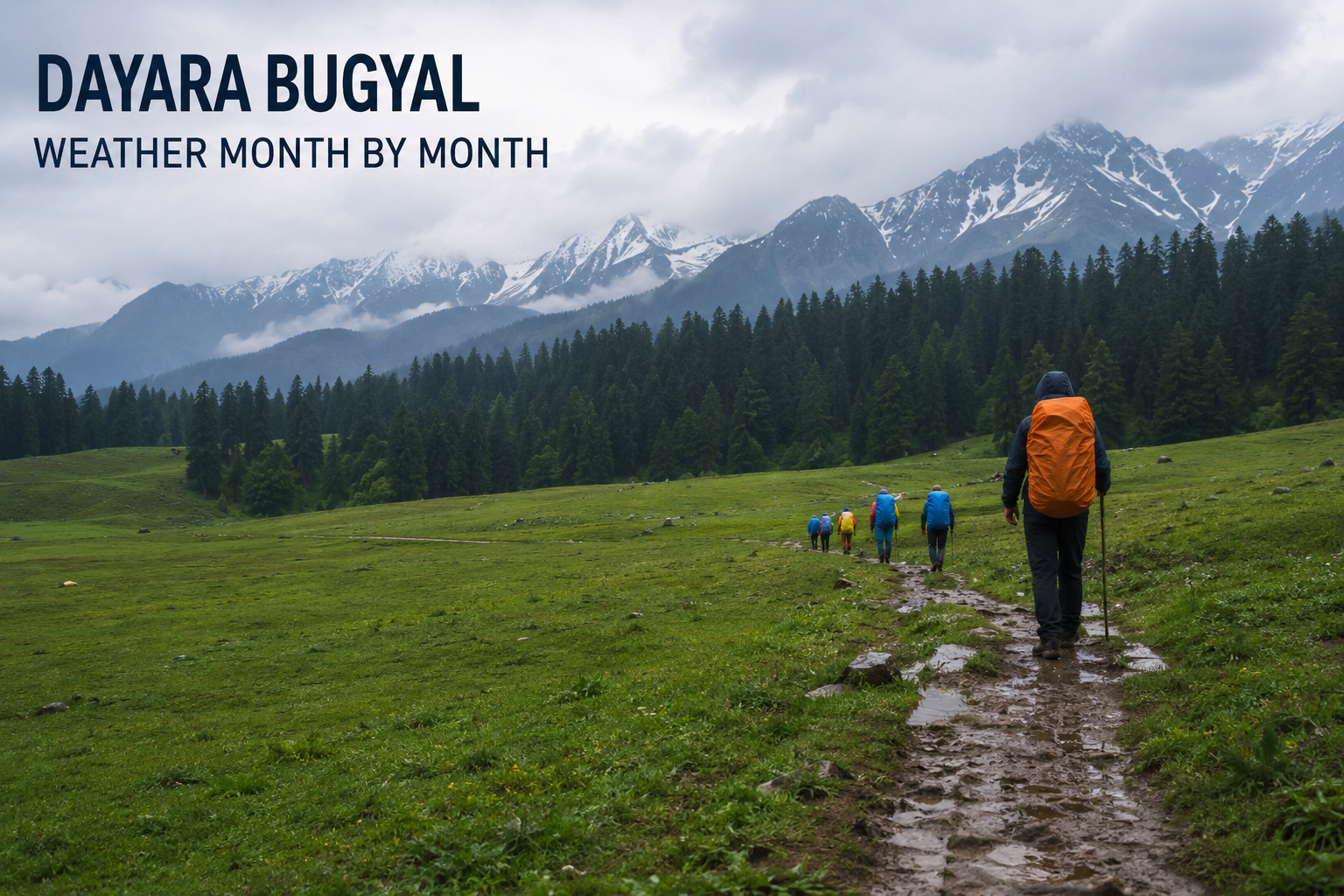
The Indian Summer Monsoon, driven by the Bay of Bengal, reaches Uttarakhand between late June and mid-September. At altitude, this translates into daily rain, slippery trails, reduced visibility, and a genuine risk of landslides on the approach roads through Uttarkashi.
Everything outside these two weather windows — April through June and October through November — forms the trekking sweet spot that most experienced Himalayan trekkers aim for.
Dayara Bugyal Weather Month by Month
January
| Month | Day Temperature | Night Temperature | Conditions | Trekking Season |
| January | 0°C to 5°C | -12°C to -7°C | Deep winter conditions with heavy snow cover, frozen trails, and crisp, clear skies. The landscape remains snow-clad, making it ideal for experienced winter trekkers. | Winter Trek |
January is peak winter at Dayara Bugyal. The meadow is buried under 3 to 5 feet of snow, and the slopes take on a near-perfect gradient for natural skiing. Western Disturbances pass through regularly, bringing fresh snowfall every few days. Between these events, however, the skies clear to a brilliant blue and the visibility across the Gangotri range is exceptional.
Trekking in January is possible but demands serious preparation. Microspikes, snow gaiters, insulated trekking boots, and a sleeping bag rated below -15 degrees Celsius are non-negotiable. The Dayara Bugyal winter trek is one of Uttarakhand’s most rewarding snow experiences, but it is not a casual one.
• Trail Status: Open with experienced guides and proper winter gear. The base villages of Raithal and Barsu remain accessible by road.
February
| Month | Day Temperature | Night Temperature | Conditions | Trekking Season |
| February | 2°C to 8°C | -10°C to -5°C | Deep snow continues across the meadows and forests. Occasional Western Disturbances can bring fresh snowfall, while clear weather windows offer spectacular snow-covered Himalayan views. | Winter Trek |
February follows a similar pattern to January but with slightly longer spells of clear weather. The snowpack is at its most stable, which actually makes for better skiing conditions than January’s more unpredictable fresh-powder days. The Gangotri peaks — including Bandarpoonch at 6,316 metres — stand out dramatically against blue skies when visibility is good.
Nighttime temperatures remain brutal, and any day where cloud cover comes in before sunset can feel intensely cold. That said, experienced operators run successful departures throughout February, and the isolation of the meadow in winter is unlike anything available in summer.
• Trail Status: Accessible for experienced trekkers with a winter-certified guide.
March
| Month | Day Temperature | Night Temperature | Conditions | Trekking Season |
| March | 7°C to 13°C | -5°C to 0°C | Winter gradually recedes as snow begins to melt across the meadows. Weather can be unpredictable, with a mix of snow, rain, and sunny days, making it a transitional trekking period. | Transition Season |
March marks the beginning of the thaw. The snowpack starts softening — slushy snow is more unpredictable underfoot than firm, frozen snow. Western Disturbances still pass through, occasionally dumping fresh snow that temporarily reverses the melt.
The lower forests around Raithal and Barsu begin waking up in March. Rhododendron buds appear on the trees, and the trail takes on a pre-spring energy. For most trekkers, March is a transitional month — too late for reliable skiing, too early for comfortable trekking.
• Trail Status: Transition period. Check with your operator before committing to a March departure.
April
| Month | Day Temperature | Night Temperature | Conditions | Trekking Season |
| April | 12°C to 18°C | 0°C to 5°C | Snow gradually recedes from the meadows, while rhododendron forests begin to bloom. Stable weather, pleasant temperatures, and clear mountain views make April an excellent time for trekking. | Recommended |
April is when Dayara Bugyal begins its most dramatic transformation. The snow retreats up the slopes, the forests below explode in red and pink rhododendron bloom, and the trail is dry and well-defined for the first time since autumn.
Day temperatures are comfortable for trekking, and the skies offer excellent morning clarity before afternoon clouds build. The combination of lingering snow, blooming rhododendrons, and golden light makes April a favourite among landscape photographers.
• Trail Status: Fully open. Recommended.
May
| Month | Day Temperature | Night Temperature | Conditions | Trekking Season |
| May | 16°C to 22°C | 5°C to 10°C | Dayara Bugyal is at its most vibrant, with lush green meadows and blooming alpine flowers. Mornings are generally stable and clear, while occasional afternoon thunderstorms may occur. | Highly Recommended |
May is among the most popular months for the Dayara Bugyal trek. The meadow is fully green, wildflowers carpet the bugyal, and the views of Bandarpoonch, Draupadi ka Danda, Srikanth, and Jaonli are crisp in the morning hours. Daytime temperatures are comfortable — warm enough to trek in a single layer, cool enough at night to appreciate a sleeping bag.
Pre-monsoon instability begins appearing from mid-May onward. Afternoon thunderstorms are common, so experienced trekkers start early and aim to reach camp before 2 PM. This is a rhythm that us builds into every May departure.
Those curious about why Dayara Bugyal is perfect for beginners will find May to be the ideal month to discover it firsthand — the trail is fully accessible, the weather is forgiving, and the visual reward at the meadow is at its peak.
• Trail Status: Fully open. One of the top two recommended months.
June
| Month | Day Temperature | Night Temperature | Conditions | Trekking Season |
| June | 17°C to 23°C | 8°C to 12°C | Pleasant temperatures prevail in early June, though pre-monsoon weather can bring afternoon showers and occasional thunderstorms. Trekking conditions remain favorable before the monsoon intensifies later in the month. | Early June Only |
Early June extends the spring trekking season. The meadow remains beautiful, temperatures are at their most comfortable for sustained effort, and the Himalayan Monal and other high-altitude birds are highly active. However, as the month progresses, pre-monsoon weather systems become less predictable.
By mid to late June, rain becomes a daily feature. Trail conditions near Gui campsite and the upper meadow can become slippery. Most experienced operators schedule their last spring departures in the first two weeks of June.
• Trail Status: Early June recommended. Post June 15 is conditional — check weather forecasts closely.
July
| Month | Day Temperature | Night Temperature | Conditions | Trekking Season |
| July | 14°C to 19°C | 8°C to 11°C | Active monsoon season brings heavy rainfall, muddy and slippery trails, reduced visibility, and an increased risk of landslides along approach roads. | Avoid |
July marks the heart of the monsoon season. The Uttarkashi approach roads — particularly sections between Chamba and Uttarkashi — are susceptible to landslides during heavy rainfall events. The path through the oak and rhododendron forest below Gui becomes slippery and poorly drained.
The meadow is lush green during the monsoon and wildflower diversity actually peaks in July, but visibility is consistently poor, views of the Gangotri range are blocked by cloud, and the camping experience is uncomfortable. For most trekkers, the risks outweigh the rewards.
• Trail Status: Not recommended. Most operators suspend departures.
August
| Month | Day Temperature | Night Temperature | Conditions | Trekking Season |
| August | 14°C to 18°C | 7°C to 10°C | Peak monsoon conditions with frequent rainfall, slippery trails, and poor mountain visibility. Landslide risks and weather-related disruptions are common. | Avoid |
August mirrors July in terms of weather pattern. Rainfall is consistent and heavy, the approach roads remain at risk, and the bugyal’s visual highlights are obscured by cloud for most of the month. Some departures operate in the last week of August as the monsoon begins receding, but these require close monitoring of road conditions.
• Trail Status: Generally not recommended. Late August conditional on weather.
September
| Month | Day Temperature | Night Temperature | Conditions | Trekking Season |
| September | 13°C to 18°C | 4°C to 8°C | The monsoon gradually retreats, with weather conditions improving from mid-September onward. Lush green meadows, fresh landscapes, and increasingly clear mountain views characterize the season. | Late September Onwards |
September is a month of transition. The first two weeks carry residual monsoon activity. From mid-September onward, the withdrawal accelerates — skies begin clearing, the air turns sharp and dry, and the first signs of autumn colour appear in the forests below.
The meadow grass is at its tallest and most intensely green in late September. The Himalayan peaks emerge from cloud dramatically after weeks of being hidden. This transition energy makes late September a genuinely exciting time to be on the trail.
• Trail Status: First two weeks conditional. Late September fully recommended.
October
| Month | Day Temperature | Night Temperature | Conditions | Trekking Season |
| October | 10°C to 16°C | -2°C to 3°C | Post-monsoon weather brings crystal-clear skies, golden alpine forests, and exceptional Himalayan views. Stable trail conditions make it one of the best months for trekking. | Highly Recommended |
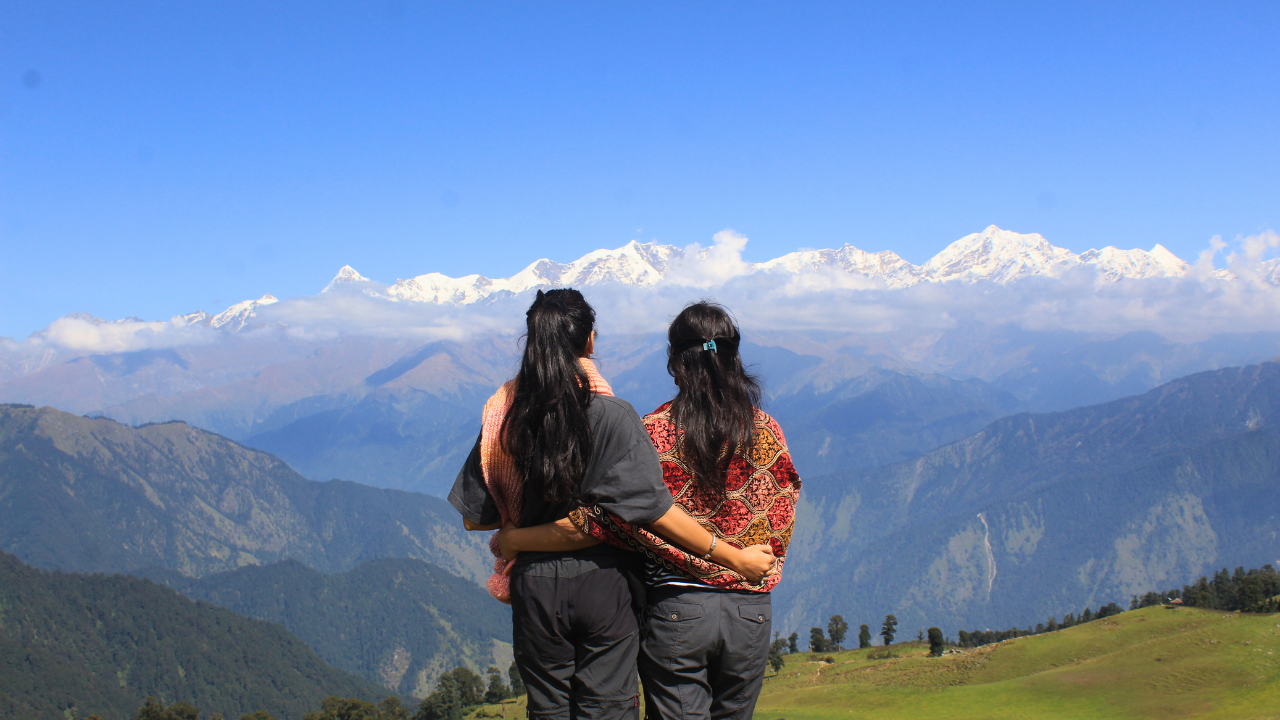
October is the finest month for views at Dayara Bugyal. The post-monsoon atmosphere scrubs the air clean, and the full sweep of the Gangotri range — from Bandarpoonch to Srikanth — stands out with a clarity that is simply not possible in summer. The forests below the meadow turn golden and amber as oak and maple shed their leaves.
Daytime trekking temperatures are ideal — cool enough for sustained effort, warm enough to be comfortable during rest breaks. Camp life under crystal-clear skies means exceptional stargazing from both Gui and the Dayara meadow.
Understanding the best time for the Dayara Bugyal Trek becomes straightforward when you experience October for yourself — the combination of post-monsoon clarity, autumn colour, and stable weather creates a window that is hard to match anywhere in the Garhwal Himalayas.
• Trail Status: Fully open. One of the top two recommended months.
November
| Month | Day Temperature | Night Temperature | Conditions | Trekking Season |
| November | 5°C to 12°C | -5°C to -1°C | First signs of winter arrive with cold mornings and nights. Early snowfall is possible, while clear skies offer excellent mountain views and photography opportunities. | Early Winter / Late Autumn Trek |
November extends the post-monsoon clarity but brings progressively colder nights. Early November is very comfortable for trekking. By late November, the first snowfall events begin appearing on the upper meadow, and night temperatures at Dayara campsite drop sharply.
The trail through the forest is stunning in early November — the last of the autumn leaves still clinging to branches, the air completely still in the mornings. Daytime visibility remains excellent throughout the month.
• Trail Status: Early November fully recommended. Late November requires winter gear and consultation with your operator.
December
| Month | Day Temperature | Night Temperature | Conditions | Trekking Season |
| December | 1°C to 8°C | -10°C to -5°C | Winter sets in with regular snowfall and snow accumulation across the meadows and trails. Snow-covered landscapes become the highlight of the trek. | Winter Trek |
December marks the return of snowfall at Dayara Bugyal. By late December, the Dayara Bugyal winter trek conditions familiar from January begin to establish themselves. Western Disturbances start crossing Uttarakhand again.
Early December offers a rare combination of fresh snow and relatively manageable temperatures — and one of the quietest periods on the trail, making it appealing for trekkers looking for solitude.
• Trail Status: Early December conditionally recommended. Late December requires full winter gear and an experienced winter guide.
What to Pack Based on Season
Packing for Dayara Bugyal depends heavily on the season. Spring and summer require light layers, rain protection, and sun safety gear, while autumn demands extra insulation for colder nights. Winter trekking requires full cold-weather equipment, including insulated boots, snow gear, heavy down jackets, and extreme-temperature sleeping bags.
Spring and Summer (April to June)
• Moisture-wicking base layer and insulating mid-layer
• Waterproof outer shell for afternoon showers
• Trekking trousers and UV-protection full-sleeves
• Sunscreen SPF 50+ and UV sunglasses — the meadow at 3,408 metres reflects significant UV
• 2-litre water bottle and water purification tablets
• Sleeping bag rated to -5 degrees Celsius minimum
Autumn (October to November)
• Same layering system as spring, plus an additional insulating layer for night
• Warm beanie, gloves, and thermal innerwear for camp temperatures
• Sleeping bag rated to -10 degrees Celsius for November
• Waterproof trekking boots — morning frost makes the trail icy until 9 AM
Winter (December to March)
• Full winter base layer system — merino wool or synthetic thermal
• Down jacket rated below -15 degrees Celsius
• Insulated and waterproof trekking boots
• Snow gaiters and microspikes
• Balaclava and expedition-weight gloves
• Sleeping bag rated to -20 degrees Celsius
Altitude and Acclimatisation at Dayara Bugyal
One consideration that often surprises first-time visitors is how little altitude affects Dayara Bugyal compared to higher Himalayan treks. At 3,408 metres, the risk of Acute Mountain Sickness is relatively low — significantly lower than treks pushing above 4,500 metres. The gradual ascent structure from Raithal (approximately 2,200 metres) built into a well-designed itinerary is key.
Symptoms of mild altitude adjustment — slight headache, reduced appetite, mild fatigue — are normal in the first 24 hours above 3,000 metres. Staying well hydrated, avoiding alcohol, and ascending no faster than your body adjusts are the practical principles. Mountainiax guides carry pulse oximeters and oxygen cylinders on every departure, regardless of season.
The weather and altitude interact meaningfully: cold temperatures accelerate dehydration because the sensation of thirst diminishes in cold air. In winter months especially, drinking regularly even when you do not feel thirsty is an important habit.
Frequently Asked Questions
1. What is the best month to visit Dayara Bugyal?
October and May are the two peak months for Dayara Bugyal trekking. October offers post-monsoon clarity and autumn colours. May delivers full wildflower bloom and comfortable trekking temperatures. Your choice comes down to whether you prefer autumn mountain views or spring meadow colours.
2. Is Dayara Bugyal open in winter?
Yes. Dayara Bugyal operates as a winter trekking and natural skiing destination from December through March. However, winter departures require specialist gear, an experienced winter guide, and significantly more preparation. Temperature at Dayara Bugyal in winter can drop to -12 degrees Celsius at night.
3. Does it snow at Dayara Bugyal?
Yes. Snowfall at Dayara Bugyal typically begins in late November or early December, driven by Western Disturbances. By January the meadow holds 3 to 5 feet of snow. The snow persists through March and melts progressively through April, though patches may remain on north-facing slopes into early May.
4. What is the weather like during the Dayara Bugyal winter trek?
Winter conditions involve daytime temperatures between 0 and 8 degrees Celsius, nighttime temperatures as low as -12 degrees Celsius, regular snowfall events, and clear sunny days in between. Winds on the open meadow can create wind-chill conditions that feel significantly colder than the air temperature.
5. Is Dayara Bugyal accessible during monsoon?
It is not recommended. The Uttarkashi approach roads are landslide-prone during monsoon, the trail through the forests is slippery, and the meadow views are obscured by cloud for most of July and August. Most experienced operators, including suspend departures during the core monsoon period.
Summary
Understanding the weather is the first step. The second is booking with an operator who knows how to read it. At Mountainiax, our trek leaders are local to Uttarkashi district and have guided Dayara Bugyal in every season and every condition this meadow offers. From May wildflower departures to February snow treks, we calibrate every detail — gear, campsite selection, daily start times, acclimatisation pace — to the season you are trekking in.
Our all-inclusive Dayara Bugyal trek packages start at Rs. 8,999 per person and cover everything from Dehradun pickup to your completion certificate. Check our upcoming batches, pick your month, and let us take care of the mountain logistics.
With the dayara bugyal trek season approaching, it’s time to plan something truly extraordinary. From breathtaking Himalayan peaks to spiritually powerful temples hidden deep in remote valleys, this journey offers an experience that goes beyond a typical trek—it becomes a story you carry for life. To make your journey seamless and well-organised, choose the best trekking company in Uttarakhand for reliable trek packages, detailed itineraries, and hassle-free booking.
Visit this page for Trek Packages, Itinerary & Booking.